
- About the Journal
- Editorial Board
- Review Process
- Author Guidelines
- Article Processing Charges
- Special Issues
- Current Issue
- Past Issue
 Journal of Basic and Applied Pharmaceutical Science
 Volume 3 (2025), Article ID: JBAPS-110
https://doi.org/10.33790/jbaps1100110Research Article
Antimicrobial Evaluation and Characterization of Herbal Soap with Terminalia Bellerica and Ocimum Tenuiflorum Extracts
Ajay Kumar Kurmi1, Saruna Thapa1, Shyanu Chaudhary1, Sujata Kumari Shah1, Ram Krishna Shrestha2, and Pratik Khanal,1,3*
1Department of Pharmacy, Modern Technical College, Pokhara University, Nepal.
2Department of Lab Technology, Modern Technical College, Pokhara university, Nepal.
3Crimson College of Technology, Pokhara University, Nepal.
Corresponding Author Details: Pratik Khanal, Department of Pharmacy, Karnali College of Health Science, Purbanchal University, Gaushala, Kathmandu, Nepal.
Received date: 04th November, 2024
Accepted date: 02nd April, 2025
Published date: 05th April, 2025
Citation: Kurmi, A. K, Thapa, S., Chaudhary, S., Shah, S. K., Shrestha, R. K., & Khanal, P., (2025). Antimicrobial Evaluation and Characterization of Herbal Soap with Terminalia Bellerica and Ocimum Tenuiflorum Extracts. J Basic Appl Pharm Sci, 3(1): 110.
Copyright: ©2025, This is an open-access article distributed under the terms of the Creative Commons Attribution License 4.0, which permits unrestricted use, distribution, and reproduction in any medium, provided the original author and source are credited.
Abstract
Background: Herbal soaps formulated with plant-derived extracts offer antimicrobial benefits and are gentler on the skin compared to synthetic alternatives, making them effective for hygiene and infection prevention.
Objective: This study evaluates the antimicrobial activity and physicochemical properties of herbal soap containing Terminalia bellerica and Ocimum tenuiflorum extracts.
Results: The soap exhibited significant antimicrobial activity against Staphylococcus aureus, Escherichia coli, and Klebsiella pneumoniae, with the highest inhibition at 4 mg/mL (0.8 g extract per 40 g soap), achieving zones of inhibition up to 20.88 ± 1.83 mm against S. aureus. Physicochemical tests revealed optimal properties in formulation 6, with a pH of 8.90 ± 0.10, foamability of 10.30 ± 0.10 cm, and moisture content of 13.15 ± 0.10%.
Conclusion: The herbal soap demonstrates potential as an effective, natural antimicrobial agent, suitable for use in resource-limited settings, though further research is needed to explore its long-term efficacy and scalability.
Introduction
The skin is the body's largest organ, making up about 15% of adult body weight, and functions in protection, water retention, and temperature regulation [1]. Herbal soap is made from plant parts with antibacterial and antifungal properties to treat injuries, diseases, or promote health [2].
Herbal skincare products with antibacterial and antifungal properties are made from plant parts like leaves, stems, bark, and fruits and they are used to treat skin infections [3]. The use of various herbal remedies for treating skin infections has been studied by many ancient medical systems, including Ayurveda, Siddha, and Unani [4]. Today, hand washing and good hand hygiene are believed to be among the most effective ways to stop the transmission of infections like COVID-19 and prevent respiratory and diarrheal illnesses [5].
O. tenuiflorum leaves contain 0.7% volatile oil, mainly 71% eugenol and 20% methyl eugenol, with carvacrol and caryophyllene. Antioxidant compounds include cirsilineol, circimaritin, isothymusin, apigenin, rosmarinic acid, and eugenol, along with flavonoids orientin and vicenin [6]. The leaves of Terminalia bellerica enhance appetite, relieve piles, lower cholesterol and blood pressure, boost immunity, prevent aging, and enhance the body's resistance. They are commonly used as traditional medicine for the above ailments by the people of Coimbatore district [7]. Its fruits' triterpenoids show antimicrobial activity, and kernel oil has a well-tolerated purgative effect [8]. The current effort focuses on manufacturing medicated herbal soap that utilizes the active properties of various herbs, making it an antioxidant and antibacterial soap suitable for regular use [9].
The need for a good herbal soap is emphasized from a recent study which found that the prevalence of diarrhea in Nepal varied widely across provinces, ranging from 3.7% to 9.0% within a two-week period. According to the WHO, 1,193 children under five died from diarrhea in Nepal in 2017 [10]. There is a critical need for a non- synthetic approach to combat these germs, which is why we conducted a study on the formulation and characterization of herbal soap using Tulsi and Barro flowers, seeds, and other natural ingredients [10]. A polyherbal soap that was formulated with sandalwood and orange peel extracts and assessed across multiple parameters, such as organoleptic properties, pH, foam height and retention, skin irritation potential, and stability at high temperatures. The resulting soap demonstrated an appealing appearance, efficient cleansing and foaming abilities, and was free from any adverse effects [11].
Herbal materials also include extracts, resins, and powders, produced through processes like extraction, purification, and concentration [12]. According to Majumdar et al. [13], herbal soap, made from botanical herbs and plant-based ingredients, is a healthier alternative to regular soap [13]. Soap, in the form of bars, liquids, or detergents, is used daily. It’s made by hydrolyzing fats with sodium hydroxide to form sodium salts of fatty acids and glycerol. The cleansing action comes from hydrocarbon chains attracted to oil and carboxyl groups attracted to water [12].
Methodology
O. tenuiflorum leaves were collected from courtyards and air-dried at room temperature before being finely ground into a powder. Three hundred grams of this powder was then macerated with pure ethanol, and a clear filtrate was obtained using Whatman cellulose filter paper. The filtrate was subsequently dried at 70ºC to yield a solid residue of O. tenuiflorum extract [6]. Collection of plant materials, especially the pericarp of T. bellerica, was conducted, followed by size reduction and sieving. The crude drug was dissolved in a suitable solvent (99% ethanol) at a ratio of 1:10. The mixture was left for 2–3 days, after which filtration was performed. The filtered solvent was heated at 70°C until all the solvent evaporated. The extract was collected and stored at a suitable temperature. The microorganisms were obtained from the culture collection at the Laboratory of Microbiology, Star Hospital Private Limited. The isolates were purified by touching the surface of the microbial population with an inoculating loop and transferring them to a new media, which was incubated at 37ºC for 24 hours. For further use, the isolates were maintained and refrigerated at 4°C.
• Escherichia coli (Resistant)-922
• Escherichia coli (Sensitive)-962
• Staphylococcus aureus – 936
• Klebsiella pneumonia–968
Preparation of soap samples:
A sterile blade was used to scrape each soap sample, which was then dissolved in sterile distilled water under sterile conditions. The stock solution was prepared and stored in the refrigerator for further use.
Method of soap formulation:
The hot process involves cooking oils and fats, along with stearic acid and beeswax, until a trace is formed. Full saponification occurs only when the mixture is cooked thoroughly. The procedure includes dissolving lye in water and heating the oil in a separate pot. The lye solution is then mixed with the oil and stirred until a trace is formed. The soap batter is cooked at low temperature for 1.5 to 2 hours, stirring occasionally as needed. All necessary ingredients, along with extracts, are mixed in, and the soap batter is poured into molds and left to cool until hardened. After cooling, the soap is removed from the molds and cut into pieces.
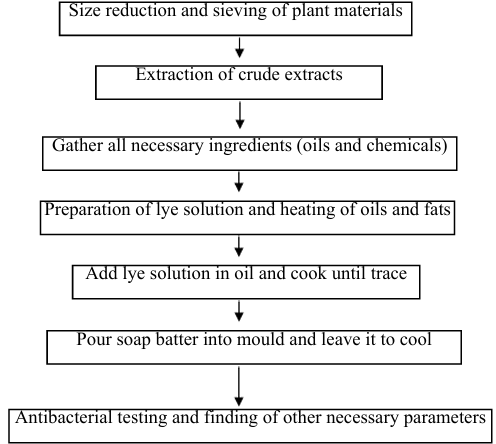
Figure.1 Flowchart of methodology
Foamability test:
2.0 g of soap was taken in 50 ml of distilled water in a 100 ml measuring cylinder. It was dissolved well and shaken vigorously for up to 2 minutes. After 10 minutes, the foam height was measured. This process was repeated three times, and the mean was calculated [14].
pH analysis test:
A pH meter was used to determine the pH of the sample. 2.0 g of soap was dissolved in 50 ml of deionized water. The pH was measured three times, and the mean value was calculated [14].
Moisture content test:
Moisture content was determined by the hot oven method. Five grams of soap were weighed in a petri dish and dried at a constant temperature of about 105ºC in a hot air oven, then cooled for some time. The initial and final weights were accurately measured, and the percentage moisture content was calculated [15].
Saponification value test:
The saponification value is defined as the number of mg of KOH required to completely hydrolyze (saponify) one gram of fat or oil. Two grams of the given fat or oil were placed in a conical flask. Twenty-five milliliters of 0.5 N alcoholic potassium hydroxide was measured and added to it. The conical flask was heated for 30–60 minutes by connecting it to a reflux condenser with a continuous flow of water. The conical flask was then allowed to cool for 30 minutes, and 1 ml of phenolphthalein was added. The sample was titrated against 0.5 N HCl solution using a burette and stand. A blank experiment (leaving out the fat or oil) was performed, and the volume of HCl required was noted. The initial and final readings were recorded, and the saponification value was calculated.
Antimicrobial test
For the antibacterial test, soap solutions of various concentrations were tested using the disc diffusion method with different bacteria, including E. coli (both sensitive and resistant strains), S. aureus, and K. pneumoniae. Soap samples with different herbal content were prepared and compared to Dettol (bar soap, item model no. HHDCOMBJUN41). One gram of soap was dissolved in distilled water. Petri dishes with culture media were prepared, and the bacterial inoculation was performed. Test samples were transferred to the Petri dishes at different spots. The plates were incubated for 12 to 24 hours at 37ºC, and the zones of inhibition were observed around the discs [15].
Statistical analysis
To analyze the data statistically, normality was initially tested to verify if the data followed a normal distribution. Homogeneity of variance was confirmed to ensure that the outcome distributions were comparable across groups. A one-way Analysis of Variance (ANOVA) at a 95% confidence level was employed to assess the inhibition zones, and an independent samples t-test was conducted in SPSS 29.1.1.0 to compare the means and standard deviations between the two groups.
Results
Saponification value data of different oils and fat
The saponification test was carried out for coconut oil, castor oil, and beeswax. The results were tabulated as follows: saponification value of beeswax (90.04), castor oil (136.93), and coconut oil (181.38).
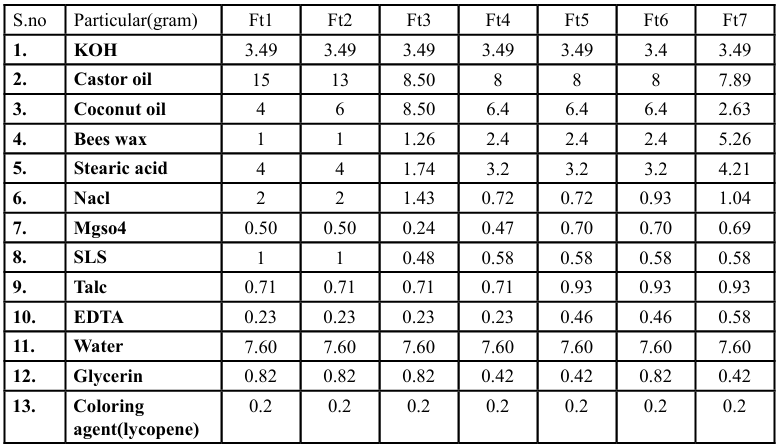
Table 1. Different composition of Formulations trial without extracts (40 g soap)
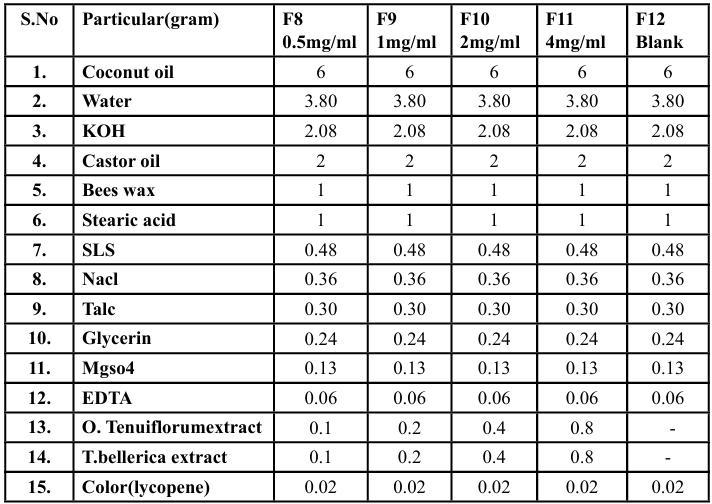
Table 2. Formulation with extracts (mg/ml) in 20m soap
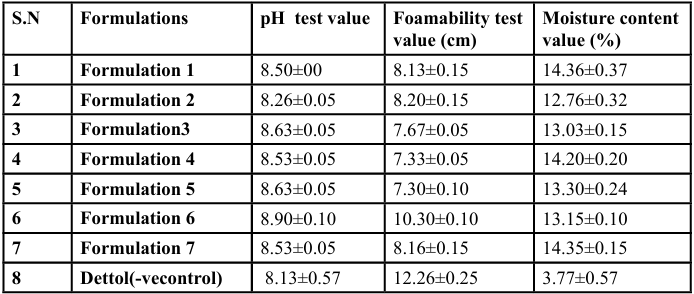
Table 3. Physical parameters of soap
Different formulations were initially prepared, and physical parameters were analyzed, including pH test, foamability test, and moisture content test. The mean value and standard deviation were calculated using SPSS 29.1.1.0. The results were tabulated, showing a comparably higher pH value, higher foamability, and lower moisture content percentage. Upon evaluation, the pH value of soap was 8.90 ± 0.10, foamability was 10.0 ± 0.10, and moisture content was 12.11 ± 0.10 for formulation 6, which exhibited the best parameters among the samples.
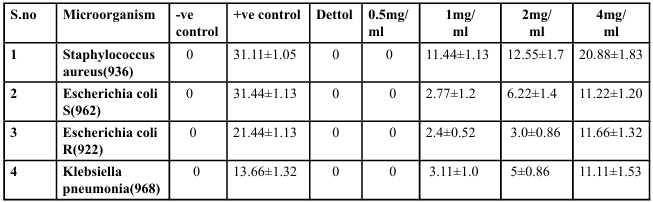
Table 4. Antimicrobial (zone of inhibition) results
Herbal soap been demonstrated on different microorganism like S. aureus, E. coli and K. pneumonia for the antibacterial testing. The result was been analyzed and listed as shown in Table4. Different concentration (0.5mg\ml, 1mg/ml, 2mg\ml, 4mg\ml), Amikacin (30mcg), Dettol (100mg/ml, +ve control) and blank (100mg/ml, -ve control) was tested.
The average diameter of the Zone of Inhibition of produced by herbal soap containing extracts of T. bellerica and extracts of O. sanctum at a ratio 0.5mg/ml in inhibiting the growth of E. coli (resistant) was 0 mm (no response), 1mg/ml was 2.4±0.52 mm, 2mg/ ml was 3.0±0.86 mm, 4mg/ml was11.66±1.32 mm and Standard (30 mcg) was 21.44±1.13 mm. No response in Dettol and Blank was seen.
The average diameter of the inhibition zone produced by herbal soap containing extracts of T. bellerica and extracts of O. sanctum at a ratio 0.5mg/ml in inhibiting the growth of S. aureus was Herbal soap was tested against different microorganisms, including S. aureus, E. coli, and K. pneumoniae, for antibacterial activity. The results were analyzed and are listed in Table 4. Different concentrations (0.5 mg/ ml, 1 mg/ml, 2 mg/ml, and 4 mg/ml), along with amikacin (30 mcg) as a positive control and Dettol (100 mg/ml) and blank (100 mg/ml) as negative controls, were tested.
The average diameter of the zone of inhibition produced by herbal soap containing extracts of T. bellerica and O. sanctum at a concentration of 0.5 mg/ml against E. coli (resistant) was 0 mm (no response); at 1 mg/ml, it was 2.4 ± 0.52 mm; at 2 mg/ml, it was 3.0 ± 0.86 mm; at 4 mg/ml, it was 11.66 ± 1.32 mm; and for the standard (30 mcg), it was 21.44 ± 1.13 mm. No response was observed in Dettol and the blank.
The average diameter of the inhibition zone produced by herbal soap containing extracts of T. bellerica and O. sanctum at a concentration of 0.5 mg/ml against S. aureus was 0 mm (no response); at 1 mg/ml, it was 11.44 ± 1.13 mm; at 2 mg/ml, it was 12.55 ± 1.7 mm; at 4 mg/ ml, it was 20.88 ± 1.83 mm; and for the standard (30 mcg), it was 31.11 ± 1.05 mm. No response was observed in Dettol and the blank.
The average diameter of the inhibition zone produced by herbal soap containing extracts of T. bellerica and O. sanctum at a concentration of 0.5 mg/ml against E. coli (sensitive) was 0 mm (no response); at 1 mg/ml, it was 2.77 ± 1.7 mm; at 2 mg/ml, it was 6.22 ± 1.4 mm; at 4 mg/ml, it was 11.22 ± 1.20 mm; and for the standard (30 mcg), it was 31.44 ± 1.13 mm. No response was observed in Dettol and the blank.
The average diameter of the inhibition zone produced by herbal soap containing extracts of T. bellerica and O. sanctum at a concentration of 0.5 mg/ml against K. pneumoniae was 0 mm (no response); at 1 mg/ml, it was 3.11 ± 1.0 mm; at 2 mg/ml, it was 5 ± 0.86 mm; at 4 mg/ml, it was 11.11 ± 1.53 mm; and for the standard (30 mcg), it was 13.66 ± 1.32 mm. No response was observed in Dettol and the blank.
Post hoc analysis of S. aureus has shown that the zone of inhibition at a concentration of 4 mg/ml is significantly different from both the standard and the control but similar to the zone of inhibition at a concentration of 2 mg/ml. Similarly, the zone of inhibition at a concentration of 2 mg/ml is different from the zones of inhibition at 4 mg/ml, the control, and the standard but similar to the zone of inhibition at a concentration of 1 mg/ml. Lastly, the zone of inhibition at a concentration of 4 mg/ml is different from all concentrations in the control group. In comparison, the standard is significantly different from all concentrations.
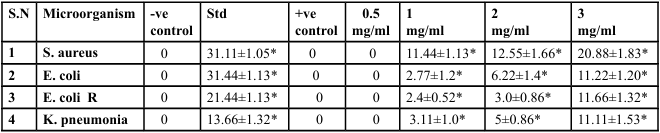
Table 5. Post hoc analysis test
Post hoc analysis for E. coli (sensitive) has indicated that the zone of inhibition at a soap concentration of 1 mg/ml is significantly different from all concentrations, the control, and the standard. Similarly, the zone of inhibition at a concentration of 2 mg/ml is significantly different from all concentrations, the control, and the standard. Lastly, the zone of inhibition at 4 mg/ml is significantly different from all concentrations, along with the control and standard, in inhibiting bacterial growth. Some regrowth of bacteria was observed after 24 hours of incubation.
In the post hoc analysis for E. coli (resistant), it was found that the zone of inhibition at a concentration of 1 mg/ml of soap is similar to that at 2 mg/ml but significantly different from the concentrations of 4 mg/ml, the standard, and the control. Similarly, the zone of inhibition at a concentration of 2 mg/ml is similar to that at 1 mg/ml and different from the concentrations of 4 mg/ml, amikacin, and the control. Lastly, the zone of inhibition at 4 mg/ml is different from the zones of inhibition of all concentrations, the control, and amikacin. Resistance was observed in the zone of inhibition after 12-14 hours of incubation.
In the analysis for K. pneumoniae, it was found that the zone of inhibition at a concentration of 1 mg/ml of soap is significantly different from all concentrations and the control. Similarly, the zone of inhibition at a concentration of 2 mg/ml is different from the zones of inhibition of all concentrations, the control, and the standard. Lastly, the zone of inhibition at 4 mg/ml is significantly different from all concentrations, the control, and the standard in inhibiting bacterial growth.
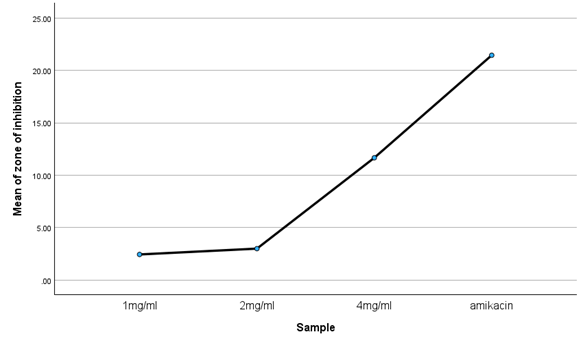
Figure.1 Line diagram of zone of inhibition in E. coli (Resistant)
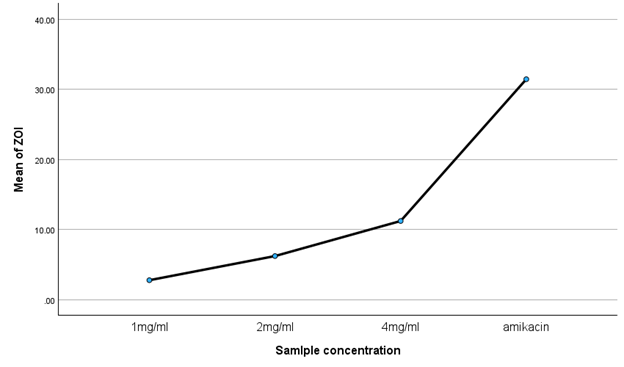
Figure.2 Line diagram of mean zone of inhibition in E. coli (sensitive)
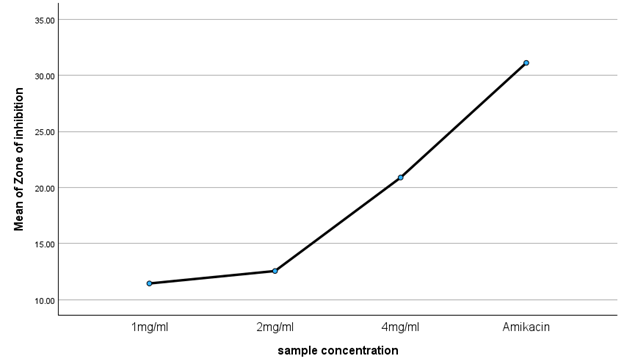
Figure.3 Line diagram of mean zone of inhibition in S. aureus
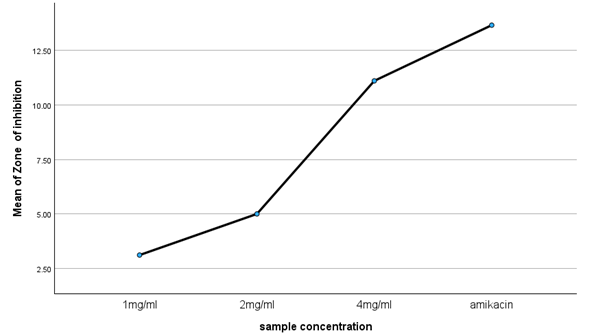
Figure.4 Line diagram of mean zone of inhibition in K. pneumonia
Discussion
Soaps are commonly used cleaning agents that help remove dirt and germs by disrupting microbial cell membranes and proteins. In this study, the soaps displayed different levels of effectiveness against the bacteria tested. Herbal soaps are gaining popularity because of their advantages over synthetic soaps, which often contain artificial ingredients and colors that can irritate the skin. Many plants possess antimicrobial properties, making them valuable for inclusion in soap formulations that can then be evaluated for their antimicrobial effects [16].
The present study was based on parameters of soap i.e. physical and chemical parameters, along with antimicrobial testing (zone of inhibition) on Staphylococcus aureus, Escherichia coli and Klebsiella pneumonia.
Kuntom et al. soap prepared with coconut oil, glycerin, olive oil, palm oil and canola oil showed results that moisture content was between 9 and 16% [17] High Foamability due to fatty acid contained in oil [16,18,19] and ph ranges from 9-10 [20]. Our formulation trial revealed that formulation 6 shows minimum moisture content, high Foamability and almost required pH i.e. 8.90 and was best to be used for preparation of soap containing extracts.
The evaluation of the herbal soaps antimicrobial properties in this study revealed that the soaps had antimicrobial activity against the tested bacteria in a concentration-dependent manner, indicating that the herbs or plant parts used in the production of these soaps had antimicrobial principles [21]. The inhibitory action was organism dependent in addition to concentration dependent. In our study concentration was in increasing dose i.e. 0.5mg/ml – 4mg/ml and single concentration of standards and controls.
Phytochemical compounds which are necessary for biologically active and thus partially responsible for antimicrobial activities such as saponins, tannin's, alkaloids, flavonoids and steroids [22]. In case of Ocimum tenuiflorum, all biologically active compounds mentioned above are present [23] and in case of T. bellerica, it also contain all the biologically active compound for antimicrobial properties [22].
Most of the herbal soaps tested significantly inhibited gram positive organisms, especially gram-positive cocci like S. aureus, S. epidermidis, and S. capitis. This is significant because skin illnesses including impetigo, furuncles, carbuncles, and acne are caused by this group of gram positive bacteria [24].
A 50% (w/v) ethanol extract of O. sanctum leaves inhibited the growth of three bacterial strains—S. pyogenes ATCC 14615, S. aureus ATCC 16799, S. mutans KPSK2—as well as C. albicans ATCC 10231, showing varying levels of effectiveness. Using the agar disk diffusion method, S. pyogenes showed the highest sensitivity to the ethanol extract of O. sanctum. The antimicrobial activity of this extract was assessed against the tested microbes by the agar disk diffusion method [25].
Basically, Prepared herbal soap contains both crude extracts of t. bellerica and O. tenuiflorum and combined effects was tabulated, where it was found that the effects of combined extracts is more sensitive to S. aureus 936 and E. coli S 962 in comparison to E coli R 922 and K. pneumonia 968. 4mg/ml or 0.8gm concentration in 40mg soap was found to be effective with comparatively with standard having higher zone of inhibition and comparatively minimal zone of inhibition at 2mg/ml in all bacteria’s. But 2mg/ml and 4mg/ml shows lower zone of inhibition in comparison with standard (Amikacin) and higher zone of inhibition in comparison with 0.5mg/ml, 1mg/ml, blank and controls.
Conclusion
The results from the study provide valuable insights into the saponification values, physical parameters, and antimicrobial efficacy of herbal soaps formulated with extracts from Terminalia bellerica and Ocimum sanctum. The saponification values indicated that coconut oil had the highest value (181.38), followed by castor oil (136.93) and beeswax (90.04), suggesting that these ingredients can effectively produce soap through saponification processes.
Among the various formulations tested, formulation 6 exhibited the best physical parameters, including a pH of 8.90 ± 0.10, foamability of 10.30 ± 0.10 cm, and moisture content of 13.15 ± 0.10%. This formulation appears to balance the desirable qualities of effective cleansing and skin compatibility.
Antimicrobial testing demonstrated that the herbal soaps were effective against a range of microorganisms, including Staphylococcus aureus, Escherichia coli, and Klebsiella pneumoniae, in a concentration-dependent manner. Notably, the zone of inhibition was greatest at a concentration of 4 mg/ml, highlighting the potential of the extracts to enhance antibacterial properties. The extracts were particularly effective against sensitive strains of S. aureus and E. coli, with the herbal formulations showing significantly higher inhibition zones compared to the negative controls.
The presence of phytochemicals such as saponins, tannins, alkaloids, flavonoids, and steroids in the herbal extracts likely contributed to the observed antimicrobial activity, further supporting the use of these natural ingredients in soap formulation. Overall, the study emphasizes the potential of herbal soaps not only as effective cleansing agents but also as alternatives to synthetic soaps, particularly for individuals seeking products with antimicrobial properties that are less likely to cause skin irritation.
Future research could explore the specific mechanisms behind the antimicrobial activity of the herbal extracts and their long term effects on skin health, as well as the feasibility of scaling up production for commercial use.
Recommendation
• Further exact study must be done to know exact antimicrobial property in increasing concentration and saturation point analyzing.
• Herbal soap formulated can be further tested on other gram positive, gram negative and resistant skin bacteria.
• Formulation optimization includes hardness increments, foam retention time increment and better concentration formulation standard.
• Other related parameters like acid insoluble ash, fatty matter content, hardness etc. can also be tested.
Conflict of interest:
The authors declare no conflict of interest.
References
Kolarsick, P. A. J., Kolarsick, M. A., & Goodwin, C. (2011). Anatomy and Physiology of the Skin: Journal of the Dermatology Nurses’ Association, 3(4), 203–213. View
Bothe Saurav , prof . Bhalsing pooja Gorakh , prof.niranjan Tiwari ,kasar Bharat. (n.d.). A review of herbal soap. www.jetir. org (ISSN-2349-5162) View
Kareru, P. G., Keriko, J. M., Kenji, G. M., Thiong’o, G. T., Gachanja, A. N., & Mukiira, H. N. (2010). Antimicrobial activities of skincare preparations from plant extracts. African Journal of Traditional, Complementary and Alternative Medicines, 7(3). View
Sudharani, M. V., Kullayappa, A. C., Dheeraj, C., Naik, K. B., Vandana, M., & Sravani, V. (n.d.). Formulation and Evaluation of Tridax Procumbens (L.) L. Herbal Soaps. View
Chirani, M. R. (2021). Environmental impact of increased soap consumption during COVID-19 pandemic: Biodegradable soap production and sustainable packaging. Science of the Total Environment. View
Agarwal, P., Nagesh, L., & Murlikrishnan. (2010). Evaluation of the antimicrobial activity of various concentrations of Tulsi (Ocimum sanctum) extract against Streptococcus mutans: An in vitro study. Indian Journal of Dental Research, 21(3), 357. View
Ahirwar, R. K. (2015). Diversity of Ethno medicinal Plants in Boridand Forest of District Korea, Chhattisgarh, India. American Journal of Plant Sciences, 06(02), 413–425. View
Sharma, P., Verma, K. K., Raj, H., & Thakur, N. (2021). A review on ethnobotany, phytochemistry and pharmacology on Terminalia belerica (Bibhitaki). Journal of Drug Delivery and Therapeutics, 11(1-s), 173–181. View
HBrenaut, E., Misery, L., & Taieb, C. (2019). Sensitive Skin in the Indian Population: An Epidemiological Approach. Frontiers in Medicine, 6, 29. View
Department of Science Lab. Tech., Federal Polytechnic Oko, Anambra State, & Obiora, J. (2022). EFFECT OF ESSENTIAL OIL EXTRACTED FROM AZADIRACHTA INDICA (NEEM) LEAVES IN FORMULATED NATURAL ANTIBACTERIAL SOAP. International Journal of Research Findings in Engineering, Science and Technology, 4(1), 27–35. View
Pawar, D. N., Pawar, A. P., & Dalvi, Y. V. (2019). Formulation and Evaluation of Herbal Scrub Gel. Research Journal of Topical and Cosmetic Sciences, 10(1), 13. View
Ferre A, Hidalgo C, Fuentes N, Kaps R, .Escamilla M. (n.d.). Revision of European ecolabel criteria for soaps, shampoos and hair conditioners. Joint Research Centre European Commission, 1–40(2012). View
Majumdar, A., Thakkar, B., Saxena, S., Dwivedi, P., & Tripathi, V. (2023). Herbal Soap- Trends, Benefits and Preparation: A Review. Acta Scientifci Nutritional Health, 7(9), 10–15. View
Dalen, M. B., & Mamza, P. (2010). Some physico-chemical properties of prepared metallic soap-driers of aluminium, copper and zinc. Science World Journal, 4. View
Vigneswaran. (n.d.). FORMULATION AND EVALUATION OF POLY HERBAL SOAP. World Journal of Pharmaceutical and Medical Research, 170–173(2022). View
May, C. Y. (1994). Palm Oil Carotenoids. Food and Nutrition Bulletin, 15(2), 1–8. View
Kuntom, A., Ahmad, I., Kifli, H., & Shariff, Z. M. (1999). Effects of superfatting agents on cracking phenomena in toilet soap. Journal of Surfactants and Detergents, 2(3), 325–329. View
Olonisakin, Al., Aremu, M. O. L., & Ahmed, S. A. L. (2006). LEAD SALT-ETHER SEPERATION OF FATTY ACIDS FROM PALM OIL. Material Science Research India, 3(1), 53–58. View
Popescu, V., Soceanu, A., Dobrinas, S., Gabriela, S., & Epure, D. (2011). Quality control and evaluation of certain properties for soaps made in Romania. Scientific Study and Research: Chemistry and Chemical Engineering, Biotechnology, Food Industry, 12, 257–261. View
Tarun, J., Susan, V., Susan, J., Suria, J., & Criton, S. (2014). Evaluation of pH of bathing soaps and shampoos for skin and hair care. Indian Journal of Dermatology, 59(5), 442. View
Kumar, V., Abbas, A.K., Fausto, N. and Mitchell, R.N. (2007) Robbins Basic Pathology. 8th Edition, Saunders Elsevier, Philadelphia, 516-522. - References—Scientific Research Publishing. (n.d.). View
Kumar, N., & Khurana, S. M. P. (2018). Phytochemistry and medicinal potential of the Terminalia bellirica Roxb. (Bahera). View
R, B., & P, B. S. (2018). Tulsi (Ocimum sanctum), excellent source of phytochemicals. International Journal of Environment, Agriculture and Biotechnology, 3(5), Article 5. View
Nethathe, B. B., & Ndip, R. N. (2011). Bioactivity of Hydnora africana on selected bacterial pathogens: Preliminary phytochemical screening. African Journal of Microbiology Research, 5(18), 2820–2826. View
Chanthaboury, M., Choonharuangdej, S., Shrestha, B., & Srithavaj, T. (2022). Antimicrobial Properties of Ocimum Species: An In Vitro Study. Journal of International Society of Preventive & Community Dentistry, 12(6), 596–602. View