
- About the Journal
- Editorial Board
- Review Process
- Author Guidelines
- Article Processing Charges
- Special Issues
- Indexing
- Current Issue
- Past Issue
 Journal of Comprehensive Nursing Research and Care
Journal of Comprehensive Nursing Research and Care Volume 9 (2024), Article ID: JCNRC-198
https://doi.org/10.33790/jcnrc1100198Research Article
Exploring the Self-efficacy and Its Influencing Factors of University Nursing Students in Taiwan during the Clinical Practicum
I-Ju PAN, PhD, RN1*, Pin-Cheng YEN, MSN, NP2, and Yi-Hui Liu, PhD, RN3,
1,3Associate Professor, Department of Nursing, I-Shou University, Taiwan.
2Department of Anesthesiology, E-DA Hospital, Taiwan.
Corresponding Author Details: I-Ju PAN, PhD, RN, Associate Professor, Department of Nursing, I-Shou University, Taiwan.
Received date: 25th May, 2024
Accepted date: 14th June, 2024
Published date: 18th June, 2024
Citation: PAN, I. J., YEN, P. C., & Liu, Y. H., (2024). Exploring the Self-efficacy and Its Influencing Factors of University Nursing Students in Taiwan during the Clinical Practicum. J Comp Nurs Res Care 9(1):198.
Copyright: ©2024, This is an open-access article distributed under the terms of the Creative Commons Attribution License 4.0, which permits unrestricted use, distribution, and reproduction in any medium, provided the original author and source are credited.Creative Commons Attribution License, which permits unrestricted use, distribution, and reproduction in any medium, provided the original author and source are credited
Introduction
Aim: This study aims to investigate the self-efficacy of nursing students during their clinical practicum and identify the factors influencing their self-efficacy.
Methods: A cross-sectional research design was employed using convenience sampling and a questionnaire survey. The 264 nursing students consisted of 144 third-year and 120 fourth-year nursing students from a university in southern Taiwan. Data were collected using the "Self-Efficacy Scale" from Liang et al. [1] and analyzed using SPSS software. Descriptive statistics, independent samples t-tests, and ANOVA were utilized to examine the differences in self efficacy based on various demographic and experiential factors.
Results: The study achieved a 100% response rate. The findings indicated that nursing students generally exhibited high levels of self efficacy, with a mean score of 44.19 out of 60. Significant differences in self-efficacy were observed based on enjoyment of clinical practice (t=5.45, p<.001), taking care of sick family members (t=2.02, p=.04), satisfaction with self-performance during practicum (F=6.81, p<.001), and intention to pursue clinical work after graduation (F=13.12, p<.001). Students who enjoyed their clinical practicum and those with higher satisfaction in their practicum performance demonstrated higher self-efficacy.
Conclusion: The study highlights the importance of enhancing self efficacy in nursing students through supportive clinical environments, effective communication, and reflective practices. Improving self efficacy can increase students' clinical confidence and motivation to pursue a career in nursing. Future research should include larger and more diverse samples to generalize the findings across different educational contexts.
Keywords: Nursing education, clinical practice, self-efficacy, nursing students, professional development
Introduction
Clinical practice serves as an essential milestone in nursing education, where a well-rounded experience acts as a sturdy bridge connecting theoretical knowledge to practical application. Chen [2] emphasizes that clinical practice is the most crucial aspect of nursing professional development, enabling students to become competent nurses. In their research on university nursing students' clinical practice, Ahmadi et al. [3] highlight the challenges faced by nursing students, including the gap between theory and practice, lack of support, difficulties in planning, limited interaction with staff, inadequate benefits, and a lack of professional identity. Consequently, addressing these challenges is considered an important issue.
Nursing is a high-pressure, high-endurance profession, involving not only dealing with patient life and death but also the stress caused by family members. From the beginning of clinical practice in fundamental nursing, students face various pressures within a few weeks, including managing clinical workload, assignments, adapting to unfamiliar environments, and navigating interpersonal dynamics. They must also integrate practical skills with professional knowledge. In light of these factors, understanding the context of students during clinical practice, reducing influencing factors, and enhancing students' self-efficacy are crucial. This not only increases their clinical confidence but also improves employment prospects after graduation.
Lai's [4] study revealed that 30% of nursing graduates were unwilling to pursue a clinical career due to insufficient hospital staffing, high job pressure, and lack of interest. This highlights the profound impact of clinical practice on nursing students, as the challenges they face during clinical practice extend far and wide. Clinical practice not only brings about learning difficulties for students but can also influence their career choices, leading them to switch career paths. This situation has a direct and significant impact on the shortage of nursing professionals.
Based on the self-efficacy theory, studies by Zhuang [5] and Ou and Ni [6] have successfully utilized instructional strategies and curriculum designs to enhance the learning confidence and professional competence of nursing students in clinical practice. These interventions have resulted in improved practical application of knowledge, strengthened communication skills, and enhanced nursing care planning abilities. By increasing self-confidence and reducing internship-related stress, these studies highlight the importance of self-efficacy in shaping nursing students' experiences in clinical practice.
Nursing is a patient-centered, dynamic process that involves the accurate analysis of patient data, identification of health issues, and the implementation of goal-oriented and timely nursing interventions to address these issues. This study utilized a self-efficacy survey questionnaire for nursing students, which encompassed core concepts such as assessment, diagnosis, planning, implementation, and evaluation—mirroring the steps of the nursing process. By assessing their self-efficacy in applying the skills acquired during their clinical practicum, nursing students can determine their perceived ability to fulfill nursing responsibilities effectively.
Research in nursing education in Taiwan has primarily focused on exploring the experiences and pressures faced by nursing students during their clinical practicum. However, there is a lack of studies investigating the self-efficacy of nursing students during clinical practicum and its influencing factors. Understanding the self- efficacy of nursing students and its impact on their clinical practicum experience can provide valuable insights for educational institutions and clinical placement settings. This research aims to investigate the self-efficacy of nursing students during their clinical practicum and identify the factors that influence their self-efficacy.
Literature Review
The Impact of Self-Efficacy on Nursing Students' Clinical Practicum "Self-efficacy," proposed by Albert Bandura in [7], is defined as "the belief in one's capabilities to organize and execute the courses of action required to manage prospective situations effectively." It emphasizes the individual's belief in their ability to succeed by evaluating their own capabilities and assessing the likelihood of achieving positive outcomes when faced with challenges. Self-efficacy focuses not on the specific abilities an individual possesses, but rather on their belief in utilizing their existing abilities successfully in specific situations.
Yang et al. [8] investigated the relationship between self-efficacy and interpersonal relationships among college students. They found that college students with higher self-efficacy had better social skills, resilience, and confidence. Kim and Sohn [9] explored the relationship between self-efficacy and clinical performance among university nursing students, finding a significant positive correlation between self-efficacy and problem-solving abilities. Similarly, Cheraghi, Hassani, and Riazi [10] demonstrated a significant correlation between self-efficacy and clinical performance among nursing students.
El-Sayed, Mousa, and Abd-Elhamid [11] investigated the relationship between learning self-efficacy, learning motivation, social support, and university nursing students. They found that more than half of the students had moderate levels of learning self-efficacy, moderate learning motivation, and high social support, and these factors were highly positively correlated. They suggested providing students with constructive feedback as positive motivation. Yao et al. [12] discovered that self-efficacy among intern nursing students played a mediating role between professional identity and competence. They recommended placing greater emphasis on students' self-efficacy. Overall, these studies indicate that self-efficacy significantly impacts students. In summary, enhancing students' self-efficacy not only increases their competence and clinical performance but also has positive effects on their mental well-being and professional identity.
Regarding the factors influencing self-efficacy, Ji [13] identified "social factors," "family," "school," "peers," and "individual psychological state" as important factors. Additionally, students' personality, motivation, and learning stress also play a role. Shao [14] proposed that besides family and peers, "self-growth" also influences self-efficacy. Accumulated past successes and failures, the experiences and advice of others, the support of family and friends, the language used by colleagues, and individual psychological states can all contribute to variations in self-efficacy. By utilizing these factors effectively, self-efficacy can be directly or indirectly enhanced, leading to increased student confidence and improved chances of successfully overcoming life challenges.
Factors Influencing Self-Efficacy in Nursing Practice
Chen [15] conducted a study on the parent-child relationship, self efficacy, and achievement motivation among vocational high school students in the hospitality and tourism field and found significant differences in self-efficacy based on gender and parental education level. Zhou and Li's (2020) research revealed that children from lower economic backgrounds had lower evaluations of future self-efficacy. Wen and Zhang [16] indicated a significant positive impact of internship experience and self-efficacy on professional commitment. Lin et al. [17] primarily explored the self-efficacy, anticipated job stress, and employment intention of graduating nursing students. The findings revealed a significant correlation between nursing students' employment intention, self-efficacy, and job stress.
The extensive body of literature reviewed above demonstrates the abundance of research conducted on self-efficacy in both domestic and international educational contexts. Particularly in the field of nursing education, self-efficacy has gained increasing attention over the years. Its close association with nursing students' clinical practicum is evident, making it a focal point of this study. The primary objective of this research is to explore the self-efficacy of nursing students in a nursing program at a university in southern Taiwan during their clinical practicum, as well as the factors influencing their self-efficacy.
Method
Research Design
This study employed a cross-sectional research design using convenience sampling and a questionnaire survey method. Self efficacy served as the research framework, and data were collected using structured scales to analyze the self-efficacy of nursing students in a university nursing program during their clinical practicum and its influencing factors.
Sample
The survey was conducted among third- and fourth-year nursing students who were at least 20 years old at a university in southern Taiwan. Third-year students (n=144) had completed clinical practicums in basic nursing, medical-surgical nursing, and obstetrics and gynecology, while fourth-year students (n=120) had completed clinical practicums in all subjects. This study distributed a total of 264 questionnaires and received 264 completed responses, achieving a response rate of 100%.
Instrument
Students' Characteristics
The instrument contained two major sections. The personal basic characteristics section includes gender, age, family economic status, and the highest educational level of parents. The personal experiences section includes the following aspects of clinical practicum: satisfaction with self-performance during practicum, whether the students enjoyed their practicum, whether they experienced any difficulties during the practicum, and whether they pursued a clinical career after graduation.
Self-Efficacy
To understand the self-efficacy of nursing students during their clinical practicum, this study utilized the "Self-Efficacy Scale" from the Nursing Career Choice Scale developed by Liang et al. [1]. The scale has an expert content validity of 0.8 and a Cronbach's alpha value of 0.927. It consists of 15 items, assessing the confidence level in performing assessment, diagnosis, planning, implementation, and evaluation tasks. Responses are scored on a 4-point Likert scale, ranging from 15 to 60, with higher scores indicating higher levels of self-efficacy.
Data Collection
After obtaining permission from the original authors of the scale, the questionnaire content was designed. The study protocol was reviewed and approved by the Institutional Review Board (IRB). The researcher personally explained the purpose of the study, the research process, the time required for completing the questionnaire, and the rights of the participants to the students. Participation in the study was voluntary, and it was emphasized that participants had the right to withdraw at any time during the completion of the questionnaire if they experienced any physical or psychological discomfort. Participants were asked to provide their informed consent before proceeding to complete the questionnaire. A total of 264 questionnaires were distributed, and all 264 questionnaires were collected, resulting in a response rate of 100%.
Ethical Considerations
This study had obtained approval from the "Human Experimentation Ethics Committee" and was premised on respecting the human rights of research participants. The questionnaires were administered anonymously, and the personal information and analysis results contained therein are strictly for the purpose of reference and analysis within this study. They will not be disclosed or used for any other purposes. The research findings are based on the written content derived from the overall analysis and do not present any individual data. The study adheres to strict confidentiality principles to protect the privacy of the participants. The use of the two scales in this study has been authorized by the original authors prior to their implementation. The 264 paper questionnaires obtained from the study are securely stored in a locked safe, with only the researchers possessing the key to access them. These data will be retained for five years and will be completely destroyed after the specified period.
Data Analysis
The questionnaire data were entered and analyzed using SPSS version 26 statistical software. The following statistical methods were employed: descriptive analysis was used to analyze gender, age, family economic status, and the highest education level of parents; independent samples t-tests were used to analyze the differences in scores among nursing students based on gender, whether they liked the clinical internship, and whether the internship caused any difficulties. The overall score differences were also examined; one way analysis of variance (ANOVA) was conducted to analyze the differences in scores among nursing students based on variables such as family economic status, father's highest education level, mother's highest education level, and whether they pursued a clinical career after graduation. Both the differences among the variables and the overall scores were examined.
Results
Student's characteristic and experiences
In the study sample, 85.2% (n=225) were female, with ages ranging from 21 to 30 years. The average age was 21.45 years (SD=1.33). Regarding the students' family financial status, 69.7% (n=184) reported it as average. In terms of the highest education level attained by the students' fathers, 58.0% (n=153) had completed high school. Similarly, for the students' mothers, 54.5% (n=144) had completed high school. For the personal experience, majority of students (69.3%) had experience of taking care of sick family members in the past, 79.8% of students felt satisfied in the clinical practice. Majority of students enjoyed clinical practice (78.1%) and felt no difficulties (50.4%). 78.1% students like nursing and 51.3% probably taking nursing as career after graduation (see Table 1 for details).
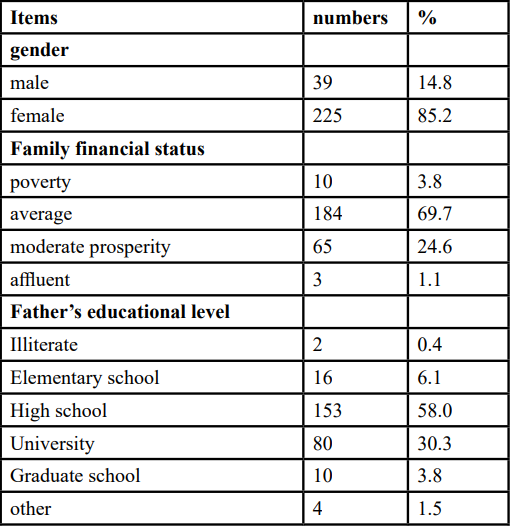
Table 1. Students’ characteristics (N=264)
Self-Efficacy in Clinical Practicum among Undergraduate Nursing Students
The self-efficacy of nursing students in clinical practicum was measured using a Likert four-point scale in this study. The response options ranged from 1 "completely lacking confidence" to 4 "completely confident." The scores ranged from 15 to 60, with a mean score of 37.5. Higher scores indicate higher self-efficacy. The total scores for the study sample ranged from a minimum of 15 to a maximum of 60, with an average total score of 44.19 (SD=8.40). When compared to the original questionnaire "Survey of Self-Efficacy in Nursing Students" for freshmen (M=48.09, SD=6.38) and seniors (M=47.50, SD=6.88), the research findings suggest that the overall self-efficacy of nursing students in clinical practicum is slightly lower than that of the respondents in the original questionnaire.
Factors Influencing Self-Efficacy in Clinical Practicum among Undergraduate Nursing Students
In the study of factors influencing self-efficacy among undergraduate nursing students, it was found that there was a significant difference in self-efficacy based on whether they enjoyed their clinical practicum (t=5.45, p< .001) and taking care of sick family members in the past (t=2.02, p=0.4) (Table 2). There were also significant differences in self-perceived practicum satisfaction (F=6.81, p< .001) and intention to pursue clinical work after graduation (F=13.12, p< .001) with regard to overall self-efficacy (Table 3). These research findings indicate that senior undergraduate nursing students who enjoy their practicum experience have higher self-efficacy, and those with higher satisfaction in their practicum performance and a future intention to work in clinical settings demonstrate a higher level of self-efficacy.
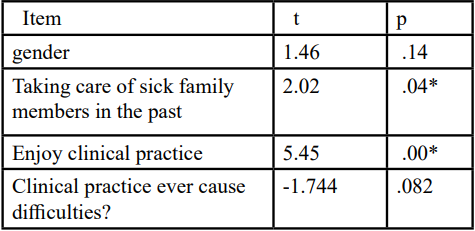
Table 2: Results of the Independent Samples t-Test for Self-Efficacy (N=264)
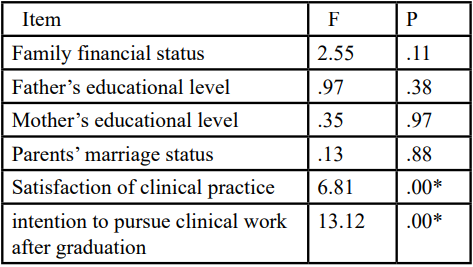
Table 3: Results of the ANOVA for Self-Efficacy (N=264)
Discussion
The overall self-efficacy of senior nursing students in this study was relatively high. This finding is consistent with the results of Liang et al. [1], where both freshman and senior nursing students exhibited high levels of self-efficacy. It can be inferred that Taiwanese nursing students have a high level of confidence in themselves due to their nursing education and perception of enhanced abilities. The top three highest-rated items were: "As a nurse, I can show care to patients," "As a nurse, I can show care to patients' families," and "As a nurse, I can collaborate with members of the healthcare team." This result aligns with Liang et al.'s [1] findings, suggesting that care, empathy, and teamwork are emphasized in nursing education and have become inherent traits of students. It is worth noting that the three lowest-rated items were: "As a nurse, I can determine the nursing care needed by my patients," "As a nurse, I can use examination results to determine how to care for patients," and "As a nurse, I can develop a patient care plan based on my knowledge." These findings are similar to Liang et al.'s [1] study, indicating that senior nursing students, despite having completed most of their clinical practicum, still have hesitations regarding their ability to successfully perform the assessment, diagnosis, planning, implementation, and evaluation steps of the nursing process. They may lack confidence in their ability to apply their learning to nursing practice. Nursing education should focus on enhancing students' competencies in this aspect.
Among the factors influencing self-efficacy, it was found that "liking clinical practicum," "practicum not causing distress," "satisfaction with self-performance during practicum," "attitude towards nursing," and "willingness to engage in clinical work after graduation" were positively associated with higher self-efficacy scores among nursing students. This may be because students who enjoy their clinical practicum experience fewer setbacks or successfully overcome challenges encountered during their practicum. As a result, they are less likely to reject nursing and more willing to enter the clinical workforce. This finding aligns with the study conducted by Bai [9], which indicated that students who have a positive attitude towards the nursing profession experience higher occupational gains and, indirectly, an increase in self-efficacy. Additionally, the study by Ho, Yang, and Wu [18] found a positive relationship between students' perception of the clinical practicum environment, satisfaction with the practicum, and career self-efficacy. This suggests that higher satisfaction with external clinical practicum experiences is associated with higher career self-efficacy. Data from Li [19] also demonstrated a positive correlation between interpersonal relationships during practicum, satisfaction with the practicum, and self-efficacy. (b) There was a significant difference in self-efficacy among nursing students who had experienced "significant life events." Students who selected this option perceived that the event had impacted their lives to some extent, resulting in various emotional experiences and subsequently influencing their self-perception. This finding is consistent with the study by Chen [2], which revealed that significant life events and negative emotional experiences among university students increased the proportion of insecure attachment. Chen, Wang, and Wu's [15] research also indicated that secure attachment relationships contribute to enhancing self-efficacy and life satisfaction among employed female students pursuing further education, while insecure attachment relationships decrease self-efficacy. Furthermore, higher self-efficacy was observed among senior nursing students. This may be because senior students have acquired more nursing knowledge and have successfully completed all their clinical practicum experiences through tremendous effort. They possess the knowledge and skills required for clinical work and are about to embark on a new phase of life outside of school. In contrast, junior nursing students may still have a limited understanding of nursing, which can lead to uncertainty about the future. This finding is consistent with the study by Han and Fu [18], which indicated that senior students have higher self-efficacy. Li's [16] research also confirmed that self efficacy tends to increase with age.
Limitations
Due to time and budget constraints, this study collected and analyzed data from nursing students at a university in the southern region. The limited sample size from a single institution restricts the generalizability of the research findings, which are only applicable to this specific school. It is recommended that future researchers interested in this area of study expand the scope to include other schools or compare differences across various educational systems and grade levels.
Conclusion
Teachers are encouraged to increase students' awareness of the importance of nursing work for individuals and society, thereby strengthening their sense of identity. Prior to the start of the practicum, schools can organize various simulated scenarios, enabling students to apply their theoretical knowledge and encourage reflection. This approach facilitates the development of skills and beliefs, preventing students from being overwhelmed by the clinical experience.
Additionally, it is suggested that preceptors or clinical instructors focus on enhancing students' nursing process skills. By establishing a trusting relationship and effective communication channels, instructors can promptly understand the reasons behind students' frustrations during the practicum. They can provide guidance, offer positive encouragement, and foster reflective thinking to enhance students' self-efficacy. Teaching students how to adapt to the pressures they encounter during clinical practicum and empowering them to learn new professional knowledge and skills in the face of difficulties will increase their motivation to pursue a career in nursing.
Competing interests:
The authors declare that they have no competing interests.
References
Liang, Y. W., Chen, W. Y., Yang, A., Tseng, Y. H., Chang, H. P., & Lin, Y. H. (2016). Factors affecting the career choices in nursing among Taiwanese nursing students: Social cognitive career theory. VGH Nursing, 33(3), 238-248.View
Chen, S. L. (2018). Cognitive apprenticeship: Application of nursing clinical practicum. Chang Gung Journal of Sciences, 28, 87-94. View
Ahmadi, S., Abdi, A., Nazarianpirdosti, M., Rajati, F., Rahmati, M., & Abdi, A. (2020). Challenges of clinical nursing training through internship approach: A qualitative study. Journal of Multidisciplinary Healthcare, 13, 891-900.View
Lai, Y. C. (2008). Willingness of new nurses graduates devoting clinical nursing and associated [Master’s thesis, China Medical University]. Airiti Library. https://www airitilibrary-com.edlib.edah.org.tw/Publication/alDetailedMesh 1?DocID=U0013-1607200814404400] https://doi.org/10.6830/ CMU.2008.00027View
Chuang, Y. C. (2019). Development of learning performance strategies for nursing students. Chinese University of Science, 6(1), 87-104.View
Ou, S. L. & Ni, L. F. (2021). Using self-efficacy to enhance nursing students' professional knowledge and skills, critical thinking, communication and cooperation. Chang Gung Nursing, 32(2), 28-40.View
Bandura, A. (1977). A self-efficacy: Toward a unifying theory of behavioral change. Psychological Review, 84(2), 191-215. View
Yang, S. Y., Fu, S. H., Wang, P. Y., Lin, Y. L. & Lin, P. H. (2020). Are the self-esteem, self-efficacy, and interpersonal interaction of junior college students related to the solitude capacity?. International Journal Environment Research of Public Health, 17(21), 1-12.View
Kim, M. S., & Sohn, S. K. (2019). Emotional intelligence, problem solving ability, self-efficacy, and clinical performance among nursing students: A structural equation model. Korean Journal of Adult Nursing, 31(4), 380-388.View
Cheraghi, F., Hassani, P. & Riazi, H. (2011). Correlation study of nursing students’ self-efficacy with clinical performance. Avicenna Journal of Nursing and Midwifery Care, 19(1), 35-45. View
El-Sayed, M. M., Mousa, M. A. E., & Abd-Elhamid, E. A. E. (2021). Academic motivation, acdemic self-efficacy and perceived social support among undergraduate nursing students, Alexandria University, Egypt. Assiut Scientific Nursing Journal, 9(24), 76-86. View
Yao, X., Yu, L., Shen, Y., Kang, Z., & Wanga, X. (2021). The role of self-efficacy in mediating between professional identity and self-reported competence among nursing students in the internship period: A quantitative study. Nurse Education in Practice, 57(1-2), 103252.View
Ji, X. L. (2006) Factors and Effects of Self-Efficacy Among College Students. Journal of Henan Polytechnic University (Social Sciences Edition), 7(1), 79–80.
Shao, J. D. (1995, June). A Study on the Self-Efficacy and Career Decision of Gifted High School Music Student. Journal of Special Education Research, 12, 295-317.View
Chen, C. W. (2012). A study on the parent-child relationship, self-efficacy and achievement motivation of vocational high school hospitality program students. [Master’s thesis, National Kaohsiung University of Hospitality and Tourism]. Airiti Library.View
Shao, J. D. (1995, June). A Study on the Self-Efficacy and Career Decision of Gifted High School Music Student. Journal of Special Education Research, 12, 295-317.View
Chen, C. W. (2012). A study on the parent-child relationship, self-efficacy and achievement motivation of vocational high school hospitality program students. [Master’s thesis, National Kaohsiung University of Hospitality and Tourism]. Airiti Library.View
Uen, J. F. & Chang, H. C. (2007). The impacts of internship circumstance in sandwich curriculum on students' professional commitment: The case of Taiwan's international hotels. Journal of Human Resource Management, 7(2), 49-70. View
Lin, P. Y., Liao, Y. J., Lin, L. X., Huang, Y. X., Pu, S. Y., Wu, Ch. G., Yuan, M. X., Peng, S. W., & Xue, Z. W. (2016, November 4th). Exploring the Relationship between Self-Efficacy, Anticipated Job Stress, and Employment Intention among Newly Graduated Nursing Students.