
- About the Journal
- Editorial Board
- Review Process
- Author Guidelines
- Article Processing Charges
- Special Issues
- Indexing
- Current Issue
- Past Issue
 Journal of Comprehensive Nursing Research and Care
Journal of Comprehensive Nursing Research and Care Volume 10 (2025), Article ID: JCNRC-209
https://doi.org/10.33790/jcnrc1100209Research Article
Important Life Activities of Older Adults in The Chiang Mai Community: A Text Mining Analysis Using KH Coder
Takako Yamada*, Hunsa Sethabouppha, Chalinee Suvanayos, Nobuko Shimizu, Noboru Hasegawa, Makoto Suzuki, and Tomohiro Umemura
1,6Faculty of Health Science, Bukkyo University, 7 Higashitoganoo-cho, Nishinokyo, Nakagyo-ku, Kyoto 604-8418, Japan.
2,3Faculty of Nursing, Chiang Mai University, 239 Huay Kaew Road, Suthep, Muang District, Chiang Mai 50200, Thailand.
4Faculty of Nursing, Toyama Prefectural University, 2-2-78 Nishinagae, Toyama 930-0975, Japan.
5Graduate School of Nursing, Doshisha Women’s College, Kodo, Kyotanabe, Kyoto 610-0395, Japan.
7Department of Health and Psychosocial Medicine, Aichi Medical University School of Medicine, 1-1 Yazakokarimata, Nagakute, Aichi 480- 1195, Japan.
Corresponding Author Details: Takako Yamada, Faculty of Health Science, Bukkyo University, 7 Higashitoganoo-cho, Nishinokyo, Nakagyo-ku, Kyoto 604-8418, Japan.
Received date: 22nd February, 2025
Accepted date: 21st March, 2025
Published date: 24th March, 2025
Citation: Yamada, T., Sethabouppha, H., Suvanayos, C., Shimizu, N., Hasegawa, N., Suzuki, M., & Umemura, T., (2025). Important Life Activities of Older Adults in The Chiang Mai Community: A Text Mining Analysis Using KH Coder. J Comp Nurs Res Care 10(1): 209.
Copyright: ©2025, This is an open-access article distributed under the terms of the Creative Commons Attribution License, which permits unrestricted use, distribution, and reproduction in any medium, provided the original author and source are credited.
Abstract
Since 2017, we have conducted a study entitled "Learning Dementia Prevention Measures from Northern Thailand, Where Dementia Is Rare." In 2018, we explored the concepts of "purpose in life" and "aging" among older adults in rural Thailand. When asked, "What are you looking forward to now?" nearly all respondents answered, "Being of service to others."
This study focused on older residents of Chiang Mai, the fifthlargest city in Thailand. Interviews were conducted using the Canadian Occupational Performance Measure (COPM), which assesses life based on three keywords: "importance," "performance," and "satisfaction." The collected data were analyzed using KH Coder, a text-mining tool. Results revealed eight typical life activities among older residents, with social connections-particularly the presence of friends- playing a crucial role in fulfilling activities.
Keywords: Chiang Mai, Older Adults, Life Activities, Community, Text mining
Introduction
We began our research in 2017 to understand the low prevalence of dementia in northern Thailand. According to a report by Japan's Ministry of Health, Labour, and Welfare, the estimated dementia incidence rate in Japan is 16%. In contrast, Thailand, which belongs to the same Asian region, has a significantly lower dementia incidence rate of 9.8% [1], as reported by Senanarong et al. in 2001. Furthermore, a 2008 study by Wangtongkum et al. reported an even lower dementia rate of 2.4% in Chiang Mai Province [2].
It is well-established that lifestyle habits significantly influence the onset of dementia. Prior studies in developed countries suggest that cognitive decline can lead to negative impacts, such as anxiety, a sense of failure in daily life, psychological stress, and social isolation. These factors may, in turn, lower physical, mental, and social quality of life (QOL) [3].
Our preliminary research in northern Thailand revealed distinctive lifestyle habits, including "older adult salons centered around temples" and "complementary and alternative medicine." A study by Wun’Gaeo highlighted the stronger interpersonal trust relationships in rural areas compared to urban areas within Thailand [4].
In 2018, we investigated what "purpose in life" and "aging" mean to older adults in rural southern Thailand [5]. When asked, "What are you currently looking forward to?" almost all respondents answered, "Being of service to others." This suggests that Thai older adults are highly attentive to others. We hypothesized that "being useful to others" and "engaging in good deeds" might stimulate the brain's reward system, potentially activating the nucleus accumbens and prefrontal cortex in religiously inclined Thai older adults [6]. Tsutsui et al. suggest that stimuli perceived as rewards in the brain likely generate a sense of pleasure and serve as reinforcement for learning, eventually becoming foundational information for decision-making and goal-oriented behaviors [7]. Based on this, we speculated that the joy of "feeling useful to others" and "seeing oneself as a helpful person" could play a role in preventing dementia among rural Thai older adults [6].
Recent studies point to significant differences in dementia population growth rates between countries [8]. For example, the prevalence rate in Thailand is reported to be 3.5 times higher than that in neighboring Malaysia [8, 9]. Thailand's aging population and associated challenges are ongoing issues.
This study aimed to illuminate the lives of urban Thai residents through interviews with older individuals in Chiang Mai, the country's fifth most populous city. Using the Canadian Occupational Performance Measure (COPM), we explored life activities through the lenses of "importance," "performance," and "satisfaction." Due to the study's design, it was not feasible to follow the same participants over time. Therefore, text mining was employed for analysis. Text mining, a methodology that focuses on analyzing textual data, has advanced significantly in recent years [10]. Text mining has been utilized in healthcare research for case studies and analyzing trends in academic papers [11-13], but it has rarely been applied in public health research.
This research was conducted following ethical guidelines, with written consent obtained from participants. Due to delays in ethical review in Thailand and subsequent travel restrictions caused by the COVID-19 pandemic, the study's implementation was postponed following the ethical review process in Japan.
Research Methods
Participants
The study subjects were 39 older individuals aged 60 and above residing in Chiang Mai, Thailand, who participated in a health checkup project organized by Chiang Mai University.
Survey Methods
Semi-structured interviews were conducted on a one-on-one basis by experienced Japanese occupational therapists and Thai nurses. During interviews led by Japanese occupational therapists, interpreters fluent in Thai and Northern Thai (a distinct regional language commonly spoken in Chiang Mai and its surroundings) were present. These interpreters, with over 20 years of experience living in Thailand, could communicate at a native level. Interview durations varied: interviews with Japanese occupational therapists required 30- 35 minutes due to interpretation time, while those conducted by Thai nurses took approximately 15 minutes. The interviews mirrored the approach in the COPM framework.
Survey Period
March 2023 and September 2023
Survey Content
The survey followed the COPM framework to investigate the life activities of older residents in Chiang Mai. Participants were asked to subjectively describe activities they deemed highly important in their lives, as well as their performance and satisfaction levels for specific items extracted from these activities.
Life activities encompassed:
- Self-care: Personal care (e.g., dressing, bathing, eating, grooming), functional mobility (e.g., transfers, indoor/outdoor mobility).
- Social life activities: Using transportation (e.g., cars, public transport), shopping, and accessing financial institutions.
- Productive activities: Paid/unpaid work (e.g., job searches, employment, volunteer activities), household chores (e.g., cleaning, laundry, cooking).
- Leisure: Static recreation (e.g., hobbies, crafts, reading), dynamic recreation (e.g., sports, walking, travel), and social interactions (e.g., visits, phone calls, parties, letters).
The interviews did not rigidly follow a sequential questionand- answer format. Instead, the researchers inferred participants' intentions and documented their narratives.
Analysis Methods
Life activities described by participants were analyzed using text mining, focusing on "importance," "performance," and "satisfaction." Statistical analysis was conducted using KH Coder [14, 15], a software package designed for the statistical analysis of textual data.
KH Coder facilitates objective, reliability, and unbiased analysis by minimizing the influence of analysts' theories or preconceptions. It is particularly suitable for analyzing free-text responses in surveys and interviews, ensuring comprehensibility through visualization.
Analysis Steps:
- Interview transcripts were converted into Excel data.
- Preprocessing was performed after importing the data into KH Coder.
- Frequently occurring words were identified, with the top 100 words listed (Table 2). Proper nouns unique to Thailand (e.g., "Muay Thai," "Sepak Takraw," "Pasalop Dance," "Baht") were excluded, as were verbs such as "sing," "eat," "play," and "walk" when considered redundant in context. Adjectives or nouns such as "weekly," "daily," "good," "few," and "other" were also removed.
- Multidimensional scaling (MDS) was applied to examine relationships between frequently co-occurring words. A scatter plot was generated, with closely positioned words interpreted as having similar occurrence patterns. The analysis targeted 55 words appearing at least five times in the data.
- Co-occurrence networks were created to visualize associations between frequently co-occurring words. The Jaccard coefficient is one of the metrics used to quantify the degree of association (similarity or co-occurrence) between two terms [16, 17]. A value closer to 1 indicates a stronger association, and a value of 0.3 or higher is generally considered to represent a strong correlation.
- To examine the connections between terms, a verification process was conducted using Key Word in Context (KWIC) concordance. The KWIC concordance allows for the analysis of how specific terms are used within the data by examining the surrounding contexts. This process was performed as needed throughout the analysis.
Ethical Considerations
Participation in the study was voluntary, with participants retaining the right to withdraw at any time. Privacy and the confidentiality of obtained information were ensured through signed consent forms. This study was approved by the Aichi Medical University Ethics Review Committee (2017-M052) and Central Research Ethics Committee (CREC) in Thailand, Certificate number: COA-CREC 062/2019.
Results
Participant Attributes and Interview Overview
Among the 39 participants in the health checkup project held at Chiang Mai University, 8 were male and 31 were female. The average age was 67 years (range: 62-88 years). In measures of cognitive function, the participants' MMSE scores averaged 27.53 (range: 23–30), while their MoCA scores averaged 22.90 (range: 14–29). All participants were able to visit the testing venue independently (Table 1).

Table 1: Basic Attributes of the Participants
Analysis Results Using KH Coder
(i) Frequent Words
Table 2 shows the most frequently used words. The top words included "friends" (63 occurrences), "cooking" (41 occurrences), "exercise" (37 occurrences), "home" (37 occurrences), "myself" (34 occurrences), "son" (31 occurrences), "grandchild" (30 occurrences), "care" (25 occurrences), and "SNS" (24 occurrences). Examples of how these words were used are provided in Table 3 for KWIC concordance.
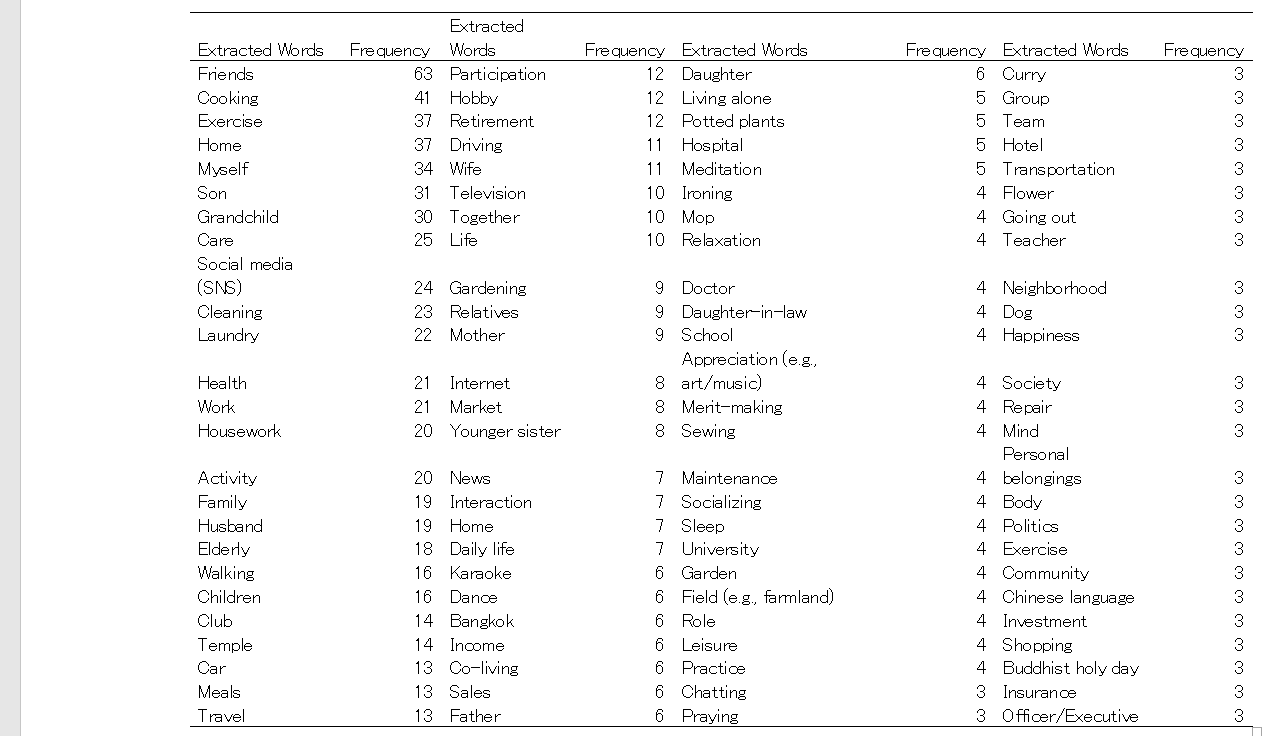
Table 2: Top 100 Frequent Words
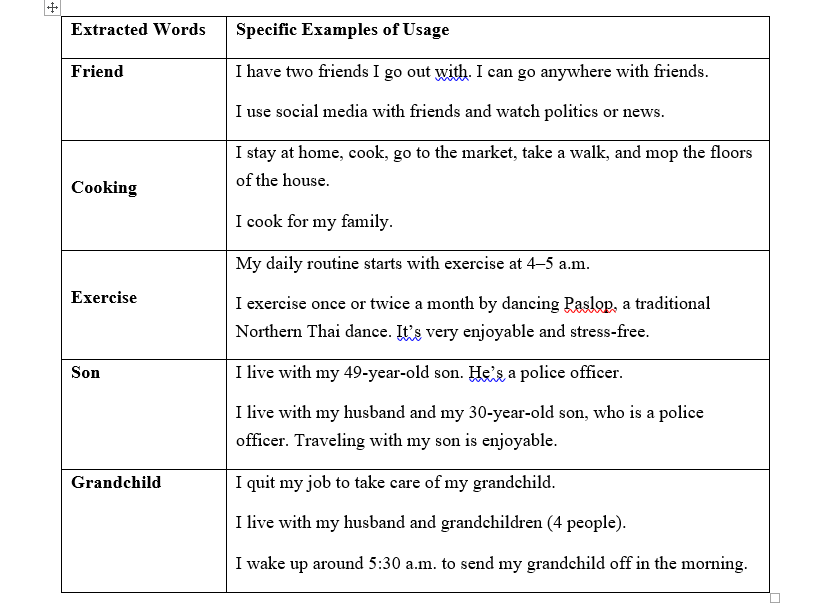
Table 3: Examples of KH Concordance
(ii) Multidimensional Scaling
Multidimensional Scaling analysis targeted 55 words that appeared at least five times, resulting in the clusters represented in Figure 1. The clusters and the frequent words in them were as follows:
- Cluster 1: "friends," "exercise," "cooking," "family," "home," "care," "SNS," "cleaning"
- Cluster 2: "myself," "grandchild," "work," "temple," "club," "activity," "participation"
- Cluster 3: "son," "laundry," "housework," "husband," "TV," "hobby"
- Cluster 4: "living alone," "mother," "father," "relatives"
- Cluster 5: "wife," "internet," "karaoke"
- Cluster 6: "market," "hospital," "meditation," "living together," "Bangkok," "sister"
- Cluster 7: "dance," "plants," "gardening"
- Cluster 8: "retirement," "interaction," "sales"
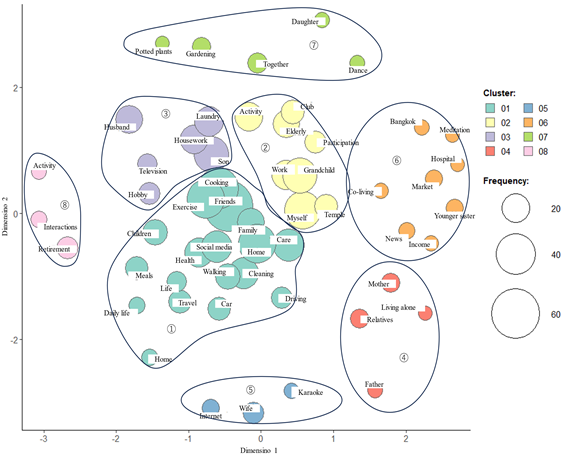
Figure 1: Multidimensional Scaling (MDS)
A multidimensional scaling (MDS) analysis based on the top 55 most frequently occurring words.
Cluster Interpretations:
- Cluster 1: Represents a social lifestyle involving outings with friends, cooking meals at home for family enjoyment, healthconscious activities, use of social networking services (SNS), and regular exercise such as walking, yoga, Sepak Takraw, and Thai Folk Dance (Ram Wong).
- Cluster 2: Focuses on self-reliance, active participation in senior clubs, Caring for grandchildren, engaging in occasional work, and making frequent temple visits.
- Cluster 3: Highlights cohabitation with a son, with activities centered around household chores such as laundry, watching TV, and engaging in hobbies.
- Cluster 4: Features individuals living alone who take on caregiving responsibilities for nearby parents or relatives.
- Cluster 5: Describes a typical male lifestyle, involving cohabitation with a wife, enjoyment of karaoke, and frequent internet usage.
- Cluster 6: Involves cohabitation with family members, regular visits to markets or hospitals, meditation, and following news.
- Cluster 7: Reflects enjoyment in watering plants, gardening, and dancing.
- Cluster 8: Represents retirees focusing on social interactions with friends.
Co-occurrence Network
The frequently occurring word "friends" was central in the cooccurrence network (Figure 2). It was observed to have relationships with "myself," "cooking," "cleaning," and "grandchild care." Activities like "grandchild care" and "temple visits" were particularly notable, as they did not frequently appear in previous interviews conducted in Japan.
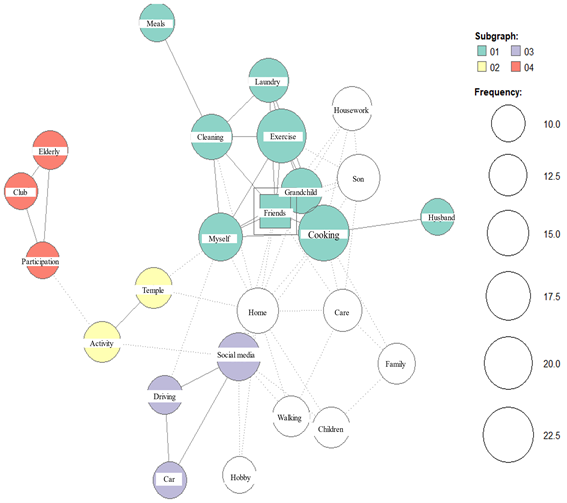
Figure 2: Co-occurrence network centered on 'friends'
A co-occurrence network analysis centered on the most frequent word, "friends".
Focusing on "grandchild," co-occurrence relationships with "child," "friends," and "SNS" were identified (Figure 3). For "temple," connections with "home," "friends," "cooking," and "SNS" were prominent (Figure 4).
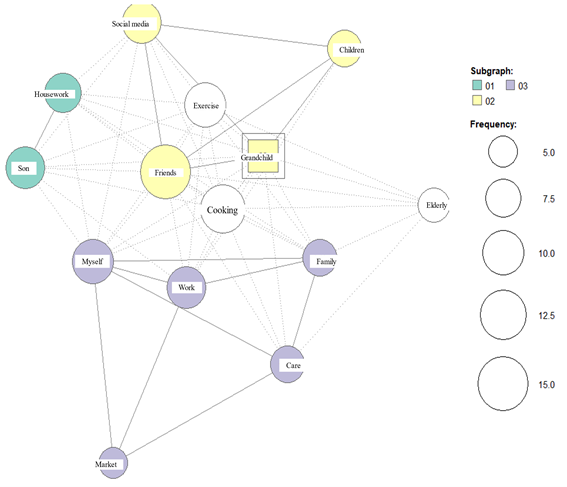
Figure 3: Co-occurrence network centered on 'grandchild'
A co-occurrence network analysis centered on the most frequent word, "grandchild."
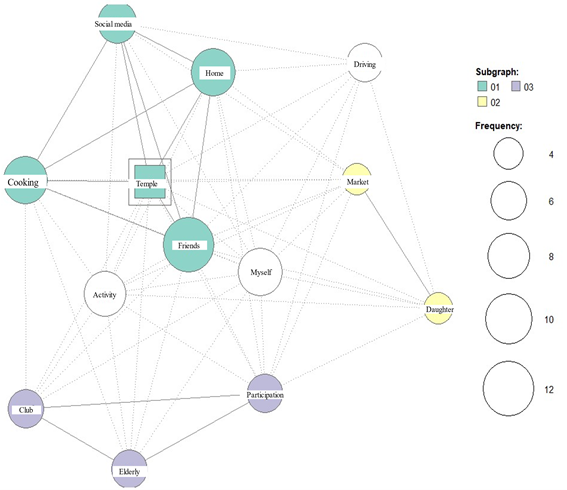
Figure 4: Co-occurrence network centered on 'temple.'
A co-occurrence network analysis centered on the most frequent word, "temple."
Key Insights from the Clusters:
- Cluster 1 highlighted a socially active lifestyle characterized by frequent outings with friends, home-cooked meals enjoyed with family, health-conscious activities, and a blend of modern and traditional practices like SNS usage and physical activities such as yoga and Thai dance. These activities suggest a picture of economically stable, socially engaged older couples enjoying life after their children have become independent.
- Cluster 2 showcased a lifestyle where older individuals were largely self-reliant, engaged in activities at senior clubs, cared for grandchildren, and occasionally worked. While their grandchildren’s care was a major responsibility, they also balanced participation in community activities. This reflects a distinct aspect of Thai culture, where grandparents often assume caregiving roles due to parents working in major cities.
- Cluster 3 depicted lives focused on cohabitation with a son, with a significant emphasis on household chores like laundry. While mentions of daughters were limited, the importance of sons in the lives of older parents was notable. Leisure activities such as watching TV and pursuing hobbies contributed to a moderate level of life satisfaction.
- Cluster 4 represented older individuals living alone but closely connected with nearby relatives, highlighting caregiving roles for aging parents.
- Cluster 5 featured men living with their wives, enjoying leisure activities like karaoke and internet usage.
- Cluster 6 described a family-centric lifestyle with regular visits to markets and hospitals, practicing meditation, and staying informed through news.
- Cluster 7 portrayed those who found joy in gardening and regular dancing.
- Cluster 8 focused on retirees actively maintaining social interactions with friends.
The study underscored the significance of friendships in the lives of Chiang Mai's older adults.
Cooking, exercise, and the use of SNS were strongly associated with "friends," as evidenced by a Jaccard coefficient of over 0.5 in the co-occurrence network analysis. Cooking for friends and being self-reliant were recurring themes among participants.
The cultural practice of grandparents caring for grandchildren emerged as a prominent feature, with "grandchild" showing strong connections with "friends," "self," and "cooking" (Jaccard coefficient > 0.4). However, this caregiving responsibility did not seem to hinder other life activities.
The word "temple" also highlighted the cultural importance of Buddhism, showing strong co-occurrence with "activities" and "self" (Jaccard coefficient > 0.4). Older individuals balanced temple-related practices with other daily activities, reflecting the integration of these practices into Thai lifestyles.
Thailand is currently categorized as an emerging middle-income country among ASEAN nations. Interviews focusing on the life activities of elderly residents in Chiang Mai, the fifth-largest city in Thailand, revealed the significance of relationships with friends as a key aspect of their lives. Additionally, the study highlighted uniquely Thai phenomena, such as the common practice of grandparents caring for grandchildren, and regular visits to temples, which, while less overtly emphasized, reflect the integration of Buddhism into daily life.
According to previous research [8, 9], the prevalence of dementia in Thailand is changing rapidly compared to the early 2000s, suggesting that further substantial shifts are expected in the coming years. Within this context, studies on the relationship between cognitive function and quality of life (QOL) [3], as elucidated in research conducted in developed countries, are likely to gain increased attention. This study provides foundational data by shedding light on the life activities of urban Thai residents, contributing to a deeper understanding of their everyday lives.
Study Limitations
These subjects of this study were older individuals who could attend health checkups at Chiang Mai University. This suggests that these participants were relatively well-off, did not need to work after the age of 60, and had access to transportation, which may limit the generalizability of the findings to the broader older population in Chiang Mai.
Additionally, the inability to follow the same participants over an extended period was a constraint of the study's design. The analysis relied on one-time interviews, which might not fully capture the dynamic nature of participants' lives and activities.
Furthermore, cultural and linguistic differences between researchers and participants might have influenced the depth of understanding in the interviews, even though interpreters were employed.
Conflict of Interest:
The authors declare that they have no competing interests.
Funding
This article presents the result of a work supported by JSPS KAKENHI Grant Number 21K10969.
References
Senanarong, V., Poungvarin, N., Sukhatunga, K., Prayoonwiwat, N., Chaisewikul, R., Petchurai, R., & Praditsuwan, R. (2001). Cognitive status in the community dwelling Thai elderly. J Med Assoc Thai, 84(3), 408-416. View
Wangtongkum, S., Sucharitkul, P., Silprasert, N., & Inthrachak, R. (2008). Prevalence of dementia among population age over 45 years in Chiang Mai, Thailand. J Med Assoc Thai, 91(11), 1685-1690. View
Fernández, I., Sansóm N., & Tomás, JM. (2024). A longitudinal study of the effect of memory on the quality of life of European adults and older adults. Appl Res Qual Life. 19:1859–1876.View
WunGaeo, S., Charoenratana, Nithi Nuangjamnong, N. (2014). Social capital in Thailand: unraveling the myths of rural-urban divide. Senshu Social Capital Rev, (5), 93-108.View
Shimizu, N., Yamada, T., Honda, N., Mochizuki, M., Kato M., Hasegawa, N., & Hunsa S. (2023). Qualitative study on important elements of life for Japanese and Thai older adults. Journal of Ageing and Longevity, 3:11-32.View
Tsutsui, K., & Watanabe, M. (2008). Neural representation of reward. Seiri Shinrigaku To Seishin Seirigaku 26(1), 5-16.
Yamada, T., Shimizu, N., Hasegawa, N., Mochizuki, M., & Tsubouchi,Y. (2022). The important life activities of elderly people in the community analyzed by SCAT: a pilot study. The Bulletin of the Faculty of Health and Medical Sciences, Bukkyo University, 16, 53-68.
Chuakhamfoo, N. N., Phanthunane, P,. Chansirikarn, S., & Pannarunothai, S. (2020). Health and long-term care of the elderly with dementia in rural Thailand: a cross-sectional survey through their caregivers. BMJ Open, 10(3), e032637.View
Tantanokit, T., Bosittipichet, T., & Leesri, T. (2021)The study of prevalence and associated factors of dementia in the elderly. Siriraj Med J, 73(4), 224–235.View
Antons, D., Grunwald, E., Cichy, P., & Salge, T. O. (2020) The application of text mining methods in innovation research: current state, evolution patterns, and development priorities. R&D Manage, 50(3), 329–351.View
Kjellstrom, S., & Golino, H. (2019). Mining concepts of health responsibility using text mining and exploratory graph analysis. Scand J Occup Ther, 26(6), 395–410.View
Carballo-Costa, L., Quintela-Del-Río, A., Vivas-Costa, J., & Costas, R. (2022). Mapping the field of physical therapy and identification of the leading active producers: A bibliometric analysis of the period 2000–2018. Physiother Theory Pract, 39(11), 2407–2419. View
Karami, A., Ghasemi, M., Sen, S., & Moraes, M. F. (2017). Shah V. Exploring diseases and syndromes in neurology case reports from 1955 to 2017 with text mining. Comput Biol Med, 109, 322–332. View
Higuchi, K. (2016) A two-step approach to quantitative content analysis: KH Coder tutorial using Anne of Green Gables (Part I). Ritsumeikan Soc Sci Rev, 52(3), 77–91. View
Higuchi, K. (2017) A two-step approach to quantitative content analysis: KH Coder tutorial using Anne of Green Gables (Part II). Ritsumeikan Soc Sci Rev, 53(1), 137–147. View
Romesburg, H.C. (2004). Cluster Analysis for Researchers. Lulu Press, Belmont, CA.
Sueyoshi, M. (2022). Text Mining Newmon. Ohmsha, Tokyo, Japan.