
- About the Journal
- Editorial Board
- Review Process
- Author Guidelines
- Article Processing Charges
- Special Issues
- Indexing
- Current Issue
- Past Issue
 Journal of Comprehensive Nursing Research and Care
Journal of Comprehensive Nursing Research and Care Volume 10 (2025), Article ID: JCNRC-210
https://doi.org/10.33790/jcnrc1100210Research Article
Considering the Validity and Reliability of the Image Map of SelfManagement of Young Children
Naohiro Hohashi
Division of Family Health Care Nursing, Graduate School of Health Sciences, Kobe University, Kobe-shi, Hyogo 654-0142, Japan.
Corresponding Author Details: Naohiro Hohashi, Division of Family Health Care Nursing, Graduate School of Health Sciences, Kobe University, Kobe-shi, Hyogo 654-0142, Japan.
Received date: 03rd February, 2025
Accepted date: 10th March, 2025
Published date: 12th March, 2025
Citation: Hohashi, N., (2025). Considering the Validity and Reliability of the Image Map of Self-Management of Young Children. J Comp Nurs Res Care 10(1): 210.
Copyright: ©2025, This is an open-access article distributed under the terms of the Creative Commons Attribution License, which permits unrestricted use, distribution, and reproduction in any medium, provided the original author and source are credited.
Abstract
Aims: This study sought to develop an Image Map of Selfmanagement (IMSM), an assessment tool for the self-management abilities of 4- to 6-year-old children, and to examine its validity and reliability.
Methods: The IMSM is a two-dimensional assessment tool that records the child’s daily activities through a two-dimensional coordinate system. Self-management abilities can be measured using the distance to the child as the c value, the distance to the mother as the m value, and the distance to the father as the f value. Items with a low c value indicate high child involvement and high child selfmanagement abilities. Items with a high m value and f value indicate low mother/father involvement and high child self-management abilities. Responses obtained from 266 parents of children attending kindergartens were analyzed.
Results: The IMSM items were examined by eight pediatric nursing specialists and two early childhood care and education specialists from which the items were determined to consist of 15 items in three domains: five for “child’s basic daily functions”; five for “playing time”; and five for “child’s sanitary and safety activities,” thus confirming content validity was confirmed. The Cronbach’s alpha coefficient of the total score was c value .739, m value .745, and f value .651, thereby confirming the internal consistency reliability. The intraclass correlation coefficient between the two total scores obtained by the test-retest method was c value .915, m value .930, and f value .891, thereby confirming test-retest reliability
Conclusion:
The IMSM was found to be valid and reliable for assessing the self-management abilities of young children.Keywords: Young Children, Self-management, Image Map of Selfmanagement (IMSM), Two-Dimensional Assessment Tool, Scale Development
Introduction
Early childhood is a time when children acquire the skills necessary for social life, such as basic lifestyle habits, social habits, and interpersonal skills, building the foundation for living as a member of society [1]. A child’s growth and development during early childhood have a significant impact on the rest of their lives. Currently, a TKstyle scale exists for evaluating the relationships between parents and children [2] as a scale for diagnosing parent-child relationships, and a Social Maturity Scale [3] as a scale for measuring children’s social life skills. In addition, a children’s health locus of control scale [4] exists as a tool for measuring self-management skills, which is centered on the idea of causal attribution for health. However, these scales are limited to measuring either the parent-child relationship or the child’s skills, with no tools existing to measure parent-child relationships or children’s self-management skills.
The purpose of this study was to clarify the degree to which parents are involved in, and supportive of, their children’s daily living activities; to develop the Image Map of Self-management (IMSM), which can grasp children’s self-management abilities and parentchild relationships; and to examine the Image Map’s reliability and validity.
Methods
Development of IMSM
Self-management was defined as “the ability to perform daily activities by oneself.” The IMSM items were selected from the Japanese version of the Denver developmental screening test [5], the Diagnosis method of mental development of toddlers and young children [6], and the Social maturity scale [3], which were examined by two pediatric nursing specialists. Daily activities acquired during the developmental stage of 4- to 6-year-old children, and which are easy to capture individual differences in the developmental stage of children, were selected. The IMSM consisted of 15 items in three domains: 5 items for “child’s basic daily functions;” 5 items for “playing time”; and 5 items for “child’s sanitary and safety activities.”
The IMSM illustrates the extent to which parents are involved in 15 items of children’s daily activities. The rating scale of the questionnaire is often based on a 5-point or 7-point scale with equal intervals, and the response format is often used to determine which of the items applies. However, individual differences exist in the rating scale standards of survey subjects and their ability to distinguish between the 5-point and 7-point levels, which may lead to errors. Therefore, instead of choosing from a set of words or numbers, it is decided to use a visual analogue scale in which the subjects could indicate the location of their choice from an illustration.
The method of responding consisted of a two-dimensional assessment tool in which the subjects were asked to indicate the degree to which each daily activity was performed independently, by placing pictures of the faces of the father, mother, and child at equal distances of 10 cm within a circle (Figure 1). A dot was placed in the center of each face, and the distance on the dot was set to 0. The distance in centimeters from the father, mother, and child was measured, and the degree of parental involvement was evaluated based on this distance. For example, a daily activity that the child can perform completely independently was marked with an X on the child’s dot, and an activity that was performed with the help of the parents was marked with an X between the child and the parent, depending on the level of involvement. The distance from the X to the child was designated the c value, the distance to the father the f value, and the distance to the mother the m value. The higher the c value, the more involved the parents were in that item. Conversely, a low c value indicates that the percentage of parents who are involved or supportive were low and that the child is performing the item independently. A high f value and high m value indicate respectively that the father and mother less involved with the child.
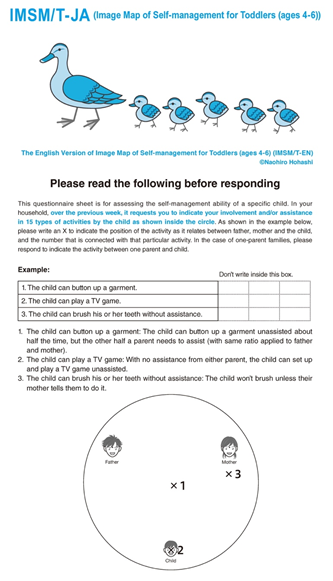
Figure 1: Cover of the Image Map of Self-management (IMSM)
Participants
The participants were parents (fathers or mothers) of children (ages 4-6) attending four kindergartens, who were most involved in raising children. A test-retest was conducted at one of the kindergartens.
Data Collection Method
The study was explained to the kindergarten principals in writing and orally. At kindergartens where consent to the study was obtained, questionnaires were distributed to the children’s families through teachers. After answering the questionnaire at home, participants were asked to place it in a sealed return envelope and drop it in a collection box set up in a secure place in the kindergarten. The researchers themselves collected the questionnaires from the collection box.
Statistical Analysis
All statistical analyses were performed using SPSS (IBM Corp.). Any missing items on the IMSM were treated as invalid. The internal consistency reliability of the scale was analyzed using Cronbach’s alpha. For temporal stability, intraclass correlation coefficients (ICC) between item scores obtained in two surveys were calculated.
Ethical Considerations
This study was conducted after obtaining approval from the affiliated university’s Institutional Review Board (approval number 486). In the request letter, the purpose and method of the study; the fact that participation was voluntary; that the subjects had the right to refuse participation; that they were not required to answer questions they did not want to answer; and that they could halt participation midway were explained. Only those giving their consent were allowed to respond. All questionnaires were anonymous, and the data obtained was managed using individually assigned code numbers to ensure anonymity.
Results
Questionnaire Response Status and Subject Attributes
From the 565 copies of the questionnaire distributed, responses with all items left blank and from single-parent families were excluded from the analysis. Data cleaning was performed, resulting in the obtaining of 266 valid responses. For the retest, 136 copies were distributed, and 94 valid responses were obtained. The basic attributes of the subjects are shown in Table 1.
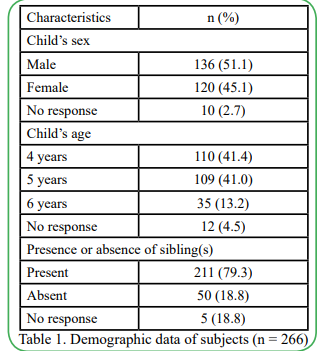
Table 1: Demographic data of subjects (n = 266)
Content validity
The contents of the IMSM items were reviewed by eight pediatric nursing specialists and two early childhood care and education specialists, and confirmed to belong to the framework of children’s daily activities. It was determined that the IMSM consisted of 15 items, with five items each in three domains: “Child’s basic daily functions”; “Playing time”; and “Child’s sanitary and safety activities.” The 15 items and the average value of each item are shown in Table 2.
Table 2: Mean item scores of the Image Map of Self-management (IMSM) (n = 266)
Internal consistency reliability
Cronbach’s alpha coefficient for the total score was .739 for the c value, .745 for the m value, and .651 for the f value (Table 3).
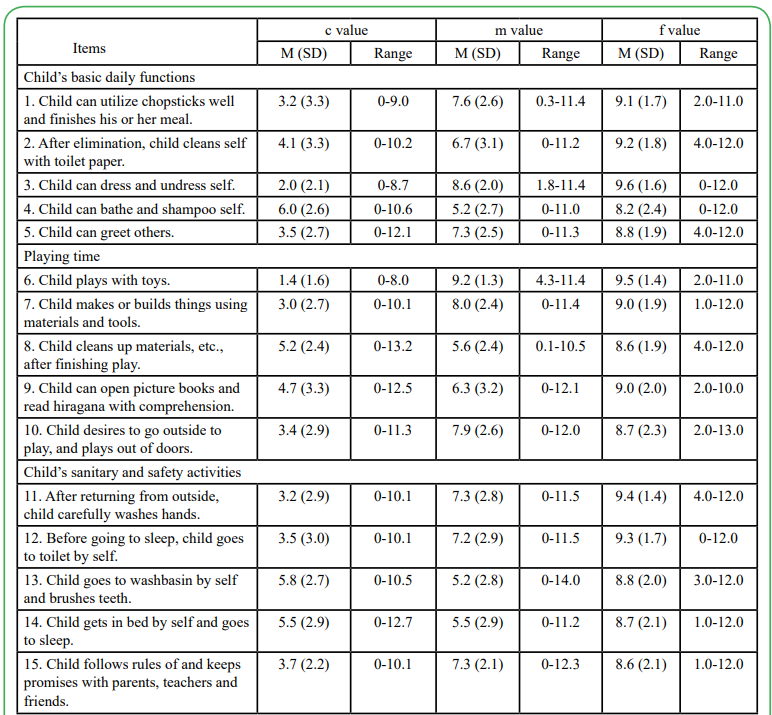
Table 3: Internal consistency of the Image Map of Self-management (IMSM) (n = 266)
Test-retest reliability
The intraclass correlation coefficients (ICC) between the scores were calculated from the two responses obtained by the test-retest method, with the c value .915, the m value .930, and the f value .891 (Table 4).
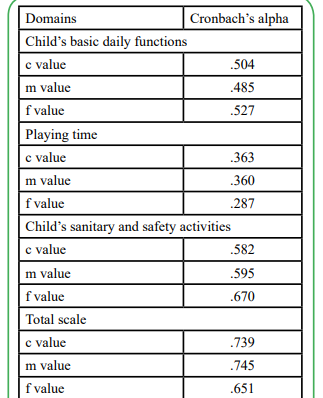
Table 4: Test-retest reliability of the Image Map of Selfmanagement (IMSM) (n = 94)
Discussion
After undergoing review by a committee of experts, the IMSM was recognized as a measure of content validity for grasping the threeway relationship in children’s daily activities. All Cronbach’s alpha coefficients exceeded the minimum standard of .60 [7], confirming internal consistency reliability. All test-retest ICCs were above the standard value of .41 [8], confirming test-retest reliability.
In the future, it will be necessary to conduct research using the IMSM on children with health disorders and establish evaluation criteria to evaluate children’s self-management abilities and parentchild relationships. It is also possible to assess children’s growth and development from the perspective of family nursing, for example, by studying the relationship between a child’s self-management ability and family functions or parent-child relationships.
IMSM uses a visual analogue scale. Therefore, it is easy to implement and can easily reflect subtle differences felt by the respondent. However, it is highly subjective, so care must be taken when making comparisons. Furthermore, it is thought that if evaluation criteria for the quality of self-management ability could be established, it would be even more useful in clinical practice.
Conclusions
The IMSM was recognized as an assessment tool with content validity, internal consistency reliability, and test-retest reliability. By asking about the degree to which parents are involved and supportive of their children’s daily activities, the IMSM can grasp children’s self-management abilities and parent-child relationships, making it possible to provide support that contributes to children’s improvement of their self-management abilities. The IMSM adopts a simple response method that requests participants to mark an X on the questionnaire, thereby allowing detailed evaluation using a visual analogue scale.
Funding Sources
This work was supported by a Grant-in-Aid for Scientific Research (B) from the Japan Society for the Promotion of Science (JSPS) in Japan (Grant Number: JP22H03400). JSPS had no role in study design, data collection, analysis and interpretation, writing of the manuscript, and decision to submit the manuscript.
Conflict of interest
The authors have no conflicts of interest to declare that are relevant to the content of this article.
Acknowledgments
The author gratefully acknowledges assistance in data collection from the following individuals: Miho Mishima, Yuriko Onishi, Akemi Nishimura, Miho Shibata, Shoko Tomioka, Misaki Omonishi, Haruka Nishio, Yuko Seigaku, Haruka Nagao, and Junko Honda.
References
Nakano, A. (2019). Nursing graphica: Pediatric nursing (1): Child development and nursing. Osaka: Medicus Shuppan.
Shinagawa, F., & Shinagawa, T. (1992). TK-style scale for evaluating the relationships between parents and children. Tokyo: Taken Publishing.
Miki, Y. (1980). Social maturity scale. Tokyo: Nihon Bunka Kagakusha.
Tanabe, K. (1997). Validity and reliability of the children’s health locus of control scale. Journal of Japan Academy of Nursing Science, 17(2), 54-61. View
Ueda, R. (1983). Japanese version of Denver developmental screening test: JDDST and JPDQ. Tokyo.View
Tsumori, M., & Inage, A. (1961). Diagnosis method of mental development of toddlers and young children: Ages 3 to 7. Tokyo: Dainippon Tosho.
Polit, D. F., & Beck, C. T. (2004). Nursing research: Principles and methods. Philadelphia: Lippincott Williams & Wilkins.View
Waltz, C. F., Strickland, O. L., & Lenz E. R. (2017). Measurement in nursing and health research. New York: Springer Publishing Company.View