
- About the Journal
- Editorial Board
- Review Process
- Author Guidelines
- Article Processing Charges
- Special Issues
- Indexing
- Current Issue
- Past Issue
 Journal of Comprehensive Nursing Research and Care
Journal of Comprehensive Nursing Research and Care Volume 10 (2025), Article ID: JCNRC-221
https://doi.org/10.33790/jcnrc1100221Review Article
Effect of an Educational Program on Women's Intention Regarding Oocyte Cryopreservation
Noha Hassan Abd-Elfattah1, Aya Shehata Abd-Elfattah Mohamed2, and Hanan Elzeblawy Hassan3*
1Assistant Professor of Maternal & Newborn Health Nursing, Faculty of Nursing, Beni-Suef University, Egypt.
2Demonstrator of Maternal & Newborn Health Nursing, Faculty of Nursing, Beni-Suef University, Egypt.
3Professor of Maternal and Newborn Health Nursing, Faculty of Nursing, Beni-Suef University, Egypt.
Corresponding Author Details: Hanan Elzeblawy Hassan, Professor of Maternal and Newborn Health Nursing, Faculty of Nursing, Beni-Suef University, Egypt.
Received date: 25th August, 2025
Accepted date: 12th December, 2025
Published date: 17th December, 2025
Citation: Abd-Elfattah, N. H., Mohamed, A. S. A. E., & Hassan, H. E., (2025). Effect of an Educational Program on Women's Intention Regarding Oocyte Cryopreservation. J Comp Nurs Res Care 10(2):221.
Copyright: ©2025, This is an open-access article distributed under the terms of the Creative Commons Attribution License, which permits unrestricted use, distribution, and reproduction in any medium, provided the original author and source are credited.
Abstract
Background: Oocyte cryopreservation is a rapidly growing technology in reproductive health, enabling healthy and non-healthy females to delay marriage and progeny, providing a viable alternative to traditional methods.
Aim: The current study was conducted to enhancing females’ intention regarding oocyte cryopreservation via an educational program.
Subjects and Methods:
Design: A quasi-experimental design was used.
Sample and Settings: A study from Beni-Suef University on a purposive sample consisted of 334 working females at Beni-Suef University.
Tools (I): An Arabic-structured interview questionnaire sheet contains female socio-demographic characteristics. (II): Females' intention regarding oocyte cryopreservation.
Results: Revealed that 48.8% of the studied females had insufficient income, and 59.3% were rural residents. After program implementation, 86.5% had moderate intentions which is higher as compared to 77.5% who had moderate intentions pre-program. A highly significant statistical differences between overall intentionspre and post program implementation (P=0.000).
Conclusion: Although there was no significant statistical relation between the studied working females’ intention levels and all items of socio-demographic characteristics found either pre-program or post program implementation. An observable improvement in females’ intention was found after program implementation.
Recommendations: Structured educational and counseling programs regarding oocyte cryopreservation should be provided by maternity nurses to females of reproductive age to make informed and timely decisions aligned with their future reproductive life.
Key words: Educational Program, Women's Intention, Oocyte Cryopreservation
Introduction
The most serious pathological health issue with the greatest geographic difference in incidence is cancer, which has also been elevated to a top priority on the global health agenda [1-7]. Globally, gynecological malignancies are a significant cause of illness and mortality in women [8-12]. Additionally, it is ranked as the fourth most prevalent cancer in women and is thought to affect more than 1.39 million women worldwide [13-20].
In light of this, many researchers emphasized the importance of nurses caring for cancer patients, addressing the issue of infertility as early as possible before starting treatment, and mentioning the potential option of FP [21-30]. Since time is a critical factor in the management of these patients, fertility counseling and referral to FP should be considered as soon as females are diagnosed with cancer, rather than when they begin gonadotoxic treatment [31-38].
In addition, an interactive process is used to concentrate on health requirements or concerns of the individual and close family members in order to enhance or assist with overcoming disease or health difficulties. As a result, nurses are essential in assisting cancer patients who are young females in changing their health-related behaviors by enhancing their knowledge and altering their attitudes regarding cryopreservation [39].
Besides, OC can be an important fertility option for females with a range of medical conditions other than cancer, such as benign ovarian teratoma, severe or recurrent ovarian endometriosis, and recurrent ovarian torsion. Among these, ovarian endometriosis is particularly concerning, as it can significantly diminish the ovarian reserve by triggering follicle “burnout,” a process where excessive follicle activation leads to premature atresia, as shown in figure 1 [40].
That is why various methods of fertility preservation (FP) can be used to help females to get pregnant during their suitable time depending on their conditions, preferences, and the indications, results, and risks associated with each method. FP includes medical therapy before chemotherapy, ovarian tissue cryopreservation, embryo cryopreservation, and oocyte cryopreservation (OC) / vitrification [42]. Among these, OC has gained increasing attention in recent years, as more females are choosing to preserve their fertility, making it likely to become part of routine clinical practice [43].

Figure 1: Association of receptors expression changes with the pathogenesis of abnormal folliculogenesis and endometriosis [41]
In this context, human OC is a procedure used to preserve a woman’s eggs for future use and enable women to conceive at a later date. Initially, this technique was only used for medical purposes when a woman faced a medical condition or required treatment that may potentially compromise fertility. However, over the last decade, OC has become more significant as a means of maintaining fertility for social reasons [44].
Nurses play a crucial role in the care and education of females, as well as in raising awareness about oocyte cryopreservation and the respect for women’s right to understand fertility preservation options [45]. Nurses should also include a discussion of potential downstream costs, including those associated with oocyte thaw, fertilization, embryo culture, preimplantation genetic testing of embryos (PGT), and embryo transfer (ET). Providers are encouraged to share their own clinic-specific statistics for oocyte survival, fertilization, implantation, and live birth rate (LBR) in an effort to be transparent as patients choose whether and where to undergo their OC procedure [46].
Accurate information, counseling provision, and a clear referral pathway are vital to ensure prompt, appropriate access to fertility services to maximize future reproductive opportunities. Prior to the gamete cryopreservation, females must be screened for transmissible viruses to prevent cross-contamination of stored samples. In addition, they must give written informed consent allowing the storage of their gametes and specifying the intended storage duration [47].
Besides their counseling and educating role within society, nurses have a greater number of relationships with patients and families than other healthcare professionals. In recent years, the results of previous studies have shown that the nursing profession is accountable for the discussion of fertility preservation options from a physician's point of view [48-54].
Aim of the study
The current study was conducted to enhancing females’ intention regarding oocyte cryopreservation via an educational program.
Researchhypothesis
Following the implementation of an educational program, females’ knowledge regarding oocyte cryopreservation will be improved.
Subject and Method
Research design:
Quasi-experimental research design (pre/post-test) was utilized to achieve the aim of the current study.
Subjects and Settings:
A study from Beni-Suef University on a purposive sample consisted of 334 working females at Beni-Suef University.
Tools of data collection:
Tool (I):- An Arabic-structured interview questionnaire sheet:
The researcher conducted a study on female socio-demographic characteristics, including age, education, marital status, occupation, residence, income, and delayed marriage or childbearing, based on advanced literature review and data collection.
Tool (II): Females' intention regarding oocyte cryopreservation:
It was adapted by the researcher from relevant literature to assess females' intentions regarding OC by 7 items as mentioned: (Interested in checking the ovarian reserve, the decision to freeze ova is a valid decision, the influence of social acceptance and culture on decision-making regarding OC, fear of future husband refusal impact on woman’s decision, lack of knowledge impact on woman’s decision, being in favor of ovum freezing, being ashamed of making the decision to freeze ova).
Scoring system:
On a five-point Likert scale, the responses were scored as follows: strongly disagree (1), disagree (2), neutral (3), agree (4), and strongly agree (5), with a total score of (1-35). The total intention score was calculated and divided into three categories:
§ High intention: for scores of ≥75% (≥ 26 degrees).
§ Moderate intention: for scores of 50%– <75% (17-26 degrees).
§ Low intention: for scores of <50%.(< 17 degrees)
Tools Validity:
Three experts assessed the content validity of the study tools, ensuring comprehensiveness, accuracy, relevance, applicability, and linguistic clarity, and made necessary adjustments based on the findings.
Tools Reliability:
The study tools' reliability was assessed using Cronbach's Alpha test, revealing a coefficient of 0.774, indicating stable and consistent results over time.
Fieldwork
The study aimed to create an educational program on oocyte cryopreservation (OC) among females. It involved three phases: preparatory, pilot study, and fieldwork. The preparatory phase involved reviewing literature and developing data collection tools. The pilot study evaluated the tools' applicability and efficiency. Fieldwork was conducted over six months, with pretest data serving as the baseline. The program was implemented at Beni-Suef University faculties, with four interactive sessions held twice weekly. The post-test evaluated the program's effectiveness. The study received approval from the Dean of the Faculty of Nursing and the Faculty of Medicine, Beni-Suef Scientific Ethical Committee.
Statistical Design:
The data was analyzed using SPSS 22.0 for descriptive statistics, Pearson correlation coefficient, Chi-square tests, and paired sample t-tests to measure categorical variables, with a significance level of P<0.05 for statistical analysis.
Results
Figure (2) Summarizes the distribution of studied working females’ socio-demographic characteristics. Concerning their monthly income from their point of view, results revealed that 48.8% of the studied females had insufficient income. For their residence, 59.3% were rural residents.
Table (1) reveals the overall levels of studied working females’ intentions regarding oocyte preservation through program phases. After program implementation, 86.5% had moderate intentions which is higher as compared to 77.5% who had moderate intentions pre-program. Using chi square test revealed highly significant statistical differences between overall intentions pre and post program implementation (P=0.000).
Table (2) summarizes the overall mean score of studied working female’s intentions regarding oocyte preservation through program phases. The overall mean score of studied working females’ intention regarding oocyte preservation after program implementation (21.89±2.15) was higher as compared to preprogram (19.74±2.98). Using paired sample t test revealed highly significant statistical difference between pre and post program implementation regarding overall intention (P=0.000).
Table (3) demonstrates the relation between studied working females’ socio-demographic characteristics and their intention levels through program phases. There was non-significant statistical relation between studied working females’ intentions levels and all socio- demographic characteristics pre and post program implementation.
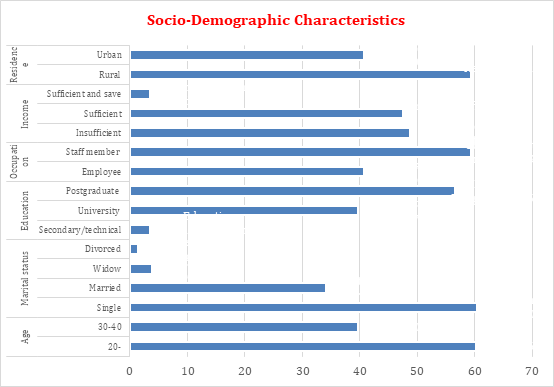
Figure 2: Frequency and percentage distribution of studied working females’ socio-demographic characteristics
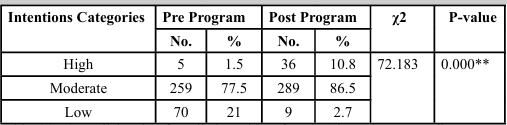
Table 1: Overall levels of studied working females’ intentions regarding oocyte preservation through program phases (n=334)

Table 2: Overall mean score of studied working female’s intentions regarding oocyte preservation through program phases (n=334).
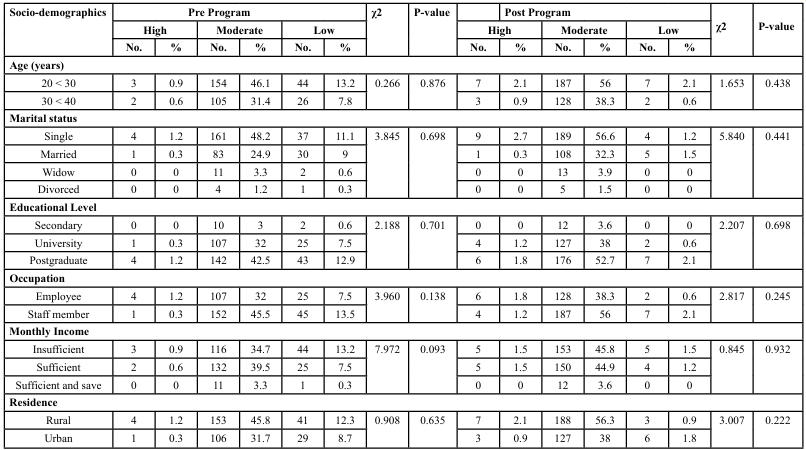
Table 3: Relation between studied working females’ socio-demographic characteristics and their intention levels through program phases (n=334).
Discussion
Worldwide, oocyte cryopreservation (OC) is a cutting-edge emerging technology field in reproductive health that is gaining popularity for both medical and nonmedical reasons. This technology has made childbearing possible for healthy females who want to postpone marriage and progeny, as well as non-healthy females who suffer from disease or treatment that limits their fertility [55].
In Upper Egypt, the concept of fertility preservation is scarcely known and rarely discussed. To date, no prior research has investigated this topic at Beni-Suef University. Therefore, raising awareness about fertility preservation at an early age is essential. So, the current study is conducted to improve, intention regarding oocyte cryopreservation among working females at Beni-Suef University.
Through advocacy, education, and support, maternity nurses significantly impact women's health intentions by addressing fertility and preservation topics. They must remain informed about various considerations, medical, ethical, cultural, and financial that affect reproductive options [56-63].
Concerning the overall intention levels of working females regarding OC, the results of the current study revealed that the mean score of females’ intention levels increased from 19.74±2.98 pre- program to 21.89±2.15 post-program. Moreover, the majority of the studied females had moderate intention post-program compared to only 1.5% of them having high intention pre-educational program.
This finding came in agreement with Sousa-Leite et al. (2019), who assessed “Women’s attitudes and beliefs about using fertility preservation to prevent age-related fertility decline-A two-year follow-up,” declared that only 14% reached a decision and almost decided not to do FP, and found that women’s intentions, desire, and number of children wanted decreased, and a low number of women progressed through the stages of the decision-making process [64].
Overall, the study reveals that females' intention to undergo oocyte cryopreservation improved after program implementation, aided by positive reinforcement, lectures, and instructional strategies. The use of clear language aligns with Edgar Dale's Pyramid of Learning, emphasizing that discussions and audiovisual aids enhance retention rates [65-72].
Likewise, Malhotra et al. (2022) emphasized that more than half of the respondents expressed low intention of fertility preservation [21], and Stevenson et al. (2021) showed that only 7.2% had considered use of FP [73]. This agreement may be attributed to many challenges impacting females’ intention regarding OC, like cultural & social norms, cost, lack of awareness, and fear of future husband refusal.
Furthermore, according to Ikhena-Abel et al. (2017), who reported that more than two-thirds of the studied sample consider OC as a future desire [74]. This disagreement may be due to the fact that the concept of OC appears to be more widely accepted among women in Western societies, with comparatively lower levels of acceptance observed in Eastern societies. In addition, acceptance of OC may be attributed to cultural, educational, and socioeconomic differences between Lower and Upper Egypt.
Regarding the studied working females’ socio-demographic characteristics and their intention levels, there was no statistically significant relation between working females’ intention level and all socio-demographic characteristics pre- and post-program implementation. This finding is aligned with EL-Adham & Shaban (2023), who revealed that there was no statistically significant relation between intention regarding OC and all socio-demographic characteristics of the studied unmarried healthy females before and after implementation of the educational program [75]. From the researcher's point of view, this may be due to challenges that might affect females' intentions regarding OC.
Moreover, another study contradicted by Jenninga et al. (2013), entitled “Female Fertility Preservation: Knowledge, attitude, practical considerations, and ethical aspects of an underutilized procedure, ”produced results that odds the findings of the current study. Given that the aforementioned study recruited females from a variety of ethnic backgrounds, some of whom believed that any FP technology violated God’s will and was ethically forbidden [76]. The variance in the results could be attributed to diverse sample subjects.
Conclusion
Based on the findings of the present study, it can be concluded that Although there was no significant statistical relation between the studied working females’ intention levels and all items of socio demographic characteristics found either pre-program or post program implementation. An observable improvement in females’ intention was found after program implementation.
Recommendation
Ø Structured educational and counseling programs regarding oocyte cryopreservation should be provided by maternity nurses to females of reproductive age to make informed and timely decisions aligned with their future reproductive life.
References
Hassan, H., Zaki, S, & Nady F.( 2025). Effect of an Educational Program on Enhancing Female Workers’ Health Belief Model of Breast Cancer Preventive Measures. American Journal of Educational Research, 13(4): 163-173. View
Zaki, S., Hassan, H., & Nady, F. (2025). Female Workers’ Knowledge about Breast Cancer at Beni-Suef University: Effect Socio-demographic Characteristics. American Journal of Public Health Research, 13(3):140-144. doi: 10.12691/ajphr-13-3-5 View
Hassan, H., Abd-ELhakam, F., & Kasem, E. (2025). Knowledge about Preventive Measures of Breast Cancer: Educational Program. Journal of New Medical Innovations and Research, 6(5): 1-8. View
Said, S., Hassan, H., & Sarhan, A. (2018). Effect of an Educational Intervention on Women's Knowledge and Attitude Regarding Cervical Cancer. American Journal of Nursing Research, 6(2): 59-66. View
Nady, F., Said, M., Youness, E., & Hassan, H. (2018). Effect of Nursing Intervention Program on Quality of Life Improvement for Women Undergoing Gynecological and Breast Cancer Treatment. Assuit Scientific Nursing Journal, 6(15): 62-77. View
Mohamed, A., Hassan, H., Gamel, W., & Arafa, A. (2019). Awareness about breast and cervical cancers among nursing students in Beni-Suef University. Journal of Nursing Education and Practice, 9(5): 44-51. View
Obora, M., Onsongo, L., & Ogutu, J.O.(2022). Determinants of sexual function among survivors of gynaecological cancers in a tertiary hospital: a cross-sectional study. Ecancer medical science, 16(4):1-20. View
Zagloul, M., Naser, E., & Hassan, H. (2020). Cervical Cancer Knowledge, Attitude, and Practices: Educational Program Management for Female Workers at Port Said University. International Journal of Studies in Nursing, 5(3): 1-16. View
Hassan, H., Masaud, H., Mohammed, R., & Ramadan, S. (2021). Self-Knowledge and Body Image among Cervical Cancer Survivors' Women in Northern Upper Egypt. Journal of Applied Health Sciences and Medicine, 1(1): 1-12 View
Ali, R., Abd El Salam, S., Kamal, H., & Hassan, H. (2021). Women with Cervical Cancer: Impact of an Educational Program their Knowledge. Journal of Obstetrics Gynecology and Reproductive Sciences, 5(2): 1-8. View
Elzeblawy, H., Kamal, H., Abd El Salam, S., & Ali, R. (2021). Survivors from Cervical Cancer: Impact of an Educational Program on Self-Knowledge and body-Image. Public Health Open Access, 5(2):1-9. DOI: 10.23880/phoa-16000175 View
Farag, D., Mohamed, S., Malk, R., & Hassan, H. (2024). Effectiveness of Educational Intervention Program about Cervical Cancer on Working Women's Knowledge, Attitude, and Practice at Beni-Suef University. Egyptian Journal of Health Care, 15 (1): 1-16. View
Mohamed, S., Fatma Saber Nady, F., & Hassan, H. (2025). Breast Cancer Preventive Measures among Female Workers at Beni-Suef University: Educational Program Based on Health Belief Model. Egyptian Journal of Health Care, 16 (1): 117- 142. View
Hassan, H., Zaki, S., & Nady, F. (2025). Female Workers’ Socio- demographic characteristics and Their Total Knowledge about Breast Cancer: Effect of an Educational program at Beni-Suef University. International Journal of Nursing Science; 15(1):1- 8. View
Nady, F., Zaki, S., & Hassan, H. (2025). Female workers’ knowledge about breast cancer preventive measures at Beni Suef University. Nursing & Care Open Access Journal, 11(1): 16‒20. DOI: 10.15406/ncoaj.2025.11.00312. View
Qalawa, Sh., Eldeeb, A., & Hassan, H. (2015). Young Adult Women’s intention regarding breast and cervical cancer screening in Beni-Suef. Scientific Research Journal, 3(3): 11 24. View
Hassan, H., Bayoumi, M., & Atwa, A. (2016). Emotional Distress Associated with Gynecologic and Breast Cancer in Beni-Suef City. International Journal of Science and Research, 5(2): 1118-1129. View
Nady, F., Said, M., Youness, E., & Hassan, H. (2017). Impact of Tailored Educational Program of Quality of Life Improvement on Women Undergoing Breast Cancer Treatment at El-Minia Region, Egypt. American Research Journal of Gynaecology. 1(1): 1-17. View
Nady, F., El-Sherbiny, M., Youness, E., & Hassan, H. (2018). Effectiveness of Quality of Life Planned Teaching Program on Women Undergoing Gynecologic Cancer Treatment. American Research Journal of Oncology, 1(1): 1-17. View
Mofrad, S. A., Nasiri, A., Mahmoudirad, G., & Shandiz, F. H. (2021). Challenges in the marital life of women with gynecological cancers: a qualitative study. Model Care J, 18 (2):1-5. View
Malhotra, N., Gupta, M., Yadav, A., Vanamail, P., & Mahey, R. (2022). Knowledge, attitude, and intentions towards fertility preservation in cancer patients among healthcare workers in Northern India. JBRA Assisted Reproduction, 26(2):305-309. View
Mohammed, F., Shahin, M., Youness, E., & Hassan, H. (2018). Survivorship in Women Undergoing Gynecological and Breast Cancer Treatment in Upper Egypt: The Impact of Quality of Life Improvement Educational Program”. American Research Journal of Gynaecology. 2(1): 1-28. View
Hassan, H., Nady, F., & Zaki, S. (2025). Northern Upper Egyptian Female Workers’ Beliefs Regarding Breast Cancer according to Health Belief Model: Effect of an Educational Program. Public Health Open Access, 9(1): 1-12. View
Nady, F., Zaki, S., & Hassan, H. (2025). Study Relation between Female Workers’ History and Their Knowledge about Breast Cancer, Breast-Self-Examination and Preventive Measures. Journal of Pediatric Advance Research, 4(1):1-9. View
Nady, F., Zaki, S., & Hassan, H. (2025). Assess Health Belief Model of Breast Cancer and Its Preventive Measures among Beni-Suef University Female Workers. International Journal of Clinical Research and Reports, 4(2). View
Hassan, H., Zaki, S., & Nady, F. (2025). Relation between Female Workers’ History and Their Knowledge About Breast Cancer, Breast-Self-Examination and Preventive: Effect Of An Educational Program. Journal of Community Medicine and Public Health Reports, 6(2). View
Mohamed, W., & Hassan, H. (2020). Effect of Instructional Supportive Guideline for Improving Women's Awareness towards Endometriosis. American Journal of Nursing Research, 8(1): 38-47. View
Hassan, H., Abd-ELhakam, F., & Ali, E. (2025). Poly Cystic Ovary Syndrome: Impact of lifestyle modifications among overweight and obese infertile women. ARC Journal of Nursing and Healthcare, 11(1):1-13. View
Abd-Elhakam, F., Ali, E., & Hassan, H. (2025). Life Style Modification Intervention among Infertile Obese Women with Poly Cystic Ovary Syndrome. Menoufia Nursing Journal, 10(2):167-186. View
Hassan, H., Abd-ELhakam, F., & Kasem, E. (2025). Effect of Dietary Habit Modification on Ovulatory Features and Symptoms Experienced among Studied Infertile Overweight and Polycystic Ovary Syndrome. Journal of New Medical Innovations and Research, 6(7): 1-8. View
Hassan, H., Hassan, S., & Baraka, M. (2015). A Survey of Relationship between Duration of Infertility and Depression among Infertile Women in Beni Suef Governorate. International Journal of Science and Research, 4(10): 1170-1177 View
Hassan, H. (2016). Infertility profile, psychological ramifications and reproductive tract infection among infertile women, in northern Upper Egypt. Journal of Nursing Education and Practice, 6(4): 92-108. View
Abd-Elhakam, F., Ali, E., & Hassan H. (2025). Effect of Lifestyle Modifications on Fertility and Menstrual Regularity among Infertile Obese Women with Polycystic Ovarian Syndrome. Menoufia Nursing Journal, 10(2):187-205. View
Hassan, H., Nasr, E., Mohamed, S., & Gooda, W. (2023). Violence against infertile women: comparative study in Upper verses Lower Egypt. Nursing & Care Open Access Journal, 9(4): 168-178. View
Hassan, H., Abd-ELhakam, F., & Ali, E. (2025). Effect of Life Style Modification Implemented Program Among Infertile Women with Poly Cystic Ovary Syndrome on Obesity and Menstrual Regulation. Journal of Clinical and Laboratory Research, 8(2): 1-7. View
Hassan, H., Abd-ELhakam, F., & Kasem, E. (2025). Hirsutism among Infertile Women: Impact of Lifestyle Modifications. Journal of New Medical Innovations and Research, 6(5); 1-7. View
Hassan, H. (2019). The Impact of Evidence-Based Nursing as The Foundation for Professional Maternity Nursing Practices. Open Access Journal of Reproductive System and Sexual Disorder, 2(2): 195-197. OAJRSD.MS.ID.000135. View
Hassan, H. (2020). Evidence-Based Practice in Midwifery and Maternity Nursing for Excellent Quality of Care Outcomes. American Journal of Nursing Research, 8(6): 606-607. View
Fahmy, S.G., & Mohamed, M.H.(2021). Knowledge, Attitude and Barriers of unmarried female bridging program Nurse regarding Egg Frozen at South Valley University. Egyptian Journal of Health Care, 12(3): 1304-1319. View
Chon, S. J., & Jee, B. C. (2024). Oocyte cryopreservation for women with endometriosis: Justification, indications, and reproductive outcomes. Clinical and Experimental Reproductive Medicine, 51(4): 277-284. View
Abdul Hamid, F., Abu, M., Abdul Karim, A., Ahmad, M., Kamal, D., & Mokhtar, M. (2022).Sex steroid receptors in polycystic ovary syndrome and endometriosis: insights from laboratory studies to clinical trials. Biomedicines, 10(7): 1-21. View
Dolmans, M. M., & Donnez, J. (2021). Fertility preservation in women for medical and social reasons: Oocytes vs ovarian tissue. Best practice & research Clinical obstetrics & gynaecology, 70(3): 63-80. View
Katsani, D., Paraschou, N., Panagouli, E., et al., (2024).Social egg freezing—A trend or modern reality?. Journal of Clinical Medicine, 13(2):1-11. View
Nweze, S. O., Iheanacho, I. L., & Okolie, E. I. (2024).Oocyte Cryopreservation and its Relationship with Marital Status of Female Lectures in Enugu State Universities. Acta Scientific MEDICAL SCIENCES, 8(12): 135-141. View
Yeshua, S., Hickey, M., Koye, D., et al., (2024). Eggsurance?A randomized controlled trial of a decision aid for elective egg freezing. Human Reproduction, 39(8): 1724-1734. View
Anderson, R.A., Davies, M.C., Lavery, S.A., & Royal College of Obstetricians and Gynaecologists. (2020). Elective egg freezing for non-medical reasons: Scientific impact paper no. 63. Bjog: An international journal of obstetrics & gynaecology, 127(9):113-121. View
Mansour, S, E., & Hassan, S, I., (2021). An Educational package for oncology nurses regarding fertility preservation among female cancer patients. Egyptian Journal of Health Care, 12(3): 1320-1329. View
Hassan, H., Gamel, W., Sheha, E., Sayed, M., & Arafa, A. (2019). Menstrual disorders Necessitating Counseling among Students in Beni-Suef University. Clinical Nursing Studies, 7(2): 29-36. View
Ali, M., Elshabory, N., Hassan, H., Zahra, N., & Alrefai, H. (2018). Perception About Premarital Screening and Genetic Counseling Among Males and Females Nursing Students. IOSR Journal of Nursing and Health Science, 7(1): 51-57. View
Rafiei, N., Khosravizadeh, Z., Zanjani, S., & Khodamoradi, K. (2020). The impact of educational packages on nursing students' knowledge towards fertility preservation. A Quasi-experimental Study. The Journal of Sexual Medicine, 17(1):77. View
Hassan, H., Eid, S., Hassan, A., & Abou-Shabana, K. (2022). Pre-Gynecological Examination: Impact Counseling on Women’s Pain, Discomfort, and Satisfaction. American Journal of Public Health Research, 10(2): 63-75 View
Abou-Shabana, K., Hassan, A., Eid, S., & Hassan, H. (2022). Effect of Counseling Sessions on Women’s Satisfaction during Gynecological Examination. Journal of Obstetrics Gynecology and Reproductive Sciences, 6(4): 1-10. View
Eid, S., Abou-Shabana, K., Hassan, A., & Hassan, H. (2023). Effect of Pre-Gynecological Examination Counseling Sessions on Relieving Women’s Pain, Discomfort and Enhancing their Satisfaction. Journal of Nursing Science - Benha University, 4(1): 751-768. View
Hassan, H., Gooda, W., Ahmed, T., & Farag, D. (2025). Marital, Sexual Satisfaction and Quality of Life among Post hysterectomy Women: Impact of Nursing Counseling Guided by BETTER Model. Egyptian Journal of Health Care, 16(1): 99-116. View
Al Ghaithi, A., Al Rashdi, E., Al Shukri, M., Al Ghabshi, R., & Albalushi, H. (2023). Oncologists’ knowledge, practice and attitude toward fertility preservation: a national survey. Life, 13(3):1-12. View
Hassan, H., Zahran, K., Youness, E., & Nady, F. (2015). Pregnant Women's Awareness, Intention and Compliance regarding Folic Acid Usage for Prevention of Neural Tube Defects According to Health Belief Model in Beni-Suef City. Pyrex Journal of Nursing and Midwifery, 1(3), 13-26. View
Nashed, N., Hassan, H., & Gooda, W. (2025). Impact of Post Abortion Counseling Based on PLISSIT Model on Women's Life Style. Egyptian Journal of Health Care, 16 (2): 1009-1028. View
Hassan, H., Nady, F., Youns, E., & Zahran, K. (2016). Call for Change Level of Knowledge, Awareness and Attitude to Follow A High Folate Diet Among Pregnant Women. IOSR Journal of Nursing and Health Science, 5(1), 93-100. View
Said, A. (2016). Effect of counseling intervention on women's knowledge, practices and lifestyle of fetal well-being among Primigravida. International Journal of Nursing Science, 6(4), 87-93 View
Farg, D., & Hassan, H. (2019). Study Hyperemesis Graviderum Requiring Hospital Admission during Pregnancy: Effect of Nursing Implication on Its Progress. American Journal of Nursing Research, 7(3), 328-341. View
Hassan, H., Said, S., & Hassanine, Sh. (2017). Disparities of Prevalence and Causes of Maternal Antenatal Anxiety among Primigravida Pregnant Women in Egypt. American Research Journal of Nursing, 3(1), 1-15. View
Mostafa, H., Yousef, F., & Hassan, H. (2018). Health Related Quality of Life Educational Interventions: Effect on Chronic Hepatitis C Patients'. Saudi Journal of Nursing and Health Care; 1(2): 56-67. View
Hassan, H., Gooda, W., & Nashed, N. (2025). Post Abortion Women's Life Style: Impact of Counseling Based on PLISSIT Model. American Journal of Nursing Research, 13 (4): 89-96. View
Sousa-Leite, M., Figueiredo, B., Ter Keurst, A., Boivin, J., & Gameiro, S. (2019). Women's attitudes and beliefs about using fertility preservation to prevent age-related fertility decline—A two-year follow-up. Patient Education and Counseling, 102(9):1695-1702. View
Hassan, H. (2019). Integrative Nursing Science in Women’s Pre-conceptional Wellness. International Journal of Health and Biological Sciences; 2(1): 17-18. View
Nady, F., Said, M., Youness, E., & Hassan, H. (2017). Impact of Tailored Educational Program of Quality of Life Improvement on Women Undergoing Breast Cancer Treatment at El-Minia Region, Egypt. American Research Journal of Gynaecology, 1(1): 1-17. View
Hassan, H., Mohamady, Sh., & Abd El-Gawad, N. (2017). Protocol for improving nursing performance towards placental examination at labor units. Clinical Nursing Studies; 5(2): 1-11. View
Masters, K. (2013). Edgar Dale’s Pyramid of Learning in medical education: A literature review, Medical Teacher; 35(11): e1584-e1593. View
Hassan, H., Mohamed, H., & Masoud, H. (2025). Women’s Knowledge and Attitude regarding Teratogenic Medications and Practices toward Minor Discomfort: Impact of an Educational Program, International Journal of Family & Community Medicine, 9(6): 146-152. View
Gamel, W., Genedy, A., & Hassan, H. (2020). Impact of Puerperal Sepsis Self-Care Nursing Guideline on Women's Knowledge and Practices. American Journal of Nursing Research, 8(2): 132-141. View
Hassan, H, & Nasr, E. (2017). Improving nurses’ knowledge and skills regarding tocolytics for inhibiting preterm labor. Clinical Nursing Studies; 5(1): 1-12. View
Mohamed, H., Hassan, H., & Masoud, H. (2025). Call for Enhancing Pregnant Women’s Knowledge Regarding Teratogenic Medica¬tions and Most Common Drugs That Cause Congenital Anomalies. NL Journal of Medical and Pharmaceutical Sciences, 1(3): 27-35. View
Stevenson, E. L., Gispanski, L., Fields, K., Cappadora, M., & Hurt, M. (2021). Knowledge and decision making about future fertility and oocyte cryopreservation among young women. Human Fertility, 24(2):112-121. View
Ikhena-Abel, D. E., Confino, R., Shah, N. J., Lawson, A. K., Klock, S. C., Robins, J. C., & Pavone, M. E. (2017). Is employer coverage of elective egg freezing coercive?: a survey of medical students’ knowledge, intentions, and attitudes towards elective egg freezing and employer coverage. Journal of assisted reproduction and genetics, 34(8): 1035-1041. View
El-Adham, A. M., & Shaban, R. E. (2023). Effect of Educational Program on Knowledge, Attitude, and Intention of Unmarried Healthy Females regarding Oocyte Cryopreservation. International Egyptian Journal of Nursing Sciences and Research, 4(1): 65-84. View
Jenninga, E., Hilders, C. G., Louwe, L. A., & Peters, A. A. (2013). Female fertility preservation: practical and ethical considerations of an underused procedure. The Cancer Journal, 14(5):333-339. View