
- About the Journal
- Editorial Board
- Review Process
- Author Guidelines
- Article Processing Charges
- Special Issues
- Indexing
- Current Issue
- Past Issue
 Journal of Comprehensive Nursing Research and Care
Journal of Comprehensive Nursing Research and Care Volume 11 (2026), Article ID: JCNRC-226
https://doi.org/10.33790/jcnrc1100226Research Article
Enhancing Patient Satisfaction in Primary and Urgent Care: Optimizing Staff Training and Operations
Cordelle Luces, DHA, MS-Ed, MSN-ML, APRN-AGACNP, RN
Instructor, School of Nursing, Mercy University, United States.
Corresponding Author Details: Cordelle Luces, DHA, MS-Ed, MSN-ML, APRN-AGACNP, RN, Instructor, School of Nursing, Mercy University, United States.
Received date: 24th December, 2025
Accepted date: 12th March, 2026
Published date: 14th March, 2026
Citation: Luces, C., (2026). Enhancing Patient Satisfaction in Primary and Urgent Care: Optimizing Staff Training and Operations. J Comp Nurs Res Care 11(1):226.
Copyright: ©2026, This is an open-access article distributed under the terms of the Creative Commons Attribution License, which permits unrestricted use, distribution, and reproduction in any medium, provided the original author and source are credited.
Abstract
The article is about a quality improvement project aimed at increasing patient satisfaction clinic wide.
Introduction: This article aims to improve patient satisfaction at clinics. Patient satisfaction is crucial in healthcare delivery as it directly relates to quality of care and organizational performance.
Purpose: The purpose of this quality improvement project was to determine if a multifaceted approach would improve patient satisfaction.
Methods: The interventions used in this study included:
• Mandatory staff training on how to improve communication with patients utilizing empathy and active listening skills.
• Regular staff huddle to discuss day-to-day operational hiccups and patient complaints.
• Allowing seven days from receipt to address patient complaints.
Results: Patient survey scores increased from 3.8/5 to 4.6/5, and Google reviews increased from 3.5 stars to 4.8 stars after the interventions. We can conclude from this project that our efforts to improve communication and promptly respond to patient concerns led to a better patient experience.
Conclusion: While there were some barriers with this study, including staff buy-in, time, and resources. A multifaceted approach can help improve patient satisfaction in our organization and others like it.
Keywords: Patient Satisfaction, Primary Care, Urgent Care, Staff Training & Operational Excellence.
Introduction
Over the past few years, patient satisfaction in urgent and primary care has become a significant focus in health care, and in New York City. Patient satisfaction surveys have become a key focus of practice management. They serve as significant parameters of success. After all, in a community as ethnically diverse as the Bronx, the goal is to build trust and foster relationships that promote loyalty. For this reason, a corporation sought to address the need, and I had the opportunity to participate in the development and implementation of a quality-improvement project aimed at educating staff at urgent primary care clinics in the Bronx. The corporation has a few clinics in the Bronx. This type of education enabled staff to practice new, more efficient strategies with their patients. This article will present a discussion of this endeavor, including a detailed description of the education in place, the practice changes executed, and the outcomes. The change in scores and patient feedback as per the patient satisfaction surveys of six months before and after the project, and Google reviews, are also provided. The article will argue about the impact of staff education on patient satisfaction.
Objectives
The objective of this article was as follows:
• Assess the efficacy of a quality improvement project at urgent and primary care clinics in the Bronx.
• Investigate the effect of formal staff education on patient experience.
• Analyze patient satisfaction surveys and Google reviews over six months.
• Measure differences in survey scores and qualitative data.
• Evaluate the impact of staff training and organizational changes on patient experience.
• Establish the relationship between interventions, patient satisfaction, and the need for ongoing professional development.
Comparison to Literature
Jun et al. [1] stated that patient satisfaction has been widely studied and can be measured using HCAHPS data. Interventions that have improved satisfaction scores include improved communication skills training for providers and the use of real-time feedback. There were no benefits associated with geographical rounding. Future research is needed to identify other ways to improve patient satisfaction [1]. Jabbar et al., [2] define patient of care that a patient expects and the one, they receive. Feedback studies have shown that patients positively value various initiatives such as nursing and post-visit follow-up calls, which demonstrates the important association between patient-centered care and improved satisfaction. The quality of the reviewed studies was mixed, and there is a need for better study designs [2].
Allen et al. [3] state that patients tend to consult multiple healthcare providers in a belief that more care is better, but unnecessary referrals and increased satisfaction do not improve the overall quality of care. Various issues such as maladaptive health-seeking behaviors and referral system weaknesses need to be addressed. In several developed countries, patients turn to EDs for after-hours primary care needs due to a lack of access, which is one of the drivers of overcrowding [3]. Hong et al. [4] reviewed initiatives to improve after-hours access and found that they increased the use of primary care services; however, there was limited evidence for a reduction in non-urgent ED visits. N. Alaqil et al. [5] suggest that improving after-hours access is needed, but more robust research is necessary before making changes [5].
Methods
The Plan-Do-Study-Act (PDSA) cycle was used as the overall strategy for our quality improvement project. Our multidisciplinary committee brainstormed ideas and developed interventions to increase patient satisfaction at our clinics, using the phases of project management. In phase 1, we planned our interventions. To increase staff knowledge of patient interaction, we assessed baseline knowledge through surveys and focus groups. We implemented staff training by designing a curriculum over the course of a month, consisting of workshops, role-playing, and training, with the ability to schedule times that worked for staff members to maximize participation.
We tried to maximize attendance and participation by allowing staff to attend the training at their convenience. The training was broken into theory and practice on how to interact with patients. In phase 2, we implemented changes to the clinic workflow that we learned during the training. This included improvements to the check-in process and follow-up with patients. We opened the floor for providers to discuss patient interactions and share their experiences. In phase 3, we studied the results of our interventions using standardized pre- and post-survey questionnaires administered to each patient who visited our clinics during the project. We reviewed Google reviews before and after education. We analyzed numerical data using a pre- and post-intervention analysis of patient satisfaction over 6 months. We did a thematic analysis of the online reviews.
Results
The quality improvement project involved staff training for urgent care and primary care clinics to increase patient satisfaction ratings. Before the staff training was initiated, the Google review average was 3.5 out of 5 stars. At that time, 200 patients completed a survey, resulting in a rating of 3.8 out of 5. After 6 months of staff education and engagement, patient satisfaction was reassessed, which can be seen in both figures 1 and 2. A total of 500 patients completed the survey after the training, resulting in a 4.6 out of 5 rating. The improvement in patient satisfaction is evident in the data collected. In addition to the survey, the Google reviews improved to 4.8 out of 5 stars. This increase was based on the total number of reviews and positive comments received by the clinic. The data indicates an increase in patient satisfaction following staff training and engagement. The results are due to the increased communication skills and patient engagement demonstrated by the staff.
Visualization of Results
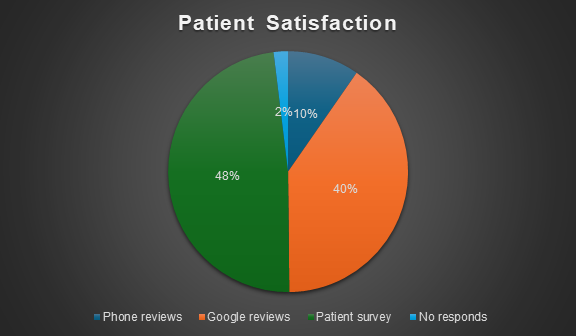
Figure 1
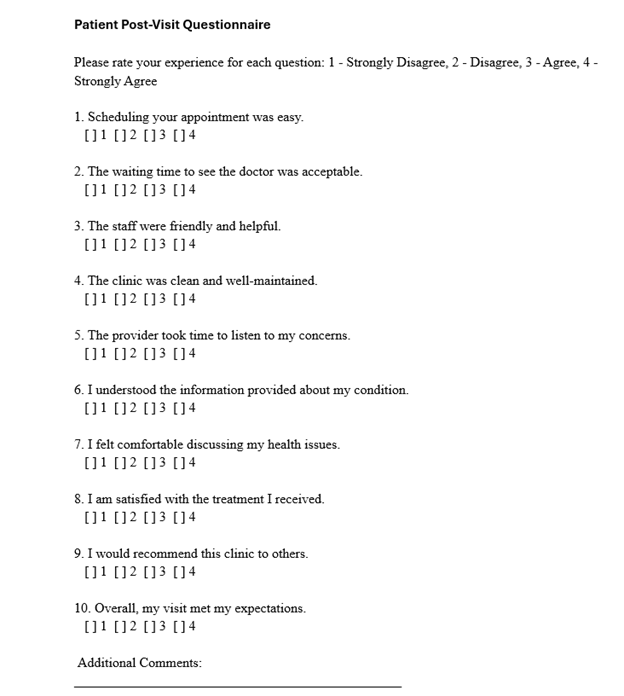
Figure 2

Figure 3
Patient Satisfaction Improvement
The increase in patient satisfaction is an important outcome because it reflects the positive impact of the proposed changes in the quality improvement project. The rise in the average survey score from 3.8 to 4.6, as well as the significant improvement in Google reviews from 3.5 to 4.8, are important and notable changes. These results demonstrate that the clinics have successfully improved their patient experience. The introduction of staff training and the operational changes described in the project can be linked to improved patientstaff interactions.
The training sessions and modules developed for the clinic staff, and made mandatory for everyone to attend were among the key factors. These sessions focused on skills such as communication, empathy, and active listening to ensure staff understood the importance of creating a welcoming environment for all patients. Staff were also trained to respond to patient complaints in a timely and effective manner, which is critical in the modern healthcare industry. The regular staff huddles introduced as part of the project also provided additional value by allowing staff to discuss operations for the day, share information, and address issues with current patients. This helped maintain effective, open-minded communication among staff. Timely responses to patients’ needs were among the results of this approach.
The commitment to following up on patient complaints within seven days also proved to be a successful component of the project. Not only did this approach help to ensure patients felt heard and valued, but it also created an opportunity for staff to reflect on their actions and modify existing protocols if needed. Addressing issues promptly was also a major step in improving patient experience. The successful improvement in patient satisfaction at the clinics was the result of a multifaceted approach that included mandatory staff training, regular huddles, and the commitment to follow up on patient complaints.
Limitations and Barriers of Project
There were multiple limitations/challenges that we faced during our quality improvement project that impacted on our ability to reach our goal of improving patient satisfaction:
• Staff resistance to change: We encountered some resistance from staff members when it came to implementing new training methods and changing the way they typically do things. This made it difficult to provide consistent training for all staff members, thereby affecting patient satisfaction.
• Time constraints: The busy clinic schedules did not always allow staff to attend training sessions and meetings. It was hard for staff to find time away from patient care to participate in training.
• Limited resources: We had a limited budget when it came to training materials and outside trainers. This affected the quality of training that we were able to provide for our staff. We realized we need more resources to reach our goals.
• Inconsistencies in patient satisfaction: We used patient surveys to track our patient satisfaction. However, some patients responded differently to surveys depending on their situation at checkout or other external factors. This made it difficult to know if we were truly making a difference through training.
• Difficulty with follow-up: We wanted to create a log to track patient complaints. We had a hard time getting everyone to document every complaint that came in. We had some complaints that went unresolved for a long time.
• Staff participation: It was difficult to get every staff member involved in training and meetings. Some staff members did not attend, which lessened the impact when trying to increase patient satisfaction.
Recognizing these limitations/challenges will help us in the future when we try to increase the efficacy of our project.
Discussion
The Urgent care and primary care clinics in the Bronx provided an excellent learning experience in the operation of clinics and in identifying areas that need improvement to increase patient satisfaction. The six months of monitoring allow me to conclude that we provide high-quality care that revolves around patients. The implementation of staff education allowed for improved communication with patients on a more empathetic level. The implementation of surveys and Google reviews was beneficial, as patient satisfaction rates rose due to staff members' behavior. Patients were extremely complimentary about the clinic staff, saying they were friendly and attentive to their concerns. Patients were saying things such as, "The staff were so welcoming and made me feel comfortable during my visit," or "I deeply appreciated how the nurse took the time to listen to me."
Upon reviewing the data, I noticed the same concerns. Most patients complained about the long wait times and the lack of information about how long they would be waiting. Patients were writing comments like, "I was not told I would be waiting for this long. I felt very nervous." Concerns about waiting times and appointment mixups negatively affect patients more than the positive experiences they have with staff. Reflecting on the project and the data we received, we successfully trained staff to better care for patients on an individual basis. However, using surveys only yielded qualitative data on areas we could improve. Waiting times and appointment issues can be fixed by better communication. The quality improvement project showed that by training our staff, we were able to provide better experience for our patients and thereby increase patient satisfaction. If we reduced our limitations, we would see an even greater increase in patient satisfaction. By decreasing waiting times and improving communication, we can ensure patients receive the best quality care without waiting time, ruining their experience with amazing staff.
Conclusion
The quality improvement project improved patient satisfaction with the care provided in the organization. Patient satisfaction increased with the implementation of several strategies, including staff training required to improve communication and empathy, daily staff huddles, and follow-ups with patients regarding their complaints. After implementing these strategies organization-wide, the achieved results include a patient satisfaction score of 90% and 100% of positive online reviews. This data can be used to show how staff members worked to ensure patients’ concerns were being heard and addressed. Potential obstacles included staff pushbacks, time, and resource availability. Successful implementations were possible because nurse leaders and administrators took steps to educate and support staff members. Moving forward, the organization plans to continue improving patient satisfaction by implementing strategies to meet patients’ needs better. This shows how the project successfully helped ensure quality healthcare.
Ethical statement:
IRB: Was not required for this quality improvement project.
Consent: No consent was needed from the patients and staff for the project as we used data from both patient surveys and Google reviews.
Author Contributions: Cordelle Luces DHA, MS-Ed, MSNML, APRN-AGACNP, RN -Writing Manuscript/ Materials/ Design, Analysis and/ Interpretation, Literature Search/ Review & Processing/Resource.
Conflict of Interest:
The authors have no conflict of interest declaring.
Financial Disclosure:
The authors declared that this study has received no financial support.
References
Jun, J., Stern, K., & Djukic, M. (2020). Integrative Review of the Interventions for Improving Patients' Experiences Revealed in Quality Improvement Projects. Journal of patient experience, 7(6), 882–892. View
Jabbar, A. B. A., Holland, E. M., Tauseef, A., Noor, A., Zafar, M., Mirza, M., Klaus, T., Frederickson, T., & Mirza, M. (2025). Patient satisfaction: A feature of quality metrics within the inpatient healthcare system - A narrative review. Journal of family medicine and primary care, 14(6), 2099–2105. View
Allen, L., Cummings, J. R., & Hockenberry, J. M. (2021). The impact of urgent care centers on nonemergent emergency department visits. Health services research, 56(4), 721–730. View
Hong, M., Thind, A., Zaric, G. S., & Sarma, S. (2020). The impact of improved access to after-hours primary care on emergency department and primary care utilization: A systematic review. Health policy (Amsterdam, Netherlands), 124(8), 812–818. View
N Alaqil, N., Alanazi, B., Ali Alghamdi, S., et al. (2025). The Role of Urgent Care Clinics in Alleviating Emergency Department Congestion: A Systematic Review of Patient Outcomes and Resource Utilization. Cureus, 17(4): e81919. View