
- About the Journal
- Editorial Board
- Review Process
- Author Guidelines
- Article Processing Charges
- Special Issues
- Indexing
- Current Issue
- Past Issue
 Journal of Comprehensive Nursing Research and Care
Journal of Comprehensive Nursing Research and Care Volume 11 (2026), Article ID: JCNRC-227
https://doi.org/10.33790/jcnrc1100227Research Article
Impact of PLISSIT-Based Counseling on Health-Related Lifestyle Behaviors After Abortion: A Quasi-Experimental Study
Walaa Khalaf Gooda1, Noha Nasser Nashed2, Hanan Elzeblawy Hassan3*
1Lecturer of Maternal & Newborn Health Nursing, Faculty of Nursing, Beni-Suef University, Egypt.
2Nurse Specialist at Beni-Suef University hospital
3Professor of Maternal and Newborn Health Nursing, Faculty of Nursing, Beni-Suef University, Egypt.
Corresponding Author Details: Hanan Elzeblawy Hassan, Professor of Maternal and Newborn Health Nursing, Faculty of Nursing, Beni-Suef University, Egypt.
Received date: 17th January, 2026
Accepted date: 17th March, 2026
Published date: 26th March, 2026
Citation: Gooda, W. K., Nashed, N. N., & Hassan, H. E., (2026). Impact of PLISSIT-Based Counseling on Health-Related Lifestyle Behaviors After Abortion: A Quasi-Experimental Study. J Comp Nurs Res Care 11(1):227.
Copyright: ©2026, This is an open-access article distributed under the terms of the Creative Commons Attribution License, which permits unrestricted use, distribution, and reproduction in any medium, provided the original author and source are credited.
Abstract
Background: Lifestyle counseling after abortion is essential, as it helps mitigate the heightened risk of severe complications faced by women. Effective guidance in areas such as nutrition, sleep, family planning, sexual changes, exercise, and daily activities is vital for reducing complications and improving overall lifestyle.
Aim: The current study was conducted to evaluate the impact of counseling based on PLISSIT model on women’s total life style after abortion.
Subjects & Methods: Design: it is a quasi-experimental pre–post study.
Sample & Settings: A convenient sample of 92 women who had abortions affiliated obstetrics & gynecology unit at Beni-Suef University Hospital. Tools: (1) A Structured Interview Questionnaire. (2) Women's lifestyle after abortion. (3) Supportive material (Arabic booklet). (4) Post-Abortion Counseling Based on the PLISSIT Model.
Results: The mean personal a habit pretest was 11.08±8.01 that improved to 20.59±5.85 posttest, 77.2% & 45.7% of the studied women had unhealthy lifestyle & always saw social media useless regarding abortion pretest, respectively, which improved posttest to 13%. & 14.1 posttest. There was a statistically significant improvement among the studied women regarding mean of Lifestyle sub-items after abortion posttest (p value ≤0.01).
Conclusion: There was a statistically significant improvement among the studied women regarding total lifestyle after abortion and the impact of social networking sites on women after the abortion posttest as well. Women’s sociodemographic characteristics did not have any effect on their lifestyle, neither pre-counselling nor postcounselling.
Recommendations: Enhancement of nursing rule as nurses may ask about the women's intentions for upcoming pregnancies and keep an eye on the family planning readiness.
Key words: Impact, Counseling, PLISSIT Model, Women’s Lifestyle, Abortion
Introduction
Lifestyle is a complex and relative concept shaped by time and individual as well as social values. Various factors influence perceptions of women’s health and status, covering physical, psychological, social, and environmental dimensions. Understanding the post-abortion health behaviors of women is crucial for promoting optimal health, yet limited research has focused on the lifestyles of women who have undergone an abortion [1-6].
Lifestyle counseling is crucial in the post-abortion period, as women who have undergone abortion are at increased risk for severe complications [7-11]. Proper counseling regarding nutrition, sleep, family planning methods, sexual changes, exercise, and daily activity is key to reducing post-abortion complications and enhancing women’s lifestyle [12-20].
Maternity nurses play a crucial role in the quality of antenatal/ postnatal care improvement, which provides woman education and support. At the same time, the nurse can provide health promotion & psychosocial services include assessment, health education, counseling & appropriate referral [21-27]. The post-abortion period is a very important time for woman; it has an effect on a woman's Lifestyle and her family. Nurses play a multi-disciplinary role during post-abortion as a direct care provider, manager, educator, monitors, coordinators, active listeners, managers, counselor, and researcher to promote post-abortion woman health, which sequentially reflected bone minimizing mortality, morbidity and correcting misconceptions and ill health behaviors post-abortion among patients. As well as improving women’s Lifestyles post-abortion. This contributes to reducing morbidity and mortality, correcting misconceptions, and addressing unhealthy behaviors post-abortion among patients [28-31].
During the initial interview, nurses must establish a positive rapport with women post-abortion to gain their trust and encourage open communication regarding their needs [32]. Nurses play a vital role in supporting the well-being of these women, initiating interventions to improve their physical and emotional conditions independently [33]. It is essential for nurses to respond with acceptance and respect, ensuring privacy and nonjudgmental attitudes, as women may feel vulnerable and anxious. High levels of anxiety may arise during evaluations and examinations, especially pelvic exams, which nurses should navigate with sensitivity towards women's modesty and any misconceptions they may hold [34].
After a miscarriage, nurses play a vital role in monitoring the woman's physical, emotional, and psychological recovery, ensuring that any potential complications are detected early and that appropriate care is provided [35]. Nurses play a multifaceted role in monitoring and supporting women's health post-abortion. They assess vital signs for recovery, including temperature, blood pressure, and heart rate, to detect complications like infection or excessive bleeding. Emotional well-being is another focus, with nurses providing support for mental health issues and referrals to professionals as needed. They ensure monitoring for complications and retained tissue and recognize signs of future pregnancy readiness while collaborating with healthcare teams for comprehensive care [36-40]. Additionally, nurses educate women on recovery, contraception, and cultural sensitivity to improve outcomes, serve as counselors to foster communication with clinicians, manage administrative responsibilities to prevent misdiagnosis, and coordinate care among healthcare professionals. Finally, they engage in research to enhance care models and support systems for women post-abortion, researching psychological effects and effective interventions [41-49].
Aim of the study
There is limited research on the use of PLISSIT-based counseling to improve lifestyle behaviors after abortion. So, the current study was conducted to evaluate the impact of counseling based on PLISSIT model on women’s total Lifestyle after abortion.
Subject and Method
Research design:
A quasi-experimental (pre- and post-test) research design was used in this study.
Setting: The current study was conducted at the post-natal unit, which is affiliated with the department of obstetrics and gynecology at Beni-Suef University Hospital.
Subjects:
Sample type:
Consecutive sampling (include all eligible women during the study period) of 92 women who had abortions in the previously mentioned setting.
Sample Size:
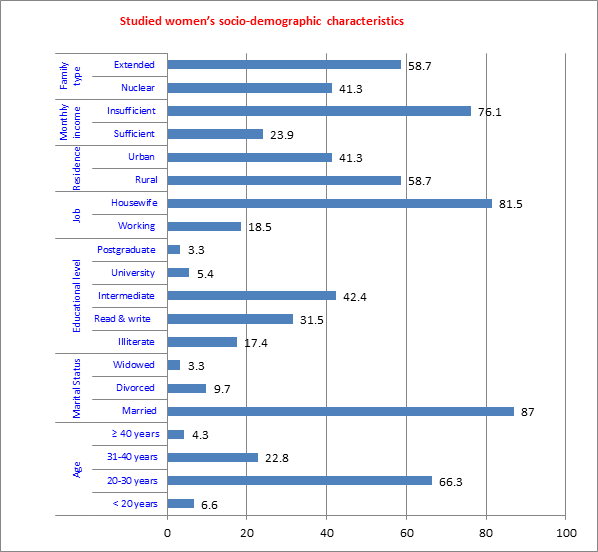
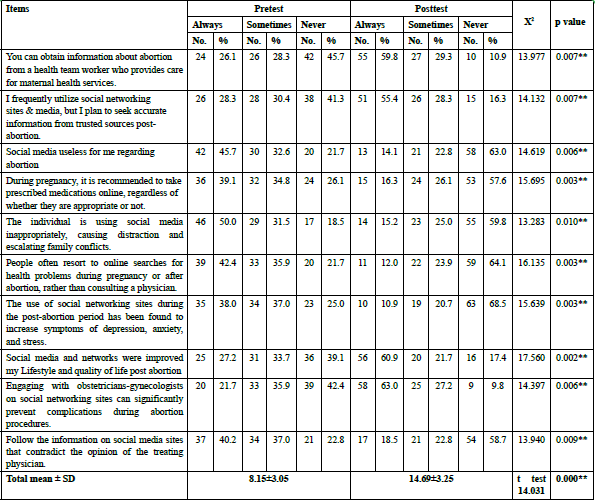
The total number of women who had abortions in one year, beginning in September 2022 and ending in August 2023, is 121 at Beni-Suef University Hospital, so the target population of this study is 92 women who had abortions. The sample size calculation was done using the following equation using the Steven and Thompson equation to calculate the sample size from the next formula [50]:
equation-1
N= population size = 121
z2= 1.96
d2= 0.05
p= 0.50
equation-2
Tools of data collection:
Data were collected using the following tools:
Tool I: A Structured Interview Questionnaire
This questionnaire was designed by the researcher based on reviewing related literature, and it was written in simple Arabic. It consists of socio-demographic data and general characteristics. It was concerned with demographic characteristics of the studied women after abortion, which included age, marital status, educational level, type of occupation, and area of residence.
Tool II: Women's lifestyle after abortion
A tool adapted from Ramadan et al. (2021) and translated into Arabic was utilized to assess women's post-abortion lifestyles [31]. This 48-item instrument is divided into seven parts: Smoking and alcohol, Nutritional lifestyle, Weight and exercise lifestyle, Personal habits, Sleeping, Spiritual habits and relationships, and Sexual intercourse. Items were rated on a three-point Likert scale (always=0, sometimes=1, never=2), with scores summed and converted to a percent score. A total score below 60% (<57.6 points) indicated an unhealthy lifestyle, while a score of 60% or above indicated a healthy lifestyle. The researcher also developed a supportive Arabic booklet to provide women with information on post-abortion care, counseling for lifestyle improvement, overcoming unhealthy habits, and tips for physical, psychological, and emotional recovery.
Tool III: Information technology
The researcher developed a ten-item tool, informed by literature reviews to assess the impact of social networking sites on women postabortion [51,52]. The tool uses a three-point Likert scale (always=0, sometimes=1, never=2) for its 10 items, yielding a total score out of 20. This score is converted to a percentage, with classifications of Poor (<50%), Moderate (50%-<70%), and Good (≥70%).
Tool IV: Post-Abortion Counseling Based on the PLISSIT Model
This program, developed in Arabic by a researcher after reviewing literature is designed for post-abortion counseling of women. It utilizes the PLISSIT model and covers aspects of abortion and postabortion lifestyle, including its definition, signs and symptoms, causes, risk factors, types, complications, management, and lifestyle considerations [52-54].
Data collection included 4 phases as follows:
Phase I: Assessment (preparatory) phase:
The study involved reviewing literature and theoretical knowledge from various sources, including books, articles, and online periodicals, to create data collection and post-abortion counseling tools based on the PLISSIT model. Approval was secured from the Faculty of Nursing dean to Beni-Suef University Hospital. A pilot study, conducted on 10% (9 women) of the sample, tested tool applicability, clarity, and efficiency; no modifications were needed, and these participants were included in the main study. Data on socio-demographic characteristics, obstetrical and gynecological history, lifestyle post-abortion, and pre-counseling information using the PLISSIT model were collected through individual interviews, with each questionnaire taking 10-20 minutes.
Phase II: Planning phase:
The researcher utilized the PLISSIT model to determine optimal timing for post-abortion counseling for each woman. Following an initial assessment, sessions were planned and implemented, focusing on objective setting, learning content determination, preparation of the session setting, methodology and media design, and the selection of an evaluation tool.
Phase III: Implementation (Intervention) Phase:
Following ethical approval from the dean of nursing and hospital director, the researcher conducted individual, oral-consent interviews with post-abortion women in the post-natal unit at Beni- Suef University Hospital. Data collection spanned six months (mid- February to mid-August 2024), with the researcher present three days a week (Sunday, Tuesday, Thursday) during morning and afternoon shifts (9:00 am - 7:00 pm). Each interactive session, lasting 45 minutes to one hour, took place in the unit's waiting area.
The session was run based on the PLISSIT model as follows:
Step (1) Permission (P):
The researcher initiated the study by welcoming each woman individually in a private setting and obtaining verbal consent after explaining the study's purpose, benefits, and voluntary nature. To build rapport, the researcher used open-ended questions and actively listened without judgment. Subsequently, the researcher discussed women's information regarding abortion, including its definition, common factors, causes, signs, symptoms, types, and complications, as well as lifestyle changes, while continuing to listen attentively.
Step (2) limited information (LI): -
The researcher provided clear, accurate information on abortion, its causes, complications, and post-abortion lifestyle. Educational content was delivered verbally and via a booklet, addressing misconceptions such as abortion not always preventing future pregnancies and physical exertion not being a direct cause. Emphasis was placed on correcting unhealthy habits like alcohol consumption and smoking, assessing nutritional lifestyle, maintaining healthy weight, and engaging in regular physical activity. The session also covered improving personal hygiene, fostering healthy social relationships, encouraging spiritual connection, and guiding safe resumption of sexual activity, with opportunities for questions.
Step (3) specific suggestions (SS):
The researcher provided personalized guidance to address individual needs and concerns, focusing on managing post-abortion conditions. Key recommendations included adopting a balanced, iron-rich diet, maintaining healthy nutritional habits, quitting or reducing smoking with coping techniques, practicing stress management through deep breathing or light exercise, and addressing fears about future pregnancies and sexual relations by normalizing feelings and encouraging partner communication. The aim was to support women in adopting healthy lifestyles, including appropriate physical activity and exercise, through practical, realistic, and context-specific advice.
Step (4) Intensive Therapy (IT):
The research involved applying a final step to women experiencing severe emotional or psychological distress post-abortion. These women were referred to specialized mental health services, such as psychologists, social workers, or cardiologists, within the hospital or community programs, with respect for privacy. The researcher provided reassurance and emphasized seeking help. Advice included quitting smoking, using natural methods for uterine cleaning postabortion, prioritizing sleep, seeking social support, adopting healthy habits (exercise, diet), using vaginal lubricants, and utilizing tools like vibrators to improve lifestyle. The study utilized supportive materials like pictures, a laptop, and videos based on the PLISSIT model for a 4-month counseling booklet phase. No cases required referral to a sex therapist, social worker, or medical/psychological specialist.
Phase IV: Evaluation phase:
The researcher re-evaluated the impact of PLISSIT model-based post-abortion counseling on women's lifestyles four months after the intervention. This evaluation utilized the same measurement tools as the initial assessment and was conducted via Zoom video calls or home visits over a one-month period.
Ethical Considerations:
The research approval was obtained from the Faculty of Medicine, Beni-Suef Scientific Ethical Committee before starting the study (Approval number: FMBSUREC/03102023). The investigator clarified the objectives and aim of the study to the women included in the study before starting.
Administrative design:
Official permission was obtained by submission of official letters issued from the dean of the faculty of nursing, Beni-Suef University, to the manager of Beni-Suef University Hospital. The title and aim of the study were explained, as well as the main data items and the expected outcomes.
Statistical Analysis
Data were summarized, tabulated, and presented using descriptive statistics in the form of means and standard deviations as a measure of dispersion. A statistical package for the social sciences (SPSS), version 26, was used for statistical analysis of the data, as it contains the test of significance given in standard statistical books. Qualitative data were expressed as a percentage. The chi-square (X²) test of significance was used in order to compare proportions between qualitative parameters. For quantitative data, a comparison between two variables was done using a student's t-test. The t-test is used when the cell sizes are expected to be large. If the sample size is small (or you have expected cell sizes < 5). Probability (P-value) is the degree of significance; less than 0.05 was considered significant. The smaller the P-value obtained, the more significant the result; less than 0.001 was considered highly significant (*), and the correlation coefficient was done by using the Pearson correlation test.
Results
Figure (1): found that 66.3% of women aged 20-30, 87% were married, 42.4% had intermediate education, and 81.5% were housewives, with 58.7% from rural areas and 76.1% having insufficient monthly income.
Table (1) presents that, less than half (45.7%) of the studied women were always saw social media useless regarding abortion which improved posttest to (14.1%). There was a statistically significant improvement among the studied women regarding the impact of social networking sites on women after abortion posttest (p value ≤0.01).
Table (2) shows that, the highest mean during pretest for personal a habit which was 11.08±8.01 and improved to 20.59±5.85 posttest. There was a statistically significant improvement among the studied women regarding mean of Lifestyle sub-items after abortion posttest (p value ≤0.01).
Figure (2): shows that, 77.2% of the studied women had unhealthy Lifestyle pretest which improved posttest to 13%. There was a statistically significant improvement among the studied women regarding total Lifestyle after abortion posttest (p value ≤0.01).
Figure (3): represents that, there was no statistically significant relation between the studied women’ total Lifestyle level and their socio-demographic characteristics during pre and posttest.
Figure (1): Percentage distribution of the studied women regarding to their socio-demographic characteristics
Table (1): Percentage distribution of the studied women regarding to the impact of social networking sites on women after abortion
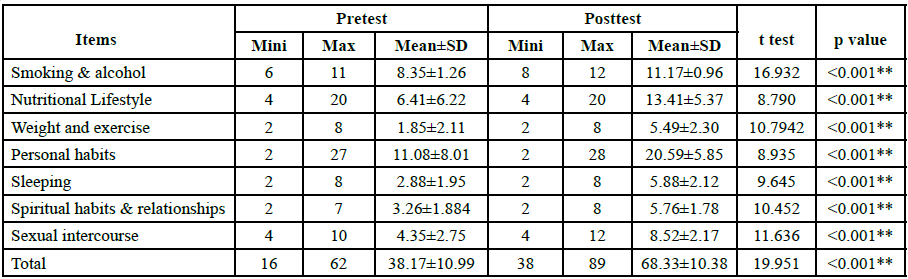
Table (2): Comparison between the studied women regarding to their Lifestyle means of sub-items after abortion
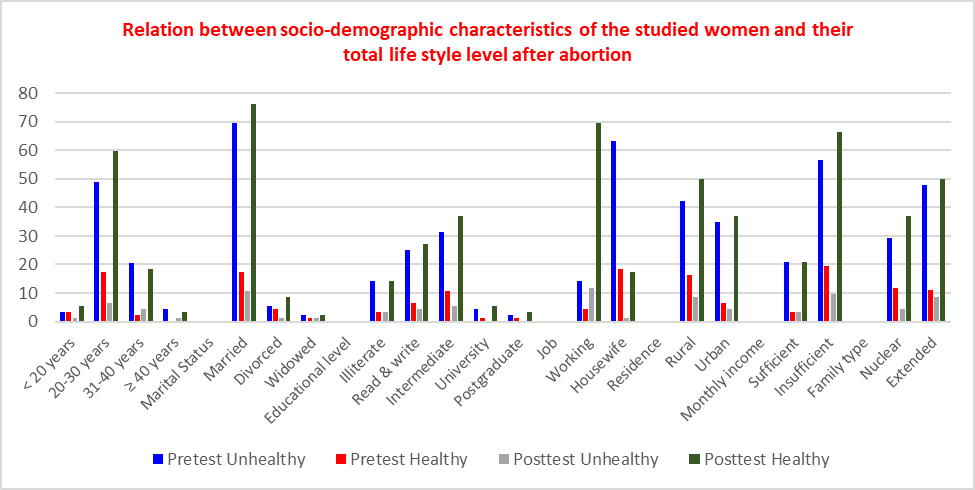
Figure (2): Percentage distribution of the studied women regarding to their total Lifestyle level after abortion
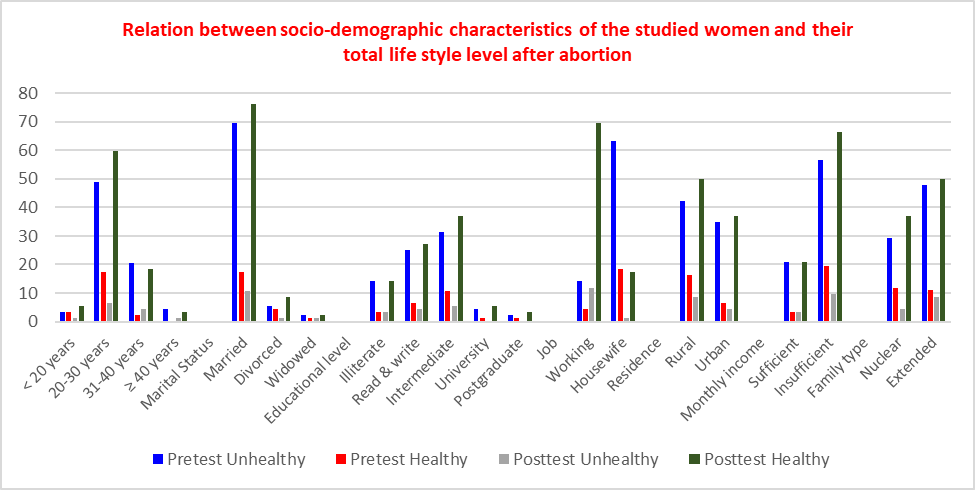
Figure (3): Relation between socio-demographic characteristics of the studied women and their total Lifestyle level after abortion
Discussion
Choosing a lifestyle following an abortion is challenging for many women. Regardless of the circumstances, it is never a pleasant feeling for a woman to make such decisions. In the case of an unintended pregnancy, it may occasionally provide a sense of relief, but more often than not, women are overwhelmed by feelings of emotional loss, despair, shame, and anger over having an abortion. Therefore, the nurse must consider how the woman feels, even if she does not express emotions or does not feel anything at all [56].
Concerning women’s lifestyle after abortion, the results is presented the total of means of sub-items of lifestyle behaviors after abortion 38.17±10.99 during the pre-counseling phase. This improved postcounseling to 68.33±10.38. There was a statistically significant improvement among the studied women in relation to lifestyle behaviors following the implementation of the counseling sessions.
The study found that most women had a healthy lifestyle concerning smoking and alcohol both before and after counseling, with all improving post-counseling. This aligns with research by Hamadneh and Hamadneh (2023), which demonstrated significant improvements in smoking behaviors among pregnant women following an educational intervention [57].
Concerning the comparison between the studied women regarding their lifestyle sub-items after abortion, the present study revealed improvement across all lifestyle areas after counseling, including smoking, alcohol consumption, nutrition, sleep, weight, exercise, spirituality, and sexual intercourse. There was a highly statistically significant improvement in the mean scores of all lifestyle subitems related to modern educational information on abortion postcounseling. From the researcher’s point of view, this may be attributed to the completeness, comprehensiveness, accuracy, and effectiveness of the counseling program based on the PLISSIT model.
This study found a statistically significant improvement in women's quality of life post-intervention, aligning with Zahmatkesh et al. [58]. Mirian et al. (2023) also reported an increase in women's personal habits from a mean score of 107.42 ± 15.08 pre-intervention to 126.72 ± 31.01 post-intervention [59].
In a study examining the effects of social networking sites on women post-abortion, it was found that over 40% of participants initially viewed social media as ineffective regarding abortion discussions, which decreased to under 20% after counseling. This significant positive change aligns with Potter et al. (2023), who noted that a third of women considered social media to be unhelpful and misinformation-prone regarding abortion [60]. Additionally, Gill et al. (2019) reported improved use and satisfaction with mobile technology in supporting post-abortion care after a web-based intervention [61].
There was no statistically significant relationship between the impact level of social networking sites and family type among the studied women. However, women from extended family types showed improved impact levels after counseling sessions. This finding aligns with Ahinkorah et al. (2020), who found no significant link between mass media exposure and family type in post-abortion influence [62]. Conversely, Gouy et al. (2024) reported a significant relationship between the effects of social media and the women's age and occupation [50].
The study indicates that approximately 20% of women had a healthy lifestyle before counseling, which improved significantly afterward, likely due to the PLISSIT model's positive impact on lifestyle behaviors. This finding is consistent with Turner et al. (2018), who noted that about two-thirds displayed healthy behaviors following an educational program, and Raphi et al. (2021), who reported significant lifestyle improvements four weeks post-intervention [63- 64].
Concerning relation between socio-demographic characteristics of the studied women and their total Lifestyle level after abortion during pre-counseling and post counseling, the current study reported that, there was no statistically significant relation between the studied women’ total Lifestyle level and their socio-demographic characteristics during pre-counseling and post implementation of counseling sessions program.
The study reveals a significant link between age and lifestyle enhancements after counseling, particularly among older women (20–30 years), attributed to their emotional maturity. This finding is consistent with Hussein et al. (2019), who reported healthier lifestyle changes in older women post-counseling [65]. In contrast, Sami & Abdel-Aziz (2021) observed no notable age-related lifestyle changes prior to counseling. However, the positive outcomes following counseling demonstrate the model's effectiveness across various age groups [66].
While marital status did not show a significant relationship with lifestyle levels, both married and divorced/widowed women improved their lifestyle scores after PLISSIT-based counseling. This indicates the counseling's effectiveness and suggests a transition necessitating further knowledge. These findings support prior studies showing positive behavior changes and reduced psychological distress from emotional support, regardless of marital status.
Research indicates a notable connection between education level and pre-counseling lifestyle quality, with more educated women leading healthier lives. Counseling improved lifestyles across all educational levels, particularly for those with intermediate education, showcasing the intervention's inclusivity. This supports El-Nemer et al. (2021) on education's impact on health awareness. The counseling model successfully enhanced lifestyle scores among less educated women, proving its accessibility and adaptability [67].
Both working and non-working women showed improved lifestyle scores after counseling sessions, despite no significant relationship between job status and lifestyle level (p > 0.05). Abortion notably influences women, particularly non-working ones, to pursue information on lifestyle and recovery, supporting findings by Mostafa & Ghoneim (2018) that reproductive health interventions are beneficial across work statuses with a focus on psychosocial support [68].
Both urban and rural women showed lifestyle improvements following counseling sessions, despite no significant association with place of residence (p>0.05). The motivation for lifestyle enhancement post-abortion, especially for those who marry young, aligns with findings from Nassar & Hassan (2020), emphasizing the effectiveness of appropriately designed structured counseling for rural populations [68].
Post-counseling, a notable link with monthly income was found, especially enhancing rural women's lifestyles. Higher-income women gained more from counseling due to better access to health resources, supporting previous findings by Ahmed et al. (2020) and indicating counseling's role in alleviating economic disparities as noted by Farag et al. (2022) [70,71].
Women in extended family settings demonstrated improved lifestyles after counseling sessions, though no significant differences were found between nuclear and extended family types (p>0.05). This enhancement is linked to their motivation for lifestyle improvement post-abortion, echoing Salem & Ibrahim's (2021) findings on lifestyle changes after miscarriage across different family structures [72].
The study found that women's lifestyles improved significantly following counselling sessions, leading to healthier habits and fewer unhealthy ones. Statistical analysis confirmed these changes. The success is attributed to counselling, educational lectures, and various teaching methods, including the use of Arabic booklets [73-82]. These booklets, which should be concise, straightforward, and visually appealing, supported other educational efforts, aligning with Edgar Dale’s Pyramid of Learning, which suggests varied retention rates based on learning methods [83-94].
Limitations of the study: -
• Low Educational Level of Participants: Some participants in the study were illiterate or had low levels of education. As a result, the researcher had to read the questionnaire aloud and explain its content verbally. This process may have unintentionally introduced interpretation bias, despite the researcher's efforts to maintain neutrality
• Short Hospital Stay: Many women were discharged quickly after abortion, which limited the available time for in-depth counseling and follow-up.
• Despite these limitations, the study provides valuable insights into the application of the PLISSIT model in post-abortion counseling and contributes to filling a gap in the local literature.
Conclusion
There was a statistically significant improvement among the studied women regarding total lifestyle after abortion and the impact of social networking sites on women after the abortion posttest as well. Women’s sociodemographic characteristics did not have any effect on their lifestyle, neither pre-counselling nor post-counselling.
Recommendations
• Enhancement of nursing rule as nurses may ask about the women's intentions for upcoming pregnancies and keep an eye on the family planning readiness. Nurse could also offer advice on lifestyle changes, preconception care, and health management to enhance future pregnancy outcomes.
References
Hassan, H., Abd-ELhakam, F., & Ali, E. (2025). Effect of Life Style Modification Implemented Program Among Infertile Women with Poly Cystic Ovary Syndrome on Obesity and Menstrual Regulation. Journal of Clinical and Laboratory Research, 8(2): 1-7. View
Feizollahi, N., Nahidi, F., Sereshti, M., Nasiri, M., & Azadpour, A. (2020): Evaluation of Quality of Life in Women with Abortion Experience in Tehran 2015 - 2016. Advances in Nursing and Midwifery, 29(1), 8-15. View
Nady, F., El-Sherbiny, M., Youness, E., & Hassan, H. (2018). Effectiveness of Quality of Life Planned Teaching Program on Women Undergoing Gynecologic Cancer Treatment. American Research Journal of Oncology, 1(1): 1-17. View
Mostafa, H., Yousef, F., & Hassan, H. (2018). Health Related Quality of Life Educational Interventions: Effect on Chronic Hepatitis C Patients'. Saudi Journal of Nursing and Health Care, 1(2): 56-67. View
Hassan, H., Ahmed, W., & Ahmed Arafa, A. (2019). Physical Activity and Menstrual Disorders Аmong School Girls in Southern Egypt. International Journal of Studies in Nursing, 4(3): 54-59. View
Hassan, H., & Farag, D. (2019). The impact of polycystic ovary syndrome on women’s quality of life: Nursing guidelines for its management. Clinical Nursing Studies, 7(3):42-57. View
Hassan, H., Abd-ELhakam, F., & Kasem, E. (2025). Androgen-related Alopecia and Infertility: Impact of Lifestyle Modifications. International Journal of Clinical Research and Reports, 4(2): 1-6. View
Hassan, H. (2020). Quality of Life with Gestational Diabetes. American Research Journal of Public Health, 3(1): 1-4. View
Nady, F., Said, M., Youness, E., & Hassan, H. (2018). Effect of Nursing Intervention Program on Quality of Life Improvement for Women Undergoing Gynecological and Breast Cancer Treatment. Assuit Scientific Nursing Journal, 6(15): 62-77. View
Malk, R., Fahem, E., Hassan, H., & Soultan, A. (2022). Efficacy of Training Program on Nurses Performance regarding Preventive Measures of Venous Thromboembolism among Critical Pregnant Women. Egyptian Journal of Health Care, 13(2): 401-413. View
Ali, M., Elshabory, N., Hassan, H., Zahra, N., & Alrefai, H. (2018). Perception about Premarital Screening and Genetic Counseling Among Males and Females Nursing Students. IOSR Journal of Nursing and Health Science, 7(1): 51-57. View
Hassan, H., Saber, N., & Sheha, E. (2019). Comprehension of Dyspareunia and Related Anxiety among Northern Upper Egyptian women: Impact of Nursing Consultation Context Using PLISSIT Model. Nursing & Care Open Access Journal, 6(1): 1-19. View
Abou-Shabana, K., Hassan, A., Eid, S., & Hassan, H. (2022). Effect of Counseling Sessions on Women’s Satisfaction during Gynecological Examination. Journal of Obstetrics Gynecology and Reproductive Sciences, 6(4): 1-10. View
Mohamed, W., & Hassan, H. (2020). Effect of Instructional Supportive Guideline for Improving Women's Awareness towards Endometriosis. American Journal of Nursing Research, 8(1): 38-47. View
Eid, S., Abou-Shabana, K., Hassan, A., & Hassan, H. (2023). Effect of Pre-Gynecological Examination Counseling Sessions on Relieving Women’s Pain, Discomfort and Enhancing their Satisfaction. Journal of Nursing Science - Benha University, 4(1): 751-768. View
Hassan, H., Gamel, W., Sheha, E., Sayed, M., & Arafa, A. (2019). Menstrual disorders Necessitating Counseling among Students in Beni-Suef University. Clinical Nursing Studies, 7(2): 29-36. View
Hassan, H., Eid, S., Hassan, A., & Abou-Shabana, K. (2022). Pre-Gynecological Examination: Impact Counseling on Women’s Pain, Discomfort, and Satisfaction. American Journal of Public Health Research, 10(2): 63-75 View
Hassan, H., Gooda, W., Ahmed, T., & Farag, D. (2025). Marital, Sexual Satisfaction and Quality of Life among Posthysterectomy Women: Impact of Nursing Counseling Guided by BETTER Model. Egyptian Journal of Health Care, 16 (1): 99-116. View
Nashed, N., Hassan, H., & Gooda, W. (2025). Impact of Post Abortion Counseling Based on PLISSIT Model on Women's Life Style. Egyptian Journal of Health Care, 16 (2): 1009-1028. View
Mohammed, F., Shahin, M., Youness, E., & Hassan, H. (2018). Survivorship in Women Undergoing Gynecological and Breast Cancer Treatment in Upper Egypt: The Impact of Quality of Life Improvement Educational Program”. American Research Journal of Gynaecolog, 2(1): 1-28. View
Hassan, H., Zahran, K., Youness, E., & Nady, F. (2015): Pregnant Women's Awareness, Intention and Compliance regarding Folic Acid Usage for Prevention of Neural Tube Defects According to Health Belief Model in Beni-Suef City. Pyrex Journal of Nursing and Midwifery, 1(3), 13-26. View
Hassan, H., Nady, F., Youns, E., & Zahran, K. (2016). Call for Change Level of Knowledge, Awareness and Attitude to Follow A High Folate Diet Among Pregnant Women. IOSR Journal of Nursing and Health Science, 5(1), 93-100. View
Said, A. (2016): Effect of counseling intervention on women's knowledge, practices and lifestyle of fetal well-being among Primigravida. International Journal of Nursing Science, 6(4), 87-93 View
Farg, D., & Hassan, H. (2019): Study Hyperemesis Graviderum Requiring Hospital Admission during Pregnancy: Effect of Nursing Implication on Its Progress. American Journal of Nursing Research, 7(3), 328-341. View
Hassan, H., Said, S., & Hassanine, Sh. (2017): Disparities of Prevalence and Causes of Maternal Antenatal Anxiety among Primigravida Pregnant Women in Egypt. American Research Journal of Nursing, 3(1), 1-15. View
Mostafa, H., Yousef, F., & Hassan, H. (2018): Health Related Quality of Life Educational Interventions: Effect on Chronic Hepatitis C Patients'. Saudi Journal of Nursing and Health Care; 1(2): 56-67. View
Said, S., Hassan, H., Sarhan, A. (2018). Effect of an Educational Intervention on Women's Knowledge and Attitude Regarding Cervical Cancer. American Journal of Nursing Research. 6(2): 59-66. View
Emem, E., & Hassan, H. (2017). Correlation between Quality Of Life and Dysmenorrhea among Nursing Schools Students. International Journal of Nursing Science, 7(6): 123-132. View
Nady, F., Said, M., Youness, E., & Hassan, H. (2017). Impact of Tailored Educational Program of Quality of Life Improvement on Women Undergoing Breast Cancer Treatment at El-Minia Region, Egypt. American Research Journal of Gynaecology, 1(1): 1-17. View
Arshad, A., Aziz, H., Shabbir, G., Shakya, S., & Munir, Z. (2023). Improving safe post-abortion care practices: A study on interventions implemented by Ipas Pakistan. Frontiers in Public Health, 11. View
Ramadan, A., Abo Shabana, K., & Mossa, S. (2021): Assessment of post abortion woman lifestyle. Egyptian Journal of Health Care, 12(3), 831-842. View
Qian, J. L., Pan, P. E., Wu, M. W., Zheng, Q., Sun, S. W., Liu, L., ... & Yu, X. Y. (2021): The experiences of nurses and midwives who provide surgical abortion care: A qualitative systematic review. Journal of advanced nursing, 77(9), 3644-3656. View
Dutta, A. P. (2025). From Chaos to Clarity: How Social Work Skills Can Change Your Life. Notion Press. 5426378(5)632. View
Briones-Vozmediano, E., Otero-García, L., Gea-Sánchez, M., De Fuentes, S., García-Quinto, M., Vives-Cases, C., & Maquibar, A. (2022). A qualitative content analysis of nurses' perceptions about readiness to manage intimate partner violence. Journal of advanced nursing, 78(5), 1448-1460. View
Lee, L., Ma, W., Davies, S., & Kammers, M. (2023): Toward optimal emotional care during the experience of miscarriage: an integrative review of the perspectives of women, partners, and health care providers. Journal of Midwifery & Women's Health, 68(1), 52-61. View
Riddell, G. (2024). Abortion Care in the Primary Care Setting. Collins-Bride & Saxe's Clinical Guidelines for Advanced Practice Nursing, 187(64)86.
Elian, T., Abd Elhameid, A., Abo Hashim, M., & Basha, A. (2023). Comparison between letrozole treatment before Misoprostol and Misoprostol alone for medical management of missed abortion. Zagazig University Medical Journal, 0(0),0-0. View
Coulam, C. B. (2020). IVIg treatment for recurrent pregnancy loss. Recurrent Pregnancy Loss, 232(54)268-274. View
Musik, T., Grimm, J., Juhasz-Böss, I., & Bäz, E. (2021): Treatment options after a diagnosis of early miscarriage: expectant, medical, and surgical. Deutsches Ärzteblatt International, 118(46), 789. View
Ho, A. L., Hernandez, A., Robb, J. M., Zeszutek, S., Luong, S., Okada, E., & Luong, S. N. (2022). Spontaneous miscarriage management experience: a systematic review. Cureus, 14(4)316673. View
Carson, A., Cameron, E. S., Paynter, M., Norman, W. V., Munro, S., & Martin‐Misener, R. (2023). Nurse practitioners on ‘the leading edge’of medication abortion care: A feminist qualitative approach. Journal of advanced nursing, 79(2), 686-697. View
Rice, W. S., Narasimhan, S., Newton-Levinson, A., Pringle, J., Redd, S. K., & Evans, D. P. (2022): “Post-Roe” abortion policy context heightens the imperative for multilevel, comprehensive, integrated health education. Health Education & Behavior, 49(6), 913-918. View
Galeotti, M., Heaney, S., Robinson, M., & Aventin, Á. (2023). Evaluation of a pregnancy loss education intervention for undergraduate nursing students in Northern Ireland: A pre-and post-test study. BMC nursing, 22(1), 268. View
Goldblatt Hyatt, E. (2024): Counseling and Abortion. In The Mental Health Clinician’s Handbook for Abortion Care (pp. 119-129). Cham: Springer Nature Switzerland, 874(67)119- 129. View
Behrani, P., & Dave, A. (2025). Menstrual cups as sustainable menstrual hygiene products. Big Data Analytics and Intelligent Applications for Smart and Secure Healthcare Services, 97(3)6476. View
Kimport, K., & Littlejohn, K. E. (2021). What are we forgetting? Sexuality, sex, and embodiment in abortion research. The Journal of Sex Research, 58(7), 863-873. View
Ahmed, S., Hasnat, M. A., Khair, M. A., Sharmeen, S., Choudhury, F. H., & Haque, N. (2022). Types of Abortion and its Consequences-A Study of 100 Cases in Mymensingh Medical College Hospital. Sch J App Med Sci, 10, 1774-9. View
Nepyivoda, O. M., & Ryvak, T. B. (2020): Threatened miscarriage and pregnancy loss: contemporary aspects of the problem. Wiad Lek, 73(5), 1021-1027. View
Kukulskienė, M., & Žemaitienė, N. (2022): Postnatal depression and post-traumatic stress risk following miscarriage. International journal of environmental research and public health, 19(11), 6515. View
Thompson, S. K. (2012): Sampling. Wiley Series in Probability and Statistics. View
Gouy, G., Attali, L., Voillot, P., Fournet, P., & Agostini, A. (2024): Experiences of women with medical abortion care reflected in social media (VEILLE study): Noninterventional retrospective exploratory Infodemiology study. JMIR Infodemiology, 4, e49335. View
Zolfaqari, Z., Ayatollahi, H., Ranjbar, F., & Abasi, A. (2024). Acceptance and use of mobile health technology in post-abortion care. BMC Health Services Research, 24(1). View
Turesheva, A., Aimagambetova, G., Ukybassova, T., Marat, A., Kanabekova, P., Kaldygulova, L., & Atageldiyeva, K. (2023). Recurrent pregnancy loss etiology, risk factors, diagnosis, and management. Fresh look into a full box. Journal of Clinical Medicine, 12(12), 4074. View
Haghighi, M., Oladbaniadam, K., Mohaddesi, H., & Rasuli, J. (2022). Individual counseling in mothers bereaved by pregnancy loss. Journal of Education and Health Promotion, 11(1), 209. View
Keshavarz, Z., Karimi, E., Golezar, S., Ozgoli, G., & Nasiri, M. (2021). The effect of PLISSIT based counseling model on sexual function, quality of life, and sexual distress in women surviving breast cancer: A single-group pretest–posttest trial. BMC Women's Health, 21(1). View
Masse, S. (2024). Her Choice to Heal: Finding Spiritual and Emotional Peace After Abortion. David C Cook, 6734(43)7836. View
Hamadneh, J., & Hamadneh, S. (2023): The impact of an online educational program to reduce second-hand exposure to smoke among nonsmoking pregnant women; a hospitalbased intervention study. Heliyon, 9(4), e13148. View
Zahmatkesh, M., Faal Siahkal, S., Alahverdi, F., Tahmasebi, G., & Ebrahimi, E. (2024). The role of art therapy on quality of life of women with recent pregnancy loss: A randomized clinical trial. PLOS ONE, 19(7), e0305403. View
Mirian, Z., AbdiShahshahani, M., Noroozi, M., Mostafavi, F., & Beigi, M. (2023). Effect of intervention based on the 5a selfmanagement model on the improvement of behaviors related to women's reproductive health after legal abortion. Scientific Reports, 13(1). View
Potter, K., Bauer, C. C., Laiwalla, R., & Lanza, S. (2023): A look at social media and misinformation in regard to abortion. Obstetrics & Gynecology, 141(5S), 91S-91S. View
Gill, R. K., Ogilvie, G., Norman, W. V., Fitzsimmons, B., Maher, C., & Renner, R. (2019). Feasibility and acceptability of a mobile technology intervention to support Postabortion care (The FACTS study phase II) after surgical abortion: User-centered design. JMIR Human Factors, 6(4), e14558. View
Ahinkorah, B. O., Seidu, A., Mensah, G. Y., & Budu, E. (2020): Mass media exposure and self-efficacy in abortion decisionmaking among adolescent girls and young women in Ghana: Analysis of the 2017 maternal health survey. PLOSONE, 15(10),e0239894. View
Turner, K. L., Pearson, E., George, A., & Andersen, K. L. (2018): Values clarification workshops to improve abortion knowledge, attitudes and intentions: A pre-post assessment in 12 countries. Reproductive Health, 15(1). View
Raphi, F., Bani, S., Farvareshi, M., Hasanpour, S., & Mirghafourvand, M. (2021): Effect of hope therapy on psychological well-being of women after abortion: A randomized controlled trial. BMC Psychiatry, 21(1). View
Hussein, S., Kamal, M., & Said, H. (2019). Age and response to reproductive counseling post abortion. International Journal of Women's Health, 11, 341–348.
Sami, L., & Abdel-Aziz, M. (2021). The role of age and counseling in post-abortion recovery: A comparative study. Middle East Journal of Nursing, 15(3), 73–81.
El-Nemer, A., Mohamed, A., & Saber, N. (2021). Women’s knowledge and lifestyle after reproductive counseling: A quasiexperimental study. International Journal of Nursing Studies, 58(4), 25–33.
Mostafa, A., & Ghoneim, M. (2018). Impact of demographic variables on lifestyle changes after miscarriage among Egyptian women. Middle East Fertility Society Journal, 23(1), 56–62.
Nassar, E., & Hassan, R. (2020). Counseling-based interventions and lifestyle enhancement among rural women post miscarriage. Egyptian Journal of Community Medicine, 38(4), 85–92.
Ahmed, R., Hassan, H., & El-Masry, R. (2020). Women's knowledge about abortion and associated factors. Journal of Reproductive Health, 34(2), 123–132.
Farag, R., Salem, M., & Taha, S. (2022). Effect of structured reproductive counseling on lifestyle among post-abortion women. Journal of Nursing Practice, 10(1), 50–58. View
Salem, R., & Ibrahim, F. (2021). Effect of family type on lifestyle behavior after miscarriage. Alexandria Scientific Nursing Journal, 23(4), 22–30.
Hassan H. (2019). Integrative Nursing Science in Women’s Pre-conceptional Wellness. International Journal of Health and Biological Sciences; 2(1): 17-18. View
Masters, K. (2013): Edgar Dale’s Pyramid of Learning in medical education: A literature review, Medical Teacher; 35(11): e1584-e1593. View
Hassan, H., Mohamady, Sh., & Abd El-Gawad, N. (2017). Protocol for improving nursing performance towards placental examination at labor units. Clinical Nursing Studies; 5(2): 1-11. View
Gamel, W., Genedy, A., & Hassan, H. (2020). Impact of Puerperal Sepsis Self-Care Nursing Guideline on Women's Knowledge and Practices. American Journal of Nursing Research, 8(2): 132-141. View
Hassan, H., & Nasr, E. (2017). Improving nurses’ knowledge and skills regarding tocolytics for inhibiting preterm labor. Clinical Nursing Studies; 5(1): 1-12. View
Nady, F., Said, M., Youness, E., & Hassan, H. (2017). Impact of Tailored Educational Program of Quality of Life Improvement on Women Undergoing Breast Cancer Treatment at El-Minia Region, Egypt. American Research Journal of Gynaecology. 1(1): 1-17. View
Hassan, H., Gooda, W., & Nashed, N. (2025). Post Abortion Women's Life Style: Impact of Counseling Based on PLISSIT Model. American Journal of Nursing Research, 13 (4): 89-96. View
Abd-Elfattah, N., Mohamed, A., & Hassan, H. (2025). Effect of an Educational Program on Women's Intention regarding Oocyte Cryopreservation. Journal of Comprehensive Nursing Research and Care, 10(2): 1-8. View
Hassan, H., Gooda, W., & Nashed, N. (2025). Correlation between Women’s Knowledge, Life Style and Impact Level of Social Networking Sites on Women After Abortion Using Counseling Based On PLISSIT Model. American Journal of Public Health Research, 13(5): 199-207. View
Mohamed, H., Hassan, H., & Masoud, H. (2025). Call for Enhancing Pregnant Women’s Knowledge Regarding Teratogenic Medica¬tions and Most Common Drugs That Cause Congenital Anomalies. NL Journal of Medical and Pharmaceutical Sciences, 1(3): 27-35. View
Masters, K. (2013): Edgar Dale’s Pyramid of Learning in medical education: A literature review, Medical Teacher; 35(11): e1584-e1593. View
Hassan, H., Mohamed, A. & Elfattah, N. (2025). Working Females’ Knowledge, Attitude, and Intention at Beni-Suef University regarding Oocyte Cryopreservation: Effect of an Educational Program. American Journal of Nursing Research, 13(4):97-102. View
Abd-Elfattah, N., Mohamed, A., & Hassan, H. (2025). Enhancing Females’ Knowledge regarding Oocyte Cryopreservation: Effect of an Educational Program. International Journal of Clinical Research and Reports, 4(6): 2-8. View
Hassan, H., Abd-ELhakam, F., & Kasem, E. (2025). Relationship between Infertile Overweight and Polycystic Ovary Syndrome Women’s Characteristics and Lifestyle Habits: An Interventional Study. Journal of General medicine and Clinical Practice, 8(8): 1-7. View
Zaki, S., Nady, S., & Hassan, H. (2025). Preventive Measures of Breast Cancer Female Workers’ Knowledge. Journal of Clinical and Laboratory Research, 8(2): 1-6. View
Hassan, H., Mohamed, H., & Masoud, H. (2025). Women’s Knowledge and Attitude regarding Teratogenic Medications and Practices toward Minor Discomfort: Impact of an Educational Program. International Journal of Family & Community Medicine, 9(6): 146-152. View
Said, D., Gooda, W., Mohamed, E., & Hassan, H. (2026). Effect of Continuous Care Model on Recurrence of Vulvovaginal Candidiasis Infection among Pregnant Women. Egyptian Journal of Health Care, 17 (1): 121-144 1009-1028. View
Abd-Elfattah, N., Mohamed, A., & Hassan, H. (2026). Study women's attitude regarding Oocyte Cryopreservation: The Impact of an Educational Initiative. American Journal of Public Health Research, 14(1): 1-6. View
Abd-ELghafar, F., Hassan, H., & Ali, E. (2026). Lifestyle modifications among infertile women with poly cystic ovary syndrome. Nursing & Care Open Access Journal, 12(1):1‒10. View
Mohamed, A., Hassan, H., & Mohamed, N. (2026). Oocyte Cryopreservation Knowledge, Attitude, and Intention Effect of an Educational Program on Working Females at Beni-Suef University. Journal of Health Care Research, 3(1): 199-221. View
Hassan, H., Nashed, N., & Gooda, W. (2026). Impact of Counseling Based on PLISSIT Model on Women’s Knowledge Regarding Modern Educational Information about Abortion. Nursing & Care Open Access Journal, 12(1):15‒22. View
Gooda, W., Hassan, H., & Nashed, N. (2026). Women's General Knowledge Regarding Abortion: Impact of Counseling Based on PLISSIT Model, International Journal of Health & Medical Research, 5(2): 90 – 101. View