
- About the Journal
- Editorial Board
- Review Process
- Author Guidelines
- Article Processing Charges
- Special Issues
- Indexing
- Current Issue
- Past Issue
 Journal of Comprehensive Nursing Research and Care
Journal of Comprehensive Nursing Research and Care Volume 11 (2026), Article ID: JCNRC-232
https://doi.org/10.33790/jcnrc1100232Research Article
Improving Student Registered Nurse Anesthetists Outcomes Through Obstetric Hemorrhage Simulation Experience
Rachel C. Gardner1, DNP, APRN, CRNA, Tiffany Eye2, DNP, MA-B, APRN, CRNA, Amy Cook3, DNP, APRN, CRNA, Erica Brown3*, DNP, RN, Jennifer Rogers4, DNP, APRN, FNP-BC, and Evan Harris3, DNAP, APRN, CRNA,
1Graduate Student, Department of Nursing, Murray State University, United States.
2Nurse Anesthesia Program Administrator, Assistant Professor, Department of Nursing, Murray State University, United States.
3Assistant Professor, Department of Nursing, Murray State University, United States.
4Associate Professor, Department of Nursing, Murray State University, United States.
Corresponding Author Details: Erica Brown, DNP, RN, Assistant Professor, Department of Nursing, Murray State University, United States.
Received date: 29th April, 2026
Accepted date: 24th June, 2026
Published date: 26th June, 2026
Citation: Gardner, R. C., Eye, T., Cook, A., Brown, E., Rogers, J., & Harris, E., (2026). Improving Student Registered Nurse Anesthetists Outcomes Through Obstetric Hemorrhage Simulation Experience. J Comp Nurs Res Care 11(1):232.
Copyright: ©2026, This is an open-access article distributed under the terms of the Creative Commons Attribution License, which permits unrestricted use, distribution, and reproduction in any medium, provided the original author and source are credited.
Abstract
Importance: Obstetric hemorrhage remains a leading, but preventable, cause of maternal morbidity and mortality worldwide. Anesthesia providers are invaluable resources during such emergencies; however, recent studies found that obstetric hemorrhage management could be improved by addressing deficiencies in provider preparedness, recognition, and response.
Objective: The purpose of this project was to evaluate the impact of repeated simulated obstetric hemorrhage emergencies on competence, confidence, and performance in student registered nurse anesthetists.
Methods: A total of 19 second-year nurse anesthesia students participated in two separate simulation experiences. The participants completed knowledge-based pretests and posttests with each simulation experience, as well as a five-point Likert scale confidence survey. Students were scored on performance using objective checklists during the simulations. Mean scores for each knowledge test, participant performance, and confidence survey were compared for statistically significant changes using a threshold of 0.05 (p-value = 0.05). All participants received a didactic lecture on obstetric hemorrhage management prior to the simulation. Participants had minimal clinical experience with obstetric hemorrhage management before this project. Outcomes evaluated included changes in competence levels, simulation performance scores, and confidence levels following the implementation of the simulation experiences.
Results: Student competence levels significantly increased from 68% at the initial pretest to 77% at the final posttest. Simulation performance scores improved from meeting 47% of the objectives during the initial simulation to meeting 80% at the second training session. The average confidence score was 4.6 out of 5 possible points.
Conclusion: These results provide strong evidence to support the use of recurring simulations to instill long-term knowledge, skills, and confidence for obstetric hemorrhage management among nurse anesthesia students.
Keywords: Simulation, Competence, Knowledge, Confidence, Performance, Management, Hemorrhage, Obstetric
Introduction
From the years 2010 to 2019, obstetric hemorrhage events accounted for nearly 51% of maternal deaths [1]. It is currently the most common complication associated with pregnancy and childbirth [2]. If survived, there is an increased risk of morbidities and negative outcomes, including but not limited to: intensive care unit admission, increased length of hospital stays, hypovolemic shock, disseminated intravascular coagulation, renal failure, acute respiratory distress syndrome, anoxic injuries, and reproductive issues following delivery [2,3]. Currently, uterine atony is one of the main causes of maternal hemorrhage, and as its incidence continues to increase, so does the risk of morbidity and mortality amongst parturients.
Successful management of obstetric hemorrhage emergencies requires high-quality, interprofessional teamwork amongst competent providers, such as physicians, nurses, and anesthesia providers. Certified Registered Nurse Anesthetists have proven to be a valuable resource during these crises due to their advanced education, critical thinking, physical skills, and knowledge of system-based responses [4]. However, recent findings from a quality improvement project performed by The Alliance for Innovation on Maternal Health, an organization focused on preventing maternal deaths and complications, and the California Pregnancy-Associated Mortality Review Committee found that anesthesia provider preparedness, recognition, and management of maternal hemorrhage emergencies were areas of weakness in care delivery, requiring the need for improved education and training [5].
The purpose of this project was to evaluate an effective method of education to be implemented for nurse anesthesia students to ensure high-quality response and management of this common and lethal complication of pregnancy. This project explored the use of repeated simulation-based training, in addition to traditional didactic teaching, in the nurse anesthesia curriculum to improve student competence, performance, and confidence.
Literature Review
Extensive literature demonstrates that simulation experiences can be highly beneficial for training in healthcare. Using simulation to prepare future providers, such as medical students, residents, nursing students, and midwifery students, to manage pregnancy-related emergencies has been successful in improving provider knowledge and self-efficacy. Additionally, improvements in clinical performance were noted with certified, practicing healthcare professionals after implementing obstetric emergency simulations. This review of the literature will review the role of simulation and its impact on student competence, performance, and confidence.
Competence
Multiple studies evaluated changes in knowledge levels after simulation-based training in obstetric hemorrhage management. Overall, the results were positive, indicating that simulation-based education can have a beneficial impact on student competence. Competence was viewed as being able to recognize, diagnose, manage, understand related pharmacology, administer drugs, and communicate [6]. Additionally, some of these elements were also used to assess for changes in performance.
A randomized controlled trial conducted by Kato & Kataoka [7] found student knowledge was enhanced when simulations were used to supplement online learning. Collectively, three studies [8-10] found increases of 37% to 69% in knowledge test scores post- implementation of simulation exercises for postpartum hemorrhage. Siaulys et al. [9] noted nearly 90% of their participants had improved test scores. Simulation exercises are beneficial across various healthcare positions and education levels, as these results were observed among physicians, licensed practical nurses (LPNs), registered nurses (RNs), and midwives [8,9].
Performance
In many studies, improved performance was observed in both simulated and real-life clinical settings for obstetric hemorrhage after simulation training. Multiple studies provided evidence to support that providers may be more likely to provide higher-quality care during obstetric hemorrhage after simulation training. Positive results from these studies include: decreases in the amount of time until transfusion of the first blood product; faster response and problem resolution times; increased use of uterotonic drugs; and decreases in the amount of time until uterotonic drug administration. Provider performance has a direct impact on patient outcomes; therefore, many studies also evaluated secondary outcomes such as the number of postpartum hemorrhage events, amount of estimated blood loss, number of cases requiring more than 5 transfused units of packed red blood cells (PRBCs), and length of hospital stay following the implementation of a simulation training [10-13]. Fortunately, the studies [10-13] found decreases with each of these outcomes. In a study from Lutgendorf et al. [12], a decrease in postpartum hemorrhage rates was found, but in their additional study [13], there was no statistically significant difference in postpartum hemorrhage rates. However, this variation may have been related to individual patient risk factors [13].
When looking to enhance student and provider education, it is important to adopt methods that prove to be effective at instilling long-term knowledge and skills retention. Few studies evaluated long-term effectiveness. However, one study by Nathan et al. [14] assessed performance in three skill categories (communication, evaluative, and management skills) during three different postpartum hemorrhage simulations: the initial training, another simulation 6-14 days later, and then a final exercise 2 years from the initial one. This study observed significant increases in performance scores from the initial training to the two-year follow-up. Additionally, there were no significant decreases in performance scores between the second simulation exercise and the two-year follow-up, further demonstrating the retention of knowledge and skills after using simulation as the main training method [14].
Simulation-based education not only benefits individual performance but may also impact teamwork skills. Walker et al. [15] found significant improvement in teamwork skills and communication amongst providers up to 3 months after the obstetric emergency simulations were implemented. Egenberg et al. [11] evaluated self- efficacy, collective efficacy, and team function. Collective efficacy is defined as the “ability to solve a problem with a unified effort,” which can directly influence the quality of team-based care [11]. In this study from Egenberg et al. [11], collective efficacy showed the largest improvement from pre-training to the follow-up test. Therefore, it can be beneficial to conduct simulation exercises on postpartum hemorrhage with a team-based approach. This will allow students to become comfortable working in a collaborative and interprofessional environment.
Confidence
Simulation exercises have been shown to instill confidence in healthcare professionals and students, which is vital to preparing these providers to act in a timely and efficient manner when faced with demanding, high-stress clinical situations such as postpartum hemorrhage. Student nurse anesthetists (SRNAs) must be able to quickly recall skills and knowledge obtained during their education to ensure patient safety and best outcomes. Multiple studies evaluated confidence using surveys in the pre- and post- intervention periods and found that participants’ confidence levels significantly increased after simulation training. One study by Walker et al. [15] found a nearly 22% increase in self-efficacy scores. Additionally, two studies [16,17] found that confidence is maintained for a period of time after participating in a maternal hemorrhage simulation, as evidenced by an increase in self-reported confidence scores between 2 and 3 months after the intervention. In addition to increased confidence, many of the studies [6,8,9] reported high rates of participant satisfaction with the simulation experience. This is important to note because students are more likely to interact, benefit, and learn from educational methods that they find enjoyable.
Methods
Setting and Participants
The evidence-based project was submitted to the University IRB for review and was determined to be exempt from full review and oversight. The project was implemented on two separate occasions at the community hospital’s simulation center. The sample comprised 19 students (n = 19) enrolled in their second year of the Doctor of Nursing Practice program. All participants had received didactic, lecture-based instruction in obstetric anesthesia management before the simulation. It is also important to note that the majority of these students did not have any previous experience or formal training in managing obstetric hemorrhage while assuming the role of an anesthesia provider, except for one student who had one experience in the clinical setting within the 1 month between the two simulations. Participation was voluntary without penalty to their coursework and/ or grades. All students provided informed consent to participate in the project.
The second-year students were chosen as the target sample population due to the obstetric focus of this project, aligning with the didactic content during the desired implementation time frame. These students were engaged in clinical rotations at the time of the project; therefore, it was beneficial that students had already begun utilizing and mastering many of the basic skills included in the simulation. Bachelor of Science in Nursing (BSN) students from the university also participated in the simulation experiences to play the role of a registered nurse. However, these students’ performances were not evaluated by the principal investigator due to the focus of this project being the SRNAs. All instruments used were created by the project director due to the inability to find a previously validated survey that encompassed the project's focus.
Study Design and Intervention
Upon arrival at the simulation center, the students completed a knowledge-based pretest. Following the pretest, each student was pre-briefed with a background scenario that would “set the scene” for the simulation. The simulation scenario was created to closely mimic a realistic postpartum hemorrhage related to uterine atony following a Cesarean section birth. Table 1 shows the background scenario that was provided to each participant. Following the pre-brief, each student was directed to carry out the simulation experience while assuming the role of the anesthesia provider, interacting with a high-fidelity mannequin as the parturient patient, a “surgeon” who was being played by a university faculty member, and the BSN students who were playing the role of labor and delivery operating room nurses. The project director played the role of the patient and interacted with the participant via the high-fidelity mannequin from the simulation center's control room.
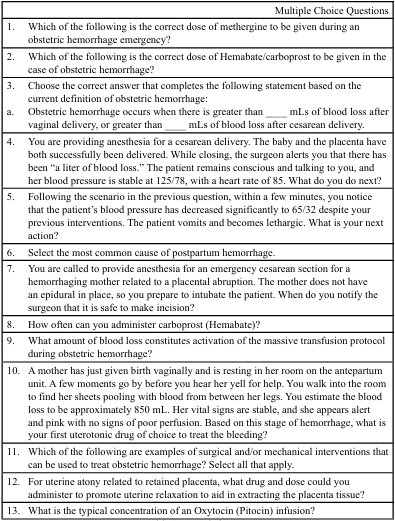
Table 1. Knowledge Test
After completion of the simulation, the project director conducted a debriefing session. At this time, the director reviewed the scenario, management of obstetric hemorrhage emergencies, and any missed objectives or skills with the student. A simulation scoring checklist and knowledge test were created by the project leader using ACOG guidelines for maternal hemorrhage management. Each participant was also provided with an educational pamphlet from the American College of Obstetricians and Gynecologists for the management of obstetric hemorrhage [3].
Following the debriefing session, each student was asked to complete a knowledge-based posttest identical to the pretest designed by the project leader. The same process was carried out at the second project date, using the same pretests and posttests, background information, and simulation scenario. Due to the anonymous nature of data collection, individual pretest and posttest responses could not be linked; therefore, analyses were conducted using aggregated group-level data. However, the students did not receive an additional postpartum hemorrhage pamphlet during the debriefing session. In addition to these steps, after completing the posttest in the second simulation, the students completed a 5-point Likert scale confidence survey designed by the project leader.
All participants were given 30 minutes to complete the project components. Students were instructed and agreed not to discuss the contents of this project with other students following their experiences. Additionally, after the initial simulation, students were not informed that the follow-up simulation would include the same knowledge tests and simulation experience. All knowledge tests, simulation scoring checklists, and confidence surveys remained anonymous.
Data Collection and Measurements
Data and outcomes were evaluated in the three main domains: competence, performance, and confidence. The 13-question knowledge-based pretests and posttests were scored with an overall percentage. For example, a participant who answered 9 of the 13 questions correctly received a score of 69%. Questions on the knowledge tests focused on knowledge about the causes, recognition, and treatment of obstetric hemorrhage. Table 1 shows the knowledge test administered pre- and post-simulation.
Data regarding participant performance was evaluated during the simulation experience. Students were scored on how many care objectives were met using a scoring checklist created by the project director, which highlights the key steps of the ACOG Obstetric Hemorrhage checklist [3]. This checklist includes relevant content for assessing the targeted competencies; however, it has not been formally validated as a performance assessment scale. As the student performed the simulation, the director would score each objective as “met” or “not met.” An objective that was “met” would receive 1 point, while an unmet objective received no points. Overall, 12 objectives were evaluated. A student was considered to have met the objective if he or she verbalized, performed, or delegated a task or skill as appropriate. If any equipment was unavailable to simulate a skill, verbalization of the skill still earned 1 point. For example, students were not required to physically place an arterial line for the simulation; this task was intended to be verbalized. Participants were also allowed to verbally designate tasks to the role-playing nurse if that skill fell within the scope of practice for that profession. At the end of the simulation, participants were given a percentage score based on the number of points they earned out of 12 possible points. For example, if a participant met 6 of the 12 objectives, then that student would receive a performance score of 50%. Table 2 shows the scoring checklist that was used to evaluate performance.
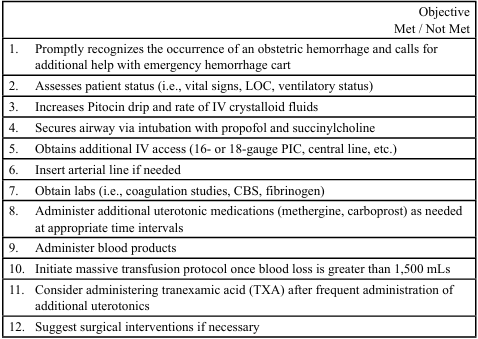
Table 2. Simulation Scoring Checklist
Confidence was scored on a 5-point Likert scale survey provided after the second simulation. Students were asked to rank statements on a scale from completely disagree (1 point) to completely agree (5 points). Higher scores reflected greater agreement with the statement, whereas lower scores reflected greater disagreement. Table 3 shows the confidence survey used.
Data Analysis
To interpret results, mean scores were the focus of analysis for this project. When evaluating the data regarding student competence, a mean score was calculated for each pretest and posttest on both simulation days. Additionally, a standard deviation was calculated for each set of test data to determine the level of consistency in scores. The mean scores were then compared using a variety of methods to evaluate for significant changes in knowledge scores. For example, the mean pretest score was compared to the posttest score at the initial simulation to determine the immediate impact of a single simulation experience on student knowledge. Furthermore, the mean score from the initial pretest was also compared to the mean posttest score at the second simulation to determine whether multiple simulation experiences provided additional benefit to student knowledge levels. Mean posttest scores at the initial simulation were also compared to the mean pretest score at the second simulation to determine whether this type of education may promote retention of knowledge. All changes in mean scores were evaluated using a p-value (using a t-score statistic) due to its ability to determine statistical significance. The threshold of significance was chosen to be 0.05. A p-value that was calculated to be less than 0.05 (p < 0.05) determined a statistically significant change in mean scores. A p-value that was calculated to be greater than 0.05 (p > 0.05) demonstrated that a change in mean scores was not statistically significant.
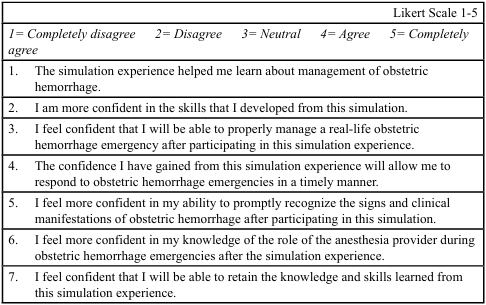
Table 3. Confidence Survey
The same process was used to evaluate for changes in participant performance at the initial and follow-up simulations. Using the simulation scoring checklist, a mean score was calculated for each simulation experience. The mean scores were then compared using the same p-value test. A change in mean scores calculated to have a p-value less than 0.05 (p < 0.05) demonstrated a statistically significant change in performance scores from the initial to the follow-up simulation. For student confidence scores, each survey received an average score out of 5 total points. Then, all average confidence scores were once again averaged to provide an overall sample mean confidence score out of 5 possible points.
The data was also evaluated in a qualitative manner. Knowledge tests were evaluated to determine educational concepts that were most frequently answered incorrectly. Additionally, the simulation performance scores were analyzed to determine the most frequently missed clinical objectives. The purpose of this analysis was to determine which concepts and/or skills may require reinforcement in future teaching.
Results
The overall sample size for this project was 19 students (n=19); however, it should be noted that not all of the knowledge tests and confidence surveys had 100% participation. 1 student neglected to complete posttests for both simulation experiences, leaving a sample size of 18 (n=18) in both posttest data sets. Additionally, 2 students neglected to complete the confidence survey, resulting in a sample size of 17 (n=17) for this data set. Pretests and simulations were completed with 100% participation (n=19). All students had similar experience levels and received the same educational training at the same university prior to the implementation of this project. No personal data or demographics were collected.
Key Findings
Increases in mean scores were found in all three of the domains analyzed. Statistical significance was found in the majority of these changes, as well. Regarding the standard deviation that was calculated for all data sets, there were very few outliers in participant scores; therefore, the data was fairly consistent for all tests and checklists at each simulation training, as well as the confidence survey.
Competence
At the initial simulation on October 4th, scores increased from an average of 68% on the pretest (standard deviation= 0.15, n=19) to 77% (standard deviation= 0.14, n=18) on the posttest. Table 4 demonstrates the calculated mean scores and standard deviations for the initial pretest and second posttest, along with the p-value score. These changes were found to be statistically significant (p-value = 0.038). From the initial pretest on October 4th to the final posttest on November 15th, mean scores increased from 68% (standard deviation = 0.15, n = 19) to 77% (standard deviation = 0.15, n = 18), respectively, with statistical significance (p-value = 0.038). The mean score from the initial simulation posttest and the pretest at the second simulation were similar at 77% (standard deviation =0.14, n=18) and 75% (standard deviation = 0.17, n=19), respectively. The mean scores in the second simulation were very similar, at 75% at the pretest (standard deviation= 0.17, n=19) and 77% at the posttest (standard deviation= 0.15, n=18). Results indicate that simulation may not have an impact on knowledge acquisition.
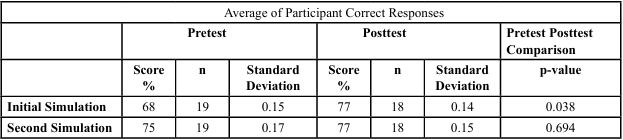
Table 4. Competence
Performance
Performance was evaluated using a scoring checklist created by the director of this project. The scoring checklist included 12 important objectives related to anesthesia management of an obstetric hemorrhage. Table 5 presents the simulation scores for each day, along with the calculated mean and standard deviation. The mean score in the initial simulation was 47% (standard deviation = 0.18, n=19), corresponding to students meeting approximately 6 of the 12 objectives. The mean score increased to 81% at the second training (standard deviation =0.11, n=19), translating to an average of approximately 10 out of the 12 objectives met. These results show statistical significance (p-value <0.0001). This statistical significance difference suggests that simulation-based experience performance strengthens when repeated in a second scenario at a later date.
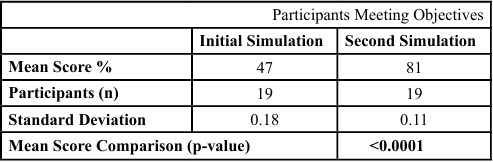
Table 5. Performance
Confidence
Following the second simulation, students were asked to complete a confidence survey to evaluate for improvements in self-efficacy after the training. Students were asked to rank the statements provided on the survey with a Likert scale. The average confidence score was 4.6. No student provided a ranking of less than 3 (neutral) for any of the statements on the survey.
Secondary Findings
The knowledge tests and simulation scoring checklists were analyzed to note the frequency of correctly/incorrectly answered test concepts and met/unmet performance objectives. Amongst all the knowledge tests, specifically looking at the difference between the initial pretest and final posttest, concepts regarding uterotonic medication dosing frequency and surgical interventions had the lowest proportion of correctly answered questions. Figure 1 demonstrates the frequency of correctly answered questions for the main areas of interest on the knowledge tests at the initial pretest and final posttest.
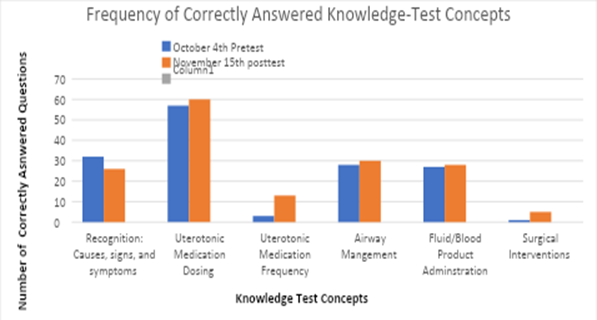
Figure 1. Frequency of Correctly Answered Knowledge-Test Concepts
Regarding performance, many of the most frequently missed objectives during the initial simulation were met during the second simulation. Figure 2 depicts the frequency of met objectives from the initial to the second simulation. The two main objectives that were recurrently missed at the second simulation included obtaining appropriate lab draws and suggesting surgical interventions. However, calling for help, obtaining labs, insertion of an arterial line, and administering tranexamic acid (TXA) all saw large increases by the second simulation.
Discussion
Summary of Findings
Overall, the findings from this project were positive and demonstrated that there may be a valuable place for recurring simulation-based training in nurse anesthesia education. Furthermore, when compared to other studies in a review of the literature, the implementation of simulation experiences during the training period for nurse anesthetists may have positive impacts on real-world clinical practice and patient outcomes. The data showed that the simulation experience significantly improved student knowledge and performance for managing this type of obstetric emergency based on increases in mean scores for both the knowledge tests and performance checklists. The project took place immediately following the participants’ didactic instruction on maternal hemorrhage management; therefore, the improvements found may indicate that simulation-based curriculum may have a synergistic effect with classic teaching methods, such as classroom-based lectures.
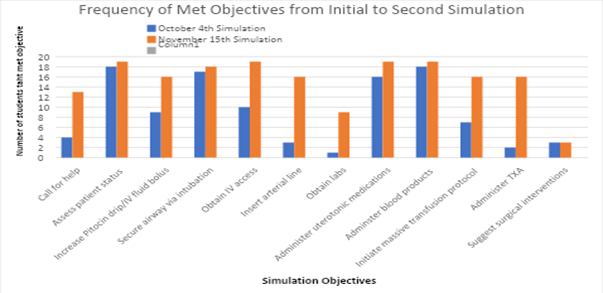
Figure 2. Frequency of Met Objectives from Initial to Second Simulation
Interpretation of Findings
Competence
The results from the knowledge tests (Figure 1) demonstrated that the use of simulation experiences to supplement classical lecture- based teaching may provide an intellectual advantage to SRNAs. The 13% increase seen in average knowledge test scores at the initial simulation demonstrated improvements in participant competence after a single simulation experience. Additionally, the mean scores from the initial posttest to the pretest at the second simulation demonstrated no significant difference and were, in fact, very similar. This was interpreted as a positive finding, as the knowledge that was gained from the first simulation experience appeared to be retained over the one month before the second simulation (Figure 2). In other words, students did not demonstrate having “lost” knowledge during the one-month break between training. Therefore, it can be reasonably inferred that simulation-based education may promote long-term knowledge retention in participants. A lack of significant change in mean pretest and posttest scores at the second simulation indicated that although one simulation experience certainly improves student competence, it is inconclusive as to whether multiple simulations provide additional benefit to knowledge levels; however, it was shown to be beneficial in student performance.
Performance
The difference in mean performance scores portrayed the largest change and possibly the greatest benefit from the simulation training. Overall, performance scores had a 72% increase. This finding displays a positive impact on the ability of simulation exercises to improve an SRNA’s ability to manage an obstetric hemorrhage emergency. It was important to determine that participants could not only acquire the required knowledge but also apply it and previously learned skills in the clinical setting. Furthermore, the impact on performance scores indicates that recurring simulation training can provide a benefit to students' clinical management skills.
Confidence
An average confidence score of 4.6 indicates that students feel confident in their ability to manage obstetric hemorrhage emergencies after participating in a simulated experience. Through these surveys, students indicated that this project promoted confidence in skills learned, the ability to recognize signs and symptoms of a hemorrhage, and an understanding of their role as the anesthesia provider during such events. As previously mentioned, no student provided a score less than 3 for any of the statements on the survey; therefore, the students did not disagree with any of the statements on the confidence survey. This is reassuring that the confidence level stayed the same or increased in this group of students.
Implications of Findings
Overall, the findings of this project support the use of simulation exercises to supplement traditional teaching in nurse anesthesia education. By allowing students to have hands-on time with skills and experience the high-stress environment when managing an obstetric hemorrhage, SRNAs will likely become more competent, high-performing, and confident providers. Although this project implemented two simulations, it is likely not necessary to require multiple simulations for improving didactic content, but it can be beneficial in improving clinical performance.
The findings from this project paralleled many of the studies that were reviewed prior to its implementation. Kato & Kataoka [7] also found that students who received online learning modules combined with simulation training for postpartum hemorrhage had significantly higher knowledge levels and better performance than those who received only traditional online learning modules. Siaulys et al. [9] reported a 65-69% increase in knowledge test scores from pre-simulation to post-simulation. Regarding the ability to transition the knowledge and skills gained through simulated experiences into real-life clinical practice, three studies observed improvements in practice and management during actual maternal hemorrhage events following the implementation of simulation experiences at their respective facilities [10,13,18]. One of these studies even found a significant decrease in the incidence of postpartum hemorrhages.
Although this specific project did not assess performance in real- world cases, the findings of these studies further validate the benefit of implementing simulation exercises to improve clinical practice and patient outcomes. Many studies also had similar findings that simulation training may instill a stronger sense of self-efficacy in healthcare professionals [8,9,11,12,15-17]. Additionally, the studies by Walker et al. [15] and Egenberg et al. [11] found that simulation not only improved personal self-efficacy but also increased participants' confidence in teamwork skills and functioning. These findings support the use of simulations to promote interprofessional collaboration and teamwork during emergencies. The use of nursing students as adjunct professionals during the simulation for this project can further validate those results by Walker et al. [15] and Egenberg et al. [11]. Many of the studies that were analyzed used high-fidelity mannequins and equipment during simulation experiences, which is similar to the equipment used in this specific project. This implies that high-fidelity simulations may be superior and yield better outcomes; however, more research is needed to compare them with simulations using basic, lower-grade equipment.
As mentioned previously, the results of the knowledge tests were also evaluated in a qualitative manner, with a focus on identifying frequently missed concepts. It was identified that questions regarding uterotonic medication dosing frequency and surgical interventions were often answered incorrectly. These findings were beneficial to the director of this study, as the need for educational reinforcement in these areas was necessary and may be implemented in later teaching. Not only can simulation experiences provide positive impacts on student learning, but instructors and professors can also use these experiences to identify areas of strength and weakness in teaching.
Limitations
Despite its positive findings, there were limitations identified with this project. To begin, the sample size was small, with a total of only 19 participants, due to the university being the only nurse anesthesia program in the region. In addition to a small sample size, there was not 100% participation for the post-simulation knowledge tests and confidence surveys; therefore, there is a minor risk for skewed results. As mentioned previously, this project did not assess for impacts on performance and competence in real-world scenarios, nor did it evaluate for changes in actual patient outcomes. A limitation of this study was that pretest and posttest responses could not be linked for individual participants, limiting the ability to assess within-subject changes over time.
Additionally, this project was limited to the use of only high-fidelity equipment; therefore, it is inconclusive as to whether similar, positive results would be found with simulations that have scarce or no access to such resources. The confidence survey, knowledge assessment, and simulation scoring checklist were developed by the primary researcher and therefore lacked validity and reliability. The primary researcher was also solely responsible for the performance scoring. The absence of independent evaluation could have introduced evaluator bias.
Recommendations
A larger sample size would allow for better generalization of these results. It is also recommended that the target population for simulation experiences is expanded to post-graduate, licensed anesthesia providers and other healthcare personnel (i.e., physicians, registered nurses, nurse midwives, etc.) to assess for improvements in current practice and interprofessional teamwork. To better understand the impact on performance, future studies should evaluate for improved real-world performance and changes in patient outcomes. Data following the incidence, mortality, and complications rate of obstetric hemorrhages at respective facilities would be beneficial to future research. Lastly, although this project assessed for retention of knowledge after one month, it was not able to evaluate long-term impacts. From a review of the literature, Nathan et al. [14] found that simulation training for postpartum hemorrhage resulted in long-term retention of knowledge and skills for a period of 2 years post-intervention; however, this was the only study to do so. Future research should focus on implementing a follow-up simulation with SRNAs during their third-year of the program, with inclusion of validated tools to strengthen project results.
Conclusion
As obstetric hemorrhage remains a common threat to the mother during childbirth, healthcare professionals must be well-trained, high-performing, and confident when it comes to recognizing and managing such events. Among these important providers are Certified Registered Nurse Anesthetists, and recent studies have shown that enhancing their educational curriculum with more hands-on, realistic training may improve patient care and outcomes. The results of this project are consistent with the literature and support the use of simulation-based education to supplement traditional teaching for SRNAs to create more competent providers. Similar to the findings in other studies, this project found that implementing simulation exercises may enhance SRNAs' knowledge, clinical performance, and confidence when managing obstetric hemorrhage emergencies. Students may have better retention of the knowledge and skills when able to recall knowledge and carry out hands-on skills while also experiencing the high-stress environment of a hemorrhage situation. Furthermore, this project allowed students to improve upon their interprofessional teamwork skills by interacting with nursing students and role-playing surgeons, just as they would in a real-life scenario of the operating room. The complexity and multiple domains of this project demonstrated strength in the findings; however, an expansion of the target population to include a larger sample size and licensed anesthesia providers is necessary to better generalize the effectiveness of this type of training in the anesthesia profession. Additionally, future studies should focus on evaluating the longer term retention of knowledge.
Competing Interests:
The authors declare that they have no competing interests.
Acknowledgements
The authors would like to acknowledge Murray Calloway County Hospital/Murray State University Simulation Center for assisting with supplies, time, and space to complete the simulation.
References
The Joint Commission. (2019, October). Quick safety 51: Proactive prevention of maternal death from maternal hemorrhage. View
World Health Organization. (2023, March 10). WHO postpartum haemorrhage summit. View
American College of Obstetricians and Gynecologists. (2017, October). Postpartum hemorrhage. View
Rosenbaum, T., & Mhyre, J. M. (2017). The anesthesiologist’s role in the national partnership for maternal safety’s hemorrhage bundle: A review article. Clinical Obstetrics and Gynecology, 60(2), 384–393. View
Atallah, F., & Goffman, D. (2020). Improving healthcare responses to obstetric hemorrhage: Strategies to mitigate risk. Risk Management and Healthcare Policy, 13, 35–42. View
Hernández, E., Camacho, M., Leal-Costa, C., et al. (2021). Does multidisciplinary team simulation-based training improve obstetric emergencies skills? Healthcare, 9(2), 170. View
Kato, C., & Kataoka, Y. (2017). Simulation training program for midwives to manage postpartum hemorrhage: A randomized controlled trial. Nurse Education Today, 51, 88–95. View
Alsaraireh, A., Madhavanprabhakaran, G., Raghavan, D., Arulappan, J., & Khalaf, A. (2024). Effect of a high-fidelity simulation-based teaching-learning experience (SBTLE) on maternal health nursing students’ knowledge of postpartum hemorrhage, confidence, and satisfaction. Teaching and Learning in Nursing, 19(1). View
Siaulys, M. M., da Cunha, L. B., Torloni, M. R., & Kondo, M. M. (2019). Obstetric emergency simulation training course: Experience of a private-public partnership in Brazil. Reproductive Health, 16(1). View
Dillon, S. J., Kleinmann, W., Fomina, Y., et al. (2021). Does simulation improve clinical performance in management of postpartum hemorrhage? American Journal of Obstetrics and Gynecology, 225(4). View
Egenberg, S., Øian, P., Eggebø, T. M., Arsenovic, M. G., & Bru, L. E. (2017). Changes in self-efficacy, collective efficacy and patient outcome following interprofessional simulation training on postpartum haemorrhage. Journal of Clinical Nursing, 26(19–20), 3174–3187. View
Lutgendorf, M. A., Spalding, C., Drake, E., Spence, D., Heaton, J. O., & Morocco, K. V. (2017). Multidisciplinary in situ simulation-based training as a postpartum hemorrhage quality improvement project. Military Medicine, 182(3). View
Lutgendorf, M. A., Ennen, C. S., McGlynn, A., et al. (2023). Interprofessional obstetric simulation training improves postpartum haemorrhage management and decreases maternal morbidity: A before-and-after study. BJOG: An International Journal of Obstetrics and Gynaecology, 131(3), 353–361. View
Nathan, L. M., Patauli, D., Nsabimana, D., Bernstein, P. S., Rulisa, S., & Goffman, D. (2016). Retention of skills 2 years after completion of a postpartum hemorrhage simulation training program in rural Rwanda. International Journal of Gynecology & Obstetrics, 134(3), 350–353. View
Walker, D., Cohen, S., Fritz, J., et al. (2014). Team training in obstetric and neonatal emergencies using highly realistic simulation in Mexico: Impact on process indicators. BMC Pregnancy and Childbirth, 14(1). View
Ehmke, S., Swan, M., Van Gelderen, S., & Bourdeanu, L. (2021). Impact of obstetric emergency high-fidelity simulation on maternity nurses’ self-efficacy in the rural hospital setting. MCN: The American Journal of Maternal/Child Nursing, 46(3), 150–154. View
Monod, C., Voekt, C. A., Gisin, M., Gisin, S., & Hoesli, I. M. (2013). Optimization of competency in obstetrical emergencies: A role for simulation training. Archives of Gynecology and Obstetrics, 289(4), 733–738. View
Nelissen, E., Ersdal, H., Mduma, E., Auestad, B., Reime, B., Mdoe, P., … Stekelenburg, J. (2017). Clinical performance and patient outcome after simulation-based training in prevention and management of postpartum haemorrhage: An educational intervention study in a low-resource setting. BMC Pregnancy and Childbirth, 17(1). View