
- About the Journal
- Editorial Board
- Review Process
- Author Guidelines
- Article Processing Charges
- Special Issues
- Indexing
- Current Issue
- Past Issue
 Journal of Comprehensive Nursing Research and Care
Journal of Comprehensive Nursing Research and Care Volume 11 (2026), Article ID: JCNRC-233
https://doi.org/10.33790/jcnrc1100233Research Article
Nurses’ Perceptions of Dual-Signature Policy for Subcutaneous Insulin Administration: A Descriptive Survey in a Rural Acute Care Hospital
Meryem Akay Kuzey*, DNP, MSN, RN and Carolyn Tinsley, DNP, MSN, RN
College of Nursing and Health Sciences, Murray State University, 1375 Chestnut St, Murray, KY 42071, United States.
Corresponding Author Details: Meryem Akay Kuzey, DNP, MSN, RN, Assistant Professor, College of Nursing and Health Sciences, Murray State University, 102 Curris Center, Murray, Kentucky, United States.
Received date: 06th May, 2026
Accepted date: 30th July, 2026
Published date: 03rd August, 2026
Citation: Kuzey, M. A., & Tinsley, C., (2026). Nurses’ Perceptions of Dual-Signature Policy for Subcutaneous Insulin Administration: A Descriptive Survey in a Rural Acute Care Hospital. J Comp Nurs Res Care 11(2):233.
Copyright: ©2026, This is an open-access article distributed under the terms of the Creative Commons Attribution License, which permits unrestricted use, distribution, and reproduction in any medium, provided the original author and source are credited.
Abstract
Context: Insulin is a high-alert medication associated with significant patient harm when administered incorrectly. Many healthcare organizations implement dual-signature verification policies requiring two nurses to independently verify subcutaneous insulin doses. Although widely used, evidence regarding its impact on nursing workflow and nurses' perceptions of its value for patient safety remains limited.
Aims: The purpose of this project was to examine nurses’ perceptions of the dual-signature policy for subcutaneous insulin administration and its impact on daily workflow in an acute care hospital.
Methods: This quality improvement project used a descriptive crosssectional survey design. A structured 10-item questionnaire was administered in person to 105 licensed nurses in a 226-bed rural acute care hospital. Survey items addressed demographic characteristics, insulin verification practices, time required to locate a second nurse, reported medication errors, and perceptions related to patient safety and time available for direct patient care. Data were summarized using descriptive statistics, cross-tabulations, and Pearson chi-square analyses.
Results: Most participants were ADN- or BSN-prepared nurses (80.9%), and 46.7% had 1–5 years of experience. Dual verification was performed 1–4 times per shift by 75.2% of respondents, and 64.8% reported locating a second nurse within five minutes. Most nurses (94.3%) reported no insulin dosage errors. Perceptions were mixed, with 55.2% viewing dual verification as necessary for patient safety, whereas 58.1% reported that removing the dual-signature policy would not provide more time for direct patient care.
Conclusion: The dual-signature policy was consistently implemented; however, nurses expressed differing perspectives regarding its necessity and its impact on workflow. These findings may inform future evaluations of insulin verification policies while balancing patient safety and nursing workflow efficiency. Because this quality improvement project was conducted in a single rural acute care hospital, the findings may not be generalizable to other healthcare settings.
Keywords: Insulin Administration; Dual Verification; Patient Safety; Nursing Regulation; Workflow; Medication Safety
Introduction
Insulin is classified as a high-alert medication, and errors in insulin administration can result in serious patient harm. Hypoglycemia, prolonged hospitalization, and increased morbidity have been associated with insulin dosing errors [1]. Because insulin is frequently administered in acute care settings, safe and consistent verification practices are essential to protect patients and prevent avoidable complications. For nurses, insulin administration is a routine responsibility during 12-hour shifts, making safety processes directly connected to daily workflow and patient outcomes.
Many healthcare organizations require dual-signature verification for subcutaneous insulin administration [2]. This process involves two nurses independently verifying the insulin type and dose before administration, with the goal of reducing preventable medication errors. National safety organizations support independent double checks for high-risk medications when implemented appropriately [3,4]. These recommendations highlight the importance of structured safeguards in high-risk medication administration and support organizational efforts to promote safe medication administration.
Evidence regarding double-checking practices has shown mixed findings. Systematic and integrative reviews suggest that structured double-checking may reduce medication administration errors [5,6]. Observational studies have also demonstrated associations between double-checking and improved medication safety outcomes [1,7]. However, other studies indicate that mandatory verification processes may interrupt workflow, increase time burden, and create inefficiencies in busy clinical environments [8,9]. Some institutions have reported no increase in insulin errors after suspending mandatory double checks for standard subcutaneous insulin when alternative safeguards were present [10]. These findings suggest that while dualsignature verification may enhance safety, its impact on workflow and nursing efficiency may vary across settings.
Although previous studies have examined medication errors, double-checking practices, and their effects on medication safety and workflow [1,5,6,8-10], limited evidence has specifically focused on nurses' perceptions of mandatory dual-signature verification for subcutaneous insulin administration. Understanding frontline nurses' perspectives may help inform organizational policy decisions and identify opportunities to improve patient safety and workflow efficiency.
At the project site, a dual-signature policy for subcutaneous insulin administration was routinely enforced. Insulin preparation and verification were regular components of daily nursing workflow. Although insulin dosage errors were uncommon, variation existed in perceptions regarding whether the policy was necessary for patient safety and whether it affected time available for direct patient care. Differences in educational preparation and years of nursing experience further suggested variability in how the policy was viewed and applied in practice.
Variation in nurses' perceptions and concerns regarding workflow created uncertainty about whether the dual-signature policy optimally supported both patient safety and efficient nursing care within the organization. The objective of this quality improvement project was to examine nurses’ perceptions of the dual-signature policy for subcutaneous insulin administration and its perceived impact on patient safety and daily workflow in a rural acute care hospital. Specifically, the project examined nurses' perceptions of the necessity of dual-signature verification, its impact on workflow, the time required to locate a second nurse and reported insulin verification practices. Findings from this project were intended to inform organizational review of the dual-signature policy and support efforts to balance medication safety with efficient nursing care.
Methods
This quality improvement project used a descriptive cross-sectional survey design to examine nurses’ perceptions of a dual-signature policy for subcutaneous insulin administration. An in-person questionnaire was used to gather information about current nursing practices within the organization and to explore nurses’ views related to patient safety, workflow efficiency, time management, and the sustainability of the policy in routine clinical practice.
A survey-based approach was selected to capture frontline nursing perspectives in real-world clinical settings. This approach was appropriate for understanding perceived benefits and challenges associated with the policy without altering existing clinical practice. The project did not involve randomization or comparison groups, as the intent was to evaluate experiences within an established workflow rather than test an intervention.
Institutional Review Board Approval
Institutional Review Board (IRB) approval was obtained from Murray State University before the project began. The project was reviewed and determined to be exempt. Participation was voluntary, and completing the survey implied informed consent. No identifying personal information was collected. All procedures followed institutional guidelines for ethical conduct and protection of participants.
Date and Duration
An in-person questionnaire was distributed to nurses, and data were collected during the summer of 2025, from May 28 to August 8. The questionnaire was completed during participants' work shifts at a time convenient for participants and in a confidential manner.
Project Setting
The project was conducted in a 226-bed rural acute care hospital in Western Kentucky. The hospital serves patients from surrounding rural communities and provides a range of inpatient and emergency services. The setting included two medical-surgical units, two critical care units, a progressive care unit (PCU), the coronary care unit (CCU), and the emergency department.
Participants
A total of 105 nurses participated in the project. The sample included registered nurses and licensed practical nurses who routinely administered subcutaneous insulin. All participants worked in hospital units where dual-signature verification for subcutaneous insulin administration was required. All 105 eligible nurses working in the participating units were invited to participate, and all completed the survey, resulting in a 100% response rate. Because this quality improvement project was conducted in the only acute care hospital in the county, no formal sample size calculation was performed.
Nurses were recruited through in-person distribution of the survey during their work shifts using a convenience sampling approach to evaluate nurses' perceptions of an existing organizational policy. Eligible participants included nurses working in hospital units where subcutaneous insulin administration and dual-signature verification were routinely required, including the medical-surgical units, critical care units, progressive care units, the coronary care unit, and the emergency department. This approach provided access to the target population most directly involved in implementing the policy during the data collection period.
Data Collection
Information for this quality improvement project was collected using a structured survey developed for a Doctor of Nursing Practice project. The survey was developed to assess nurses' perceptions of the dual-signature policy for subcutaneous insulin administration. Before implementation, it was reviewed by the Doctor of Nursing Practice project advisor. The survey was completed in person using a paper questionnaire. The project included a single group of participants and did not involve comparison or control groups.
The survey included 10 closed-ended questions related to demographic characteristics, insulin administration practices, and perceptions of the dual-signature policy. Demographic questions addressed education level and years of experience. Practice-related questions addressed the number of insulin doses prepared during a typical 12-hour shift, frequency of dual verification, and time required to find another nurse for verification. Perception-based questions addressed views on incorrect insulin dosing, prior experience in settings without a dual-signature policy, perceived importance of the policy for patient safety, and the perceived effect of policy removal on time available for patient care.
Participation was voluntary. Verbal information about the purpose of the project, confidentiality, and estimated completion time was provided before the survey. The survey took approximately 10 to 15 minutes to complete. Informed consent was implied by completing and returning the survey. No names or personal identifiers were collected. Completed surveys were returned to the project investigators and stored in a locked cabinet accessible only to authorized personnel. Each survey was checked for completeness before review.
Data Analysis
Data were reviewed for completeness and accuracy before analysis. Descriptive statistics were used to summarize demographic characteristics, work-related variables, and perceptions of the dualsignature policy. Categorical variables were summarized using frequencies and percentages. Pearson chi-square analyses were conducted to examine associations between years of nursing experience and nurses' perceptions of the dual-signature policy, including its perceived importance for patient safety and its perceived effect on time available for direct patient care. Numerical variables, such as the number of insulin doses prepared during a typical 12- hour shift, were summarized using frequency tables and graphs. Data were analyzed using IBM SPSS Statistics [11].
Results
The distribution of nurses by educational preparation is shown in Table 1. Among the 105 nurses surveyed, 45.7% held a Bachelor of Science in Nursing (BSN), 35.2% held an Associate Degree in Nursing (ADN), 14.3% were Licensed Practical Nurses (LPNs), and 4.8% held a Master of Science in Nursing (MSN). Overall, the study sample consisted primarily of BSN- and ADN-prepared nurses, representing more than 80% of participants.
Years of nursing experience are also presented in Table 1. Nearly half of the participants (46.7%) reported 1–5 years of experience. Additional experience levels included 6–10 years (19.0%), 11–15 years (7.6%), 16–20 years (9.5%), and more than 20 years (17.1%). Overall, the sample represented nurses with a broad range of clinical experience, although those with 1–5 years of experience comprised the largest group.
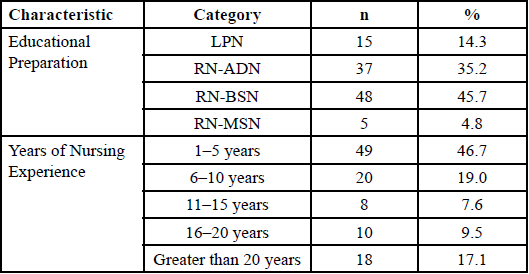
Table 1: Participant Characteristics (N = 105)
Insulin doses prepared during a 12-hour shift are presented in Table 2. Overall, 77.1% of participants reported preparing 1–4 insulin doses per shift, followed by 5–10 doses (19.0%), 11–15 doses (1.9%), 16–20 doses (1.0%), and more than 20 doses (1.0%). Overall, most nurses reported preparing relatively few insulin doses during a typical 12-hour shift.
The time required to locate a second nurse for insulin dose verification is shown in Table 2. Most nurses (64.8%) reported finding a verifying nurse in less than five minutes. Additional responses included 5–10 minutes (29.5%), 10–15 minutes (4.8%), and more than 15 minutes (1.0%). These findings indicate that a second nurse was generally available for verification within a short period of time.
Frequency of dual insulin verification during a 12-hour shift is presented in Table 2. A total of 76.2% of participants completed dual insulin verification 1–4 times per shift, whereas 20.0% completed it 5–10 times and 3.8% completed it 11–15 times. Overall, most nurses performed dual insulin verification relatively infrequently during a typical shift, consistent with the reported number of insulin doses prepared.
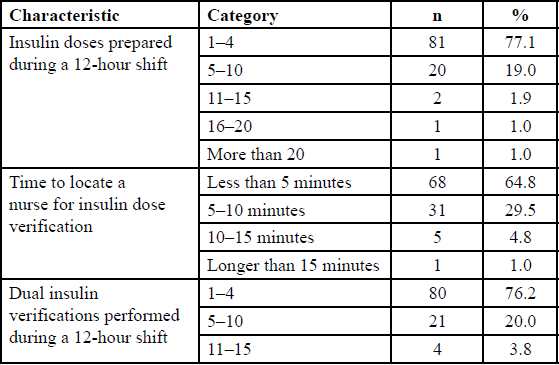
Table 2: Insulin Administration and Dual Verification Workflow Characteristics (N = 105)
The occurrence of incorrect insulin dosage is shown in Table 3. Among participants, 94.3% reported no incorrect insulin dosage during their shifts, whereas 5.7% reported at least one incorrect dosage. Overall, incorrect insulin dosages were reported infrequently among the study participants.
The percentage of incorrect insulin dosages among reported errors is shown in Table 3. Five participants (83.3% of those reporting an error) indicated an error rate of 10% or less, whereas one participant (16.7%) reported a 100% error rate. Among the few nurses who reported an insulin dosage error, most indicated a relatively low error rate.
Experience working in facilities without a dual insulin verification policy is shown in Table 3. Nearly three-quarters of participants (72.4%) had not worked in facilities without a dual insulin verification policy, whereas 27.6% had previous experience in such facilities. Overall, most nurses had practiced in environments where dual insulin verification was an established medication safety policy.
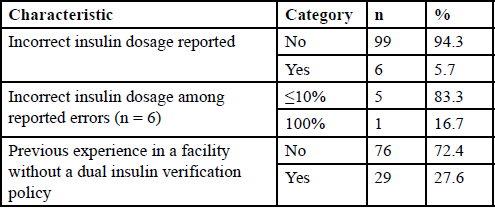
Table 3: Insulin Administration Errors and Experience with Dual Verification Policy (N = 105)
Perceptions of whether dual insulin verification was necessary for patient safety are shown in Table 4. Participants were asked whether dual insulin verification was necessary for patient safety; 55.2% responded "Yes," whereas 44.8% responded "No." Overall, nurses' perceptions were divided, although a slight majority viewed dual insulin verification as necessary for patient safety.
Table 4 also presents participants' perceptions of whether dual insulin verification provided more time for patient care. A total of 58.1% of participants reported that dual insulin verification did not provide more time for patient care, whereas 41.9% reported that it did. Overall, most participants did not believe that the dual insulin verification process increased the time available for direct patient care.
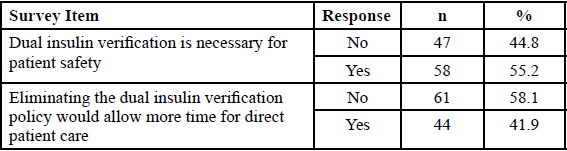
Table 4. Overall Nurses' Perceptions of the Dual Insulin Verification Policy (N = 105)
Table 5 and Figure 1 present nurses' perceptions of the necessity of dual insulin verification for patient safety across years of nursing experience. Overall, the majority of nurses in most experience groups considered dual insulin verification necessary for patient safety, although responses varied across groups. Nurses with 16–20 years of experience reported the lowest level of agreement (20.0%), whereas nurses with more than 20 years of experience reported the highest level of agreement (61.1%). However, a Pearson chi-square test indicated that the association between years of nursing experience and perceptions of the necessity of dual insulin verification was not statistically significant (χ²(4, N = 105) = 5.85, p = .210).
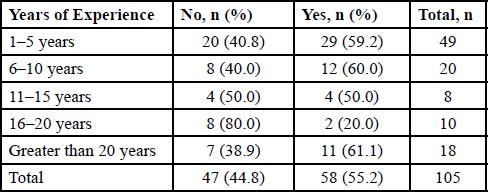
Table 5. Cross-Tabulation of Years of Nursing Experience and Perceptions of Dual Insulin Verification Policy
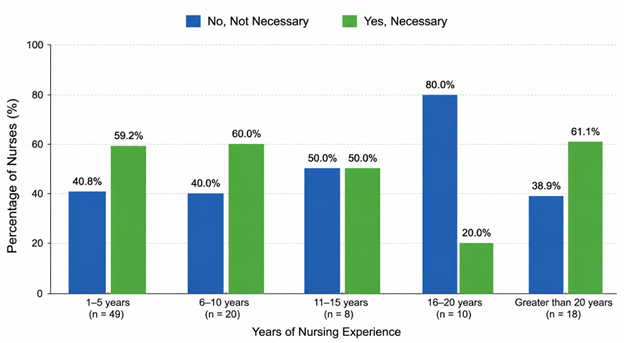
Figure 1: Nurses' Perceptions of the Necessity of Dual Insulin Verification for Patient Safety by Years of Nursing Experience
Table 6 and Figure 2 present nurses' perceptions of whether eliminating the dual insulin verification policy would allow more time for direct patient care across years of nursing experience. Perceptions varied across experience groups. Nurses with 16–20 years of experience were the most likely to believe that eliminating the policy would allow more time with patients (80.0%), whereas nurses with more than 20 years of experience were the least likely to hold this view (27.8%). A Pearson chi-square test indicated a marginally significant association between years of nursing experience and perceptions of the policy's effect on time available for direct patient care (χ²(4, N = 105) = 7.88, p = .096), suggesting differences across experience groups at the 10% significance level.
Discussion
This quality improvement project examined nurses’ perceptions of the dual-signature policy for subcutaneous insulin administration, with a focus on patient safety and daily workflow. Findings showed that reported insulin dosage errors were uncommon and that dual insulin verification was routinely used in practice. However, nurses differed in their views regarding the necessity of the policy and its impact on workflow, particularly related to time available for direct patient care.
Insulin is a high-risk medication, and administration errors can result in serious patient harm [1]. Many healthcare organizations use dual-signature verification to reduce these risks. National safety organizations, including the Institute for Safe Medication Practices and The Joint Commission, support independent double checks for high-alert medications when implemented appropriately [3,4]. In this project, reported insulin dosage errors were uncommon, and dual insulin verification was routinely used by participants. Previous studies have suggested that structured verification processes may support medication safety for high-alert medications [2,5]. However, because this project relied on nurses’ self-reported experiences and did not compare medication-error rates before and after implementation of the policy, the findings cannot determine whether dual verification reduced insulin errors. Instead, the results indicate that the verification process was well integrated into medication administration practices within the participating organization.
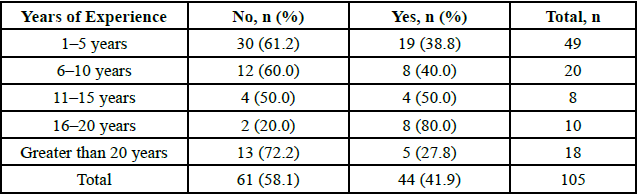
Table 6. Cross-Tabulation of Years of Nursing Experience and Perceived Effect of Policy Change on Time with Patients
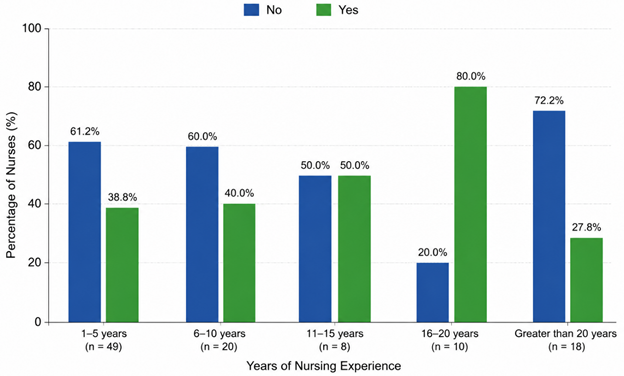
Figure 2: Perceived Effect of Eliminating the Dual Insulin Verification Policy on Time Available for Direct Patient Care by Years of Nursing Experience (italic)
The results also highlighted concerns related to workflow and time with patients. Many nurses reported that removing the dual-signature policy would not provide more time for direct patient care, although some experienced delays when locating a second nurse. Previous studies have similarly shown that additional verification steps may interrupt workflow and increase time demands, particularly in busy clinical settings [8,9]. Despite occasional delays, many participants did not perceive a substantial overall effect on time available for direct patient care. This may reflect the integration of dual insulin verification into routine nursing practice, allowing nurses to incorporate the process into their established workflow. It is also possible that delays occurred intermittently rather than consistently enough to meaningfully affect overall patient-care time. Workflow challenges associated with dual verification may also vary according to staffing levels, unit demands, and the availability of another qualified nurse [5,9].
Descriptive patterns in perceptions of the dual-signature policy were observed across years of nursing experience. Some experience groups showed stronger agreement regarding the necessity of the policy, whereas others were more divided. Perceptions of whether removing the policy would provide more time for direct patient care also differed descriptively across experience categories. These patterns may reflect differences in clinical experience and prior exposure to various practice environments. Previous studies have suggested that nurses’ clinical experience and familiarity with medication safety practices may influence perceptions of independent double-check procedures and adherence to safety policies [2,5]. However, these descriptive patterns should be interpreted cautiously because the statistical analyses did not provide strong evidence of consistent differences across experience groups.
The association between years of nursing experience and perceptions of the necessity of dual insulin verification was not statistically significant. The association between nursing experience and perceptions of whether removing the policy would provide more time for direct patient care was also not statistically significant at the conventional .05 level, although the finding was marginal at the .10 level. This pattern may indicate a possible relationship that should be examined in larger studies, but it does not provide sufficient evidence to conclude that perceptions differed by experience level. Because all participants worked within the same acute care hospital and followed the same organizational policy, shared procedures and routine exposure to dual verification may have contributed to broadly similar perceptions across groups. Organizational expectations and the local safety culture may therefore have had a stronger influence on nurses’ perceptions than years of experience alone. Previous studies have similarly suggested that medication safety practices are shaped by standardized protocols, organizational expectations, safety culture, and individual nurse characteristics [2,5].
Despite the slight majority who considered dual insulin verification necessary for patient safety, nearly 45% of nurses did not view the policy as necessary. This finding indicates that nurses working under the same organizational policy differed in how they perceived the value of mandatory dual verification. Some nurses may rely more heavily on clinical judgment and familiarity with insulin administration, whereas others may perceive safeguards such as standardized insulin protocols, electronic medication administration records, barcode medication administration, and clinical decision support systems as reducing the need for an additional manual verification step. Previous studies have suggested that nurses may question mandatory double-check procedures when they become routine tasks rather than truly independent safety checks [2,5]. These findings highlight the importance of continuing education and clear communication regarding the purpose and expected process of independent double verification within contemporary medication safety systems.
Education and organizational support may help address differences in nurses’ perceptions. Previous research highlights the importance of clear guidance, ongoing education, and leadership support in promoting consistent medication safety practices [2,5]. Explaining the intended purpose of independent dual verification and addressing workflow concerns may support more consistent implementation of the policy. Nursing leaders should also evaluate whether staffing patterns and unit workflows allow nurses to complete verification in a timely manner. Periodic review of the policy, together with frontline nurse feedback and objective medication-safety data, may help organizations determine whether current verification requirements appropriately balance patient safety and workflow efficiency.
Overall, this project provides practical insight into nurses’ experiences with dual-signature verification in clinical practice. Although the policy is intended to support medication safety, the findings indicate that nurses hold differing views regarding its necessity and its effect on workflow. As electronic medication administration records, barcode medication administration, and clinical decision support technologies continue to advance, healthcare organizations should periodically evaluate how these safeguards complement manual dualsignature verification. Such evaluations should incorporate nurses’ perspectives, workflow measures, and objective medication-error data. Balancing patient safety with workflow efficiency remains an important consideration in nursing practice and organizational policy development.
Limitations
This project was conducted in a single hospital, which limits the generalizability of the findings to other healthcare settings. Because this project used a cross-sectional design, the findings represent nurses' perceptions at a single point in time and may not reflect changes in perceptions over time. A convenience sampling approach was used because the project focused on nurses working in the only acute care hospital in the county where dual-signature verification for subcutaneous insulin administration was routinely required. Although this approach allowed the project to obtain perspectives from the nurses most directly involved in the policy, it may have introduced selection bias. Only bedside nurses participated, and the perspectives of nurse managers and nurse educators were not included. Their input may have provided additional insight into how the dual-signature policy affects workflow, education, and patient safety at a broader organizational level. In addition, nursing students were not included. Including their experiences may have helped identify differences in understanding, workflow, and training needs between students and licensed nurses. Some years-of-experience groups included relatively few participants, which may limit the interpretation of comparisons across experience levels. The findings were also based on self-reported perceptions and experiences, which may be subject to recall bias and social desirability bias. The project did not include objective medication-error data; therefore, it was not possible to determine whether the dual-signature policy influenced actual medication-error rates. Finally, the survey was developed specifically for this quality improvement project and was reviewed by the Doctor of Nursing Practice project advisor; however, formal pilot testing and psychometric evaluation, including validity and reliability testing, were not performed.
Conclusion
This quality improvement project examined nurses' perceptions of the dual-signature policy for subcutaneous insulin administration. The findings provide insight into nurses' perceptions of the dual-signature policy; however, this project did not evaluate the effectiveness of the policy or establish causal relationships. Ongoing education and brief refresher sessions may help reinforce the purpose of independent double-checking and its role in patient safety. Nurse leaders should consider staffing patterns and unit workflow to facilitate timely dual-signature verification, particularly during busy shifts. In addition, healthcare organizations should continue to evaluate how barcode scanning and electronic co-signature systems can complement dualsignature verification to support safe insulin administration practices. Future studies using objective medication-error data and multicenter study designs are needed to further evaluate the impact of dualsignature verification on medication safety.
Acknowledgements
The authors thank all nurses who supported the data collection process.
Funding
No funding was received for this project.
Author Contributions (CRediT)
Meryem Kuzey Akay: Conceptualization, Methodology, Formal analysis, Data curation, Resources, Data Collection
Carolyn Tinsley: Conceptualization, Data Collection, Resources
Conflict of Interest:
The authors declare no conflicts of interest.
Use of Artificial Intelligence
During the preparation of this manuscript, the authors used ChatGPT to improve language and readability. The authors reviewed and edited the content and take full responsibility for the final manuscript.
Human Subjects Approval Statement
This project was reviewed by the Murray State University Institutional Review Board and determined to be exempt. Participation was voluntary, and informed consent was implied through survey completion.
Data Availability Statement
The data that support the findings of this study are available from the corresponding author upon reasonable request.
References
Westbrook, J. I., Li, L., Hooper, T. D., Raban, M. Z., Middleton, S., & Lehnbom, E. C. (2021). Associations between doublechecking and medication administration errors: A direct observational study of paediatric inpatients. BMJ Quality & Safety, 30(4), 320–330. View
Alsulami, Z., Choonara, I., & Conroy, S. (2014). Paediatric nurses’ adherence to the double-checking process during medication administration in a children's hospital: an observational study. Journal of Advanced Nursing, 70(6), 1404- 1413. View
Institute for Safe Medication Practices. (2019). Independent double checks: Worth the effort if used judiciously and properly. ISMP Medication Safety Alert, 24, 1–6. View
The Joint Commission. (2024). National patient safety goals: Hospital program. View
Koyama, A. K., Maddox, C. S., Li, L., Bucknall, T., & Westbrook, J. I. (2020). Effectiveness of double-checking to reduce medication administration errors: A systematic review. BMJ Quality & Safety, 29(7), 595–603. View
Alqahtani, N. (2022). Reducing potential errors associated with insulin administration: An integrative review. Journal of Evaluation in Clinical Practice, 28(6), 1037–1049. View
Modic, M. B., Albert, N. M., Sun, Z., Bena, J. F., Yager, C., Cary, T., Corniello, A., Kaser, N., Simon, J., Skowronsky, C., & Kissinger, B. (2016). Does an insulin double-checking procedure improve patient safety? Journal of Nursing Administration, 46(3), 154–160. View
Pfeiffer, Y., Zimmermann, C., & Schwappach, D. L. B. (2020). What do double-check routines actually detect? An observational assessment and qualitative analysis of identified inconsistencies. BMJ Open, 10, e039291. View
Schutijser, B. C. F. M., Jongerden, I. P., Klopotowska, J. E., Portejijs, S., de Bruijne, M. C., & Wagner, C. (2019). Double checking injectable medication administration: Does the protocol fit clinical practice? Safety Science, 118, 853–860. View
Mondloch, M., & Watson, J. (2021). Suspension of independent double-check for subcutaneous insulin administration [Poster presentation]. CentraCare Health. View
IBM Corp. (2015). IBM SPSS Statistics for Windows (Version 23.0) [Computer software]. IBM Corp. View