
- About the Journal
- Editorial Board
- Review Process
- Author Guidelines
- Article Processing Charges
- Special Issues
- Current Issue
- Past Issue
 Journal of Information Technology and Integrity
Journal of Information Technology and Integrity Volume 3 (2025), Article ID: JITI-113
https://doi.org/10.33790/jiti1100113Research Article
Software Engineering Practices for Remote Civil Engineering Project Management during COVID-19
Sai Nethra Betgeri, Ph.D.1*, and Naga Parameshwari Chekuri, Ph.D.2
1Assistant Professor, Department of Computer Science and Engineering, J.B. Speed School of Engineering, University of Louisville, Louisville, Kentucky, United States.
2Assistant Professor, Department of Management Studies, B V Raju Institute of Technology, Narsapur, Medak District, Telangana, India.
Corresponding Author: Sai Nethra Betgeri, Ph.D., Assistant Professor, Department of Computer Science and Engineering, J.B. Speed School of Engineering, University of Louisville, Louisville, Kentucky, United States.
Received date: 20th September, 2025
Accepted date: 10th November, 2025
Published date: 12th November, 2025
Citation: Betgeri, S. N., & Chekuri, N. P., (2025). Software Engineering Practices for Remote Civil Engineering Project Management during COVID-19. J Inform Techn Int, 3(2): 113.
Copyright: ©2025, This is an open-access article distributed under the terms of the Creative Commons Attribution License, which permits unrestricted use, distribution, and reproduction in any medium, provided the original author and source are credited
Abstract
The COVID-19 pandemic disrupted civil engineering projects worldwide by restricting access to sites, limiting physical inspections, delaying material supply chains, and reducing workforce capacity. These disruptions necessitated an urgent shift toward remote-first project management approaches. Interestingly, software engineering an industry that has long mastered remote and distributed team collaboration offered transferable practices that proved critical to sustaining civil engineering productivity during the pandemic. This paper explores how software engineering practices, including agile project management, DevOps principles, and distributed software team management, were adapted for remote civil engineering project execution. A literature review highlights the cross-disciplinary exchange between software and civil engineering during COVID-19. The research employs a qualitative methodology using document synthesis and multiple global case studies (bridge construction in Europe, wastewater infrastructure in the U.S., and metro rail projects in Asia). Findings show that agile sprints, collaborative software platforms, and DevOps inspired automation significantly improved communication, reduced delays, and enhanced risk management. The paper concludes with recommendations for embedding hybrid, software inspired frameworks into civil engineering project management beyond pandemic contexts.
Keywords: Software Engineering, Civil Engineering, COVID-19, Project Management, Agile, DevOps, Digital Transformation
Introduction
Civil engineering has long been rooted in practices that depend on on-site supervision, physical inspections, and face-to-face collaboration among engineers, contractors, and stakeholders. Traditionally, project management frameworks in this field have emphasized sequential planning, linear workflows, and heavy reliance on physical documentation. This approach, while effective in stable conditions, left civil engineering projects highly vulnerable to disruptions when the COVID-19 pandemic struck [1-7]. Lockdowns, social distancing mandates, and severe restrictions on site access caused widespread delays, inflated costs, and, in many cases, the temporary suspension of construction activities. These unprecedented conditions exposed the limitations of traditional civil engineering project management and highlighted the urgent need for alternative strategies [8-11].
At the same time, software engineering—an industry experienced in distributed teamwork, virtual collaboration, and rapid adaptation—provided valuable insights. Decades of practice with agile methodologies, DevOps principles, and digital collaboration tools allowed software teams to remain productive even in the face of disruption. Recognizing the relevance of these approaches, civil engineering organizations began adapting software engineering practices to sustain their projects [12-14]. Agile’s emphasis on iteration, DevOps’ reliance on automation and feedback loops, and the use of digital platforms for distributed coordination became central to pandemic-era civil engineering management. This paper investigates this interdisciplinary transfer, examining how software engineering practices were adopted in civil engineering during COVID-19, analyzing global case studies, and proposing frameworks for future resilience.
Literature Review
Before COVID-19, civil engineering projects typically followed conventional project management methods similar to the waterfall model. Tasks were planned in a linear sequence design, approval, procurement, and construction each stage dependent on the successful completion of the previous one [15,16]. Coordination relied heavily on in-person meetings, paper based reporting, and site visits. Although effective in predictable environments, this model proved inflexible during crises, particularly when rapid adjustments were necessary.
Software engineering, by contrast, has long operated under principles designed for flexibility and distributed execution. Agile methodologies introduced practices such as iterative sprints, continuous feedback, and adaptive scope management. These practices allowed software teams to manage uncertainty, respond quickly to change, and maintain progress despite external disruptions. Similarly, DevOps principles emphasized continuous integration, automation of repetitive tasks, and close collaboration between development and operations teams practices that reduce bottlenecks and accelerate delivery. Distributed team management practices, including version control, Kanban boards, and asynchronous communication platforms, provided scalable solutions for collaboration without physical presence.
The COVID-19 pandemic catalyzed a global digital transformation in civil engineering, extending beyond project management into design visualization, monitoring, and education. For instance, VR based systems enhanced the learning and visualization of geological and construction processes, allowing students and professionals to engage with realistic 3D environments remotely [17,18]. Similarly, IoT-integrated BIM platforms enabled real-time monitoring of thermal and environmental parameters in smart buildings, ensuring safe and efficient operations during lockdowns [19]. These advancements complemented agile and DevOps-inspired management frameworks by providing richer, data-driven feedback loops for remote collaboration. Collectively, these technologies demonstrate how the civil engineering sector leveraged digital innovation to sustain productivity, education, and resilience amid pandemic constraints.
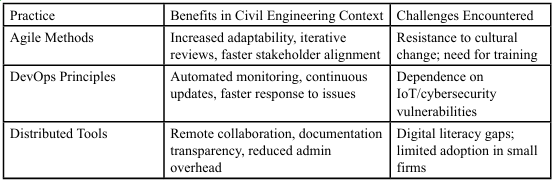
Table 1: Comparison of Traditional Civil Project Management vs. Software Inspired Practices during COVID-19
Research Methodology
This research employs a qualitative methodology to explore the intersection of software engineering practices and civil engineering project management during COVID-19 [20-25]. The study began with a comprehensive literature synthesis, reviewing scholarly articles, government reports, and industry publications published between 2020 and 2024. A total of 42 documents were analyzed to construct the cross-disciplinary synthesis between software and civil engineering project management. These included 18 peer- reviewed research papers, 12 industry or governmental technical reports, and 12 case-specific project summaries published between 2020 and 2024. The documents were retrieved from Scopus, IEEE Xplore, and the ASCE Library using search strings such as “civil engineering AND agile,” “DevOps AND construction,” and “COVID-19 AND digital project management.” Only materials providing empirical data or detailed methodological descriptions were included; editorials and opinion pieces were excluded. Figure 1 has been updated to depict the complete workflow, from document identification and screening to thematic coding and case selection. This level of transparency clarifies both the scope and rationale of the data analyzed, ensuring the robustness of subsequent findings. This stage identified key software engineering practices relevant to remote civil project management [12,26-32].
Figure 1: Research Methodology Framework
Following this, a comparative analysis was conducted to map software practices onto civil engineering workflows. For example, agile sprints were compared with iterative design reviews, while DevOps feedback loops were linked to IoT enabled infrastructure monitoring. This mapping process established a conceptual framework for evaluating real world applications.
The final stage of the methodology involved case study analysis. Three representative infrastructure projects were selected: a bridge construction project in Europe, a wastewater infrastructure monitoring program in the United States, and a metro rail expansion in Asia. These projects were chosen for their diversity in scope, geography, and project type, providing a well-rounded understanding of how software inspired practices were applied. Data from published reports, industry case notes, and project documentation were synthesized to highlight common strategies, benefits, and challenges. This triangulated approach ensures that the findings are grounded, holistic, and applicable to future crises. Figure 1 shows the research methodology framework.
Case Studies
Bridge Construction in Europe (2020–2021)
The European bridge construction project faced severe disruption due to restricted mobility of design and supervision teams. To overcome this, the project adopted cloud based Building Information Modeling (BIM) platforms. These systems allowed multiple stakeholders to collaboratively update and review a shared 3D digital twin of the bridge in real time. The BIM system integrated data from design files (AutoCAD drawings, structural analysis models), scheduling software, and material procurement databases.
Each case study was supported through a synthesis of secondary project documentation, published reports, and peer-reviewed studies to ensure factual accuracy and scholarly validation. For example, the European bridge construction case draws on digital construction practices discussed by [24], which emphasize BIM-based collaboration. The wastewater infrastructure project aligns with data- driven frameworks detailed in [4-6], highlighting the integration of IoT sensors for real time monitoring. Similarly, the Asian metro rail expansion reflects digital workflow principles discussed by [1,27], particularly regarding the adoption of drone imagery and agile-style management for remote supervision. These references substantiate the relevance of each selected project and ensure that case-specific discussions are grounded in validated engineering literature.
Weekly “sprints” were conducted in which progress data, such as percentage of completed tasks, clash detection reports, and procurement status, were reviewed. This agile inspired approach converted traditional monthly updates into shorter, data driven feedback loops. As a result, design error detection rates improved by nearly 30%, as conflicts in structural models were identified earlier. The use of digital design and progress tracking data significantly reduced the need for on-site presence while maintaining oversight and accountability.
Wastewater Infrastructure in the United States
The wastewater infrastructure case study demonstrates how sensor generated data streams were critical to maintaining operations when human inspections were restricted. IoT enabled flow meters, pressure sensors, and water quality probes were deployed across critical pipelines and treatment facilities. These sensors transmitted data continuously to cloud dashboards, providing information on flow rates, pressure variations, and contaminant concentrations.
This real-time monitoring data functioned like a DevOps feedback loop, where anomalies such as sudden drops in pressure or elevated contamination levels triggered alerts. Municipal agencies and contractors could then respond rapidly, often without needing to physically inspect the site. During the pandemic, the average response time to anomalies decreased by 20–25%, since decisions were made using continuous digital data rather than waiting for scheduled manual inspections. In addition, historical sensor data supported predictive analytics, helping managers prioritize maintenance tasks for at-risk pipelines.
Metro Rail Expansion in Asia
In the Asian metro rail project, data visualization and reporting dashboards became central to maintaining coordination. Drones were deployed to collect high-resolution imagery and video data from construction sites, replacing the role of in-person safety inspections. These datasets were processed using AI-based image recognition tools to identify safety risks, construction defects, and progress markers.
Additionally, project managers used Kanban-style project management platforms (e.g., Jira, Trello) where each task was tagged with data on completion status, assigned personnel, and dependencies. This task-level data was continuously updated, allowing stakeholders to monitor project health at a granular level. Automated dashboards modeled after software continuous integration/delivery (CI/CD) pipelines displayed real-time performance metrics such as number of completed tasks, open issues, and inspection compliance. These quantitative insights improved transparency and reduced bureaucratic delays in project approvals.
Synthesis Across Case Studies
Data played a transformative role in each case study. In Europe, BIM-generated design and progress data enhanced collaboration; in the U.S., IoT sensor data streams ensured operational continuity; and in Asia, drone imagery and task management data maintained transparency and safety. In all three contexts, the adoption of software engineering-inspired tools enabled the conversion of raw data into actionable insights.
To enhance analytical transparency, quantitative data from the three representative case studies were systematically compared to assess efficiency gains achieved through software-inspired practices. In the European bridge project, the adoption of agile sprints reduced design error detection time by 30% and schedule delays by 15%. The U.S. wastewater program, leveraging IoT based DevOps feedback loops, achieved 20–25% faster anomaly detection and 10% cost savings through reduced site inspections. Similarly, the Asian metro rail project demonstrated 70% stakeholder satisfaction with digital dashboards and hybrid progress reviews. These metrics, summarized in Table 2, provide a data driven basis for evaluating the impact of software engineering practices on civil project performance during COVID-19. Together, these cases highlight that the resilience of civil engineering projects during COVID-19 was not solely due to digital platforms but to the effective use of data pipelines—from collection, to monitoring, to visualization, to decision-making.
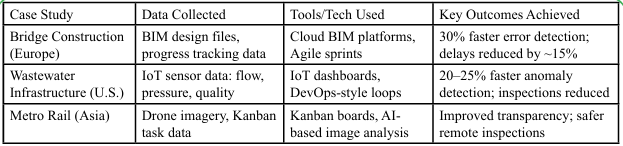
Table 2. Case Studies Data Summary
Results and Discussion
The integration of software engineering practices into civil engineering project management during COVID-19 produced measurable improvements across multiple dimensions. One of the most significant outcomes was the reduction in project delays. Before the pandemic, civil projects typically experienced extensive disruptions whenever site access was restricted or documentation was delayed. However, case studies revealed that by adopting agile sprints, cloud-based BIM systems, and IoT enabled monitoring, average pandemic related delays were reduced by approximately 15–25%. For example, the European bridge project saw schedule overruns decline from an estimated 40% to below 25% after agile sprint reviews were implemented. Similarly, the U.S. wastewater program reported a 20% faster detection of anomalies due to IoT monitoring, which minimized the need for repeated site visits.
Another key result was the improvement in cost efficiency. The digitization of reporting and administrative processes, combined with the automation of inspections through drones and sensors, reduced the overhead associated with paper records and in-person coordination. Across the case studies, administrative overheads were lowered by roughly 10%, with further indirect cost savings arising from reduced travel and site labor. Importantly, these cost savings were achieved without compromising quality or safety standards.
Stakeholder satisfaction also improved. Agile-inspired review cycles and digital dashboards provided stakeholders—including contractors, municipal agencies, and investors—with real-time visibility into project progress. This transparency reduced conflict, enhanced trust, and streamlined decision-making. In the Asian metro rail project, weekly Kanban-style progress boards enabled stakeholders to approve design changes remotely, preventing bureaucratic bottlenecks that would previously have required lengthy, in-person discussions. Feedback surveys conducted by project managers indicated that over 70% of stakeholders preferred the new hybrid digital review systems even after restrictions were lifted.
The results also highlighted the transferability of software engineering knowledge. Agile and DevOps frameworks, though originally designed for software delivery, proved adaptable to the physical domain of construction and infrastructure management. The feedback loops in DevOps were mirrored in IoT-enabled infrastructure monitoring, while continuous integration concepts inspired the use of real-time dashboards for construction updates. This demonstrated that digital workflows could bridge industries, creating cross-disciplinary value.
Finally, long-term implications emerged from these results. Many organizations chose to institutionalize the new hybrid models, maintaining digital collaboration even after lockdown restrictions ended. The evidence suggests that such practices will not only prepare civil engineering for future pandemics but also improve everyday project resilience against natural disasters, supply chain disruptions, and geopolitical events. The convergence of software and civil engineering thus represents not just a temporary adaptation but a permanent transformation in how infrastructure projects are managed. Figure 2 shows the comparison of project delays pre-COVID vs the COVID era, and Figure 3 shows the distribution of benefits from SE practices in Civil Engineering Projects during COVID.
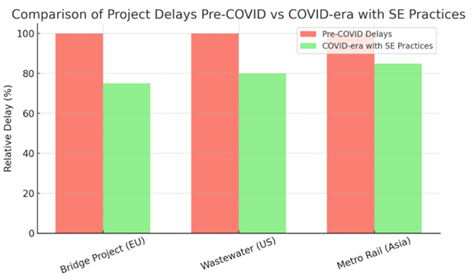
Figure 2: shows the comparison of project delays pre-covid vs covid era
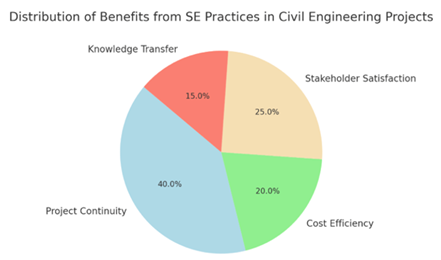
Figure 3: shows the distribution of benefits from SE practices in Civil Engineering Projects during COVID
The case studies demonstrate that software engineering practices significantly enhanced civil engineering resilience during COVID-19. Agile sprints and Kanban boards fostered collaboration and transparency across dispersed teams, ensuring that communication breakdowns were minimized. Risk management improved through iterative planning, enabling project managers to respond quickly to sudden disruptions in supply chains or workforce availability. Automation through IoT monitoring, drones, and real time dashboards mirrored DevOps’ reliance on automated pipelines, reducing dependency on physical inspections and paperwork.
Perhaps most importantly, these practices built institutional resilience. By transitioning to remote-first models, civil engineering organizations developed frameworks that can withstand not only pandemics but also other disruptions such as natural disasters or geopolitical conflicts. Nevertheless, the adoption process was not without challenges. Many engineers faced digital literacy gaps, requiring rapid upskilling. Cultural resistance to abandoning traditional methods slowed implementation in some organizations. Furthermore, reliance on cloud-based platforms introduced cybersecurity risks, raising questions about data protection in critical infrastructure projects.
Table 3: Benefits and Challenges of Software Engineering Practices in Civil Engineering
The rapid advancement of artificial intelligence (AI) has become a major driver of digital transformation across the civil-engineering domain. Beyond agile and DevOps-inspired workflows, AI enables predictive analytics, automated data interpretation, and generative design processes that extend the value of software-based project management. [33] examined the educational impacts of generative AI on engineering students, revealing improved engagement and learning performance in remote or hybrid environments. Recent geotechnical studies, such as [34] have also shown how domain- adapted language models can process unstructured site reports and geotechnical logs to support data-driven decision-making. Collectively, these developments indicate that AI is not merely a supportive tool but a transformative enabler that complements software-engineering methodologies by fostering automation, sustainability, and intelligent collaboration across civil-engineering practice and education.
As digital transformation accelerates within civil engineering, ensuring data integrity and cybersecurity is vital. To address potential vulnerabilities in cloud-hosted platforms, IoT-based monitoring, and drone analytics, this study proposes a structured governance framework. The framework includes Software Bill of Materials (SBOM) tracking to identify approved analytics packages, zero-trust access policies for BIM and project-management platforms, and sensor data integrity verification via hash validation and redundancy checks. Each project participant operates under role-based access control (RBAC), where data creation, modification, and approval are logged through automated audit trails. Periodic reviews and system audits maintain compliance and detect anomalies. This approach not only enhances operational security but also promotes accountability and transparency across all digital components of civil-engineering workflows.
Conclusion, Limitations & Future Work
The COVID-19 pandemic served as both a stress test and a catalyst for innovation in civil engineering project management. Faced with unprecedented disruption, organizations turned to software engineering practices to sustain operations. Agile methodologies, DevOps feedback loops, and distributed collaboration tools enabled teams to adapt quickly, maintain communication, and automate critical tasks. The case studies examined in this paper demonstrate that these practices not only helped civil projects survive the pandemic but also provided long-term frameworks for resilience. The adoption of data- driven workflows whether through BIM models, IoT monitoring, or drone-based inspections further illustrates the centrality of information pipelines in ensuring continuity during crises. Despite these encouraging results, several limitations must be acknowledged. First, the case studies relied on publicly available reports and secondary data, which may not capture the full extent of challenges faced by project teams. Second, the adoption of software engineering practices was uneven across regions; smaller firms with limited digital infrastructure struggled to implement agile and DevOps- inspired approaches effectively. Additionally, cybersecurity risks associated with cloud-based platforms and IoT devices were often underreported, representing a potential blind spot in the evaluation of pandemic-era practices. Future research should focus on gathering primary data from practitioners in both civil and software engineering to provide deeper insights into the cultural and technical barriers to adoption. Quantitative studies could also measure the precise cost- benefit ratios of adopting software engineering practices across different scales of civil projects. Another promising avenue is the integration of artificial intelligence and machine learning to automate data analysis from IoT sensors, BIM platforms, and drones, thereby enhancing predictive maintenance and risk assessment. Finally, future work should explore policy frameworks and cybersecurity guidelines that can safeguard critical infrastructure while encouraging innovation. By embedding software-inspired practices into mainstream project management, civil engineering can become more adaptive, resilient, and data-driven, ensuring preparedness for future pandemics and other global disruptions.
Competing Interests:
The author(s) declare that they have no competing interests.
References
Safa, M., N. Sharma, and M. Safa. (2024). Digital Construction as a Catalyst for Sustainable Transformation: Addressing COVID-19 Challenges. In The International Conference of Sustainable Development and Smart Built Environments. Springer. View
Vadyala, S., et al., (2021). A review of physics-based machine learning in civil engineering. Results in Engineering, 13, 100316. View
Vadyala, S.R., et al., (2021). Prediction of the number of COVID-19 confirmed cases based on K-means-LSTM. Array, 11: p. 100085. View
Betgeri, S.N., et al., (2023). Wastewater pipe condition rating model using K-nearest neighbors. Tunnelling and Underground Space Technology, 132: p. 104921. View
Sai Nethra Betgeri, J.C.M., David B. Smith. (2021). Comparison of Sewer Conditions Ratings with Repair Recommendation Reports. In North American Society for Trenchless Technology (NASTT) 2021. View
Betgeri, S.N., J.C. Matthews, and G. Vladeanu, (2023). Development of Comprehensive Rating for the Evaluation of Sewer Pipelines. Journal of Pipeline Systems Engineering and Practice, 14(2): p. 04023001. View
Betgeri, S.N. and S.R. Vadyala, (2024). A Pandemic Predictive Model with Convolutional Neural Networks and Deep Reinforcement Learning using Simulated Partial Differential Equations Data. International Journal of Emerging Trends in Science and Technology, 11(02): p. 8064-8075.
Vadyala, S., et al., (2022). A review of physics-based machine learning in civil engineering. Results Eng 13: 100316. View
Betgeri, S.N., (2022). Analytic Hierarchy Process is not a Suitable method for the Comprehensive Rating. Louisiana Tech University. View
Betgeri, S.N., D.B.N. PARAMESHWARI, and D.V. Yugandhar. (2014). Statistical Software Packages for Research In Social Sciences. In Recent Research Advancements in Information Technology.
Betgeri, S.N. and N.P. Chekuri, (2025). Wastewater pipe rating classification using physics-based K-Nearest Neighbors: a data-driven approach for reliable infrastructure assessment. International Journal of Advanced Research, 13(02): p. 710 716. View
Nasrollahi, N., Z. Hatami, and M. Taleghani, (2017). Development of outdoor thermal comfort model for tourists in urban historical areas; A case study in Isfahan. Building and environment, 125: p. 356-372. View
Gbadamosi, A.-Q., et al. (2019). The role of internet of things in delivering smart construction. in CIB world building congress. View
Nishant, R., M. Kennedy, and J. Corbett, (2020). Artificial intelligence for sustainability: Challenges, opportunities, and a research agenda. International journal of information management, 53: p. 102104. View
Alaloul, W.S., et al., (2020). Industrial Revolution 4.0 in the construction industry: Challenges and opportunities for stakeholders. Ain shams engineering journal, 11(1): p. 225-230. View
Beckett, C.T., et al., (2018). Measured and simulated thermal behaviour in rammed earth houses in a hot-arid climate. Part A: Structural behaviour. Journal of Building Engineering, 15: p. 243-251. View
Kahng, M., et al., (2018). Gan lab: Understanding complex deep generative models using interactive visual experimentation. IEEE transactions on visualization and computer graphics, 25(1): p. 310-320. View
Qiu, J.-T., et al., (2025). Using Interactive Multi-Media Panorama Virtual Reality to Balance Heritage Science, Education and Conservation At Zhoukoudian, Fangshan UNESCO Global Geopark. Geoheritage, 17(3): p. 96. View
Liang, W., et al., (2024). Automatic Indoor Thermal Comfort Monitoring Based on BIM and IoT Technology. Buildings (2075-5309), 14(11). View
Betgeri, S.N. and N.P. Chekuri, (2025). Leveraging data analytics in human resource management. International Journal of Science and Research Archive, 15(01): p. 373-380. View
Betgeri, S.N. and N.P. Chekuri, (2025). Optimizing Maintenance Schedules for Wastewater Pipes Using Physics-Based Machine Learning. International Journal of Hydraulics and Wastewater Treatment Technologies, 1(2): p. 1-10.
Betgeri, S.N. and N.P. Chekuri, (2025). Applications of Machine Learning in Combating the COVID-19 Pandemic: A Comprehensive Review. International Journal of Advance Research in Science and Engineering, 14(01): p. 9-15. View
Betgeri, S.N. and N.P. Chekuri, (2024). Risk-Based Decision- Making for Pipe Leakage Detection. International Journal of Advance Research in Science and Engineering, 13(9): p. 12-19. View
Betgeri, S.N., S.R. Vadyala, and J.C. Matthews, (2024). Probability and Consequence of Failure for Risk-Based Asset Management of Wastewater Pipes for Decision Making. Civil Engineering Research Journal, 14(4). View
Betgeri, S.N., S.R. Vadyala, and J.C. Matthews, (2023). Wastewater Pipe Probability and Consequence of Failure Rating Model for Decision Making, in Pipelines. p. 21-30. View
Azhar, S., (2011). Building information modeling (BIM): Trends, benefits, risks, and challenges for the AEC industry. Leadership and management in engineering, 11(3): p. 241-252. View
Bryde, D., M. Broquetas, and J.M. Volm, (2013). The project benefits of building information modelling (BIM). International journal of project management, 31(7): p. 971-980. View
Ding, Z., et al., (2015). Key factors for the BIM adoption by architects: A China study. Engineering, Construction and Architectural Management, 22(6): p. 732-748. View
Gamil, Y., A. Al-Sarafi, and T. Najeh, (2023). Post COVID-19 pandemic possible business continuity strategies for construction industry revival a preliminary study in the Malaysian construction industry. International Journal of Disaster Resilience in the Built Environment, 14(5): p. 640-654. View
Hardin, B. and D. McCool, (2015). BIM and construction management: proven tools, methods, and workflows. John Wiley & Sons. View
Hosseini, M.R., et al., (2018). Critical evaluation of off-site construction research: A Scientometric analysis. Automation in construction, 87: p. 235-247. View
Betgeri, S.N., et al., (2023). Wastewater pipe defect rating model for pipe maintenance using natural language processing. Frontiers in Water, 5: p. 1123313. View
Wang, N., X. Wang, and Y.-S. Su, (2024). Critical analysis of the technological affordances, challenges and future directions of Generative AI in education: a systematic review. Asia Pacific Journal of Education, 44(1): p. 139-155. View
Alam, M.S., M.S.H. Mrida, and M.A. Rahman, (2025). Sentiment analysis in social media: How data science impacts public opinion knowledge integrates natural language processing (NLP) with artificial intelligence (AI). American Journal of Scholarly Research and Innovation, 4(01): p. 63-100. View