
- About the Journal
- Editorial Board
- Review Process
- Author Guidelines
- Article Processing Charges
- Special Issues
- Current Issue
- Past Issue
 Journal of Information Technology and Integrity
Journal of Information Technology and Integrity Volume 4 (2026), Article ID: JITI-115
https://doi.org/10.33790/jiti1100115Review Article
Advancing AI Text Checkers: Future Directions, Ethical Governance, and Human–AI Integration
Robb Shawe, PhD, MS
Department of Cyber Leadership, Capitol Technology University, Laurel, MD, United States.
Corresponding Author: Robb Shawe, PhD, MS, Department of Cyber Leadership, Capitol Technology University, Laurel, MD, United States.
Received date: 18th June, 2026
Accepted date: 13th August, 2026
Published date: 17th August, 2026
Citation: Shawe, R., (2026). Advancing AI Text Checkers: Future Directions, Ethical Governance, and Human–AI Integration. J Inform Techn Int, 4(1): 115.
Copyright: ©2026, This is an open-access article distributed under the terms of the Creative Commons Attribution License, which permits unrestricted use, distribution, and reproduction in any medium, provided the original author and source are credited
Abstract
Artificial intelligence (AI) text evaluation technologies have become increasingly integrated into academic, governmental, legal, publishing, and commercial environments, offering unprecedented opportunities to enhance efficiency, consistency, and scalability in document analysis. Despite these advancements, existing AI text checkers continue to exhibit significant limitations, including inconsistent detection accuracy, insufficient contextual understanding, algorithmic bias, limited explainability, and inadequate governance mechanisms. Building on prior research examining the capabilities and shortcomings of contemporary AI text checkers, this article advances the scholarly discourse by shifting the focus from technological limitations to governance-oriented solutions for trustworthy AI-assisted text evaluation. The study introduces the Hybrid AI Text Evaluation Governance Model (HA- TEGM). This conceptual governance framework integrates artificial intelligence with continuous human oversight, explainable decision- making, institutional accountability, ethical governance, auditability, and adaptive organizational learning. Rather than positioning AI as a replacement for human expertise, the framework emphasizes collaborative intelligence in which AI augments professional judgment while maintaining transparency, regulatory compliance, and responsible decision-making throughout the evaluation lifecycle. The article further examines future directions for AI text evaluation by integrating governance maturity, continuous validation, explainable artificial intelligence (XAI), and human-centered system design. The proposed framework provides organizations with a structured governance model capable of improving the reliability, credibility, fairness, and sustainability of AI-assisted text evaluation across diverse operational environments. The study concludes that the long-term success of AI text evaluation systems will depend not solely on advances in computational performance but on establishing comprehensive governance architectures that ensure ethical, transparent, accountable, and human-centered implementation. The proposed HA-TEGM framework offers practical governance guidance for educators, publishers, policymakers, government agencies, and organizational leaders responsible for implementing trustworthy AI-assisted text evaluation systems.
Keywords: Artificial Intelligence; AI Text Checkers; AI Text Evaluation; Hybrid AI Text Evaluation Governance Model (HA- TEGM); Artificial Intelligence Governance; Explainable Artificial Intelligence (XAI); Human–AI Collaboration; Human-Centered Artificial Intelligence; Ethical AI; AI Governance; Algorithmic Transparency; Organizational Governance; Accountability; Auditability; Regulatory Compliance; Responsible Artificial Intelligence; Decision Support Systems; Adaptive Governance; Governance Maturity; Trustworthy Artificial Intelligence
Introduction
Artificial intelligence (AI) has rapidly transformed the landscape of digital communication, knowledge management, and document evaluation. Organizations across academia, government, healthcare, legal services, publishing, finance, cybersecurity, and commercial enterprises increasingly rely on AI-assisted text evaluation systems to improve efficiency, consistency, and scalability in reviewing written content. These technologies perform a wide range of functions, including grammar and style correction, plagiarism detection, authorship assessment, AI-generated content identification, semantic analysis, readability evaluation, and automated quality assurance. As organizations generate unprecedented volumes of digital information, AI text evaluation systems have become indispensable tools supporting operational decision-making and organizational productivity [1,2].
The rapid adoption of generative artificial intelligence has simultaneously created new governance challenges. While AI systems continue to improve computational performance, many existing AI text checkers remain constrained by inconsistent detection accuracy, insufficient contextual reasoning, limited explainability, algorithmic bias, and an inability to consistently distinguish between human-authored and AI-generated content [3-5]. These limitations become increasingly significant when AI-assisted evaluations influence academic integrity investigations, legal documentation, governmental decision-making, scientific publishing, professional certification, and organizational knowledge management, where inaccurate assessments may produce substantial ethical, legal, and operational consequences.
The increasing sophistication of large language models (LLMs) further complicates AI text evaluation. Modern generative AI systems produce highly coherent, contextually relevant, and stylistically adaptive content that frequently resembles human writing. Consequently, traditional AI detection approaches that rely primarily on statistical linguistic characteristics have become progressively less reliable as the distinction between human-authored and AI-assisted writing continues to diminish [1,4]. This evolution demonstrates that future AI text evaluation cannot depend exclusively on increasingly complex detection algorithms; instead, it must incorporate broader governance mechanisms to ensure transparency, accountability, explainability, and continuous validation throughout the evaluation lifecycle.
Previous research examined these challenges through a comprehensive review of AI text checkers, identifying their technological capabilities, operational limitations, and practical implications across education, publishing, and content creation. That investigation concluded that although AI technologies substantially improve efficiency and productivity, they remain incapable of replacing human judgment in evaluating complex linguistic contexts, ethical considerations, and nuanced interpretations. Consequently, the study recommended continued human oversight while identifying significant opportunities for future technological and organizational development.
While these findings established an important foundation for understanding the operational limitations of AI text evaluation, they also revealed a significant gap within the emerging literature. Existing scholarship has largely concentrated on improving detection accuracy through algorithmic refinement, natural language processing, and machine learning techniques. Comparatively little attention has been devoted to the governance structures necessary to ensure that AI-assisted text evaluation systems operate ethically, transparently, consistently, and accountably across organizational environments. As AI technologies assume increasingly influential roles in institutional decision-making, governance becomes equally as important as technological capability.
The emergence of trustworthy artificial intelligence has therefore shifted scholarly attention beyond algorithmic performance toward organizational governance. International governance initiatives, including the National Institute of Standards and Technology (NIST) AI Risk Management Framework, the Organisation for Economic Co-operation and Development (OECD) AI Principles, UNESCO's Recommendation on the Ethics of Artificial Intelligence, and the European Union's AI Act, collectively emphasize that trustworthy AI requires explainability, transparency, accountability, fairness, human oversight, and continuous risk management rather than technological performance alone. These governance principles demonstrate that effective AI implementation requires multidisciplinary integration among technical systems, organizational leadership, regulatory compliance, ethics, and human decision-making.
Building upon these developments, this study advances the scholarly discussion by transitioning from identifying technological limitations toward developing governance-centered solutions. Rather than asking whether AI text checkers accurately identify AI-generated content, this article examines how AI text evaluation systems should be governed to ensure responsible implementation throughout their operational lifecycle. The central premise of this research is that trustworthy AI text evaluation depends on integrating advanced computational capabilities with structured governance mechanisms that preserve human judgment, organizational accountability, and continuous institutional oversight.
To address this need, this article introduces the Hybrid AI Text Evaluation Governance Model (HA-TEGM). This conceptual governance framework integrates artificial intelligence with continuous human participation throughout the evaluation process. The framework combines explainable artificial intelligence (XAI), human-centered AI, organizational governance, auditability, adaptive learning, regulatory compliance, and continuous improvement into a unified governance architecture. Rather than replacing human expertise, HA-TEGM positions AI as a decision-support capability operating within a comprehensive governance ecosystem that strengthens transparency, fairness, and institutional trust while reducing the risks associated with fully autonomous evaluation systems.
The proposed framework also extends beyond educational applications to address AI-assisted text evaluation across diverse organizational environments, including higher education, government agencies, scientific publishing, healthcare, legal systems, cybersecurity, financial institutions, and commercial enterprises. Although each sector possesses unique operational requirements, they share common governance challenges involving explainability, accountability, documentation, ethical decision making, and regulatory compliance. Consequently, a governance- centered approach provides greater long-term organizational value than continued emphasis on algorithmic detection performance alone.
Accordingly, the objectives of this article are fourfold. First, it examines the evolving limitations of contemporary AI text evaluation technologies within increasingly sophisticated generative AI environments. Second, it synthesizes emerging principles from AI governance, explainable AI, and human-centered system design into a unified conceptual foundation. Third, it introduces the Hybrid AI Text Evaluation Governance Model (HA-TEGM) as a structured governance architecture for trustworthy AI-assisted text evaluation. Finally, it proposes future research directions emphasizing governance maturity, adaptive organizational learning, continuous validation, and responsible human–AI collaboration as essential components of next-generation AI text evaluation systems.
Ultimately, this article argues that the future success of AI text evaluation will depend not primarily on developing increasingly sophisticated detection algorithms, but on establishing governance architectures that integrate technological innovation with ethical leadership, organizational accountability, institutional transparency, and sustained human oversight. Through this governance-centered perspective, AI text evaluation evolves from a narrow technological capability into a comprehensive organizational decision-support system that strengthens trust, improves decision quality, and promotes responsible artificial intelligence across diverse sectors.
Evolution of Artificial Intelligence Text Evaluation
From Rule-Based Grammar Checkers to Intelligent Language Models
Artificial intelligence text evaluation has undergone a remarkable transformation over the past four decades. Early automated writing assistance systems were primarily rule-based applications designed to identify grammatical errors, spelling mistakes, punctuation inconsistencies, and basic syntactical deficiencies. These systems relied upon predefined linguistic rules and static dictionaries, providing deterministic corrections with little understanding of contextual meaning or semantic relationships. Although effective for mechanical editing tasks, early text evaluation systems possessed limited adaptability and frequently failed when confronted with ambiguous language, discipline-specific terminology, or stylistic variation [6-9].
Advances in computational linguistics, machine learning, and natural language processing (NLP) fundamentally altered the capabilities of automated text evaluation systems. Statistical language models enabled software to evaluate contextual relationships rather than isolated grammatical structures, allowing AI systems to recommend stylistic improvements, readability enhancements, vocabulary refinement, and contextual corrections. Subsequent developments in deep learning and transformer architectures significantly expanded these capabilities by enabling models to recognize complex linguistic patterns, semantic intent, and discourse relationships across extended documents [1,2].
The emergence of large language models (LLMs) represents another major evolutionary milestone. Contemporary AI systems no longer function solely as grammar-correction tools but increasingly generate original content, summarize complex information, translate languages, synthesize literature, and assist with analytical reasoning. These capabilities have transformed AI from an editorial assistant into an active participant in knowledge creation processes. Consequently, AI text evaluation has expanded beyond identifying linguistic errors toward assessing originality, authenticity, authorship characteristics, logical coherence, and responsible AI-assisted writing [10,11].
The Emergence of AI-Assisted Knowledge Work
The integration of generative AI into professional environments has fundamentally changed organizational knowledge work. Institutions increasingly employ AI technologies to assist with drafting reports, preparing research manuscripts, generating technical documentation, developing educational materials, supporting legal research, producing healthcare documentation, and enhancing organizational communication. Rather than replacing human expertise, these technologies increasingly serve as collaborative decision-support systems that augment human productivity and reduce repetitive cognitive tasks [12,13].
This evolution has substantially increased organizational dependence upon AI-assisted text evaluation. Universities use AI detection technologies to support academic integrity investigations; publishers incorporate automated screening into editorial workflows; corporations employ AI-assisted document quality assurance; governmental agencies integrate AI into policy development; and legal organizations increasingly use AI for document review and contract analysis. As AI-generated content becomes progressively indistinguishable from human-authored writing, organizations require evaluation systems capable of supporting informed decision- making while maintaining fairness, transparency, and accountability.
The expansion of AI-assisted knowledge work has therefore shifted organizational priorities. Traditional concerns regarding editing efficiency have evolved into broader governance questions concerning responsible AI deployment, institutional trust, regulatory compliance, and ethical decision-making. These developments demonstrate that technological capability alone is insufficient for ensuring trustworthy AI implementation [14,15].
Limitations of Contemporary AI Text Evaluation
Despite significant technological progress, current AI text evaluation systems continue to exhibit substantial operational limitations. Numerous empirical studies demonstrate inconsistent detection performance, elevated false-positive rates, false-negative classifications, algorithmic bias, limited contextual understanding, and inadequate explainability. These shortcomings undermine institutional confidence in AI-generated assessments and introduce operational, ethical, and legal risks for organizations relying on automated evaluations [3-5].
One persistent challenge involves contextual reasoning. Although modern language models demonstrate impressive linguistic capabilities, AI evaluation systems frequently struggle to distinguish nuanced disciplinary writing, specialized technical language, culturally dependent expressions, and stylistic diversity. Consequently, highly technical or academically sophisticated documents may be incorrectly classified as AI-generated despite representing entirely original human scholarship [3-5].
Equally important are explainability limitations. Most commercial AI text evaluation platforms generate probabilistic outputs without providing transparent explanations regarding how conclusions were reached. Users often receive numerical confidence scores or categorical determinations without understanding the underlying evidence supporting these assessments. This absence of interpretability reduces organizational trust and complicates informed decision-making, particularly when AI-generated recommendations influence consequential institutional actions [16,17].
The previous study by Shawe [18] documented many of these concerns through multiple case studies across education, publishing, and content creation, concluding that AI text checkers should support—not replace—human evaluation, as technological limitations remain significant.
These findings suggest that improving algorithmic performance alone will not resolve the broader challenges associated with trustworthy AI deployment.
From Algorithmic Performance to Artificial Intelligence Governance
Recent developments within artificial intelligence research increasingly recognize that trustworthy AI extends beyond computational accuracy. International governance initiatives consistently emphasize that successful AI implementation requires organizational structures capable of ensuring ethical decision- making, accountability, transparency, explainability, fairness, continuous monitoring, and effective human oversight [19,20-23].
This evolution represents a significant conceptual shift. Earlier AI research primarily focused on improving computational performance through enhanced algorithms, expanded datasets, and increasingly sophisticated neural network architectures. Contemporary AI governance scholarship instead recognizes that technological advancement must occur alongside institutional governance capable of managing operational risk, organizational responsibility, regulatory compliance, and public trust [24-26].
Consequently, AI governance has emerged as a multidisciplinary field integrating computer science, organizational leadership, ethics, public policy, cybersecurity, information assurance, risk management, and systems engineering. Governance provides organizations with mechanisms to supervise AI throughout its operational lifecycle, ensuring that technological innovation remains aligned with organizational objectives and societal expectations [27-29].
For AI text evaluation, governance is particularly important because evaluation results frequently influence academic integrity proceedings, employment decisions, scientific publications, governmental documentation, legal reviews, and organizational policy development. Decisions of this magnitude require considerably greater assurance than algorithmic probability scores alone can provide.
Human–AI Collaboration as the Future of Text Evaluation
Rather than viewing artificial intelligence and human expertise as competing alternatives, emerging research increasingly supports collaborative intelligence as the preferred operational model for complex decision-making. Human evaluators contribute contextual understanding, ethical reasoning, interdisciplinary expertise, professional judgment, and organizational experience, while AI systems contribute computational speed, consistency, scalability, and analytical efficiency [30,31].
This complementary relationship establishes the foundation for hybrid evaluation systems that integrate technological capability with structured human oversight. Under this approach, AI performs routine analytical tasks while humans remain responsible for contextual interpretation, ethical evaluation, governance oversight, and final decision authority. Such collaboration preserves institutional accountability while enabling organizations to capitalize upon the efficiencies offered by advanced AI technologies [10,31].
As a result, future AI text evaluation systems should be designed not as autonomous decision-makers but as governance-enabled decision-support systems operating within transparent organizational frameworks. This perspective shifts scholarly attention from improving isolated algorithms toward constructing governance architectures capable of sustaining trustworthy AI deployment across diverse organizational environments.
The evolution of AI text evaluation demonstrates that technological innovation alone cannot satisfy the growing demands for trustworthy, transparent, and accountable AI-assisted decision- making. As organizations increasingly depend on AI-generated assessments, governance principles are essential to ensuring ethical implementation, institutional confidence, and responsible operational use. Consequently, the next section examines the theoretical foundations of AI governance. It establishes the conceptual basis for the Hybrid AI Text Evaluation Governance Model (HA-TEGM), which serves as the central contribution of this study.
Theoretical Foundations for AI Text Evaluation Governance
The increasing integration of artificial intelligence into organizational decision-making has transformed AI text evaluation from a technological capability into a governance challenge. Although advances in machine learning, natural language processing, and generative AI have significantly improved computational performance, these developments have simultaneously introduced new concerns regarding accountability, explainability, transparency, fairness, regulatory compliance, and institutional trust. Addressing these challenges requires a governance-oriented perspective that extends beyond algorithmic performance and incorporates interdisciplinary principles from organizational governance, systems theory, human-centered artificial intelligence, and explainable AI.
The theoretical foundation presented in this section establishes the conceptual basis for the Hybrid AI Text Evaluation Governance Model (HA-TEGM). Rather than relying upon a single theoretical perspective, the framework synthesizes complementary concepts from multiple disciplines to support trustworthy AI-assisted text evaluation across diverse organizational environments.
Artificial Intelligence Governance
Artificial intelligence governance comprises the organizational structures, policies, oversight mechanisms, and decision-making processes that ensure AI systems operate responsibly, ethically, and transparently, and in accordance with institutional objectives. Unlike technical AI development, which emphasizes algorithmic performance, AI governance focuses on how organizations manage the lifecycle of AI systems from acquisition and deployment through monitoring, validation, continuous improvement, and eventual retirement [21,23,32].
Effective governance requires organizations to establish clearly defined roles, responsibilities, accountability structures, documentation standards, and risk management processes throughout the AI implementation process. Governance further requires continuous monitoring to ensure that AI systems remain aligned with organizational objectives while adapting to evolving technological capabilities, regulatory expectations, and operational risks [23,27].
Within AI text evaluation, governance extends beyond determining whether an algorithm correctly identifies AI-generated content. Instead, governance addresses broader organizational questions, including:
• Who remains accountable for AI-assisted decisions?
• How should AI-generated recommendations be validated?
• What documentation should accompany AI-generated assessments?
• How should organizations respond when AI systems produce inconsistent or inaccurate results?
• How should continuous improvement be incorporated into AI evaluation processes?
These governance considerations establish organizational confidence while preserving human responsibility throughout the evaluation lifecycle.
Human-Centered Artificial Intelligence
Human-centered artificial intelligence provides another foundational component of HA-TEGM. Rather than pursuing fully autonomous AI decision-making, human-centered AI recognizes that artificial intelligence should augment human expertise rather than replace professional judgment [30,31].
Human evaluators contribute capabilities that remain difficult for AI systems to replicate consistently, including:
• contextual reasoning;
• ethical deliberation;
• interdisciplinary knowledge integration;
• organizational experience;
• professional judgment;
• cultural awareness;
• stakeholder sensitivity; and
• adaptive decision-making.
Conversely, AI systems contribute computational speed, consistency, scalability, pattern recognition, and analytical efficiency.
These complementary capabilities support collaborative intelligence in which humans and AI operate as integrated partners rather than competing decision-makers. Such collaboration improves decision quality while preserving institutional accountability [31].
Within AI text evaluation, human-centered AI ensures that final determinations affecting academic integrity, employment decisions, publication acceptance, legal review, governmental documentation, or organizational policy remain subject to qualified human oversight.
Explainable Artificial Intelligence (XAI)
One of the most significant criticisms of contemporary AI systems concerns their limited explainability. Many AI models generate highly accurate predictions while providing minimal insight into the reasoning underlying those predictions. These "black box" characteristics create substantial governance challenges because organizations cannot confidently defend decisions they cannot adequately explain [16].
Explainable Artificial Intelligence (XAI) seeks to address this limitation by developing AI systems capable of communicating understandable explanations regarding their analytical processes, decision pathways, confidence levels, and supporting evidence [16]. Within AI text evaluation, explainability includes several essential characteristics:
• transparent scoring methodologies;
• understandable reasoning for classification decisions;
• confidence indicators;
• supporting linguistic evidence;
• traceable analytical pathways; and
• documented model limitations.
These capabilities enable human reviewers to evaluate AI recommendations critically rather than accepting algorithmic outputs without question.
Explainability, therefore, strengthens organizational trust while supporting accountability, auditability, and regulatory compliance.
Organizational Governance Theory
Organizational governance theory provides the institutional perspective necessary for integrating AI into enterprise decision- making. Governance systems establish the structures through which organizations direct strategy, manage risk, allocate resources, monitor performance, and maintain accountability [29,33].
Traditional governance models emphasize leadership responsibility, internal controls, stakeholder oversight, continuous improvement, performance measurement, and organizational resilience. These same principles become increasingly applicable to AI systems as organizations depend more heavily upon automated decision-support technologies.
Applying governance theory to AI text evaluation shifts organizational attention from isolated software performance toward enterprise-wide governance capabilities, including:
• executive oversight;
• governance committees;
• policy development;
• risk assessment;
• audit procedures;
• documentation standards;
• compliance monitoring; and
• organizational learning.
Consequently, AI text evaluation becomes an organizational governance function rather than merely a software application.
Socio-Technical Systems Perspective
Artificial intelligence operates within complex socio-technical systems composed of people, technology, organizational processes, regulatory environments, and institutional cultures. Evaluating AI effectiveness, therefore, requires consideration of both technological performance and human interaction [11,34].
Socio-technical systems theory argues that sustainable organizational performance depends on optimizing relationships among technological systems, human participants, organizational structures, and operational processes rather than optimizing any single component in isolation.
Applying this perspective to AI text evaluation recognizes that successful implementation depends upon:
• reliable technology;
• competent human reviewers;
• effective governance policies;
• organizational training;
• continuous monitoring;
• institutional culture; and
• adaptive learning.
Failure within any component may compromise the overall integrity of AI-assisted evaluation regardless of algorithmic sophistication.
Adaptive Governance and Continuous Organizational Learning
Artificial intelligence evolves continuously through software updates, expanded datasets, emerging regulations, and changing operational requirements. Consequently, governance structures must likewise remain adaptive rather than static [27,34].
Adaptive governance emphasizes continuous assessment, organizational learning, iterative improvement, stakeholder feedback, and ongoing refinement of governance processes.
Within AI text evaluation, adaptive governance includes:
• continuous model validation;
• periodic governance reviews;
• policy refinement;
• stakeholder feedback integration;
• emerging regulatory compliance;
• algorithm performance reassessment; and
• organizational lessons learned.
Rather than viewing governance as a one-time implementation activity, adaptive governance recognizes AI oversight as an ongoing organizational capability.
Integrated Conceptual Foundation for HA-TEGM
The preceding theoretical perspectives collectively establish the conceptual basis for the Hybrid AI Text Evaluation Governance Model (HA-TEGM). Individually, each theory addresses an important dimension of trustworthy AI implementation. Collectively, however, they provide a comprehensive governance architecture capable of supporting responsible AI-assisted text evaluation across organizational environments.
The integration of AI governance, human-centered AI, explainable AI, organizational governance theory, socio-technical systems thinking, and adaptive governance creates a multidimensional framework that extends beyond traditional AI detection technologies. Rather than emphasizing algorithmic performance alone, HA- TEGM recognizes that trustworthy AI emerges through the coordinated interaction of technological capability, organizational leadership, institutional accountability, ethical oversight, continuous improvement, and informed human judgment.
Thus, the proposed framework conceptualizes AI text evaluation as a governance-enabled decision-support ecosystem rather than an isolated computational process. This perspective provides the theoretical justification for the governance architecture introduced in the following section.
The theoretical perspectives presented in this section demonstrate that effective AI-assisted text evaluation requires considerably more than accurate computational models. Trustworthy implementation depends upon governance structures capable of integrating technological innovation with organizational accountability, explainability, ethical oversight, and continuous human participation. Building upon these theoretical foundations, the following section introduces the Hybrid AI Text Evaluation Governance Model (HA-TEGM), which integrates the governance principles developed throughout this study into a unified operational framework by defining its architecture, governance domains, operational components, and implementation lifecycle.
Positioning HA-TEGM Within Existing AI Governance Frameworks
The Hybrid AI Text Evaluation Governance Model (HA-TEGM) was developed to complement, rather than replace, existing artificial intelligence governance guidance. International frameworks such as the National Institute of Standards and Technology (NIST) Artificial Intelligence Risk Management Framework, the Organisation for Economic Co-operation and Development (OECD) AI Principles, UNESCO's Recommendation on the Ethics of Artificial Intelligence, and the European Union Artificial Intelligence Act collectively establish foundational principles for trustworthy AI, including transparency, accountability, fairness, explainability, human oversight, and risk management. These initiatives provide essential normative guidance regarding what responsible AI should achieve across organizational environments.
However, these governance frameworks are intentionally broad in scope and are not designed as operational governance architectures for AI-assisted text evaluation. Their principal objective is to establish organizational principles, regulatory expectations, and risk- management guidance applicable across diverse AI technologies rather than to prescribe domain-specific governance mechanisms for evaluating AI-generated textual content.
HA-TEGM extends this body of scholarship by operationalizing these foundational governance principles within the specific context of AI-assisted text evaluation. Rather than focusing exclusively on governance principles or algorithmic performance, the framework integrates governance strategy, explainability, collaborative human oversight, operational evaluation processes, auditability, adaptive organizational learning, governance maturity, and stakeholder assurance into a unified organizational architecture. Consequently, the framework conceptualizes AI text evaluation as an enterprise governance capability rather than a stand-alone software function.
Therefore, HA-TEGM should be understood as an implementation- oriented governance framework that translates established international AI governance principles into an integrated lifecycle specifically designed for trustworthy AI-assisted text evaluation. In doing so, the framework contributes a governance architecture that supports responsible organizational implementation while remaining conceptually aligned with existing international guidance.
Although the preceding discussion establishes that HA-TEGM is conceptually grounded in internationally recognized AI governance principles, it is equally important to distinguish where the proposed framework extends existing guidance. Table 1 compares representative international AI governance frameworks with HA-TEGM to illustrate both their shared governance foundations and their respective areas of emphasis. Rather than replacing existing governance standards, HA- TEGM operationalizes those principles within the specific context of AI-assisted text evaluation by integrating governance maturity, organizational learning, explainability, structured human oversight, and an end-to-end implementation architecture.
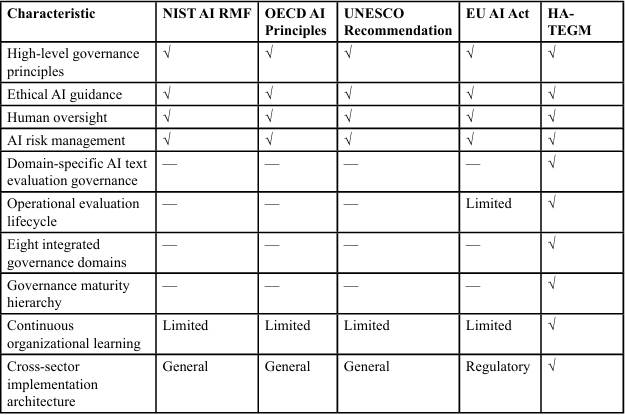
Table 1: Comparison of HA-TEGM with Representative AI Governance Frameworks
As demonstrated in Table 1, HA-TEGM shares the foundational governance objectives promoted by established international AI frameworks while extending their practical application through an integrated implementation architecture specifically designed for AI-assisted text evaluation. This comparison clarifies that the contribution of the present study does not reside in redefining the principles of trustworthy artificial intelligence but in operationalizing those principles into a comprehensive governance model capable of supporting transparent, accountable, and explainable organizational decision-making. The following section builds upon this comparative foundation by introducing the structural components of the Hybrid AI Text Evaluation Governance Model.
Hybrid AI Text Evaluation Governance Model (HA-TEGM)
Conceptual Overview
The increasing complexity of artificial intelligence-assisted text evaluation necessitates governance architectures that extend beyond algorithmic performance. Although contemporary AI systems demonstrate remarkable computational capabilities, their operational effectiveness depends upon organizational structures capable of ensuring transparency, accountability, ethical oversight, explainability, and continuous human participation. Accordingly, this study introduces the Hybrid AI Text Evaluation Governance Model (HA-TEGM). This multidimensional governance framework integrates advanced artificial intelligence with structured organizational governance throughout the text evaluation lifecycle [21,35].
Unlike conventional AI text checkers that function primarily as automated detection tools, HA-TEGM conceptualizes AI text evaluation as an organizational decision-support ecosystem in which artificial intelligence augments—but never replaces—professional human judgment. The framework emphasizes collaborative intelligence by combining computational efficiency with governance mechanisms that preserve institutional accountability, regulatory compliance, ethical reasoning, and organizational learning.
The architecture recognizes that trustworthy AI cannot be achieved solely through increasingly sophisticated algorithms. Rather, sustainable AI implementation emerges through the coordinated interaction of technology, governance, leadership, oversight, and continuous improvement.
An additional governance consideration concerns the responsible management of data throughout the AI evaluation lifecycle. Organizations implementing AI-assisted text evaluation should establish policies governing data retention, secure storage, access controls, and, where legally or institutionally appropriate, mechanisms supporting the deletion or anonymization of evaluation records after their intended purpose has been fulfilled. Incorporating these lifecycle management practices strengthens privacy protection, reinforces stakeholder trust, and aligns AI-assisted text evaluation with broader principles of responsible information governance, institutional accountability, and regulatory compliance.
Governance Philosophy
The design philosophy underlying HA-TEGM is founded upon five fundamental assumptions [25,31].
First, AI should function as a decision-support capability rather than an autonomous decision-maker. This principle reflects the concept of Human Primacy, which serves as a foundational normative assumption of the Hybrid AI Text Evaluation Governance Model (HA-TEGM).
Human Primacy establishes that artificial intelligence exists to augment, rather than replace, professional human judgment. Within HA-TEGM, consequential decisions affecting academic integrity, scientific publishing, governmental administration, legal review, or organizational governance remain the responsibility of qualified human decision-makers. Artificial intelligence therefore functions as an advisory and analytical capability operating under continuous human authority, ethical oversight, and institutional accountability.
Second, accountability for organizational decisions must always remain with qualified human professionals. This collaborative approach recognizes that artificial intelligence excels at rapidly identifying patterns, processing large volumes of information, and supporting analytical consistency, whereas human experts contribute contextual understanding, ethical reasoning, interdisciplinary judgment, and organizational experience. Together, these complementary capabilities produce more reliable, transparent, and defensible institutional decisions than either human or artificial intelligence operating independently.
Third, explainability is essential for establishing institutional trust in AI-assisted recommendations. Consequently, governance should be understood as an integrated organizational capability rather than a collection of isolated compliance activities. Strategic leadership, ethical oversight, explainability, auditability, regulatory compliance, and continuous organizational learning operate as mutually reinforcing components that collectively sustain trustworthy AI implementation over time.
Fourth, governance must remain adaptive to accommodate technological evolution, regulatory change, and organizational learning. Because artificial intelligence capabilities, regulatory expectations, and organizational requirements evolve continuously, governance structures cannot remain static. Instead, organizations should establish mechanisms for periodic policy review, performance monitoring, stakeholder feedback, governance reassessment, and continuous refinement of AI oversight practices. Adaptive governance enables institutions to respond proactively to emerging risks, technological innovation, and evolving ethical expectations while sustaining long-term organizational resilience and public trust.
Finally, continuous collaboration between humans and artificial intelligence produces superior outcomes compared with either operating independently. HA-TEGM recognizes that trustworthy AI emerges through the complementary integration of computational efficiency and professional human expertise. Artificial intelligence contributes speed, scalability, consistency, and analytical support, whereas human decision-makers provide contextual understanding, ethical reasoning, interdisciplinary judgment, and institutional accountability. By integrating these complementary capabilities throughout the evaluation lifecycle, organizations strengthen decision quality, procedural fairness, transparency, and stakeholder confidence while preserving ultimate human responsibility for consequential decisions.
Collectively, these design assumptions operationalize the theoretical principles established in Section 3 and provide the governance foundation supporting the implementation of HA-TEGM throughout the AI-assisted text evaluation lifecycle.
Architecture of HA-TEGM
The Hybrid AI Text Evaluation Governance Model comprises eight integrated governance domains that operate throughout the AI text evaluation lifecycle.
Domain 1. Strategic Governance
Strategic Governance establishes organizational direction, executive sponsorship, governance policies, and institutional objectives for AI assisted text evaluation.
Representative responsibilities include:
• Executive oversight
• Governance policies
• Organizational strategy
• Resource allocation
• Risk appetite
• Performance objectives
Strategic Governance ensures AI implementation remains aligned with organizational mission and long-term institutional priorities.
Domain 2. Ethical and Regulatory Governance
This domain ensures AI systems operate within established ethical principles and applicable legal frameworks.
Primary responsibilities include:
• Ethical AI principles
• Human rights considerations
• Regulatory compliance
• Privacy protection
• Data governance
• Fairness assessment
• Bias monitoring
Ethical governance strengthens public confidence while reducing organizational liability.
Domain 3. Explainability and Transparency
Explainability represents one of the most significant governance requirements for trustworthy AI.
This domain requires AI systems to produce understandable outputs that include:
• Confidence scores
• Decision rationale
• Evidence summaries
• Traceable analytical pathways
• Model limitations
• Documentation
Transparent AI allows reviewers to evaluate recommendations critically rather than accepting algorithmic outputs without explanation.
Domain 4. Human Oversight and Collaborative Intelligence
Human oversight remains central throughout the governance architecture.
Responsibilities include:
• Human review
• Expert validation
• Decision approval
• Appeals processes
• Contextual interpretation
• Ethical deliberation
• Final decision authority
Under HA-TEGM, AI recommendations are always subject to qualified human evaluation before consequential organizational decisions are made.
Domain 5. Operational Evaluation Processes
This domain governs the technical workflow supporting AI-assisted text evaluation.
Representative operational activities include:
• Document ingestion
• Linguistic analysis
• Context assessment
• AI-generated content evaluation
• Similarity analysis
• Authorship indicators
• Quality assurance
• Recommendation generation
Operational governance ensures analytical consistency while maintaining process integrity.
Domain 6. Auditability and Accountability
Every significant AI-supported evaluation should be fully documented.
As a result, this governance domain includes:
• Audit trails
• Decision logs
• Version control
• Reviewer documentation
• Governance reporting
• Incident documentation
• Corrective actions
Comprehensive auditability supports organizational learning while facilitating regulatory review and institutional accountability.
Domain 7. Continuous Learning and Adaptive Improvement
Artificial intelligence evolves continuously.
Consequently, governance must likewise remain adaptive through:
• Performance monitoring
• Feedback integration
• Model recalibration
• Policy revision
• Governance assessment
• Organizational learning
• Emerging technology evaluation
Continuous improvement transforms governance into a living organizational capability rather than a static policy document.
The Hybrid AI Text Evaluation Governance Model (HA-TEGM) conceptualizes AI-assisted text evaluation as an adaptive governance ecosystem in which technological capability and organizational oversight operate collaboratively rather than independently. The framework integrates eight interdependent governance domains that collectively support strategic leadership, ethical implementation, explainable decision-making, human oversight, operational consistency, organizational accountability, continuous learning, and stakeholder trust. Rather than following a linear sequence, these governance domains function as a continuously interacting system that evolves through organizational experience, governance maturity, and ongoing refinement. Figure 1 presents the conceptual architecture of the Hybrid AI Text Evaluation Governance Model.
Figure 1 demonstrates that trustworthy AI-assisted text evaluation emerges through the coordinated interaction of governance capabilities rather than through technological performance alone. By integrating strategic governance, ethical oversight, explainability, human collaboration, accountability, and adaptive organizational learning into a unified governance architecture, HA-TEGM provides a comprehensive framework for responsible AI implementation across diverse organizational environments. The following sections examine each governance domain in greater detail and describe how the framework can be operationalized to support transparent, accountable, and sustainable AI-assisted decision-making.
Domain 8. Organizational Trust and Stakeholder Assurance
The ultimate objective of HA-TEGM extends beyond computational accuracy toward organizational trust.
Representative outcomes include:
• Stakeholder confidence
• Institutional credibility
• Decision legitimacy
• Public transparency
• Responsible innovation
• Sustainable AI adoption
• Governance maturity
This domain recognizes that trust represents the most valuable outcome of responsible AI governance. Together, these eight governance domains function as an integrated organizational architecture that coordinates strategic leadership, ethical oversight, operational evaluation, accountability, and continuous organizational learning throughout the AI-assisted text evaluation process.
Operational Lifecycle
HA-TEGM operates as a continuous governance cycle rather than a linear process.
The lifecycle consists of seven recurring stages:
1. Organizational Governance Initialization
2. AI-Assisted Document Evaluation
3. Human Expert Validation
4. Governance Compliance Review
5. Decision Authorization
6. Audit Documentation
7. Continuous Organizational Learning
Each completed evaluation generates institutional knowledge that informs future governance improvements, creating an adaptive feedback loop supporting long-term organizational resilience.
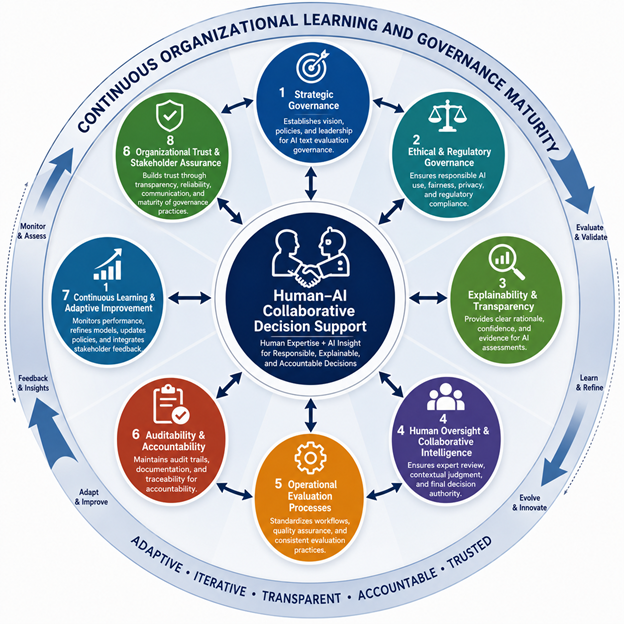
Figure 1: Hybrid AI Text Evaluation Governance Model (HA-TEGM)
Organizational Applications
Although developed within the context of AI text evaluation, HA- TEGM possesses broad cross-sector applicability. Potential implementation environments include:
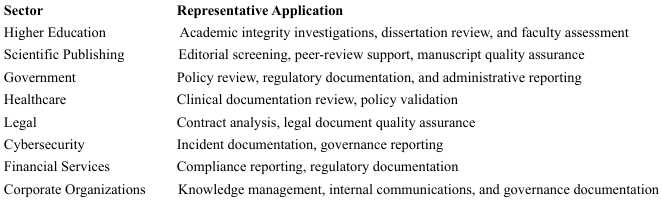
Table
The adaptability of HA-TEGM demonstrates that governance principles remain applicable regardless of organizational mission or operational environment.
Original Contribution to Knowledge
The Hybrid AI Text Evaluation Governance Model advances existing scholarship in several important respects.
First, it shifts the scholarly emphasis from improving AI detection algorithms toward governing AI-assisted decision-making.
Second, it integrates organizational governance, explainable AI, human-centered AI, socio-technical systems theory, and adaptive governance into a unified conceptual architecture.
Third, it formalizes AI text evaluation as a governance-enabled organizational capability rather than a standalone software application.
Fourth, it introduces governance maturity as a critical determinant of the trustworthiness of AI implementation.
Finally, HA-TEGM establishes a scalable governance framework capable of adapting to future developments in generative AI, regulatory policy, and organizational practice.
Collectively, these contributions extend existing AI text evaluation research by demonstrating that sustainable AI implementation depends upon governance architectures that integrate technological capability with ethical oversight, institutional accountability, transparency, and continuous human collaboration.
Operationalizing the Hybrid AI Text Evaluation Governance Model
Governance-Driven AI Text Evaluation Lifecycle
The successful implementation of artificial intelligence within organizational environments depends on establishing structured governance processes that integrate technological capabilities with institutional oversight. Rather than functioning as an isolated software application, the Hybrid AI Text Evaluation Governance Model (HA-TEGM) conceptualizes AI text evaluation as a continuous governance lifecycle involving organizational leadership, human expertise, technological assessment, regulatory compliance, and adaptive organizational learning [21,28].
The proposed lifecycle consists of seven interdependent governance phases that collectively ensure trustworthy AI-assisted text evaluation while preserving accountability throughout the decision-making process. Each phase contributes to organizational resilience by combining automated analytical capabilities with structured human participation and continuous governance review.
The lifecycle begins with governance preparation, during which organizational objectives, policies, ethical requirements, regulatory obligations, and evaluation criteria are established before AI systems analyze any documents. Following governance initialization, AI systems perform computational analysis while simultaneously documenting analytical outputs, confidence measures, and supporting evidence.
Human subject-matter experts subsequently review AI-generated findings, evaluate contextual considerations beyond algorithmic interpretation, and determine whether additional analysis or clarification is necessary. Governance personnel then verify organizational compliance with applicable policies, documentation requirements, and ethical standards before any operational decision is finalized.
Once governance validation is complete, authorized decision-makers approve institutional actions and ensure complete documentation of both AI-generated recommendations and human reasoning. Finally, the completed evaluation is added to the organization's governance knowledge repository, supporting continuous organizational learning and future refinement of AI governance policies.
Unlike traditional linear workflows, this lifecycle repeats iteratively through feedback, enabling organizations to improve governance maturity over time.
Human–Artificial Intelligence Decision Collaboration
One of the distinguishing characteristics of HA-TEGM is its rejection of fully autonomous AI decision-making. Instead, the framework adopts a collaborative intelligence approach in which artificial intelligence and qualified human professionals perform complementary functions throughout the evaluation process [30,31].
Artificial intelligence contributes computational capabilities, including:
• large-scale document processing;
• linguistic pattern recognition;
• semantic similarity analysis;
• stylistic consistency assessment;
• probability estimation;
• anomaly detection;
• metadata analysis; and
• preliminary recommendation generation.
Human evaluators contribute capabilities that remain beyond the reliable scope of current AI technologies, including:
• contextual interpretation;
• ethical reasoning;
• organizational knowledge;
• professional expertise;
• interdisciplinary synthesis;
• policy interpretation;
• stakeholder considerations; and
• final decision authority.
Within HA-TEGM, collaborative intelligence is implemented through clearly defined governance responsibilities that combine AI-generated analytical support with structured human evaluation and documented institutional decision authority. This operational approach preserves accountability while enabling organizations to benefit from computational efficiency without relinquishing professional judgment.
This collaborative relationship strengthens both operational efficiency and institutional confidence by ensuring that AI recommendations remain advisory rather than determinative, thereby preserving human decision-making authority and organizational accountability.
Illustrative Operational Application of HA-TEGM
To demonstrate the practical implementation of the Hybrid AI Text Evaluation Governance Model (HA-TEGM), this section presents an illustrative operational scenario involving AI-assisted evaluation within a higher education environment. The example is intended solely to demonstrate the application of the governance framework and should not be interpreted as an empirical validation study. Rather, it illustrates how the governance architecture integrates artificial intelligence, human expertise, organizational oversight, and institutional accountability throughout the evaluation lifecycle.
Assume that a doctoral dissertation committee receives a dissertation chapter for review. As part of the institution's standard quality assurance procedures, the manuscript is analyzed using an AI-assisted text evaluation platform. Following computational analysis, the system reports that the document has an estimated 84% probability of AI-generated content and identifies several passages exhibiting linguistic characteristics commonly associated with large language model output. Under a traditional technology-centered workflow, such a probabilistic score might be interpreted as evidence of inappropriate AI use, potentially triggering an academic integrity investigation or additional disciplinary review.
Under the Hybrid AI Text Evaluation Governance Model, however, the AI-generated assessment represents only the initial analytical input within a broader governance process rather than a final institutional determination. The AI system documents its analytical outputs, confidence measures, and supporting indicators while simultaneously identifying known limitations associated with probabilistic classification. Explainability mechanisms provide reviewers with information regarding the textual characteristics contributing to the assessment rather than presenting only a numerical confidence score.
Qualified subject-matter experts subsequently evaluate the manuscript independently, considering disciplinary conventions, technical terminology, writing style, citation practices, methodological consistency, and contextual evidence that may not be fully captured through computational analysis. Human reviewers determine whether the broader scholarly context supports the AI- generated observations and whether additional documentation or clarification is warranted before any institutional action is considered.
Following expert review, governance personnel evaluate compliance with institutional policies governing AI-assisted writing, academic integrity, documentation standards, and procedural fairness. Audit records document the AI-generated assessment, the supporting evidence reviewed by human evaluators, the rationale underlying the committee's conclusions, and the final governance determination. This documentation establishes transparency, traceability, and accountability throughout the evaluation process while preserving procedural integrity.
Assume that the committee ultimately concludes that the elevated AI probability resulted from highly structured academic writing, discipline-specific terminology, and consistently formal language rather than inappropriate AI-generated authorship. Under HA-TEGM, the AI-generated probability score does not independently determine the outcome. Instead, the final decision reflects the integration of computational analysis, explainable evidence, professional judgment, governance review, and documented institutional oversight. The completed evaluation is subsequently incorporated into the organization's governance knowledge repository, where it informs future policy refinement, reviewer training, governance maturity assessments, and continuous organizational learning.
This illustrative scenario demonstrates that HA-TEGM conceptualizes AI-assisted text evaluation as a governance-enabled decision-support process rather than an automated classification system. Artificial intelligence contributes computational efficiency and analytical consistency, while human reviewers remain responsible for contextual interpretation, ethical deliberation, institutional accountability, and final decision authority. By integrating explainability, structured oversight, comprehensive documentation, and adaptive organizational learning throughout the evaluation lifecycle, the framework reduces the likelihood that consequential organizational decisions will rely exclusively on probabilistic AI outputs. Consequently, HA-TEGM strengthens transparency, procedural fairness, and institutional trust while enabling organizations to benefit from AI-assisted text evaluation in a responsible and accountable manner.
Figure 3 illustrates an example operational workflow demonstrating how the Hybrid AI Text Evaluation Governance Model (HA-TEGM) integrates artificial intelligence, explainability, human expertise, governance oversight, institutional decision-making, and continuous organizational learning into a unified governance process. Although presented as an illustrative scenario, the workflow demonstrates how governance principles can be operationalized across organizational environments while maintaining transparency, accountability, and responsible human oversight.
As illustrated in Figure 3, the governance-centered workflow extends beyond computational analysis by integrating organizational oversight throughout every stage of the evaluation lifecycle. Rather than allowing AI-generated probability scores to determine institutional outcomes independently, HA-TEGM ensures that explainability, human expertise, governance compliance, documentation, and continuous organizational learning collectively support transparent, accountable, and trustworthy decision-making.
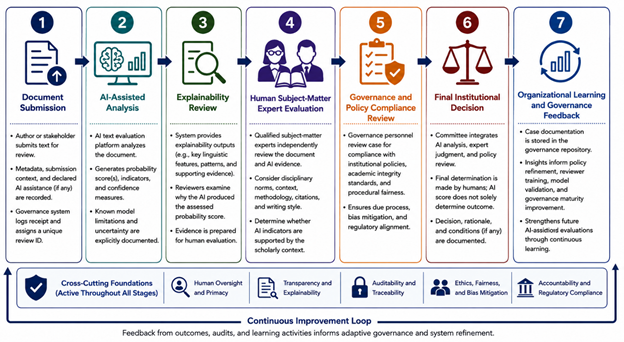
Figure 3: Illustrative Operational Workflow of the Hybrid AI Text Evaluation Governance Model (HA-TEGM)
Explainability Throughout the Evaluation Process
Explainability serves as a foundational governance principle throughout HA-TEGM. Every significant analytical output generated by AI should be accompanied by sufficient documentation to enable reviewers to understand how the conclusions were reached [16,35].
Explainable evaluation includes several complementary components.
First, AI systems should provide confidence indicators that reflect the relative certainty of analytical conclusions.
Second, supporting linguistic evidence should accompany classification decisions whenever practical.
Third, analytical reasoning should identify which textual characteristics contributed most significantly to evaluation outcomes.
Fourth, known model limitations should be disclosed whenever AI recommendations may be influenced by uncertainty, incomplete information, or technological constraints.
Finally, human reviewers should document the rationale supporting any modification, acceptance, or rejection of AI-generated recommendations.
Collectively, these explainability mechanisms improve institutional transparency while facilitating meaningful human oversight.
Governance Risk Management
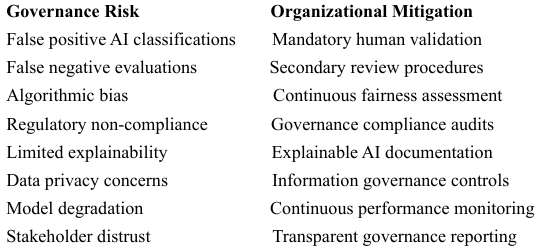
The implementation of AI text evaluation introduces numerous organizational risks that extend beyond computational accuracy. Thus, HA-TEGM incorporates governance-based risk management throughout the operational lifecycle [21,27].
Representative governance risks include:
Table
Rather than eliminating risk entirely, HA-TEGM seeks to manage organizational uncertainty through structured governance controls that strengthen resilience while reducing operational vulnerability.
Governance Maturity
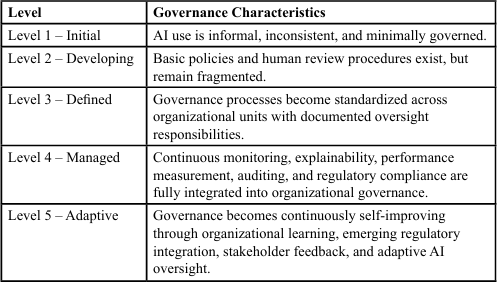
Organizations vary considerably in their AI governance capabilities. Consequently, HA-TEGM incorporates governance maturity as an essential mechanism for evaluating organizational preparedness and continuous improvement [24,35].
The proposed maturity hierarchy consists of five progressively advancing levels.
Table
Governance maturity enables organizations to assess current capabilities while identifying structured pathways for future improvement.
As organizations increasingly integrate artificial intelligence into text evaluation processes, governance capabilities must evolve from ad hoc implementations to mature, adaptive oversight structures. Governance maturity reflects an organization's ability to systematically integrate policies, human oversight, explainability, accountability, continuous learning, and organizational trust into AI- assisted decision-making. Figure 2 illustrates the proposed five-level AI Text Evaluation Governance Maturity Hierarchy, demonstrating the progressive development of governance capability from initial implementation to adaptive, continuously optimized governance.
The governance maturity hierarchy demonstrates that trustworthy AI-assisted text evaluation is achieved through progressive organizational development rather than technological implementation alone. As governance capabilities mature, organizations strengthen transparency, accountability, human oversight, and institutional resilience while fostering greater confidence in AI-supported decision-making. Building upon this maturity perspective, the following discussion examines how these governance principles can be operationalized across diverse organizational environments through the implementation of the Hybrid AI Text Evaluation Governance Model.
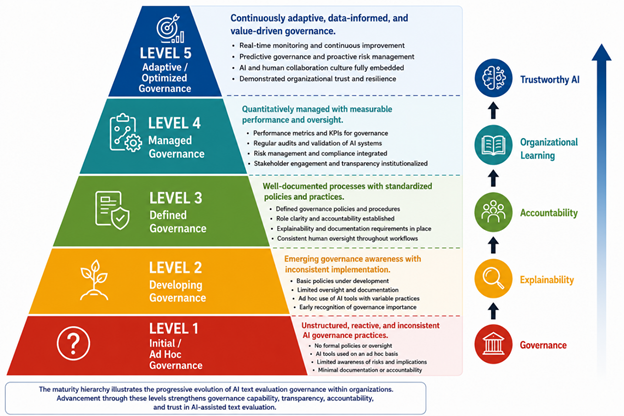
Figure 2: Five-Level AI Text Evaluation Governance Maturity Hierarchy
Organizational Benefits of HA-TEGM
The governance architecture established by HA-TEGM produces organizational capabilities that extend beyond computational performance by strengthening institutional oversight, documentation quality, explainability, regulatory compliance, and stakeholder confidence.
Representative organizational outcomes include:
• increased transparency;
• strengthened institutional accountability;
• improved regulatory compliance;
• enhanced stakeholder confidence;
• more consistent decision-making;
• reduced governance risk;
• stronger documentation practices;
• improved explainability;
• continuous organizational learning;
• sustainable AI adoption;
• greater operational resilience; and
• long-term governance maturity.
Collectively, these outcomes demonstrate that governance-centered AI implementation creates organizational value substantially exceeding technological performance alone.
Rather than measuring success exclusively through computational accuracy, HA-TEGM evaluates AI implementation according to organizational trust, ethical responsibility, institutional resilience, and sustained governance effectiveness.
Section 5 has demonstrated how the Hybrid AI Text Evaluation Governance Model can be operationalized through governance lifecycles, collaborative intelligence, explainability, risk management, and governance maturity. While these implementation mechanisms establish the framework's practical utility, their broader significance extends across multiple organizational sectors. Thus, the following section examines the cross-sector implications of governance- centered AI text evaluation. It explores how HA-TEGM can support responsible AI adoption within higher education, scientific publishing, government, healthcare, legal systems, cybersecurity, financial services, and corporate enterprises.
Cross-Sector Applications and Future Directions for AI Text Evaluation Governance
Higher Education
Within higher education, HA-TEGM provides a governance architecture supporting academic integrity investigations, dissertation review, faculty evaluation, and AI-assisted scholarly assessment while preserving transparency, procedural fairness, and institutional accountability. As institutions increasingly integrate AI-assisted text evaluation into academic decision-making, this governance architecture addresses concerns regarding fairness, transparency, due process, and student rights [6,7,13].
An additional governance consideration involves informed participation in AI-assisted evaluation processes. Institutions should communicate clearly when artificial intelligence forms part of academic assessment, explain the purpose for which AI technologies are being used, and establish procedures through which students and other stakeholders may seek clarification or challenge AI- assisted determinations. Although specific legal and institutional requirements may vary, transparent communication and meaningful opportunities for human review reinforce procedural fairness, strengthen institutional trust, and support participatory governance within AI-assisted assessment environments.
Under the Hybrid AI Text Evaluation Governance Model (HA- TEGM), AI-generated assessments function as advisory evidence rather than final determinations. Faculty members, dissertation committees, academic integrity officers, and institutional administrators remain responsible for interpreting AI-generated findings within the broader academic context. This governance approach reduces the likelihood of false accusations while strengthening institutional confidence in AI-supported academic decision-making.
The framework further encourages universities to establish standardized governance policies governing AI-assisted evaluation, documentation requirements, appeal procedures, and periodic validation of AI technologies to ensure continued reliability.
Scientific Publishing and Scholarly Communication
Within scientific publishing, HA-TEGM provides a governance architecture supporting editorial screening, peer-review assistance, manuscript quality assurance, and the transparent evaluation of AI- assisted scholarly writing. By integrating explainability, documented human oversight, auditability, and editorial accountability into publication workflows, the framework strengthens research integrity while preserving the authority of editors and peer reviewers. As the use of generative artificial intelligence continues to expand within scholarly communication, this governance architecture provides a structured approach for addressing questions of authorship, originality, disclosure, and publication ethics [9,12].
Rather than relying exclusively upon AI detection software, HA- TEGM proposes governance-centered editorial review in which AI screening complements traditional peer review rather than replacing it. Editorial boards are responsible for evaluating scientific merit, methodological rigor, originality, ethical compliance, and suitability for publication.
Within this environment, explainability becomes particularly important. Editorial decisions influenced by AI-generated recommendations should be accompanied by transparent documentation enabling reviewers and authors to understand how AI-assisted analyses contributed to editorial outcomes. Such transparency strengthens confidence in both editorial decision making and scholarly publishing.
Government and Public Administration
Government agencies may implement HA-TEGM to support policy analysis, regulatory documentation, administrative reporting, legislative drafting, public communication, and records management while preserving transparency, documented oversight, regulatory compliance, and public accountability. As artificial intelligence assumes a greater role in governmental decision-support processes, the framework provides a structured governance architecture that strengthens explainability, procedural integrity, and responsible human oversight for decisions affecting citizens, public resources, and regulatory compliance [23,29].
HA-TEGM provides government organizations with governance structures emphasizing transparency, documentation, auditability, and responsible oversight throughout AI-assisted document evaluation. Human review remains mandatory before AI-supported analyses influence official governmental actions, ensuring that elected officials and public administrators retain decision-making authority.
Additionally, comprehensive audit trails facilitate public accountability by documenting how AI recommendations contributed to governmental decisions while preserving institutional transparency.
Healthcare and Clinical Documentation
Within healthcare organizations, HA-TEGM provides a governance architecture supporting AI-assisted clinical documentation, medical record review, quality assurance, research synthesis, and administrative reporting while preserving professional judgment, regulatory compliance, patient safety, and organizational accountability. By integrating explainability, documented human oversight, and structured governance throughout clinical and administrative workflows, the framework enables healthcare organizations to benefit from AI-assisted decision support without diminishing ethical responsibilities, legal accountability, or clinician authority.
Within healthcare environments, HA-TEGM emphasizes collaborative intelligence in which clinicians remain responsible for interpreting AI-generated recommendations while considering patient-specific circumstances beyond computational analysis.
Governance mechanisms, including documentation standards, explainability requirements, audit procedures, and continuous validation, support responsible AI implementation while preserving patient-centered care.
Legal Services
Within legal organizations, HA-TEGM provides a governance architecture supporting AI-assisted legal research, contract analysis, litigation preparation, regulatory review, and document management while preserving evidentiary integrity, professional judgment, procedural fairness, and legal accountability. By integrating explainability, documented human oversight, and structured governance throughout legal workflows, the framework enables organizations to benefit from AI-assisted analytical capabilities while ensuring that attorneys and other qualified legal professionals retain responsibility for contextual interpretation, legal reasoning, and final decision authority.
HA-TEGM recognizes that legal professionals remain accountable for all AI-assisted analyses. AI contributes efficiency through rapid document analysis, while attorneys provide statutory interpretation, legal reasoning, ethical evaluation, and professional accountability.
Consequently, governance-centered AI implementation strengthens legal practice without diminishing professional responsibility.
Cybersecurity and Critical Infrastructure
Within cybersecurity organizations, HA-TEGM provides a governance architecture supporting AI-assisted incident reporting, vulnerability assessments, threat intelligence analysis, regulatory documentation, and digital forensic investigations while preserving transparency, documented oversight, evidentiary integrity, and organizational accountability. By integrating explainability, structured human review, and comprehensive governance controls throughout cybersecurity workflows, the framework enables organizations to leverage AI-assisted analytical capabilities while ensuring that qualified cybersecurity professionals retain responsibility for threat assessment, risk evaluation, incident response, and final operational decision-making.
However, cybersecurity environments require governance mechanisms capable of ensuring documentation integrity, evidentiary reliability, regulatory compliance, and operational accountability. HA-TEGM supports these objectives by integrating explainable AI, structured documentation, continuous monitoring, and human validation throughout cybersecurity reporting processes.
Such governance strengthens organizational resilience while reducing operational risks associated with automated decision making.
Corporate Knowledge Management
Across modern organizations, HA-TEGM provides a governance architecture supporting AI-assisted policy development, procedure management, technical documentation, compliance reporting, strategic planning, training materials, and organizational communications while preserving transparency, documented oversight, institutional accountability, and organizational knowledge integrity. By integrating explainability, structured human review, and continuous governance throughout enterprise information workflows, the framework enables organizations to strengthen knowledge management, improve documentation quality, and support informed decision-making while ensuring that organizational authority and accountability remain with human decision-makers.
HA-TEGM extends organizational governance beyond isolated AI applications by integrating AI-assisted document evaluation into broader enterprise governance systems. Human reviewers remain responsible for ensuring organizational alignment, strategic consistency, regulatory compliance, and stakeholder communication while AI supports document standardization and analytical efficiency.
This governance-centered approach transforms AI into an organizational capability that supports continuous knowledge management rather than functioning solely as an editing technology.
Emerging Research Directions
Building upon the governance architecture proposed throughout this study, the continued evolution of generative artificial intelligence presents numerous opportunities for future scholarly investigation. While HA-TEGM establishes a conceptual framework for trustworthy AI-assisted text evaluation, empirical validation represents the next stage in advancing governance-centered AI implementation across diverse organizational environments.
Future research should evaluate the effectiveness of governance- centered AI implementation across diverse organizational environments through comparative case studies, longitudinal organizational assessments, simulation modeling, and mixed methods investigations.
Several research priorities warrant particular attention.
First, empirical studies should examine how governance maturity influences organizational trust in AI-assisted decision-making.
Second, researchers should investigate relationships among explainability, human oversight, and decision quality across different operational contexts.
Third, comparative analyses should evaluate governance-centered AI implementation in the context of evolving regulatory frameworks and international AI governance standards.
Fourth, future investigations should examine the organizational effects of adaptive governance and continuous learning mechanisms on long-term AI performance.
Finally, interdisciplinary collaboration among computer scientists, organizational leaders, governance scholars, ethicists, legal researchers, and information systems professionals will be essential to developing governance architectures that adapt to rapidly evolving AI technologies.
Collectively, these research directions provide a foundation for establishing AI text evaluation as an interdisciplinary field integrating technological innovation with organizational governance, institutional accountability, and responsible human–AI collaboration.
The preceding discussion demonstrates that the Hybrid AI Text Evaluation Governance Model is broadly applicable across educational, governmental, legal, healthcare, cybersecurity, publishing, and commercial environments. Although each sector presents unique operational challenges, all require governance mechanisms that balance computational efficiency with transparency, accountability, ethical oversight, and human judgment. Building upon these cross-sector applications, the final section synthesizes the principal findings of this study, evaluates the broader implications of governance-centered AI implementation, and outlines a strategic vision for the future of trustworthy AI-assisted text evaluation.
The Hybrid AI Text Evaluation Governance Model (HA-TEGM) integrates eight complementary governance domains that collectively support trustworthy, transparent, and accountable AI-assisted text evaluation. Although each domain performs a distinct governance function, their collective interaction establishes a comprehensive organizational governance architecture capable of balancing computational efficiency with ethical oversight and sustained human participation. Table 2 summarizes the primary objectives and representative organizational indicators associated with each governance domain.
The governance domains summarized in Table 2 illustrate that trustworthy AI text evaluation extends well beyond computational performance. Effective implementation requires coordinated governance structures that integrate strategic leadership, ethical oversight, organizational accountability, explainability, and continuous human collaboration throughout the AI lifecycle. Collectively, these domains provide the organizational foundation upon which sustainable and responsible AI-assisted text evaluation can evolve, thereby reinforcing the governance-centered perspective advanced throughout this study.
Practical Implications for Organizational Leadership
As organizations increasingly integrate artificial intelligence into decision-making processes, executive leaders must recognize that successful AI implementation is fundamentally a governance responsibility rather than solely a technological initiative. Although advances in machine learning and generative AI have substantially enhanced organizational productivity, trustworthy AI-assisted text evaluation ultimately depends upon leadership structures capable of ensuring ethical oversight, institutional accountability, regulatory compliance, and sustained stakeholder confidence [33,34].
For executive leadership, the Hybrid AI Text Evaluation Governance Model (HA-TEGM) provides a structured governance architecture that supports strategic decision-making throughout the AI implementation lifecycle. By integrating governance policies, explainable artificial intelligence, human oversight, auditability, and continuous organizational learning, the framework enables leaders to balance technological innovation with responsible institutional stewardship. This governance-centered perspective allows organizations to adopt emerging AI capabilities while maintaining operational transparency and preserving public trust.
From a governance perspective, HA-TEGM further supports organizational resilience by encouraging proactive rather than reactive management of AI-related risks. Executive leaders are provided with mechanisms to continuously monitor AI performance, evaluate governance maturity, document organizational decisions, and adapt governance policies as technological capabilities and regulatory expectations evolve. Such adaptive governance enhances institutional agility while reducing organizational vulnerability associated with rapidly changing AI technologies.
The framework also provides practical value for organizational policy development. Institutions implementing AI-assisted text evaluation should establish formal governance policies that define roles and responsibilities, human-review requirements, documentation standards, model-validation procedures, explainability expectations, audit requirements, and continuous-improvement mechanisms. These governance structures promote consistency across organizational units while strengthening accountability for AI-assisted decisions.
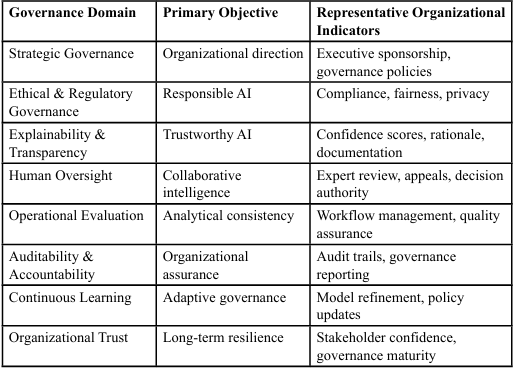
Table 2: Hybrid AI Text Evaluation Governance Domains
Finally, HA-TEGM emphasizes that sustainable AI implementation depends upon cultivating organizational cultures that value collaboration between human expertise and artificial intelligence. Rather than viewing AI as a replacement for professional judgment, organizations should encourage collaborative intelligence in which technological capability enhances—rather than supplants— critical thinking, ethical reasoning, interdisciplinary expertise, and institutional responsibility. Such an approach strengthens organizational trust while ensuring that AI continues to serve as a responsible decision-support capability aligned with organizational mission and societal expectations.
The practical implications discussed above demonstrate that effective AI text evaluation extends beyond software implementation to encompass executive leadership, organizational governance, institutional culture, and continuous strategic oversight. As organizations increasingly integrate artificial intelligence into knowledge-intensive environments, governance-centered implementation becomes essential for ensuring responsible innovation and sustaining stakeholder confidence. Therefore, the concluding section synthesizes the principal contributions of this study and presents a forward-looking vision for the future of trustworthy AI-assisted text evaluation.
Conclusion
Artificial intelligence has fundamentally transformed how organizations evaluate, produce, and manage written information. As AI-assisted text evaluation becomes increasingly integrated into higher education, scientific publishing, government, healthcare, legal services, cybersecurity, financial institutions, and corporate environments, organizations face challenges that extend well beyond computational performance. Although advances in machine learning, natural language processing, and generative artificial intelligence have substantially improved the speed, scalability, and analytical capabilities of document evaluation, these technological developments have simultaneously intensified organizational demands for transparency, explainability, accountability, ethical oversight, regulatory compliance, and institutional trust.
This study argues that the long-term success of AI-assisted text evaluation depends not solely on developing increasingly sophisticated detection algorithms, but on establishing governance architectures capable of integrating technological innovation with responsible organizational oversight. Existing AI text evaluation systems provide valuable analytical support; however, limitations involving contextual reasoning, algorithmic opacity, probabilistic uncertainty, and inconsistent accountability demonstrate that technological advancement alone cannot ensure trustworthy implementation. Instead, effective AI deployment requires governance structures that preserve professional judgment, document institutional decision- making, and support continuous organizational learning.
To address this challenge, this article introduced the Hybrid AI Text Evaluation Governance Model (HA-TEGM), a governance centered conceptual framework that integrates artificial intelligence with structured human oversight, explainable decision-making, organizational accountability, adaptive governance, and continuous institutional learning. Rather than positioning artificial intelligence as an autonomous decision-maker, HA-TEGM conceptualizes AI as a governance-enabled decision-support capability operating within organizational processes that preserve ethical reasoning, professional expertise, and institutional responsibility throughout the evaluation lifecycle.
The principal contribution of this study extends beyond proposing another conceptual AI governance model. Building upon internationally recognized principles of trustworthy artificial intelligence, HA-TEGM translates those principles into an implementation-oriented governance architecture specifically designed for AI-assisted text evaluation. Through the integration of eight interconnected governance domains, a continuous operational lifecycle, a governance maturity hierarchy, and cross-sector implementation guidance, the framework provides organizations with both a theoretical foundation and a practical roadmap for implementing trustworthy AI across diverse operational environments.
An equally important contribution of this research is its recognition that organizational trust cannot be achieved through computational accuracy alone. Sustainable AI implementation depends upon governance systems capable of documenting decisions, supporting explainability, ensuring regulatory compliance, managing organizational risk, facilitating meaningful human oversight, and continuously adapting to technological and organizational change. In this context, governance maturity becomes an essential complement to technological sophistication, providing organizations with a structured pathway for strengthening institutional resilience, stakeholder confidence, and responsible AI adoption over time.
The cross-sector applications presented throughout this study further demonstrate that the governance principles underlying HA-TEGM remain broadly applicable across organizational environments. Whether supporting academic integrity investigations, editorial review, governmental decision-making, healthcare documentation, legal analysis, cybersecurity reporting, financial compliance, or enterprise knowledge management, the framework consistently emphasizes collaborative intelligence in which artificial intelligence augments—but does not replace—qualified human judgment. This governance-centered perspective positions AI-assisted text evaluation as an organizational capability rather than merely a technological function.
Several limitations should be acknowledged. First, HA-TEGM is presented as a conceptual framework derived from the interdisciplinary synthesis of existing governance scholarship rather than empirical implementation studies. Consequently, future empirical validation is necessary to evaluate its effectiveness across operational settings. Second, the rapid evolution of generative artificial intelligence, international governance frameworks, and regulatory expectations will require continuous refinement of governance models to maintain organizational relevance. Finally, implementation strategies will inevitably require adaptation to accommodate sector-specific legal, ethical, operational, and cultural requirements.
Future research should therefore focus on empirically validating HA-TEGM through comparative case studies, longitudinal organizational investigations, mixed-methods research, governance maturity assessments, simulation modeling, and cross-sector implementation analyses. Additional scholarship should examine the relationships among explainability, organizational trust, governance maturity, human oversight, and decision quality while exploring the integration of HA-TEGM with emerging international AI governance standards and evolving regulatory frameworks.
Ultimately, the future of artificial intelligence-assisted text evaluation depends upon an equally sophisticated evolution in organizational governance. As AI systems become increasingly embedded within institutional decision-making, organizations must move beyond viewing artificial intelligence as solely a technological capability and instead recognize it as a governance responsibility requiring ethical leadership, structured oversight, institutional accountability, and continuous organizational learning. The Hybrid AI Text Evaluation Governance Model (HA-TEGM) offers an implementation-oriented governance architecture through which organizations can balance technological innovation with responsible human stewardship. By integrating governance, explainability, collaborative intelligence, and adaptive organizational learning into a unified framework, HA-TEGM provides a foundation for trustworthy, transparent, and sustainable AI-assisted text evaluation capable of supporting informed decision-making across increasingly complex organizational environments.
Original Contribution to Knowledge
The principal scholarly contribution of this article is the development of the Hybrid AI Text Evaluation Governance Model (HA-TEGM), an implementation-oriented governance architecture that repositions AI-assisted text evaluation from a predominantly algorithmic challenge to an organizational governance capability. Unlike existing scholarship, which has focused primarily on improving detection accuracy or computational performance, this study synthesizes artificial intelligence governance, human-centered AI, explainable AI, organizational governance theory, socio-technical systems theory, and adaptive governance into a unified framework for responsible AI-assisted text evaluation.
By introducing eight interconnected governance domains, a continuous operational lifecycle, a governance maturity hierarchy, and cross-sector implementation guidance, HA-TEGM provides both a theoretical foundation and a practical roadmap for implementing trustworthy artificial intelligence across higher education, scientific publishing, government, healthcare, legal services, cybersecurity, financial institutions, and corporate enterprises. The framework complements existing international AI governance initiatives by translating their foundational principles into an operational governance architecture specifically designed for AI-assisted text evaluation.
As a result, this study extends the scholarly literature by demonstrating that the long-term effectiveness of AI-assisted text evaluation depends not solely on advances in artificial intelligence, but on governance systems capable of integrating ethical oversight, explainability, accountability, institutional trust, continuous organizational learning, and sustained human–AI collaboration into a cohesive organizational decision-support ecosystem.
Competing Interests:
The author declares that there are no competing financial, commercial, institutional, or personal interests that could have influenced the research, analysis, interpretation, or publication of this manuscript. The development of the Hybrid AI Text Evaluation Governance Model (HA-TEGM) was conducted independently and without financial support, sponsorship, or influence from developers, vendors, or distributors of artificial intelligence text evaluation technologies.
Author's Note
This manuscript extends the author's previously published research on artificial intelligence text evaluation (Shawe, 2025). Whereas the earlier publication examined the capabilities, limitations, and practical applications of contemporary AI text checkers, the present study advances that work by introducing the Hybrid AI Text Evaluation Governance Model (HA-TEGM), an implementation- oriented governance framework that integrates artificial intelligence governance, explainable artificial intelligence, human-centered AI, organizational governance, governance maturity, and continuous organizational learning. The present manuscript substantially expands the theoretical foundation, comparative governance analysis, operational architecture, implementation guidance, and practical applications beyond those presented in the earlier publication.
References
Dwivedi, Y. K., Kshetri, N., Hughes, L., Slade, E. L., Jeyaraj, A., Kar, A. K., et al. (2023). What if ChatGPT wrote it? Multidisciplinary perspectives on generative conversational AI's opportunities, challenges, and implications for research and practice. International Journal of Information Management, 71, 102642. View
Javaid, M., Haleem, A., & Singh, R. P. (2023). A study on ChatGPT for Industry 4.0: Background, potentials, challenges, and eventualities. Journal of Economy and Technology, 1, 127- 143. View
Elkhatat, A. M., Elsaid, K., & Almeer, S. (2023). Evaluating the efficacy of AI content detection tools in differentiating between human and AI-generated text. International Journal for Educational Integrity, 19(17). View
Walters, W. H. (2023). The effectiveness of software designed to detect AI-generated writing: A comparison of 16 AI text detectors. Open Information Science, 7, Article 20220158. View
Kar, S. K., Bansal, T., Modi, S., & Singh, A. (2024). How sensitive are free AI-detector tools in detecting AI-generated texts? Indian Journal of Psychological Medicine, 47(3), 275 278.
Park, J. (2019a). An AI-based English grammar checker vs. human raters in evaluating EFL learners' writing. Multimedia Assisted Language Learning, 22(1), 112–131. View
Park, J. (2019b). Implications of AI-based grammar checker in EFL learning and testing. The Korea English Language Testing Association Journal, 14, 11–39. View
Heintz, K., Roh, Y., & Lee, J. (2022). Comparing the accuracy and effectiveness of Wordvice AI Proofreader to two automated editing tools and human editors. Science Editing, 9(1), 37–45. View
McIntosh, L. (2021). Automating quality checks in the publishing process. In Transforming Scholarly Publishing with Blockchain Technologies and AI (pp. 251–264). IGI Global. View
Russell, S., & Norvig, P. (2021). Artificial intelligence: A modern approach (4th ed.). Pearson. View
Stahl, B. C. (2021). Artificial intelligence for a better future: An ecosystem perspective on the ethics of AI. Springer. View
Bozkurt, A. (2025). Artificial intelligence, education, and responsible innovation: Emerging governance perspectives. Educational Technology Research and Development. View
Chaudhry, I. S., Sarwary, S. A. M., El Refae, G. A., & Chabchoub, H. (2023). Time to revisit existing students’ performance evaluation approach in higher education in a new era of ChatGPT—A case study. Cogent Education, 10, Article 2210461. View
Adams, R. (2024). The new empire of AI: The future of global inequality. Wiley. View
Floridi, L. (2023). The ethics of artificial intelligence: Principles, challenges, and opportunities. Oxford University Press. View
Arrieta, A. B., Díaz-Rodríguez, N., Del Ser, J., Bennetot, A., Tabik, S., Barbado, A., ... Herrera, F. (2020). Explainable artificial intelligence (XAI): Concepts, taxonomies, opportunities, and challenges toward responsible AI. Information Fusion, 58, 82–115. View
ISO/IEC 22989. (2022). Artificial intelligence—Artificial intelligence concepts and terminology. View
Shawe, R. (2025). Utilizing AI text checkers: Case studies and implications. International Journal of Intelligence Science, 15(3), 125–143. View
European Commission. (2024). Ethics guidelines for trustworthy artificial intelligence. View
European Parliament. (2024). Artificial Intelligence Act. View
National Institute of Standards and Technology. (2023). Artificial Intelligence Risk Management Framework (AI RMF 1.0). View
OECD. (2024). OECD framework for the classification of artificial intelligence systems. View
United Nations Educational, Scientific, and Cultural Organization. (2021). Recommendation on the ethics of artificial intelligence. View
Ala-Pietilä, P., et al. (2024). Strengthening trustworthy artificial intelligence governance. European Commission.
Floridi, L., & Cowls, J. (2022). A unified framework of five principles for AI in society. Harvard Data Science Review. View
Jobin, A., Ienca, M., & Vayena, E. (2020). The global landscape of AI ethics guidelines. Nature Machine Intelligence, 2(1), 9–18. View
ISO/IEC 23894. (2023). Information technology—Artificial intelligence—Risk management. View
United States Government Accountability Office. (2021). Artificial intelligence: An accountability framework for federal agencies and other entities. View
Wirtz, B. W., Weyerer, J. C., & Sturm, B. J. (2020). The dark sides of artificial intelligence: An integrated AI governance framework for public administration. International Journal of Public Administration, 43(9), 818–829. View
Kumar, V., & Singh, P. (2024). Human-centered artificial intelligence for organizational decision support. AI and Society.
Shneiderman, B. (2022). Human-centered AI. Oxford University Press. View
Organisation for Economic Co-operation and Development. (2024). OECD AI principles. View
Simon, H. A. (1997). Administrative behavior (4th ed.). Free Press. View
Weick, K. E. (1995). Sensemaking in organizations. Sage. View
High-Level Expert Group on Artificial Intelligence. (2020). Assessment list for trustworthy AI (ALTAI). View