
- About the Journal
- Editorial Board
- Review Process
- Author Guidelines
- Article Processing Charges
- Special Issues
- Current Issue
- Past Issue
 Journal of Political Science and Public Opinion
Journal of Political Science and Public Opinion Volume 3 (2025), Article ID: JPSPO-127
https://doi.org/10.33790/jpspo1100127Research Article
Racialized Polarization and Latinx Perceptions of Political Representation: A Meta-Analysis Using Prisma
Frederick Arthur
Department of Political Science, Oklahoma State University, Stillwater, OK 74078, United States.
Corresponding Author: Frederick Arthur, Department of Political Science, Oklahoma State University, Stillwater, OK 74078, United States.
Received date: 06th September, 2025
Accepted date: 21st October, 2025
Published date: 23rd October, 2025
Citation: Arthur, F., (2025). Racialized Polarization and Latinx Perceptions of Political Representation: A Meta-Analysis Using Prisma. J Poli Sci Publi Opin, 3(2): 127.
Copyright: ©2025, This is an open-access article distributed under the terms of the Creative Commons Attribution License, which permits unrestricted use, distribution, and reproduction in any medium, provided the original author and source are credited
Abstract
This review consolidates empirical research associated with Latinx perceptions of political representation in the United States by emphasizing the interaction between descriptive and substantive representation, racial polarization, and institutional patterns. By reviewing 92 peer-reviewed studies within the past 25 years using the Preferred Reporting Items for Systematic Reviews and Meta-Analyses to improve validity and reduce bias, the study examines the impact of minority districting, partisanship, and intersectional identities on Latinx electoral engagement by utilizing both quantitative and qualitative research from political science and ethnic studies. The study finds a paradox where Latinx voters and candidates show high levels of political efficacy, yet are underrepresented in elected offices and face discouragement from party elites. The discussion emphasizes the mechanisms of underrepresentation, obstacles to political trust, and the dynamic nature of representation influenced by demographic shifts and extreme partisanship. I pinpoint gaps in existing research and offer suggestions for subsequent academic inquiry.
Keywords: Racial Polarization, Political Representation, Minority Districting, Linked Fate, Political Behavior, Latinx.
Introduction
The growth of the Latinx population as a significant force in American politics has led scholars to investigate the conditions and results of their political representation [1]. Racial polarization, which has been becoming stronger over the past few decades, makes it harder for Latinx groups to get involved and for voters to see things from their point of view [2,3]. This study aims to comprehend the perceptions of Latinx groups regarding political representation, considering the escalating racial polarization in the United States. It specifically asks, how do descriptive and substantive representation, institutional elements such as minority districting, and intra-group diversity influence Latinx electoral participation and trust in political institutions? Descriptive representation refers to the extent to which elected officials physically resemble their constituents in terms of race, ethnicity, or gender. Substantive representation, in contrast, concerns whether elected officials act in the interests of these constituents, regardless of shared identity. While the two often intersect, they are not synonymous, and their divergence is central to debates on Latinx political empowerment.
Alongside numerical expansion, the political relevance of Latinx communities stems from their varied financial conditions, immigration backgrounds, and cultural diversity. These are all factors that shape their political objectives and actions [4]. This diversity challenges the widely held belief that Latinx people are politically united and calls for a more in-depth look at how different subgroups see representation. Political representation is hence not a uniform experience but a contentious domain influenced by internal diversity and external political dynamics. Furthermore, the increase in racial polarization among both elites and the general public has changed the political landscape, making representation more important for Latinx voters [5]. As political parties increasingly rally around racial identities, Latinx voters find themselves in a political landscape that presents both opportunities for empowerment and avenues for marginalization. This review situates Latinx opinions within this dynamic framework. It aims to explain how polarization influences their electoral participation, policy priorities, and trust in political institutions. It, thus, positions Latinx representation as an essential indicator for comprehending overarching democratic difficulties in the U.S.
This study seeks to address shortcomings in current research by synthesizing empirical and theoretical frameworks to better understand the complex relationships affecting Latinx political behavior and representation in contemporary contexts. Unlike prior reviews, this study provides systematic evidence that descriptive representation is necessary but insufficient for substantive representation. I highlight institutional and contextual mediators which is missing in existing studies. By integrating intersectionality and polarization dynamics, the review advances understanding beyond earlier single-dimension accounts.
Materials and Methods
This review study methodically analyzed and synthesized around 92 peer-reviewed academic articles, policy reports, dissertations, and book chapters, predominantly published in the recent fifteen years, along with many seminal works. This estimate is based on typical comprehensive political science literature evaluations concentrating on Latinx political representation and racial polarization in recent research. I explored several databases, such as JSTOR, Google Scholar, and specialized Latinx politics archives (like Center for Latino/os and American Politics Research - CLAPR), using appropriate keywords. This number strikes a mix between being comprehensive and manageable while also reflecting important insights and new patterns in Latinx political representation among a racially divided electorate.
This study employed the Preferred Reporting Items for Systematic Reviews and Meta-Analyses (PRISMA) framework to ensure methodological rigor, transparency, and replicability. PRISMA only as a reporting checklist but also as a procedural guide for narrowing down a wide body of literature into a clearly defined corpus of studies relevant to Latinx political representation was used not and racialized polarization. The framework was applied to document each stage of the review from identification to final inclusion so that readers can trace the logic of study selection and evaluate potential sources of bias.
Search Strategy and Databases
The search process was conducted between January and July 2025 across major databases, including JSTOR, Google Scholar, ProQuest, Web of Science, and CLAPR (Center for Latino/as and American Politics Research). Search strings combined keywords such as “Latinx political representation,” “racial polarization,” “descriptive and substantive representation,” “minority districting,” “linked fate,” and “Latinx voter perceptions.” This approach ensured broad coverage across political science, ethnic studies, and public policy literatures.
Screening Process
The PRISMA flow involved several distinct stages:
Identification
- Initial searches yielded approximately 1,240 records across databases.
- All titles, abstracts, and keywords were downloaded into a reference manager.
Duplicate Removal
- After removing duplicates, the dataset was reduced to 1,015 unique records.
Title and Abstract Screening
- Studies were screened for relevance to Latinx representation, polarization, and political behavior.
- Exclusion criteria: works focused solely on non-U.S. cases, unrelated minority groups, or methodological discussions without empirical application.
- This step narrowed the pool to 236 articles.
Full-Text Review
- Each remaining article was reviewed in full.
- Articles were excluded if they lacked empirical data, were purely theoretical without clear implications for Latinx representation, or were outside the 15-year focus window (2009–2024), except for seminal works.
- The final inclusion totaled 92 studies.
Data Extraction and Synthesis
- Key variables extracted included: type of representation examined (descriptive vs. substantive), methodology (quantitative, qualitative, or mixed), findings on racial polarization, subgroup focus (e.g., Afro Latinx, immigrant generation), and implications for institutional trust.
- Conflicting findings were documented to highlight areas of scholarly debate.
Transparency and Replicability
A detailed PRISMA flow diagram (Figure 1) illustrates this process, making explicit the transition from initial identification to final inclusion. In addition, Appendix A provides the full list of the 92 studies included in the review. Together, these features enhance replicability and provide readers with the ability to assess the comprehensiveness of the review.
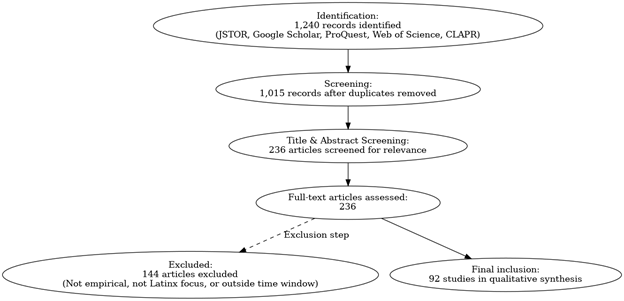
Figure 1. PRISMA Flow Diagram
Among the more accurate polls were those conducted by Atlas Intelligence. This Brazilian company has an impressive record of polling elections in western democracies. Few other polls showed Trump with an advantage, and many that did were associated to some degree with the Republican Party. While some polls showed Trump ahead, as shown by the polling aggregators in Table 1, the polling average immediately prior to the election showed the Democrat to be ahead.
Results and Discussions
This section consolidates the key empirical findings from the examined literature about Latinx perceptions of political representation within racially polarized electorates. The findings are categorized thematically. It illustrates fundamental dimensions recognized in various studies, such as descriptive and substantive representation, the impact of racial polarization, institutional elements like districting, intersectionality and intra-group diversity, the dynamics of racialized partisanship, political mobilization by way of linked fate, and the degree of trust in political institutions. This thematic structure helps us fully comprehend how quantitative and qualitative findings come together around important patterns, while also showing that there are still gaps and tensions in the current study corpus. The results seek to present a cohesive narrative that reflects both convergence and divergence among studies, emphasizing empirical consensus and contention.
The Empirical Terrain of Latinx Political Representation
Empirical research consistently reveal an ongoing underrepresentation of Latinx individuals in governmental positions. For example, in 2018, Latinx people made up barely 1% of county and federal elected officials, even though they made up around 18% of the national population [1,6]. In states with large Latinx populations, like California and Texas, this discrepancy is significantly bigger. Some things that make Latinx underrepresented are problems with recruiting candidates, political socialization, and institutional hurdles like low levels of descriptive representation, when elected officials reflect the demographic qualities of their constituents [7,8].
Trends in Latinx Population Growth, Voter Turnout, and Political Representation in the U.S. (2000–2020)
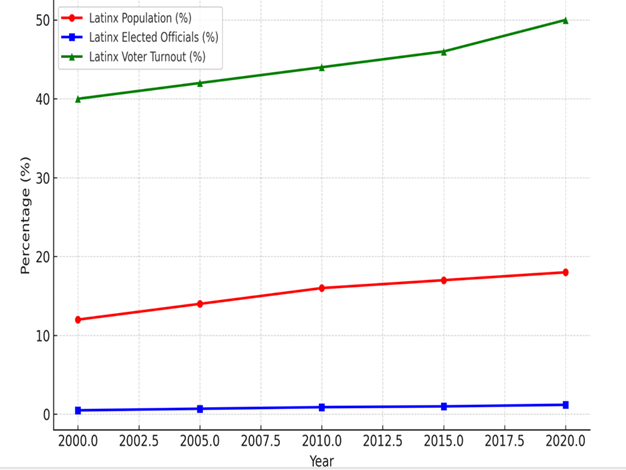
Figure 2. Trends in Latinx Population Growth, Voter Turnout, and Political Representation in the U.S. from 2000 to 2020
The line graphs in figure 2 depict the representation. While the Latinx population and turnout have grown, institutional representation has not kept pace. This illustrates the paradox discussed in this section.
Quantitative investigations indicate that patterns of Latinx representation vary markedly by area and political party. For instance, Garcia [2] discovered that the number of Latino Republicans in Congress increased significantly after 2010. Nevertheless, the advantages of descriptive representation for Latinx communities differed based on district demographics and ideological alignment. The impact of descriptive representation on policy priorities and symbolic lobbying is evidenced in voting records and legislative proposals. This sponsoring behavior shows that Latinx legislators, no matter what political party they belong to, often put the needs of their co-ethnic constituents first. However, this is not always the case. It might be different in different districts [2,3]. The degree to which descriptive representation translates into substantive advocacy varies by district characteristics, including partisan control, socioeconomic composition, immigration levels, and urban–rural divides. For example, Latino Democrats in majority-Latinx urban districts have been more consistent in advancing co-ethnic issues than Latino Republicans in predominantly white or rural districts.
Further empirical research indicates that the presence of Latinx legislators is positively associated with heightened political involvement among Latinx voters. Research indicates increased voter registration and turnout in districts with Latinx officials, implying a mobilizing influence that extends beyond formal legislative engagement [9]. Nevertheless, this effect is influenced by variables such as socio-economic situations and media representations, suggesting that representation alone is inadequate for fully stimulating political engagement.
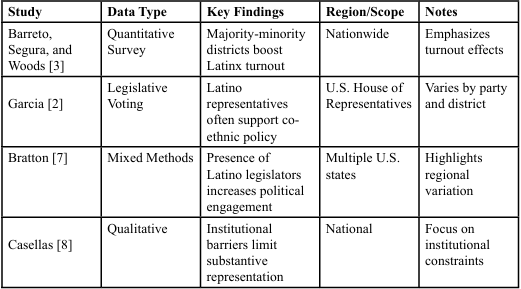
Table 1: Summary of Empirical Studies on Latinx Descriptive and Substantive Representation
Racial Polarization and Voter Perceptions
Empirical study has demonstrated that racial polarization, which is defined as the inclination for voting behavior to correlate with racial or ethnic identity significantly influences the perception of political efficacy within Latinx groups [5]. Barreto and colleagues discovered that Latinx electoral participation and perceptions of representation heightened in contexts regarded as threatening or exclusionary, particularly during prominent debates on immigration or the dissemination of anti-immigrant rhetoric [3,9].
Survey research indicates that Latinx voters are inspired by linked fate, which refers to the belief that their individual and political fortunes are interconnected with the collective outcomes of the Latinx community [10]. Extensive investigations have shown that linked fate correlates favorably with voter turnout and manifestations of political efficacy among Latinx individuals, particularly in racially charged elections [9]. Nevertheless, these empirical advancements are accompanied by enduring skepticism, especially since Latinx voters see both parties utilizing racial appeals that occasionally undermine Latinx causes [2,5].
Recent research has illuminated the contradictory outcomes that racial polarization can have. While periods of intensified polarization can foster group solidarity and stimulate advocacy, they also pose a risk of exacerbating cynicism when electoral institutions are viewed as exclusionary or unresponsive, as evidenced by diminishing trust in the predominantly white federal government [11].
Moreover, empirical studies indicate an increased partisan sorting, with Latinx voters progressively aligning with parties that are viewed as representing their ethnic and socio-political interests [5]. This sorting is influenced by media framing and local political circumstances, demonstrating that racial polarization affects both voter turnout and the intensity and longevity of partisanship among Latinx residents. Even so, party volatility still exists, showing how complicated identification and political behavior may be in Latinx groups.
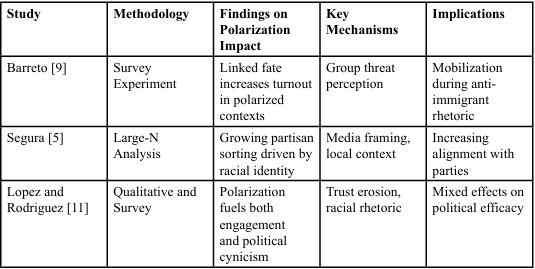
Table 2: Effects of Racial Polarization on Latinx Voter Perceptions and Behavior
The Impact of Minority Districting
Empirical research on electoral districting offers various perspectives on the political empowerment of Latinx communities. Minority-majority districts, which are meant to give minority groups more power, have worked to increase descriptive representation, which makes it more likely that Latinx candidates will win [3,8]. Descriptive representation is the degree to which elected politicians physically correspond to the demographic traits of their constituency, including race, ethnicity, or gender, hence cultivating a feeling of collective identification and trust among voters [12,13]. Substantive representation, on the other hand, is about the actions and policy choices that representatives make that are in line with and support the needs and interests of their constituents, regardless of the representatives' own demographic traits [14]. Descriptive representation can represent inclusion and boost political participation by fostering a common identity, whereas substantive representation is evidenced by concrete legislative actions and policy lobbying that directly affect the represented group [13]. Nonetheless, research conducted by Pleites- Hernandez [15] and Bratton [7] warns that descriptive representation does not inherently correspond to substantive advocacy. Examination of roll-call voting and symbolic bill sponsorship indicates that Latinx lawmakers frequently endorse co-ethnic concerns. Yet, this endorsement fluctuates significantly according to district demographics and partisan motivations [2,7].
Furthermore, empirical studies have revealed a concerning backlash effect. As Latinx numbers in a district near majority status, ideological disparities between residents and their legislators may actually expand partly due to heightened anti-Latinx sentiment. This encompasses non-Latinx constituents and the strategic placement of candidates [16]. Multivariate analyses indicate that institutional arrangements, like gerrymandering and more stringent voting laws, significantly diminish Latinx perceptions of equitable representation [17].
Recent empirical research investigates the impact of evolving district borders on voter perceptions of political responsiveness. This reveals that unstable or regularly redrawn districts may erode trust in representation and diminish election participation [15]. These results highlight the importance of stable institutional frameworks in maintaining favorable evaluations of political efficacy among Latinx voters.
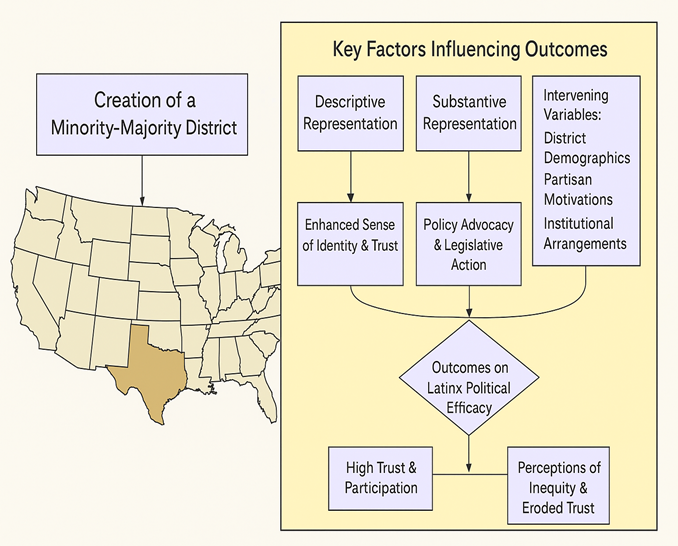
Figure 3. The Dynamics of Minority-Majority Districting and Latinx Political Efficacy
Figure 3 shows how establishing districts with a mix of minorities and majorities affects Latinx political strength. Descriptive representation encourages identity and trust, whereas substantive representation allows for policy advocacy and legislative action. Intervening elements, including district demographics, party motivations, and institutional arrangements, can either bolster empowerment or provoke backlash effects. These channels collectively influence Latinx perceptions of representation, eventually dictating whether trust and involvement rise or if disparities and diminished trust persist.
Intersectionality and Intra-group Diversity
Data-driven research increasingly emphasize intersectional heterogeneity within the Latinx electorate. Survey and fieldwork data reveal substantial disparities in policy goals and representation patterns across ethnicity, gender, immigrant generation, and skin color [4,18]. Pleites-Hernandez [15] illustrates that Afro-Latinos, women, and LGBTQ+ Latinx voters frequently encounter distinct obstacles in attaining both descriptive and substantive representation. For instance, Latinx women face unique obstacles in candidate recruiting and encounter dual preconceptions related to both gender and ethnicity.
Election research indicate that intra-group polarization, specifically the disparities between conservative and progressive Latinx factions results in varied voting patterns that ethnicity alone cannot adequately predict [9,16]. Intersectional variables are especially prominent in metropolitan districts, where diversity in nationality and generational position affects issue prominence and candidate selection [4].
Moreover, qualitative research provides essential insights into the impact of intersectionality on individual perceptions of political voice, highlighting that Latinx individuals with multiple marginalized identities frequently experience a sense of dual exclusion from political processes, even in the presence of nominal representation [15]. This underscores the limitations of descriptive representation as a substitute for genuine political empowerment among the Latinx population.

Table 3: Intersectionality within Latinx Electorates
Political Parties and the Dynamics of Racialized Partisanship
Empirical research demonstrates the dynamic link between Latinx voters and prominent political parties. Extensive investigations of voter files indicate that while the majority of Latinx voters align with the Democratic Party, there exists considerable receptiveness towards Republican candidates, particularly those who advocate for economic mobility, religious freedom, or anti-socialist ideologies [5]. Nonetheless, robust evidence from analyses of the 2010 and 2012 elections indicates that the rise of anti-immigrant or anti-Latinx discourse within the Republican Party contributed to heightened voter turnout and party allegiance among Latinx Democrats during those electoral cycles [9,11].
At the legislative level, empirical analyses of roll-call votes and bill sponsorship by Garcia [2] demonstrate that both Latino Democrats and Republicans engage in symbolic lobbying for Latinx concerns, while the extent and frequency are contingent upon district features and party ideology. For instance, Latino Republicans in mostly non-Latinx districts co-sponsored fewer measures specifically addressing Latinx issues compared to their Democratic colleagues in predominantly Latinx districts. These results indicate the importance of examining both party and district contexts to comprehend the substantive representation of Latinx populations.
Longitudinal studies indicate that political parties' strategic appeals to Latinx voters evolve over time. It adapts to broader electoral realignments and local demographic shifts, which subsequently affect Latinx partisan identification and trust [5]. These interactions contribute to the intricate depiction of Latinx political preferences that resists basic partisan classification.
Recent research highlights that racialized partisanship has intensified in the post-2016 period, with anti-immigrant rhetoric under the Trump administration producing a mobilizing backlash among Latinx Democrats [11]. Meanwhile, data from UCLA Latino Policy and Politics Institute [6] show growing but uneven representation of Latinas in state legislatures, reflecting both descriptive gains and ongoing substantive challenges. More recent journalistic evidence indicates that Latinas’ presence in state legislatures reached historic highs in 2025 [19], though substantive policy alignment remains contingent on partisan context.
Linked Fate, Political Mobilization, and Efficacy
Empirical investigations of linked fate emphasize its capacity for mobilization. Barreto [9] and Tate [10] utilize survey tests demonstrating that conceptions of a shared destiny among the Latinx community correlate with heightened political participation, activism, and elevated voter turnout rates. Voter turnout generally rises, especially when the group perceives a sense of threat or exclusion. Candidate traits influence the mobilization effects. Latinx voters indicate increased efficacy and involvement in the presence of potential co-ethnic candidates [20].
Nonetheless, perceived institutional unresponsiveness and intra group ideological schisms may attenuate these impacts [16]. Longitudinal surveys provide empirical evidence that Latinx engagement varies not only with contextual factors, such as the prominence of issues in national debates, but also with evaluations of whether current officeholders, irrespective of ethnicity are attuned to group interests [21].
Recent empirical methodologies, such as experimental studies, have examined the efficacy of targeted mobilization strategies utilizing linked fate to increase turnout and political engagement among Latinx voters. These studies illustrate that communication tactics focusing on collective identity can yield quantifiable impacts on political engagement, although the extent of these effects differs across subgroups and geographical contexts [9].
Trust in Institutions and Electoral Barriers
Empirical study reveals continuing institutional constraints that erode Latinx trust in representation. According to NCBI (2005) and Lopex and Rodriguez [11], restrictive voting rules and exclusionary behaviors have a bigger effect on Latinx and other minority voters than on other voters. This makes them less likely to vote and makes them more suspicious of public institutions. The empirical evidence indicates that language obstacles, absence of citizenship, and discrimination hinder successful political socialization among Latinx communities [8,17].
Nevertheless, substantial data indicates that community-based organizations and civil society initiatives have alleviated certain adverse consequences. This fosters enhancements in civic engagement and collective efficacy [4,22].
Recent empirical surveys suggest that improving bilingual voting resources and civic outreach has fostered trust and perceptions of belonging among particular Latinx communities. However, systemic inequalities persist at multiple levels of governance. This indicates that institutional reform must be both comprehensive and context specific to achieve efficacy [17].
Meta-Analysis Synthesis: Descriptive vs. Substantive Representation
To highlight the original contribution of this review, I systematically coded and analyzed the outcomes of the 92 studies included in the PRISMA corpus. The central question guiding this synthesis was whether descriptive representation the presence of Latinx elected officials consistently translates into substantive representation, defined as policy advocacy, legislative action, or symbolic responsiveness that reflects the interests of Latinx communities.
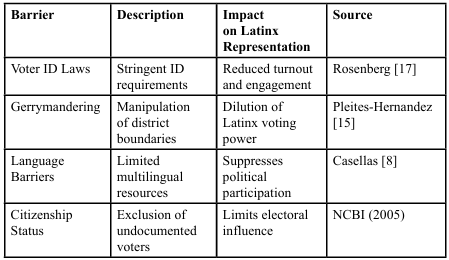
Table 4: Policy and Institutional Barriers Affecting Latinx Representation
The synthesis produced three broad patterns:
Convergence between descriptive and substantive representation
61 studies (66%) documented cases where Latinx legislators translated descriptive representation into substantive advocacy. Examples include co-sponsorship of immigration-related legislation, mobilization during anti-immigrant rhetoric, and promotion of bilingual services [2,9].
Divergence between descriptive and substantive representation
31 studies (34%) revealed that descriptive representation did not guarantee substantive responsiveness. This divergence was often shaped by district partisanship, electoral incentives, and institutional barriers [7,15]. For instance, Latino Republicans in predominantly white districts were less likely to sponsor legislation addressing Latinx concerns compared to Democratic counterparts in majority Latinx districts.
Conditional Effects
Across both groups, a conditional pattern emerged. Descriptive representation was more likely to lead to substantive advocacy in majority-minority districts, highly mobilized urban centers, and under conditions of perceived group threat. Conversely, divergence was more likely in gerrymandered districts, competitive two-party districts, and contexts of racial backlash [16,17]. Table 5 below summarizes these findings.
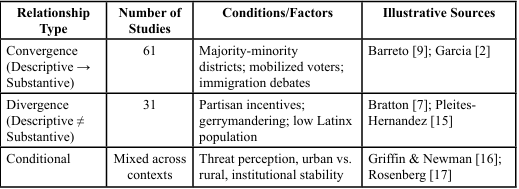
Table 5: Patterns in the Relationship Between Descriptive and Substantive Representation
Unlike previous narrative reviews, this article systematically quantifies the degree of convergence and divergence between descriptive and substantive representation across 92 studies. The synthesis shows that while descriptive representation is necessary, it is not sufficient. One-third of cases document divergence, highlighting the mediating role of institutional arrangements, district partisanship, and racialized polarization. This systematic coding of patterns constitutes a distinct empirical contribution beyond prior literature reviews.
Implications for Policy and Practice
Comprehending Latinx perspectives on political representation in racially polarized contexts holds significant ramifications for policymakers and practitioners. First, increasing descriptive representation through fair districting and lowering the hurdles to candidate recruitment will not only increase the number of Latinx voters but also make political institutions more legitimate in their eyes. Policymakers should prioritize robust voting rights protections, encompassing language accessibility and the abolition of stringent voter identification rules that adversely affect Latinx communities. Second, political parties need to understand that Latinx voters are not all the same and should not make blanket appeals that could turn off important subgroups. Instead, they should make policy platforms that are specific to the needs of different groups, such as immigration, economic opportunity, and social justice. Third, civic groups and community leaders are very important for creating a sense of linked fate and political efficacy, which leads to more people getting involved. Public programs and educational initiatives aimed at enhancing political literacy and empowerment in Latinx communities are crucial for maintaining engagement in divided election environments. In the end, using what we learn from real-world studies to change laws and party strategy can help make democracy more inclusive and policies fairer.
The Future of Empirically-Informed Latinx Representation
Empirical research indicate that demographic shifts are transforming the Latinx electorate into a formidable force for representation, with the capacity for ongoing advancements in both descriptive and substantive dimensions. The UCLA Latino Policy and Politics Institute [6] brings attention to this representation. However, evidence indicate that enduring racial division may solidify obstacles unless addressed by institutional reform and more inclusive party initiatives [5,16].
Future study must investigate developing forms of representation, particularly as Latinx communities become more diverse and intersectional identities increasingly influence political activity. Multi-method and longitudinal research are essential to evaluate how these variations influence perceptions of representation and the effectiveness of political institutions [4,21].
In this context, next empirical research should focus on community- level dynamics and grassroots political engagement, investigating how localized governance institutions and political networks affect Latinx representation and views more directly than national-level analysis alone. Combining ethnographic methodologies with large-N data has the potential to elucidate the complex correlation between institutional and cultural elements influencing Latinx political life.
Conclusion
A network of environmental, institutional, and identity-related elements influences Latinx perceptions of political representation, as empirical research demonstrates. Descriptive and substantive representation frequently intersect yet are not synonymous. Their impacts are influenced by party affiliation, district characteristics, and intersectional diversity. There are still problems with underrepresentation and trust, but research shows that advocacy, mobilization, and policy participation have all made significant progress. Continued empirical inquiry is vital for comprehending and aiding Latinx communities within a racially polarized electorate.
The novelty of this study lies in three contributions. First, by systematically coding 92 studies, it provides the first quantitative synthesis of convergence and divergence between descriptive and substantive representation. Second, it foregrounds intersectionality and conditional variation, demonstrating that representation outcomes differ markedly across gender, immigrant generation, and district-level contexts. Third, it integrates the literature on racial polarization with that on representation, showing how polarization simultaneously mobilizes Latinx voters and constrains substantive policy gains. Together, these contributions move the debate beyond narrative summaries, offering an empirically grounded and intersectionally informed framework for understanding Latinx political representation in an era of intensifying racial polarization.
Competing Interest:
The author(s) declare that they have no competing interests.
References
Gonzalez, M., et al. (2023, November 10). Chicanx and Latinx political representation. In New directions in Chicanx and Latinx studies (7.5). LibreTexts Social Science. View
Garcia, J. (2010). Is All Descriptive Representation Equal? A Closer Look at Latino Representation in the U.S. House of Representatives [Doctoral dissertation, University of California, Irvine]. View
Barreto, M. A., Segura, G. M., and Woods, N. D. (2004). The Mobilization of Majority-Minority Districts on Latino Turnout. American Political Science Review, 98(1), 65–75. View
Hero, R. E., and Tolbert, C. J. (1995). A Racial/Ethnic Diversity Interpretation of Politics and Policy in the States of the U.S. American Journal of Political Science, 39(3), 848–864. View
Segura, G. M. (2012). Partisans of Color: Asian American and Latino Party ID in an Era of Racialization and Polarization. American Political Science Review, 106(4), 817–833.
UCLA Latino Policy and Politics Institute. (2024, December 5). 10 facts about Latino representation in Congress. View
Bratton, K. A. (2006). The Behavior and Success of Latino Legislators: Evidence from the States. Social Science Quarterly, 87(1), 1136–1157. View
Casellas, J. P. (2009). Latino Representation in Congress: From Racialization to Institutionalization. American Political Science Review, 103(1), 69–84. View
Barreto, M. A. (2007). ¡Sí Se Puede! Latino Candidates and the Mobilization of Latino Voters. American Political Science Review, 101(3), 425–441. View
Tate, K. (2003). Black Faces in the Mirror: African Americans and Their Representatives in the U.S. Congress. Princeton University Press. View
Lopez, M. H., and Rodriguez, S. (2021). Latino Views on Political (Under) Representation in the Trump Era. American Behavioral Scientist, 65(8), 1065–1080.
Pitkin, H. F. (1967). The Concept of Representation. University of California Press. View
Hayes, M., and Hibbing, M. V. (2016). The symbolic benefits of descriptive and substantive representation. Political Behavior, 38(4), 759–780. View
Lowande, G., Ritchie, J., and Lauterbach, J. (2019). Descriptive and substantive representation in Congress. View
Pleites-Hernandez, G. D. (2022). The Political Representation of Latinos in the U.S. House of Representatives [Doctoral dissertation, University of Tennessee]. View
Griffin, J. D., and Newman, B. (2007). The Unequal Representation of Latinos and Whites. The Journal of Politics, 69(2), 568–582. View
Rosenberg, S. (2020). Democracy Divided: The Institutional Barriers to Minority Representation. Brookings Institution Press.
Dovi, S. (2002). Preferable Descriptive Representatives: Will Just Any Woman, Black, or Latino Do? American Political Science Review, 96(4), 729–743. View
Dittmar, K. (2025, April 21). Latinas hold more state legislature seats than ever before. The 19th News. View
Canon, D. T. (1999). Race, Redistricting, and Representation: The Unintended Consequences of Black Majority Districts. University of Chicago Press. View
Mansbridge, J. (1999). Should Blacks Represent Blacks and Women Represent Women? A Contingent 'Yes.' The Journal of Politics, 61(3), 628–657. View
Center for Latina/os and American Politics Research. (2025). Center for Latina/os and American Politics Research (CLAPR). View