
- About the Journal
- Editorial Board
- Review Process
- Author Guidelines
- Article Processing Charges
- Special Issues
- Current Issue
- Past Issue
 Journal of Political Science and Public Opinion
Journal of Political Science and Public Opinion Volume 3 (2025), Article ID: JPSPO-129
https://doi.org/10.33790/jpspo1100129Research Article
Leveraging Generative AI for Integrity Governance: Complementarity Between GDI and UNCAC Reports
Cheng Hsun Huang1*, and I-Jan Yeh2
1Department of Public Administration, National Chengchi University, Taiwan.
2Professor, Department of Public Policy and Management, Shih Hsin University, Taipei, Taiwan.
Corresponding Author: Cheng Hsun Huang, Adjunct Lecturer, Shih Hsin University, Taiwan.
Received date: 08th September, 2025
Accepted date: 12th November, 2025
Published date: 14th November, 2025
Citation: Huang, C. H., & Yeh, J., (2025). Leveraging Generative AI for Integrity Governance: Complementarity Between GDI and UNCAC Reports. J Poli Sci Publi Opin, 3(2): 129.
Copyright: ©2025, This is an open-access article distributed under the terms of the Creative Commons Attribution License, which permits unrestricted use, distribution, and reproduction in any medium, provided the original author and source are credited
Abstract
Taiwan has long been dedicated to promoting integrity affairs, earning international recognition through periodic evaluations such as the Corruption Perception Index (CPI) and the Government Defense Integrity Index (GDI). The continuous implementation of the United Nations Convention against Corruption (UNCAC) national reports demonstrates heightened awareness of the overall integrity landscape. However, to optimize the utilization of resources invested by public sectors, a systematic planning approach is essential to minimize additional costs from redundant efforts. Therefore, this study aims to analyze the complementary nature of international integrity indices, proposing a framework for mutual referencing to systematically enhance the efficiency of evaluation preparation. Unlike previous integrity studies, this research employs generative AI tools such as ChatGPT and Claude to analyze and process extensive secondary data from domestic and international GDI and UNCAC reports. The AI-driven approach reveals critical policy gaps through cross index pattern recognition, particularly demonstrating how integrating GDI Question 29 with UNCAC Articles 32-33 exposes legislative inconsistencies in whistleblower protection mechanisms. This approach extends to value-added applications including scenario based evaluations, self-assessment for improvement, and reducing learning barriers from international experiences. Ultimately, it facilitates better understanding of the current state and challenges in promoting integrity affairs within the public sector, laying a solid evidential foundation for proposing corresponding improvement measures.
Keywords: Government Defense Integrity Index, United Nations Convention against Corruption National Reports, Generative AI, Natural Language Processing
Introduction
Research Background
In today's globalized environment, integrity governance has emerged as a core indicator of national governance modernization. As international exchanges deepen and economic expansion accelerates, corruption affects not only social justice and economic development within individual countries but may also significantly impact the international investment environment and multinational corporate operations. Therefore, within the integrity governance framework, effectively enhancing government transparency and public trust has become a shared global challenge.
The scope of integrity governance is extensive, with military corruption having particularly profound impacts. Military corruption not only undermines national security but may directly compromise defense capabilities. For instance, corruption in weapons and equipment procurement processes can result in the acquisition of substandard military equipment, directly affecting combat effectiveness and endangering military personnel's lives. Moreover, military corruption may trigger international tensions, especially in contexts involving arms trade and foreign assistance. When defense budgets are misappropriated or abused, this constitutes not merely a domestic issue but may also damage a country's international reputation and strategic partnerships.
In Taiwan's democratization process, the military's role has been indispensable. From transition and consolidation to the deepening of democratic reforms, the military has transformed from a closed, isolated institution into an open organization cooperating with civil society. This transformation has been pivotal to democratization. With persistent calls for military nationalization, civilian leadership, and military professionalization, Taiwan has successfully embedded these changes into its legal framework, institutional systems, and cultural context. The evolution of civil-military relations from separation to openness, cooperation, and shared goals has not only demonstrated political transformation but also created opportunities for defense policy reform and multidimensional military modernization.
As a nation actively engaged with the international community and committed to improving administrative efficiency and transparency, Taiwan is fully aware of the importance of integrity governance. Over the past decades, Taiwan has achieved remarkable progress, reflected in improved performance on internationally recognized indices such as the Corruption Perceptions Index (CPI) and the Government Defence Integrity Index (GDI) (see Figure 1-1). Beyond these indices, although Taiwan is not a United Nations member and thus cannot formally accede to the United Nations Convention against Corruption (UNCAC), it nevertheless adheres to the Convention's spirit and standards through self-regulation and evaluation. By publishing UNCAC-style national self-assessment reports, Taiwan demonstrates its support for and commitment to international anti corruption efforts.
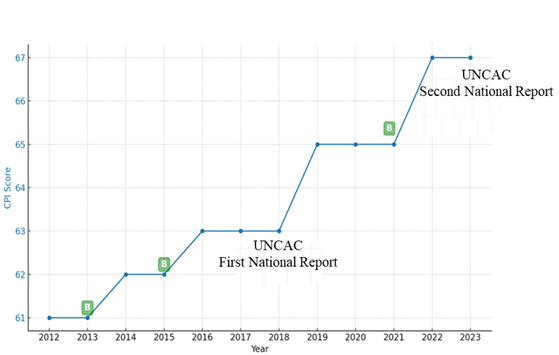
Figure 1-1: Trends in CPI performance, GDI performance, and timeline of UNCAC national integrity reports
UNCAC national reports are submitted by each State Party in accordance with the Convention's requirements, detailing progress, challenges, and future plans in combating and preventing corruption. This enables countries to learn from each other, share best practices, and demonstrate to the international community their implementation of anti-corruption commitments. The report structure is divided into a General Part (overview of the anti-corruption framework and implementation status) and a Thematic Part (assessment of national implementation of UNCAC). See Tables 1-1 and 1-2.
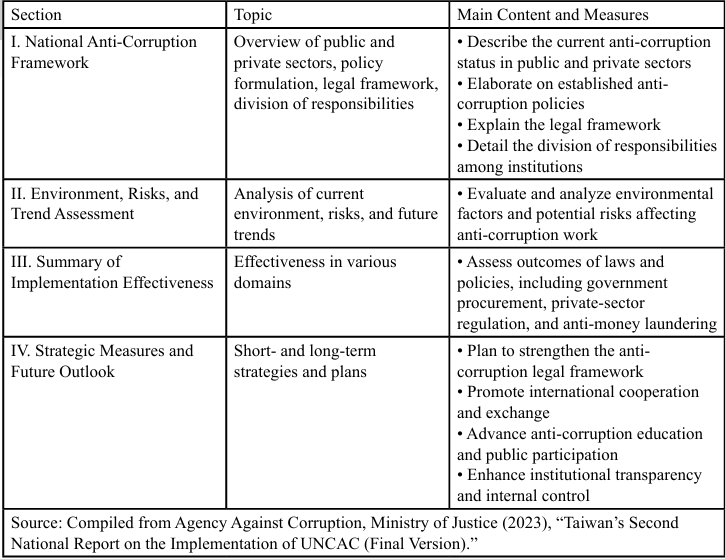
Table 1-1. Summary of Evaluation Items in the UNCAC National Integrity Report (General Part)
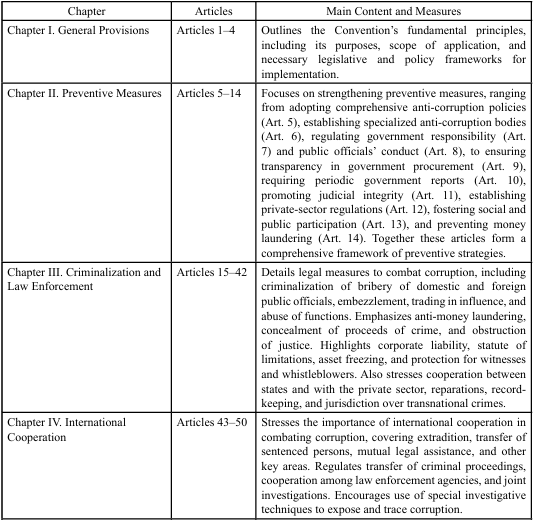
Table 1-2. Summary of Evaluation Items in the UNCAC National Integrity Report (Thematic Part)
Based on the UNCAC Second National Report provided by the Agency Against Corruption, Taiwan has demonstrated notable progress in establishing an anti-corruption framework, assessing environmental risks, and developing concrete strategies. The content highlights substantial achievements in legal enforcement, governmental transparency, public participation, and anti-money laundering measures. In addition, advances have been made in criminalization and law enforcement, strengthening international cooperation, implementing asset recovery, and providing technical assistance and information exchange. These accomplishments are reflected in Taiwan's strong performance in international indices such as CPI and GDI, underscoring its commitment to fostering a transparent and integrity-based governance environment. By promoting legitimacy and accountability, and advancing education and civic engagement, Taiwan has consolidated a culture of integrity, which is the main reason for its consistently favorable performance in integrity reports and international rankings.
Research Motivation
Despite progress, integrity governance still faces numerous challenges and difficulties. Under constraints of limited resources and mounting pressures, effective integration and coordination of integrity policies become crucial. This study aims to explore approaches for enhancing complementarity and coordination among multiple integrity indicators to maximize public resource efficiency, reduce policy overlap and waste, and identify new strategies for improving resource utilization through analyzing the interactions among existing indicators.
This research applies generative AI technologies (e.g., ChatGPT and AI-BOTs) as methodological tools. From a complementarity perspective, it investigates the interconnections among global integrity indicators. Leveraging natural language processing capabilities, the study conducts in-depth evaluation and integration of international and domestic reports such as the GDI and UNCAC. The goal is to construct a refined framework for promoting integrity affairs.
Furthermore, AI is employed to simulate evaluation processes under different scenarios, supporting self-assessment and continuous improvement. Such applications will assist the public sector in more comprehensively understanding the current state and challenges of integrity governance, while simultaneously lowering the threshold for learning from international experiences, thus facilitating more effective policy formulation and implementation.
Research Questions
1. How can a complementarity-based framework for linking international integrity indicators be constructed to promote cross-country data sharing and enhance the efficiency of integrity governance?
This question examines how various international integrity indicators can be effectively connected in the context of globalization to optimize resource use and policy outcomes.
2. What are the roles and challenges of generative AI in transforming and applying international integrity evaluation data, and how can the accuracy and practicality of data analysis be ensured?
This explores the potential and limitations of generative AI in processing large-scale integrity data (e.g., GDI and UNCAC reports), as well as its practical applications in policymaking environments.
3. Based on insights derived from AI and data analysis, how can a comprehensive guideline for advancing integrity governance be designed and implemented to support substantive progress in the public sector?
This focuses on how AI-generated in-depth analysis and forecasting can inform the development of actionable guidelines, enabling public agencies to optimize policymaking and achieve measurable improvements in integrity practices.
Literature Review
Development and Applications of Generative AI in Public Administration
Focusing on integrity indicators, this study reviews literature on the development and application of generative AI in public administration and extends the work of Salah, Abdelfattah, and Al Halbusi [1] on using tools such as ChatGPT and Bard to analyze bureaucratic behavior, as well as Gozalo-Brizuela and Garrido Merchán [2] on broad surveys of generative AI applications. It draws on Anderson et al. [3], which shows how generative AI can improve non-academic readers' understanding of environmental health science literature; Ebert and Louridas [4] and Weisz et al. [5], which examine productivity gains in software engineering; and recent design principles for building applications with state-of-the art generative AI.
Compared with prior studies, this research places greater emphasis on applications of generative AI to policy innovation and governance transformation, especially comprehensive gains in policy efficiency and effectiveness. Generative AI can transcend the limits of traditional analytic methods and drive innovation in administrative decision making, thereby challenging and expanding the boundaries of conventional administrative frameworks.
It highlights the role of AI tools in assessing and improving transparency and efficiency in the public sector. Specifically, examining the complementarity between UNCAC national reports and the GDI offers an in-depth look at how governments can better integrate and deploy integrity resources. This perspective supplements existing work on generative AI uses in administrative efficiency and data analysis and adds a new angle: using AI to optimize evaluation and enhancement of government integrity indices, thereby promoting policy innovation and implementation.
Research on the Government Defence Integrity Index (GDI) and Its Applications
The literature on the Government Defence Integrity Index (GDI) largely addresses transparency in defense management and the effectiveness of anti-corruption mechanisms across countries. A common trend emerges: GDI is widely used as an assessment tool and is recognized internationally as an important practical standard for improving transparency in policymaking and strengthening institutional integrity. Oyosoro [6] discusses GDI’s applicability and challenges in Sub-Saharan Africa; Yuliia [7] analyzes defense-budget transparency and its role in enhancing accountability; Goodman [8] investigates corruption risks and effective countermeasures in U.S. arms-export controls; and Pyman [9] summarizes GDI updates, their impact on transparency and integrity in defense, and provides international best-practice cases.
This body of work deepens understanding of the scope and trends of GDI research but invites critical reflection. Regarding “transparency and anti-corruption mechanisms,” while GDI gauges these areas, transparency indicators may involve subjectivity and standardization challenges. Some governments may adopt measures that appear to raise transparency without truly improving institutional openness. Sole reliance on GDI as a yardstick can thus be limiting. On “GDI’s coverage,” although widely applied, GDI may not capture all forms of defense corruption. Certain practices, such as misconduct in procurement or abuses of power, may escape detection, so GDI results should be carefully compared with ground realities. For “international comparisons and best practices,” while Pyman [9] compiles exemplary cases, their transferability is uncertain. Cultural, historical, and political differences may render some practices ineffective in particular contexts.
Applying generative AI to GDI assessment, especially combined with UNCAC national reports, offers a significant advance. First, consistent with Oyosoro [6] and Yuliia [7], AI underscores the importance of transparency and institutional integrity. Automated collection, analysis, and interpretation of large defense and anti corruption datasets enable more accurate assessments of policy implementation and performance, revealing hidden patterns and pinpointing control weaknesses or corruption risks. Second, echoing Goodman’s [8] critique of arms-export controls, generative AI supports more dynamic, multidimensional analysis beyond GDI’s scope, such as abuses of power in procurement, and can model the potential integrity impacts of policy change. Third, following Pyman [9] on international comparison and best practices, AI enables deeper cross-cultural analysis and helps identify strategies effective under different political and cultural conditions, supporting country specific customization.
Positioned in the GDI research domain, this study integrates generative AI with international comparison to develop a more dynamic, comprehensive, and tailored evaluation framework. Using AI-driven data analysis and machine-learning models, it seeks to improve the accuracy and practical utility of GDI assessments and contribute new theory and methodology to the future development of defense-integrity evaluation.
Analyses of Research on UNCAC Country Review Reports
Scholarship on the United Nations Convention against Corruption (UNCAC) country review reports spans the Convention’s origins and global impacts to legal frameworks and implementation strategies. Webb [10] emphasizes UNCAC’s worldwide influence since its 2003 adoption as the first binding international agreement in global anti-corruption efforts. Don (2014) studies the operation of the Implementation Review Mechanism, including country selection, use of government experts, and national reviews. On economic and societal effects, Argandoña (2006) finds that UNCAC mitigates corruption’s negative effects on investment and the rule of law, especially in developing countries. Babu [11] examines how countries incorporate UNCAC into domestic law, often requiring extensive legal reform.
These studies indicate that UNCAC’s value in driving national anti-corruption policy depends heavily on how countries implement and adhere to its principles within their legal and regulatory systems. Heimann and Pieth (2016) and Rose-Ackerman and Palifka [12] highlight UNCAC’s influence on national laws and policymaking. Yet, as Brada and Drabek [13] note, transparency concerns and persistent corruption issues in reporting processes reveal limits to UNCAC’s ability to drive substantive change.
From a critical perspective, while the literature underscores UNCAC’s importance, it also exposes practical challenges. Webb [10] and Don (2014) stress UNCAC’s legal and cooperative significance but do not fully address the utility of review reports for internal reform. As Brada and Drabek [13] argue, if reporting lacks transparency and substantive issues remain unresolved, UNCAC’s effectiveness is challenged. Although Argandoña [14] and Babu [11] show positive economic and rule-of-law effects, their analyses often assume ideal conditions and underplay obstacles such as legislative complexity, bureaucratic resistance, and conflicts between reforms and existing systems. Likewise, Heimann and Pieth (2016) and Rose-Ackerman and Palifka [12] focus on policy design more than operational guidance, risking a gap between theory and action.
In line with Graycar and Prenzler [15] and Cockcroft and Andersson (2018), this study leverages generative AI to strengthen data analysis in UNCAC reports. Pattern recognition and risk assessment can uncover deeper trends and relationships, improving report quality and enabling more precise and objective policy evaluation.
Summary
A broad review of literature on generative AI in public administration, the GDI, and UNCAC country reports yields a comprehensive understanding of current scholarship. Tools such as ChatGPT show potential to improve efficiency and transparency, particularly in analyzing bureaucratic behavior and processing data. Beyond data integration, these technologies can catalyze innovation in policymaking, enhancing policy efficiency and effectiveness. While GDI and UNCAC studies reveal challenges in coverage and subjective evaluation, AI can raise accuracy and objectivity, especially for large, multidimensional datasets.
These findings align with this study’s three core questions. First, AI enables more precise evaluation and linkage of international integrity indicators such as GDI and UNCAC to build a complementary assessment framework and strengthen global consistency and efficiency in integrity governance. Second, natural-language processing and machine learning help extract insights from extensive secondary sources, supplying richer information and higher data accuracy for integrity assessments, directly addressing concerns about AI’s practical utility and accuracy. Third, generative AI can support more precise and effective strategy design and implementation in the public sector, especially in crafting actionable guidelines, thereby improving understanding of and responses to integrity challenges and needs. These integrations not only show AI’s potential to enhance integrity governance but also its practical value in driving policy innovation and improving governance efficiency. Further research can explore concrete AI applications in global integrity assessment and develop more forward-looking, adaptive integrity strategies.
Research Design
Analytical Framework
When processing specialized materials in the fields of the Government Defence Integrity Index (GDI) and the United Nations Convention against Corruption (UNCAC), ChatGPT may face issues of inaccurate knowledge and context loss. To address these challenges, an embedding approach can convert materials into vector representations and store them in a vector database (see Figure 3-1). This enables efficient reading and analysis by the AI.
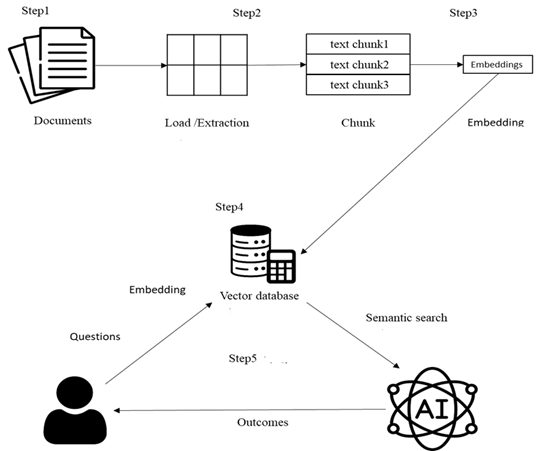
Figure 3-1. Analytical framework diagram
Validity and Reliability of AI-Assisted Analysis
To ensure the rigor and credibility of AI-assisted analysis, this study adopted a triangulation approach integrating cross-validation between AI models, expert verification of secondary data, and cross referencing with official materials. ChatGPT-4 and Claude 3 were employed in parallel to identify and interpret policy gaps, with results compared for semantic coherence and contextual consistency. Selected AI-generated interpretations were subsequently reviewed by the authors domain experts in integrity governance to assess their conceptual alignment with established theoretical and institutional frameworks. In addition, all AI analyses were cross-checked against official GDI and UNCAC documents to ensure conformity with authoritative sources.
To maintain reliability and transparency, standardized prompting protocols were applied throughout the analytical process, and manual review was employed to preserve contextual coherence and prevent interpretive drift. Bias mitigation measures instructed the AI models to prioritize primary sources, provide explicit citations, and identify contradictory or alternative perspectives. A three-stage quality assurance process AI analysis, expert review, and AI-assisted synthesis combined computational efficiency with human oversight, ensuring that generative AI strengthened rather than compromised the scientific integrity of this policy-oriented research.
Data Compilation
Given the efficiency of vector databases for storing and handling specialized materials, the database constructed for this study provides strong support for integrating and analyzing GDI- and UNCAC related materials. Embedding and integrating these materials not only accelerate access and processing but also ensure analytical depth and accuracy, enabling AI models to handle complex queries and support richer policy analysis and decision-making. Vectorized processing also enhances scalability and flexibility, laying a solid foundation for future research and applications. Table 3-1 lists the main materials included in this study.
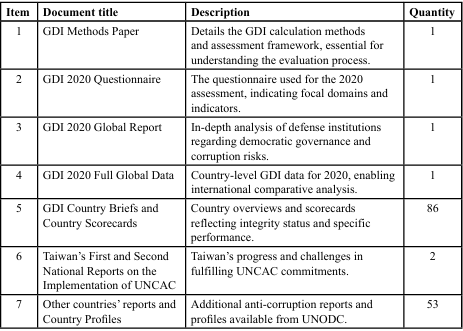
Table 3-1. Data inventory
Analytical Focus: Whistleblower Protection Law
As countries and international organizations place increasing emphasis on integrity, “integrity” has become an essential component of modern states. It is a connector that links the pursuit of openness, transparency, and accountability with the daily work of agencies. Whistleblower protection has long been a prominent global topic. Article 33 of UNCAC explicitly requires States Parties to incorporate measures into their legal systems to protect whistleblowers from unjust treatment. Whether in the public or private sector, individuals often possess first-hand information about misconduct. Proactive disclosures can deter and reduce corruption. Whistleblower protection frameworks are thus a critical element of anti-corruption.
Although Taiwan is not a UN member and thus has no treaty obligation, it domesticated UNCAC in 2016 to demonstrate its commitment to anti-corruption and alignment with global integrity trends. International review conferences for Taiwan’s national reports were held in 2018 and 2022, inviting international reviewers to “health-check” Taiwan’s anti-corruption work and integrity building. In both meetings, whistleblower protection drew particular attention. Reviewers expressed strong concern about the progress of Taiwan’s Whistleblower Protection Act draft, shared New Zealand military experiences with whistleblower mechanisms as design references, and publicly urged Taiwan to prioritize passage of the bill to safeguard whistleblower rights and reduce opportunities for corruption [16].
In 2019 the Executive Yuan submitted a Whistleblower Protection Act draft to the Legislative Yuan for three readings. The bill lapsed at the end of the term and was returned for reconsideration. Contentious issues such as the scope of protected disclosures, retroactivity, stepwise internal-first reporting procedures, and personal security protections have stalled progress. A series of corruption-related incidents in Taiwan underscores the need for comprehensive legal protection, spanning both public (including broadly defined public officials) and private sectors: tainted food safety incidents, the Taroko train disaster, bribery cases, a textbook-publisher whistleblower case, and money-laundering crimes, among others. Robust statutory protection for whistleblowing is necessary and further justifies a dedicated whistleblower protection law.
In a past military whistleblowing incident arising from the “1985 grievance hotline,” the whistleblower who reported officers’ improper visits to off-limits venues subsequently received calls from persons connected to those exposed. Although no overt retaliation occurred, the pressure resembled after-the-fact intimidation. While internal regulations exist (e.g., “Guidelines for Handling Petitions by the Ministry of National Defense and Subordinate Agencies”), their protective scope is not as comprehensive as a dedicated statute. This case highlights the importance of a specialized Whistleblower Protection Act.
From an international benchmarking perspective, Transparency International’s November 2021 GDI assessment ranked Taiwan tied for 6th out of 86 countries (score 70), categorizing Taiwan—along with the UK and Germany—as a country with “very low” risk of military corruption [17]. Taiwan received A/B grades (low risk) in “Personnel,” “Finance,” and “Political” dimensions, but C/B grades (higher risk) in “Procurement” and “Operations.”
Within the “Personnel” dimension, problems remain. On Question 36 (whistleblower protection), Taiwan’s average score was only 42/100. Closer review suggests that evaluation bases and reality may diverge due to information asymmetries, stereotypes, misperceptions, or reliance on single sources, producing scores misaligned with actual conditions. Before undertaking corrective actions, this study argues for deep analysis and comparison of the “problem itself,” “actual conditions,” and “country contexts,” and only then proposing targeted improvements.
Research Analysis
1. Whistleblower protection from the UNCAC perspective
In 2003 the United Nations adopted the United Nations Convention against Corruption (UNCAC). It entered into force for 193 Member States in 2005. The Convention provides legal and policy guidance for anti-corruption, including prevention, criminalization and law enforcement, international cooperation, asset recovery, and technical assistance and information exchange [18]. UNCAC contains eight chapters and 71 articles. It has the largest number of States Parties and is the only legally binding global anti-corruption instrument. In 2015, Taiwan domesticated UNCAC, becoming to date the only non-UN-member sovereign state to legislate for and implement the Convention.
To realize UNCAC’s spirit and advance implementation, Taiwan consistent with Article 6, which calls for regular publication of analyses of corruption environments, risks, and trends and evaluations of policy effectiveness published and convened international reviews of its First and Second National Reports in 2018 and 2022. These systematized progress in anti-corruption, comprehensively reviewed UNCAC implementation, and invited international experts, civil society, and scholars to issue concluding observations [19]. Key recommendations included: expediting passage of a Whistleblower Protection Act; further amending the Company Act; creating a central registry of beneficial ownership for companies and trusts; criminalizing private-sector bribery; and making political donations transparent and capped. Article 33 on protection of reporting persons was a focal issue in both reviews.
On whistleblower protection, Taiwan’s prior UNCAC practice shows that, because a dedicated statute has not yet passed and the existing draft remains contested, the topic has received less attention than, for example, asset disclosure by public officials, conflicts of interest, political donations, and lobbying laws and their practice, or private-sector anti-corruption. Research trends have focused on implementing UNCAC chapters [20], domestic legal responses, integrity system design, prevention, administrative transparency, anti-money laundering [21], public procurement reform, asset tracing and mutual legal assistance [22], and corporate integrity.
Recently, as whistleblower protection has regained prominence, Huang and Tung (2020) summarize three research streams: (1) cross-country comparisons of whistleblowing laws; (2) effects of legal provisions, including impacts on criminal policy, on witness protection, and on the design and feasibility of whistleblower systems; and (3) perceptions and cognition regarding such laws.
Building on this, and departing from prior work, this study reviews whistleblower protection within Taiwan’s UNCAC national reports to map the current status of the proposed whistleblower bill. It also draws on trends reported in other countries’ UNCAC materials as references for Taiwan’s future policy design, using external experience to sharpen domestic reforms.
2. Whistleblower protection from the GDI perspective
Research on the military has been limited due to sensitivity and data scarcity. Since 2009, however, Transparency International- Defence & Security has issued the Government Defence Integrity Index (GDI), the only global assessment of defence-sector corruption risk. Results were released in 2013, 2015, and 2020, and GDI has become a regular benchmark. It discloses, in a transparent way, risk assessments across political, financial, personnel, operations, and procurement dimensions, spurring research on defence integrity [23].
Huang (2021) groups GDI-related studies into four areas: cross national comparison and learning; impacts of assessment; indicator analysis; and score analysis. Single-item deep dives are scarce, and most research centers on procurement; personnel-dimension topics such as whistleblowing remain under-studied.
In GDI, the Personnel dimension covers integrity education, ethics, leadership commitment, anti-bribery mechanisms, whistleblower protection, vetting, promotion and postings, and salary transparency. The whistleblowing item has evolved across the three editions (Table 4-1) from a basic check for the existence of “laws and mechanisms” to a more granular, system-level evaluation of law, prioritization, resources, dedicated bodies, effectiveness, and enabling environment [23]. This helps defence organizations assess their mechanisms and lets the public better understand military whistleblower protection.
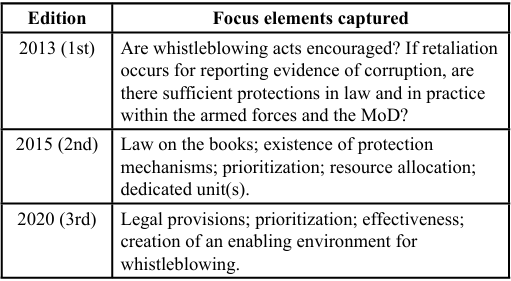
Table 4-1. Evolution of the GDI whistleblowing item (2013–2020)
Using Taiwan’s whistleblower-bill status as a starting point, this study shows strong societal and governmental expectations for protection. It then examines the issue through UNCAC and GDI lenses to articulate implications for society and the defence sector. Because published scores can be overly flattering or unduly pessimistic, we triangulate national-report content and GDI evidence to reconstruct Taiwan’s military whistleblower mechanism and avoid misperception. The international indicators are then used to propose forward-looking strategies.
Although Taiwan has not yet enacted a whistleblower statute and thus underperforms on certain international indicators, relevant practices and mechanisms exist. By contrasting published scores with actual arrangements, we clarify gaps. Given repeated UNCAC review calls to prioritize whistleblower legislation, stock-taking and benchmarking are critical to reform. The next sections analyze (a) Taiwan’s military whistleblower mechanism and (b) lessons from international practice, to inform evidence-based policy.
3. Dual-lens assessment of whistleblower protection
In practice under both GDI and UNCAC, Taiwan shows a constructive stance and concrete steps on whistleblower protection. In GDI, Taiwan scores 50/100 on legal provisions, indicating room to strengthen the framework. The assessment evolved from a binary “law/mechanism present” to a systemic view of clarity, prioritization, and effectiveness.
Under UNCAC, although no dedicated statute is in force, government and civil society demonstrate commitment. Through the national report review conferences, Taiwan has systematized progress and undertaken a comprehensive stock-take. Recommendations such as expediting a Whistleblower Protection Act signal movement toward a more complete and effective regime. These directions reflect alignment with international standards and domestic demand for transparency and accountability. Continued legal reform and institution-building can deliver further gains.
4. Scenario simulations (AI personas and prompts)
Introducing AI into GDI evaluations can materially affect data collection, assessment, and review. As a primary assessor, AI can accelerate processing and reduce human bias, but it may struggle with complex strategic and defence contexts.
AI Primary Assessor — scoring focus for Q36A (whistleblowing): legal-framework completeness; effectiveness in practice; case based evidence of retaliation handling; policies and measures such as training, outreach, and anonymous channels; alignment with international standards (e.g., UNCAC). Methods combine documentary analysis, case review, and quantitative and qualitative evidence, against international best practice.
AI Peer Reviewer — review focus: completeness of bases; methodological rigor; consistency with facts and standards; feasibility of recommendations; and reliability and currency of sources.
AI Government Assessor — rebuttal and clarification points: progress of legal reforms; implemented measures and awareness raising; international cooperation and benchmarking; case analyses evidencing protection within current law; transparency and accountability initiatives. The aim is to justify higher scores while demonstrating commitment and action.
AI improves efficiency and reduces bias but has limits in contextual and strategic understanding. Best practice is AI as an assistive tool combined with expert judgment.
5. Lowering the barrier to learning from peers
Select Asian experiences are instructive. Korea’s Act on the Protection of Public Interest Whistleblowers provides confidentiality and anti-retaliation remedies. Japan’s Whistleblower Protection Act supports internal reporting within firms. India lacks a comprehensive national law but has sub-national efforts and national proposals. Effective regimes share core elements: clear legal frameworks; explicit anti-retaliation measures; confidential channels; independent oversight; and public education to build a speak-up culture. Taiwan can adapt such elements to local context, reducing learning costs and improving protection.
Conclusion
Using generative AI tools, notably ChatGPT and Claude 3, this study builds a complementarity framework linking GDI and UNCAC materials, with whistleblower protection as a case. NLP-driven integration improves processing accuracy and efficiency and yields a fuller basis for evaluating and enhancing integrity policy. The framework deepens policymakers’ understanding of legal protections, strengthens international knowledge sharing, and supports more standardized and enforceable policies. AI’s pattern detection exposes policy gaps and improvement opportunities, enabling more effective measures to deter corruption and protect reporters.
Limitations
Limits concern sources, technology, scope, implementation, and cross-country variation. Findings depend on the accuracy, timeliness, and completeness of GDI and UNCAC materials. Generative-AI tools may misread complex policy texts and can encode bias. Focusing on indicator complementarity constrains coverage of other determinants of governance outcomes. Even sound laws and policies face implementation challenges in enforcement capacity, compliance, and integrity. Cultural and institutional differences affect transferability; AI tools and methods may require localization to legal and cultural settings. These constraints inform cautious interpretation and point to future research on broader factors and tailored AI methods.
References
Salah, M., Abdelfattah, F., & Al Halbusi, H. (2023). Generative artificial intelligence (ChatGPT & bard) in public administration research: A double-edged sword for street-level bureaucracy studies. International Journal of Public Administration, 1-7. View
Gozalo-Brizuela, R., & Garrido-Merch'an, E. (2023). A survey of generative AI applications. ArXiv, abs/2306.02781. View
Anderson, L., Kanneganti, D., Houk, M., Holm, R., & Smith, T. (2023). Generative AI as a tool for environmental health research translation. GeoHealth, 7. View
Ebert, C., Louridas, P., & Ebert, C. (2023). Generative AI for software practitioners. IEEE Software, 40(1), 30-38. View
Weisz, J. D., Muller, M., He, J., & Houde, S. (2023). Toward general design principles for generative AI applications. arXiv preprint arXiv:2301.05578. View
Oyosoro, F. I. (2022). Building integrity in the defence sector of sub-Saharan African states: The case for resilient national defence industrial bases. View
Yuliia, D. (2022). Transparency and accountability of information of the defense budget (Master's thesis, Nord universitet).
Goodman, C. (2019). Holes in the Net: US Arms Export Control Gaps in Combating Corruption. London: Transparency International Defence and Security. View
Pyman, M. (2023). Tackling defense corruption. Ethical dilemmas in the global defense industry, 259. View
Webb, P. (2005). The United Nations convention against corruption: Global achievement or missed opportunity?. Journal of International Economic Law, 8(1), 191-229. View
Babu, R. (2006). The United Nations Convention Against Corruption: A critical overview. New Institutional Economics. View
Rose-Ackerman, S., & Palifka, B. J. (2016). Corruption and Government: Causes, Consequences, and Reform (2d ed.). Oxford: Oxford University Press. View
Brada, J. C., Drabek, Z., & Perez, M. F. (2012). The Effect of Home-Country and Host-Country Corruption on Foreign Direct Investment. Review of Development Economics, 16, 640-663. View
Argandoña, A., (2006). "The United Nations convention against corruption and its impact on international companies," IESE Research Papers D/656, IESE Business School, revised 12 Oct 2006. View
Graycar, A., & Prenzler, T. (2013). Understanding and Preventing Corruption. London: Palgrave Macmillan. View
Agency Against Corruption, Ministry of Justice. (2022). Second national report international review. View
Wang, Y.-C. (2021, November 19). Taiwan ranked sixth globally in the “Government Defence Integrity Index”; Agency Against Corruption: Recognized internationally. United Daily News.
Agency Against Corruption, Ministry of Justice. (2018). How does the Agency Against Corruption promote the domestic implementation of the United Nations Convention against Corruption? View
Agency Against Corruption, Ministry of Justice. (2022). Successful conclusion of the second international review of Taiwan’s UNCAC national report Committee issues 104 concluding observations urging Taiwan to align with international anti- corruption efforts. View
Agency Against Corruption, Ministry of Justice. (2017). Review of domestic legislation and legislative recommendations regarding Chapter II “Preventive Measures” and Chapter III “Criminalization and Law Enforcement” of the United Nations Convention against Corruption. Unpublished research report.
Wang, N. (2016) Research on the Impact of Tourism Corporate Social Responsibility on Tourists’ Willingness to Buy: Based on Visitor Surveys in Nanjing and Shanghai. Consumer Economy, 32, 92-96. View
Li, C. (2016). Confirmatory Factor Analysis with Ordinal Data: Comparing Robust Maximum Likelihood and Diagonally Weighted Least Squares. Behavior Research Methods, 48, 936 949. View
TI-DSP. (2021). Government Defence Integrity Index. View