
- About the Journal
- Editorial Board
- Review Process
- Author Guidelines
- Article Processing Charges
- Special Issues
- Current Issue
- Past Issue
 Journal of Political Science and Public Opinion
Journal of Political Science and Public Opinion Volume 4 (2026), Article ID: JPSPO-131
https://doi.org/10.33790/jpspo1100131Research Article
Strategic Industrial Competition of New Geo-Economic Pattern
Kaixuan Wang1, Bo Chen2, and Yu Song3*
1School of Economics, Central University of Finance and Economics, Beijing, China.
2Institute of Defense Economics and Management, Central University of Finance and Economics, Beijing, China.
3*Institutes of Science and Development, Chinese Academy of Sciences, No. 15, North One, Zhongguancun, Haidian District, Beijing, China.
Corresponding Author: Yu Song, Institutes of Science and Development, Chinese Academy of Sciences, No. 15, North One, Zhongguancun, Haidian District, Beijing, China.
Received date: 02nd November, 2025
Accepted date: 19th January, 2026
Published date: 21st January, 2026
Citation: Wang, K., Chen, B., & Song, Y., (2026). Strategic Industrial Competition of New Geo-Economic Pattern. J Poli Sci Publi Opin, 4(1): 131.
Copyright: ©2026, This is an open-access article distributed under the terms of the Creative Commons Attribution License, which permits unrestricted use, distribution, and reproduction in any medium, provided the original author and source are credited
Abstract
The accelerating technological revolution and restructuring of global supply chains have transformed great-power competition in strategic industries from traditional competition based on comparative advantage to a multidimensional contest centered on technological innovation and security considerations. This study starts with the definition of strategic industries and proposes a Technology-Resource dual-dimensional framework to explore the fundamental implications and core characteristics of competition in strategic industries. Furthermore, by introducing the coopetition network model and integrating game theory, it provides a theoretical foundation for analyzing interactions of countries. Such an inquiry helps reveal the multidimensional features and driving mechanisms underlying strategic industrial competition, deepens understanding of the formation and evolution of great-power strategic competition, and provides insights into the future of global industrial structures.
Keywords: Strategic Industries, Industrial Competition, Strategic Competition, Geo-economy, Complex Networks, Game Theory.
Introduction
Industries serve as the fundamental pillar supporting economic transformation and development, and are crucial for developing countries to overcome the middle-income trap and achieve high-quality growth. With the acceleration of a new wave of technological revolution and industrial transformation, technology has become the primary arena of great-power competition, in which strategic competition increasingly centers on high-tech innovation capabilities. On one hand, China’s rapid technological advancement and industrial rise have generated a sense of power transition anxiety in the United States. Under a binary, zero-sum logic, the U.S. has increasingly securitized the concept of technology, interpreting China’s technological progress as a threat to its global dominance and officially defining China as a strategic competitor. This has led to a series of technology containment and decoupling measures, including export controls, investment restrictions, and industrial reshoring.
On the other hand, globalization has shifted the pattern of industrial division from domestic to international specialization. While offshoring manufacturing allowed the U.S. service sector to flourish, it also resulted in industrial hollowing-out and heightened vulnerability to supply-chain disruptions, leaving the U.S. without sufficient domestic support for its high-end industries. Meanwhile, emerging powers have advanced their competitive positions through active industrial policies aimed at fostering high-tech and high-value-added sectors, further eroding the incumbent powers’ advantages. Theoretically, industrial development plays a decisive role in technological innovation and application, while critical and strategic technologies constitute a key foundation of national security. Consequently, great-power competition has increasingly evolved into competition over strategic industries.
Strategic industries represent a pivotal arena of great-power strategic competition and serve as a transformative force reshaping the global competitive landscape. Understanding the concept, characteristics, and theoretical foundations of strategic industrial competition is essential not only for building a systematic analytical framework for great-power competition, but also for fostering new drivers of economic development and cultivating novel sources of international competitiveness. In this context, the study begins with the conceptual definition of strategic industries and, drawing on existing research on industrial competition, conducts a systematic examination of the connotation, key features, and theoretical underpinnings of strategic industrial competition.
This study aims to provide theoretical support and policy insights for emerging economies to enhance their industrial competitiveness in the context of the evolving great-power strategic competition. Particularly, in the face of growing global economic uncertainties, the findings offer general recommendations for relevant countries to promote industrial upgrading, cope with strategic competition, and strengthen their global competitiveness.
This study has three primary contributions. First, it develops an interdisciplinary analytical framework by effectively integrating research from industrial economics and international relations. Traditionally, the field of international relations has focused on the strategic interplay of great-power competition, while economics has concentrated on the study of industrial policy and market mechanisms. It bridges this gap by proposing the comprehensive concept of strategic industrial competition, which integrates strategic rivalry with industrial policy. This provides a novel perspective for understanding great-power competition in technological and industrial domains.
Second, this study introduces a coopetition network model, integrated with game theory, to provide a dynamic and structured tool for analyzing interactions between countries within the context of strategic industrial competition. This approach moves beyond traditional descriptive case studies, enabling a more accurate representation of the complex competitive and cooperative relationships among countries. Consequently, it not only offers a novel perspective on strategic industrial competition but also serves as a reference for the study of transnational competition in other domains.
Third, the study is firmly grounded in contemporary policy practices and challenges among countries. The discussion on issues such as the securitization of technology and the weaponization of supply chains holds direct and significant policy relevance. Contemporary policies, such as the U.S. CHIPS and Science Act and its export controls on semiconductor technologies to China, serve as realworld manifestations of the theoretical concepts examined in this study. By analyzing these contemporary great-power policies, the study provides critical insights into the nature of technological and industrial competition within the current international political economy. Furthermore, it elucidates the strategic interactions and policy responses of countries as they grapple with challenges related to technological innovation, supply chain restructuring, and industrial security. This study contributes to a more nuanced understanding of and response to the complexities of contemporary global competition.
The remainder of this study is structured as follows. Section 2 presents the literature review. Section 3 defines strategic industries. Section 4 discusses the conceptual dimensions of strategic industrial competition. Section 5 analyzes its fundamental characteristics. Section 6 outlines the methodology and presents case studies. Section 7 concludes the study and discusses its implications.
Literature Review
In the context of globalization and economic interdependence, competition and cooperation have become defining features of international interaction. Countries are deeply interlinked through industrial and supply chain networks, creating a relationship of profound economic interdependence. This structural interdependence is driving a paradigm shift in geopolitics, wherein the logic of traditional security-dominated statecraft is gradually being supplanted by a framework centered on economic statecraft and strategic competition. Consequently, geoeconomic relations are increasingly becoming the central axis of international relations. Scholarly research on geoeconomics is currently concentrated primarily within the field of international relations. The concept of geoeconomics was first introduced by Luttwak [1]. He argues that with the end of the Cold War, the likelihood of military conflict between states decreased significantly. However, interstate rivalry does not disappear. Rather, it migrates to the economic domain, where states pursue national strategic objectives through economic means [2].
Against the backdrop of great-power competition, the international environment is characterized by a growing convergence of economic interests, national security, and foreign policy. Consequently, certain international economic activities have become highly politicized or even weaponized [3-7]. As strategic competition between states intensifies, a growing number of countries are adopting various forms of economic statecraft, motivated primarily by national security concerns [8]. Economic statecraft refers to a nation’s use of economic instruments, such as industrial and trade policies, economic sanctions, and financial tools, to achieve foreign policy objectives. Its efficacy is fundamentally predicated on asymmetries in national power [9]. Specifically, economic statecraft manifests in two primary dimensions. On one hand, relatively weaker states may exert influence over the strategic decisions of more powerful nations by controlling access to scarce resources. On the other hand, powerful states may leverage instruments such as financial sanctions and trade barriers to apply pressure and assert influence [10]. As international competition escalates, scholarly understanding of economic statecraft continues to evolve. When the relative power of major countries becomes more balanced, strategic interaction increasingly occurs through the formulation of strategic industrial and trade policies [11].
While the aforementioned studies provide a theoretical foundation for understanding inter-state geoeconomic relations, they do not sufficiently clarify the interactive strategic gameplay among governments within this process. In the current context of greatpower competition, a growing number of economies are utilizing industrial policy as a tool to achieve geoeconomic objectives [12]. Industrial policy has thus evolved. Its objectives now extend beyond promoting domestic industrial transformation and economic development to explicitly encompass goals of national security and strategic competition, solidifying its role as a primary instrument of geoeconomic statecraft. When facing strategic competition from a dominant power, the latecomers can employ industrial policy to foster domestic development while simultaneously eliciting policy responses from their competitor [13].
Furthermore, in the context of globalization, national economies are highly interdependent, exhibiting significant asymmetries. Dominant states can leverage these asymmetric dependencies to coerce target nations, thereby advancing their own political and economic objectives [14]. On one hand, dominant powers engage in the securitization of economic issues and the weaponization of interdependence. This amplifies the sensitivity and vulnerability inherent in trade relations, heightening the risk of fragmentation within global industrial and supply chains. On the other hand, asymmetric dependencies, intensified by network effects, drive dominant states to enact restrictive industrial policies against others. They seek to legitimize actions, such as decoupling in high-tech sectors and imposing financial sanctions, that sever network-based power, all in pursuit of establishing a long-term strategic competitive advantage [15].
While theories of economic interdependence and game theory provide a theoretical foundation for understanding contemporary interstate strategic interactions, complex network theory offers a complementary methodological framework for analyzing greatpower competition. Indeed, the concept of a network is not unfamiliar to the international relations. Keohane and Nye’s [16] concept of complex interdependence focuses on how networks of state relationships shape key features of the international system and, consequently, state behavior.
Whereas traditional economic interdependence theory is often static in its analysis, complex network theory introduces topological structure to explain the dynamic characteristics of interstate interaction. Therefore, the competitive and cooperative dynamics among major powers can be abstracted into a model of network topology. The characteristics of economic interdependence among nations can thus be represented as a complex network exhibiting scale-free and small-world properties. This topological structure reveals the underlying asymmetries within these interdependent relationships. A small number of states occupying core positions possess high centrality, controlling critical pathways for global technology and resources. Consequently, this networked interdependence inherently endows these core-node states with structural power.
Furthermore, while network topology delineates the static structure of interstate competition and cooperation, the transfer of influence and the implementation of strategies must be characterized through game theory models. The intrinsic coupling mechanism between complex networks and game models lies in the fact that the topological features of a network define the initial conditions and payoff functions, thereby shaping the direction of strategic evolution. Conversely, the strategic choices made by agents under conditions of bounded rationality can, by altering the distribution of network edges, drive a restructuring of the power architecture. This interaction provides a dynamic explanation for understanding strategic industrial competition among great-powers.
Consequently, within the great-power competition, strategic industries have emerged as a central arena. Existing research on strategic competition has predominantly focused on the intricate linkages between technology, resources, and national security. In this context, industrial policy is no longer confined to enhancing market performance and industrial development. It increasingly emphasizes how states utilize policy instruments to bolster the strategic competitiveness of specific sectors. However, existing theoretical frameworks exhibit limitations in fully explaining the complexity of strategic industrial competition and its manifestations in interstate interactions.
Network approaches offer a novel perspective for analyzing interstate interactions. Specifically, coopetition network models are capable of capturing the complex, simultaneous processes of competition and cooperation among states. Nevertheless, network analysis alone is insufficient to fully reveal the underlying motivations and decision-making processes of states engaged in strategic industrial coopetition. To address this gap, this study incorporates game theory as a complementary methodology to the coopetition network model. Therefore, building upon the definition of strategic industries, this study proposes a technology-resource dual-dimension framework. This framework aims to provide a more comprehensive interpretation of the fundamental connotations and principal characteristics of strategic industrial competition. Furthermore, by integrating the coopetition network model with game theory, the study constructs a theoretical foundation for analyzing interstate interactions, thereby offering a novel perspective for understanding contemporary international strategic competition.
Defining Strategic Industries
Against the backdrop of intensifying great-power competition, strategic industries have emerged as the focal point of interstate strategic competition. The concept of strategic industries has long occupied a central place in discussions of industrial policy, national security, and international political economy. However, despite its frequent use, the term remains conceptually fluid and contextdependent. In early economic literature, strategic industries were often equated with sectors possessing high externalities, strong spillover effects, or significant roles in national competitiveness, such as defense, energy, and advanced manufacturing. Yet, as global technological interdependence deepened and geopolitical rivalries intensified, the meaning of strategic has expanded beyond traditional military or economic criteria to encompass technological sovereignty, supply-chain resilience, and national security. The existing literature reflects diverse interpretations, varying by analytical perspective, national context, and policy orientation. To advance conceptual clarity, this study approaches the definition of strategic industries from two interrelated dimensions technology and resources which together capture the structural foundations of contemporary strategic competition.
The Technological Perspective of Strategic Competition
According to Schumpeter [17], a nation’s success in competition ultimately depends on its capacity for technological innovation. From the technological perspective, strategic industries are those that occupy critical positions in the global innovation and production network, serving as the foundation of a nation’s technological sovereignty and competitiveness. In the current phase of great-power competition, technological leadership has become a decisive factor in shaping national security, industrial capacity, and international influence. Advanced technologies such as semiconductors, artificial intelligence, quantum computing, and biotechnology are increasingly regarded as strategic enablers their control determines not only industrial upgrading but also the ability to project power and maintain strategic deterrence. The strategic nature of technology arises from its dual characteristics of economic value and security sensitivity. On the one hand, technological innovation drives productivity, enhances industrial value chains, and generates long-term economic growth. On the other hand, technology embodies critical knowledge assets and infrastructure essential for defense and network resilience. As a result, the boundary between economic and security domains has become increasingly blurred, leading states to securitize technology and to incorporate innovation policy into the broader framework of national strategy.
From a practice, the technological dimension of strategic competition, one of the most comprehensive classifications of strategic industries was presented in the report Taking the Helm: A National Technology Strategy to Meet the China Challenge issued by the Center for a New American Security (CNAS). The report emphasizes that, to maximize the allocation and utilization of resources and consolidate the United States’ competitive leadership in strategic competition, technologies should be prioritized into four hierarchical categories, Leading-edge, World-class, Fast-follower, and Over-the-horizon technologies. This taxonomy encompasses both foundational and disruptive technologies, as well as emerging and future-oriented innovations.
According to CNAS, Leading-edge technologies refer to core foundational capabilities such as microelectronics and artificial intelligence, alongside breakthrough and game-changing technologies like quantum computing. World-class technologies are those in which the United States must sustain global competitiveness, including sectors such as telecommunications and biotechnology. Fastfollower technologies denote areas where the U.S. possesses a base of technical knowledge but initially lags behind global frontrunners, through observation and concentrated investment, these fields can achieve subsequent innovation breakthroughs. Finally, Over-thehorizon technologies function as an insurance policy, acknowledging that technological foresight is inherently uncertain and that disruptive breakthroughs often arise from unexpected domains.
In addition, the Office of Science and Technology Policy [18] and the President’s Council of Advisors on Science and Technology [19] respectively released two reports, Industries of the Future Act and Industries of the Future Institutes: A New Model for American Science and Technology Leadership, which introduced the concept of industries of the future. These documents identify five frontier technological domains, artificial intelligence, advanced manufacturing, quantum information science, 5G advanced communication networks, and biotechnology, as the cornerstone of future industrial competitiveness. Compared to the broader concept of strategic industries, the industries of the future framework focus on a subset of rapidly evolving, potentially disruptive technologies. However, this focus often overlooks other critical domains within strategic industries that are vital for national security, economic stability, and long-term competitiveness. The key distinctions between these two concepts are detailed in Table 1.
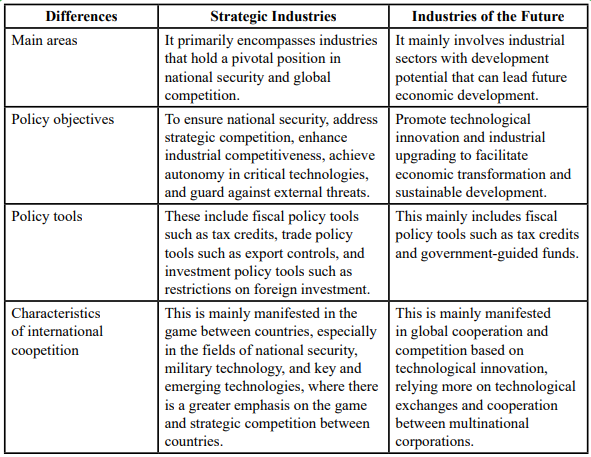
Table 1 Comparison Between Strategic Industries and Industries of the Future
From a strategic technology perspective, strategic industries can be defined as sectors that rely on specific technological innovations and applications which have a direct bearing on national security and strategic competitiveness. In summary, strategic industries can be broadly categorized into two groups. The first encompasses cutting-edge and disruptive technology domains in which a country holds a global technological lead, representing areas of sustained innovation advantage. The second includes sectors whose technological capabilities are indispensable for maintaining innovation sovereignty, enabling industrial competitiveness, and safeguarding national security. Their strategic importance is rooted not only in their economic contribution but also in their capacity to shape global technological hierarchies and alter the balance of power among major economies.
The Technological Perspective of Strategic Competition
However, strategic technologies alone are insufficient for a comprehensive understanding and definition of strategic industries. Although strategic technologies drive industrial development, their application is often contingent upon the support of strategic resources. Resources and technologies are complementary and interdependent. Resources provide the material foundation for technological applications, while technologies offer pathways for the efficient utilization of resources. Their interaction collectively determines a nation’s position and strategic competitiveness within the global industrial chain. Consequently, without the support of strategic resources, even with leading technologies, it is difficult for a nation to attain a dominant position in global competition.
In the context of intensifying great-power competition, control over key resources has become not merely an economic issue but a matter of strategic security and geopolitical leverage. Resource endowment and access particularly in energy, critical minerals, and rare earth elements constitute the material foundation upon which technological innovation and industrial capacity are built. According to resource security theory and the political economy of interdependence, states seek to secure stable access to strategic resources to minimize external vulnerabilities and ensure the resilience of domestic supply chains. As global production networks become increasingly fragmented, the concentration of resource supply in a limited number of countries has heightened systemic risks, giving rise to resource weaponization and supply-chain geopolitics. The United States and other major economies have therefore elevated resource security to a national strategic priority, establishing criticalmineral lists, investment screening mechanisms, and international partnerships aimed at diversifying supply sources and reducing dependence on geopolitical competitors.
The United States and other major economies have elevated resource security to a national strategic priority. The United States, in collaboration with its allies, is promoting friend-shoring and has established the minerals security partnership to reduce dependence on specific countries for critical minerals. The European Union has enacted the Critical Raw Materials Act to strengthen internal resource recycling and diversify external supply sources. This greatpower competition underscores that the security of critical resources has become deeply integrated with technological and industrial competition, forming an indispensable component of interstate strategic contention.
Strategic minerals are characterized, on the one hand, by their scarcity and monopolistic supply structures, and on the other hand, by their foundational role in supporting high-technology and strategic industrial development. As great-power competition intensifies, these resources have acquired clear attributes of strategic competition, serving as both economic inputs and instruments of geopolitical leverage. Currently, major economies including the United States, the European Union, and China have all published their respective lists of critical minerals.
These critical minerals underpin multiple domains of strategic competition, including high-technology research and development, clean-energy transitions, and defense-industrial production. For example, arsenic, gallium, rhodium, and rubidium are vital for advanced technology manufacturing; antimony, cobalt, iridium, lanthanum, and lithium are indispensable to the clean-energy sector; and beryllium and praseodymium are essential for defense and aerospace applications. Most of these strategic minerals exhibit high import dependence and low substitutability, making them particularly vulnerable to supply disruptions in the context of geopolitical conflict or export restrictions. Consequently, they embody strong strategic attributes, as any interruption in their supply chains could generate cascading effects across national security, technological innovation, and industrial stability.
The sustained development of high-tech industries and the enhancement of global competitiveness are contingent upon access to critical mineral resources. For any nation, mastery of both frontier technologies and strategic mineral resources can enable a dominant position within the global high-tech industrial chain. Take rare earth as an example. These critical minerals are essential to hightech industries. Core technologies in fields such as information and communications technology, smart manufacturing, and quantum technology are fundamentally dependent on the supply of rare earth.
Although clean energy, particularly its global supply chains, has increasingly acquired geopolitical characteristics, the strategic logic underlying clean-energy competition remains deeply intertwined with both critical mineral resources and technological innovation. Taking the lithium-battery supply chain as an example, the development of clean energy depends simultaneously on access to critical minerals and on advances in strategic technologies. Hence, strategic energy resources ultimately derive their competitiveness from the nexus between mineral endowment and technological capability. Whether a nation controls essential mineral resources or commands frontier technologies, it can secure a dominant position within the global production and manufacturing of clean-energy products. In this sense, the foundation of clean-energy geopolitics rests on the interaction between material and technological power.
Simultaneously, within the context of globalization and greatpower competition, the impact of strategic resource supply chains on national strategic industries has become increasingly pronounced. Following the outbreak of the Russia-Ukraine conflict, Russia’s exports of natural gas and oil to Europe plummeted. This not only triggered an energy crisis in Europe but also exposed the inherent vulnerabilities of supply chain dependency. This crisis directly drove up industrial costs across Europe and prompted nations, including the United States and European countries, to elevate supply chain security, encompassing energy and critical minerals, to a strategic level directly linked to national security and industrial competitiveness.
In summary, from the resource-based dimension of strategic competition, strategic industries primarily encompass sectors related to strategic mineral resources, which constitute a core pillar of national economic and security architecture. These industries not only underpin economic growth, defense security, and strategic industrial development but also serve as a crucial source of structural power in shaping the dynamics of interstate strategic competition. Incorporating strategic mineral resources into the framework of strategic industries represents not only a logical extension of industrial policy but also an imperative choice for navigating the complex landscape of international strategic competition.
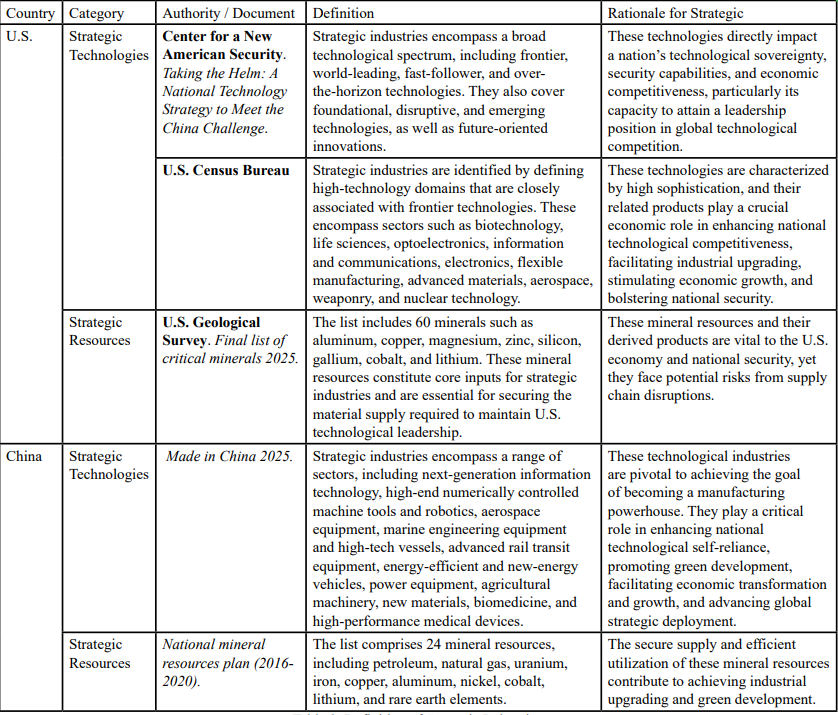
Table: 2 Definition of Strategic Industries
Therefore, this study argues that strategic industries embody both a technological and a resource-based dimension of strategic competition. Strategic industries typically refer to sectors that exert a decisive influence on national security and technological leadership, whereas strategic resources constitute the material foundation upon which these industries depend for their existence and growth. Together, they form the dual pillars of a technology-resource framework for strategic industries. In the absence of key technologies, resources remain confined to a low value-added state. Conversely, without a stable resource supply, a nation’s technological advantages struggle to translate into sustained industrial competitiveness.
They are long-term and forward-looking industries aligned with national security imperatives and economic development objectives driven primarily by strategic technologies and grounded in strategic mineral resources. Strategic technologies exert a multiplier effect, not only steering the direction of industrial development and structural transformation but also accelerating the formation of national strategic advantages. Meanwhile, strategic resources provide the essential material foundation for technological research and innovation. Their stability and security serve as critical safeguards for the resilience and reliability of strategic industrial and supply chains.
The Connotation of Strategic Industrial Competition
The Primary Actor in Strategic Industrial Competition Is the State
Existing literature on industrial competition has predominantly treated firms as the primary actors, focusing on their strategic decision-making within domestic and international market structures. However, strategic competition represents a higher-order form of competition one that unfolds between states rather than firms. Whether in the U.S.–Soviet confrontation or in contemporary Sino-U.S. competition, the essence of strategic competition lies in the struggle for international power, where outcomes are ultimately determined by the leadership and strategic capacity of the state. Within this broader context of great-power competition, strategic industries have become central arenas of geopolitical contestation. In strategic industrial competition, the state rather than the market or individual firms serves as the principal actor that defines objectives, mobilizes resources, and coordinates industrial strategies in pursuit of national interests. This state-centered orientation reflects the growing fusion of economic policy and national security, where industrial policy is no longer confined to market correction or innovation promotion but becomes an integral component of national strategy and geopolitical competition.
From the perspective of political economy, the state assumes a dual role as both a strategic planner and a market participant. On the one hand, it formulates long-term industrial visions, allocates fiscal and technological resources, and establishes regulatory frameworks to shape domestic industrial structures. On the other hand, it actively intervenes in international economic arenas through trade measures, export controls, investment screening, and alliance-building to protect and enhance national strategic advantages.
The Root of Strategic Industrial Competition Lies in Power Transitions
In the analysis of great-power competition, power transition theory provides a coherent framework for understanding the strategic interplay between a hegemonic power and a rising state. According to power transition theory, the international system is typically dominated by a single leading power that shapes global order and maintains systemic stability. As the capabilities of a rising power grow and begin to approach those of the dominant state, the balance of power shifts, and the emerging challenger starts to question and potentially threaten the hegemon’s established position. However, initiating open confrontation while still in a position of relative weakness is strategically unwise, as premature conflict would accelerate the power transition process to the rising state’s disadvantage. Likewise, if the rising power has already surpassed the hegemon, a military challenge becomes equally irrational, since its strategic objectives can be achieved through non-military means.
At the same time, the hegemonic power may experience a sense of crisis in response to the perceived erosion of its dominance and may thus resort to preventive war to forestall further decline. Zhou [20] argues that before a rising state overtakes the hegemon, the latter is most likely to initiate military action preemptively to mitigate potential losses. Yet under conditions of nuclear deterrence, direct military confrontation between great powers has become highly costly and therefore unlikely. As a result, strategic competition between dominant and rising states has increasingly shifted toward non-military, peaceful forms manifesting primarily in economic, technological, and industrial domains.
In the current context of global economic interdependence, direct military conflict between major powers has become less plausible. Consequently, offensive realism is inadequate for fully explaining the dynamics of great-power interaction under these conditions. Simultaneously, contemporary great-power competition primarily involves dynamic shifts in power between a hegemonic power and a rising state. In contrast, hegemonic stability theory emphasizes the stabilizing role of a single hegemon within the international system. Therefore, power transition theory offers a more suitable framework for characterizing the dynamic competition between a rising state and a hegemon. This is particularly true as the rivalry among major powers has evolved beyond a mere contest of military and economic strength to one centered on competition within and between industrial chains, driven by continuous application and rapid innovation.
Empirically, this logic is clearly reflected in the evolving dynamics of Sino-U.S. relations. As China’s economic strength and international influence have grown, the power gap between the rising and the dominant state has gradually narrowed, accentuating the structural contradictions inherent in the power transition. The United States has exhibited a form of status anxiety, perceiving China’s rapid development as a threat to its global leadership and privileged position in the international hierarchy. In response, Washington has initiated a series of trade frictions and technological containment measures designed to impede China’s ascent, thereby intensifying bilateral strategic competition.
As Zhao [21] observes, in light of the profound transformations of world politics and the growing salience of geoeconomics, Sino-U.S. strategic competition has become comprehensive and cross-domain in nature. Wu [22] further notes that the scope of this competition has expanded beyond trade to encompass industrial policy, hightechnology protection, regional strategy, international rulemaking, and even divergent development models underpinned by competing value systems. Among these, competition over strategic and hightechnology industries stand out as a concrete manifestation of this broader great-power competition.
Power transition is often accompanied by shifts in industrial leadership and the transfer of technological advantage. According to Porter’s theory of national competitive advantage, a nation’s position in global competition is not static. Rather, it is dynamically shaped by the interplay of four key determinants, factor conditions, demand conditions, related and supporting industries, and firm strategy [23]. First, national competitiveness stems from a country’s resource endowments. These resources encompass not only natural resources but also factors such as technology, human capital, and specialized infrastructure. Strategic industrial competition between nations is fundamentally reliant on these very factors. The U.S.-China competition, for instance, depends not only on factor conditions like natural resources and critical minerals, but also on the innovative capacity and the deployment of R&D resources in high-technology domains such as semiconductors and artificial intelligence.
Second, domestic market demand serves as a crucial driver of national competitive advantage. Specifically, state-driven demand for strategic technologies, particularly in critical and emerging fields, stimulates corporate innovation and industrial advancement. Third, within the context of global economic interdependence, competition in strategic industries no longer hinges solely on the development of individual sectors. Instead, it is characterized by the formation of industrial clusters that are deeply embedded within global industrial and supply chains. The formation of such clusters and the integration of global supply chains mean that a nation’s competitiveness in strategic industries is determined not only by domestic innovation and demand but also by factors such as global market dynamics, resource allocation, and international partnerships. Finally, Porter identifies firm strategy as one of the core determinants of national competitiveness. Interstate strategic competition, particularly in strategic industries, is increasingly manifested as a state-led strategic contest. Governments utilize policy instruments, including industrial policy, to enhance the competitive position of their domestic firms in the global arena.
As competition among great-powers intensifies, the process of power transfer will be further reflected in strategic industries. This is not only a contest in the economic field, but also a game of national security and technological sovereignty. Against the backdrop of an accelerating technological revolution, a nation’s competitiveness in strategic industries is progressively becoming a key benchmark for measuring its international standing. National competitiveness is no longer dictated solely by natural resource endowments but depends critically on technological innovation, human capital, policy support, and synergistic development with related industries and supply chains. In this context, emerging powers can gradually narrow the gap with established powers, thereby accelerating the redistribution of international power. This process underscores that the root cause of strategic industrial competition lies in power transition, which serves as the core driver of change in the global power structure.
The Root of Strategic Industrial Competition Lies in Power Transitions
At its core, strategic industrial competition represents a struggle for international leadership. For the dominant power, maintaining leadership entails preserving its control over critical technologies, production networks, and innovation ecosystems that underpin global governance and economic influence. For the rising power, challenging that leadership requires building alternative centers of industrial and technological capability that can reduce dependence on existing hierarchies and reshape the structure of global value chains. Thus, strategic industrial competition constitutes the economic and technological frontier of great-power competition for global preeminence. Historically, contests for global leadership were often resolved through war, with shifts in the world’s power centers achieved by military means. Consequently, strategic competition was traditionally concentrated in the military domain. Yet in the modern era, deepening economic interdependence, complex trade linkages, and the deterrent effect of nuclear weapons have drastically reduced the likelihood of large-scale war among great powers. Strategic competition has thus shifted from the military to the economic and technological spheres, with its essence increasingly defined by struggles over international leadership and the security economy.
The United States seeks to preserve its strategic advantage and global dominance, whereas China aims to enhance its international discourse power and reclaim its historical position as a leading world power. This divergence in strategic objectives has generated intense competition over global leadership. Moreover, strategic industries are primarily concentrated in high-technology sectors, where technological advancement not only drives socio-economic development but also reinforces national security. As a result, securing leadership in strategic industries has become the commanding height of the Sino-U.S. competition. Notably, the Trump administration’s first National Security Strategy and National Defense Strategy explicitly stated that interstate strategic competition, rather than terrorism, now constitutes the most significant concern for U.S. national security. This policy shift institutionalized the notion that great-power competition manifested most clearly in the contest over strategic industries has supplanted terrorism as the defining axis of global security politics.
The Core of Strategic Industrial Competition Lies in Technological Competition
Within the strategic context of Sino-U.S. competition, the deepening technological revolution and the intensification of great-power competition have created both opportunities and challenges for the restructuring of the global technological power system. Technology has become one of the most complex, significant, and defining challenges confronting all nations in this transformation [24]. The Biden administration’s 2022 National Security Strategy likewise emphasizes that technology is at the core of today’s geopolitical and geoeconomic competition and at the heart of national economic security, critical and emerging technologies will reshape the world’s economic, military, and political order. This statement encapsulates the essence of contemporary strategic competition: control over technology increasingly determines the hierarchy of global power and the future configuration of the international system.
Technology functions as an endogenous driver of global political and economic development. Major powers continuously advance technological innovation to upgrade their industrial structures and enhance national economic capacity, thereby strengthening their bargaining power and competitiveness in the contest for economic privileges. As the frontier of productivity and the foundation of national competitiveness, technology defines the capacity of a state to lead in both economic and security domains. Securing a first-mover position and national leadership in critical technologies enables a country’s industries to operate at the technological frontier and to capture strategic advantages in global industrial competition and supply-chain configuration. In this sense, technological leadership becomes not only the foundation of industrial development but also the decisive source of strategic competitiveness in the evolving global order
Industrial Policy Plays a Crucial Role in Strategic Industrial Competition
Industrial policy serves as a key instrument through which states intervene in the economy to guide industrial transformation, stimulate innovation, and enhance strategic competitiveness. In the context of great-power competition, industrial policy has evolved from a developmental tool aimed at correcting market failures to a strategic instrument of national competition, integrating economic, technological, and security objectives. By shaping the allocation of resources, directing investment toward critical sectors, and fostering technological leadership, industrial policy enables states to build and sustain advantages in strategic industries that underpin longterm national power. Emerging powers utilize industrial policy as a strategic instrument for developing key technologies and strategic industries. This process has gradually eroded the competitive advantages traditionally held by established powers. In response, incumbent powers have increasingly turned to industrial policy as an effective means of mitigating multiple crises, including economic stagnation, supply-chain disruptions, and technological dependence. As a result, great-power competition has evolved into a competition of industrial policies characterized by continuous innovation, policy adaptation, and strategic application.
According to the IMF research report, 37% of global industrialpolicy interventions are motivated by the pursuit of enhanced strategic competitiveness [12]. Furthermore, motivations related to climate change and supply chain resilience accounted for 28.1% and 15.2% of responses, respectively, while those concerning national security and geopolitical tensions constituted 19.7%. Among these, the primary motivations for implementing industrial policy in advanced economies focused on climate change, geopolitical considerations, and national security. In contrast, emerging and developing economies prioritized enhancing strategic competitiveness and other objectives. This divergence underscores a significant transformation in the rationale of industrial policy. Contemporary industrial policy is no longer confined to improving firm productivity or promoting aggregate economic growth. Instead, it increasingly focuses on addressing strategic competition, preserving technological leadership, and utilizing policy instruments to shield domestic economies from diversified external shocks in order to achieve both economic and non-economic objectives [25]. This evolution reflects the growing fusion of industrial policy with national security and geoeconomic strategy in the post-globalization era.
The Fundamental Forms of Strategic Industrial Competition
Overt and Covert Forms of Competition
From the perspective of competitive forms, strategic industrial competition can be categorized into overt and covert competition. Overt competition refers to explicit and measurable economic activities that occur within the framework of industrial competition, typically involving direct contests over technology, resources, and talent. Great-powers engage in strategic competition through industrial and trade policy measures, resulting in a clearly delineated competitive landscape. Examples include major powers introducing industrial policies to support strategic sectors, initiating trade disputes, or imposing export controls and entity restrictions aimed at limiting competitors’ access to critical technologies. These actions represent the visible dimension of strategic industrial competition.
A representative example of this is the U.S. Entity List, a key component of its export control regime targeting China. By placing Chinese entities on this list, the U.S. aims to impede China’s technological advancement. In 2019, the U.S. added the Chinese technology firm Huawei to the Entity List, prohibiting American companies from selling critical technologies and components to it. This move was designed to contain China’s rise in 5G telecommunications and advanced semiconductor manufacturing. Another typical case is the U.S. Section 301 investigation. In 2018, leveraging Section 301 of the Trade Act of 1974, the U.S. imposed high tariffs on Chinese goods. This action sought to undermine China’s competitiveness in key strategic industries and thereby preserve U.S. global technological and industrial dominance.
In contrast, covert competition manifests in indirect, less visible forms of strategic behavior. Rather than relying on formal legislation or policy announcements, states employ subtler instruments, such as mobilizing allies, leveraging multilateral institutions, or influencing third countries, to constrain the rise of competing powers and suppress the development of their strategic industries. This form of competition operates through geoeconomic signaling, alliance coordination, and rule manipulation, blurring the boundary between economic competition and geopolitical containment. For instance, the United States has pursued technological containment against China not only through overt measures but also by leveraging its global influence to mobilize allies, aiming to establish a more extensive technological blockade.
In summary, strategic industrial competition manifests in both overt and covert forms. Overt competition involves direct measures, such as industrial and trade policies aimed at technological containment.
Adversarial and Cooperative Forms of Competition
In terms of its nature, strategic industrial competition can be categorized into adversarial and cooperative forms. The adversarial dimension is primarily manifested in actions whereby states broaden the concept of national security or weaponize interdependence to advance strategic objectives. This form of competition stems from conflicting national interests. States undertake a series of actions to constrain a rival’s technological innovation, industrial capacity, or directly undermine its position within global industries. This can lead to fractures in industrial and supply chains, ultimately aiming to reconfigure the competitor’s supply network centrality and security architecture in favor of their own. Typical measures include initiating trade wars over critical products and technologies, tightening foreign investment screening, strengthening export controls, and imposing economic and financial sanctions. These actions aim to constrain competitors’ industrial and technological capacities while reinforcing national strategic autonomy. For example, the financial sanctions imposed on Russia by the United States, the European Union, and others which excluded it from the SWIFT system and imposed economic blockades on its energy, defense, and technology sectors, exemplify adversarial competition that employs financial and trade tools as strategic weapons.
In contrast to adversarial competition, coopetition reflects a state in which great-power simultaneously engage in both rivalry and collaboration. Even amid strategic competition, states may find it necessary to cooperate in certain domains to address shared global challenges. Cooperative competition operates on two interrelated levels. First, it takes the form of an economic statecraft strategy, in which a country engages with allies or trading partners to collaborate in industries possessing strategic significance. For instance, despite competition and rivalry in certain sectors, the United States and the European Union share strategic interests in promoting the digital economy and green technologies. The U.S.-EU Digital Trade Agreement exemplifies this form of cooperative competition, as the two parties seek collaboration in these areas to harmonize standards and foster technological innovation. Furthermore, the U.S.-EU Trade and Technology Council provides an institutional framework for collaboration. It employs tools such as foreign direct investment screening and export controls to underscore the importance of collective economic security, thereby facilitating cooperation on technological standards, addressing global trade challenges and supply chain security, and enhancing the security and competitiveness of information and communication technology.
Second, even between rival great powers that maintain adversarial relations or compete in specific strategic sectors, cooperation may still emerge in areas of mutual interest, such as joint research, climate technology, or global health, reflecting the coexistence of competition and interdependence in contemporary strategic competition. For example, despite intense competition in economic and technological domains, the U.S. and China have engaged in cooperation on global climate change. The two countries have coordinated on issues such as emission reduction targets to jointly advance the green transition.
The adversarial and cooperative forms of competition in strategic industries reflect the complex dynamics of great-power games in contemporary international relations, revealing a reality where rivalry and collaboration coexist. On one hand, a state may employ adversarial competition to bolster its own strategic autonomy and constrain a rival’s competitiveness. On the other hand, it may utilize cooperative competition to foster alliances, enhance collaboration, and advance shared interests. This illustrates the dual strategy that states adopt in the realm of strategic industries: to guard against external threats while simultaneously positioning themselves advantageously within global competition.
The Fundamental Characteristics of Strategic Industrial Competition
The Securitization of Competitive Objectives
Against the backdrop of great-power competition, the objectives of industrial competition have expanded far beyond the traditional pursuit of production efficiency and national economic growth. Instead, contemporary industrial competition increasingly aims to safeguard national security, restore supply-chain resilience, respond to the weaponization of trade dependencies, and maintain technological superiority [26].
This shift has intensified the use of a new form of economic statecraft, wherein industrial, trade, and regulatory policies, as well as sanctions, are strategically linked to national security objectives. Such measures not only serve to protect domestic economic and technological interests but also mobilize allies and partner economies to participate in broader strategic competition, thereby amplifying great-power competition and reshaping the contours of global economic security [27].
Within the context of U.S.-China strategic competition, U.S. industrial policy is increasingly geared toward objectives of national security, technological rivalry, and geopolitics, exhibiting a pronounced trend of securitization. This is particularly evident in the semiconductor sector, where the U.S. has employed a combination of industrial and trade measures to expand its policy goals from purely economic development to encompass the maintenance of technological leadership and national security. A prime example is the CHIPS and Science Act. This legislation provides substantial subsidies to attract advanced manufacturing back to the U.S., while its provisions explicitly restrict beneficiary firms from expanding advanced production capacity in China, directly tying industrial policy to geopolitical strategy. Consequently, the U.S. approach to industrial policy is dual-pronged. It seeks not only to revitalize domestic manufacturing through subsidies but also to reinforce America’s dominant position in the global semiconductor supply chain by restricting foreign firms’ technological engagement with China. As great-power competition intensifies, industrial policy has thus transcended its role as a mere economic instrument, becoming an integral component of national strategic rivalry that directly shapes the global political, economic, and technological landscape.
Flexibility of Strategic Instruments in Competition
In the contemporary context of great-power competition, competition over strategic industries have become increasingly complex, with the boundaries between different strategic instruments growing progressively blurred. Rather than relying on a single policy tool or isolated competitive measure, states now employ comprehensive toolkits of strategic instruments to achieve their geopolitical and economic objectives.
Hegemonic powers, in particular, have weaponized interdependence by leveraging existing global financial and trade networks to exert influence over foreign firms and governments. Through the combined use of investment screening, financial sanctions, export controls, and other restrictive mechanisms, they selectively constrain economic activities that are deemed critical to national or strategic interests [28, 29]. This convergence of economic and security instruments illustrates the hybridized and networked nature of strategic industrial competition in the post-globalization era.
In the strategic competition with China, the U.S. has developed a systematic toolkit of strategic economic instruments. It integrates industrial, trade, investment, and financial policy measures to curb China’s technological advancement and secure U.S. supply chains. These tools are not deployed in isolation but are used synergistically and in a mutually reinforcing manner. Industrial subsidy policies are leveraged to reshore manufacturing, export controls to impede technology transfer, investment screening to prevent technology leakage, and financial sanctions to restrict capital flows. Together, they form a comprehensive, end-to-end strategy of containment spanning from R&D and production to capital.
First, U.S. industrial policy measures aim to reshape the strategic industrial landscape through subsidies, tax incentives, and conditional provisions. A prime example is the Inflation Reduction Act. While offering tax credits to its clean energy industries, the Act mandates that electric vehicle batteries and critical minerals must originate from North America or free trade partners. This not only seeks to undercut China’s supply chain advantages in sectors like photovoltaics and lithium batteries but also aims to redirect allied industrial capital toward the United States. Second, U.S. trade policy measures have constructed a technology blockade network against China through export controls and multilateral coordination mechanisms with allies. This has become a core component of America’s technological containment strategy toward China. Through export controls, the U.S. can act unilaterally at home while also coordinating with allied nations to establish a broader and more systematic technology embargo.
Third, by strengthening foreign investment screening and imposing outbound investment restrictions, the U.S. seeks to obstruct the bilateral flow of capital and technology in strategic sectors between the two countries. The 2018 Foreign Investment Risk Review Modernization Act exemplifies this approach. It expanded the scope of security reviews to include transactions involving critical technologies and infrastructure, intensified scrutiny of such technologies, and established a list of countries of special concern. Consequently, this has raised the difficulty for China in acquiring technology from and cooperating with the U.S., while also significantly increasing the cost of Chinese investment and mergers and acquisitions in the American market. Finally, leveraging the dominant position of the U.S. dollar and global financial infrastructure, the United States employs financial sanctions and payment system dominance to exert strategic pressure. Against the backdrop of intensifying U.S.-China technological competition, the U.S. has progressively escalated financial sanctions against Chinese defense enterprises, restricting their access to financing and lending in international capital markets.
The Asymmetry of Competitive Behavior
Strategic industrial competition is characterized by pronounced asymmetries among states, which manifest not only in differences in resource endowments, technological capabilities, industrial foundations, and institutional strengths, but also in the modes of competition, the choice of policy instruments, and the distribution of risks. Advanced economies, leveraging their technological dominance and institutional power, tend to maintain leadership in global value chains by establishing high-standard trade, investment, and technology regimes that reinforce their structural advantages.
Intensified great-power competition has accelerated the weaponization of interdependence, as states seek to sever networkbased channels of influence and control through measures such as technological decoupling, investment screening, and financial or economic sanctions. The concept of weaponized interdependence refers to the strategic exploitation of asymmetric dependencies within global production and financial networks, enabling dominant powers to constrain or coerce other states under the pretext of safeguarding national security. In this asymmetric structure, control over key nodes, such as advanced technologies, payment systems, and global supply-chain chokepoints, has become a source of structural power, allowing leading states to transform interdependence from a mutual benefit into an instrument of strategic containment.
Extreme Ultraviolet Lithography (EUV) machines are indispensable equipment in semiconductor manufacturing, enabling the production of chips at nodes below 7nm. They represent one of the core technologies in the global semiconductor industry. ASML, headquartered in the Netherlands, is the sole global manufacturer of this technology. Meanwhile, China, as the world’s largest consumer of chips and a major builder of manufacturing capacity, is critically dependent on this equipment. However, leveraging this asymmetric dependency, the U.S. has employed export controls, extending its jurisdiction over products containing U.S. technology or software through long-arm statutes, to exert diplomatic pressure on the Dutch government. This pressure has resulted in the denial of export licenses for EUV lithography machines to China.
Furthermore, rare earth elements serve as foundational materials for modern high-tech industries, with extensive applications in sectors such as electric vehicles and aerospace. China possesses not only the world’s largest share of rare earth reserves but also holds a leading position in rare earth refining and processing technologies. The advanced manufacturing sectors of developed economies, including the United States and Europe, are heavily reliant on processed rare earth products from China. Consequently, China’s rare earth resource advantage has evolved into a strategic lever in its competition with the United States and a countermeasure against U.S. technological containment.
The U.S.’ restriction of China’s semiconductor development through EUV technology blockade, aimed at consolidating its global leadership, and China’s strategic counter-leverage based on its rare earth resources, deployed to seek a balance of power and safeguard its own developmental space, both exemplify the conversion of asymmetric dependencies at critical nodes of the global supply chain into structural power.
The Interactivity of the Competitive Process
Strategic industrial competition among major powers is not a one-off or unilateral act but a process characterized by mutual strategic interaction and reciprocal use of policy instruments. In the current landscape of industrial competition, states increasingly regard industrial policy as a deliberate tool of strategic competition. However, the application of such policies often produces negative spillover effects on trading partners, raising concerns over national security and prompting retaliatory countermeasures.
Existing empirical evidence underscores the intensity of this policy interdependence. According to Evenett et al. [12], when one major economy provides subsidies for a specific product, there is a 73.8% that another economy will introduce similar subsidies within a year. This high degree of policy responsiveness reveals the interactive and reactive dynamics of strategic industrial competition, in which national strategies evolve through cycles of stimulus, retaliation, and adjustment. This illustrates that, against the backdrop of great-power competition, the formulation and implementation of industrial policy are no longer driven solely by economic objectives. Instead, they are increasingly intertwined with the recalibration of the global strategic landscape and the pursuit of national security goals.
In August 2022, the U.S. enacted the Inflation Reduction Act, which provides tax credits for the clean energy industry and consumer tax incentives for electric vehicles (EV), aiming to attract segments of the EV supply chain to relocate to the U.S. This strategy is designed to erode the competitive advantages of China and Europe in areas such as battery materials and component manufacturing, while simultaneously nurturing domestic manufacturing capabilities. Facing the dual pressures of potential industrial outflow and external competition, the European Union responded swiftly. In March 2023, it introduced the Net-Zero Industry Act and the Critical Raw Materials Act. That same year, it also launched a countervailing duty investigation into Chinese electric vehicles. These moves not only addressed concerns over market distortions stemming from U.S. subsidies but also targeted another major competitor, China.
The Dynamics of Strategic Industrial Competition
The study of strategic industrial competition lies at the intersection of industrial economics and international relations, encompassing dimensions of industrial competition, technological competition, and great-power strategic interaction. Given the complex interdependencies and adaptive dynamics inherent in this field, complex network analysis and game theory provide both the theoretical foundation and methodological tools for understanding how states and industries interact, compete, and co-evolve within the global system. These approaches enable us to capture the nonlinear, networked, and evolutionary nature of strategic competition, bridging the analytical gap between economic structures and geopolitical behavior.
A Coopetition Network Model for Strategic Industrial Competition
In recent years, the application of complex network methodologies in economics has yielded significant theoretical and empirical progress. The competitive and cooperative relationships among major powers can be effectively represented through the network and the network of networks framework, in which multiple modular subnetworks, each corresponding to distinct industrial, technological, or policy domains, are interconnected to form higher-level clustered systems. Within and across these networks, patterns of competition and cooperation coexist and evolve dynamically.
The characteristics of economic interdependence among nations can be conceptualized as a complex network exhibiting scalefree and small-world properties. Within such a network, power is not distributed uniformly but is highly concentrated among a few core nodes. This structural perspective reveals that the essence of interdependence lies not in symmetrical mutual benefit, but in the ability to derive and wield power from asymmetrical network topologies. For instance, a nation that controls critical core technologies or resources achieves high centrality within the network. This centrality translates into significant network power, enabling control over that node and its potential instrumentalization as a lever in strategic competition. Simultaneously, while such a network structure exhibits robustness against random failures, it demonstrates marked vulnerability to targeted attacks such as export controls and financial sanctions. When a core node is disrupted, it can trigger cascading failures throughout the network, thereby amplifying risks and potentially leading to systemic collapse.
To accurately model this dynamic process, it is essential to first define the network and its key attributes. From a topological perspective, interstate strategic industrial coopetition constitutes an extremely complex network. This network is not merely a simple aggregation of nation-states as cooperative and competitive actors. It also encompasses the intricate interrelationships of both competition and cooperation among these actors. Building on the framework of complex networks and the core concept of strategic industrial competition, we designate states as the nodes within the network. On one hand, states are the primary actors in strategic competition, whose objectives are to sustain national competitive advantage and ensure security, in contrast to firms that primarily seek profit. On the other hand, states are also the implementers of industrial policy, capable of utilizing policy instruments to achieve these strategic objectives.
Edges represent the interactive relationships between these nodes. Specifically, an edge captures the competitive and cooperative dynamics between states across economic, technological, and policy domains. These relationships can be purely competitive, such as technological blockade, resource rivalry, purely cooperative, such as cross-border investment, joint innovation, or a hybrid of both competition and cooperation. From a cluster-network perspective, the dynamics operate on two levels. At the inter-cluster level, each cluster network strives to maximize its collective gains by competing with others for strategic advantages, resources, and influence. At the intra-cluster level, competition and cooperation coexist, nodes within a cluster compete for finite resources, yet their interconnections also generate positive spillover effects, which, from an external viewpoint, constitute cooperative linkages. In this sense, cooperation within the network can be understood as a mechanism to maximize the efficacy of industrial policies and enhance collective competitiveness.
Figure 1 presents a simplified model illustrating the dynamics of coopetition within a strategic industrial network. Each node represents a state, with its size indicating its relative importance or centrality. Different colors denote distinct module networks, which are labeled in Figure 1 as M1-1, M1-2, M2-1, and M2-2. Multiple module networks collectively form cluster networks, identified in Figure 1 as N1 and N2. Connections between individual nodes across different module networks are considered cooperative and are represented by solid lines. Conversely, connections between nodes belonging to different cluster networks are interpreted as competitive and are depicted using dashed lines. Edges represent the relationships between nodes, with the weight of each edge reflecting the strength or significance of that relationship. Based on their relative importance, nodes are categorized as either core (C) or peripheral (P). These categories are further associated with distinct competitive and cooperative strategies.
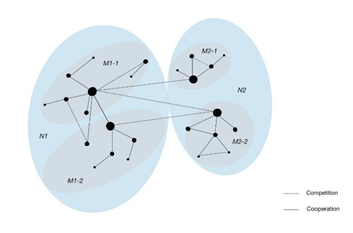
Figure 1: The Coopetition Model
The interstate strategic industrial coopetition network G can be formally represented as an ordered quadruple. G=(V,E,W)
where V = {v1,v2,...,vn} denotes the set of nodes, and each elementv_ irepresents a state participating in the global strategic industrial coopetition network. E = {eij} denotes the set of edges, which captures the competitive and cooperative relationships among the actors. These relationships encompass, but are not limited to, trade flows, investment flows, and technology transfers between them. Furthermore, each edge eijϵ E corresponds to an unordered pair of nodes (vi,vj ) from V. W = {w1,w2,... ...,wn } is the set of edge weights.
In strategic industrial competition, power derives not only from a nation’s technological and resource endowments but also from its position within the global industrial network structure. Within the framework of complex networks, such structural power manifests as control over critical nodes. Metrics for assessing network structural features primarily include global measures, such as network density, average degree, clustering coefficient, average shortest path length, and node-level measures, such as degree, closeness centrality, betweenness centrality, eigenvector centrality.
This study focuses specifically on betweenness centrality and eigenvector centrality. This focus is justified for three reasons. First, under strategic industrial competition, interstate rivalry is fundamentally a contest for control over pivotal core nodes. Global network metrics describe systemic efficiency or connectivity but fail to capture the decision-making rationale of states as strategic actors. Second, betweenness centrality measures the extent to which a node lies on the shortest paths between other nodes, reflecting its potential to control the flow of resources. This metric directly determines the efficacy of a state’s potential weaponization of interdependence and shapes its cost-benefit calculus in strategic interactions. Third, eigenvector centrality directly reflects a nation’s importance within the coopetition network. Derived through the power iteration of the adjacency matrix, it quantifies a state’s potential payoff in the strategic game. Consequently, static topological features of the network can be mapped onto dynamic variables within the game theoretic model. Betweenness Centrality is calculated by,

In this formulation, dij represents the total number of shortest paths between states i and j. dk,ij denotes the number of those shortest paths that pass through an intermediary state k. n is the total number of states in the network. Eigenvector Centrality is computed by,

M(i) denotes the set of nodes directly adjacent to node i. λ is the largest eigenvalue of the adjacency matrix A. Aij is an element of A, representing the weighted connection strength between nodes i and j. The adjacency matrix A is an n×n square matrix that represents a directed, weighted network.

Edge weights incorporate two primary categories of factors. The first comprises economic factors, such as the intensity of trade flows and cross-border investment in strategic industries. The second involves technological dependency factors, including innovation collaboration, technology transfer, and technological proximity related to strategic industries. Furthermore, the formation and weighting of edges are subject to dynamic influences from several sources. First, policy factors. Changes in a state’s industrial and trade policies can alter inter-nodal relationships. For instance, U.S. export controls on China, which led to technology supply disruptions, directly reshaped the competitive and cooperative dynamics in strategic industries between the two countries, consequently modifying the weight of their connecting edge. Second, technological factors. The evolution of technology and industrial structure can shift the relative technological standing among states, thereby affecting the weights of their connecting edges. Third, external environmental factors. This category operates on two levels. On a global scale, macroeconomic shifts can influence interstate strategic industrial dynamics. The COVID-19 pandemic, for example, triggered disruptions in key industrial and supply chains, which in turn impacted edge weights. On a regional scale, localized geopolitical changes can also lead to modifications in edge weights.
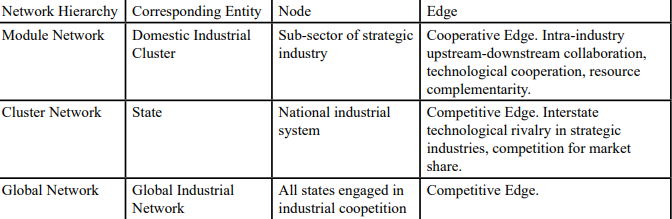
Table 3: Mapping Network Nodes to Hierarchical Levels
According to node importance, the network can be divided into multiple modular sub-networks, which collectively form a clustered network. As Table 3 shows. Connections within modular networks represent cooperative linkages among industries, whereas connections between clustered networks signify competitive interactions across strategic domains. Within each network, the total amount of power is fixed, and each node receives a proportional share based on its level of importance. Through varying patterns of competition and cooperation, individual nodes and their corresponding modular networks seek to maximize overall payoffs at both the local and global levels. This structure captures the multi-layered, interdependent, and adaptive nature of strategic industrial competition.
The coopetition model not only captures the process of industrial competition among states but also describes the dynamic mechanism of power transition within the network. At the macro level, competition among clustered networks representing the strategic industries of major powers arises from the struggle for limited structural power. During this dynamic process, as trade and industrial policies become more coordinated, one network gradually attains dominance, reshaping the inter-network configuration. Once such dominance stabilizes, the relationship between the two clustered networks transitions from pure strategic competition to a coopetition structure.
At the micro-dynamic level, this transition is accompanied by a redistribution of power across nodes within the network. The process can be characterized through eigenvector centrality, which captures the kinetics of energy or influence diffusion among interconnected nodes. Over time, the network tends toward a steady-state equilibrium, which can be formally expressed as, x(t) = Atx(0)where tdenotes the time required for the network to reach equilibrium, and Arepresents the adjacency matrix that encodes the intensity of competitive and cooperative ties. By iteratively computing x(t), it becomes possible to estimate the temporal dynamics of competition and cooperation, including the duration and stability of each phase.
Game Theory Analysis Based on Industry Coopetition Networks
The multi-layer network structure of complex networks provides an analytical foundation for understanding the static architecture of interstate industrial coopetition. However, a purely topological network analysis struggles to capture the dynamic adjustment of actor strategies and the long-term equilibrium of their interactions. On one hand, it cannot explain why states adopt varying competitive or cooperative strategies at different stages. On the other hand, it fails to depict how iterative strategy adjustments reciprocally reshape the network structure itself. Therefore, it is necessary to introduce gametheoretic methods to enable a more profound analysis of this issue.
Game theory emphasizes that rational agents seek to maximize their payoffs through repeated interactions. Theoretically, one of the most effective mechanisms for achieving cooperation in repeated games is the Tit-for-Tat strategy. In practice, this logic is vividly reflected in strategic industrial competition and trade conflicts, where major powers frequently employ reciprocal or retaliatory measures. Examples include the trade wars and industrial policy races observed in recent years, both of which exhibit the classic features of Titfor- Tat dynamics as states respond to one another’s protectionist or interventionist actions in an iterative manner. The study by Evenett et al. [12] also shows that major economies have a tit-for-tat approach to the application of industrial policies.
Drawing on the framework established by Wang et al. [30] for modeling welfare functions in national industrial policy games, the total welfare generated by a country’s industrial policy can be decomposed into four key components. Gains from technological innovation, net benefits from international trade, spillover benefits to national security stemming from strategic industries, and profits derived from technological gaps that exceed competitors’ expectations.
P=t∙Y+α(at^2+bt)Y+β∙t∙φ∙Y+γ(t-t^e )Y
t denotes the rate of technological substitution, te represents the expected rate of technological substitution held by other countries, Y stands for the nation’s total economic output, and φ indicates the share of strategic industries within that total output. The term (t - te) thus quantifies the unexpected technological gap, which is a critical driver for the aforementioned gains derived from exceeding competitors’ expectations.
Building upon this foundation, both betweenness centrality and eigenvector centrality are incorporated into the payoff function. Equation (6) specifies the cost function, where betweenness centrality determines the differential in strategic costs. A state with higher betweenness centrality incurs a lower unit cost when executing a competitive strategy. Equation (7) defines the benefit function, in which eigenvector centrality scales the magnitude of benefits. A state with higher eigenvector centrality accrues greater benefits from any chosen strategy by virtue of its network power. Furthermore, industrial policy acts as a moderating variable. As the core instrument for state-led industrial coopetition. It negatively correlates with strategic execution costs and positively amplifies strategic benefits. Specifically, greater policy intensity reduces costs while enhancing the returns on strategic actions.

where θ is the industrial policy adjustment coefficient, b is the strategic cost parameter, h(si,sj ) is the strategy matching coefficient, and P denotes the intensity of industrial policy. Consequently, the welfare function of the game can be expressed as follows.

This game involves two types of actors, that is emerging economies (F) that seek to develop strategic industries, and developed economies (L) that aim to maintain their technological leadership. Each type of actor has two strategic choices: a competitive strategy (Hawk) and a cooperative strategy (Dove). Here, a cooperative strategy encompasses actions such as joint R&D and alliance formation. A competitive strategy, in contrast, includes measures like imposing trade barriers, implementing export controls, and providing strategic industry subsidies. Consequently, four distinct strategy profiles emerge. The corresponding payoff matrix is presented in Table 4.
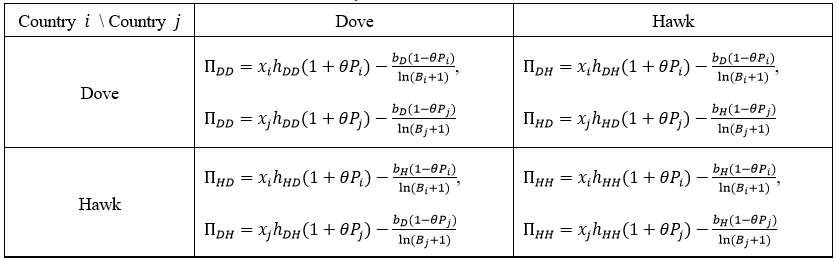
Table 4: Payoff Matrix of the One-Shot Game
Consider an asymmetric game between the two aforementioned types of actors, modeled here as a two-country interaction. The following inequalities hold. BL > BF > 0, xL > xF > 0. Assume the following values for the strategy matching coefficient h, hCC=1.2, hDD = 0.8. Additionally, hCD = 1.8, reflecting the scenario where the follower unilaterally competes, thereby gaining technological spillovers. Conversely, hDC = 2.0, capturing the situation where the leader engages in unilateral competition to extract substantial rents. In the resulting one-shot game between the two countries, the strategy profile (Hawk, Hawk) constitutes a Nash Equilibrium, as adopting a competitive strategy is the dominant strategy for both types of countries. However, the mutual payoff from the cooperative profile (Dove, Dove) is higher than that obtained from the Nash Equilibrium. Consequently, the one-shot game exhibits a classic Prisoner’s Dilemma structure.
Equilibrium under Tit-for-Tat Strategy and Case Analysis
However, interstate interactions typically constitute not a simple one-shot game but rather a long-term repeated game. In such repeated interactions, states often employ measures like sanctions to mutually constrain each other by raising the cost of competition, exhibiting a tit-for-tat pattern [12].
Assume both players initiate the game with a cooperative strategy and share a common discount factor δ for future payoffs. Taking the leading economy as an example, the present discounted value of its total payoff from sustained cooperation is (Π_DD^L)/(1-δ). If it deviates, the present value becomes Π_DD^L+δΠ_HD^L+(δ^2 Π_HH^L)/(1-δ). For the tit-for-tat strategy to constitute a SPNE, the following condition must hold.

Further analysis reveals that,

Therefore, the critical discount factor for the leading economy is derived as δ_L^*=(Π_HD^L-Π_DD^L)/(Π_HD^L-Π_HH^L ).
Similarly, the critical discount factor for the follower (catching-up) economy is δ_F^*=(Π_DH^F-Π_DD^F)/(Π_DH^F-Π_HH^F ).
When δ≥max(δ_L^*,δ_F^*), sustained cooperation becomes an equilibrium outcome. In this scenario, neither player has an incentive to deviate from cooperation for short-term unilateral gains. Conversely, if δ
In practice, the competitive and cooperative dynamics between the U.S. and China in strategic industries exhibit a distinct
tit-for-tat pattern of interaction. The semiconductor industry serves as a paradigmatic case. As a quintessential strategic
industry, it constitutes a primary arena for U.S.-China industrial policy competition. As the technological leader in semiconductors,
the United States controls core segments of the industrial and supply chain, such as chip design and advanced manufacturing equipment.
The U.S. faces two strategic payoff streams. A cooperative strategy entails exporting chips and equipment to China to capture market profits.
Conversely, a competitive strategy involves implementing industrial subsidies and technology blockades, exemplified by measures like the CHIPS
and Science Act and the Export Administration Regulations, to curb China’s industrial upgrading in the short term and consolidate its own
monopolistic position. China, as the follower and catch-up economy, confronts a dual imperative. On one hand, it must rely on imports to
access high-end chips and equipment. On the other hand, it pursues indigenous innovation and R&D through industrial policy support.
Simultaneously, in response to U.S. technology supply restrictions, it adopts countermeasures.
Table 5: Payoff Matrix of the U.S.-China One-Shot Game in Strategic Industries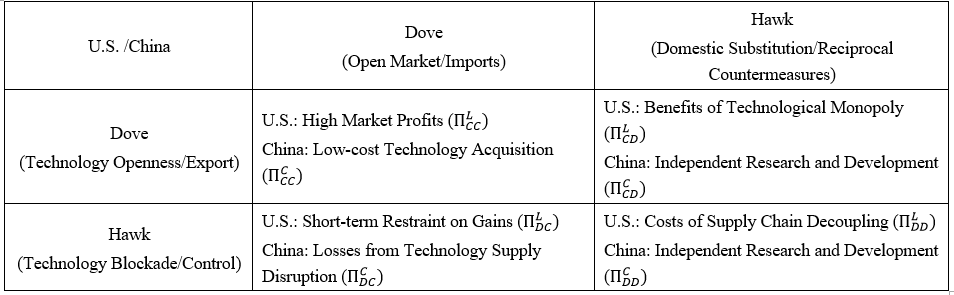
As shown in Table 5, the payoff structure of the U.S.-China one-shot game satisfies Π_HD^L>Π_DD^L>Π_HH^L and Π_DH^F>Π_DD^F>Π_HH^F. Consequently, the unique Nash Equilibrium in this one-shot game is the strategy profile (Hawk, Hawk). This equilibrium manifests concretely as the United States imposing technology blockades against China and China enacting reciprocal countermeasures.
In the context of a repeated game, however, U.S.-China interactions exhibit a tit-for-tat character. This dynamic can be delineated into two distinct phases.
Phase I (Pre-2018). Mutual Cooperation and Shared Gains. During this period, both the U.S. and China predominantly adopted cooperative strategies, reaping the mutual benefits of economic globalization. This was manifested in the U.S. exporting semiconductors and manufacturing equipment to China, while China relied heavily on imports to meet domestic demand, leveraging global supply chains to develop its electronics industry. In this phase, both sides maintained a relatively high discount factor, prioritizing the long-term efficiency of industrial chains and demonstrating a low propensity to deviate from cooperation.
Phase II (2018-Present). Tit-for-Tat Escalation. The United States unilaterally deviated from the cooperative equilibrium, prompting China to initiate corresponding countermeasures in a tit-for-tat manner. This shift crystallized during the first Trump administration. The U.S. explicitly redefined China as a strategic competitor, adopted a strategy of strategic rivalry, and elevated semiconductors to a national security priority. Concrete measures included imposing export controls, most notably through the Entity List, against Chinese semiconductor firms and enacting technology supply cutoffs to companies like Huawei. Consequently, the effective discount factor for the U.S. decreased, while the perceived shortterm payoff from containing China’s semiconductor advancement increased. In response to the U.S. technology blockade, China implemented countermeasures. First, it bolstered industrial policy support to foster indigenous innovation. Second, it imposed export controls on critical raw materials such as gallium and germanium. This tit-for-tat escalation resulted in mutual losses. U.S. firms suffered from diminished market share in China and faced supply chain risks regarding key semiconductor inputs. Chinese companies, conversely, bore the pressure of substantially increased R&D costs. The collective payoff for both nations fell below the level achievable through sustained cooperation.
The equilibrium outcome is primarily governed by two theoretical parameters, the discount factor and the payoff structure. In practice, their evolution is driven by three concrete factors. First, the evolution of the discount factor. For the United States, its effective δ hinges on a trade-off between the short-term gains from technological monopoly and the long-term efficiency losses stemming from industrial chain fragmentation. Second, the credibility of symmetrical punishment. The efficacy of the tit-for-tat strategy depends critically on the credibility and feasibility of retaliatory measures. China’s export controls on critical rare-earth elements, for instance, raise the cost for the U.S. to deviate, thereby effectively lowering the critical discount factor and making the cooperative equilibrium more attainable. Third, industrial policy as a strategic moderator. Industrial policy functions as a key moderator in coopetition by directly altering the payoff structure. The U.S. CHIPS and Science Act increases the payoff from unilateral competition, which in turn lowers its effective discount factor. Conversely, China’s subsidy policies reduce the cost of import substitution, elevate its effective δ, and enhance the sustainability of its long-term strategy.
Complex network theory provides a structured analytical framework for understanding interstate strategic industrial coopetition. Through its multi-layered topology, encompassing module, cluster, and global networks, and its quantification of nodal power via metrics like betweenness centrality and eigenvector centrality, this framework clearly delineates the initial positions of the actors, their patterns of interaction, and the foundation for resource allocation. Furthermore, it supplies the essential initial conditions, strategic action sets, and payoff functions for the game-theoretic analysis of interstate interactions. Conversely, the game itself, through strategic choices and equilibrium outcomes in repeated interactions, reciprocally reshapes the network structure. This establishes a dynamic, bidirectional feedback mechanism between network topology and strategic gameplay.
Returning to the coopetition model, the process by which the network approaches a steady state also represents the dynamic transition from strategic competition to cooperative competition among major powers. This transformation can be further examined through the lens of repeated game theory, which captures how states iteratively adjust their strategic behaviors to maximize long-term payoffs. Meanwhile, complex network theory provides a structural representation of the game relationships among actors. Within and across clustered networks, nodes engage in repeated games, continuously updating their strategies based on prior outcomes. Network topology, in turn, influences the equilibrium outcomes of the game, while the evolving strategies reshape the structure of the network itself. This mutual feedback mechanism between structure and behavior enables the integration of complex network analysis and game theory to model the dynamic processes of trade and industrial policy competition among states in strategic industries.
Conclusions and Implications
Conclusions
This study conceptualizes strategic industrial competition as a multidimensional and evolving process shaped by the interplay of technological innovation, industrial policy, and geoeconomic power relations. Unlike traditional industrial competition that is primarily market-driven, strategic industrial competition integrates security, political, and systemic considerations into industrial and technological policymaking. It reflects a structural transformation in which industrial policy has become a central instrument of statecraft and strategic autonomy. The analysis reveals four key characteristics of this process: first, the securitization of competitive objectives, as industrial competition increasingly serves national security imperatives; second, the flexibility of strategic instruments, as states adopt adaptive combinations of industrial, trade, and regulatory tools; third, the asymmetry of competitive behaviors, driven by uneven power and technological capacities; and fourth, the interactive and co-evolutionary nature of competition, shaped by dynamic feedbacks between national strategies and global networks. By integrating complex network analysis and game theory, the study further demonstrates that strategic industrial competition is not a static confrontation but a dynamic system of adaptive interactions, where competition and cooperation coexist and evolve through repeated strategic adjustments. This framework allows for the modeling of power transitions, policy feedback loops, and network stability, offering a rigorous analytical foundation for understanding the longterm dynamics of global industrial competition.
The findings contribute to the literature by linking industrial economics with international political economy, establishing a theoretical bridge between industrial policy as a developmental tool and industrial policy as a strategic instrument. It enriches the understanding of geoeconomic statecraft, showing how economic interdependence and technological governance are increasingly weaponized as tools of power competition. For emerging economies, the results suggest that enhancing strategic industrial resilience, technological self-reliance, and policy coordination is essential in navigating great-power competition. Strengthening cross-sectoral collaboration, optimizing industrial policy mix, and developing international innovation partnerships can mitigate external shocks while reinforcing internal innovation capacity.
As this study primarily focuses on constructing and conceptualizing a theoretical framework, it does not involve empirical data testing or simulation analysis. Therefore, future research could extend this framework by empirically testing the coopetition model across different strategic sectors and by simulating the effects of industrial policy interaction on global supply-chain restructuring. This would deepen our understanding of how strategic industrial networks evolve under conditions of geopolitical uncertainty and technological transformation.
Implications
Against the backdrop of great-power competition, rivalry in strategic industries has increasingly become a central arena of interstate contention. Advances in technology and industrial upgrading have led nations to rely increasingly on industrial policies and technological innovation to compete for critical technologies and resources. Strategic industries such as semiconductors, new energy, and biotechnology, which are inherently linked to technological sovereignty, national security, and strategic competitiveness, have consequently become key targets for policy intervention. Therefore, determining how to enhance national competitiveness in strategic industries through effective policy intervention constitutes a critical challenge for governments in formulating their economic and foreign policies. Within this context, diverse economies exhibit heterogeneous policy orientations and divergent strategic approaches.
For emerging economies seeking to develop strategic industries, the pursuit is often constrained by limited technological accumulation and significant resource constraints. Typically positioned at the periphery or semi-periphery in strategic industrial competition, they face dual constraints, high monopolization at critical nodes and asymmetric dependencies. Consequently, a strategic policy agenda for these economies should prioritize, first, the active implementation of industrial policies to foster strategic sectors, with a focus on cultivating indigenous innovative capacity to break through the technological blockades erected by advanced economies. Second, they need to construct a credible tit-for-tat countermeasure system to raise the cost of competition for advanced economies. Finally, it is essential to build diversified supply chains and collaborative industrial networks to mitigate systemic risks.
For advanced economies aiming to maintain technological leadership, their strategic calculus is shaped by a core position within the global strategic industrial coopetition network, which grants them high centrality and substantial network power. Simultaneously, endowed with strong innovative capacity and dominant global market positions, their strategic focus should be on sustaining these technological and market advantages rather than engaging in purely confrontational games. Therefore, a prudent strategy for these economies involves leveraging their positional advantages at key nodes to raise rivals’ costs of competition through the application of network power. However, this must be balanced with cooperation to establish a credible deterrent, avoiding a pursuit of radical structural decoupling that could trigger systemic risks within the global network.
Concurrently, to mitigate the systemic network risks arising from strategic industrial coopetition, international cooperation and governance institutions must play a proactive role. On one hand, they should foster mechanisms to protect critical nodes, ensuring baseline connectivity is maintained during geopolitical contests to prevent local conflicts from escalating into global cascading failures. On the other hand, efforts should be made to enhance transparency in interstate coopetition, reducing the distortions caused by incomplete information and thereby assisting states in more accurately evaluating the long-term costs and benefits of their strategic choices.
Acknowledgment:
This work was supported by the National Natural Science Foundation of China (72504271); Strategic Economy Interdisciplinarity (Beijing Universities Advanced Disciplines Initiative, No. GJJ2019163) and the China Postdoctoral Science Foundation under Grant Number 2025M781772.
Conflict of interest:
The authors declare no conflict of interest.
References
Luttwak, E. N. (1990). From geopolitics to geo-economics: Logic of conflict, grammar of commerce. National Interest, 20. View
Blackwill, R., & Harris, J. (2016). War by Other Means. Massachusetts: Harvard University Press. View
Farrell, H., & Newman, A. L. (2019). Weaponized interdependence: How global economic networks shape state coercion. International security, 44(1), 42-79. View
Farrell, H., & Newman, A. L. (2025). The weaponized world economy: Surviving the new age of economic coercion. Foreign Aff., 104, 8. View
Hasnat, B. (2015). US national security and foreign direct investment. Thunderbird International Business Review, 57(3), 185–196. View
Moisio, S. (2018). Towards geopolitical analysis of geoeconomic processes. Geopolitics, 23(1), 22–29. View
Thirlwell, M. P. (2010). Return of Geo-economics: Globalisation and National Security. Sydney: Lowy Institute for International Policy. View
Baldwin, D. A. (2020). Economic statecraft: New edition. Princeton University Press. View
Mastanduno, M. (1999). Economic statecraft, interdependence, and national security: Agendas for research. Security Studies, 9(1-2), 288–316. View
Friedberg, A. L. (1991). The changing relationship between economics and national security. In Power, Economics, and Security (pp. 134-146). Routledge. View
Kapstein, E. B. (2002). Two Dismal Sciences Are Better Than One Economics and the Study of National Security: A Review Essay. International Security, 27(3), 158–187. View
Evenett, S., Jakubik, A., Martín, F., & Ruta, M. (2024). The return of industrial policy in data (IMF Working Paper No. 2024/001). International Monetary Fund. View
Wang, Y., Zhao, C. W., & Jiang, S. Z. (2024). Technological Containment and Counter-containment in Great Power Competition. Social Sciences in China, (6), 100–121.
Fu, Q. (2024). Weaponized Economics, Interdependence, and the Maintenance Strategy of US Dominance. World Economics and Politics, (07), 125–152.
Ren, L., & Sun, Z. M. (2021). Securitization of Economic Issues and the Network Power of Hegemony. World Economics and Politics, (06), 83–109. View
Keohane, R. O., & Nye, J. S. Jr. (1973). Power and interdependence. Survival, 15(4), 158–165. View
Schumpeter, J. A., & Opie, R. (1934). The theory of economic development: An inquiry into profits, capital, credit, interest, and the business cycle. Harvard University Press. View
OSTP. Industries of the Future Act. View
PCAST. Industries of the Future Institutes: A New Model for American Science and Technology Leadership. Retrieved from . View
Zhou, J. (2019). Power transition and paradigm shift in diplomacy: Why China and the US march towards strategic competition? The Chinese Journal of International Politics, 12(1), 1–34. View
Zhao, M. (2019). Is a new Cold War inevitable? Chinese perspectives on US–China strategic competition. The Chinese Journal of International Politics, 12(3), 371–394. View
Wu, X. (2020). Technology, power, and uncontrolled great power strategic competition between China and the United States. China International Strategy Review, 2(1), 99–119. View
Porter, M. E. (1990). The Competitive Advantage of Nations. Free Press. View
Center for Strategic and International Studies (CSIS), & Bates, E. (2020). Tech-Politik: Historical perspectives on innovation, technology, and strategic competition. Center for Strategic & International Studies. View
Rotunno, L., & Ruta, M. (2024). Trade spillovers of domestic subsidies. IMF Working Paper (forthcoming). View
Bown, C. P. (2023). Modern industrial policy and the WTO (Working Paper No. 23-15). Peterson Institute for International Economics.View
Aggarwal, V. K., & Reddie, A. W. (2022). New economic statecraft: Industrial policy in an era of strategic competition. In G. J. Ikenberry & K. Tsunekawa (Eds.), The strategic options of middle powers in the Asia-Pacific (pp. 105–122). Routledge.
Baldwin, D. A. (2020). Economic statecraft (New ed.). Princeton University Press. View
Clayton, C., Maggiori, M., & Schreger, J. (2023). A framework for geoeconomics (NBER Working Paper No. 31852). National Bureau of Economic Research. View
Wang, K., Lam, T. H., Chen, B., Song, Y., & Wang, C. (2025). Great Power Competition, Technology Substitution and Industrial Policy Coopetition: An Analysis Based on a Two- Country Game. Sustainability, 17(23), 10635.