
- About the Journal
- Editorial Board
- Review Process
- Author Guidelines
- Article Processing Charges
- Special Issues
- Current Issue
- Past Issue
 Journal of Political Science and Public Opinion
Journal of Political Science and Public Opinion Volume 4 (2026), Article ID: JPSPO-132
https://doi.org/10.33790/jpspo1100132Research Article
A Research Note on Framing
Louis Fucilla1, and Trent A. Engbers2*
1Associate Professor, Politics, Government, and Law University of Wisconsin – Whitewater, 800 W Main St, Whitewater, WI 53190, United States.
2Professor, Department of Political Science and Public Administration, University of Southern Indiana, 8600 University Boulevard, Evansville, IN 47712, United States.
Corresponding Author: Trent A. Engbers, Professor, Department of Political Science and Public Administration, University of Southern Indiana, 8600 University Boulevard, Evansville, IN 47712, United States.
Received date: 21st November, 2025
Accepted date: 21st January, 2026
Published date: 23rd January, 2026
Citation: Fucilla, L., & Engbers, T. A., (2026). A Research Note on Framing. J Poli Sci Publi Opin, 4(1): 132.
Copyright: ©2026, This is an open-access article distributed under the terms of the Creative Commons Attribution License, which permits unrestricted use, distribution, and reproduction in any medium, provided the original author and source are credited
Abstract
Framing research plays a central role in the study of political communication and public opinion, yet scholars employ markedly different strategies to identify and operationalize frames. These methodological choices shape what frames are observed, how frequently framing appears, and what inferences are drawn about elite behavior and opinion formation. This manuscript compares two dominant approaches in the framing literature. A priori approaches identify frames in advance based on existing scholarship, elite discourse, or hypothesized attitudinal effects within a specific issue domain. In contrast, the policy entrepreneur approach treats frames as strategic communicative tools used by political actors to advance agendas across time and policy areas, allowing frames to emerge inductively from political communication. Using a common empirical data set of presidential speeches, the study demonstrates that these alternative strategies yield substantively different portraits of framing behavior, even when applied to identical texts. Comparative analyses show that a priori approaches tend to undercount framing activity, obscure contextual variation, and overstate message discipline, while studies limited to major speeches misrepresent frame diversity in lower salience policy domains. The manuscript concludes by advancing a comprehensive policy entrepreneur–centered method that remains open to emerging frames while maintaining analytic relevance to public opinion and agenda setting. This approach offers a more contextually sensitive and methodologically transparent framework for studying elite framing in contemporary political discourse.
Introduction
Numerous approaches have been utilized to identify frames in the study of political communication. Yet the choice of frame selection has dramatic implications for sampling and thus the results of qualitative studies. This study is concerned with analyzing how researchers identify frames in public opinion and political communication studies. Based on an assessment of the literature, this paper will compare and contrast two different archetypal approaches to identifying frames. One approach, which we term the a priori approach, focuses on identifying highly specific frames within a particular policy or issue domain. Another approach, which we term the policy entrepreneur approach, focuses on identifying how a policy entrepreneur uses a variety of frames across a wide variety of policy or issue domains1. These studies of policy entrepreneurs utilize frames as a method of analysis. This paper proceeds by briefly reviewing the literature on framing and the methods utilized to identify and analyze frames with an emphasis on the advantages and disadvantages of each method. It then presents an alternative method to analyzing frames. It concludes by comparing the results of different methods by interpreting the results of a common data set using different methodological strategies. This approach highlights the similarities and differences found using these alternative approaches.
Framing
At a very general level, framing “… refers to the process by which people develop a particular conceptualization of an issue or reorient their thinking about an issue” [5]. This study is specifically interested in framing that occurs within the context of communication. Thus it makes no claim about how frames influence attitudes or opinion formation, or the role of frames in thought [5]. The key questions then are what constitutes a frame and how frames are identified [6,7]?
The answer to the first part of the question is much easier to address than the second. Frames in communication provide a way of making sense of real-world events [8-11]. Entman suggests that frames in communication define problems, solutions and the causal relationship between the two as well as the appropriate evaluative criteria for these three things (1993: 52).
Entman’s original formulation described a stratified flow that begins with the administration, travels through other elites and institutional news, and reaches citizens. Recent work shows that digital pump valves such as platforms, algorithms, analytics, ideological media and rogue actors reshape these paths by both accelerating and filtering frame transmission. In practice, elites still originate many frames, but platform mediation and audience visibility open additional routes for contestation. In cases where publicly funded news organizations face rapid and visible feedback, audience informed cascades can affect editorial choices in short windows of time. The conditions for this upward influence include the salience of the issue, the presence of cross media amplification and the organizational accountability of the outlet. For studies of framing and policy entrepreneurs, this suggests that analyses should consider not only elite to mass flow but also the potential for audience triggered reframing during coverage cycles. In our study of presidential communication, this implies that frames released at high profile moments may be stabilized by conservative pathways in the cascade, while lower salience frames can be shaped by reactive editorial decisions when audience pressure is acute [12,13]. While there is broad agreement about the definition of a frame, there is no clear consensus on how to identify one in communication.
A Priori Approaches to Framing
A priori studies of framing have identified frames by duplicating frames that emerge in systematic or unsystematic content analysis. Chong and Druckman suggest that “compelling” studies adopt the following practices to accurately identify and measure frames: identify an issue or event, identify relevant attitude(s) to that issue or event, survey academic literature or elite discourse on that issue/ event to define an initial set of frames and finally conduct a content analysis of selected sources choosing between the trade-offs posed by machine-based or manual coding techniques (2007a: 106-108). The argument that this paper makes is that such approaches focus on maximizing the validity of the frames identified by defining them a priori on their ability to affect the relevant attitude(s) for a specific issue or event. In this sense, preselected frames take center stage in the analysis. This is the most common method of frame analysis with 80% of studies using frames preselected by the researcher [14].
One well-known example of this approach comes from Nelson, Clawson and Oxley’s experiment on the effects of framing on support for a public rally by the Klu Klux Klan (1997). They identify two frames likely to affect support for the rally: free speech and public safety. The frames themselves were created by local media by videotaping real news stories. In this way, the frame type and content was chosen a priori but by different entities, the researchers and the media respectively. They find that the choice of frame influences support for the KKK rally. While a priori frames hold a sacrosanct place in experimental research, they are not limited to it. A priori methods have also been used in media analysis studies. Consider, Steensland’s [15] study of guaranteed income frames. Like Nelson and colleagues [16], Steensland focuses her attention on three types of concepts of interest: diagnosing problems, prescribing solution, and linking policies to values. She then searches the New York Times for occurrences of these frames to understand how actors influence the use of frames in the media.
Another example from experimental research comes from Chong and Druckman’s analysis of the effects of competing framing on attitudes towards urban growth management (UGM) policies [17]. Chong and Druckman rely on previous scholarship to establish 8 potentially relevant frames that may affect attitudes towards UGM policies [17]. They use a pre-test experiment to have subjects identify examples of strong and weak frames for and against UGM policies from these potentially relevant frames. A key methodological point here is that Chong and Druckman identify frames for inclusion in their experiment on based on their a prioir ability to move relevant attitudes. As with past research, strong frames move attitudes in the expected direction [18,19].
Alternatively, Andsager [20] identifies frames from outside of the study sample. She uses press releases from pro-life and pro-choice organizations to identify the dominant frames of each side and then analyzes newspaper coverage based on the identified frames. Based on this analysis, she is able to show which policy side is best able to move the mass debate.
These studies [16,17,20] each use a unique approach to identifying frames, but share a strategic choice of pre-identifying frames prior to analysis. Thus the choice between self-identifying frames [15,16], identifying frames from previous scholarship [17] or relying on elite discourse to pre-identify frames [20] all share a common interest on identifying frames in order to better understand their impact. A priori studies maximize impact by selecting frames that are highly salient and commonly agreed upon.
However, this paper argues that frames might be also of interest because of what they tell us about the elite, or elites, that are attempting to craft persuasive communication separate from their political or social impact. In this context, a researcher may be less concerned about maximizing the validity of the frames identified but maximizing the validity of what captured frames tell us about elite communication or behavior.
A priori studies are also limited by the fact that some frames may be missed. Issue positions change and frames evolve. As such, frames chosen prior to the period of primary data collection may become less relevant and new frames may emerge. A failure to consider emergent frames significantly limits the accuracy of understanding with regard to the techniques used in current political debates. This is particularly true for experimental studies that may not accurately represent how issues are framed in a political context [21].
Studies that Focus on Policy Entrepreneurs
This focus on context is one of the primary drives of techniques that look at frames as created by policy entrepreneurs attempting to advance an agenda. Policy entrepreneur studies that consider agenda are rooted in the literature on policy processes. A policy entrepreneur is a political actor who attempts to link together problems and solutions for consumption by other elites, the media or the mass public [22,23]. In essence, policy entrepreneurs put together the constituent parts of a “frame, problems, solutions, casual relationships and evaluative criteria,” into a coherent package for public consumption. Some policy entrepreneurs may be narrowly focused on one specific event or policy issue. Others, like the president, may focus on a wider variety of issues or events. A policy entrepreneur may also be forced to respond to emergent issues or events that are outside of their agenda or area of concern. These emergent events may provide a “window” for the entrepreneur to connect new problems to existing solutions or vice versa [23]. The essence of framing studies that consider the policy entrepreneur is the policy entrepreneur themselves and their construction of frames overtime and across multiple issues or events [24,25].
Studies of policy entrepreneurs allow researchers interested in framing to address questions about elite communication and behavior that are pertinent to other sub-fields of political science. For instance, scholars of the American presidency are interested in the size of a president’s agenda and the degree to which they exercise message discipline about their agenda in communication with the press and the public. Assessing the number of issues which the president frames provides a way to analyze agenda size and how the president frames issues, and how those frames changes overtime provides a way to assess message discipline.
Consider Entman’s [26] study of the framing of the 9/11 disaster. Entman is concerned about how effective three policy entrepreneurs are in shaping the post 9/11 military debate. To this end, he analyzes Bush’s 2002 State of the Union, an article by Seymour Hersh [27] and two articles by Thomas Friedman [28,29] to identify emerging frames. These frames are then matched against media coverage over time to understand which frames (the axis of evil or the anti-Saudi) frame are most influential in shaping the debate. Typical of frames of policy entrepreneurs, this study focuses on the agenda and how frames influence that agenda over time. It also enables researchers to understand how and why the frame emerges based on its source and the context of the political debate.
Similarly, Meyer [30] analyzes each state of the union from the end of World War II to 1995 for references to the Soviet Union or nuclear war/engagement. Meyer’s interest is agenda evaluation and how subsequent policy entrepreneurs have adjusted their frames in response to the evolving debate and political context. Like others policy entrepreneurs studies, frames are identified through an emerging process where the text is evaluated for its attempt to shape the issue understanding in either a positive or negative direction. Meyer’s study is more typical of frames studies of policy entrepreneurs in that he examines one entrepreneurs communication over time rather than the long term impact of one communicative episode. He is able to show that the frames of product entrepreneurs are endogenous to the political context and thus highlights the important not constraining frames as policy debates evolve.
It is important to note that framing studies of policy entrepreneurs are not without their weaknesses. A drawback of this approach is that the frames identified by focusing on one entrepreneur may yield less valid and reliable measures than those identified in the a priori approach. Using the communication from one policy entrepreneur may hurt the validity of individual frames in the analysis because frames are identified and measured based on one source rather than developing expectations about frames a priori from sources external to the communication. “Likewise, while a priori approaches direct study findings may making advanced decisions about what constitutes a frame.” Should be “Likewise, a priori approaches influence study findings by making advanced decisions about what constitutes a frame.” Policy entrepreneur studies direct study findings by making advanced judgments about who is a policy entrepreneur.It may also hurt the reliability of frame measurement because independent coders using similar rules about what constitutes a frame may still code the same communication differently. Again, the strength of the policy entrepreneur approach is in using frames to provide a robust understanding the elite communication or behavior with weak reliability or validity of individual frames the resultant trade-off.
An important consideration in the policy entrepreneur approach is which communication is used as the basis of analysis. In the context of research on the American presidency, should analysts consider only major speeches like the State of the Union or include minor addresses and remarks that are less likely to receive the attention of media or other elites? Examples in the literature seem to emphasize a focus on major speeches [31,32]. A drawback of this approach may be that it misses the ability to capture how frames emerge as an entrepreneur develops and tests them in front of more limited audiences.
Framing, Public Opinion, and Motivated Reasoning
Framing effects also depend on how citizens process competing considerations over time. Lodge and Taber’s account of motivated reasoning predicts that strong prior attitudes invite defense of initial frames and selective counter arguing, while weak prior attitudes invite receptivity to later frames. The political communication context matters because partisan competition, issue salience and accuracy goals can moderate these dynamics. When elite polarization is signaled, partisans tend to evaluate co-partisan arguments as stronger regardless of objective content, which amplifies prior attitude effects and yields polarized frame evaluations. When cues signal cross partisan agreement or when respondents are asked to justify their views, accuracy motivation reduces directional processing and restores attention to argument strength. This conditional account links framing, public opinion and democracy by specifying when citizens update toward consensus and when they defend identities. For the present manuscript, this supports our focus on context and method: open coding across the full corpus captures emergent frames that interact with partisan signals and audience accountability, while a priori coding risks missing selection and defense behavior among engaged publics [34].
Moral Framing
Moral framing provides a complementary explanation for why some frames travel across ideological boundaries while others stall. Moral reframing refers to crafting arguments that connect a position to the moral foundations prioritized by a target audience. Laboratory and field studies show that conservatives respond more to appeals that invoke loyalty, authority or sanctity, while liberals respond more to care and fairness appeals. In electoral contexts, morally reframed critiques can reduce support for preferred candidates by aligning the argument with the audience’s moral concerns. Recent work also shows that many communicators are willing to use moral reframing when they believe it is effective, although some experience integrity costs when endorsing values they do not hold. For policy entrepreneur research, moral reframing is relevant in two ways. First, it cautions against assuming a single moral register in a priori coding of frames. Second, it suggests that emergent frames should be classified at the micro level not only by problem, cause and remedy, but also by the moral concern they invoke. Doing so allows us to identify when entrepreneurs test reframed appeals in lower salience venues before importing them into major addresses [34-36].
Method
This study seeks to demonstrate the advantages and disadvantages of framing methods by analyzing one common data set utilizing three different methods. The first method entails that traditionally employed by framing studies interested in the policy entrepreneur. Namely, identification of frames over time for major policy addresses by a policy entrepreneur. As such, we identify frames during five major speeches of Barack Obama during the study period and compare them to frames created during all speeches during the study period.
The second method of analysis seeks to understand how frames identified through emergent processes differ from frames utilizing a priori techniques. For this analysis, we consider two policy domains, healthcare and the environment. The data set is analyzed for frames previously identified in the literature and these results are compared to frames identified during a more emergent method of analysis.
Lastly, we suggest a third recently published method of analysis [37]2. The method utilized in this study is derived from the policy entrepreneur’s tradition of framing research in that its focus is on the framing behavior of one policy actor and that the studies goal is to identify the frequency of frames, issues framed and their relationship to public policy and public opinion. As such, it benefits from the behavioral connection found in policy entrepreneur studies.
However, this method differs from other framing studies in two ways. First, the study is not limited to major speeches. Every presidential speech from February 21 2009 until June 2, 2009 is coded for inclusion in the study. Presidential statements were collected from the Public Papers of the President collected by American Presidency Project at the University of California Santa Barbara. This intact sample includes over 200 presidential speeches and enables researchers to understand not only how frames are used in major policy addresses but the pattern of framing that occurs in the everyday give and take of Washington politics. This includes press conferences, news conferences, major and minor presidential addresses, interviews, weekly addresses, town hall meetings and presidential statements read by the President. It excludes presidential statements read by the press secretary or issued by the Whitehouse through press releases. While using an intact sample limits the generalizability of the findings to other political periods such as campaigns, this time period has a number of advantages including representing a time early in the administration when the president is most active in agenda setting and occurs during a period of normal political activity when both the legislature and supreme court are active.
Second, the study benefits from an open coding scheme. Unlike frame-based studies that begin with a priori frames, this approach to framing research allows frames to emerge from the text. Past studies of political communication have tended to use a deductive approach that fails to identify emerging frames that arise as the political and social context changes [39]. While allowing for emergent frames is not a new technique, it has not been combined with policy entrepreneur approaches to framing.
To this end, manual coding techniques were utilized. Every speech was read by two research and independently coded at the sentence level to identify both the nature of the frame (i.e. what is the message communicated) and what is the policy domain that the frame addresses. Frames were also coded for contextual data such as the type of speech, date and whether the narrative event was prepare or in response to a question, but this analysis is not used in this paper. Frame policy domains were coded based on the codes of the policy agenda project3. Identified frames were entered into a database that served as a codebook. Electronic text searches of all of the speeches were subsequently conducted using the codebook to ensure comprehensiveness. Electronic coding techniques were not used given this methods lack of suitability for finding unknown concepts [7,40].
Scholars of framing have recognized that frames exist on a spectrum from micro to macro frames [41,42]. Macro level frames include broad categories of frames such problem frames, solution frames, or value frames. These serve to categorize framing behavior but give little insight into the rhetorical idiosyncrasies used by policy entrepreneurs. Meso frames provide more specific insight into the process of framing but lack the language specificity of micro frames. One might consider how the meso frame for capital punishment of “Innocence” encompasses several micro frames such as “the risk of executing the wrong person is too great” or “too many capital cases have been tried without the DNA evidence necessary to prove guilt.” This study identified media frames at the micro level. Using micro level frames allows more detailed analysis and the option of aggregating the analysis up to compare to other research.
In order to meet inclusion in the study, the frame had to meet four criteria. First, it needed to be spoken by the president. Second, the larger study’s focus on domestic policy led researchers to exclude foreign policy related speeches. Third, the frame had to orient the listener to a particular worldview. By that we mean, it had to focus on a particular conceptualization or lead to a normative evaluation of the policy domain. This served to distinguish policy statements such as “My administration will begin distribution more than $15 billion in federal assistance” from frames such as “The Recovery Act will enable America to retain first place.” Lastly, the frame had to be unanimously agreed upon by both researchers. This last criteria was designed to address the drawback of emerging approaches to framing, namely that they are open to critiques about reliability and validity. This study featured an intercoder reliability factor of 81%. Like many framing studies, this method still maintains concerns about validity, but use of intercoder reliability reduces the likelihood of threats to reliability.
Results
This study argues that the choice of framing research methods should depend on the research question of interest. However, the choice of methods is only important if different methods produce unique results. This section compares how a priori frame identification, studies of policy entrepreneurs agendas, and our comprehensive policy entrepreneur technique that identifies frames from the perspective of the policy entrepreneur while remaining open to emerging frames produce different results. This section compares our findings to those findings that would have been found under an alternative methodology.
Studies of Major Speeches
In order to compare our findings to those that would have been found in traditional policy entrepreneur speeches that focus on major addresses, we have truncated our sample to only include major political speeches. Three criteria were used to identify a major speech. Major speeches must meet one of three criteria. First, they may be televised in prime time on a national network. Second, specially scheduled addresses as classified by the press office are included. Third, they include domestic news conferences over 45 minutes in length. Based on these criteria, we identified four major speeches during the study period:
• National Address to a Joint Session of Congress 2/29/09
• News Conference on 3/24/09
• Address on the economy at Georgetown 4/14/09
• News Conference 4/29/09
When this truncated sample is compared to the sample of all the speeches during the study period, we find remarkably little difference in the percent of frames dedicated to each policy domain (Table 1). The traditional approach of looking at policy entrepreneur’s agendas and their choice of frames in major speeches does a good a good job of helping us understand the policy priorities of policy entrepreneurs. A t-test between policy domains found in major speeches and those in all speeches show no statistical difference between the policy focus of these research strategies (P>.396). For the majority of policy domains, the differences between the percent of frames directed at a policy domain in major speeches only differs by a few percentage points from those in all speeches. Thus, constraining studies of frames to major speeches does help one understand policy priorities without the time demands required to code all speeches.
This finding, however, does obscure a number of notable exceptions that have implications for framing research. First, the number of frames dedicated to government operations is much higher in major speeches suggesting that policy entrepreneurs use major speeches as an opportunity for process education in addition to substantive policy debate. Minor speeches are more likely to be geared toward niche audiences that do not require the same level of public education.
Second, there appear to be differences based on policy priority that are lost when all policy domains are aggregated together (Graph 1 and 2). Perhaps unsurprising, those policy domains that are the highest priority for the administration are found both in major and minor speeches. However, minor policy concerns such as public lands, transportation and community development are less likely to be addressed in major speeches. As such, constraining framing studies to major speeches underreports the framing of less important policy areas thus suggesting more policy discipline than is actually present.
These limitations are probably not enough to warrant the coding of all presidential speeches given the significant time and effort that this process requires unless the focues of the study is in minor policy subsystems or educative function of the presidency. The major difference that we find between frames in major speeches and frames in all speeches is not concerned with the policy domain of the frame but rather the actual framing technique utilized (Table 2). There are three main difference between major speech frames and all frames.
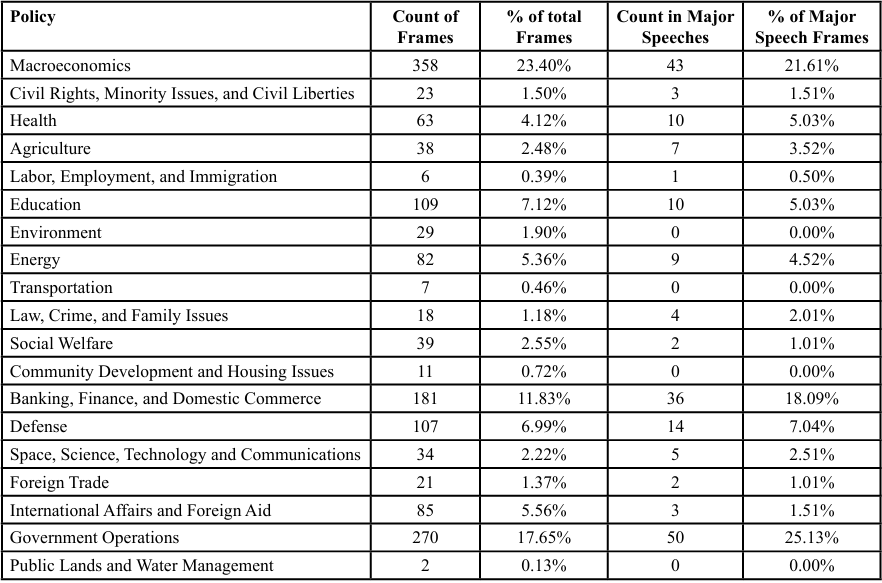
Table 1. Policy Domains by Major Speeches and All Frames
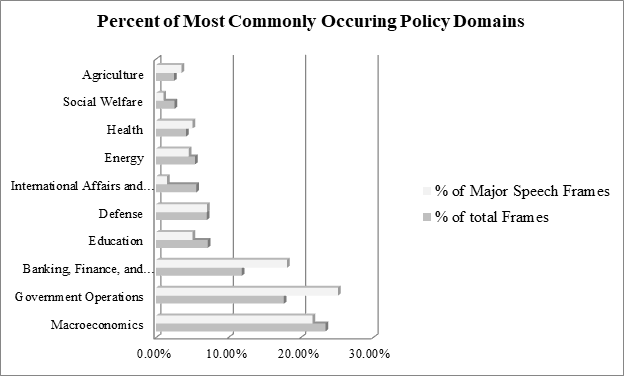
Graph 1: Comparison of Major and Total frames for High Policy Priorities
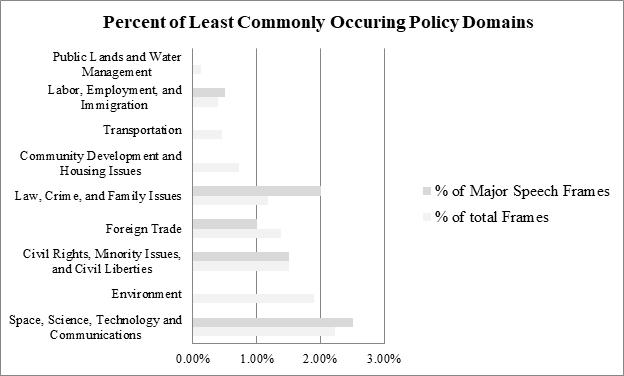
Graph 2: Comparison of Major and Total frames for Low Policy Priorities
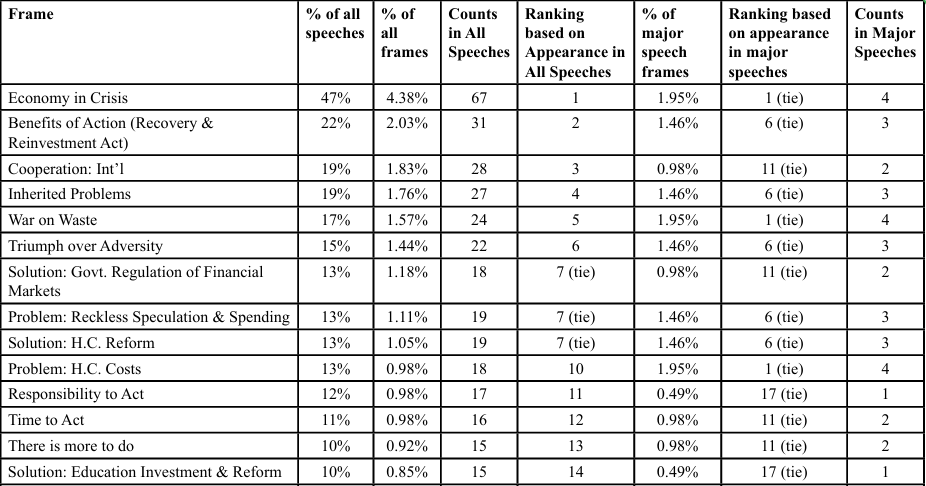
Table 2: Comparison of Frames between Major and All Speeches.
Likewise some frames such as “broad support for action” and “problem: deficit” are among the top 20 frames in major addresses but do not show up in the top 20 among all addresses. Thus researchers studying all frames may miss the importance of certain frames as they become muddled in the sheer number of frames found among all speeches. This creates problems for those scholars who seek to understand how policy entreperneurs seeks to move mass audiences. Specific frames of interest, including some commonly used frames, are ignored in analysis of major addresses.
Lastly, frames related to emerging policy priorities such as health care reform receive greater attention in major speeches than in all speeches suggesting an attempt to lead public opinion ahead of political action. When a policy debate is emerging, policy entrepreneurs tend to use fewer frames but use use them in higher profile ways. This is a valuable lesson for political action but tends to overreport the amount of political energy that a policy entrepreneur is spending on emerging policy domains.
Studies of Selected Frames
The following two sections compare the frames that were found within a policy domain to a separate analysis grounded in the literature. In other words, it attempts to identify how framing studies produce different results when they start with a priori frames. In order to compare how findings differ with this new methodology compared to traditional frame-based studies of framing, one needs to begin with a set of a priori frames. Because most frame-based studies focus on one policy domain, this section will illustrate how starting with a priori frames produces different results than an open coding scheme by examining the areas of health care and air pollution. Additionally, we have had to aggregate our frames from the micro to the meso level to allow for equal comparisons.
Jennifer Jerit [43] conducted a very thought provoking and well written study of framing strategies in the health care policy debates. Her research suggests that there are three primary pro-healthcare frames utilized in the debate. These frames include:
• Security: The increased security that would be provided by healthcare reform.
• Status Quo: The problems created by the current health care system such as exclusion of preexisting conditions and lack of coverage.
• Crisis: the need for change without reference to any specific problem.
Given the pro-healthcare reform agenda of the Obama administration, one would expect to find similar frames utilized (See appendix 1 for the frames utilized in each analysis). The results are somewhat mixed (Table 3).
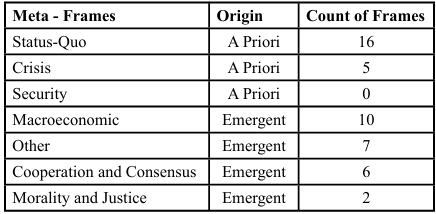
Table 3: Counts of Health Care Reform Frames During the Study Period
While one of the a priori frames was the most common frame, the other a priori frames were much less utilized. The security frame which was found to be important in past health care debates was nonexistent. Instead, a number of emergent frames took priority in framing the debate. These emerging frames were based on thematic groups of frames found in presidential speeches. For example, the morality and justice meso frame included two micro frames “there's a powerful moral element to health care” and “we must realize that fixing what's wrong with our health care system is no longer just a moral imperative.” Thus we can see how using only a priori frames undercounts the frequency of framing as a rhetorical and agenda setting device.
Likewise, it is noteworthy that seven of the frames were classified in an “other” category. These were frames such as “in order to lead in the global economy… we're also going to have to address the shortcomings of our health care system.” The large number of one time frames suggests that policy entrepreneurs go through a period of testing frames. These frames would also be undercounted in studies that rely on a priori frames. Similarly, given the lack of message discipline in framing, relying on a few a priori frames suggests more message discipline than actually exists.
Lastly, the significant differences in findings between analysis based in a priori and emerging framing points to the importance of context in framing research. Frames are inherently contextually bound. Jerit [43] bases her frames on the healthcare debate during the Clinton administration. This further underreports the presences of frames. Consider how frames utilizing economic factors were not present in the previous health care debate because it occurred during a time of economic health. This was the second most common framing strategy during this study period. Failing to adjust for the current political climate will misrepresent the frames used.
These findings are representative of what you find if you look at other policy domains. Consider the debate around air pollution. Clark Miller’s [45] study of meso frames and environmental policy identifies four frames found in the debate around air pollution and atmospheric change. While all of these frames were found during the current study period, so too were five other groups of emerging frames (Table 4).
As with the health care frames, relying on a priori frames undercounts the frequency of framing as a communicative technique and suggests that frames are much less idiosyncratic than they actually are. More than half of the frames utilized would not have been discovered if one utilized only a priori frames. Thus if one is interested in behavior outcomes, as most frame studies are, the exclusion of emerging frames would cause frame counts to be artificially low and unrealistically disciplined.
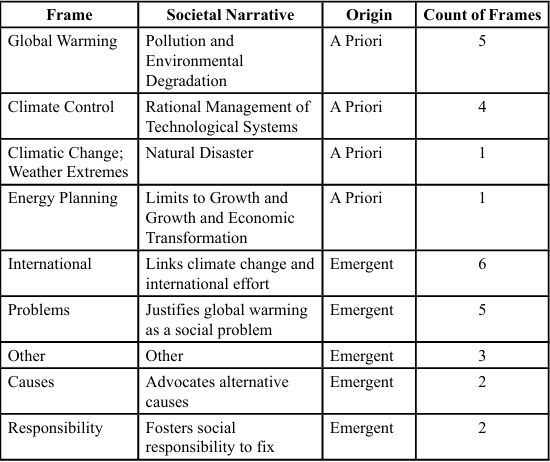
Table 4. Counts of Air Pollution Frames During the Study Period
The comparison with Miller’s [44] work also suggests another important finding. Miller asserts that frames emerge from the social context. This new approach finds that the frames utilized in the global warming debate are not just a product of their social environment but that policy entrepreneurs are also strategically creating frames to address their audience and the current political debate. When President Obama travels internationally, he attempts to link air pollution with the need for an international effort. Likewise, the presence of climate change deniers in the United States necessitates the introduction of a problem frame that seeks to justify policy efforts towards alleviating air pollution. In this way, a priori frames paint policy entrepreneurs as less autonomous because it ignores the political context and how it shapes the choice of frames utilized.
Conclusion
The tradition of framing studies in political science is long and distinguished, but these studies have tended to focus on two approaches to framing research. They are either frame-based studies (experimental or otherwise) that begin with a set of a priori frames and examine their frequency or impact; or they are studies of entrepreneurs that focus on the political communication of one or a few actors. This study suggests a new approach that brings together these techniques. It contributes to the policy entrepreneur literature by linking policy entrepreneurs directly to their frames as distinct from their agenda. Likewise, it contributes to the political communication literature by linking it directly to the policy entrepreneur.
The new approach stills retains the threats to validity found in policy entrepreneur studies and introduces a risk that some priority policy frames will become hidden in the barrage of frames found in minor addresses, nevertheless it produces important findings not found in other research methods. A priori framing studies underrepresent the presence of framing in political discourse and diminish the role of context in frame creation and presentation. This new approach allows for a more comprehensive list of frames grounded in a social context by considering emerging frames and using an intact sample of all public pronouncement. Likewise, studies of major speeches by policy entrepreneurs do a good job of representing policy priorities but fail to reflect the complexity and frequency of frames utilized in political discourse. By looking at frames emergently across a wide range of speech venues, the proposed method is able to retain the behavioral connection to policy entrepreneur studies while considering the context and complexity of the framing environment.
Competing Interests:
The authors declare that they have no competing interests.
References
Brewer, & Paul R. (2002). Framing, Value Words, and Citizens' Explanations of Their Issue Opinions. Political Communication 19(3):303-316. View
Brewer, Paul, R., and Kimberly Gross. (2005). Values, Framing, and Citizens' Thoughts about Policy Issues: Effects on Content and Quantity. Political Psychology, 26(6):929-948. View
Huang, Huiping. (2010). Frame-Rich, Frame-Poor: An Investigation of the Contingent Effects of Media Frame Diversity and Individual Differences on Audience Frame Diversity. International Journal of Public Opinion Research 22(1):47-73. View
Price, Vincent, Lilach Nir, and Joseph Cappella. (2005). Framing Public Discussion of Gay Civil Unions. The Public Opinion Quarterly, 69(2):179-212. View
Chong, Dennis, and James N. Druckman. (2007a). Framing Theory. Annual Review of Political Science, 10(1):103–26. View
Roslyng, M. M., & Dindler, C. (2023). Media power and politics in framing and discourse theory. Communication Theory, 33(1), 11–20. View
Eisele, O., Heidenreich, T., Litvyak, O., & Boomgaarden, H. G. (2023). Capturing a news frame: Comparing machine learning approaches to frame analysis with different degrees of supervision. Communication Methods and Measures, 17(3), 205–226. View
Gamson, William A., and Andre Modigliani. (1989). Media Discourse and Public Opinion on Nuclear Power: A Constructionist Approach. American Journal of Sociology, 95(1):1-37. View
Entman, Robert M. (1993). Framing: Toward Clarification of a Fractured Paradigm. Journal of Communication, 43:51–58. View
Cappella, Joseph, N., and Kathleen Hall Jamieson. (1997). Spiral of Cynicism: The Press and the Public Good. New York: Oxford University Press. View
Nelson, Thomas E., Zoe M. Oxley, and Rosalee A. Clawson. (1997). Toward a Psychology of Framing Effects. Political Behavior, 19(1):221-246. View
Entman, R. M., & Usher, N. (2018). Framing in a fractured democracy: Impacts of digital technology on ideology, power and cascading network activation. Journal of Communication, 68(2), 298–308. View
Landis, B. T., & Allen, W. L. (2022). Cascading activation revisited: How audiences contribute to news agendas using social media. Digital Journalism, 10(4), 537–555. View
French, E. (2013). Using Observational Data to Study Issue Framing Effects. Presented at the 2013 MPSA Annual Conference, Chicago, IL.
Steensland, B. (2008). Why Do Policy Frames Change? Actor idea Coevolution in Debates over Welfare Reform. Social Forces, 86(3):1027-1054. View
Nelson, Thomas, E., Rosalee, A., Clawson, and Zoe, M. Oxley. (1997). Media Framing of a Civil Liberties Conflict and its Effect on Tolerance. American Political Science Review, 91:567–83. View
Chong Dennis, and James N. Druckman, (2007b). Framing Public Opinion in Competitive Democracies. American Political Science Review, 101(4):637–55. View
Amsalem, E., & Zoizner, A. (2022). Real, but limited: A meta analytic assessment of framing effects in the political domain. British Journal of Political Science, 52(1), 221–237. View
Pan, J., Shao, Z., & Xu, Y. (2021). How government-controlled media shifts policy attitudes through framing. Political Science Research and Methods, 9(4), 836–853. View
Andsager, J. L. (2000). How Interest Groups Attempt to Shape Public Opinion with Competing News Frames. Journalism & Mass Communication Quarterly, 77(3):577-592. View
Guenther, L., Jörges, S., Mahl, D., & Brüggemann, M. (2024). Framing as a bridging concept for climate change communication: A systematic review based on 25 years of literature. Communication Research, 51(4), 367–391. View
Baumgartner Frank R., and Bryan D. Jones. (1993). Agendas and Instability in American Politics. Chicago, IL: University of Chicago Press. View
Kingdon, John W. (2003). Agendas, Alternatives, and Public Policy, 2nd ed. NewYork: Longman. View
Capano, G., & Galanti, M. T. (2021). From policy entrepreneurs to policy entrepreneurship: Actors and actions in public policy innovation. Policy & Politics, 49(3), 321–342. View
Arnold, G., Klasic, M., Wu, C., Schomburg, M., & York, A. (2023). Finding, distinguishing, and understanding overlooked policy entrepreneurs. Policy Sciences, 56, 657–687. View
Entman, R. M. (2003). Cascading activation: Contesting the White House's frame after 9/11. Political Communication, 20(4):415-432. View
Hershe, S. October 22, (2002). King’s Ransom, New Yorker, p. 35. View
Friedman, T. October 5, (2001a). Yes, but What? New York Times, p. A27 View
Friedman, T. October 30, (2001b). Drilling for Tolerance. New York Times, p. A17. View
Meyer, D. S. (1995). Framing National Security: Elite Public Discourse on Nuclear Weapons During the Cold War. Political Communication, 12(2):173-192. View
Cohen, Jeffrey E. (1995). Presidential Rhetoric and the Public Agenda. American Journal of Political Science, 39(1):87–107. View
Hill, Kim Q. (1998). The Policy Agendas of the President and the Mass Public: A Research Validation and Extension. American Journal of Political Science, 42(4):1328-1334. View
Leeper, T.J. and Slothuus, R. (2014). Political Parties, Motivated Reasoning, and Public Opinion Formation. Advances in Political Psychology, 35, 129-156. View
Feinberg, M., & Willer, R. (2019). Moral reframing: A technique for effective and persuasive communication across political divides. Social and Personality Psychology Compass, 13(12), e12501. View
Voelkel, J. G., & Feinberg, M. (2018). Morally reframed arguments can affect support for political candidates. Social Psychological and Personality Science, 9(8), 917–924. View
Isiminger, A., & Giner-Sorolla, R. (2024). Willingness to use moral reframing: Support comes from perceived effectiveness, opposition comes from integrity concerns. Social Psychological Bulletin, 19, e13053. View
Engbers, T., & Fucilla, L. (2012). Transforming Leadership and the O bama Presidency. Social Science Quarterly, 93(5), 1127 1145. View
Iyengar, S. (1994). Is Anyone Responsible?: How Television Frames Political Issues. Chicago, IL: University of Chicago Press. View
Matthes, J. and M. Kohring. (2008). The Content Analysis of Media Frames: Toward Improving Reliability and Validity. Journal of Communication, 58(2):258-279. View
Grimmer, J., and Gary King. (2011). General Purpose Computer assisted Clustering and Conceptualization. Proceedings of the National Academy of Sciences, 108(7):2643-2650. View
Scheufele, D. A. (1999). Framing as a Theory of Media Effects. Journal of Communication, 49 (1): 103-122. View
Zhongdan, P., and J. McLeod. (1991). Multilevel Analysis in Mass Communication Research. Communication Research, 18:140-170. View
Jerit, Jennifer. (2008). Issue Framing and Engagement: Rhetorical Strategy in Public Policy Debates. Political Behavior, 30(1):1-24. View
Miller, C. A. (2000). The dynamics of Framing Environmental Values and Policy: Four Models of Societal Processes. Environmental values, 211-233. View