
- About the Journal
- Editorial Board
- Review Process
- Author Guidelines
- Article Processing Charges
- Special Issues
- Indexing
- Current Issue
- Past Issue
 Journal of Public Health Issues and Practices
Journal of Public Health Issues and Practices Volume 10 (2026), Article ID: JPHIP-255
https://doi.org/10.33790/jphip1100255Research Article
Enhancing Athletic Identity and Perceived Physical Ability Through Organized Running Events: Implications for Health Behavior
Katie Helms1*, and Duston Morris2
1School of Counseling, Human Performance, and Rehabilitation, University of Arkansas at Little Rock, DKSN 515, 2810 South University Ave. Little Rock, AR 72204; Tel: 501-683-7206, United States.
2Department of Health Sciences, University of Central Arkansas, 201 Donaghey Avenue, Conway Arkansas, 72034, Tel: 501-450-3194; Fax: 501-450-5515, United States.
Corresponding Author Details: Katie Helms, School of Counseling, Human Performance, and Rehabilitation, University of Arkansas at Little Rock, DKSN 515, 2810 South University Ave. Little Rock, AR 72204; Tel: 501-683-7206, United States.
Received date: 04th February, 2026
Accepted date: 07th April, 2026
Published date: 09th April, 2026
Citation: Helms, K., & Morris, D., (2026). Enhancing Athletic Identity and Perceived Physical Ability Through Organized Running Events: Implications for Health Behavior. J Pub Health Issue Pract 10(1): 255.
Copyright: ©2026, This is an open-access article distributed under the terms of the Creative Commons Attribution License, which permits unrestricted use, distribution, and reproduction in any medium, provided the original author and source are credited.
Abstract
Insufficient exercise and obesity remain significant public health concerns. Identity theory and self-efficacy theory provide frameworks for understanding health behavior, suggesting that athletic identity and perceived physical ability influence exercise participation. Community running events offer practical opportunities for identity development and efficacy enhancement, yet their psychological and behavioral impacts remain underexplored. This study examined changes in athletic identity and perceived physical ability associated with participation in a trail running event and explored relationships among these constructs and self-reported health behaviors. Participants in a trail race completed surveys assessing athletic identity, perceived physical ability, and health behaviors pre-event and post-event. Significant increases were observed for athletic identity and perceived physical ability, but not for health behaviors. Athletic identity was found to predict self-reported health behaviors. These findings suggest that participatory sports events such as running races function as interventions for strengthening psychological constructs associated with sustained physical activity engagement. Considering public and non-profit investment in community running events, results provide insights into using these events as important public health tools.
Key words: Exercise, Fitness, Sports, Recreation, Public Health
Introduction
Identity theory and self-efficacy theory are two commonly used frameworks for understanding health behavior. Identity theory explains behavior as aligned with self-concept. Self-identification as an “athlete” is a measurable component of identity that is associated with positive health behaviors, particularly exercise. Similarly, perceived physical efficacy is also a predictor of exercise behavior. Confidence in one’s ability to engage in physical activity is a critical factor in enabling and sustaining participation.
While much research examines associations between identity, self-efficacy, and health behavior, less attention has been given to the practical application of these theories in real-world contexts. Organized running races are popular ways in which communities encourage citizens to engage in healthy behaviors, and are celebrated as public health events. These events provide opportunities for participants to experience success in physical challenges, and to perceive themselves as athletes. The current study examines the extent to which running events may help to enhance participants’ athletic identity and perceived athletic ability, as well as relationships with self-reported health behaviors. Results may help identify lasting health benefits associated with organized participatory sports events.
Literature Review
Despite the well-documented benefits of exercise, insufficient physical activity levels and obesity remain major health problems among adults in the United States. More than 40% of adults are classified as obese [1]. Inadequate physical activity is a key risk factor for obesity, yet nearly three-fourths of Americans fail to meet sufficient physical activity guidelines [2]. Furthermore, one-quarter to one-third of adults report being sedentary [3,4].
Athletic Identity
Identity Theory is an intrapersonal approach to understanding health and exercise behavior, suggesting that people tend to engage in behaviors consistent with their self-identities [5,6]. Within the domain of physical activity, exercise- and sport-related identities play a central role in shaping behavior. Exercise identity reflects the extent to which individuals define themselves as exercisers and has been shown to predict exercise participation [7,8].
Athletic identity represents a specific dimension of self-identity in which individuals identify with the role of “athlete” [9]. Like exercise identity, athletic identity is positively associated with exercise and physical activity levels. Perceived competence has been identified as a key sub-component of athletic identity and is particularly related to moderate-to-vigorous physical activity [7]. However, declines in perceived competence and athletic identity across adulthood highlight the need for physical activity contexts that sustain identity alignment over time [10].
Perceived Athletic Ability
Given the importance of perceived competence within athletic identity, self-efficacy theory provides an additional framework for understanding exercise behavior. Self-efficacy theory posits that individuals are more likely to engage in activities that they believe they can do and will avoid ones that they believe are beyond their abilities [11]. Self-efficacy has been widely applied to health behaviors and is consistently associated with higher physical activity levels and lower perceived barriers [12,13].
Perceived physical efficacy encompasses multiple aspects of exercise behavior, including knowledge, environmental comfort, and physical capability. This constraint appears to be more salient among women, who are less likely than men to perceive exercise environments as inclusive and welcoming, and who report lower perceived physical ability [10,14].
Perceived ability and physical literacy represent important mechanisms for enhancing physical activity efficacy [15]. Physical literacy refers to the ability, confidence, and motivation to engage in physical activity across the lifespan and includes elements of physical competence and confidence [16]. Physical literacy predicts physical activity participation [17] yet declines in physical literacy across the population pose a continued threat to public health [18]. Experience with physical activity is also a critical component of motivation and adherence [19].
While athletic identity and perceived efficacy are known predictors of exercise behavior, research is needed to connect these constructs to practical, community-based interventions. Specifically, identifying events or programs that enhance athletic identity, and perceived ability may help promote sustained health behavior change. The current study examines athletic identity and perceived physical ability before and after participation in a long-distance trail running event, as well as their relationships with self-reported health behaviors.
Running events as potential for identity and efficacy enhancement
Community running events present a potential strategy for promoting sustained exercise behavior. These events are popular and accessible, with approximately 170,000 run/walk race events encompassing over 20 million participants being held throughout the United States in 2024 [20]. Running and walking are among the most popular physical activities among adults who are active, with approximately 50 million Americans participating [21]. Beyond their immediate physical activity benefits, running events may shape how individuals perceive themselves and their physical capabilities, particularly through the development of athletic identity and enhanced physical efficacy.
For adults who choose to participate in organized, competitive activities like running races, athletic identity may remain an important aspect of self-identity. These events offer potential for identification with an activity-based group, such as “runner” or “athlete” [22]. In contrast to self-directed exercise, races offer sports-related occasions containing athletic elements such as race bibs, medals, and finish lines that may serve to reinforce participants’ perceptions of themselves as athletes within those events. Referring to participants as “athletes” is common terminology for organized sports events such as races, even at recreational levels [23]. Such cues may serve to reinforce a sense of belonging in athletic events and athletic identity alignment.
In addition to providing experiences that affirm active identity, running race events may also have the potential to build efficacy related to physical capabilities. Race participants reported higher self-esteem and self-efficacy during weeks in which they participated in an organized race than during weeks in which they had not [24]. Women in particular reported higher self-efficacy after completing a marathon [25]. Races create “positive cycles” where participants experience achievements that in turn, reinforce confidence in physical capabilities and willingness to undertake physical challenges [26]. Such reinforcement, particularly through event-provided symbols such as finish medals and public recognition, may help maintain or increase positive perceptions of physical ability.
The current study examines changes in athletic identity and perceived physical ability before and after participation in a trail running event and evaluates the relationships between these constructs and self- reported health behaviors. Findings have implications for the use of community sport events as mechanisms for long-term health behavior change through identity and efficacy enhancement.
Material and Methods
Procedure
Human subjects research approval was obtained from the relevant institutional review board prior to data collection. A web-based survey was administered to participants registered for the Catsmacker Trail Run, an annual event that has been held in Arkansas State Parks and National Forest Service jurisdictions since 2000. The event offers two distance options (12 and 20 miles) and is regarded as both an entry-level recreational race and a competitive event, depending on participant perspective.
Participants completed a pre-test questionnaire included in race communications prior to the event. A post-test survey was distributed through event follow-up communications after race completion.
Instrument
Demographic variables included gender and age. Participants also reported their running experience and motivations for participation. Three outcome measures were assessed: the Athletic Identity Questionnaire [27], the Perceived Physical Ability subscale of the Physical Self-Efficacy Scale [28], and a researcher-developed scale assessing positive health behaviors.
The Athletic Identity Questionnaire (AIQ) measures the extent to which it is important for one to identify as a participant in sports, exercise or physical activity, and is useful in public health research [27]. Given variability in how trail race participants classify their activity [29], the AIQ was selected for its broad conceptualization of athletic identity across exercise and sport contexts. The 21-item scale is rated on a 5-point Likert scale (1 = not at all descriptive of me to 5 = very descriptive of me), with higher scores indicating stronger athletic identity. Internal consistency ranges from .68 to .89.
The Perceived Physical Ability (PPA) subscale of the Physical Self-Efficacy Scale [28] was used to measure participants’ self- assessment of their physical capabilities as they related to a physical competition such as a running race. This subscale was chosen in lieu of the entire instrument, as the other subscale primarily measured confidence in physical appearance rather than ability. The PPA subscale measured 10 items related to participants’ self-reported confidence in physical abilities with a possible range of 10 to 50, with higher scores indicating greater perceived physical ability. As a subscale, it demonstrated appropriate internal consistency (α = .84) and test-retest reliability, (r = .69, p <.001).
Positive health behaviors were assessed using nine adapted items from the Behavioral Risk Factor Surveillance System [30,31]. Items measured importance and engagement in behaviors related to physical activity, nutrition, sleep, and stress on a 5-point Likert scale. Higher scores indicated stronger endorsement of health-promoting behaviors.
Results
Demographics and Outcome Variables
Forty-eight out of 144 event participants completed the pre-test and 52 completed the post-test, resulting in response rates of 33.3% and 36.1%, respectively. Thirty (62.5%) of the pre-test participants were male, and 18 (37.5%) were female. Twenty-six (50%) of the post-test participants were male, and twenty-six (50%) were female. Gender and age distributions for the pre-test and post-test are outlined in Table 1.
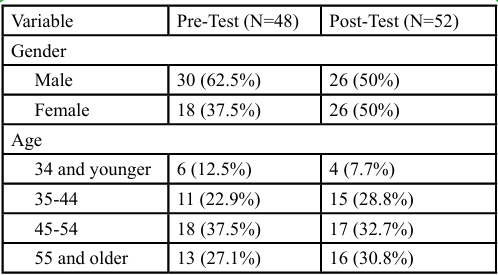
Table 1: Demographic Characteristics of Pre-Test and Post-Test Participants
Measures of central tendency and variability were calculated for three test variables in the post-test, including athletic identity, health behavior, and perceived physical ability. These were compared between age groups and gender in the post-test. There was no gender related or age-related differences in these three outcome variables (Table 2).
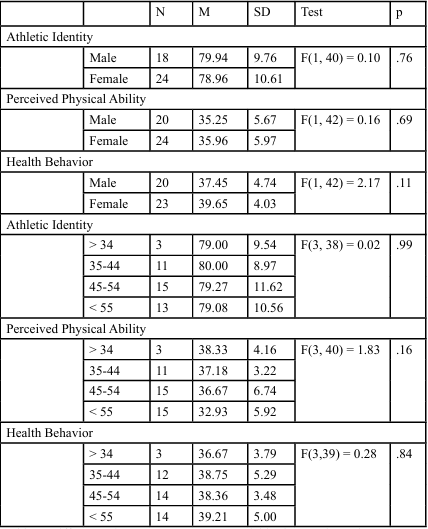
Table 2: Differences in Post-Test Outcome Variables by Gender and Age Group
Athletic Identity, Perceived Physical Ability, and Health Behavior Pre-event and Post-event
Means for athletic identity, perceived physical ability, and health behavior were compared between pre-test and post-test respondents. Independent samples t-tests revealed significant differences in means for both physical activity efficacy and athletic identity between pre- test and post-test respondents (see Table 3).
Athletic Identity and Perceived Physical Ability as Predictors of Positive Health Behavior
Athletic identity was examined as a predictor of positive health behavior, as well as perceived physical ability. Athletic identity significantly predicted health behavior, F(1, 39) = 6.76, p = .013, accounting for 15% of the variance (R² = .15). Higher levels of positive health behavior were associated with higher levels of athletic identity. Athletic identity also significantly predicted perceived physical ability, F(1, 39) = 39.05, p <.001. Greater perceived physical ability was associated with higher levels of athletic identity, accounting for 15% of the variance (R² = .15).
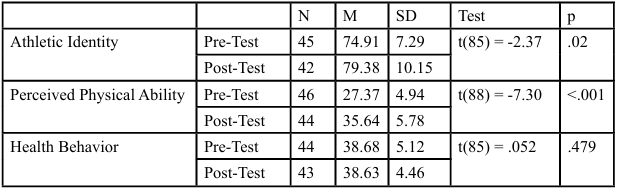
Table 3: Pre-Test and Post-Test Differences in Outcome Variable Means
A multiple linear regression analysis was conducted to examine whether athletic identity and perceived physical ability predicted health behavior. Preliminary analyses indicated that the assumptions of linearity, normality of residuals, homoscedasticity, and absence of multicollinearity were adequately met. The overall regression model was statistically significant, F(2, 37) = 3.26, p = .050, accounting for 15% of the variance (R² = .15). Athletic identity emerged as a significant positive predictor of health behavior, (β= .44, p = .048), whereas physical activity efficacy did not (p = .723).
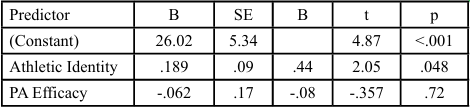
Table 4: Multiple Linear Regression Predicting Positive Health Behavior
Discussion
The purpose of this study was to examine changes in athletic identity, perceived physical ability, and health behavior associated with participation in a trail running race, as well as to explore the relationships among these constructs following the event. Findings indicate that participation was associated with increases in athletic identity and perceived physical ability, and that athletic identity significantly predicted positive health behavior. These results suggest that organized running events may play a meaningful role in shaping physical self-identity with implications for public health.
Demographic Differences in Outcome Variables
No age- or gender-related differences were observed in post-event athletic identity, perceived physical ability, or health behavior. The absence of differences may reflect a self-selected sample with shared interests and experience in endurance activity.
Changes in Athletic Identity and Perceived Physical Ability
Race participants who completed the post-test reported higher levels of athletic identity and perceived physical ability compared to race participants who completed the pre-test. These findings suggest that the event may have strengthened self-identification as an athlete. This result is consistent with past research finding that athletic identity is fluid and can be influenced by the quality or outcome of experiences [32]. Findings also suggest that participating in a sports event may have enhanced participants’ confidence in their physical capabilities, building on Anderson et al.,’s [7] idea that targeting physical competence through successful experiences might be a way to address sustained behavioral change. These results are consistent with Perrier et al. [33], which identify self-efficacy alongside athletic identity as potential targets for sports events interventions. Participatory sports events may be seen as important to maintaining athletic identity among participants, and participants can use events as ways to build successful experiences with physical activity.
While increases in athletic identity and perceived physical ability were observed from pre-test to post-test, a similar increase in positive health behavior was not found. This finding may indicate that identity or efficacy constructs may be more easily adjusted than actual behavior. While sports events may have an immediate effect on such constructs, actual behavior intent or change may take more sustained time and effort. This finding may also be due to the sample having already stable health behaviors that support participation in trail races.
Athletic Identity and Health Behavior
Athletic identity was found to be a predictor of positive health behavior in both the simple and multiple regression analyses. Individuals who more strongly identified as athletes reported higher engagement in health-promoting behaviors. These findings are like previous studies linking athletic identity to health behavior [27,34]. In the current study, a participatory sports event can be seen as an intermediate event that links identity with health behaviors. In this context, identifying as an “athletic” person may increase motivation to maintain behaviors that support overall health, such as regular physical activity.
Athletic identity also predicted perceived physical ability, indicating a relationship between how individuals see themselves as athletes and how competent they feel physically. However, when both athletic identity and perceived physical ability were included in a multiple regression model predicting health behavior, only athletic identity was found to be a significant predictor. These results suggest that while athletic identity and perceived physical competency are related, athletic identity remains more of an overarching construct related to lifestyle behaviors. This interpretation might be especially important when considering how physically diverse populations might continue to pursue health behaviors from a self-identity perspective, regardless of a wide range of physical ability levels, including disability.
Conclusions, Limitations, and Future Research
This study demonstrates that organized running events can help strengthen the extent to which people see themselves as athletes and boost their confidence in their physical abilities, both of which are associated with positive health behavior. These findings suggest that community-based sports events may help people maintain healthy behaviors over time by changing how they think about themselves. Considering that such events are largely publicly administered and celebrated as outward-facing celebrations of cities and communities, demonstrating ways in which these events may positively affect public health is important to their continued support.
Practical Implications
Event organizers should recognize their role in shaping participants’ self-perceptions and physical ability confidence. Rather than focusing exclusively on competitive outcomes, events can strategically emphasize athletic identity development through inclusive language, recognition systems, and participatory frameworks. Referring to all participants as “athletes,” regardless of performance level, may reinforce self-identification that extends beyond the event itself. Similarly, providing tangible symbols of accomplishment such as finisher medals, personalized certificates, or public recognition, can validate participants’ athletic identities and build confidence in physical capabilities.
These findings also have implications for public health programming. Community stakeholders and funding agencies may find value in supporting organized sports events not merely as one-time recreational activities, but as structured interventions that promote psychological constructs associated with sustained health behavior. The observed increases in athletic identity and perceived physical ability following event participation suggest that such events warrant consideration alongside traditional health promotion strategies.
Broadening Participation and Identity
An important extension of this work involves examining what constitutes meaningful participation in sports events. While this study focused on competitive participants, athletic identity may also develop through non-competitive involvement such as volunteering, course marshaling, or event organization. By expanding participation pathways, events could engage populations who face barriers to competitive participation such as disability or injury while still fostering connections to athletic communities and active identities. Future research should examine whether non-competitive event involvement similarly enhances athletic identity and health-related self-perceptions, potentially broadening the public health impact of community sports events.
Study Limitations and Future Research
Several methodological limitations should be acknowledged. First, the use of independent samples for pre-test and post-test assessments limits our ability to draw conclusions about individual-level changes. While group-level differences suggest event-related effects, a repeated-measures design would strengthen inferences by tracking identity and efficacy changes within individuals over time.
Another limitation of the current study involves using independent samples rather than matched pre-test and post-test respondents, resulting in results that might not be able to be inferred at the individual level. Future research might consider a matched design that could assess identity and perceived physical ability changes among individuals. Another limitation of the current study design involves data collection at one time immediately after the event. Longitudinal approaches might examine the effect of increased athletic identity and perceived physical ability at various points after the conclusion of the event to determine how these changes might be sustained over time.
Finally, while running and trail events are popular and common among community events, only one event was measured in the current study, resulting in limited applicability for other types of sports events. Future research might examine multiple and different types of events to help clarify the conditions under which sport participation most effectively promotes health-related outcomes.
Community sports events represent accessible, commonplace opportunities for promoting health behavior change through enhancement of athletic identity and physical self-efficacy. By recognizing and intentionally cultivating these mechanisms, event organizers, public health professionals, and community stakeholders can maximize the lasting health impact of participatory sports programming. As evidence accumulates regarding how organized events shape participants’ self-perceptions and behavioral patterns, such events should be increasingly valued not merely as recreational opportunities, but as strategic public health interventions with potential for population-level impact on physical activity engagement and health outcomes.
Competing Interest:
The authors declare that they have no known financial or personal relationships that could have appeared to influence the work reported in this paper.
References
Centers for Disease Control and Prevention. (2024). Obesity and severe obesity prevalence in adults: United States, August 2021–August 2023 (NCHS Data Brief No. 508). National Center for Health Statistics. View
Centers for Disease Control and Prevention. (2022). Participation in aerobic and muscle-strengthening physical activities among adults aged 18 and over: United States, 2020 (NCHS Data Brief No. 443). National Center for Health Statistics. View
Centers for Disease Control and Prevention. (2023a). Adult physical inactivity prevalence maps. View
National Center for Health Statistics. (2020, December 14). Healthy People 2020. Centers for Disease Control and Prevention. View
Burke, P.J., & Stets, J.E. (2009). Identity theory. New York: Oxford University Press. View
Stryker, S. (1980). Symbolic interactionism: A social structural version. Menlo Park, CA: Benjamin/Cummings. View
Anderson, C.B., Masse, L.C., Zhang, H., Coleman, K.J., & Chang, S. (2009). Contribution of athletic identity to child and adolescent physical activity. American Journal of Preventive Medicine, 37(3) 220-226. View
Liardi, V., Gammage, K., Deck, S., & Hall, C. (2023). Exercise identity and its relation to self- presentation concerns in males and females. Research Quarterly for Exercise and Sport, 94(3), 707-714. View
Brewer, B.W., Van Raalte, J.L., & Linder, D.E. (1993). Athletic identity: Hercules’ muscles or Achilles’ heel? International Journal of Sport Psychology, 24, 237-254. View
Sport England. (2023). Active Lives Adult Survey: November 2022–November 2023. Sport England. View
Bandura, A. (1982). Self-efficacy mechanism in human agency. American Psychologist, 37(2),122-147. View
Bauman A.E., Reis R.S., Sallis J.F., Wells J.C., Loos R.J., Martin B.W. (2012). Correlates of physical activity: why are some people physically active and others not? Lancet, 380 (9838), 258–271. View
Stutts, W. (2002). Physical activity determinants in adults: Perceived benefits, barriers, and self-efficacy. AAOHN Journal, 50(11), 499-507. View
Stankowski, C. L.,Trauntvein, N. E., & Hall, S. L. (2017). I use the student recreation center, but I would use it more if…: Understanding male and female constraints to student recreation center use. Recreational Sports Journal, 41, 55-66. View
Cotter, K. A., & Sherman, A. M. (2012). Exercising control: Exercise intention and perceived constraints in older adults with osteoarthritis. Gerontologist, 53(6), 1046-1050. View
Whitehead, M. (2010). Physical literacy: Throughout the lifecourse. London, UK: Routledge. View
Sport England. (2019). Active Lives Children Survey: Academic year 2018–19. Sport England. View
American Physical Therapy Association (2017, June 30). Physical literacy decline in children leads to adverse effects in adults. View
Partyka, A., & Waskiewicz, Z., (2024). Motivation of marathon and ultra-marathon runners. A narrative review. Psychology Research and Behavior Management, 17, 2519-2531. View
Running USA. (2025, January 29). RunSignup’s annual RaceTrends report shows per race participation growth of 8.2%. View
Statista. (2025, February). Running participation in the United States from 2018 to 2024. View
Strachan, S.M., Shields, C.A., Glassford, A., & Beatty, J. (2012). Role and group identity and adjustment to the possibility of running group disbandment. Psychology of Sport and Exercise, 13(4), 436-443. View
Campa, F., & Coratella, G. (2021). Athlete or non-athlete? This is the question in body composition. Frontiers in Psychology, 12:814572. View
Cypryanska, M., & Nezlek, J. B., (2018). Everyone can be a winner: The benefits of competing in organized races for recreational runners. The Journal of Positive Psychology, 13. View
Gorczyca, A., Jankowski, Jankowski, T., Oles, P. (2016). Does running a first marathon influence general self-efficacy and positive orientation? International Journal of Sports Psychology, 47(5), 466-482. View
Pearson, C. (2020, January 11). 11 reasons you should do a race. Endurance Bike and Run. View
Anderson, C. B. (2004). Athletic identity and its relation to exercise behavior: Scale development and validation. Journal of Sport and Exercise Psychology, 26(1), 39-56. View
Rykman, R. M., Robbins, M. A., Thornton, B., & Cantrell, P. (1982). Development and validation of a physical self-efficacy scale. Journal of Personality and Social Psychology, 42(5), 891- 900. View
Helms, K. & Morris, D. (2025). Trail racing in central Arkansas: Participant characteristics and motivation. Arkansas Journal.
Centers for Disease Control and Prevention (2023b). Behavioral Risk Factor Surveillance System Survey Data. Atlanta, Georgia: U.S. Department of Health and Human Services, CDC, 2023. View
Pierannunzi, C., Hu, S.S., & Balluz, L. (2013). A systematic review of publications assessing reliability and validity of the Behavioral Risk Factor Surveillance System (BRFSS), 2004 2011. BMC Medical Research Methodology, 13(49), 1-14. View
Edison, B. R., Christino, M. A., & Rizzone, K. H. (2021). Athletic identity in youth athletes: A systematic review of the literature. International Journal of Environmental Research and Public Health, 18(14). View
Perrier, M., Sweet, S.N., Strachan, S.M., & Latimer-Cheung, A.E. (2012). I act, therefore I am: Athletic identity and the health action process approach predict sport participation among individuals with acquired physical disabilities. Psychology of Sport and Exercise, 13, 713-720. View
Helms, D., & Morris, D. (2020). Relationship of athletic identity to selected health behaviors among college students: Implications beyond formal sport participation. Journal of Physical Activity Research, 5(1), 3-8. View