
- About the Journal
- Editorial Board
- Review Process
- Author Guidelines
- Article Processing Charges
- Special Issues
- Indexing
- Current Issue
- Past Issue
 Journal of Public Health Issues and Practices
Journal of Public Health Issues and Practices Volume 10 (2026), Article ID: JPHIP-261
https://doi.org/10.33790/jphip1100261Research Article
Intergenerational and Multigenerational Caregiving in the United States: Prevalence, Demographics, Disparities, and Policy in 2025
Tokesha L. Warner1*, Brian Calhoun2, Sanjoy Saha1, Kalai Mugilan1, and Elizabeth Brown3
1Assistant Professor, Department of Public Health, Health Administration & Information, and Health Sciences, Tennessee State University, 3500 John A Merritt Blvd, Nashville, TN 37209, United States.
2Doctoral Public Health Student, Department of Public Health, Health Administration & Information, and Health Sciences, Tennessee State University, 3500 John A Merritt Blvd, Nashville, TN 37209, United States.
3Associate Professor and Chair, Department of Public Health, Health Administration & Information, and Health Sciences, Tennessee State University, 3500 John A Merritt Blvd, Nashville, TN 37209, United States.
Corresponding Author Details: Tokesha L. Warner, Assistant Professor, Department of Public Health, Health Administration & Information, and Health Sciences, Tennessee State University, 3500 John A Merritt Blvd, Nashville, TN 37209, United States.
Received date: 16th January, 2026
Accepted date: 04th June, 2026
Published date: 06th June, 2026
Citation: Warner, T. L., Calhoun, B., Saha, S., Mugilan, K., & Brown, E., (2026). Intergenerational and Multigenerational Caregiving in the United States: Prevalence, Demographics, Disparities, and Policy in 2025. J Pub Health Issue Pract 10(1): 261.
Copyright: ©2026, This is an open-access article distributed under the terms of the Creative Commons Attribution License, which permits unrestricted use, distribution, and reproduction in any medium, provided the original author and source are credited.
Abstract
Family caregiving plays a central role in the United States' long- term services and supports system. This comprehensive overview consolidates recent data from population-based surveys, government sources, and peer-reviewed research to create a detailed profile of intergenerational and multigenerational caregiving trends projected through 2025. The report highlights the overall prevalence of caregiving, its societal and economic value, and specific roles within grandfamilies where grandparents care for their grandchildren and within the sandwich generation, which consists of adults caring for both children and aging parents. It also examines disparities faced by caregivers from diverse racial, ethnic, and LGBTQ+ backgrounds, emphasizing how these differences impact access to resources and overall caregiver well-being. The analysis further explores the economic and health consequences of caregiving, including financial burdens, increased stress, and health risks for caregivers. The evolving policy environment is another focus area, covering initiatives such as Medicaid’s home- and community-based services (HCBS), the National Family Caregiver Support Program, and the recent 2022 National Strategy to Support Family Caregivers [1]. Key findings reveal that approximately 53 million adults in the U.S. provide unpaid care, according to data from AARP and the National Alliance for Caregiving (2020), with out-of-pocket expenses averaging over $7,200 annually [2] and the economic contribution of unpaid caregiving reaching around $600 billion in 2021 [3]. Additionally, grandparents serve as primary caregivers for millions of children [4]. While caregivers are more likely to experience mental health challenges, including elevated distress, compared to non- caregivers [5]. The report concludes with evidence-informed recommendations to improve caregiving support through better financing strategies, enhanced training programs, expanded respite services, and equity-focused programs to ensure fair access and inclusivity across all caregiver populations.
Keywords: Family Caregiving; Grandparents Raising Grandchildren (grandfamilies); Sandwich Generation; Multigenerational Caregiving; Caregiver Disparities; Intergenerational Caregiving
Introduction
Intergenerational and multigenerational caregiving processes are integral to family life in nearly every household in the United States. These caregiving dynamics involve individuals of different ages and generations providing various kinds of support, often over extended periods, and frequently unacknowledged. Such relationships may encompass caring for aging parents, supporting children or adults with special needs, assisting relatives, and caring for adult children or grandchildren. These relationships form a complex web of responsibilities that affects a substantial portion of the U.S. population. Recent national surveillance data and policy analyses highlight a growing trend toward more complex care, characterized by longer caregiving durations and greater demands on caregivers. These trends are accompanied by a widening of disparities along racial, gender, ethnic, and income lines, revealing that some communities face more significant challenges and fewer resources in managing caregiving responsibilities. Reports from organizations like the American Association of Retired Persons (AARP) and the National Alliance for Caregiving (NAC) (2020) and research by Kilmer et al. [5] underscore the need for targeted policies and support mechanisms tailored to diverse caregiver experiences. Alongside these observed trends, significant reforms at both state and federal levels are underway to better recognize and support caregivers throughout their life course. Notably, Medicaid Home and Community-Based Services (HCBS) programs have expanded to offer more comprehensive support for caregivers of individuals with disabilities or aging-related needs.
Additionally, the 2022 National Strategy to Support Family Caregivers represents a landmark effort to create a coordinated national framework that emphasizes the importance of family caregivers and aims to improve their access to resources, respite, and health services. These policy initiatives are grounded in an evolving understanding of caregiving as a critical component of healthcare and social support systems. They seek to address the multifaceted challenges caregivers face, including physical, emotional, and financial burdens. Moreover, these efforts recognize caregiving as a continuum across various life stages, emphasizing the need for adaptable, inclusive, and sustainable support structures. This paper synthesizes recent evidence to provide an updated overview of caregiving in the United States, contextualizing current trends and policy developments within a broader social and demographic framework. Its aim is to provide valuable insights for service provision, scholarly research, and policy formulation, highlighting areas requiring further intervention and innovation to ensure that caregivers receive appropriate recognition, resources, and support across the full spectrum of their responsibilities.
Background
Prevalence estimates from organizations such as the AARP and NAC highlight the significant growth of unpaid caregiving over the past decade. These data indicate that more than one in five adults, approximately 20%, are involved in providing care to family members or others in need, and among them, 61% are concurrently employed, balancing work and caregiving responsibilities [6]. Further analyses and studies have documented the substantial financial burden associated with unpaid caregiving, including high out-of-pocket costs for medical supplies, medications, and supportive services. Despite these costs, unpaid caregivers contribute immense economic value by providing essential care that would otherwise require paid professionals [2,3]. Peer-reviewed research utilizing Behavioral Risk Factor Surveillance System (BRFSS) data indicates that caregivers often report poorer mental health outcomes compared to non-caregivers, suggesting that the emotional and psychological toll can be significant [5].
Demographic studies and pediatric literature further emphasize the presence of youth and young adult caregivers, a large yet underrecognized population that faces unique challenges, including educational disruptions, social isolation, and financial strain [7]. Cultural frameworks, such as filial piety prevalent in many Asian American families, profoundly influence caregiving experiences, expectations, and practices within these communities [8]. Additionally, the rise in life expectancies has led to increased sibling caregiving, particularly for adults with intellectual and developmental disabilities (IDD), where siblings often assume caregiving roles for their aging relatives [9,10].
Formal and Informal Caregiving
Aging people use a range of medical providers and specialists, all of which require care coordination. The responsibility for care coordination also falls to the informal caregiver. Informal caregivers frequently face physical, emotional, and financial stress as they balance these responsibilities with other aspects of their lives [6]. Formal caregiving refers to paid care provided by trained professionals or service organizations, such as home health aides, nurses, or staff in assisted living facilities. These caregivers deliver support based on established standards, often within regulated environments, and receive compensation for their services.
However, the responsibility for care coordination often falls on informal caregivers family members, friends, or neighbors who provide unpaid support with daily living tasks, medical needs, and emotional assistance. This form of support is crucial for many, ensuring that those in need receive help through their personal networks. Informal caregivers frequently face significant emotional, physical, and financial challenges.
Multigenerational and Intergenerational Caregiving
Multigenerational caregiving refers to situations where individuals provide care across more than one generation within a family, such as caring for both aging parents and children simultaneously. This type of caregiving often involves complex family dynamics and a broad range of responsibilities, as caregivers must address the diverse needs of both older and younger family members. Such roles are increasingly common and crucial in the United States as family caregiving evolves to address the needs of multiple generations.
Intergenerational caregiving, on the other hand, encompasses the exchange of care and support between generations, including grandparents caring for grandchildren, adult children supporting elderly parents, and reciprocal care arrangements in which younger family members assist older relatives. These caregiving roles can be formal or informal and are shaped by cultural, social, and economic factors, highlighting the importance of understanding how family structures adapt to meet the needs of their members as they age [4,6].
Sandwich Generation
The term Sandwich Generation refers to middle-aged adults who support both children and aging parents [11]. The intersection of multigenerational caregiving responsibilities can have significant implications for the health and well-being of the person in the caregiver role and for their ability to be an effective caregiver. Research indicates that individuals in the Sandwich Generation often experience high levels of stress, physical exhaustion, and caregiver burnout due to the competing demands of caring for both younger and older family members simultaneously [12]. This responsibility can involve cohabitation with aging parents or independent living, but it does not lessen the caregiving burden.
Grandfamilies
According to 2020 U.S. Census Bureau data [13], nearly 5.9 million grandchildren under the age of 18 reside with a grandparent householder, highlighting the prevalence of these family structures. The term " grandfamilies " refers to households in which grandparents or other relatives are the primary caregivers for children whose parents are unable to fulfill this role [14]. In the United States, millions of children live in grandfamily arrangements, often due to circumstances such as parental illness, incarceration, substance abuse, military service, parental death, or economic hardship.
Grandparents step in to provide stability, emotional support, and essential care, bridging generational gaps and meeting the diverse needs of children facing challenging situations [14]. While these caregivers often take on responsibilities similar to those of parents including financial support, housing, transportation, and healthcare they may encounter unique challenges related to their age, resources, and legal status.
Understanding the dynamics and needs of grandfamilies is crucial for developing policies and programs that support their well-being and the children in their care.
Sibling Caregiving
In addition to caregiving provided by parents and grandparents, adult siblings often play a critical role in supporting brothers or sisters with chronic illnesses or disabilities [9], or younger siblings at risk of foster placement. These sibling caregivers may step in to provide ongoing assistance with daily living activities, medical management, advocacy, and emotional support as their siblings age or as parental caregivers become unavailable. The responsibilities can extend to financial support, coordinating healthcare appointments, and navigating social services, frequently requiring siblings to balance these demands with their own work and family obligations. Adult sibling caregivers face unique challenges, such as adjusting family dynamics and planning for long-term care, underscoring the need for targeted resources and supportive programs to address their specific circumstances [15].
Description of Caregivers
Intersectionality, within the scope of caregiving identities and responsibilities, refers to the complex and interconnected ways in which various aspects of a caregiver’s identity interact to shape their experiences and challenges [16]. This approach also highlights the ways in which social, economic, and cultural factors intersect to influence the accessibility and adequacy of caregiving resources. By acknowledging overlapping identities, intersectionality provides a broader perspective for understanding both the challenges and strengths present within caregiving communities. This framework recognizes that caregiving is not a one-size-fits-all role. There may be multiple and overlapping caregiver responsibilities, which can be further complicated by the specific social identities each caregiver holds. These intersecting factors may impact on how caregivers access support, balance work and family obligations, or advocate for themselves and those in their care. As a result, addressing the needs of caregivers requires a nuanced understanding of how these layered identities interact, ensuring that solutions are tailored and responsive to the gaps found within caregiving experiences.
Informal caregivers in the U.S. saves the health system approximately $683 billion annually in unpaid caregiving, which is valued at $1.1 trillion if compensated. This figure represents the economic impact of their labor, which is crucial for maintaining the health and well-being of older adults and individuals with disabilities. Understanding these diverse caregiving dynamics is crucial for developing supportive policies and interventions that address both the economic and emotional challenges faced by caregivers across different populations and cultural backgrounds.
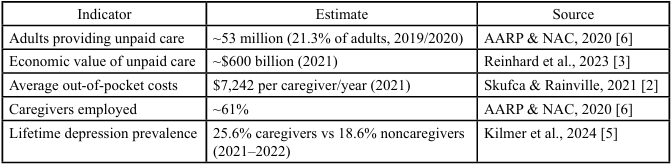
Table 1. Selected U.S. Indicators of Family Caregiving (most recent available)

Table 2. Grandparents and Grandfamilies in the United States (selected measures)

Table 3. Sandwich Generation Indicators
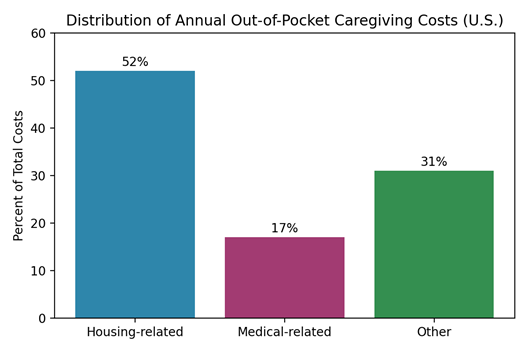
Figure 1. Distribution of annual out-of-pocket caregiving costs by category. Source: Skufca & Rainville [2].
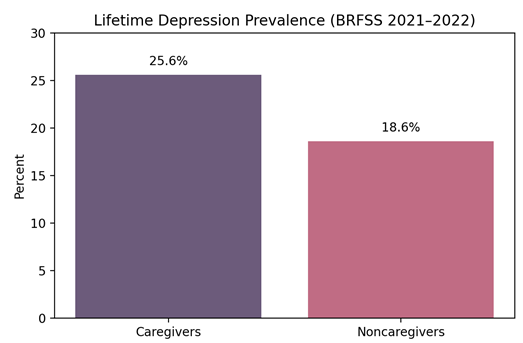
Figure 2. Lifetime depression prevalence among caregivers vs. noncaregivers (BRFSS 2021–2022). Source: Kilmer et al. [5].
Discussion
The evidence indicates that the United States relies heavily on unpaid caregivers for day-to-day support, complex medical and nursing tasks, and advocacy roles, highlighting the vital contribution of family and community members in the health and well-being of individuals needing care [3,6,17]. These caregivers often provide essential services that would otherwise require formal healthcare professionals, underscoring their importance within the healthcare system. However, this reliance comes with significant challenges.
Financial strain on caregivers is substantial and unevenly distributed across different demographic groups. Younger caregivers, as well as those identifying as Hispanic/Latino and Black, tend to shoulder disproportionate burdens, experiencing higher levels of economic hardship and distress compared to their counterparts [2]. The financial stress reflects not only the costs of caregiving but also systemic inequalities that limit access to resources and support.
Nutrition is another area of concern, as caregivers may prioritize the needs of those they care for over their own, leading to skipped meals or reliance on convenient but less healthy food options. In addition, sleep disturbances are common among caregivers, often stemming from nighttime caregiving duties, anxiety, or worry [18]. Chronic sleep deprivation can intensify emotional distress and increase the risk of health complications. Research supports this, showing that greater caregiver burden is significantly associated with both insomnia and malnutrition among caregivers [19]. These findings underscore the importance of comprehensive supports that address stress management, healthy lifestyle habits, and self-care for caregivers.
Sleep deprivation among caregivers warrants particular attention because it can impair concentration, decision-making, emotional regulation, and physical health, all of which are essential to sustaining safe and effective care [18,20]. Repeated nighttime awakenings, vigilance related to a care recipient’s symptoms or behaviors, and the ongoing anticipation of emergencies can lead to fragmented sleep and cumulative fatigue over time [18]. Poor sleep has also been associated with higher levels of caregiver burden, depressive symptoms, cardiovascular risk, and reduced quality of life, creating a cycle in which exhaustion makes caregiving more difficult and caregiving demands further erode rest [19-21]. These patterns suggest that sleep health should be addressed as a central component of caregiver support, with interventions such as respite care, behavioral sleep support, and routine screening for sleep problems incorporated into broader caregiver assessment and assistance efforts. Data from the Behavioral Risk Factor Surveillance System (BRFSS) further reveal that caregivers consistently report worse mental health indicators than non-caregivers, emphasizing the emotional and psychological toll of caregiving responsibilities [5]. This mental health disparity underscores the need for targeted interventions to support caregiver well-being and resilience.
Additionally, the intergenerational aspects of caregiving are exemplified by the prevalence of grandfamilies where grandparents serve as primary caregivers and multigenerational or sandwich- generation households, where adults simultaneously care for aging parents and their own children [4,22]. These family structures highlight the complex, layered nature of caregiving across generations. Despite the widespread recognition of caregiving challenges, research on youth caregiving where minors assume caregiving roles and sibling caregiving for adults with intellectual and developmental disabilities (IDD) remains limited but is of growing policy relevance [7,9].
Policymakers have begun to address these issues through initiatives such as Medicaid Home and Community-Based Services (HCBS) self-direction models, which permit some payment to family caregivers, and through various federal strategies and programs designed to support caregivers [1,23]. Moving forward, continued emphasis on advancing equity is essential, including comprehensive caregiver assessments, expanded respite services, caregiver training, and workplace supports. Addressing these areas can help alleviate some of the burdens faced by caregivers and promote better health outcomes for both caregivers and care recipients within a more equitable and sustainable framework.
Caregivers frequently experience elevated levels of chronic stress, which can negatively impact both their mental and physical health [5]. This persistent stress often leads to disruptions in healthy routines, including reduced physical activity, irregular nutrition, and poor sleep quality. Many caregivers report struggling to maintain regular exercise due to time constraints and fatigue, which can further exacerbate stress and health issues.
Conclusion
Intergenerational and multigenerational caregiving are foundational to the United States’ system of support for aging, disability, and family well-being. Across households and communities, family caregivers provide day-to-day assistance, care coordination, emotional support, and advocacy that enable millions of children, adults, and older adults to remain in homes and communities rather than institutional settings. As population aging accelerates, chronic disease prevalence increases, and the formal care workforce remains constrained, the role of family caregivers will become even more central to the nation’s public health, healthcare, and social service infrastructure.
The evidence reviewed in this paper underscores that caregiving is not only widespread but also stratified by age, race and ethnicity, income, household structure, and life stage. Grandfamilies, sandwich generation caregivers, youth caregivers, and sibling caregivers may encounter distinct but overlapping burdens related to financial strain, mental health risk, employment disruption, and reduced access to culturally relevant support. For that reason, policy responses must move beyond one-size-fits-all approaches and instead invest in evidence-based, caregiver-centered systems that include equitable financing models, respite services, training, workplace flexibility, and routine caregiver assessment across healthcare and community settings. Strengthening these supports is a strategic investment with benefits that extend beyond individual families: it can improve caregiver and care-recipient outcomes, reduce avoidable institutionalization, and promote a more equitable and sustainable care system for the future.
Implications
The findings in this review have important implications for policy and systems planning. First, caregiving should be recognized as a core component of the long-term services and supports continuum rather than as a private family matter outside the scope of formal policy intervention. Federal and state strategies should prioritize sustainable financing for caregiver supports, including respite care, navigation services, education and training, and pathways for compensation in contexts where family members provide intensive care. Healthcare systems can further strengthen support by integrating caregiver identification and assessment into routine care, particularly for patients with chronic illness, disability, dementia, and complex care needs.
Second, the diversity of caregiving arrangements described in this paper suggests that effective interventions must be tailored to different populations and contexts. Programs designed for grandfamilies, sandwich generation caregivers, youth caregivers, LGBTQ+ caregivers, and culturally diverse communities should account for differences in household structure, legal and financial needs, language access, and historical inequities in service access. Employers, schools, community-based organizations, and public health agencies also play a role in reducing caregiver burden by expanding workplace flexibility, connecting caregivers to resources, and addressing the social determinants that intensify stress and hardship.
Finally, the review highlights the need for continued surveillance and research that better captures the full scope of caregiving across the life course. Future studies should strengthen the measurement of underrecognized groups, including youth caregivers, sibling caregivers, and caregivers navigating multiple roles simultaneously, while also improving attention to intersectionality and disparities. More robust data can guide resource allocation, inform program design, and support evaluation of policies intended to improve caregiver well-being. Taken together, these implications reinforce that supporting caregivers is both a public health imperative and a practical strategy for sustaining equitable, community-based care in the United States.
Conflicts of Interest:
The authors declare no conflicts of interest.
References
Administration for Community Living. (2022). National Strategy to Support Family Caregivers. View
Skufca, L., & Rainville, G. C. (2021). Caregiving out-of-pocket costs study. AARP Research. View
Reinhard, S. C., Caldera, S., Houser, A., & Choula, R. B. (2023). Valuing the invaluable: 2023 update—Strengthening supports for family caregivers. AARP Public Policy Institute. View
U.S. Census Bureau. (2023). Grandparents as caregivers (ACS). View
Kilmer, G., Omura, J. D., Bouldin, E. D., et al. (2024). Changes in health indicators among caregivers—United States, 2015–2016 to 2021–2022. MMWR. Morbidity and Mortality Weekly Report, 73(34), 740–746. View
AARP & National Alliance for Caregiving (2020). Caregiving in the United States 2020. AARP Public Policy Institute. View
Miller, K. E. M., Hart, J. L., Useche Rosania, M., & Coe, N. B. (2024). Youth caregivers of adults in the United States. Demography, 61(3), 829–847. View
Xiao, C., Patrician, P. A., Montgomery, A. P., Wang, Y., Jablonski, R., & Markaki, A. (2024). Filial piety and older adult caregiving among Chinese and Chinese-American families in the United States: A concept analysis. BMC Nursing, 23, 115. View
Lee, C. E., & Burke, M. M. (2018). Caregiving roles of siblings of adults with intellectual and developmental disabilities: A systematic review. Inclusion, 6(3), 237–246. View
Lee, C. E., Burke, M. M., Arnold, C. K., & Owen, A. (2020). Compound sibling caregivers of individuals with intellectual and developmental disabilities. Journal of Applied Research in Intellectual Disabilities, 33(5), 1069–1079. View
Chisholm, J. F. (1999). The Sandwich Generation. Journal of Social Distress and the Homeless, 8(3), 177–191. View
Hoyle, J., Warren-Findlow, J., Wallace, L., Laditka, J., & Laditka, S. (2022). THAT’S WHAT FRIENDS ARE FOR: SOCIAL CAPITAL, DEVELOPMENTAL DISABILITY, AND THE LIFE COURSE. Innovation in Aging, 6(Supplement_1), 77–77. View
U.S. Census Bureau. (2020). Grandchildren under 18 years living with a grandparent householder (Table B10001) [American Community Survey 5-year estimates]. U.S. Department of Commerce. View
Fuller-Thomson, E., Minkler, M., & Driver, D. (1997). A Profile Of Grandparents Raising Grandchildren In The United States. The Gerontologist, 37(3), 406–411. View
Kruithof, K., IJzerman, L., Nieuwenhuijse, A., Huisman, S., Schippers, A., Willems, D., & Olsman, E. (2021). Siblings’ and parents’ perspectives on the future care for their family member with profound intellectual and multiple disabilities: A qualitative study. Journal of Intellectual & Developmental Disability, 46(4), 351–361. View
Liu, R., Chi, I., & Wu, S. (2022). Caregiving Burden Among Caregivers of People With Dementia Through the Lens of Intersectionality. The Gerontologist, 62(5), 650–661. View
Reinhard, S. C., Young, H. M., et al. (2019). Home alone revisited: Family caregivers providing complex care. AARP Public Policy Institute. View
Byun, E., Lerdal, A., Gay, C. L., & Lee, K. A. (2016). How adult caregiving impacts sleep: A systematic review. Current Sleep Medicine Reports, 2(4), 191–205. View
Aydin, N. O., Tanriverdi, I., Pasin, O., Sumbul Sekerci, B., Smith, L., Hajek, A., & Soysal, P. (2025). The Relationship Between Caregiver Burden With Insomnia and Malnutrition in Caregivers of Older Hospitalized Patients. International Journal of Geriatric Psychiatry, 40(6), e70106. View
Fernández-Carro, C., Faus-Bertomeu, A., Rodríguez-Blazquez, C. et al. (2025). The Impact of Caregiving on Older Caregivers’ Health: A Scoping Review. Ageing Int 50, 34. View
Polenick, C. A., Leggett, A. N., Webster, N. J., Han, B. H., Zarit, S. H., & Piette, J. D. (2020). Multiple chronic conditions in spousal caregivers of older adults with functional disability: Associations with caregiving difficulties and gains. The Journals of Gerontology: Series B, Psychological Sciences and Social Sciences, 75(1), 160–172. View
Pew Research Center. (2022). More than half of Americans in their 40s are sandwiched between an aging parent and their own children. View
Kaiser Family Foundation. (2025, January 13). How do Medicaid home care programs support family caregivers? View