
- About the Journal
- Editorial Board
- Review Process
- Author Guidelines
- Article Processing Charges
- Special Issues
- Current Issue
- Past Issue
 Journal of Social Work and Welfare Policy
Journal of Social Work and Welfare Policy Volume 4 (2026), Article ID: JSWWP-206
https://doi.org/10.33790/jswwp1100206Research Article
Covid-19 and Social Work Field Education in Eswatini: A Qualitative Study of Final-Year Students Experiences
Thabsile Lukhele
Lecturer, Department of Social Work, Eswatini Medical Christian University, Eswstini.
Corresponding Author Details: Thabsile Lukhele, Lecturer, Department of Social Work, Eswatini Medical Christian University, Eswstini.
Received date: 16th April, 2026
Accepted date: 29th June, 2026
Published date: 01st July, 2026
Citation: Lukhele, T., (2026). Covid-19 and Social Work Field Education in Eswatini: A Qualitative Study of Final-Year Students Experiences. J Soci Work Welf Policy, 4(2): 206.
Copyright: ©2026, This is an open-access article distributed under the terms of the Creative Commons Attribution License, which permits unrestricted use, distribution, and reproduction in any medium, provided the original author and source are credited.
Abstract
The COVID-19 pandemic caused unprecedented disruption to higher education globally, with significant implications for practice- based professional training. Social work field education, which relies on direct client engagement and professional supervision, was particularly affected by public health restrictions and institutional closures. This study explored the lived experiences of five (n = 5) final-year undergraduate social work students who completed field placements during the COVID-19 pandemic in Eswatini.
A qualitative phenomenological design was employed to capture students’ experiences of practicum under pandemic conditions. Data were collected through semi-structured interviews and analyzed using thematic analysis. Five themes emerged: uncertainty regarding completion of field education; limited opportunities to apply practice skills due to reduced face-to-face engagement with clients; fear of contracting the virus; poor communication networks and unstable internet connectivity; and resilience and adaptation among students. The findings suggest that pandemic-related disruptions constrained experiential learning opportunities, supervision processes, and professional socialization.
The study highlights the importance of developing crisis-responsive field education frameworks, strengthening digital infrastructure, and implementing flexible supervision models to support continuity of learning during emergencies. Such measures are essential for safeguarding educational quality, promoting equity, and enhancing student well-being in times of disruption. Future research should examine the long-term effects of hybrid and virtual field education models on student competency development, professional identity formation, and readiness for professional practice.
Keywords: COVID-19 Pandemic, Social Work Field Education, Practicum, Phenomenology, Student experiences, Eswatini
Introduction
The COVID-19 pandemic disrupted social and institutional life globally, affecting healthcare systems, economies, and educational institutions. Higher education institutions were particularly impacted as they rapidly transitioned to remote and hybrid modes of instruction in response to public health restrictions [1,2]. For practice-based disciplines such as social work, these disruptions were especially significant because professional training depends heavily on experiential learning through field education.
Field education is widely recognized as the signature pedagogy of social work, providing opportunities for students to integrate theoretical knowledge, professional values, and practice skills within real service settings [3,4]. Through supervised practice in community organizations, students develop competencies in assessment, intervention, and ethical decision-making, while receiving guidance from experienced practitioners. The practicum, therefore, plays a central role in preparing students for professional practice.
During the COVID-19 pandemic, however, public health restrictions limited face-to-face interactions between students, supervisors, and clients. Many agencies reduced operations, suspended placements, or shifted to remote service delivery. These changes introduced significant uncertainty regarding placement completion, supervision quality, and opportunities for skill development. Although emerging international research has begun to examine the effects of COVID-19 on social work education, limited empirical evidence exists documenting how these disruptions affected field education in Eswatini.
Understanding students’ experiences during this period is important for informing future crisis-responsive education policies and strengthening professional training systems. This study, therefore, explores the lived experiences of final-year social work students completing field placements during the COVID-19 pandemic in Eswatini.
Literature Review
Field education as signature pedagogy in social work
Field education is the central practice-based component of social work training and is widely described as the profession’s signature pedagogy [4]. Through educationally focused service experiences in agencies and communities, students apply classroom learning, practice professional values, and develop core competencies under the guidance of qualified supervisors [3,5]. Field learning contributes to professional identity formation and supports the development of competence, ethical judgment, and confidence for direct practice [6,7]. Many competencies associated with effective social work practice, such as empathy, boundary management, critical thinking, and matching interventions to client needs, are difficult to teach or evaluate fully within the classroom alone [8]. Accordingly, field education and academic instruction are commonly viewed as equally essential in preparing students for practice.
COVID-19 disruptions in higher education and the shift to online learning
COVID-19 forced higher education systems to adopt rapid instructional changes, often shifting to remote or blended learning with limited preparation. Emerging evidence suggests that abrupt digital transitions created challenges for both educators and students due to limited training in online teaching, unstable infrastructure, and unequal access to devices and reliable internet [9]. In many contexts, these shifts intensified student anxiety and uncertainty, particularly when institutions lacked coordinated crisis-response strategies or when students faced economic constraints and digital exclusion [10].
Across African contexts, digital learning approaches have been criticized for insensitivity to inequality and vulnerability, as economically disadvantaged students may be excluded from online learning due to limited access to smartphones, laptops, data, electricity, or connectivity [11,12]. These inequities raise concerns about justice and inclusion in education systems, especially during crises when learner support is most needed.
COVID-19 and challenges specific to social work field education
Social work field education was adversely affected by COVID-19 because practicum depends on client contact, agency access, and close supervision. During periods of lockdown and restricted movement, many agencies reduced operations, limited student placement capacity, or suspended placements entirely. This contributed to student uncertainty about placement availability and completing the required hours. Where placements continued, technology- mediated services were increasingly used to maintain client contact and supervision [13]. However, virtual practice and supervision introduced constraints such as inconsistent connectivity, high data costs, reduced opportunities for observation and modeling, and limited practice of interpersonal and clinical skills that are typically developed through face-to-face engagement.
Ethical and practice challenges related to remote service delivery have also been widely noted, including confidentiality and privacy risks, informed consent challenges, boundary concerns, safety planning limitations, and questions about practitioner competency in digital environments [14,15]. These concerns may be amplified for students who require structured guidance, feedback, and reflective supervision to integrate professional standards into practice. Recent scholarship further suggests that reduced supervision quality during COVID-19 limited reflection, professional socialization, and competency development, potentially affecting students’ readiness for practice and confidence entering the workforce [16,17]. Moreover, recent studies have shown that hybrid and remote field education models created both challenges and opportunities for student learning, supervision, and professional development [16,17,18].
Student well-being, health, and safety concerns during the pandemic
Beyond academic disruption, COVID-19 created health and safety concerns for students and practitioners. Fear of infection, inconsistent access to protective measures, and uncertainty about exposure risks contributed to stress and anxiety in field settings. Studies across postsecondary populations and applied training programs report increased psychological distress associated with isolation, uncertainty, financial strain, and disruption of plans [10]. For social work students, monitoring well-being is especially important given the profession’s known risks for vicarious trauma, compassion fatigue, and burnout under occupational stress [19,20]. Evidence from studies of social work students during COVID-19 indicates that disruptions to field education and limited support can negatively affect mental health and contribute to anxiety about professional readiness and employment prospects [21].
Overall, literature suggests that COVID-19 created intersecting disruptions to field placement access, supervision quality, skill development opportunities, digital equity, and student well-being. However, there remains limited empirical research documenting these dynamics in Eswatini. This study addresses this gap by foregrounding the lived experiences of final-year social work students completing practicum during the pandemic, with implications for field education planning, ethical remote practice readiness, and crisis-responsive student support.
Methodology
Research Design
This study employed a qualitative phenomenological design to explore the lived experiences of social work students completing field education during the COVID-19 pandemic in Eswatini. Phenomenology is appropriate when the aim is to understand how individuals interpret and give meaning to shared experiences [22]. The approach enabled the researcher to capture how students experienced disruptions to practicum learning, supervision, and professional development under pandemic conditions. Qualitative inquiry was particularly appropriate because limited empirical research has documented how the pandemic affected social work field education within the Eswatini context. By focusing on participants’ narratives and interpretations, the study sought to generate contextualized insight into how students navigated field learning during a public health crisis.
Study Setting
The study was conducted at a higher education institution in Eswatini that offers undergraduate social work training requiring a compulsory field practicum. Field education typically involves a minimum of 12 weeks of supervised practice in community agencies such as hospitals, NGOs, and social service organizations. During the COVID-19 pandemic, many agencies adopted remote or hybrid service models due to lockdown measures and public health restrictions.
Sampling and Participants
A purposive sampling strategy was used to recruit participants who had direct experience completing field placement during the pandemic. Purposive sampling is appropriate in qualitative research when participants are selected based on their ability to provide rich, relevant insights into the research phenomenon (Robinson, 2014). Five final-year undergraduate social work students participated in the study. Eligibility criteria included:
1. Completion of field placement during the COVID-19 pandemic (2020–2021)
2. Enrollment in the final year of the social work program
3. Willingness to participate in a recorded interview
Although the sample size was small, it is consistent with phenomenological studies that prioritize depth of understanding over breadth [22].
Data Collection
Data were collected through semi-structured, face-to-face interviews conducted in a private office setting to ensure confidentiality and comfort. Each interview lasted approximately 40–50 minutes and was audio-recorded with participants’ consent. The semi-structured format allowed participants to reflect openly on their experiences while ensuring consistency across interviews. Guiding questions included:
1. As a social work trainee on field placement during COVID-19, what experiences or challenges did you face?
2. To what extent did COVID-19 affect your health and safety while providing services during field placement?
Follow-up probing questions were used to clarify responses and encourage deeper reflection. Field notes were also taken to capture contextual observations and emerging insights.
Data Analysis
Interview recordings were transcribed verbatim and analyzed using thematic analysis, following the six-phase framework outlined by Braun and Clarke (2006):
1. Familiarization with the data through repeated reading of transcripts
2. Generation of initial codes capturing meaningful data segments
3. Searching for patterns across codes to identify potential themes
4. Reviewing and refining themes for internal consistency
5. Defining and naming themes
6. Producing the final analytical narrative
The analysis focused on identifying recurring patterns in students’ descriptions of their practicum experiences during the pandemic.
Trustworthiness
To enhance methodological rigor, the study followed established criteria for qualitative trustworthiness, including credibility, dependability, confirmability, and transferability [23].
Credibility was strengthened through prolonged engagement with the data and careful transcription of interviews to preserve participants’ meanings. Direct quotations were used in the findings to ensure participants’ voices were accurately represented.
Dependability was enhanced by maintaining a clear audit trail documenting data collection procedures, coding decisions, and theme development.
Confirmability was supported through reflexive note-taking during analysis to minimize researcher bias and ensure interpretations were grounded in the data. In addition, peer debriefing was used during the analysis process to enhance the credibility of emerging themes. Preliminary findings were discussed with a qualitative research colleague who reviewed coding decisions and thematic interpretations. Member checking was also conducted with selected participants to verify that the findings accurately reflected their experiences and perspectives.
Ethical Considerations
Ethical approval for the study was obtained from the relevant institutional review authority. Participation was voluntary, and informed consent was obtained from all participants before interviews. To protect confidentiality, pseudonyms were assigned and identifying details were removed from transcripts.
Participants were also informed of their right to withdraw from the study at any time without penalty.
Transferability was addressed by providing detailed descriptions of the research context, participant characteristics, and field education structures in Eswatini so that readers can assess the relevance of findings to similar settings.
Key findings
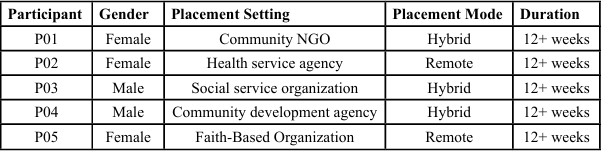
Table 1: (Participant Characteristics)
Table 1 presents the demographic and placement characteristics of the study participants. The five participants were final-year undergraduate social work students who completed field placements during the COVID-19 pandemic between 2020 and 2021. The table summarizes participants’ gender, placement settings, and practicum modalities, illustrating the range of practice environments and learning conditions experienced during the pandemic.
Table 2 (Summary of Themes)
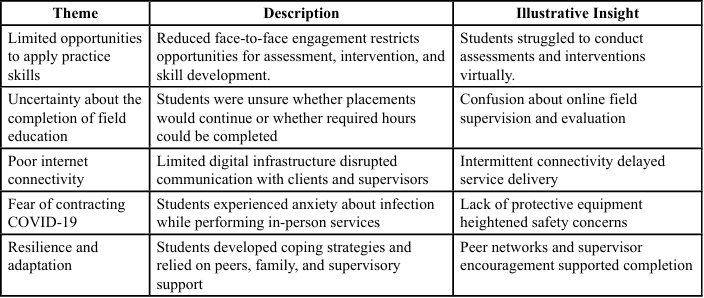
Table 2: Presents a summary of the major themes that emerged from the thematic analysis of participants’ interviews.
Table 2 summarizes the key themes that emerged from the thematic analysis of participants’ interviews. The themes capture students’ experiences of completing field education during the COVID-19 pandemic, including disruptions to practice learning, supervision challenges, technological barriers, health and safety concerns, and students’ resilience and adaptive coping strategies.
Although most students finished their 12-week internships, it took them much longer to cover the hours they were supposed to work in the field. This is because some of them and their supervisors contracted the virus and were quarantined for a period. Five key themes emerged from the study: uncertainty regarding completion of field education, limited opportunities to apply practice skills due to reduced face-to-face engagement, poor communication network and internet connectivity, fear of contracting the virus, and resilience and adaptation.
Theme 1: Limited opportunities to apply practice skills due to reduced face-to-face engagement.
Social work students doing field work during COVID-19 revealed that they did not acquire adequate skills and knowledge during the pandemic.This was a result of the very limited physical contact with clients as everything was done online, including communication, assessments, and intervention, as well as all doing all other activities over the phone. Bailey-Belafonte [24] states that doing assessments with clients over the phone or online could be difficult due to barriers such as poor internet connectivity. Additionally, supervision was minimal as social workers worked from home; students received instructions over the phone and did not immediately receive feedback. One of the students highlighted that” my supervisor, working from home, issued instructions over the phone. Thus, the quality of fieldwork supervision was compromised” (P03). It is important to recall that these challenges and overnight contingency measures are visiting social work students and practitioners who lack specialized experience and knowledge in disaster management and providing services in such critical moments as the pandemic.
Another student reported: "The one challenge I faced was not being able to effectively apply my knowledge in practice. This was because it was tough to meet clients face-to-face due to COVID restrictions, as I feared getting infected and infecting others or just being put at risk. Additionally, it was difficult to provide comprehensive care services to those infected by the virus". (P02)
Another student revealed that they had challenges meeting clients face-to-face due to the restrictions they had to adhere to: "We were unable to link clients to services, and those we were able to link to services could not receive appropriate services at the appropriate time due to COVID-19 restrictions". (P05).
The student expanded, "During COVID-19, we were not able to acquire the necessary skills during attachment since most things were done virtually. In practice, one would be exposed to COVID-19, and as a result, we would be expected to self-isolate, leaving behind a lot of work undone." (P05).
Theme 2: Uncertainty regarding completion of field education
Students initially expressed uncertainty regarding the transition to virtual field education. Much of this uncertainty stemmed from limited prior experience with online service delivery and supervision among both students and field instructors. Since students had to work from home, lecturers found it difficult visiting them across the country and they put themselves at risk of contracting the virus. But in the absence of other contingency measures tertiary institutions used telephone and other mobile platforms to do fieldwork assessments [25]. Inevitably this came with many compromises. One student explained the situation thus: “When the school and the supervisors told us that we were moving virtual, I thought it would just be a short time, things will get better, and we will return to face-to-face within two or three weeks. But when weeks passed and the situation was getting worse I started to panic. (P04). Another participant stated, “Even our supervisors from school couldn’t assess us in the organizations because of the lockdown”. (P01)
Two more students had similar views about the introduction of online field education. Both reported being initially skeptical but as they went along, they began to gain confidence in their work. One student stated, “At first, I was confused and did not have confidence as I have never done an internship online and without a supervisor on standby to guide me and give me instructions, but luckily I had a good supervisor who was very supportive and helped me make the best of the situation” (P05). My supervisor was approachable and supportive all the way, answering my questions, providing clarity and giving feedback on time” (P03)
Theme 3: Poor communication network and internet connectivity
All participants viewed the introduction of the online field education platforms during the pandemic as a major source of severe stress. Students attached to organizations in remote areas had major problems communicating with clients, as the internet connection was intermittent. One student stated, “Our calls to clients were often not returned, which prolonged the process, and sometimes we found no one to address our problems. So, we had to keep calling until we got hold of the client” (P02).
Literature confirmed that agencies in rural areas where network connectivity is rarely stable were indeed severely constrained. Others would not have considered these platforms as they need approval from funding agencies before implementation, and this eats into the time the students should be offering services and learning [26].
Theme 4: Fear of contracting the virus
Some students did manage to meet clients and supervisors face-to- face. Though that was a desirable turn of events, there was always the fear of contracting the virus. Limited availability of protective wear exacerbated the fear as the government was too cash-strapped to provide personal protection to social workers and students.
During the pandemic, I also got infected with the virus at some point, and this impacted on my health, safety, and the safety of others. It also led to poor service delivery as most colleagues were also infected and had to go into quarantine. It was, therefore, difficult to dispense services needed by our clients" (P04).
Another student reported that "One was always anxious about being infected by COVID-19, thus leading to not doing justice in service delivery. The agency made it mandatory for one to be vaccinated even if it was against your beliefs". (P01).
Aked et al. (2020) highlight that the coronavirus itself caused depression in university students, as everyone was fearful of testing positive for the virus. Some students lost members of their families and loved ones, some of whom were breadwinners who financed their education. That increased their level of fear, anxiety, and depression. One of the participants disclosed that “my roommate lost her auntie (sister’s mother), who was her guardian since her mother had passed on five years earlier. This situation left her stressed and despondent about completing school” (P03).
Theme 5: Resilience and adaptation
Some participants disclosed that they learned to remain positive amid the crisis. A curious culture of mutual support was developing because of the realization that everybody needs the next person, although their interaction may pose mutual danger. Students also received support and encouragement from families, lecturers, and friends. The support they received from their supervisors also helped them to remain positive. One student disclosed that “I discovered some skills I was not aware I had such as being patient and encouraging other students not to give up, and that things will be fine” (P05).
Another student revealed that advice from family members, friends, and peers boosted her resilience: “My family, friends, and peers told me to use the traditional herbs (umhlonyane) and gum tree that had been discovered to minimize chances of one getting COVID-19 (P02).” I realized how much we all needed one another, especially in those difficult times” (P04). I learned about many communication platforms I had not known before. During the pandemic, students created group chat rooms on WhatsApp and other communication platforms (P03).
Despite the challenges brought by the pandemic, fieldwork strove to the new norm of remote learning, and many students were able to cover the required hours through the support of a few daring agencies. Granted, these agencies risked their lives and the lives of the students by supporting their education and ensuring their graduation was not delayed.
Discussion
The findings of this study demonstrate how the COVID-19 pandemic disrupted social work field education in Eswatini by limiting opportunities for direct client interaction, reducing supervision quality, and creating uncertainty regarding placement completion. These experiences are consistent with international research documenting the significant impact of pandemic restrictions on practice-based professional education [13,16].
Participants reported that remote service delivery limited their ability to conduct assessments, build rapport with clients, and observe professional practice. These challenges are particularly significant because field education plays a central role in developing practice competence and professional identity [3]. Without adequate opportunities for experiential learning, students may feel less prepared for professional practice.
The findings revealed that it took a while for schools and organizations to emerge from confusion and start to devise strategies for responding to COVID-19. This delay was mainly caused by organizations’ fearful reluctance to open their doors to students for internships. Due to the urgent nature of the pandemic and the need to ensure student and client safety, field education reforms had to materialize quickly [27]. Online activities and training were developed, and field supervisors played a pivotal role in providing means for students to gain the most needed skills and help them complete the required hours for graduation. Findings also revealed confusion and uncertainty among students when informed that they would do fieldwork online. This confusion stemmed from supervisors’ lack of experience in delivering services to clients online. Likewise, students had never done fieldwork online. This was an emotionally and psychologically traumatic time for both parties. However, students' determination and resilience were evident, and they were able to finish the required fieldwork. Students could also manage their stressors, including personal, familial, academic, and financial challenges.
The findings also highlighted structural challenges related to digital inequality. Poor internet connectivity and high data costs limited communication between students, supervisors, and clients, reflecting broader concerns about digital infrastructure in many African higher education systems [12,28]. These barriers underscore the importance of addressing technological inequities when designing remote or hybrid field education models.
Participants also highlighted personal challenges, such as fear of contracting the virus and losing family members who were pillars of their education. According to the students, such fears and uncertainty about the future added a lot of stress and anxiety during their fieldwork attachment.
Despite these disruptions, students demonstrated resilience and adaptability by developing peer support networks and learning new digital communication skills. This finding aligns with previous research suggesting that crisis conditions can foster innovation and collaborative problem-solving in social work education [4].
The findings also highlighted that social work education must plan for future disasters like COVID-19 to avoid being caught unawares. The pandemic experience should hopefully prompt schools and organizations to seek means to remain stable and functional during disasters. Plans need to be put in place to ensure students are socially, mentally, and financially protected. There is a need for collaboration between the schools and field supervisors to forge contingency plans for disaster events before the students are placed in the field. Ideal forums for such planning could be workshops and conferences where comprehensive plans are hammered out. It is always important to train personnel on plans and programs of action to be launched during disasters.
Students highlighted having to learn a few life lessons that they would carry through to the future. The literature revealed that field educators also learned a few lessons they would carry through to the future, such as innovative methods of practice, creativity, flexibility, and collaboration with stakeholders to meet the needs of students and communities. Moreover, social work departments in universities have also learned that a far more comprehensive range of ideas and methods in curriculum development and implementation is possible. The crisis forced them to stretch their thoughts beyond anything they had imagined. There is also a realization that unprecedented collaborations between organizations are vital to responding to community needs in a way that does not compromise students’ safety. This is the spirit and illustration of thinking outside the box.
Limitations of the Study
This study has several limitations that should be considered when interpreting the findings. First, the study involved only five final-year social work students from one higher education institution in Eswatini. Although the sample size is consistent with phenomenological research, the findings may not be transferable to all social work students or institutions. Second, participants were asked to reflect on experiences that occurred during the COVID-19 pandemic, which may have introduced recall bias. Third, the study relied solely on student perspectives and did not include field supervisors, agency personnel, or academic staff whose experiences may have provided additional insight. To minimize bias, the study employed systematic thematic analysis, maintained an audit trail, and used direct participant quotations to ensure findings remained grounded in participants’ lived experiences.
Implications for Social Work Education and Policy
The findings of this study have important implications for social work education, field practice, and policy development in Eswatini and similar contexts. First, the disruptions experienced by students highlight the need for social work programs to develop crisis- responsive field education systems capable of maintaining experiential learning during public health emergencies and other disruptions. Traditional models of field education that rely exclusively on face- to-face interaction may not be sustainable during crises.
Second, the findings highlight the growing importance of digital competencies in social work practice. The shift toward remote service delivery during the pandemic suggests that social work curricula should prepare students for technology-mediated practice environments while ensuring adherence to ethical standards.
Third, the challenges related to supervision and placement coordination underscore the importance of strong partnerships between universities and field agencies. Effective collaboration is essential to ensure continuity of supervision, student safety, and service delivery during emergencies.
At the policy level, the study also highlights broader structural inequalities in digital access, particularly for students placed in rural or resource-constrained environments. Addressing digital infrastructure and technological access will be essential to ensure equitable learning opportunities during future disruptions.
Recommendations
Based on the findings of this study, several recommendations are proposed to strengthen social work field education during future crises.
1. Social work training institutions in Eswatini should establish crisis-responsive field education guidelines, including contingency placement models and hybrid supervision systems.
2. Universities should integrate tele-social work competencies and ethical digital practice training into social work curricula.
3. Field agencies should strengthen structured supervision systems, including regular virtual supervision sessions when face-to-face supervision is not possible.
4. Universities and placement agencies should develop formal crisis placement agreements outlining responsibilities, supervision expectations, and student safety procedures during emergencies.
5. National stakeholders, including professional associations and ministries responsible for higher education, should develop standardized education policies and tele-social work guidelines.
6. Governments and universities should invest in improving digital infrastructure and providing subsidized internet access to students to reduce technological inequalities.
7. Future research should examine the long-term effects of hybrid and virtual field education models on student competency development and professional readiness.
8. Professional bodies and higher education institutions should continue advocating for greater professional recognition and autonomy of social workers to strengthen the profession's ability to respond effectively during crises and emergencies.
Conclusion
Students faced significant challenges during their field education. These include personal circumstances and difficulties adjusting to the new instruction platform, disrupted experiential learning opportunities, supervision practices, and student well-being. Limited face-to-face engagement with clients, unstable digital infrastructure, and concerns about health and safety affected students’ ability to fully develop practice competencies.
Findings reveal that during the pandemic, students need support from all stakeholders (family, school, and organizations) to be able to cope and be resilient and successful in their academic success. Despite the numerous challenges, students developed resilience and were able to complete their hours with the support they received. Their lived experiences will offer significantly higher education and remarkable opportunities to learn from what happened and strengthen the social work programs during future pandemics.
These findings highlight the importance of strengthening crisis preparedness in social work education through flexible placement models, improved digital infrastructure, and stronger collaboration between universities and field agencies. Developing such systems will be essential to ensuring that social work students continue to receive high-quality professional training during future emergencies.
While the findings provide valuable insight into students’ experiences, they should be interpreted in light of the study’s small sample size and focus on a single institution. Future studies involving multiple universities, field supervisors, and agency personnel are needed to develop a broader understanding of crisis-responsive social work field education and the long-term impact of virtual practicum models.
Conflicts of Interest:
The author reports there are no competing interests to declare.References
De Jonge, E. & Hedriks, P. (2020). The impact of the COVID-19 pandemic on social work education and practice in the Netherlands. Social Work Education. View
Toquero, C. M. (2020). Challenges and Opportunities for Higher Education Amid the COVID- 19 Pandemic: The Philippine Context. Pedagogical Research, 5(4). View
Bogo, M. (2017). Field Education. Social Work Oxford Bibliographies. View
Drolet, J.L., Alemi, M.I., Bogo, M., Chilanga, E., Clark, N., St George, S., Charles, G., Hanley, J. McConnel, S.M., McKee, E., Walsh, C.A., and Wulff, D. (2020). Transforming Field Education During Covid-19. Field Educator, 10 (2). View
Oliver, M., (2013).The social model of disability: thirty years on. Disability & Society, 28(7), 1024–1026. View
Ayala, J., Drolet, J., Fulton, A., Hewson, J., Letkemann, L., Baynton, M., & Elliott, G. (2017). Field Education in Crisis: experiences of field education coordinators in Canada. International Journal, 37(3), 281-293. View
Bogo, M. (2015). Field Education for Clinical Social Work Practice: Best Practices and Contemporary Challenges. Clinical Social Work Journal, 43, 317-324. View
Arundel, M.K., Morrison, S., Mntulak, A., & Csiernik, R. (2022). Social Work Field Practicum Instruction During Covid-19: Facilitation of the Remote Learning Plan. Field Scholar, 2(1). View
Hodges, C., Moore, S., Lockee, B., Trust, T., & Bond, A. (2020). The Difference between Emergency Remote Teaching and Online Learning. EDUCAUSE Review. View
Gupta, R., & Agrawal, R. (2021). Are the concerns destroying the mental health of college students? A qualitative analysis portraying experiences amidst COVID-19 ambiguities. Analyses of Social Issues and Public Policy (ASAP), 21(1), 621– 639. View
Dennissen, M., Benschop, Y., & van den Brink, M. (2020). Rethinking Diversity Management: An Intersectional Analysis of Diversity Networks. Organization Studies, 41(2), 219–240. View
Motsa, N. (2021). COVID-19: Understanding and Responding to the Educational Implications for the Vulnerable Children in Eswatini. Perspectives in Education, 39(3), 17-29. View
Kourgiantakis, T. (2020). Social work practice education and training during the Pandemic disruptions and discoveries. International Social Work, 63(6). View
Mishna, F., Bogo, M., & Root, J. (2012). “It just crept in”: The Digital Age and Implications for Social Work Practice. Clinical Social Work Journal, 40(3). View
Reamer, F.G. (2015). Clinical Social Work in a Digital Environment: Ethical and Risk Management Challenges, Clinical Social Work Journal, 43, 120-132. View
Au, C., L. Drolet, J., Kaushik, V., Charles, G., Franco, M., Henton, J., & Wickman, J. (2023). Impact of COVID-19 on social work field education: Perspectives of Canadian social work students. Journal of Social Work, 23(3), 522-547. View
Jansing, C., Ketner, M., Shaw, L., Cooper-Bolinskey, D., & Rudd, S. (2025). Social Work Field Education and Supervision: What a Global Pandemic Taught us. Journal of Social Work in the Global Community, 9, 1–12. View
Drolet, J., Salim, S., Choudhury, M., Nicholas, D., McKee, E., Walsh, C., & Charles, G. (2024). Social work practicum students' experiences, challenges, and aspirations during the COVID-19 pandemic. Transformative Social Work, 2(1). View
Cuartero, M. E., & Campos-Vidal, J. F. (2018). Self-care behaviours and their relationship with Satisfaction and Compassion Fatigue levels among social workers. Social Work in Health Care, 58(1), 1–17. View
Kreitzer, L., Brintell, S., & Austin, W. (2020). Institutional Barriers to Healthy Workplace Environments: From the Voices of Social Workers Experiencing Compassion Fatigue. The British Journal of Social Work, 50(7), 1942–1960. View
Apostol, A. C., Irimescu, G., Radoi, M. (2023). Social Work Education during the COVID-19 Pandemic—Challenges and Future Developments to Enhance Students’ Well-being. Sustainability, 2023, 15,9009. View
Creswell, J. W. & Poth, C. N. (2016). Qualitative Inquiry & Research Design: Choosing among approaches. Los Angeles, CA: Sage Publications. View
Lincoln, Y.S. and Guba, E.G. (1985) Naturalistic Inquiry. SAGE, Thousand Oaks, 289-331. View
Buchanan, C. & Bailey-Belafonte, S. (2021). Challenges in adapting to field placement during a pandemic: A Jamaican perspective. International Social Work. 64, (2). View
Duraku, Z.H., & Hoxha, N. (2020). The Impact of COVID-19, school closure, and social isolation on gifted student’s wellbeing and attitudes toward remote (online) learning. Department of Psychology, University of Prishtima. View
Ozmete, E. & Pak, M. (2020). The Relationship between Anxiety Levels and Perceived Social Support during the pandemic of Covid-19 in Turkey. Social Work in Public Health, 35, (7), 603- 616. View
Bonano-Broussard, D., Henry, A., Williams, N., Mitchell, D., & Savani, S. (2023). Social Work Field Education During the Covid-19 Pandemic: A Scoping Review of Literature. Field Scholar, 13(1). View
Dennissen, M., Benschop, Y., & van den Brink, M. (2020). Rethinking Diversity Management: An Intersectional Analysis of Diversity Networks. Organization Studies, 41(2), 219–240. View