
- About the Journal
- Editorial Board
- Review Process
- Author Guidelines
- Article Processing Charges
- Special Issues
- Current Issue
- Past Issue
 Journal of Social Work and Welfare Policy
Journal of Social Work and Welfare Policy Volume 4 (2026), Article ID: JSWWP-209
https://doi.org/10.33790/jswwp1100209Research Article
Social Media Use and Empathy among College Students: A Cross-Sectional Study
Kiana Fleeger, Tatiana Henry, and Christopher Streidl*
Department of Psychology, Social Work, & Recreational Therapy, Slippery Rock University of Pennsylvania, Slippery Rock, Pennsylvania, United States.
Corresponding Author Details: Chris Streidl, PhD, LISW-S, LCSW, Assistant Professor, Department of Psychology, Social Work, & Recreational Therapy, Slippery Rock University of Pennsylvania, Slippery Rock, PA 16057, United States.
Received date: 26th June, 2026
Accepted date: 29th July, 2026
Published date: 31st July, 2026
Citation: Fleeger, K., Henry, T., & Streidl, C., (2026). Social Media Use and Empathy among College Students: A Cross Sectional Study. J Soci Work Welf Policy, 4(2): 209.
Copyright: ©2026, This is an open-access article distributed under the terms of the Creative Commons Attribution License, which permits unrestricted use, distribution, and reproduction in any medium, provided the original author and source are credited.
Abstract
The purpose of this study was to examine associations between social media engagement patterns and empathy among college students. Participants were 122 students at a public university in the United States who completed the Basic Empathy Scale and self-report measures of social media use and engagement. One- way analyses of variance, multiple regression, and correlational analyses were used to examine associations between social media engagement and empathy. The regression model predicting affective empathy was significant, F(3, 118) = 6.03, p < .001, explaining 13.3% of the variance (adjusted R² = .111). Non-passive social media use (β = .40, p = .028) and female gender (β = .44, p < .001) were significant predictors of higher affective empathy. The interaction between social media use and gender was not statistically significant. Screen time and other measures of social media engagement were not significantly associated with empathy. Overall, patterns of social media engagement, rather than time spent using social media, may be relevant to affective empathy among college students. More interactive social media use was associated with higher affective empathy compared with primarily passive use, highlighting the importance of considering how individuals engage with social media rather than treating social media use as a uniform behavior.
Keywords: Social Media, Empathy, Cognitive Empathy, Affective Empathy, College Students
Introduction
Social media has become a central component of daily communication, social interaction, and information sharing, particularly among young adults. College students are among the most active users of social media platforms, frequently relying on these platforms to maintain relationships, access information, and engage with others. As social interactions increasingly occur in digital spaces, researchers have become interested in how social media use may relate to important social and emotional characteristics, including empathy.
Empathy is commonly defined as the ability to understand and share the emotional experiences of others and is widely recognized as an important component of interpersonal relationships and social functioning. Researchers typically distinguish between cognitive empathy, which involves understanding another person's perspective, and affective empathy, which involves sharing or responding to another person's emotional experiences. Because empathy plays a critical role in communication and relationship development, understanding how contemporary forms of social interaction relate to empathy has become increasingly important.
Research examining the relationship between social media use and empathy has produced mixed findings. Some studies suggest that greater social media use is associated with lower empathy, while others have reported positive or nonsignificant relationships. Emerging evidence suggests that the manner in which individuals engage with social media may be more important than the amount of time spent online. In particular, researchers have identified differences between active forms of social media use, such as posting or commenting, and passive forms of use, such as scrolling or observing content without direct interaction.
Despite growing interest in this topic, relatively little research has examined the relationship between social media use and empathy among college students. The present study sought to examine associations between social media engagement patterns and empathy in a sample of college students, with particular attention to differences between active and passive social media use.
Literature Review
Social Media Use Among College Students
Social media platforms have risen in popularity over the years, and their use has become increasingly prevalent among young adults. A survey conducted by Gottfried and Park [1] found that the most commonly used social media platforms among American adults were YouTube (84%) and Facebook (71%). Additionally, approximately half of American adults reported using Instagram, with notable increases in the use of platforms such as TikTok, Reddit, and WhatsApp in recent years.
College students are among the most active social media users. Younger adults between the ages of 18 and 29 report particularly high rates of engagement with platforms such as Instagram, Snapchat, TikTok, and Reddit [1]. For example, 80% of adults under the age of 30 reported using Instagram, substantially exceeding rates observed among older age groups. Beyond entertainment and information seeking, college students frequently use social media to maintain existing relationships and remain connected with individuals they know offline [2].
Beyond their role in facilitating social connection, patterns of social media engagement among college students may also have implications for psychological well-being. For example, Jiao et al. [3] found that passive social network use was associated with greater subthreshold depression among university students, with fear of missing out partially mediating this relationship. Such findings suggest that the effects of social media may depend not simply on whether or how frequently students use these platforms, but on their patterns of engagement and the social and emotional processes associated with that use.
Given the prevalence of social media use among college students and its role in facilitating social interaction, researchers have become increasingly interested in how social media engagement may relate to social and emotional characteristics, including empathy.
Empathy
Empathy is generally defined as the ability to understand and share the emotional experiences of others and is widely recognized as an important component of interpersonal functioning [4]. Researchers commonly conceptualize empathy as a multidimensional construct consisting of both cognitive and affective components [5]. Cognitive empathy refers to the ability to understand another person's perspective or mental state, whereas affective empathy involves the capacity to emotionally respond to and share in the feelings of others [6]. Both dimensions contribute to interpersonal relationships and social interactions and have been associated with prosocial behavior and social functioning [7].
Although empathy has been conceptualized and measured in various ways throughout the literature, the distinction between cognitive and affective empathy remains one of the most widely accepted frameworks for understanding empathic processes.
Social Media Engagement and Empathy
As social media platforms have become increasingly integrated into daily life, researchers have become interested in their potential relationship with empathy. One important distinction within this literature is between active and passive social media use. Active use involves direct interaction and communication, such as posting content or commenting on others' posts, whereas passive use involves viewing content without direct engagement [8]. This distinction may be important because different patterns of social media engagement appear to have different relationships with empathy.
Research examining the relationship between social media use and empathy has produced mixed findings. Some studies suggest that greater social media use is associated with higher levels of empathy. For example, Vossen and Valkenburg [9] found that more frequent social media use was associated with both cognitive and affective empathy among adolescents. Similarly, Errasti et al. [10] reported higher empathy scores among adolescents who used social media platforms such as Facebook and X.
In contrast, other studies have reported negative associations between social media use and empathy. Martingano et al. [11] found that lower cognitive empathy was associated with more frequent social media checking behaviors, particularly passive engagement. Similarly, Carrier et al. [12] found small negative relationships between time spent online and both cognitive and affective empathy among young adults.
A recent meta-analysis by Martingano et al. [11] further highlighted the complexity of this relationship, finding no overall significant association between social media use and either cognitive or affective empathy. Collectively, these findings suggest that the relationship between social media use and empathy may depend on factors such as age, user characteristics, and the specific ways individuals engage with social media platforms.
This complexity is also reflected in research examining active and passive patterns of social media use more broadly. In a meta-analysis of 141 studies, Godard and Holtzman [13] found that associations between active and passive social media use and measures of mental health, well-being, and social support were generally small or negligible. However, passive use was associated with slightly poorer well-being among emerging adults. The authors concluded that the effects of social media engagement may be more nuanced than a simple distinction between active and passive use, highlighting the importance of examining specific populations and outcomes.
Recent research with college students provides additional support for considering patterns of social media engagement. Lai et al. [14] examined active and passive social media use among 1,740 college students and found that active use was associated with lower social anxiety and greater communication capacity, whereas passive use was associated with greater social anxiety and lower communication capacity. Notably, communication capacity included empathy along with other interpersonal abilities, and active social media use was positively associated with empathy. Although empathy was not the primary outcome of the study, these findings suggest that interactive forms of social media use may provide opportunities for interpersonal engagement relevant to empathic responding.
Despite growing interest in this topic, relatively little research has focused specifically on college students. Given the prevalence of social media use among this population, additional research is needed to better understand how different patterns of social media engagement relate to empathy among emerging adults.
Study Purpose and Hypotheses
Despite growing interest in the relationship between social media use and empathy, existing findings remain inconsistent. Previous research has reported positive, negative, and nonsignificant associations between social media use and both cognitive and affective empathy. Additionally, relatively little research has focused specifically on college students, despite their high levels of social media engagement. Given the prevalence of social media use among this population and the mixed findings within the existing literature, further research is needed to better understand how social media engagement relates to empathy among emerging adults.
The purpose of the present study was to examine the relationship between social media use patterns and empathy among college students. Consistent with prior research suggesting that passive social media engagement may be associated with lower levels of empathy, it was hypothesized that greater passive social media use would be associated with lower cognitive and affective empathy. Because previous findings regarding overall social media use and empathy have been inconsistent, analyses also explored relationships between broader patterns of social media engagement and empathy.
Methods
Participants and Procedure
Participants consisted of 122 students enrolled at a midsized public university in western Pennsylvania. Participants ranged in age from 18 years to 26 years or older, with the majority (83.6%) between the ages of 18 and 22. The sample was predominantly female (80.3%), with 18.9% identifying as male and 0.8% identifying as non-binary. Participants represented all undergraduate class standings, with sophomores (28.2%) and seniors (31.6%) comprising the largest proportions of the sample.
Recruitment occurred through university email announcements and QR code flyers distributed across campus. Participation was voluntary, and all responses were collected anonymously through an online survey.
The study was reviewed and approved by the Slippery Rock University Institutional Review Board through an expedited review process. Prior to participation, all respondents provided informed consent electronically before accessing the survey.
Measures
Demographic Questionnaire
Participants provided demographic information including age, gender, and year in school. Additional questions assessed social media use patterns and engagement behaviors.
Social Media Use
Social media use was assessed using eight researcher-developed self-report items created for the present study. Items assessed the social media platforms participants currently used, their three most frequently used platforms, average daily social media screen time, predominant content type, purposes for using social media, typical interaction style, perceived importance of social media for maintaining connections with offline support systems, and whether participants had previously taken a break from social media use.
Social media interaction style was assessed using a single item asking participants to select the statement that best described their typical social media use. Response options represented four patterns of engagement: (a) primarily passive use, characterized by scrolling, watching, or reading without interacting; (b) mostly passive use with occasional interaction through liking, commenting, or sharing; (c) frequent interactive use, including regular liking, commenting, and posting; and (d) content creation-focused use, characterized primarily by creating and sharing original content. For the ANOVA analyses, these response options were collapsed into three categories: passive, mixed, and active. The primarily passive response constituted the passive group, mostly passive use with occasional interaction constituted the mixed group, and frequent interaction and content creation-focused use were combined to form the active group. For the regression analysis, interaction style was further dichotomized as passive versus non-passive, with the non-passive category including participants who reported at least some interactive social media use.
Basic Empathy Scale
Empathy was measured using the Basic Empathy Scale [15], a 20- item self-report instrument designed to assess cognitive and affective empathy. Items were rated on a five-point Likert-type scale, with higher scores indicating greater empathy. Consistent with recommended scoring procedures, negatively worded items were reverse-scored prior to analysis. Separate cognitive empathy and affective empathy scores were calculated, along with an overall empathy score. Internal consistency in the current sample was acceptable for both affective empathy (α = .799) and cognitive empathy (α = .807).
Data Analysis
Data were analyzed using IBM SPSS Statistics. Descriptive statistics were calculated for all study variables. A one-way analysis of variance (ANOVA) was conducted to examine differences in empathy across social media interaction groups. Multiple regression analysis was used to evaluate whether dichotomized social media interaction style (passive vs. non-passive), gender (female vs. non-female), and their interaction predicted affective empathy. Because of the small number of participants identifying outside the binary gender categories, gender categories could not be examined separately and were dichotomized for this analysis. Correlational analyses were conducted to examine relationships among screen time, social media engagement variables, and empathy measures. Statistical significance was evaluated using an alpha level of .05. Internal consistency reliability was assessed using Cronbach's alpha coefficients.
Results
Preliminary Analyses
Preliminary analyses were conducted to prepare and evaluate the Basic Empathy Scale. Items were recoded to a 1–5 scale and reverse- scored where appropriate. Internal consistency was acceptable for both subscales, with Cronbach’s alpha coefficients of .799 for affective empathy and .807 for cognitive empathy, indicating adequate reliability.
Descriptive Statistics
Descriptive statistics indicated that participants reported moderately high levels of empathy overall (M = 3.97, SD = 0.42). Participants reported slightly higher levels of cognitive empathy (M = 4.13, SD = 0.47) than affective empathy (M = 3.83, SD = 0.54) (See Table 1 below).
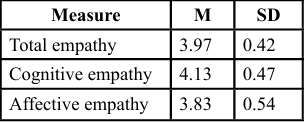
Table 1. Descriptive Statistics for Empathy Measures
Group Differences in Empathy by Social Media Interaction Type
A one-way analysis of variance (ANOVA) was conducted to examine differences in empathy across social media interaction types (passive, mixed, active). Results indicated no significant differences in total empathy, F(2, 119) = 1.80, p = .170, η² = .029. However, a trend-level effect was observed for affective empathy, F(2, 119) = 2.56, p = .082, η² = .041, such that participants reporting primarily passive use demonstrated lower affective empathy compared to those engaging more interactively. No significant differences were observed for cognitive empathy, F(2, 119) = 0.21, p = .808, η² = .004.
Predictors of Affective Empathy
To further examine predictors of affective empathy, a multiple regression analysis was conducted using dichotomized social media interaction style (passive vs. non-passive), gender (female vs. non- female), and their interaction term. Because of the small number of participants identifying outside the binary gender categories, gender categories could not be examined separately and were dichotomized for this analysis. The overall model was statistically significant, F(3, 118) = 6.03, p < .001, accounting for approximately 13% of the variance in affective empathy (R² = .133, adjusted R² = .111).
Results indicated that both gender and social media interaction style were significant predictors of affective empathy. Participants who reported non-passive social media use demonstrated higher levels of affective empathy compared to those who primarily engaged in passive use (β = .40, p = .028). Gender was also a significant predictor (β = .44, p < .001), with female participants reporting higher levels of affective empathy than non-female participants (See Table 1 below).
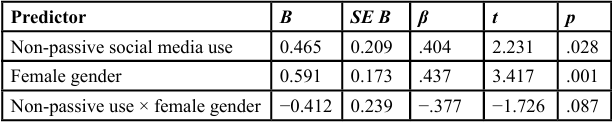
Table 2. Multiple Regression Predicting Affective Empathy
The interaction between social media use and gender approached significance (β = −.38, p = .087), suggesting that the relationship between passive social media use and affective empathy may differ by gender. Specifically, the negative coefficient suggests that the difference in affective empathy between passive and non-passive users may have been smaller among female participants than non- female participants. However, this finding should be interpreted cautiously because the interaction did not reach conventional levels of statistical significance.
Additional Correlational Analyses
Additional analyses indicated that neither screen time nor perceived importance of social media for maintaining social connections were significantly associated with empathy. Correlational analyses further supported this pattern, showing no meaningful relationship between daily screen time and empathy measures, and only a small, non-significant association between number of platforms used and affective empathy (r = .16, p = .079).
Overall, these findings suggest that while the amount of time spent on social media is not associated with empathy, patterns of engagement, particularly passive versus more interactive use, may be associated with affective empathy, with potential variation across gender.
Discussion
The purpose of this study was to examine relationships between social media use patterns and empathy among college students. Although overall social media use and screen time were not associated with empathy, patterns of social media engagement were related to affective empathy. Specifically, regression analyses indicated that non-passive social media use was associated with higher levels of affective empathy compared with primarily passive use. Gender was also a significant predictor of affective empathy, with female participants reporting higher empathy scores than non female participants.
One notable finding of the current study was the association between social media interaction style and affective empathy. This finding is consistent with previous research suggesting that different forms of social media engagement may be associated with different social and emotional outcomes. For example, Martingano et al. [11] found that passive social media behaviors were associated with lower levels of empathy, while Powell and Roberts [16] reported positive associations between more interactive online behaviors and empathy. The current findings extend this literature by suggesting that among college students, passive engagement with social media may be associated with lower levels of affective empathy. This pattern is also consistent with Lai et al. [14], who found that active social media use among college students was associated with greater communication capacity, including empathy, whereas passive use was associated with lower overall communication capacity. Together, these findings suggest that interactive forms of social media use may be associated with interpersonal processes relevant to empathic responding. One possible explanation for this finding is that passive social media use may provide fewer opportunities for emotional engagement and perspective-taking than more interactive forms of online communication. Active behaviors such as commenting, posting, and responding to others may encourage users to consider the thoughts, feelings, and experiences of other individuals, whereas passive scrolling may involve a more observational and detached experience. Although the present study cannot determine causal relationships, these findings suggest that how individuals engage with social media may be more important than how much time they spend using it.
This interpretation is further supported by the finding that neither screen time nor perceived importance of social media for maintaining social connections was significantly associated with empathy. These results challenge the common assumption that greater social media use is inherently associated with lower empathy. Instead, the findings suggest that the quality and nature of social media engagement may be more relevant than the amount of time spent online. Two individuals may spend similar amounts of time using social media while experiencing very different social and emotional outcomes depending on how they engage with the platforms. At the same time, these findings should not be interpreted as evidence that active social media use is uniformly beneficial or passive use uniformly harmful. Godard and Holtzman’s [13] meta-analysis found generally small or negligible associations between active and passive social media use and broader measures of mental health, well-being, and social support. The present findings therefore may reflect relationships specific to affective empathy and this population rather than a general advantage of active social media use across outcomes.
Another important finding was the role of gender in affective empathy. Female participants reported significantly higher levels of affective empathy than non-female participants. This finding is broadly consistent with previous research demonstrating gender differences in self-reported empathy. However, the gender distribution of the present sample requires caution when interpreting this finding. Because only one participant identified as nonbinary, gender was dichotomized as female versus non-female for the regression analysis, and differences among gender identities could not be examined independently. Future research using larger and more gender-diverse samples is needed to better understand whether and how gender may influence the relationship between social media engagement and empathy.
Although the interaction between social media use and gender did not reach statistical significance, the observed pattern suggests that the relationship between interaction style and affective empathy may vary by gender. This finding should be considered exploratory and interpreted cautiously. Additional research with larger and more gender-diverse samples is needed to examine this possibility.
A strength of this study was its examination of active and passive social media use rather than focusing exclusively on overall social media use or screen time. By distinguishing between different patterns of engagement, the study was able to identify relationships that may have been overlooked when considering social media use as a single construct. These findings highlight the importance of differentiating between passive and active social media behaviors when examining the relationship between social media use and empathy.
Several limitations should be considered when interpreting these findings. First, the study utilized a cross-sectional design, which prevents conclusions regarding causality. It is therefore unclear whether passive social media use contributes to lower affective empathy, whether individuals with lower affective empathy are more likely to engage in passive social media use, or whether another variable influences both. Second, all measures relied on self-report data, which may be influenced by social desirability bias or inaccurate self-assessment. Third, the sample was drawn from a single university and was predominantly female, which may limit the generalizability of the findings to other student populations. The small number of participants identifying outside binary gender categories also prevented examination of differences across a broader range of gender identities. Future research should utilize more diverse samples and longitudinal designs to better understand the direction and nature of the relationship between social media engagement and empathy.
Overall, the findings suggest that patterns of social media engagement may be more important than the amount of social media use when examining empathy among college students. Regression analyses indicated that social media interaction style was associated with affective empathy, with non-passive use predicting higher affective empathy compared with primarily passive use. These findings contribute to a growing body of literature suggesting that the social and emotional consequences of social media use depend not only on how often individuals use these platforms, but also on how they engage with them.
Competing Interests:
The authors declare that they have no competing interests.
References
Gottfried, J., & Park, E. (2025). Americans’ social media use 2025. Pew Research Center. View
Ellison, N. B., Steinfield, C., & Lampe, C. (2007). The benefits of Facebook “friends:” Social capital and college students’ use of online social network sites. Journal of Computer-Mediated Communication, 12(4), 1143-1168. View
Jiao, J., Dong, X., Nuermaimaiti, N., & Liu, Y. (2025). The relationship between passive social network site use and sub threshold depression among college students: a moderated mediation model. BMC Psychology, 13(1), 739. View
Decety, J., & Jackson, P. L. (2004). The functional architecture of human empathy. Behavioral and Cognitive Neuroscience Reviews, 3(2), 71- 100. View
Davis, M. H. (1983). Measuring individual differences in empathy: Evidence for a multidimensional approach. Journal of Personality and Social Psychology, 44(1), 113-126. View
Shamay-Tsoory, S. G. (2011). The neural bases for empathy. The Neuroscientist: A Review Journal Bringing Neurobiology, Neurology and Psychiatry, 17(1), 18-24. View
Decety, J., & Cowell, J. M. (2014). The complex relation between morality and empathy. Trends in Cognitive Sciences, 18(7), 337-339. View
Verduyn, P., Ybarra, O., Résibois, M., Jonides, J., & Kross, E. (2017). Do social network sites enhance or undermine subjective well-being? A critical review. Social Issues and Policy Review, 11(1), 274-302. View
Vossen, H. G. M., & Valkenburg, P. M. (2016). Do social media foster or curtail adolescents’ empathy? A longitudinal study. Computers in Human Behavior, 63, 118-124. View
Errasti, J., Amigo, I., & Villadangos, M. (2017). Emotional uses of Facebook and Twitter: Its relation with empathy, narcissism, and self-esteem in adolescence. Psychological Reports, 120(6), 997-1018. View
Martingano, A. J., Konrath, S., Zarins, S., & Okaomee, A. A. (2022). Empathy, narcissism, alexithymia, and social media use. Psychology of Popular Media, 11(4), 413-422. View
Carrier, L. M., Spradlin, A., Bunce, J. P., & Rosen, L. D. (2015). Virtual empathy: Positive and negative impacts of going online upon empathy in young adults. Computers in Human Behavior, 52, 39-48. View
Godard, R., & Holtzman, S. (2024). Are active and passive social media use related to mental health, wellbeing, and social support outcomes? A meta-analysis of 141 studies. Journal of Computer-Mediated Communication, 29(1), zmad055. View
Lai, F., Wang, L., Zhang, J., Shan, S., Chen, J., & Tian, L. (2023). Relationship between social media use and social anxiety in college students: Mediation effect of communication capacity. International Journal of Environmental Research and Public Health, 20(4), 3657. View
Jolliffe, D., & Farrington, D. P. (2006). Development and validation of the Basic Empathy Scale. Journal of Adolescence, 29(4), 589–611. View
Powell, P. A., & Roberts, J. (2017). Situational determinants of cognitive, affective, and compassionate empathy in naturalistic digital interactions. Computers in Human Behavior, 68, 137- 148. View