
- About the Journal
- Editorial Board
- Review Process
- Author Guidelines
- Article Processing Charges
- Special Issues
- Current Issue
- Past Issue
 Journal of Social Work and Welfare Policy
Journal of Social Work and Welfare Policy Volume 4 (2026), Article ID: JSWWP-211
https://doi.org/10.33790/jswwp1100211Review Article
A Review and Critique of the U.S. Policy and Service Responses to Unaccompanied Migrant Children
Charles Hounmenou1*, Thomas Hampson2, and Keerthi Tammineni3,
1University of Illinois Chicago, 1040 West Harrison Street, Chicago, Illinois 60607, United States.
2Truth Alliance Foundation, Inc., 869 E Schaumburg Rd, Schaumburg, IL 60194, United States.
Corresponding Author Details: Charles Hounmenou, PhD, Associate Professor, Jane Addams College of Social Work, University of Illinois Chicago, 1040 West Harrison Street, Chicago, Illinois 60607, United States.
Received date: 06th June, 2026
Accepted date: 08th August, 2026
Published date: 10th August, 2026
Citation: Hounmenou, C., Hampson, T., & Tammineni, K., (2026). A Review and Critique of the U.S. Policy and Service Responses to Unaccompanied Migrant Children. J Soci Work Welf Policy, 4(2): 211.
Copyright: ©2026, This is an open-access article distributed under the terms of the Creative Commons Attribution License, which permits unrestricted use, distribution, and reproduction in any medium, provided the original author and source are credited.
Abstract
The gaps in monitoring and protecting unaccompanied migrant children (UMCs) in the United States highlight serious concerns about their location and well-being. These issues span multiple federal agencies and reveal systemic problems in immigration and child welfare policies related to UMCs. Information on the exploitation of this vulnerable population, the responses to their needs, the needed and provided services, and departmental responsibilities in implementing safety and well-being programs is limited. This paper aims to review and critique the U.S. government’s responses to UMCs and to discuss potential alternatives to protect this vulnerable group, who are at risk of violence and exploitation. Starting with a highlight of the salient features of the UMC population, the paper explores the risks and experiences of violence and exploitation while UMCs are in federal custody and after they are released to a sponsor. Then, U.S. policies and programs for UMCs are reviewed. Next, the service responses are reviewed, focusing on the specific needs of UMCs, service delivery, and a critique of these responses. The review reveals gaps in oversight and interagency coordination, essential for protecting UMCs. These gaps pose substantial challenges to ensuring the safety, health, and protection of UMCs. Implications for policy, practice, and advocacy are discussed.
Keywords: Unaccompanied Migrant Children, Policy, Protection, Services, Rights, Needs, and Stakeholders.
Introduction
Over the past five years, a significant issue has emerged concerning unaccompanied migrant children (UMCs) who go unaccounted for after being in federal custody. U.S. Immigration and Customs Enforcement (ICE) has lost track of many of these children, raising serious concerns about their safety and the efficacy of immigration processes, as detailed in a March 2025 Department of Homeland Security’s Office of Inspector General report [1]. This report indicated that out of 448,000 UMCs transferred to the U.S. Department of Health and Human Services’ (HHS) Office of Refugee and Resettlement (ORR) between 2019 and 2023, over 32,000 could not be located. As of October 2024, more than 43,000 UMCs who received a Notice to Appear (NTA) failed to attend their scheduled court dates. Furthermore, as of January 2025, ICE was unable to serve NTAs to 291,000 of the 448,000 recorded UMCs due to a lack of knowledge regarding their whereabouts. These tracking and oversight deficiencies raise profound concerns for the children's safety and highlight systemic problems in implementing immigration and child welfare policies related to UMCs. These issues have spanned multiple federal administrations. The DHS Inspector General’s report warned of the risk of child trafficking if proper monitoring and tracking are not implemented [1]. Indeed, the U.S. Congressional Research Service estimated that in 2020, 75%- 80% of UMCs arriving at the United States-Mexico border became victims of human trafficking [2].
A recent development, on August 31, 2025, saw a U.S. judge order an emergency halt to a Trump administration plan to deport nearly 700 UMCs back to Guatemala [3,4], illustrating the ongoing challenges faced by UMCs. Significant media coverage and congressional hearings have focused on the multiple protection violations experienced by UMCs after their release from federal custody. There remains a limited understanding of UMCs’ vulnerability to and experiences of exploitation, the adequacy of policy responses, their service needs and provision, and the responsibilities of various stakeholder departments and non-governmental agencies in ensuring UMCs’ safety and well-being. This paper aims to review U.S. government policies and service responses for UMCs, discuss implications, and propose alternative strategies to protect this vulnerable population. The paper will first describe key UMC characteristics, then examine their vulnerability to violence and exploitation, analyze policy responses and challenges, assess service needs and provisions, and finally discuss implications for policy, practice, and research.
Background Knowledge about UMCs in the USA
UMCs vs. Unaccompanied Refugee Children (URCs)
UMCs and URCs are distinct legal categories within the U.S. immigration system, each with specific eligibility criteria, protections, and services [5,6] (See Table 1). UMCs, also known as unaccompanied alien children, are defined as individuals under 18 years of age who lack lawful immigration status in the U.S. and have no parent or legal guardian present in the U.S. to provide care and physical custody [2,6] (Homeland Security Act of 2002, Pub. L. No. 107-296, Section 462(g)(2)). Most UMCs are apprehended at or near U.S. borders, particularly the southern border [2,7]. While UMCs may flee violence, abuse, poverty, or other threats, they do not meet the definition of refugees under U.S. law [7,8]. Their protection framework emphasizes care standards, due process, and child welfare rather than refugee resettlement [6,9,10]. They are not provided with government-funded legal counsel [2,7]. UMCs typically enterremoval proceedings, where they must independently qualify for relief such as asylum or Special Immigrant Juvenile status [2], and they generally lack legal status, with no guarantee of future attainment.
URCs, like UMCs, are children outside their home country. However, they meet the definition of a "refugee" under U.S. law, meaning they are fleeing persecution based on race, religion, nationality, social group, or political opinion, and they lack parents or guardians able to care for them [5]. URCs enter the U.S. through the Unaccompanied Refugee Migrant (URM) Program, usually after undergoing formal refugee processing overseas. They receive designated foster care and comprehensive services for integration as legal refugees, including eligibility for permanent residency and a direct path to citizenship.
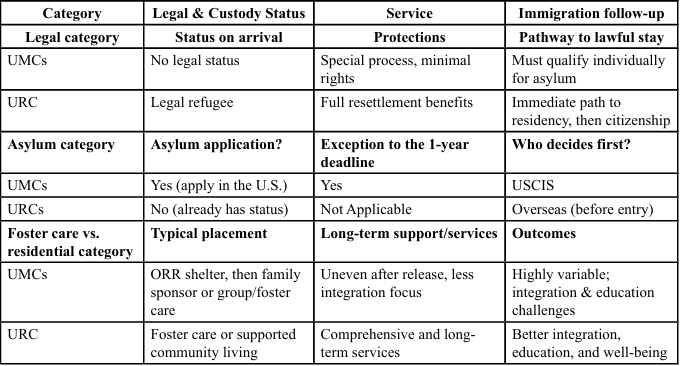
Table 1: Comparison of UMCs and URCs
Overview of Key Demographics of UMCs
UMCs in the U.S. can be categorized by age, gender, country of origin, language, legal and custodial status, trends over time, referrals, and post-release status. Data from FY2024 show that 64% of UMCs referred to ORR by ICE were 15 years or older [6,9], with 24% falling within the 0–12 age range (Table 2). This age distribution underscores the vulnerability of younger children, who are often separated from families early or sent ahead for safety, and highlights the physical challenges of migration they endure [11].
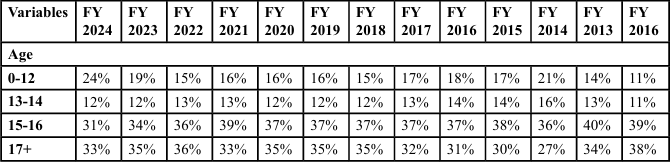
Table 2: Age distribution of UMCs in ORR’s care by fiscal year.
Regarding gender, 61% of UMCs in ORR’s care in FY2024 were male [13] (Table 3). This gender imbalance is consistent with historical trends, where boys are often perceived as more capable of undertaking long journeys or are targeted for criminal recruitment in their home countries [11].
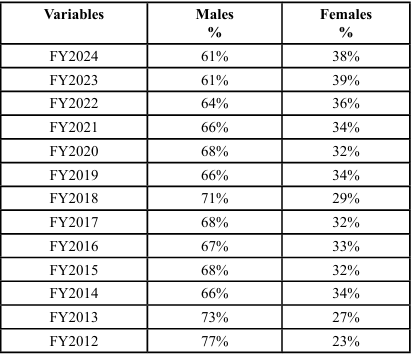
Table 3: Distribution of UMCs in ORR’s care by sex in FY2012-2024
The primary countries of origin for UMCs in the U.S. between 2020 and 2024 have been the Northern Triangle countries of Central America, with Guatemala accounting for 32.1% to 47.5%, Honduras for 20.3% to 32.3%, and Mexico for 5.7% to 20.3% (Table 4). In FY2024 specifically, the majority of UMCs were from Guatemala (32%), followed by Mexico (20%), Honduras (20%), and El Salvador (8%). UMCs speak five main languages, with Spanish being the most prevalent [6,9,10,13].
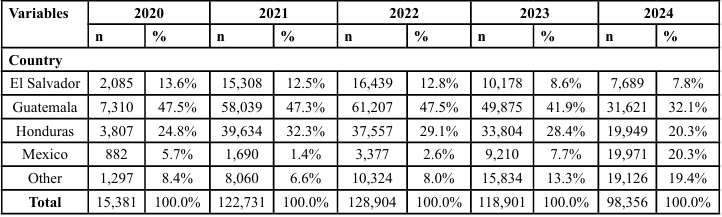
Table 4: Countries of UMCs in ORR’s care based on transfers and fiscal year (FY2020-2024).
Federal law mandates that UMCs apprehended at borders are processed by DHS’s Customs and Border Protection (CBP) and ICE, and then transferred to HHS’s ORR within 72 hours. From 2003, when ORR assumed responsibility for UMC care and data collection, until 2011, annual encounters were below 8,000. However, beginning in 2012, UMC transfers increased significantly, ranging from 24,000 to 70,000 between FY2013 and FY2019. Numbers decreased during the COVID-19 pandemic in FY2020 but surged thereafter, exceeding 100,000 in FY2021 and peaking at 128,904 in FY2022, before declining to 98,356 in FY2024 (Table 5). These fluctuations reflect evolving migration patterns and recent border enforcement policies [2].

Table 5: Distribution of UMC transfers from ICE to ORR from 2015 to 2024
The surges in UMC transfers in FY2019 and FY2022 can be attributed to various DHS and broader socio-political factors influencing migrant flows. These include increased migration from Central America due to violence, economic hardship, and instability, as well as heightened apprehensions and referral numbers of UMCs [14]. The significant rise in FY2022 was linked to ongoing migration pressures stemming from regional instability and worsening economic conditions [15]. The socioeconomic impacts of the COVID-19 pandemic also contributed to increased migration, alongside DHS's adjustments to border restrictions and enforcement priorities, which aimed to balance enforcement with humanitarian needs [14,15].
Violence, Exploitation, and Child Trafficking Victimization among UMCs
Understanding the UMC Migration Upsurge
Violence, poverty, and natural disasters are primary drivers for UMCs leaving their home countries, with transnational gangs influencing migration decisions [2]. Gangs exert influence through threats of forced recruitment, extortion, and violence against children and their families, particularly in countries like El Salvador, Honduras, and Guatemala, where they maintain territorial control. Limited employment opportunities also push children to seek better living conditions in the U.S. [16]. Abusive family environments or the absence of caregivers can lead children to migrate [2]. Environmental degradation and climate-related disasters contribute to food insecurity and displacement, further motivating migration. Pull factors for migration to the U.S. include changes in immigration law, such as the Trafficking Victims Protection Reauthorization Act (TVPRA) of 2008, which provides protections for unaccompanied children from non-contiguous countries, enabling them to seek asylum [17]. Family reunification and the desire to work and send remittances home are also significant motivators. Families may also send children to the U.S. out of fear for their safety, leading to family separations.
UMCs’ Vulnerability to Violence, Exploitation, and Trafficking
UMCs face elevated risks of violence, labor exploitation, and trafficking during their journeys and within the U.S. because of several interconnected factors: the trauma they have experienced; exploitative transit and smuggling networks; lack of protective guardians; and legal and administrative gaps [2,16,18,19]. Pre- migration trauma related to violence, poverty, and family separation can impair UMCs’ ability to recognize and resist exploitation [16,20,21]. Transit and smuggling conditions can pressure UMCs into labor to repay debts to smugglers or support families in home countries [22-24]. The absence of parental or guardian supervision, hurried placements into unfamiliar settings, and reliance on unknown individuals for basic needs increase vulnerability [25].
Gaps in legal and administrative processes exacerbate these risks. The lack of guaranteed government-funded legal representation, coupled with language barriers and limited interpretation services, hinders UMCs’ understanding of their rights and court proceedings, increasing their susceptibility to prolonged detention, wrongful deportation, and subsequent exploitation [26]. Case delays create uncertainty, making UMCs vulnerable to fraudulent sponsorships [25]. Fear of law enforcement or deportation deters disclosure of abuse or exploitation and impedes help-seeking [20]. These factors create an environment where UMCs are at high risk of exploitation and human trafficking.
UMCs’ Experiences of Violence and Exploitation
Federal oversight findings, congressional hearings, and NGO reports reveal significant gaps in the UMC protection system, including documented incidents of violence and exploitation by sponsors after UMCs leave ORR custody. A 2018 U.S. Senate Permanent Subcommittee on Investigations report noted that there was no centralized tracking system for UMCs post-release until 2017. Among the over 400,000 UMCs placed with sponsors or providers between FY2012 and FY2017, 30% lacked post-placement status checks, and federal agencies lacked aggregate data on abuse or exploitation by sponsors.
A U.S. Congress hearing on July 24, 2025, titled “House Oversight Subcommittee Hearing on Unaccompanied Migrant Children,” examined issues with tracking, processing, and safeguarding UMCs. This hearing referenced the March 2025 DHS OIG Report, which found ICE unable to monitor the location or status of UMCs post release. The report also indicated that 31,000 UMCs were released to incomplete or undeliverable sponsor addresses, and over 43,000 evaded immigration court hearings. The hearing further revealed that UMCs as young as 14 were rescued from forced labor on a California marijuana farm. The OIG report also stated that ICE lost track of approximately 15% of 448,820 UMCs transferred to ORR from FY2019 through FY2023, leaving them vulnerable. Gaps in case management and data sharing between agencies hampered efforts to detect sponsor-related violence or exploitation, and the lack of federal data on post-release violence placed tens of thousands of UMCs at risk. Investigative journalism and congressional hearings have documented significant cases of labor exploitation and trafficking of UMCs in the U.S., exposing systemic failures in vetting, oversight, and protection. Hannah Dreier’s 2023 New York Times investigation series, “Alone and Exploited,” uncovered a widespread network of migrant children working in hazardous jobs across the U.S., often overlooked by federal audits. These audits failed to detect child labor in dangerous sectors like construction and food processing, leading to injuries and fatalities. The New York Times also launched a public database tracking outcomes for over 550,000 children released in the U.S., prompting congressional hearings and further journalistic coverage [27].
The U.S. Department of Labor’s 2023 report, “Findings on the Worst Forms of Child Labor,” documented a 69% increase in unlawful child labor since 2018, with UMCs working in dangerous settings like meatpacking and construction. The Packers Sanitation Services case resulted in $1.5 million in penalties for over 100 children working hazardous night shifts cleaning at meat processing plants [27]. UNICEF USA’s 2024 report, “Invisible Hands,” based on U.S. Department of Labor data, found a 76% rise in child labor violations since 2015, with a 472% increase in minors employed contrary to law. Many of the over 437,000 UMCs released to sponsors since 2021 ended up in hazardous industries with weak social safety nets. A Reuters investigation series (2022-2023), “Undocumented and Underage,” revealed the use of migrant child labor by large companies in chicken processing and auto supply factories in the southern U.S., highlighting structural problems and a lack of oversight in corporate supply chains [28,29]. NBC News’ “Whistleblower Accounts” series reported allegations from facilities for unaccompanied minors regarding inadequate sponsor screenings and HHS failures, leading children into dangerous jobs [30].
Major news outlets such as PBS, NPR, and Frontline have produced reports and documentaries on UMCs working in unsafe and illegal conditions, even as audits by major brands fail to detect these violations [31,32]. Interviews with investigators and survivors confirm that most UMCs face immediate labor abuse in the U.S., with oversight, vetting, and enforcement systems failing to prevent child trafficking and ongoing abuse. These investigations have spurred subsequent congressional hearings on the urgent need to protect vulnerable children from illegal labor practices. Several congressional committee hearings over the past five years (e.g., April 26, 2023; June 14, 2023; July 23, 2025) have addressed the exploitation of UMCs and the failures of agencies like HHS and DHS in vetting sponsors and protecting these children. Hearings have highlighted Inspector General reports detailing hundreds of thousands of children released to poorly screened sponsors, some unrelated, who subsequently exploited them [33]. Congressional members frequently referenced The New York Times 'investigations, which exposed sponsors forcing children into dangerous jobs in violation of labor laws. A House Oversight audit [34] raised concerns about trafficking networks exploiting over 340 undocumented children through labor. Other legislative audits have identified gaps in post-release follow-up and legal representation, contributing to widespread abuse and exploitation [2,34].
U.S. Policy Responses to UMCs
Legislative Framework
The legal framework governing the handling, care, and protection of UMCs in the U.S. includes the Flores Settlement Agreement of 1997, the Homeland Security Act of 2002, and the William Wilberforce Trafficking Victims Protection Reauthorization Act of 2008 [17].
The Flores Settlement Agreement of 1997. This agreement establishes nationwide standards for the detention, treatment, and release of minors in federal custody. It guarantees children the right to be held in the least restrictive and most appropriate setting and mandates prompt release to their family or qualified guardians. It sets requirements for adequate food, medical care, water, and individualized needs assessments during detention, and limits the length of detention for children. Critiques of the Flores Settlement Agreement include challenges to its enforcement by law enforcement, limited protections for family unity, inadequate monitoring, and efforts to weaken its safeguards. Early reports and DOJ Office of the Inspector General audits revealed widespread non-compliance until ORR assumed custody responsibility in 2003, exposing discrepancies between the decree and actual conditions. The agreement applies only to children, not accompanying parents, exacerbating family separations. Oversight relies heavily on lawsuits and advocacy rather than regular government checks, placing enforcement responsibility on lawyers and NGOs. Flores has been central to many court battles and policy debates since 1997 [35].
The Homeland Security Act of 2002. This legislation established DHS and transferred immigration enforcement responsibilities from the Immigration and Naturalization Service to CBP and ICE. It assigns ORR the task of providing shelter, care, and placement services for UMCs, including licensed facilities and post-release monitoring. However, the interagency structure created by the Act has led to fragmentation and oversight gaps concerning UMCs, complicating case management and delaying reunification efforts. ICE has faced difficulties tracking children’s locations and post-release statuses, as highlighted by the 2025a DHS audit, which recommended improved tracking systems.
The Trafficking Victims Protection Reauthorization Act (TVPRA) of 2008. This law acknowledges UMCs’ vulnerability to child trafficking and mandates special protections during their immigration process. It requires coordination and screening to identify potential trafficking victims and protect them from exploitation or deportation without due process. It provides legal pathways, such as T visas and Special Immigrant Juvenile Status (SIJS), for children who have been trafficked, abandoned, or abused. The law introduces specialized procedures for UMCs, distinguishing between those from non-contiguous countries (all nations except Mexico and Canada) and contiguous countries (Mexico and Canada) to streamline care, screening, and legal processes. Provisions for children from non-contiguous countries include mandatory referral to ORR within 72 hours of DHS determining unaccompanied status, placement in removal proceedings before standard immigration courts, and temporary care in the least restrictive setting possible. For children from contiguous countries, DHS must screen within 48 hours to assess key factors; if ordered to return, the child must be repatriated.
Recent Policy Developments and Challenges
Recent policy changes include (1) reductions in legal representation, (2) sponsor vetting issues, and (3) reversal of enforcement and information-sharing rules. In early 2025, the U.S. government attempted to halt funding for legal services for UMCs, but this decision was reversed following public backlash. Additional measures were implemented to limit legal aid, raising concerns about due process for minors [11,36,37]. The Trump administration’s 2025 directives for the HHS’s Unaccompanied Children Program expanded sponsor vetting, including fingerprinting of all household adults and DNA testing. Critics argue this discourages qualified sponsors, particularly undocumented ones, and risks prolonged custody for children [38]. Newer regulations codify and expand protections within ORR custody, though oversight and transparency gaps persist [38].
An interim federal court rule in March 2025 reversed a 2024 Biden era regulation that barred ORR from sharing sponsor immigration status with enforcement agencies [39]. While compliant with federal law (8 U.S.C. §1373), this reversal raises concerns about sponsor privacy and child welfare. Efforts continue to safeguard UMCs against policy changes that limit legal aid or weaken child protections, such as recent cuts to federal legal services programs. Past federal bills, like S.3128 - Protecting Unaccompanied Children Act of the 118th Congress (2023-2024), aimed to enhance reporting, monitoring, and care standards for children in federal custody. These legal protections seek to ensure UMCs receive proper care, protection from trafficking and abuse, access to legal processes, and opportunities to seek asylum or other lawful immigration status safely.
Institutional Responsibilities in Policy Responses to UMCs
Institutional responsibilities in policy responses to UMCs involve a coordinated system of agencies, legal frameworks, and service providers designed to ensure the safety, legal protection, and well- being of these vulnerable populations.
Stakeholder federal agencies
DHS’s CBP apprehends and detains UMCs at ports of entry and between them, conducts initial screenings (age, identity, vulnerability), ensures compliance with Flores settlement standards, and transfers custody to HHS within 72 hours. The DHS’s ICE manages transfer logistics, issues Notices to Appear to initiate removal proceedings, represents the government in immigration court, and oversees case monitoring and repatriation efforts. HHS’s ORR takes custody of UMCs referred by DHS and places them in safe, least restrictive environments, such as shelters, foster care, or group homes. ORR ensures access to medical, mental health, educational, and recreational services [5,10]. ORR conducts comprehensive sponsor assessments—including identity verification, fingerprint background checks, sex-offender registry searches, and home studies—facilitates legal orientation programs, and performs post-release follow-up calls to monitor child safety and well-being. DOJ’s Executive Office for Immigration Review (EOIR) handles removal cases for UMCs, assigning immigration judges to review asylum claims, SIJS petitions, and other relief applications [38]. EOIR develops child-friendly courtroom procedures to safeguard due process, including the appointment of guardians ad litem, and ensures legal representation and procedural protections throughout the immigration adjudication process.
Policy implementation responsibilities
Stakeholder agencies, including federal, state, and non-governmental entities, have core policy implementation responsibilities regarding UMCs, categorized into five areas: (1) legal representation and due process, (2) screening and protection standards, (3) safe and humane care facilities, (4) family reunification and return, and (5) reintegration programs.
First, policies ensure UMCs’ right to legal counsel and information to navigate complex immigration systems, including funding for legal services and orientation programs. Second, federal law mandates the use of child welfare professionals to assess, screen, and protect children from trafficking and exploitation, with consistent evaluation and improvement of conditions and timelines in custody. Third, safe and humane care facilities are to be prioritized, which involves developing and using home-like placements rather than large, congregate care settings to reduce institutional custody time and limit adverse facility transfers. Fourth, child services agencies are responsible for upholding standards that prevent unnecessary family separation, promote faster reunification, and prioritize the child’s interests in custody and transfer decisions. Finally, for children ordered removed or departing, coordinated services are needed to support their transition and reintegration, reducing the risks of re migration and exploitation.
Gaps in U.S. Policy Responses to UMCs
Enforcement and detention practices present significant problems. Children often remain in CBP’s holding cells beyond the 72-hour limit set by the Flores Agreement due to ORR capacity shortages [38]. Reactive surge shelters, opened during UMC influxes, frequently lack consistent oversight, leading to reports of poor hygiene, inadequate staffing, and security issues. The “zero tolerance” family separation policy caused significant trauma, damaged trust, and created logistical challenges for reunification long after prosecutions ended [40].
Limitations exist in the legal representation of UMCs and the court process. UMCs do not have a guaranteed right to government-funded counsel, leaving many to navigate complex immigration courts alone [38]. Case backlogs and limited legal orientation programs increase children’s uncertainty and mental health stress, with frequent court date postponements. The unequal treatment of Mexican and non- Mexican children under the TVPRA causes confusion and unequal access to screening protections. Care standards and trauma-informed services for UMCs require improvement. ORR facilities vary in their capacity to provide trauma-informed care, mental health counseling, or educational programs, resulting in inconsistent outcomes [40]. Short-term influx facilities rarely incorporate restorative justice or therapeutic methods, exacerbating pre-migration and detention- related trauma. Frequent transfers between shelters disrupt service continuity, weaken therapeutic relationships, and hinder consistent case management.
Significant concerns surround sponsorship and vetting processes. Sponsor background checks and home studies are often rushed to meet release deadlines, increasing the risk of placing children in unstable environments [40]. Limited post-release follow-up means children may fall out of care or struggle to access essential services in their communities [41]. Inconsistent data sharing between federal, state, and local agencies weakens accountability when sponsor placements fail. Finally, there is inconsistency in policies and service planning for UMCs. Funding lapses frequently force ORR to reduce bed capacity, pause legal orientation, or cut caseworker staffing, impacting child welfare during subsequent influxes [38]. Frequent executive actions and memos shift guidance midstream, creating confusion for frontline workers, shelters, legal providers, and sponsors.
Ethical concerns persist regarding the quality of services for UMCs. Critics argue that child detention, regardless of duration, constitutes a punitive approach [37,40,42]. The emphasis on border enforcement over addressing root causes (violence, poverty, climate issues) perpetuates cycles of child migration without providing lasting solutions. The lack of transparency, coupled with limited data on outcomes in mental health, education, and legal case resolution, undermines public accountability and hinders policy reform concerning UMCs’ needs and rights.
Considerations of Children’s Rights in the Care for UMCs
Ataiants et al. [20] argue that U.S. policies and procedures re-traumatize UMCs and cause serious developmental harms, contravening international child-rights standards under the Convention on the Rights of the Child. While regulations like the Flores Settlement Agreement and the TVPRA of 2008 establish minimum protections, significant gaps remain in safeguarding children’s rights in service delivery.
First, initial intake and vulnerability screening are often conducted by law enforcement officers rather than trained social workers or child welfare professionals, risking misidentification of protection needs (e.g., trafficking, past abuse). This highlights inadequate child- sensitive screening and assessment.
Second, although UMCs have the right to legal proceedings, they are rarely provided court-appointed counsel, creating serious risks when navigating complex immigration law alone. The absence of a statutory right to counsel means many UMCs must navigate complicated immigration processes without legal guidance, contributing to case backlogs and increasing vulnerability, risking their right to a fair hearing and heightening the risk of wrongful deportation. While courts have emphasized that federal agencies must ensure counsel “to the greatest extent practicable,” implementation often falls short due to funding limitations or withdrawal [43].
Third, child rights standards require children in custody to be housed in safe, humane, and child-appropriate settings [26]. Recurring problems involve large-scale or unlicensed facilities housing UMCs in unsafe conditions, including isolation, excessive detention, and inadequate oversight. Despite guidance that detention should be a last resort, various jurisdictions default to holding children in secure facilities, exposing them to psychosocial harm instead of placing them in family- or community-based care.
Fourth, discriminatory policies or practices—including expedited removal, family separation, or profiling—violate children’s rights to protection and equal treatment [26]. Many UMCs proceed through immigration and welfare systems without appointed guardians or counsel, compromising their ability to understand and assert their rights in hearings and placement reviews. Children face unequal treatment, from access to services to legal protections, due to inconsistent application of non-discrimination safeguards.
Fifth, policies often lack systematic, individualized “best interests” assessments, leading to decisions about detention, placement, or return that may harm a UMC’s safety and development [37,44]. Consequently, some UMCs are returned to dangerous environments or denied asylum despite apparent harm risks, while others remain in custody for extended periods due to bureaucratic or policy barriers. Existing policies rarely require providing age-appropriate information for children to share their views on decisions affecting their well-being and safety.
Finally, data sharing between federal agencies like ORR and ICE puts children and potential sponsors at risk, creating fear of detention or deportation for families and undermining child welfare and reunification efforts. After placement with sponsors, few systems offer consistent monitoring or mental health support, leaving children exposed to neglect, exploitation, or secondary migration without protective oversight. Fragmented oversight by federal agencies results in gaps in service provision and accountability for service providers.
Service Responses to UMCs
Service Responses to UMCs
UMCs face complex service needs related to safety, physical and mental health, education, legal assistance, family stability and reunification, and social support, both during federal detention and after release to sponsors or family members [42].
Service needs of UMCs in federal custody
While in federal custody, UMCs have essential service needs guided by federal regulations to ensure their safety, well-being, and successful integration [38,41,42]. These primary needs include:
The provision of comprehensive care for children in custody, as mandated by the Flores Settlement Agreement and federal regulations, encompasses several critical components. This includes ensuring safe shelter and addressing fundamental physical, cognitive, social, and emotional requirements. Essential health services involve thorough physical and mental health assessments, trauma-informed interventions, and facilitated access to medical and mental health professionals. Robust protection measures are implemented to shield children from abuse, neglect, human trafficking, and exploitation, supported by rigorous risk assessments and response protocols. Furthermore, dedicated case management by trained professionals connects children with vital legal, educational, healthcare, and community resources. Educational support is provided to maintain learning continuity and foster language development throughout their time in custody. Finally, services are tailored to be culturally and linguistically appropriate, specifically addressing trauma, health, and acculturation needs to promote holistic well-being.
Post-release service needs of UMCS
Following their release to sponsors or families, UMCs require placement in secure environments to mitigate risks of exploitation, trafficking, or self-harm [7]. Essential post-release provisions encompass medical and mental health care, including assessment and treatment for acute and chronic conditions with prioritized mental health services; legal representation to navigate immigration processes, though not universally provided; educational resources for academic enrollment; case management to facilitate family reunification, conduct home studies, and connect caregivers with support services; and programming and recreation to foster healthy cognitive, social, and emotional development. ORR conducts a comprehensive risk and placement needs assessment, considering safety, individual needs, and the least restrictive environment, to determine appropriate care [11,38]. Transitional foster care prioritizes children under 13, sibling groups with at least one child under 13, pregnant or parenting minors, and those with significant individual needs. Placement decisions for children with disabilities or severe mental health challenges are informed by evaluations from licensed psychologists [5,10,45].
Service Provision for UMCs
Service provision by federal agencies and key challenges
Federal agencies offer a range of services to UMCs, adjusting protocols to meet child welfare requirements. ORR operates shelters nationwide, providing housing, education, healthcare, and legal assistance until release to sponsors [1,8,46]. In FY2022, the average ORR custody period was approximately 30 days per UMC, with over 2,500 in ORR custody at any given time. ORR’s network includes over 200 licensed facilities, with influx shelters used during emergencies to transfer children to licensed care within 90 days [8] (Table 6). Recent reforms have introduced stricter sponsor vetting protocols, leading to longer stays in federal custody and increased oversight [31].

Table 6: Data on UMCs processed by federal agencies between 2019 and 2024
ICE and other agencies face challenges in tracking released children, with thousands of cases lacking sufficient address information for post-release monitoring [1]. Inadequate sponsor vetting has led to the discovery of abuse, exploitation, and unsafe conditions. Many children are found working strenuous or dangerous jobs after release, raising concerns about the enforcement of child labor protections [8]. The scale and complexity of UMC service provision underscore ongoing concerns regarding safety, oversight, and welfare during federal custody.
Post-release service provision by non-governmental agencies and key challenges
After release from ORR, UMCs receive services to promote safety, stability, and reintegration. However, the intensity and coverage of these services vary by funding, region, and individual risk level [25,47,48]. This analysis examines the critical challenges and deficiencies in post-release support services for UMCs, focusing on the multifaceted issues that impact their safety, well-being, and integration into new environments. The provision of essential services, including safety checks, case management, legal aid, healthcare, and educational support, is frequently hampered by systemic limitations and resource constraints.
Initial post-release interventions include safety and well-being calls conducted within 30 days of release to ascertain the child's condition and ensure immediate safety. For higher-risk children, ongoing case management is crucial, facilitating connections to vital resources such as healthcare, educational support, legal services, housing assistance, and counseling. Legal services are intended to assist UMCs in navigating immigration courts and applications, yet funding limitations and policy shifts often result in a significant lack of legal representation for many children [1,47-50].
Mental and physical health care referrals and support are provided through local organizations and clinics, aiming to offer medical, psychological, and trauma-informed care. School enrollment assistance, including language support and tutoring, is also offered to aid in the integration of UMCs into educational systems. Furthermore, family integration and housing assistance is provided to sponsors to ensure stable living conditions for UMCs.
However, significant challenges pervade service provision. These include limited access to essential medical, mental health, legal, and educational services, insufficient post-release support, poor interagency coordination, and persistent funding issues [1,47-50].
Service provision deficiencies
A critical deficiency lies in case management, with only a small fraction of children receiving post-release case management, often limited to 30 to 90 days [7,42]. Major gaps include the limited duration and coverage of these services, weak referral and follow-up systems, and a lack of continuity of care between Office of Refugee Resettlement (ORR) custody and community-based providers [51].
UMCs frequently experience disrupted schooling, leading to increased dropout rates and difficulties in securing employment. Educational institutions may lack the capacity or preparedness to address their complex needs, particularly in rural areas [52]. Language barriers, cultural differences, and logistical challenges further impede educational access. Documented failures in sponsor safety checks and follow-up calls place children at risk of exploitation or inadequate care. Inadequate medical evaluations and a lack of continuity in healthcare result in the oversight of critical health issues.
Access to care is further restricted by a lack of insurance, insufficient post-release guidance, and a shortage of qualified, trauma-informed providers. Staff within ORR-contracted agencies face pressures from policies mandating rapid releases, contributing to moral distress and role strain [49]. Few UMCs receive sustained case management or follow-up after release [7,42]. A lack of oversight renders children vulnerable to trafficking and labor abuse. Essential resources such as food security and housing are often scarce. Communication breakdowns between agencies hinder the continuity of care. Sponsors may avoid seeking services due to fear of detection or deportation. These cumulative deficiencies significantly increase UMCs’ risk of physical and psychological harm and social isolation. Fluctuating congressional appropriations challenge ORR's operational capacity, and high per-child costs strain budgetary resources. Short-term grants for community-based organizations frequently cover only basic services, leaving critical gaps in long-term support.
Issues with UMC's immigration proceedings
A substantial number of UMCs face significant barriers in their immigration proceedings due to a lack of access to legal representation. The absence of a guaranteed right to a government appointed lawyer necessitates that children find and fund their own attorneys or rely on limited pro bono services. There is a pronounced shortage of immigration lawyers with specialized expertise. The immigration process is often expedited, leaving insufficient time for thorough case preparation. The legal system itself is complex and adversarial, making navigation exceedingly difficult without legal counsel. Furthermore, juvenile defense structures are often weak or entirely absent in many jurisdictions. Consequently, many UMCs are compelled to navigate complex, high-stakes immigration proceedings without representation, leading to poorer legal outcomes and an elevated risk of removal or deportation. These systemic gaps collectively prevent children from accessing stable environments, legal protection, healthcare, education, and emotional support during the critical post-release period.
Accountability and Monitoring Issues in Service Delivery
Key issues of accountability and monitoring in service provision for UMCs center on significant gaps in tracking, oversight, and interagency coordination, posing serious risks to children’s safety and the integrity of immigration processes.
Gaps in monitoring and interagency coordination among federal agencies
ICE facilities rely heavily on brief, non-comprehensive health assessments, often based on self- reports, leading to missed or delayed diagnoses and insufficient treatment [17,53]. ICE detention centers also face overcrowding, limited space, and poor control of infectious diseases, resulting in high infection rates that violate health standards. ICE does not conduct a comprehensive analysis of inspection results, as self-assessed reports are often not shared or reviewed across DHS components, limiting transparency and accountability [36]. A significant lack of coordination between ICE, CBP, and other DHS offices hampers effective management of detention surges and transitions.
ORR’s monitoring visits and audits of service provider agencies are often conducted out of cycle, leading to uneven oversight of facility compliance with childcare standards [36,40,54]. Human Rights Watch [40] also found that the provision of required services to children was not adequately documented, jeopardizing child safety. Sponsor screenings are not always thorough or timely, often resulting in missing background checks and incomplete home studies. Documentation lapses hinder effective tracking and follow-up safety checks. Post-release follow-up calls by ORR to ensure child well being are frequently delayed or not documented, putting children’s ongoing safety at risk [40].
Fragmented authority and data silos between DHS (CBP and ICE), HHS (ORR), and DOJ (EOIR) hinder comprehensive service delivery. For example, ORR does not share detailed sponsor information with DHS, limiting post-placement compliance and enforcement of protection measures [1,34,55]. The absence of a unified case- management platform complicates the tracking of health records, legal case status, and educational information, making seamless coordination between agencies and service providers more difficult.
Gaps in accountability with NGOs contracted for UMC services
During a July 16, 2025, congressional hearing, several NGOs, particularly those heavily reliant on federal grants, were accused of mismanaging funds, excessive profiteering, and failing to protect UMCs [50]. Some NGOs were implicated in facilitating migrant releases without court hearings [50] and were accused of advising migrants on evading immigration enforcement, potentially enabling human smuggling and criminal networks. Despite facing accusations of political targeting, many faith-based and humanitarian organizations were defended as essential for community support and vital aid to UMCs. Overall, these gaps highlight the need for better integrated monitoring systems, standardized protocols, and improved data sharing among federal agencies and partner service provider organizations.
Implications for Policy, Practice, and Advocacy
The analysis throughout this paper shows that the U.S. response to UMCs is marked by systemic fragmentation, inconsistent protections, and gaps in oversight that place children at continued risk of violence, exploitation, and trafficking. As earlier sections show, federal agencies have repeatedly failed to track children after release [1], and thousands of children have been released to incomplete or undeliverable addresses. These failures, combined with weak sponsor vetting, limited legal representation, and inconsistent trauma-informed care, underscore the need for coordinated reforms across policy, practice, and advocacy.
Implications for Policy
Policy reforms must address the structural weaknesses identified in earlier sections, including the gaps in interagency coordination, data fragmentation, and inconsistent child protection standards.
Reframe UMCs as children first. The paper documents how enforcement-first approaches—such as prolonged CBP detention beyond the 72 hour Flores limit and the “zero tolerance” policy — have caused trauma and undermined child welfare [40]. Policies must shift from immigration enforcement toward child protection, aligning with findings that UMCs face “elevated risks of violence, labor exploitation, and trafficking” [2,56].
Universal post-release services. Earlier sections shows that only a fraction of UMCs receive post-release case management, often limited to 30–90 days [42]. Given documented exploitation— including children found working in meatpacking plants, construction sites, and auto supply factories [28,57]—universal, long-term post release services are essential.
Standardized sponsor screening and monitoring. Congressional hearings and DHS investigations reveal widespread failures in sponsor vetting, including “children placed with previously improperly vetted sponsors” [55]. National standards for background checks, home studies, and follow-up monitoring would reduce the risks of trafficking and labor exploitation.
Integrated interagency data systems. The paper repeatedly highlights data silos between DHS, HHS, and DOJ. The absence of a unified case-management system contributes to children going missing and undermines accountability. Integrated systems would allow real-time tracking and reduce the likelihood of cases where “over 32,000 could not be located” [1].
Interagency governance structure. Given the fragmented responsibilities across CBP, ICE, ORR, and EOIR, a statutory interagency council could streamline decision-making, reduce duplication, and ensure consistent implementation of child welfare standards.
Implications for Practice
Practice reforms must respond to the service gaps identified in the manuscript, including inconsistent trauma-informed care, limited legal access, and disrupted educational and health services.
Expand legal representation. Earlier sections show that UMCs “do not have a guaranteed right to government-funded counsel” [38], leaving many to navigate complex immigration proceedings alone. Multidisciplinary models integrating legal and social services would improve outcomes and reduce wrongful deportations.
Strengthen trauma-informed care. The paper documents cumulative trauma from pre-migration violence, dangerous transit conditions, and detention experiences [16,20]. Frontline staff must be trained in trauma-informed, culturally responsive care, including services for Indigenous language speakers.
Integrated case management. Given the documented fragmentation—“weak referral and follow-up systems, and a lack of continuity of care” [51]—a single, coordinated case manager across legal, educational, and health domains would improve continuity and reduce the risk of exploitation.
School and community partnerships. The literature shows that UMCs often experience disrupted schooling and face barriers to enrollment [52]. Schools should be central partners in monitoring well-being, providing psychosocial support, and ensuring educational continuity.
Sponsor support systems. Evidence shows that sponsors often lack resources, guidance, or oversight, contributing to unsafe placements. Structured sponsor training, home visits, and ongoing support would strengthen placement stability.
Implications for Advocacy
Advocacy must address the political and structural conditions that perpetuate UMC vulnerability.
Promote child-centered policy framing. Advocacy organizations should emphasize that UMCs are children entitled to protection under domestic and international standards, countering narratives that frame them as immigration enforcement subjects.
Push for transparency and accountability. Given repeated failures—such as “post-release follow-up calls…frequently delayed or not documented” [58]—advocacy groups should demand public reporting on placement outcomes, sponsor vetting, and service delivery.
Support legislative reforms. Advocacy should support bills such as the Protecting Unaccompanied Children Act (S.3128) and vetting standards legislation (S.286), which aim to strengthen monitoring, legal access, and child protection.
Amplify UMC voices. As the paper notes, children rarely participate in decisions affecting their well-being. Advocacy should promote participatory research and youth-led policy input to ensure reforms reflect lived experiences.
Implications for Research
Research must fill in the evidence gaps identified throughout this paper.
Longitudinal studies. The paper highlights the absence of data on long-term outcomes in education, mental health, and legal status. Longitudinal research would illuminate how early interventions shape trajectories.
Evaluation of service models. Given inconsistent post-release services, comparative studies are needed to identify effective, scalable models of case management, legal representation, and trauma-informed care.
Sponsor dynamics. Research should examine sponsor characteristics, placement stability, and risk factors for exploitation, building on documented failures in vetting and monitoring.
Policy implementation studies. Given frequent policy shifts— such as the reversal of ORR information-sharing rules [39]—research should analyze how policy changes affect child safety and service delivery.
Conclusion
The review of U.S. policy and service responses to UMCs reveals a protection system strained by fragmented interagency coordination, inconsistent care standards, and persistent gaps in oversight that leave tens of thousands of children vulnerable to violence, exploitation, and trafficking. Evidence from federal audits, congressional hearings, investigative journalism, and NGO reports demonstrates that failures in tracking, sponsor vetting, legal representation, and trauma informed services are not isolated incidents but systemic shortcomings embedded in the current immigration and child welfare framework. While foundational laws such as the Flores Settlement Agreement, the Homeland Security Act, and the TVPRA establish important safeguards, their uneven implementation—combined with fluctuating political priorities—has produced a system unable to reliably ensure children’s safety and well being. Addressing these challenges requires a child centered policy orientation, stronger interagency data systems, expanded legal and post release services, and sustained advocacy to uphold children’s rights regardless of immigration status. Ultimately, protecting UMCs demands a coordinated national commitment to treating these young migrants not as enforcement subjects but as children entitled to safety, stability, and care.
Conflict of Interest:
The authors declare no conflicts of interest.
References
Department of Homeland Security (2025a, March 25). ICE cannot effectively monitor the location and status of all unaccompanied alien children after federal custody. OIG-25- 21. U.S. Department of Homeland Security, Office of Inspector General. Final Report. 27 pages. View
Congressional Research Service (2024, September 5). Unaccompanied alien children: An overview. CRS Report Prepared for Members and Committees of Congress. 51 pages. View
Jordan, M., & Jewett, C. (May 28, 2025). Checks on migrant children by homeland security agents stir fear. View
Jordan, M., & Kavi, A. (2025, August). A judge temporarily blocks U.S. efforts to deport Guatemalan children. New York Times. View
Office of Refugees and Resettlement (ORR) (2025a, August 18). Unaccompanied Refugee Minors Program. View
ORR (2025b, August 18). Unaccompanied alien children: Data. View
National Immigration Forum (2020). Fact Sheet: Unaccompanied migrant children (UACs). View
Justice For Immigrants (2019). Unaccompanied children in the United States: Backgrounder. 4 pages. View
Office of Refugees and Resettlement (ORR) (2025c, August 8) Unaccompanied alien children released to sponsors by state. View
ORR (2025d, August 8). Policy and guidance: Unaccompanied alien children bureau policy guide. View
National Immigration Forum (2023, August 31). Explainer: The Office of Refugee Resettlement and unaccompanied migrant children. View
Desai, N., Adamson, M., & Cohen, L. (2019). Child welfare and unaccompanied children in federal immigration custody: A data and research-based guide for federal policy makers. 34 p. View
ORR. (2025e, May). ORR influx care facilities for unaccompanied alien children. Fact Sheet. View
Department of Homeland Security (2022). FY 2019-2021 Annual Performance Report. 162 pages. View
Department of Health and Human Services Agency (2022). Financial report Fiscal Year 2022. View
Garcia, M.F., & Birman, D. (2022a). Understanding the migration experience of unaccompanied youth: A review of the literature. Am J Orthopsychiatry, 92(1):79-102. View
Rodriguez, J. (2023). Where We Stand: A 20-Year Retrospective of the Unaccompanied Children’s Program in The United States. 78 p. USCRI & The Children’s Village. View
Byrne, O. (2008). Unaccompanied children in the United States: A Literature review. New York: Vera Institute of Justice, 2008. View
Menjívar, C., & Perreira, K.M. (2019) Undocumented and unaccompanied: children of migration in the European Union and the United States. Journal of Ethnic and Migration Studies, 45(2):197-217. View
Ataiants, J., Cohen, C., Riley, A.H., Tellez, L. J., Reidy, M.C., & Chilton, M. (2018). Unaccompanied children at the United States border, a human rights crisis that can be addressed with policy change. Journal of immigrant and minority health, 20(4),1000-1010. View
Barnwell, T., Cuervo, S., & Siegel, J. (2017). The migration of unaccompanied children to the U.S.: Factors in successful integration. USCCB Migration and Refugee Services. 36 pages. View
Dupree, W. (2023, April 19). Numerous unaccompanied border children have been employed illegally in factories, construction sites, and slaughterhouses. Newstex Blogs
Figueroa, A. (2023, April 18). Labor exploitation of unaccompanied migrant children probed at U.S. House hearing. Newstex Blogs Minnesota Reformer. LexisNexis. View
Hutchison, H. (2023, April 19). ‘Modern day slavery’: Sen. Blackburn says unaccompanied migrant kids are being used for child labor, sex trafficking. The Daily Caller. View
Greenberg, M., Grow, K., Heredia, S., Monin, K., & Workie, E. (2021). Strengthening services for unaccompanied children in U.S. communities. Migration Policy Institute. 59 pages. View
Braaten, C.N., & Braaten, D. (2019). Suffer the little children to come: The legal rights of unaccompanied alien children under United States federal court jurisprudence, International Journal of Refugee Law, 31(1), 55–82. View
Ordway, D. (2024, March 27). How they did it: The New York Times exposes migrant child labor exploitation across 50 states. The Journalist’s Resource. View
Merrefield, C. (2023, March 13). How they did it: Reuters reporters expose child labor abuses in the U.S. South. Reuters Investigative Series. The Journalist’s Resource. View
Reuters Investigates (2023). Undocumented and underage. Reuters. View
Strickler, L., & Ainsley, J. (2023, June 2). Report finds more than 340migrant kids were sent to live with non-relatives who sponsored other children. NBC News. View
Alvarez, P. (2025, June 4). Trump administration takes hundreds of migrant children out of their homes, into government custody. CNN. View
Kim, J. (September 25, 2023). Perdue Farms and Tyson Foods under federal inquiry over reports of illegal child labor. View
U.S. Congress Committee on the Judiciary (2023). Oversight of the exploitation of unaccompanied migrant children. U.S. House of Representatives.
Committee on Oversight and Government (2025, July 24). Hearing wrap-up: Taking action to protect vulnerable children exploited by the Biden border crisis. View
CWLA (2019). History and update on Flores Settlement. View
Hasson, R. G., Crea, T.M., McRoy, R.G., & Lê, A. H. (2018). Patchwork of promises: A critical analysis of immigration policies for unaccompanied undocumented children in the United States. Child & Family Social Work, 1–8. View
Iusmen, I. (2021). Discretion-as-politics in immigration processes: The case of unaccompanied migrant children in the U.S. Journal of Immigrant & Refugee Studies, 21(3), 305–317. View
National Immigration Forum (2025, March 11). Unaccompanied alien children – 2025 Update. View
Federal Register (March 25, 2025). Unaccompanied children program foundational rule; Update to accord with statutory requirements. 45 CFR Part 410 RIN 0970–AD16. Federal Register / Vol. 90, No. 56. Rules and Regulations. A Rule by the Children and Families Administration. View
Human Rights Watch (2024a). We need to take away children. Zero accountability six years after “zero tolerance”. View
Young, J., Binford, W., Bochenek, M.G., & Greenbaum, J. (2024). Health risks of unaccompanied immigrant children in federal custody and in U.S. Communities. American Journal of Public Health, 114(3), 340-346. View
Lovato, K., Bui, D.H.T., & Zaragoza, M. (2025). Understanding the needs of unaccompanied immigrant children separated from their parents during the “zero tolerance” policy in the U.S.: A systematic review of the literature. Children and Youth Services Review, 173(108296). View
Hampson, T. (2024, October 1). We’re the government. We’re here to help you. Illinois Family Institute. View
Catholic Legal Immigration Network, Inc. (2021). Fact sheet: Immigration court considerations for unaccompanied children who file for asylum with USCIS while in removal proceedings, in light of J.O.P. v. DHS, No. 19-01944 (D. Md. filed July 1, 2019) View
National Center for Youth Law (2024, October). Rights of children in ORR custody placed in restrictive custody. View
Alvarez, P. (2025, August 8). Exclusive: Federal law enforcement to begin interviewing unaccompanied migrant children in government custody. CNN Politics. View
Children Immigration Law Center [CILA (2025, March 7). Understanding post-release services for unaccompanied youth. Children Immigration Law Center. View
McKibben, K., & Castillo, T. (2025, Sept 9). Unaccompanied children are under attack, again. UCLA Latino Policy and Politics Institute. View
Doering-White, J., Darrow, J., Grace, B., Roth, B., Herring, A., & Liew, S. (2025). Care under pressure: Policy contradictions of speedy release, safety, and placement suitability in ORR- contracted programs for unaccompanied migrant children. Children and Youth Services Review, 169 (108093), 1-9. View
U.S. Congress Committee on Homeland Security (2025, July 16). An inside job: How NGOs facilitated the Biden border crisis. Full Committee Hearing. View
Evans, K., & Londoño, T. (2022, August). Post-release services for unaccompanied children: Current gaps and needed improvements. Center on Immigration & Child Welfare. 6 pages. View
López, R.M. & Giraldo-Santiago, N. (2023). A critical examination of policies and practices impacting the education of unaccompanied immigrant children in the United States. Education Policy Analysis Archives, 31(12), 1–28. View
Song, S.J. (2021). Mental health of unaccompanied children: Effects of U.S. immigration policies. B.J. Psych, 7(6):e200. View
LexisNexis (2024, November 19). House Homeland Security Subcommittee on Border Security and Enforcement and Subcommittee on Oversight, Investigations and Accountability hold joint hearing on trafficked migrant children. CQ Transcriptions. View
Department of Homeland Security (2025c, June 5). DHS initiative uncovers widespread abuse, exploitation of unaccompanied kids placed with previously improperly vetted sponsors. View
Garcia, D., & Birman, D. (2022b). Risk and resilience among unaccompanied immigrant minors. Child and Adolescent Social Work Journal, 39(5), 543–556.
Dreier, H. (2023, February 25). Alone and exploited, migrant children work brutal jobs across the U.S. New York Times. View
Human Rights Watch. (2024b). “We’re not safe”: Failures in the protection of unaccompanied migrant children in U.S. custody. View