
- About the Journal
- Editorial Board
- Review Process
- Author Guidelines
- Article Processing Charges
- Special Issues
- Current Issue
- Past Issue
 Journal of Social Work and Welfare Policy
Journal of Social Work and Welfare Policy Volume 4 (2026), Article ID: JSWWP-213
https://doi.org/10.33790/jswwp1100213Review Article
The Influence of Religion and Spirituality on the Sexual Health of Black Men Who Have Sex With Men: A Literature Review
Brantley N. Avery, BSW, and Tommie L. Watkins Jr.*, Ph.D., LMSW, M.Div.
Professor, Department of Social Work, Wright State University, Dayton, OH 45435, United States.
Corresponding Author Details: Department of Social Work, University of Alabama at Birmingham, 1402 10th Avenue South, Birmingham, AL 35294-1241, United States.
Received date: 02nd July, 2026
Accepted date: 19th August, 2026
Published date: 21st August, 2026
Citation: Avery, B. N., & Watkins, T. L., (2026). The Influence of Religion and Spirituality on the Sexual Health of Black Men Who Have Sex With Men: A Literature Review. J Soci Work Welf Policy, 4(2): 213.
Copyright: ©2026, This is an open-access article distributed under the terms of the Creative Commons Attribution License, which permits unrestricted use, distribution, and reproduction in any medium, provided the original author and source are credited.
Abstract
Studies have shown that HIV disproportionately affects Black men who have sex with men (BMSM) and other sexual minorities, as well as those that identify as being non-heteronormative. Due to the large roles religion and spirituality have been shown to play in the lives of many Black Americans, the Black Church has been identified as both a protective factor and a risk factor in the sexual health of BMSM. This paper acts as a literature review and identifies the ways that religion and spirituality influence the sexual health of BMSM. Religion and spirituality have been identified as distinct but largely overlapping concepts, with religion associated with public domains of worship, prayer, and conscription to a prescribed set of beliefs and dogma, and spirituality associated with private domains of internal and external connection including practices of the embodiment of a Divine. The Black Church was identified as a potential platform for HIV education and awareness, as well as HIV care and prevention, for its members. BMSM reported that religion and spirituality were important to them, but that homonegative behaviors within some denominations of the Black Church have made it hard to stay connected to the community. Gaps in the established literature include exclusion of non-Judeo Christian faiths in studies and an overuse of small sampling and cross-sectional research designs. Future studies should focus on the effects of different faiths on the sexual health of BMSM.
Keywords: Religiosity, Religion, Spirituality, Sexuality, Sexual Identity, Homosexuality, MSM, BMSM, Black MSM, African American MSM, Church, Black Church
Introduction
Though the connection between race and sexual health has been well documented, the role that religion and spirituality play in that relationship has not been so effectively researched. Young BMSM have confirmed the importance of religion in their lives in an overwhelming majority compared to other racial minorities in America [1]. The human immunodeficiency virus, more commonly referred to as HIV, has been shown to disproportionately affect Black sexual minority men [2-4]. In a 2018 study, a little less than half the participants noted that religiosity and spirituality had some personal degree of influence on how they approached HIV prevention, highlighting the potential role of religiosity and spirituality as influencers in HIV education, awareness, prevention, and continued care in the lives of BMSM (Drumhiller).
Black sexual minorities have a long history of vulnerability to depression, anxiety, and suicidal thoughts or ideation [5]. This can be explained by the higher amounts of psychological distress experienced by Black sexual minorities due to the overlapping layers of stress coming from their racial and sexual identities and expression. Stress and poor mental health can lead to increased sexual risks and decreased levels of HIV care in BMSM [4]. Increased sexual risks include having multiple sexual partners, not using condoms, and avoiding HIV testing. Decreased levels of HIV care may include avoiding HIV clinics and testing. If risk factors such as depression, anxiety, and suicidal thoughts can negatively impact the sexual health and wellbeing of BMSM, then identifying protective factors to fight against the risk factors is a necessary step in shielding BMSM and other sexual minorities from physical, mental, and emotional harm.
Due to the high levels of religious and spiritual practice in Black American populations, religiosity and spirituality have been identified as having the potential to provide support and protection against sexual risk behaviors and stressors [6]. The purpose of this review is to determine the protective or risk factors that can be attributed to religiosity and spirituality in relation to sexual health and wellness, and to identify ways in which they may be implemented in improving the sexual, physical, and emotional wellbeing of BMSM.
Methods
A systematic literature review was conducted from February to March of 2025. Research was conducted using terms such as: “Spiritual” or “spirituality” and “Religion” or “religiosity” and “Black men” or “African American Men” and “sexuality” or “sexual” or “sexual health.” Some databases used autofill for terms such as “Black men” or “African American Men” and “religion” or “religiosity.” In those cases, autofill suggestions were used. Databases searched include Academic Search Premier, Black Life In America, Criminal Justice Database, Humanities Full Text, Jstor, OmniFileFull Text Mega, SAGE Journals, and Social Services Abstract. It should be noted that the use of databases was limited to what is accessible to students and staff at the University of Alabama at Birmingham. Limiters such as a date range and publication type were used to ensure any used sources in the review were peer reviewed and written in approximately the last ten years.
Each article used was submitted into a synthesis table, attached in the appendix, that recorded the Author and Year, the Purpose/ Research Question, the Theoretical Framework, the Sample/ Population, Methodology, Key Findings, Limitations, Conclusions/ Implications, and Notes/Observations. The purpose of the synthesis table was to congregate and categorize a large quantity of data into a more manageable format, thereby making it easier to identify similarities and differences in the established field of research. Thematic content analysis was used to identify common trends, patterns, and limitations in the established literature.
Though it will be touched upon in more detail in the limitations portion of this review, it should also be acknowledged here that systematic reviews have shortcomings unique to their format, as it is virtually impossible to review and synthesize the entire library of a research field.
Findings
The major findings of this literature review have been divided into the four most relevant topics according to the purpose of this study: Religiosity, Spirituality, the protective factors associated with religiosity and spirituality, and the risk factors associated with religiosity and spirituality. Institutional, public exercises of religion, as well as the more personal or private exercises of spirituality, have unique influences on BMSM and how they interact with their families, communities, and oneself. Both have been shown to offer protection through education, resiliency building, and offering an established social network through the aforementioned communities. However, unhealthy behaviors such as role flexing and indulging in traditional roles of masculinity, amongst other risks, present challenges for BMSM and queer members of the Black Church that need to be addressed in order to minimize mental, spiritual, and physical trauma in its members.
Religiosity
For the purpose of this literature review, religion and spirituality are viewed as often overlapping, but ultimately distinct concepts. While the definition of spirituality will be explained further along in the review, religion will be defined here as participation in an organized entity that relies on faith, rituals, practices, and conscription to certain dogmas that focus on an often historical higher power or superlative being [6,7]. Religion and religiosity rely heavily on rituals, attendance, and subscription to established denominations and holy places such as churches and temples. There are consistent teachings members of a religion or denomination are expected to follow, and the role of religion in a person’s life can be viewed as more transactional in comparison to spirituality. The public nature of religion, and Christianity especially, allows for a cohesiveness between the Black Church and Black communities that has long defined much of its history and influence in America.
The Black Church
The Black Church is a centrally fixed and focused organization in the lives of many Black Americans due to its strong ties to family and community, which historically has been the social justice and information centers for Black communities. This literature review borrows the definition of the Black Church from PBS, which defines it with the inclusion of the seven major Black American Protestant Churches in America. This includes the “National Baptist Convention, the National Baptist Convention of America, the Progressive National Convention, the African Methodist Episcopal Church, the African Methodist Episcopal Zion Church, the Christian Methodist Episcopal Church and the Church of God in Christ” [8]. As understood in this review, the Black Church is the culmination of the Black experience in America, from enslavement to the Second Great Awakening, through Abolition and Emancipation, the Civil Rights movement, and all the way to today. According to the NIH, the Black Church is a place of spiritual guidance and social support, as well as an advocate for social justice and resiliency [9]. In this review, the Black Church will be correlated more with religiosity rather than spirituality due to its position as an institution of religious background. Attending services in the Church was, and often still is, an ingrained activity in many Black Americans that has dated back to childhood [10]. Seen as an educational center of Black history and the Civil Rights movement, the influence of the Church reaches much further than religious activity and, in fact, affects the behaviors and opinions of its clergy in almost all aspects of life [10,11].
Family
Religiosity is a significant part of life for a large percentage of Black Americans. According to one article, 96% of Black American millennials still say they believe in God or a higher power [12]. Many religious values and ideals are instilled during childhood when children are often forced to attend religious services by their parents. Through an acculturation process, Black Americans absorb the dogma and rituals of their Church [13]. The affiliation between Church and generational family involvement often influences a “large extended family” in the church body [13]. Traditional, patriarchal roles are expected in families within the church body, especially of men. According to W.E.B. DuBois, American sociologist and civil rights activist, Black manhood relied on leadership in the community and nuclear familyhood [14]. “Spiritual formation,” the process of creating a close relationship with God, was identified as a common benefit of attending religious services by participants in Miller’s study [13].
Public domain of religion
Public domains of religion, referring to the visible aspects of religious belief and activity such as worship services, play a vital role in the health and well-being of BMSM. Other public elements of religion may include teaching scripture, singing hymns, participating in outreach opportunities, and attending sermons. Public domains of worship are often influenced by religiosity more so than spirituality due to their reliance on the Church or other holy places as a central focal point. In a study by Garofalo, a higher percentage of Black Americans attended Church services once a month (36.1%) and reported to find religion important (70.5%) than any other racial or ethnic group in the study (2015). In another study from Skalski, 65% of Black participants receiving HIV care found religion to be important [2]. The Black Church, in particular, has a long history as a social hub for Black communities. It reinforces the value of community which continues to be vital for many Black Americans to draw strength and resiliency from [10,14].
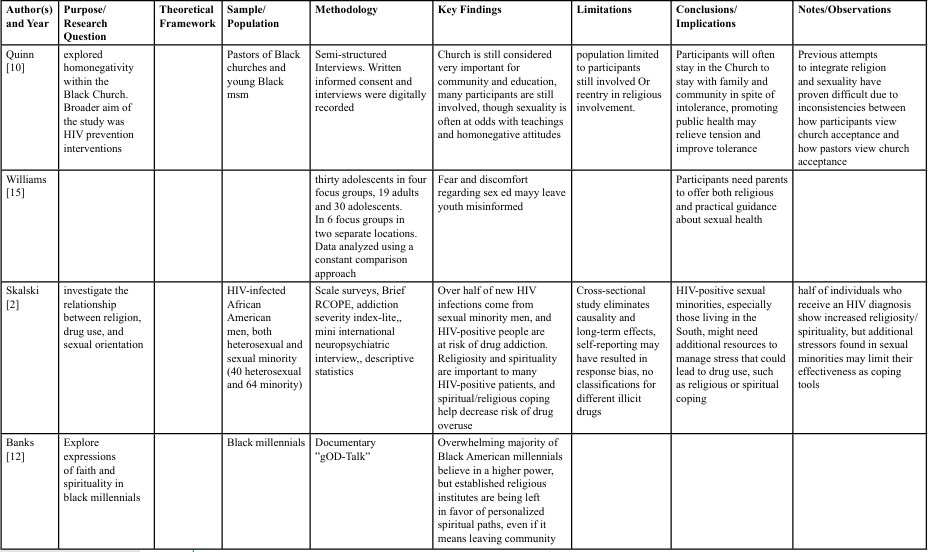
Table 1
Spirituality
Private domain of religion
Though religion and spirituality are often viewed as synonymous terms, this paper instead defines each term as separate but often overlapping concepts related to how people interact with what they consider sacred or holy. In this sense, spirituality refers to the inner workings of a person in regard to how they view and experience the supernatural, and evolve a practiced embodiment of connection to a higher other and higher self. As opposed to public domains of worship, which often take place in religious institutions such as churches or temples, private domains of worship embody the more spiritual side of participants in less formal environments. The personal fulfillment of religion and forging a sincere relationship with God are common aspects of spirituality, ones that BMSM tend to gravitate toward more often. Spirituality can be fostered and maintained outside of institutional religion, making it more appealing to sexual minority men in the Black Church who often find it difficult to attend services due to homonegative behaviors from the church body [10]. In a study from Battle et. al on older Black gay men, spirituality was shown to have a direct correlation with the participants’ happiness, while religiosity had an inverse correlation [19]. Again, this could be due to stressors within the Black Church making it difficult to attend services or events on a regular basis. Spiritual coping has also been shown to decrease drug use in HIV-positive BMSM, highlighting its effectiveness as a stress reliever [2,24].
Church as a protective factor
The Black Church and religious participation have been identified as protective factors against drug use and sexual risks such as multiple sexual partners and unprotected anal or oral sex. These protective aspects stem from family, community, education, resilience, and influential behavior in the Black Church.
As previously explained, attending worship services was almost exclusively done as a family for many Black children, and it was through religious attendance that they learned their values, beliefs, and history [13,16]. Though the Black Church is often criticized for its homonegative views, described by one participant in Drumhiller’s study as “not in tune with the real world” [20], many BMSM still see an opportunity for it to become a platform for tolerance and HIV education and prevention. As one participant in Powell’s study put it, BMSM would be more accepting of the Black Church if only the Black Church would be more accepting of them [24]. Education on sexual health and HIV, enhancing the role of the pastor in said education, and working in tandem with faith-based organizations are all ways in which the Black Church can further protect its sexual minority members.
The Role of The Church in HIV Education/Prevention
Studies such as Powell’s, which identified strategies to help the Church become more involved in HIV-prevention efforts, reported that pastors who are informed about HIV care can increase engagement in HIV care and treatment due to their influence on church members [24]. In a study from Garofalo, a combination of religious attendance and faithfulness was associated with a decrease in acts of sexual risk such as unprotected anal sex [1]. This could be explained by how religion influences lifestyle behaviors, access to social support through community, promotes healthy beliefs, or provides methods of coping, as explained by Grieb [23]. Because HIV disproportionately affects BMSM, the fear of spreading HIV is a constant one. Based on current prevention and treatment plans, BMSM have a 50% lifetime risk of HIV infection [23]. Lack of knowledge concerning HIV/AIDS has previously prevented some religious institutions from speaking on the topic in a tolerant light, but by shifting the topic of HIV prevention and treatment from a religious issue into a social justice and public health issue, the Black Church can “reframe” the problem in a way that is better suited to their already established role as a source of social and civil activists [13].
The Role of The Pastor in Education
As a historically educational hub for Black communities, pastors and preachers have much influence in the cultivation of attitudes in church bodies. According to Quinn, messages from pastors were exceptionally influential in how young BMSM saw themselves and their place in the Church with regards to their sexuality [10]. The most accepted homonegative beliefs in the Church stem from Christian dogma [16], implying that pastors can control beliefs of the body through their sermons. Inconsistencies between how pastors viewed their congregation and how participants in Quinn’s study viewed them in terms of judgment toward homosexuality highlights that some pastors may be out of touch with their congregation without realizing it [16]. Despite this, Powell’s study identified pastors as the best primary, but not only, messengers for positive sex education in the Church like teaching on healthy relationships and information on HIV testing [24]. Though the Black Church has failed in the past to be accepting toward sexual minorities, BMSM still see benefit in attending religious services and wish to see their churches become platforms for tolerance in their communities. As one of the participants in Powell’s study said, “‘If you want people to come with open arms, you have to embrace them with open arms. Don’t embrace me with whispers and snickering’” [24].
Resiliency and Faith-Based Organizations
In Grieb’s 2020 study, participants reported a need to access spiritual and religious support in non-church settings. In cases such as those, faith-based organizations (FBOs) are excellent sources of providing religious support outside of institutional structures. FBOs are, typically, non-profit organizations and businesses rooted in religious identity and identified through their religious beliefs or connections. They can include churches, temples, and charities. Peer support and individual level interventions have been shown to be most effective in offering support and decreasing sexual risk in BMSM [1,23]. BMSM have stressed how important spirituality and religion can be as social supports and sources of resiliency in their lives [25] and have affirmed the importance of having safe spaces where they can receive support and discuss the unique challenges they face [25]. According to Nunn, there is an interest in involving FBOs in public health to “help reduce racial disparities, and to leverage the positive role of faith and spirituality” in Black communities [3]. FBOs tend to be underutilized in Black communities due to financial and time restraints, though there is evidence they are able to provide good quality HIV interventions when they work alongside communities [3].
Church as a risk factor
The Black Church has been described as paradoxical for the way it treats its sexual minority members [13]. As previously explained, many of the homonegative beliefs and attitudes in the Black Church stem from Christian dogma [16] and have the tendency to undermine the self-reported happiness of Black LGBT members [19]. Stressors stemming from role flexing, spiritual genocide, family, mental health, and traditional views of masculinity all have shown to play a part in negatively impacting BMSM through the Black Church [5,11,16].
Role Flexing
A number of BMSM in the Church have reported the continued use of “role flexing,”[10,16,26] which refers to the tendency to modify or switch between different characteristics, personality traits, or roles based on the situation a person is in to avoid perceived open rebuke and rejection due to heteronormative ideals. For example, a young BMSM may dress or speak differently when they are with their family or church than when they are with their partner. Switching between roles in this fashion is a form of protection; by modifying one’s behavior, they can limit the risk of discrimination or persecution from the people they care about.
Intersectionality, as defined by Heard-Harvey, is the process of examining the interconnectedness of multiple variables (age, race, gender, etc.) to understand societal issues [26]. In terms of role flexing, the intersectionality of race, sexual orientation, and sexual identity in the experiences of BMSM sometimes means marginalization in both Black and queer communities, resulting in multiple degrees of tension [26]. The emotional strain of long-term role flexing can cause high levels of stress in BMSM, therefore influencing sexual behaviors, increasing sexual risks, and even increasing the risk of suicidal ideation [5,16].
Spiritual Genocide
The term “spiritual genocide” was used in Lassiter’s 2014 study to describe the spiritual and psychological damage BMSM experience when they are disconnected from their higher power and the strength they are provided through that relationship. In a study by Drumhiller, it was noted that a high degree of spirituality was directly associated with a high sense of self-esteem [20]. When BMSM are cut off from their source of spiritual resilience, however, the internalization of homonegative messages becomes a more persistent issue for them and they become more susceptible to mental health issues, sexual risk-taking, and lower utilization of HIV prevention services [4,5,14]. “Whether they practice safe sex or not, BMSM already see their souls as damned,” so they do not bother with healthy sexual decision making [6,11]. In this sense, staying with the Black Church could paradoxically make it harder to be spiritually healthy.
Family
Kinship ties have been shown to directly impact how BMSM experience wellness [22,25], especially so due to the entwined nature of family and religion [10,13]. However, the connection between family and religion often acts as a two-edged sword in regard to homonegative attitudes and behaviors. In Quinn’s study on the experiences of homonegativity in BMSM, most of the participants experienced homonegative interactions with their family members after coming out. Those homonegative messages often had religious undertones [16]. Being out often directly affected the family due to stigma from the larger church body [16]. According to Lassiter, who did a literature review on African American same-gender-loving men, being welcomed in the church was directly linked with their ability to keep their sexual identity private [18]. Though some BMSM are able to stay connected to their biological families after coming out to some degree, many others are left with no other choice than to distance themselves from their church, thereby distancing themselves from their families [10]. Chosen families, sometimes referred to as “gay families,” offer alternative familial and social support to BMSM in place of biological families [16,22], though the potential trauma of leaving behind a former family may still cause mental, emotional, and sexual health issues.
Mental Health
According to an online survey from 2018, it has been shown that BMSM have increased risks of suicidal ideation and suicide attempts [5]. This is likely because stigma, discrimination and victimization related to sexual orientation have all been associated with increased suicidal ideation in young LGBT members [5], as well as the pervasiveness of homonegative attitudes in the Black Church. Because many BMSM experience prolonged exposure to religious institutions like church through childhood acculturation and adulthood pressures to fit in, they are more likely to internalize homonegative messages from the Church [11]. Intersectional tensions related to race, gender, and sexual orientation may also increase risk of suicidal ideation in LGBT youth due to the higher numbers of stressors [5]. In more public domains, such as churches, fear of persecution likely keeps BMSM from speaking out against discrimination. This keeps them isolated and without a social network of supportive peers within the Black Church. Future mental health interventions need to address relevant concerns such as domestic violence and sexual discrimination.
Perceptions of Masculinity
Famous American sociologist W.E.B. DuBois developed a thesis on the formation of Black Manhood in the late 1800s, and a study in 2021 has shown that many of its points remain relevant today. To DuBois, the quintessential aspects of Black manhood included education, intelligence, economic stability, and leadership in the Black family and community [14]. Barnes' study used thematic content analysis to divide the thesis into three themes, with 47% of BMSM in the study reporting they subscribe to at least one of the traits listed in the thesis [14]. The first theme, however, contained heteronormative gender expectations that placed a large amount of importance on how to be perceived as masculine. To DuBois, the value of a Black man came from their position in the nuclear household as the husband, father, and leader [14]. Femininity, in supposed opposition to masculinity, undermined the essential leadership qualities needed in a Black man. These themes are still prevalent today in young BMSM who feel the expectations of physical and sexual dominance to be at odds with homosexuality [16]. In another study, BMSM found their nonconforming gender and sexual identities to be freeing from the normative gender expectations in their religious communities [22]. Temporary conformity of gender expectations is another example of role flexing that BMSM might deal with in their religious communities.
Limitations/Gaps
By far the most prevalent gap in research regarding how religiosity affects the sexual health of BMSM is the exclusion of non-Judeo Christian religions. Religions and other sects of faith that developed outside of the Abrahamic tradition, such as Hinduism, Buddhism, Confucianism, and Taoism, were notably absent from the literature. All but one study in this review used Christianity as their religion of choice in their population samples. Though Christianity has by far been shown to be most heavily prevalent in the lives of BMSM, excluding other religions and faiths limits the generalizability of established research. A large majority of the papers utilized a cross sectional design for their studies, allowing for observation of a limited number of variables at one point in time at the expense of conclusions of causality or for testing differences over an extended period. Many of the studies also only included small sample sizes, some in very specific regions of the U.S., which severely limits the generalizability of the results to a national or international level. Purposive sampling, such as convenience and snowballing, was also established as a limitation in many of the studies in this review, introducing the possibility of sample bias, self-report bias, and small generalizability.
Limitations of this literature review may include sampler bias in regards to the papers chosen for review. As previously mentioned, the databases used in the process of collecting papers were confined to what was available to students and staff at the University of Alabama at Birmingham during the collection period. Therefore, the methodology used is not exhaustive of the established sphere of literature, and relevant studies may have been excluded due to an absence of knowledge or experience pertaining to their existence. Lack of generalizability and reproducibility is a common shortcoming in literature reviews, and readers should be aware that further research beyond a single literature review is encouraged.
Implications for Practice
It is conclusive that religiosity and spirituality offer a wide array of benefits for BMSM in the right settings and provided by the right sources. For future HIV interventions and treatments, a holistic approach that highlights the strengths of private and public religion and spirituality would work best for future programs that can also focus on community and culture [1]. Future research should explore ways to integrate spirituality and religiosity into HIV prevention and treatment such as peer support, counseling, prayer, and worship [23]. This can be done by combining the resources provided by faith-based organizations and the social networks cultivated by community based businesses. Steps may also be taken to slowly include the Black Church in HIV care and education through pastors, as it has been established that pastors are influential in shifting the attitudes of their congregation [16].
Conclusion
The effects of spirituality and religiosity on the sexual health of Black men who have sex with men have been proven significant enough to warrant closer inspection, primarily by health and faith communities. Through this literature review, religiosity and spirituality have been defined as distinct concepts that leave their own impacts on Black communities, and the Black Church in particular has been identified as both a protective factor and a risk factor for Black sexual minorities. The potential of the Black Church to become a platform for tolerance and acceptance toward sexual minorities and non-heteronormative individuals, as well as an educator on sexual health and HIV care and prevention awareness, have been outlined in multiple studies and is considered by some members of the Church as a way of bridging misunderstandings between pastors, sexual minorities, and other members. An exceptional gap in the literature lies in the exclusion of non-Judeo-Christian religions in many studies. The Black Church was the focus of many studies, and it has been established that the Black Church has roots connected to Protestant Christianity. As a result, most studies related to Black Americans and religion focus on Christianity and no other faiths such as Judaism, Islam, or Buddhism. Small sample sizes and cross-sectional studies were also identified as gaps in the established literature. Larger, more substantive qualitative and quantitative studies can be explored to more accurately review these findings of the literature review.
Conflict of Interest:
The authors declare no conflicts of interest.
References
Garofalo, R., Kuhns, L. M., Hidalgo, M., Gayles, T., Kwon, S., Muldoon, A. L., & Mustanski, B. (2015). Impact of Religiosity on the Sexual Risk Behaviors of Young Men Who Have Sex With Men. Journal of Sex Research, 52(5), 590–598. View
Skalski, L. M., Martin, B., & Meade, C. S. (2019). Sexual Orientation, Religious Coping, and Drug Use in a Sample of HIV-Infected African-American Men Living in the Southern USA. Journal of Religion & Health, 58(4), 1368–1381. View
Nunn, A., Jeffries,William L.,,IV, Foster, P., McCoy, K., Sutten- Coats, C., Willie, T. C., Ransome, Y., Robin, G. L., Jackson, E., Berkley-Patton, J., Keefer, M., & Coleman, J. D. (2019). Reducing the African American HIV Disease Burden in the Deep South: Addressing the Role of Faith and Spirituality. AIDS and Behavior, Suppl.Supplement, 23(3), 319-330. View
Hill, W. A., & McNeely, C. (2013). HIV/AIDS Disparity between African-American and Caucasian Men Who Have Sex with Men: Intervention Strategies for the Black Church. Journal of Religion and Health, 52(2), 475–487. View
Wilton, L., Chiasson, M. A., Nandi, V., Lelutiu-Weinberger, C., Frye, V., Hirshfield, S., Hoover, D. R., Downing, M. J., Lucy, D., Usher, D., & Koblin, B. (2018). Characteristics and correlates of lifetime suicidal thoughts and attempts among young black men who have sex with men (MSM) and Transgender Women. Journal of Black Psychology, 44(3), 273–290. View
Watkins, T. L., Simpson, C., Cofield, S. S., Davies, S., Kohler, C., & Usdan, S. (2016). The Relationship of Religiosity, Spirituality, Substance Abuse, and Depression Among Black Men Who Have Sex with Men (MSM). Journal of Religion and Health, 55(1), 255–268. View
Arrey, A. E., Bilsen, J., Lacor, P., & Deschepper, R. (2016, July 22). Spirituality/religiosity: A cultural and psychological resource among Sub-Saharan African migrant women with HIV/AIDS in Belgium. PloS one. View
Public Broadcasting Service. (n.d.-a). The Black Church. PBS. View
Brewer, L. C., & Williams, D. R. (2019, March). We’ve come this far by faith: The role of the Black Church in Public Health. American journal of public health. View
Quinn, K., & Dickson-gomez, J. (2016). Homonegativity, Religiosity, and the Intersecting Identities of Young Black Men Who Have Sex with Men. AIDS and Behavior, 20(1), 51-64. View
Lassiter, J. M. (2014). Extracting Dirt From Water: A Strengths- Based Approach to Religion for African American Same Gender-Loving Men. Journal of Religion and Health, 53(1), 178–189. View
M. Banks, A. (2023, October 24). Documentary on Black millennials depicts wide range of religion, rebellion. Religion News Service (USA). Available from NewsBank: Black Life in America. View
Miller, R. L. (2007). Legacy Denied: African American Gay Men, AIDS, and the Black Church. Social Work, 52(1), 51–61. View
Barnes, S. L. (2021). Becoming a Man: A Duboisian Examination of the Experiences of Black Men Who Have Sex with Men. Social Problems, 68(2), 207–225. View
Williams, T. T., Pichon, L. C., & Campbell, B. (2015). Sexual Health Communication Within Religious African-American Families. Health Communication, 30(4), 328–338. View
Quinn, K., Dickson-Gomez, J., & Kelly, J. A. (2016). The role of the Black Church in the lives of young Black men who have sex with men. Culture, Health & Sexuality, 18(5), 524–537. View
O’Cleirigh, C., Foley, J. D., Stanton, A. M., McKetchnie, S. M., Gulbicki, L. R., Muten, J., Chai, P., Fitch, C., Onofrey, S., Klevens, R. M., & Psaros, C. (2024). Sexual Networking and HIV/STI Prevention Among Men who have Sex with Men and Identify as Persons of Color in the Era of COVID-19 in Boston, MA: Qualitative Findings from the National HIV Behavioral Surveillance Project. AIDS and Behavior, 28(2), 473-487. View
Lassiter, J. M., & Parsons, J. T. (2016). Religion and Spirituality's Influences on HIV Syndemics Among MSM: A Systematic Review and Conceptual Model. AIDS and Behavior, 20(2), 461- 472. View
Battle, J., Daniels, J., Pastrana, A. (Jay), Turner, C. B., & Espinoza, A. (2013). Never Too Old To Feel Good: Happiness and Health among a National Sample of Older Black Gay Men. Spectrum: A Journal on Black Men, 2(1), 1–18. View
Drumhiller, K., Nanín, J. E., Gaul, Z., & Sutton, M. Y. (2018). The Influence of Religion and Spirituality on HIV Prevention Among Black and Latino Men Who Have Sex with Men, New York City. Journal of Religion and Health, 57(5), 1931–1947. View
Garrett-Walker, J. J., & Torres, V. M. (2017). Negative Religious Rhetoric in the Lives of Black Cisgender Queer Emerging Adult Men: A Qualitative Analysis. Journal of Homosexuality, 64(13), 1816–1831. View
Joe, J. R., Heard, N. J., & Ford, D. J. (2023). “Wellness is wholeness”: Explorations of wellness among Black gay men. Journal of Counseling & Development, 101(1), 56–68. View
Grieb, S. M., Donovan, E., White, J. J., Miller, D., & Dangerfield II, D. T. (2020). Increasing Opportunities for Spiritual and Religious Supports to Improve HIV-Related Outcomes for Black Sexual Minority Men. Journal of Urban Health, 97(5), 704–714. View
Powell, T. W., Herbert, A., Ritchwood, T. D., & Latkin, C. A. (2016). "Let Me Help You Help Me": Church-Based HIV Prevention for Young Black Men Who Have Sex With Men. AIDS Education and Prevention, 28(3), 202-215. View
Klein, C., & Lomonaco, C. (2016). Real talk: Developing a computer-delivered sexual health program for black men who have sex with men. AIDS Education and Prevention, 28(6), 455- 471. View
Heard Harvey, C. C. C., & Ricard, R. J. (2018). Contextualizing the Concept of Intersectionality: Layered Identities of African American Women and Gay Men in the Black Church. Journal of Multicultural Counseling & Development, 46(3), 206–218. View