
- About the Journal
- Editorial Board
- Review Process
- Author Guidelines
- Article Processing Charges
- Special Issues
- Current Issue
- Past Issue
 Journal of Social Work and Welfare Policy
 Volume 4 (2026), Article ID: JSWWP-214
https://doi.org/10.33790/jswwp1100214Research Article
Barriers to Resettlement for Refugee & Immigrants: A Qualitative Data Analysis of Peer Support Groups
Azadeh Masalehdan Block1*, Ivonne Smith-Tapia2, Leslie Aizenman2, Yesmina Salib2, Kira Panzer3, Sheri Boyle1, and Janice McCall1
1Department of Social Work, Sociology & Human Services, PennWest University of PA, California, PA ,United States.
2Refugee & Immigrant Services, Jewish Family and Community Services of Pittsburgh, Pittsburgh, PA, United States.
3Department of Psychiatry & Neurobehavioral Sciences, University of Virgina, Charlottesville, VA, United States.
Corresponding Author Details: Azadeh Masalehdan Block, MSW, PhD., Professor, Department of Social Work, PennWest University, Box 90, 250 University Ave., California, PA 15419, United States.
Received date: 09th June, 2026
Accepted date: 01st September, 2026
Published date: 03rd September, 2026
Citation: Block, A. M., Smith-Tapia, I., Aizenman, L., Salib, Y., Panzer, K., Boyle, S., & McCall, J., (2026). Barriers to Resettlement for Refugee & Immigrants: A Qualitative Data Analysis of Peer Support Groups. J Soci Work Welf Policy, 4(2): 214.
Copyright: ©2026, This is an open-access article distributed under the terms of the Creative Commons Attribution License, which permits unrestricted use, distribution, and reproduction in any medium, provided the original author and source are credited.
Abstract
The resettlement process is a complex one; in ANONYMOUS LOCATION, refugee and immigrant support groups are utilized to ease the process of integration. The primary aim for this program evaluation is assessing a refugee and immigrant resettlement program and the types of barriers to integration faced by its participants. The qualitative data analysis design described herein triangulates 111 documents from clinical observations, focus group transcripts, and peer leader feedback. Findings from qualitative analyses reveal that barriers to integration include family, materials, venue, transportation, over-reliance on peer support groups (PSG), engaging new members, group dynamics, team management, interpreter, household tasks, and misunderstandings. Implications for policy include internal shifts in funding and resources within agency as well as advocacy for additional county funding and resources. Implications for integration of peer model in social work are discussed.
Keywords: Refugees, Groupwork, Peer, Resettlement, Qualitative Research
Introduction
Stressors are a part of resettlement and have an impact on one’s emotional and mental health [1,2]. The conditions that one lives in post displacement, i.e. their experience in a refugee camp, is directly linked to one’s mental and emotional health [3-5]. While acute trauma is something to be mindful of in the work being done, especially with refugees, the layer of displacement which is connected to social, cultural and economic conditions must not be overlooked [1,2]. ANONYMOUS created the refugee and immigrant support group (RISG) program to connect, support and strengthen client connections to community.
At ANONYMOUS, immigrants and refugees are provided with services that assist with English proficiency, health services, green card applications and social support [6]. The social support program, RISG, provides a flexible, unique and culturally grounded approach to healing. The cumulative trauma of the resettlement/immigration process impacts one’s shifting identity. Group work approaches have been shown to support those from more collectivist cultures who would benefit from support in recalibrating and building a new identity [7-10]. The model utilized at ANONYMOUS is inclusive of concepts like cultural competence and humility and is grounded in a strengths-based approach. From these perspectives, the community is the strength; the peer groups provide a modality through which to harness that strength for the benefit of the newly arriving immigrant or refugee.
Group Work with Refugees & Immigrants
A recent scoping study examined 26 relevant peer-reviewed articles on cultural competence in refugee service settings and reported themes such as integrated care models, family-centered or community-based service models, and meaningful participation of refugee voices as important features of effective service provision for refugee populations [9]. In their evaluation of research methods and group work, Rubel & Okech [11] asserted that group work researchers play an important role in giving voice to populations that are marginalized, and that the qualitative work helps to shine a light on the complexities that might have otherwise been missed. Of the 30 studies reviewed to evaluate strategies in qualitative research methodologies, only one study was conducted with an immigrant population. Suh & Lee [12] conducted a psychological group (reality therapy) run by trained bi-lingual therapists with a small group of Korean women over eight weekly meetings. Authors found that many barriers impacted the group members adaptation including: low self-esteem, homesickness, language barriers, issues with cultural adaptation, and financial difficulties. Many clients made progress on the aforementioned issues and reported improved well-being of self, greater group connectivity and overall improved well-being.
Less is empirically known about program outcomes when it comes to evaluating the efficacy of peer groups with the refugee and immigrant population. In the US, peer groups have been utilized extensively in health education and in the treatment of substance use disorders [13-16]. In general, the US has embraced the peer group model in places like community settings (e.g. new parent groups and shared experience groups) as well as in service to communities (e.g. Girl Scouts) [17]. Peer groups are very effective at serving isolated populations and at obtaining cultural minority perspectives; in fact, recent research has shown that peer models may be especially adept at helping those ethnic communities within the service area of ANONYMOUS [18]. While stigma about mental health treatment exists in native and non-native population [19], research indicates social support increases feelings of social integration, decreases feelings of loneliness and provides more distinct avenues in the advancement of healthier coping skills [20]. In Clark and colleagues’ 2026 study, they also found that “trust, connection, proactivity and moral commitment to be key mechanisms that enabled better integrated mental health care across refugee clients, providers and services”.
The RISG program provides an entrée to services, opening the door to the potential for deeper engagement in mental health services [16]. The RISG program at ANONYMOUS was built out of the Center for Torture and Trauma Survivors’ (CTTS) clubhouse mode and is culturally grounded and rooted in the strengths of the communities it serves. Group models are economically efficient; the cost of staffing is less than that of 1:1 services like mental health counseling or case management [8]. Thus, the purpose of our study is to conduct a qualitative program evaluation of a refugee resettlement program initiative, RISG. Our study’s aim is to assess the types of barriers to integration faced by participants of RISG.
Methods
The utilization of agency data for academic and research purposes was approved by the Institutional Review Board of ANONYMOUS UNIVERSITY, IRB 17-003. All data analyzed by researchers was de-identified and coded; only employees of ANONYMOUS had access to de-identified primary data that connects client ID and name for the purposes of their continuous work providing services. Client’s consent to treatment and use of client data statements are confidential and stored within agency. The purpose of qualitative research can be varied; in the case of this analysis, it was to advance understanding and theory [21] and to confirm and expand on previous quantitative data findings [6,22].
Qualitative Data Collection
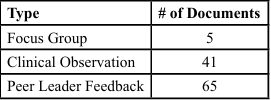
Triangulation was utilized to ensure validity of themes, minimize bias and provide a robust qualitative analysis [23,24]. The 111 source documents included: focus group transcripts; clinical observer notes, and peer leader assessments. Data utilized spanned from the start of the RISG program in 2015 through to 2019.
Focus Groups. Examples of focus group questions include… How many focus groups were convened and how many attended? Focus groups are audio-recorded and facilitated by three staff members at ANONYMOUS. The coordinator for the RISG program facilitates the groups with two interpreters.
Clinical observations. The clinical observations are done by a master’s or doctorate-level clinician whose charge is to minimize impact on the group process and to take an ethnographic approach to observing. Clinical observations included areas such as…
Peer leader assessments. The peer leader assessments are a qualitative assessment of perceptions of success, areas for growth and pressing concerns. Areas examined include…
Insert Appendix A, Table 1 right about here
Appendix B
Table 1: Qualitative Data Tabulation
Qualitative Data Analysis
Utilizing a grounded theory approach, these qualitative documents were “open coded” by two staff to identify primary themes [25]. In this initial analytic phase, the goal is to ensure that staff remain with an “open mind” without preconceived theories to uncover meaning. From this initial phase, staff examined line-by-line, identifying concepts and early categories, and then compared their notes to identify primary themes to inform a series of “focused codes” [26]. This helped to create cohesion between the codes and their linkage to other concepts. “Focused codes” reflected key building blocks in understanding client and provider experiences of the peer support program. Interpretations of those passages apropos the “focused codes” were documented through a process known as “memo writing” [26]. Memos were reviewed and re-reviewed by a third evaluator to judge whether or not these memos helped to synthesize theory about peer support programs for immigrants and refugees [25]. By discussing the memos and codes the research team was able to resolve discrepancies before creating a final list of thematic categories for all 111 documents.
For example, the code of “barriers to integration” was compared between rater one and rater two, and rater two and rater three to assess inter-rater reliability for “open and specific coding”. “Barriers to integration” itself incorporates a wide range of meaning and definition, thus across all raters, it was essential to engage in rigorous analysis to ensure reliability of the code/ focused-codes developed and to demonstrate consistency in methodologies undertaken to analyze diverse populations. Furthermore, the inter-rater reliability analysis meticulously compared all quotations, document by document. For example, if rater one and rater two each identified four codes in a source document, but only two were the same source document, the inter-rater reliability for this document comparison would be 50%. This research is taking place in a social services agency that is not engaging in experimental design; therefore, the analysis of reliability was not nominal. According to Hallgren [27], in such clinical settings, comparing coding data through percentages of agreement is appropriate. Agreements on coding in a thematic analysis, like the one presented herein, are high given the context and knowledge of the groups by the research staff coding the data.
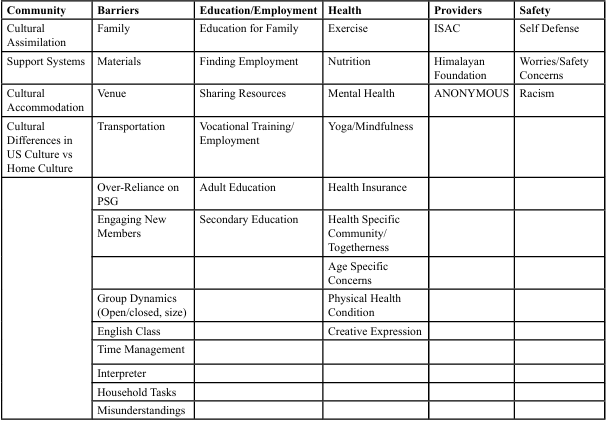
Overall, the coding scheme for barriers to integration included 12 focused codes: family, materials, venue, transportation, over reliance on peer support groups (PSG), engaging new members, gender specific, group dynamics, English classes, time management, interpretation, household tasks, and misunderstandings. To maintain confidentiality, documents will be labeled by their document number, clinician ID number, and type of feedback: leader, focus group or observer.
(insert Table 2, Appendix B, about here)
Appendix B
Table 2: Broad and Focused Codes
Results
Barriers to Integration
Family. Thirteen documents included quotes that identified “family” as a critical aspect of their lives. These quotes demonstrate that family can either enhance, (i.e. by providing care for children so that parents can attend groups); or detract from group participation (i.e. by requiring adults to stay home to care for indigent relatives.) In this passage, a group leader describes how family impacts the participants’ lives:
Some participants were not able to attend regularly due to their family chores. The female participation is still very low, despite our effort to bring gender balance. Likewise, some individuals with some physical and/or emotional issues are yet to be involved in the program (document 4, SGL 1, leader feedback).
Childcare remains a critical need, in particular for female participation. Sometimes peer group leaders were providers of childcare when specific persons designated with that duty did not come to the group. Participants faced barriers in terms of balancing the needs of their family and their work schedule, balancing these things did not always leave consistent time open for group participation.
Materials. Twenty-three documents included quotes relating to the materials utilized to run the group meetings. There was a challenge for a particular refugee sub group in terms of furnishings available. ANONYMOUS has addressed this issue; it is no longer impacting client participation. Peer leaders also reported desire for more materials supports for weekly group meetings; although group leaders acknowledged being able to run the groups despite budget constraints. Some locations had WIFI and presentation materials (e.g. projectors, sound systems), others did not; peer leaders would have preferred to have these materials available consistently. One leader reported that:
I would have engaged them differently, if I had some art materials –like paper, color pencils, crayons, paints and brush (document 26, SGL2, leader feedback).
Venue. Location to host these groups appears to be an evolving issue. ANONYMOUS replies to these issues as quickly as possible, but not all issues can be resolved swiftly. Twenty documents described issues related to the venue for the group. Space being provided to particular refugee sub groups is not always conducive to number of participants in groups or to activities that group wishes to engage in (i.e. yoga practice needs more physical space).
Sometimes space dedicated to the RISG program was being used for other purposes and this posed issues for group leaders in terms of running groups in a timely fashion and enhancing comfort of group participants. The following quote underscores one of the times in which a leader felt the space was impacting the success of the group:
We have a very limited space in the hall that we have been conducting this program at. And in the middle of the summer without enough space and all the congestion it’s getting very warm and hard for us to continue this program (document 1, SGL 4, leader feedback).
Childcare space was not always separate from group space and this posed issues in terms of participation. In particular, clients reported positive experience with public library space that felt more welcoming and served for multiple uses (childcare, older kids and adults in group).
Speaker 11: I like that it is a library – we can bring kids; high schoolers watch younger kids; kid friendly space is very important
Speaker 9 & Speaker 1: The staff are wonderfully friendly; we love the pictures of (speaker’s ethnicity) people on the wall upstairs; really like the space; (document 41, 4AB, focus group).
Some refugees reported frustration with being resettled to communities that experienced extreme poverty or violence and saw this as retraumatizing and/or undesirable. Clients reported wanting more to be done to ensure safety and upward mobility. While this doesn’t reflect the materials utilized in group, per se, participants did express a desire for the groups to impart information about which neighborhoods are desirable and safe to live in. This focus group transcription helps bring this issue to light:
Speaker 3: Yes we like living in NEIGHBORHOOD, the rent is more expensive but it is worth it.
Speaker 1: Yes, that is why something like a flyer would be good for new people, it would be helpful to have these things.
Speaker 3: Refugees who have come here already struggled with bad conditions where they are from. So we don’t want to live in an area with bad things like shooting or dangerous situations. We already experienced that (document 43, IFG, focus group).
ANONYMOUS is prioritizing ensuring that groups have accessible locations, centralized to community. For some, proximity to walk to venue for group would be ideal. Multiple ethnic groups discussed location as critical to participation. Some participants questioned the quality of the space (furnishings and temperature) and felt that enhancements were necessary to bring comfort to participants.
Transportation. In 37 documents, participants identified transportation as a hindrance to group participation. Lack of transportation or transportation difficulties were a significant hindrance to participation across multiple ethnic groups (e.g. Bhutanese, Latinx). For some ethnic groups, individualized pick up and drop off was the preferred way to engage clients in the group setting (e.g. Bhutanese, Turkish, Latinx). One leader describes the process before and after each group:
Since the participants were living across [several neighborhoods] picking them up in the morning and dropping them off after the classes required extended period of time (Document 2, SGL1, Leader Feedback).
Bus transportation was “not helpful” to certain ethnic groups; it is unclear if this is culturally connected or related to proximity and utility of buses in their geographic region. For other ethnic groups, RISG group location needed to be located near public transportation. Some clients reported difficulty with navigating the port authority/ bus system. This underscores the unique cultural contexts of transport and what modalities are acceptable to specific populations and/or subgroups within populations (i.e. elderly individuals).
Some group leaders reported interest in having dedicated vehicles for participant transport. For groups to engage in field trips, dedicated transport was a necessity for successful actualization of the trip. For some populations driving in inclement weather may have been a barrier to participation. For some, a lack of efficient public transportation was emblematic of more significant concerns with community resources. Some leaders and participants indicated that getting a driver’s license, and/or having free parking may reduce transportation barriers.
Over-reliance on peer support groups (PSG). Nine documents identified issues that reflect a desire that the RISG groups provide acclimation and information across multiple service areas such as health insurance, employment, education, health & wellness, language interpretation for social events, and even assistance with grocery shopping. Many wanted individualized support in navigating their new environment until they (not ANONYMOUS) deemed services complete. Many populations reported wanting more individualized attention from group leaders for their specific needs and tailored support related to their experience. One peer leader describes her experience with sharing resources and how participants then wanted to utilize group time to get specific information related to their personal situation:
Sharing resources with the ladies would sometimes turn into some of them wanting individual attention. I had to explain to them that I was not a trained case worker and referred them to ISAC (document 78, SGL26, leader feedback).
Striking the balance, for the leaders, between giving and sharing resources and solving the individual problems of participants remains ongoing since new participants are always joining. ISAC is a program that provides individual case management and is a service provided by multiple agencies in ANONYMOUS county. Group leaders will be most successful in focusing on group issues when they reaffirm the boundaries and limit the amount of individualized assistance, they give during group time.
Engaging new members. In 14 documents, issues surrounding the engagement of new participants were discussed. Group leaders discussed wanting to integrate new members into the RISG group but feeling stuck on how to achieve this. Here is a portion of focus group dialogue that focuses on this issue:
The group discussed the issue of attendance for quite a long time. They were frustrated at the low attendance of the support group and talked about why they believed people were not joining the group. Some members believed it was due to laziness, others argued that people were not comfortable discussing certain problems with community members (document 43, IRFG, focus group).
Leaders, on the other hand, reported wanting more supports from ANONYMOUS in terms of recruitment. Barriers to engaging new members may include lack of motivation and stigma surrounding discussing personal matters in a group format. Some expressed interest in providing dedicated ethnic community space and social events as means for destigmatizing and engaging new members in RISG. For some ethnic groups, the venues affiliations dictate population engaged, i.e. church location engages church members of a specific ethnicity. Engaging young adult participants is a particular challenge because of work/family/life balance issues. Specific groups for parents and older adults may be warranted to further engage these populations due to their experience of additional barriers to treatment.
Group dynamics. Who attends and participates in groups can vary week to week and this can greatly impact group dynamics; this finding was demonstrated in 26 documents and was consistent across ethnicities (i.e. Bhutanese, Latinx, Syrian, Sudanese, and Congolese). Some ethnicities experienced more repetition in attendance, whereas others tend to have more new group members with each weekly meeting. The following observation was made regarding group dynamics in one group meeting:
After 45min, another three women arrived to the group. Once these three additional women arrived, the group dynamic shifted and the facilitator became more formal in her presentation style. She continued to demonstrate strong capability of group facilitation, but two of the three of the new women began to complete activities with negative rather than the positive tone the group used earlier (document 40, SGO, group observation).
Behaviors of group members also varied and could be related to age and maturation (in terms of willingness to wait turns to speak, etc.). Some leaders and group members blamed personal character flaws for a lack of participation during group, others suggested that some members only coming to groups that are “fun” and involve some special or unique activity/outing. Individuals are sometimes reticent to share in group because of fear of stigma and concern about how others will perceive them based on the issues/problems they are facing. Some feel ownership of their group and question the addition of group members who they perceive to be “different” from them; this also manifested in attendees being reticent to have opposite gender participants and family members of other ethnicities (and level assimilation) present. There is value in dividing group members up content-wise to make what is discussed relevant to all in attendance. Pre-existing relationships amongst group members, and between group leaders and group members can impact how the bigger group interacts in both positive and negative ways.
Also, there were some previous relationships established some woman were closer to others. Also, all the woman were so different and had different reasons for attending the group. Some wanted to socialize and have fun. Some wanted to have learn skills. Even though I mixed the sessions some educational some fun the woman would chooses which sessions to attend (document 76, LA1, leader feedback).
Subgroups can also form based on the time point for resettlement and one’s level of previous familiarity or assimilation. Group leaders expressed frustration with rules for group engagement, including expectations surrounding taking turns speaking and lacking clarity in how to best navigate this aspect of group work; although communication patterns is a part of the group leader training process.
English classes. English classes (or English as a second language, ESL) provide an avenue for deeper engagement in US culture. Clients report needing additional supports (e.g. childcare, transportation) to engage in these classes. Twelve documents discussed the need for English classes to meaningfully engage in the community. In the following quote, the observer listened to the group leader discuss the intersection of the RISG and English classes in aiding in assimilation:
However, SGL8 believes, at least for now, that the areas she would and has selected to help are language skills and pragmatic use of language, cultural interpretation, and the ramifications of misinterpretation, help with child and family issues and supports (document 37, BM1, group observation).
Lack of English proficiency is seen as a major barrier to leading a full life; groups often focus on this as a central concept or content area. Some groups have tried to run a group with mixed levels of English proficiency, unclear if this mixed model is of benefit to clients. When asked what services leaders could use assistance with the reply was often about ESL course offerings and access to ESL classes in conjunction with the peer support groups.
Time management. Many leaders commented that their participants had multiple demands on their time including the demands of other groups that aid in their resettlement. Nine documents highlighted the issue of time management. For example, this leader feedback brought awareness regarding a competing demand on participants time related to citizenship testing:
Many of the participants were attending the civic classes. So, they had to leave in the middle of the session (document 48, B1AB, leader feedback).
For some, the orientation to time and timeliness was a barrier to fully participating in the groups (i.e. arriving on time). Competing demands of work and family made consistent participation difficult. Group leaders responded to this by trying to offer group meetings at alternative times. For example:
The only problem that we had was losing participants due to their own schedules. I tried to be flexible by offering weekend sessions (document 81, SGL17, leader feedback).
Time management was a struggle across ethnicities and age groups and underscored the many competing demands on time for families and the struggle with how to prioritize and engage in the community.
Interpretation. Major issues expressed in relation to interpretation were present in 17 documents. The issues related to: lack of interpreters available for proper evaluation of groups and the need for more resources for illiterate clients who due to age, or other circumstances, are unlikely to gain literacy (through offerings like ESL courses). Sometimes groups needed interpreters to be able to offer specialty activities within the group but this was not provided. Many peer leaders discussed language as a barrier to fully engaging in life in their resettled community.
I think that the biggest barrier of immigrants is language: making this the main barrier in front of their lives, limiting their development and progress in this unified and admirable American society that has welcome us, immigrant from all over the world, with open arms (document 8, SGL30, leader feedback).
Sometimes, lack of group leaders with strong English proficiency was a barrier to running a group again (if for example, the group leader stepped down and no one had the proficiency level to take their place; leaders must be English proficient to communicate effectively with ANONYMOUS. Another barrier to integration was literacy; even if a participant could speak some English this did not mean they could read in English (i.e. they are preliterate), which made engaging in some activities much more difficult. However, this didn’t mean the leaders wouldn’t try and then see what supports were needed:
Because we have literate women in the group, we were able to do activities smoothly. With a mixed group, it would be difficult. But for our next session, we are trying to do mixed and see how it goes (document 53, SGL 18, leader feedback).
For groups dealing in the additional layer of disability that impacts communication (i.e. hearing impairment), traditional interpretation would not have ameliorated the issues the group leader faced. Indigenous languages (or less commonly spoken) serve as an additional barrier to integration. For example, one observation related that even with interpretation services language barriers persisted:
SGL43 reported that one of the participants is a new arrival that recently joined the group. The new arrival does not speak English or Spanish. Another participant translated from Spanish into the other’s language (document 109, OBS3, group observation).
Household tasks. In eleven documents, participants reported a variety of barriers in terms of lack of literacy in reading and paying bills, obtaining driver’s licenses, making doctor’s appointments, writing checks, completing tax forms, and being in communication with their child’s school. Participants often brought in documents received in the mail and asked for assistance; leaders sometimes reviewed procedures broadly and at other times (when need was more specific) referred participants to the office hours provided by ISAC as a place for obtaining assistance.
The group member who has been here less than six months produced a couple of utility bills she was confused about. The group, with SGL7’s guidance, discussed the process of how utilities worked and how the bills are paid. She actually demonstrated tearing off the perforated section and how to mail it back (document 23, SD, group observation).
In particular when it came to communications with children’s schools, tech literacy was lacking and specific training on application that manages student records was necessary. Some even discussed needing more instruction with shopping and use of household appliances.
Misunderstandings. In nine documents participants described experiences where they felt misunderstood by American neighbors/ community members and issues surrounding misunderstanding related to religious affiliation. One participant described how his experiences helped him overcome stereotypes he had learned:
Another said he is a Christian and was living next door to a family of Muslims. He had some beliefs about them that were negative, but after getting to know them he sees that they are very good people (he says, maybe even better than some (client ethnicity) Christians he knows) (document 20, CG2, group observation).
Another type of misunderstanding experiences by clients related to the purpose of certain activities. One group observation highlighted some of these conflicting experiences for participants, which may additionally highlight issues of racism and ethnocentrism experienced by participants in the physical spaces where they support groups are hosted.
He (group leader) said an advantage is the support for each other and a consequence was that the communities get very suspicious and threatened when groups of them congregate (document 20, CG2, group observation).
Discussion
This study’s findings highlight myriad barriers that refugees and immigrants face when trying to acclimatize to culture in the USA. The purpose of the RISG program is to assist refugees and newer immigrants in the process of integration to life in a new setting such as a new home country. The RISG program intends to bring awareness to resources they may not be aware of and to teach clients how to utilize services, programs and opportunities that have been designed to aid in the process of acclimatization. In general, research partnerships between community non-profit agencies and research institutions have been limited, due to a variety of issues including financial constraints [28]. As such little is known about the success of such programs in the academic literature, and many agencies aren’t utilizing rigorous quantitative or qualitative research methodologies to evaluate program outcomes. However, those assessing the health risks of asylees and refugees point to community leaders as a source of information and connectivity that would likely support successful integration [29]. Despard’s [28] review of the use of evidence-based practice in non-profit settings revealed other barriers that underscore practical limitations like funding, including: capacity limitations and lack of access to research evidence.
This qualitative analysis unearthed some important issues, such as family; that can provide both help and hindrance to integration, mainly because of the dual roles, especially of women. Suh & Lee [12] concur, finding that, for female immigrants from Korea, marital relationships were strained and clients developed feelings of inadequacy in parenting which was exacerbated by lack of English proficiency and the inability to deeply engage in their child’s schooling.
The materials and venue codes highlight the critical role environmental comfort and dynamism play in the role of the groups. Client and leaders wanted to vary the experience week to week, and wanted the space to be comfortable for their peers. Many peer feedback forms and focus group passages highlighted these practical concerns and ANONYMOUS shifted funds and acted as a broker to ensure that these needs, as they were reasonable, were met for clients.
Interestingly, transportation was an issue that was inconsistent across groups and underscored the need for ANONYMOUS to devise individualized solutions to address this barrier to integration. Transportation is an issue for many clients, but the solutions found to address it must be culturally sensitive and respond to client needs. Research has shown that transportation has been a specific barrier to refugee participation in engaging in physical activities, like going to the gym [30]; in this study it was lack of financial capability to pay for the transport, not access to the transport, that was a barrier to participation. Providing transportation vouchers might be one way to address this issue short term, but the longer-term issue of low pay as a newly resettled refugee or immigrant, underscores the chronic nature of transportation barriers for this population.
Over-reliance on the peer support groups (PSG) was an issue for leaders across ethnicities. Moreover, group leaders had to be trained to respond to clients and to set limits to the services they could reasonably provide in a group setting. Saying “no” wasn’t easy for many of the peer leaders and they would get overwhelmed with tasks better suited to programs and employees at ANONYMOUS whose focus was that particular issue. Perhaps the nature of the refugee experience: being limited to the confines of a physical location which, prevented gainful employment or deeper engagement in society surrounding the camp, set the tone for this over- reliance, making it, an issue that could be specifically redressed for clients being resettled out of those circumstances.
Some groups experienced fluctuations in attendance; some believed it was due to issues like sharing personal issues in a more public forum (stigma), whereas others saw this as an issue of work/family/ life balance. Certainly, the day and time groups should be varied so that issues such as these can be accommodated; initiatives like “bring a friend” day, might be a culturally appropriate way to engage new members in a group meeting geared toward a more disengaged demographic.
Implications for Social Work Practice
Our findings place greater attention and emphasis to the Council on Social Work Education’s (CSWE) 2022 Educational Policy and Accreditation Standards (EPAS), Competency 3: Engage in anti racism, diversity, equity, and inclusion in practice. As discovered through the data analysis of this study, it is critical for social workers to understand the pervasive impact of power, gender, and intersectionality from one’s home country/ culture particularly when working with refugee and immigrant populations. These dynamics will permeate into the group and may lead to certain expectations that differ for participants. Gender dynamics also were expressed at other times when groups needed to be run in separate spaces for male and female clients, to accommodate cultural practices. Sometimes complications arose when there was a struggle in transitioning from one set of ideals more “traditional” in orientation to one that views gender roles as more fluid in terms of societal and occupational roles [31]. One way that ANONYMOUS could address this would be to let the peer leaders guide this process during sessions specifically focused on evolving gender roles and expectations.
Another notable application of CSWE’s 2022 EPAS is in Competency 8: Intervene with individuals, families, groups, organizations, and communities. In our study, group dynamics often permeated group meetings and sometimes took leaders off-course. A specific training on group and power dynamics centered on cultural humility and intersectionality could be beneficial to the groups and leaders in maintaining focus and quality for the RISG programs. Presently, English classes continue to be offered in tandem with the RISG program, and administrators look at new and innovative ways to couple these groups to maximize participation in both. Having multiple demands on one’s time can make juggling responsibilities and opportunities difficult. Many clients reported difficulty in this area, perhaps ANONYMOUS could offer a culturally adapted time management workshop as a part of the RISG program to provide leaders who see this as a need for their constituents the opportunity to engage more deeply in the organization of one’s schedule.
Our findings place critical attention to CSWE’s 2022 EPAS, Competency 2: Advance human rights and social, racial, economic, and environmental justice. As discovered through the data analysis of this study, the critical role of language and cultural interpreters were not always available, and the need for more interpreters who speak a variety of languages cannot be underscored enough. One shift that ANONYMOUS has integrated into the RISG program is the shift from affinity of nationality to that of language. Partnerships with schools, universities and ethnic community organizations may provide additional avenues to securing more reliable and consistent interpretative services. Additionally, research has shown that mobile phone technology increases motivation in the learning of a new language and helps to bolster autonomy for refugees and newer immigrants [32] and may be a resource worth exploring further. Additionally, the household tasks that clients often needed assistance with intersected issues of language fluency/literacy. Clients would bring in mail, papers from their child’s school, or need assistance with other tasks like tax forms or writing a check. Programs at ANONYMOUS offer drop-in hours weekly for clients to obtain assistant with exactly these kinds of issues, however the time and space are not always convenient for clients in greatest need. The RISG program is now either fully online or hybrid which ANONYMOUS has found allows for more participation in the group environment. Misunderstandings are often an issue for clients, especially in the early days of their resettlement. While many clients do not engage in the peer groups until a few weeks or months into their resettlement, a brochure, or the addition of this issue to a checklist at the time of resettlement would be helpful in normalizing this experience. Inevitably there will be misunderstandings; if clients are taught how to successfully rebound, redress, and recover from these experiences they will be less likely to negatively impact the client. These misunderstandings can even take place between the client and agency, further complicating resettlement efforts and clinical rapport [33]. Additionally, support in verbal fluency and literacy would also have a positive impact on mastering household tasks [32], and these efforts would demonstrate an ongoing commitment to promoting the dignity and respect of clients served.
Limitations
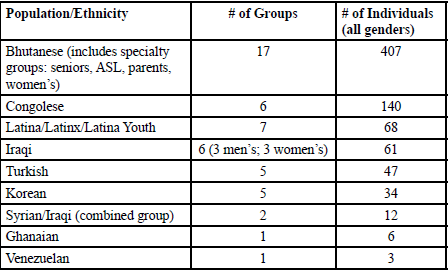
There are a few limitations in this study. Limited generalizability tend to occur in qualitative studies given the specific samples used. In this study, we are also aware of the specificity of the Bhutanese refugee population, as seen in Appendix C, Table 3. However, it is also the purpose of qualitative research to focus attention on these smaller populations when broader population-based studies are challenging.
This study may also be vulnerable to researcher bias given the specific program site and smaller sample size. Efforts throughout the research process were undertaken to ensure the reduction of bias when reporting on codes and implications of our findings.
Appendix C
Table 3: Peer Groups by Ethnicity (FY 2018-2019)
Finally, we acknowledge that there is a limitation in replicating this study since these results are highly specific to the time and location of the program site. Awe know that findings typically cannot be applied to represent the entire population of refugees and immigrants. However, the issues which we do report in our studies do document the current barriers to integration facing this refugee community which are unique and contextual to their culture of origin, their time as refugees, and their stories and experiences of integration into the USA. The effectiveness of assisting refugees and immigrants in the process of integration is clear from this and other study results [6] and remains a priority for agencies seeking to provide equitable resources for successful resettlement.
Declaration of Interest:
The authors report no declarations of interest.
References
Goodkind, J., Ferrera, J., Lardier, D., Hess, J. M., & Greene, R. N. (2021). A mixed method study of the effects of post- migration economic stressors on the mental health of recently resettled refugees. Society and Mental Health, 11(3), 217–235. View
Shannon, P. J., Vinson, G. A., Wieling, E., Cook, T., & Letts, J. (2015). Torture, war trauma, and mental health symptoms of newly arrived Karen refugees. Journal of Loss and Trauma, 20(6), 577-590. View
Lardier, D. T., Hess, J., Winter, L., & Goodkind, J. R. (2023). The impact of postresettlement stressors and access to health care on health outcomes in recently resettled refugees in the United States. The American Journal of Orthopsychiatry, 93(6), 516–531. View
Kaslow, F. W. (2014) Intervening with immigrant families: An integrative systems perspective, Journal of Family Psychotherapy, 25:2, 177-191. View
Porter, M., & Haslam, N. (2005). Predisplacement and post displacement factors associated with mental health of refugees and internally displaced persons: A meta- analysis. The Journal of the American Medical Association, 294, 602-612. View
Block, A.M., Aizenman, L., Saad, A., Harrison, S., Sloan, A., Vecchio, S. & Wilson, V. (2018) Peer support groups: Evaluating a culturally grounded, strengths-based approach for work with refugees, Advances in Social Work Practice, 18(3), 930-948. View
Drožđek, B., & Bolwerk, N. (2010). Group therapy with traumatized asylum seekers and refugees: For whom it works and for whom it does not? Traumatology, 16(4), 160–167. View
Kira, I., Ahmed, A., Wasim, F., Mahmoud, V., Colrain, J., & Rai, D. (2011). Group therapy for refugees and torture survivors: Treatment model innovations. International Journal of Group Psychotherapy, 62(1), 69-88. View
Lau, L. S., & Rodgers, G. (2021). Cultural competence in refugee service settings: A scoping review. Health Equity, 5(1), 124–134. View
Panagiotopoulos, A., & Pavlopoulos, V. (2023). Group belonging and social identities in the transition of asylum- seekers in Greece: Longitudinal pathways to adjustment. Healthcare (Basel, Switzerland), 12(1), 55. View
Rubel, D., & Okech, J. E. A. (2017). Qualitative Research in Group Work: Status, Synergies, and Implementation. Journal for Specialists in Group Work, 42(1), 54–86. View
Suh S, & Lee M. (2006). Group work for Korean expatriate women in the United States: an exploratory study. Journal for Specialists in Group Work, 31(4), 353–369. View
Kepner, W., & Humphreys, K. (2025). Effectiveness of mutual help groups for illicit drug use disorders: A review of the current literature. Current Addiction Reports, 12, 12. View
Broadhead, R. S., Heckathorn, D. D., Altice, F. L., van Hulst, Y., Carbone, M., Friedland, G. H., … Selwyn, P. A. (2002). Increasing drug users’ adherence to HIV treatment: results of a peer-driven intervention feasibility study. Social Science & Medicine, 55(2), 235. View
Gross, M. (2010). Alcoholics Anonymous: Still Sober After 75 Years. American Journal of Public Health, 100(12), 2361–2363. View
Thomas, L., Clarke, T., & Kroliczak, A. (2008). Implementation of peer support demonstration project for HIV+ Caribbean immigrants: A descriptive paper. Journal of Immigrant & Refugee Studies, 6, 526-544. View
Yalom, I. (2005). The theory and practice of group psychotherapy. Basic Books. View
Webel, A., Okonsky, J., Trompeta, J., & Holzemer, W. (2010). A systematic review of the effectiveness of peer-based interventions on health-related behaviors in adults. American Journal of Public Health, 100(2), 247-253. View
Cole, A., & Blythe, B. (2010). Mentoring as an alternative to therapy for immigrant and refugee youth. Revista de Asistenta Sociala, 9, 149-156. View
Stewart, M., Simich, L., Shizha, E., Makumbe, K., & Makwarimba, E. (2012). Supporting African refugees in Canada: Insights from a support intervention. Health & Social Care in the Community, 20(5), 516-527. View
Imenda, S. (2014). Is there a conceptual difference between theoretical and conceptual frameworks? Journal of Social Sciences, 38, 185–195. View
Ayoko, O. B., & Pekerti, A. A. (2008). The mediating and moderating effects of conflict and communication openness on workplace trust. International Journal of Conflict Management, 19, 297–318. View
Fusch, P. I., Fusch, G. E., & Ness, L. R. (2017). How to conduct a mini-ethnographic case study: A guide for novice researchers. The Qualitative Report, 22, 923–941. View
Jonsen, K., & Jehn, K. A. (2009).Using triangulation to validate themes in qualitative studies. Qualitative Research in Organizations and Management: An International Journal, 4, 123–150. View
Strauss, A., & Corbin, J. (1998). Basics of qualitative research. Sage Publications. View
Charmaz, K. (2006). Constructing grounded theory: a practical guide through qualitative analysis. Sage Publications. View
Hallgren K. A. (2012). Computing Inter-Rater Reliability for Observational Data: An Overview and Tutorial. Tutorials in quantitative methods for psychology, 8(1), 23-34. View
Despard, M. R. (2016). Challenges in Implementing Evidence Based Practices and Programs in Nonprofit Human Service Organizations. Journal of Evidence-Informed Social Work, 13(6), 505–522. View
Chuah, F. L. H., Tan, S. T., Yeo, J., & Legido-Quigley, H. (2018). The health needs and access barriers among refugees and asylum-seekers in Malaysia: a qualitative study. International Journal for Equity in Health, 17(1), N.PAG. View
Hartley, L., Fleay, C., & Tye, M. E. (2017). Exploring physical activity engagement and barriers for asylum seekers in Australia coping with prolonged uncertainty and no right to work. Health & Social Care in the Community, 25(3), 1190–1198. View
Schisler, A. M. C., & Polatajko, H. J. (2002). The individual as mediator of the person-occupation-environment interaction: Learning from the experience of refugees. Journal of Occupational Science, 9(2), 82–92. View
Can, T., & Şimşek, I. (2018). Fostering foreign language acquisition in young refugees using mobile devices: The YouRNI project experience. TLC Journal, 2(3), 29–41. View
Khan P. (2003). An analysis of conflict experienced between agencies involved with asylum seekers. Journal of Social Work Practice, 17(1), 115–126. View