
- About the Journal
- Editorial Board
- Review Process
- Author Guidelines
- Article Processing Charges
- Special Issues
- Current Issue
- Past Issue
 Journal of Social Work and Welfare Policy
 Volume 4 (2026), Article ID: JSWWP-215
https://doi.org/10.33790/jswwp1100215Research Article
Structural Policy Gaps and Caregiver Strain Among U.S. Family Caregivers
Heather Dye
Associate Professor, Department of Social Work, East Tennessee State University, PO Box 70645 Johnson City, TN 37614, United States.
Corresponding Author Details: Heather Dye, Associate Professor, Department of Social Work, East Tennessee State University, PO Box 70645 Johnson City, TN 37614, United States.
Received date: 11th June, 2026
Accepted date: 18th September, 2026
Published date: 21st September, 2026
Citation: Dye, H., (2026). Structural Policy Gaps and Caregiver Strain Among U.S. Family Caregivers. J Soci Work Welf Policy, 4(2): 215.
Copyright: ©2026, This is an open-access article distributed under the terms of the Creative Commons Attribution License, which permits unrestricted use, distribution, and reproduction in any medium, provided the original author and source are credited.
Abstract
Family caregivers play an essential role in supporting older adults and individuals with chronic health conditions in the United States, yet many provide extensive care with limited support and resources. This study examined how gaps in caregiver support systems are associated with caregiver strain among U.S. family caregivers. The study focused on perceived professional support, caregiving-related financial difficulty, household income, positive coping strategies, and psychological distress. A total of 238 family caregivers participated in the study. Data were analyzed using descriptive statistics, bivariate linear regression analyses, and multiple linear regression analysis. Findings showed that higher levels of professional support and positive coping strategies were associated with lower caregiver strain, while greater financial difficulty was associated with higher caregiver strain. Higher household income was also associated with lower caregiver strain. In addition, stress and anxiety symptoms were significant predictors of caregiver strain, while depressive symptoms were not statistically significant. Overall, the findings suggest that caregiver strain is influenced not only by caregiving responsibilities, but also by broader financial, structural, and psychological factors. These results highlight the importance of strengthening caregiver support systems, expanding financial and respite resources, and improving caregiver integration into healthcare and long-term care systems.
Keywords: Family Caregivers, Caregiver Strain, Structural Policy Gaps, Professional Support, Psychological Distress
Introduction
According to the Caregiving in the U.S. 2025 report, the most current national estimate, 63 million Americans, or approximately 1 in 4 adults, provided unpaid or partially unpaid family caregiving in the past year [1]. This represents a substantial increase from the 53 million Americans estimated to have provided family caregiving in 2022 [1]. The growing number of family caregivers reflects increasing reliance on unpaid caregiving to support individuals with chronic, disabling, and serious health conditions [2]. More than 40% of caregivers provide high-intensity care, while only 22% report receiving formal training, and nearly half report significant financial strain while balancing employment and caregiving responsibilities [1]. These findings highlight the increasing demands placed on family caregivers and the need to examine whether existing support systems adequately address those demands.
Family Caregiving in the United States
Family caregivers provide essential support to family members, friends, relatives, partners, and/or neighbors who have chronic, disabling, and serious health conditions [2]. In home-based long- term care, family caregivers may provide assistance with activities of daily living, medication management, transportation, communication with healthcare providers, and coordination of services. Although these responsibilities are essential to maintaining care in the home, family caregivers often perform them without the formal training, compensation, and structural support available to professional healthcare providers. As a result, caregivers may experience substantial physical, emotional, financial, and social demands associated with providing care.
These demands have important implications for caregiver well being and the sustainability of home-based long-term care. Caregiver strain has been associated with limited support and psychological distress, including symptoms of depression and anxiety [3,4]. Caregiving responsibilities may also create financial challenges through out-of-pocket expenses, reduced work hours, and disruptions to employment [5,6]. The combination of intensive caregiving responsibilities and limited resources raises concerns about whether current systems adequately support family caregivers in their role within home-based long-term care.
Policy Challenges in Home-Based Long-Term Care
The growing reliance on family caregivers creates significant policy concerns because many caregivers provide complex and demanding care with limited access to formal support. Key gaps include caregiver training, coordination between caregivers and healthcare professionals, respite care, financial assistance, workplace protections, and access to supportive services. These gaps may contribute to caregiver strain and make it more difficult for caregivers to sustain their caregiving responsibilities over time. Strengthening caregiver support is therefore increasingly important for sustaining home-based long-term care systems in the United States.
Several policy areas have been identified as particularly important for supporting family caregivers, including caregiver education programs [7], interprofessional integrated services [2], respite care [8], workplace protections, and access to supportive services [5]. Caregiver strain can affect caregiver well-being and may also have implications for care recipient outcomes and healthcare system utilization [9]. Understanding the structural conditions associated with caregiver strain is therefore important for identifying policy strategies that may strengthen support for family caregivers and improve the sustainability of home-based long-term care.
Policy Gaps in Home-Based Long-Term Care
The responsibilities of family caregivers have increased substantially, yet their role in sustaining the healthcare system often goes unrecognized and unsupported. Structural and organizational barriers, such as gaps in training, coordination, financial assistance, and technological infrastructure, can contribute to the unsustainability of family caregivers providing long-term care [10]. This study highlights these gaps and shows the importance of person-and-family centered care frameworks through integration of caregiver relationships into the care team. Closing these gaps can help shape caregivers’ experiences and relieve them of the burden and psychological stress they report.
According to Wrede et al. [7], family caregivers often do not receive any outside formal training. These caregivers perform tasks that are carried out by trained medical professionals such as administering medications, managing pain, monitoring overall health, and coordinating with multiple health providers [10]. The lack of formal training and integration with the medical team undermines the quality of care for the recipient and contributes to caregiver burden. Formal preparation is a necessity for caregivers to effectively perform essential healthcare functions in a home-based setting. Prior research has consistently identified the lack of formal training for caregivers as a gap in the system [1,7,11,12].
Coordinating care, navigating systems, and advocating for the care recipient causes extreme stress for the caregiver. Caregivers spend a great deal of time performing daily care tasks for the care recipient, yet they lack access to information and are excluded from the decision-making process [13]. This lack of integration creates a system-level barrier to long-term care coordination, especially when family caregivers act as an informal care coordinator without formal authority or inclusion in the care planning process. This makes it extremely difficult for caregivers to manage care due to having limited structured communication between hospitals, clinics, pharmacies, and other community services [13].
Another gap in long-term care policy for family caregivers is the limited availability of respite care services. According to the 2022 U.S. National Strategy to Support Caregivers, respite care is one of the most desired and requested forms of support that family caregivers seek. This structural gap creates disparities for those who provide long-term and high-intensity care because it leaves little opportunity for rest and recovery [14]. Respite care provides the greatest benefits to caregivers because it serves as a protective factor against caregiver burden and supports the infrastructure to sustain care over time [2]. Policies that provide respite services by increasing the access and availability, providing low cost vouchers, and reducing eligibility restrictions can help close the gap and create an infrastructure more conducive to family caregiving in home-based long-term care [11,14].
Family caregivers provide complex tasks on a daily basis and remain largely unpaid despite their significant value and impact to society and on workforce participation. Many caregivers face financial strain and hardship due to reducing work hours and incurring out-of- pocket expenses associated with caregiving responsibilities [5]. According to the AARP, family caregivers spend approximately $7,200 annually out-of-pocket on caregiving expenses, highlighting the need for financial support policies. There are tax credits and stipends to help offset burdens, but they are inconsistent across states. This economic structural gap reinforces financial strain and diminishes the value of those who provide essential long-term care services [1].
Caregivers face numerous challenges and report barriers that assistive technology has the potential to make the caregiving experience more efficient, effective, safer, and less burdensome. Assistive technology can support family caregivers by increasing access to education, clinical, and community resources [15]. Telehealth systems have the potential to provide resources for both the caregiver and care recipient to participate in videoconferencing, remote consultations, psychosocial and cognitive behavioral interventions, and social support. This can also promote collaboration and integration to connect family caregivers to clinicians. Family caregivers could participate in real-time interaction, online health education classes, receive professional guidance, and access peer support forums [15,16].
Overview of Study
This study examines how factors reflecting gaps in caregiving support systems, including caregiver training, system coordination, respite care, and financial support, are associated with caregiver strain and psychological distress among U.S. family caregivers. Because this study does not directly evaluate specific policies, the term “policy gaps” refers to broader limitations in the availability, accessibility, and adequacy of caregiver support resources and services. These policy gaps reflect systemic deficiencies that place significant responsibility on family caregivers. This research aims to inform policy solutions that strengthen caregiver support, improve caregiver well-being, and enhance the sustainability of home-based long-term care systems.
The following hypotheses examine how factors related to caregiver support and resources are associated with caregiver strain, with a specific focus on caregiver burden (negative caregiving impact), financial stress, household income, perceived system support, positive coping strategies, and psychological distress, including depressive symptoms, anxiety symptoms, and stress symptoms.
Hypothesis 1: Greater perceived professional support will be associated with lower caregiver strain.
Hypothesis 2: Greater caregiving-related financial difficulty will be associated with higher caregiver strain.
Hypothesis 3: Higher household income will be associated with lower caregiver strain.
Hypothesis 4: Greater use of positive coping strategies will be associated with lower caregiver strain.
Hypothesis 5: Higher levels of depressive symptoms, anxiety symptoms, and stress symptoms will be associated with higher caregiver strain.
Methods
Participants
A total of 238 family caregivers from the United States were recruited from Prolific, an online research platform where participants receive monetary compensation for their time. Participants in this study met inclusion criteria requiring them to be 18 years or older, physically present in the United States, and providing unpaid care or assistance to someone aged 50 years or older. Participants represented a range of demographic and caregiving backgrounds. The sample included caregivers across varying income levels, educational backgrounds, employment statuses, and caregiving experiences. Most participants identified as White/Caucasian, and the majority reported providing care for one to three years. Additional demographic information is presented in Table 1. This study was approved by the author’s university Institutional Review Board (IRB #c0625.3e), and all participants provided informed consent.
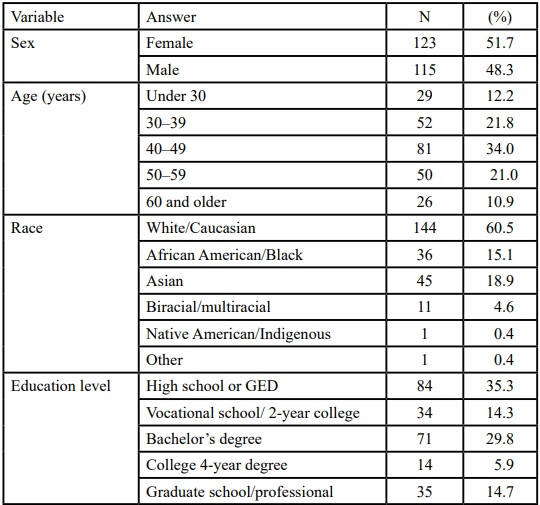
Table 1: Participant Demographics
Instruments
A questionnaire was used to assess demographic information such as gender, age, sex, and race. Perceived professional support, caregiving-related financial difficulty, and household income were examined as independent variables associated with caregiver strain using the demographic questionnaire. See Table 1.
The Caregiver Strain Index [17] is a 13-item scale that measures caregivers' physical and emotional strain. This scale has two subscales: physical strain and emotional strain. Responses are recorded as “yes” or “no.” An example item from the emotional strain subscale is, “Caregiving is emotionally upsetting.” An example item from the physical strain subscale is, “Caregiver’s health has suffered.” Each “yes” equals 1 point. Total scores range from 0–13. A score of 7 or greater indicates a high level of caregiver strain and increased risk for caregiver burden. The Cronbach’s alpha has been reported above .80 across multiple studies and has demonstrated correlations with depression, physical health, and quality of life outcomes [3].
The Depression Anxiety and Stress Scale [18] is a 21-item measure that is widely used to assess negative emotional states experienced during the previous week. This measure includes three subscales: depression (DASS-D), anxiety (DASS-A), and stress (DASS-S). The depression subscale (DASS-D) measures hopelessness, low self-esteem, and low positive affect. The anxiety subscale (DASS-A) measures autonomic arousal, musculoskeletal symptoms, situational anxiety, and subjective experiences of anxious arousal. The stress subscale (DASS-S) measures tension, agitation, and negative affect. Each subscale contains seven items rated on a 4-point Likert scale from 0 (Did not apply to me at all) to 3 (Applied to me very much or most of the time). Total scores range from 0 to 63. The internal consistency was .72, .77, and .70 for the depression, anxiety, and stress subscales, respectively [19]. The overall score, which includes all items, had a high consistency alpha of .88 [19].
The COPE Index [20] assesses the experiences of informal caregivers of older individuals. This study used two of the three subscales: the Negative Impact (NI) subscale and the Quality of Support (QS) subscale. The Negative Impact (NI) subscale measures the stress and burden associated with caregiving, particularly in long-term care contexts where sustained caregiving is required. The Quality of Support (QS) subscale evaluates perceived support from family, friends, and professional and community-based long- term care services. The COPE Index was also used to examine caregivers’ coping-related experiences and perceived ability to manage caregiving demands. Each item is rated on a 4-point Likert scale ranging from 1 (never) to 4 (always). An example item from the NI subscale is, “Do you feel that caring for your relative is too demanding?” Higher QS scores indicate greater perceived support, while higher NI scores indicate greater caregiver burden. The COPE Index demonstrates good validity and internal consistency, with Cronbach’s alpha coefficients ranging from .67 to .88 [20].
Additionally, a single-item measure assessed formal support from professionals who provide resources, guidance, and services essential for long-term care, including home health aides, adult day programs, and care coordination. The question was, “Do you feel professionals have provided you with resources and support as a caregiver?” Responses were originally on a 5-point scale (1 = Not at all, 5 = Extremely) and were dichotomized into ‘Low support’ (Not at all/A little) and ‘High support’ (Moderately/Very much/Extremely).
Statistical Analysis
Data analyses were conducted using IBM SPSS Statistics version 29 (IBM Corp. Armonk, NY, USA). Descriptive statistics were used to summarize participant demographic characteristics and caregiving variables. Bivariate linear regression analyses were conducted to examine associations between caregiver strain and perceived professional support, caregiving-related financial difficulty, household income, and positive coping strategies. A multiple linear regression analysis was conducted to examine the relationship between depressive symptoms, anxiety symptoms, stress symptoms, and caregiver strain. Statistical significance was evaluated using an alpha level of .05.
Results
Hypothesis 1: A bivariate linear regression indicated that perceived professional support was significantly associated with caregiver strain, R² = .065, F(1, 230) = 15.93, p < .001. Greater perceived professional support was associated with lower caregiver strain (β = −.255, p < .001). The null hypothesis was rejected.
Hypothesis 2: A bivariate regression showed that caregiving-related financial difficulty was significantly associated with caregiver strain, R² = .414, F(1, 228) = 161.21, p < .001. Greater financial difficulty was associated with higher caregiver strain (β = .644, p < .001). The null hypothesis was rejected.
Hypothesis 3: Household income was significantly associated with caregiver strain in a bivariate regression model, R² = .031, F(1, 230) = 7.34, p = .007. Higher income was associated with lower caregiver strain (β = −.176, p = .007). The null hypothesis was rejected.
Hypothesis 4: A bivariate regression indicated that COPE Index positive coping/support-related scores were significantly associated with caregiver strain, R² = .306, F(1, 228) = 100.72, p < .001. Greater use of positive coping strategies was associated with lower caregiver strain (β = −.554, p < .001). The null hypothesis was rejected.
Hypothesis 5: A multiple linear regression indicated that DASS- 21 depressive symptoms, anxiety symptoms, and stress symptoms collectively explained a significant proportion of variance in caregiver strain, R² = .290, F(3, 228) = 31.02, p < .001. The overall model was statistically significant.
At the individual predictor level, stress symptoms were significantly associated with higher caregiver strain (β = .402, p < .001), and anxiety symptoms were also significantly associated with higher caregiver strain (β = .365, p = .021). Depressive symptoms were not a significant predictor of caregiver strain (β = −.185, p = .238). Therefore, the null hypothesis was partially rejected. See Table 2.
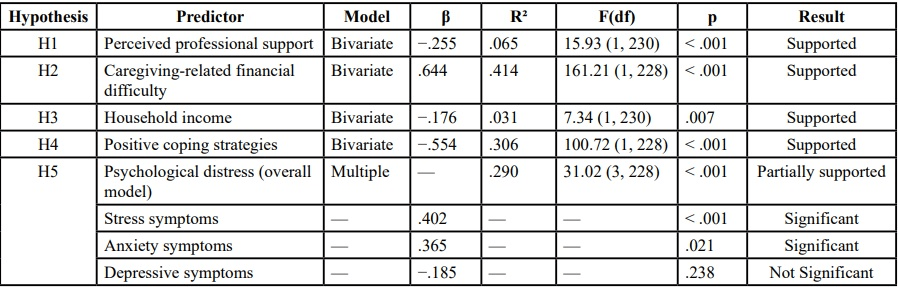
Table 2: Regression Results Predicting Caregiver Strain (N = 238)
Discussion
Findings related to Hypothesis 1 showed that perceived professional support acted as a protective factor against caregiver strain. Caregivers who reported higher levels of support from professionals experienced lower levels of strain. This finding highlights the importance of stronger integration between family caregivers and formal care systems. When caregivers feel supported, informed, and included in care processes, their overall strain appears to lessen. From a policy standpoint, this points to the value of improving communication between providers and families, formalizing caregiver involvement in care planning, and expanding access to caregiver education and consultation. These findings are consistent with prior research emphasizing caregiver integration into interdisciplinary care systems and the importance of professional support in long-term care settings [11,13].
Results for Hypothesis 2 demonstrated a strong relationship between caregiving-related financial difficulty and caregiver strain. Caregivers experiencing greater financial pressure reported substantially higher levels of strain, reinforcing how central economic stress is to the caregiving experience. This finding aligns with national reports showing widespread out-of-pocket spending and employment disruption among caregivers [1]. It also supports prior research documenting the economic consequences of informal caregiving and reduced workforce participation [5,6]. These findings suggest that financial strain is one of the most direct and actionable areas for policy intervention. Expanding caregiver tax credits, paid leave policies, and wage replacement programs could meaningfully reduce this burden.
Hypothesis 3 focused on household income and caregiver strain. Higher income levels were associated with lower caregiver strain, reinforcing the idea that financial resources help buffer some of the pressures of caregiving. At the same time, this also suggests that caregiver strain is not evenly distributed, and that lower-income caregivers may face disproportionate challenges in sustaining care responsibilities. This finding is consistent with prior research showing that financial resources can buffer the economic burdens associated with caregiving and reduce vulnerability to caregiver strain [1].
Consistent with Hypothesis 4, positive coping strategies were associated with lower caregiver strain. Caregivers who reported greater use of positive coping strategies experienced less strain, suggesting that coping plays an important protective role. At the same time, coping should not be viewed purely as an individual skill. Access to respite care, training, and supportive services likely shapes a caregiver’s ability to cope effectively. This finding supports prior literature identifying respite care and caregiver support services as important protective factors against caregiver burden [14]. It also reinforces recommendations from caregiver policy research emphasizing the importance of strengthening external support systems rather than relying solely on individual resilience [5].
Hypothesis 5 examined whether depressive symptoms, anxiety symptoms, and stress symptoms would be associated with caregiver strain. Findings showed that higher levels of stress and anxiety were significantly associated with greater strain, while depressive symptoms were not a significant predictor in the model. These findings partially support Hypothesis 5 and are consistent with prior research linking caregiver burden to emotional distress, including anxiety and depressive symptoms [4]. This suggests that caregiver strain is closely tied to ongoing psychological stress, not just external conditions. It also points to the importance of incorporating mental health screening and support into caregiver-focused services, particularly for stress and anxiety-related symptoms.
Overall, these findings reinforce a systems-level understanding of caregiver strain. Financial difficulty, coping capacity, and psychological distress stood out as particularly important factors, alongside perceived professional support and income. Rather than acting in isolation, these variables reflect interconnected policy domains that shape how caregiving is experienced.
An important limitation of this study is the use of a cross sectional online panel recruited through Prolific. Because the study relied on a self-reported convenience sample, the findings may limit generalizability to all family caregivers, particularly high-intensity caregivers who may have limited access to or use of digital technologies. Additionally, the cross-sectional design limits the ability to determine causal relationships between the factors examined and caregiver strain.
From a policy perspective, the results suggest that caregiver strain is responsive to structural change. Strengthening caregiver integration into healthcare systems, reducing financial strain, and expanding access to mental health and coping supports may all help reduce strain and improve caregiver sustainability. As the caregiving population continues to grow nationally [1], addressing these structural gaps becomes increasingly important for both caregiver well-being and the stability of long-term care systems.
Conclusion
This study examined how structural factors within the U.S. home based long-term care system are associated with caregiver strain among family caregivers. The findings suggest that caregiver strain is influenced by multiple interconnected factors, including professional support, financial resources, coping capacity, and psychological distress. Overall, the results indicate that caregiver strain is not solely an individual experience but is shaped by broader structural and policy-related conditions. Strengthening support systems for family caregivers can be an important component of promoting caregiver well-being and sustaining home-based long-term care in the United States.
Conflict of Interest:
The authors declare no conflict of interest.
References
AARP & National Alliance for Caregiving. (2025). Caregiving in the U.S. 2025. AARP Public Policy Institute. View
Dye, H. (2025). Family caregiver burden in home-based long term care: A biopsychosocial perspective. Journal of Aging and Long-Term Care, 8(2), 79–96. View
Marinho, J. S., Batista, I. B., Nobre, R. A. S., Guimarães, M. S. A., Santos-Orlandi, A. A., Brito, T. R. P., Pagotto, V., Saidel, M. G. B., Fusco, S. F. B., Maia, F. O. M., Corona, L. P., & Nunes, D. P. (2022). Burden, satisfaction caregiving, and family relations in informal caregivers of older adults. Frontiers in Medicine, 9, 1059467. View
Yao, H., Li, K., Li, C., Hu, S., Huang, Z., Chen, J., & Xu, Y. (2024). Caregiving burden, depression, and anxiety in informal caregivers of people with mental illness in China: A cross- sectional survey. BMC Psychiatry, 24(1), 824. View
Beach, B., Bélanger-Hardy, L., Harding, S., Rodrigues Perracini, M., Garcia, L., Tripathi, I., Gillis, M., & Dow, B. (2022). Caring for the caregiver: Why policy must shift from addressing needs to enabling caregivers to flourish. Frontiers in Public Health, 10, 997981. View
Chari, A. V., Engberg, J., Ray, K. N., & Mehrotra, A. (2015). The opportunity costs of informal elder-care in the United States: New estimates from the American Time Use Survey. Health Services Research, 50(3), 871–882. View
Wrede, N., Töpfer, N. F., Risch, A. K., & Wilz, G. (2025). How do care-related beliefs contribute to depression and anxiety in family caregivers of people with dementia? Testing a cognitive vulnerability-stress model. Aging & Mental Health, 29(2), 282- 290. View
Goh, Y., Ow Yong, J. Q. Y., Ng, C. K. V., Li, Z., Hu, Y., Tam, W. W., & Ho, S. H. C. (2024). Caregivers’ experiences in helping individuals with severe and enduring mental health challenges integrate into the community: A qualitative descriptive study in Singapore. Journal of Psychiatric and Mental Health Nursing, 31(6), 1120–1132. View
Lei, L., Leggett, A. N., & Maust, D. T. (2023). A national profile of sandwich generation caregivers providing care to both older adults and children. Journal of the American Geriatrics Society, 71(3), 799–809. View
Green, M. R., Hughes, M. C., Afrin, S., & Vernon, E. (2025). Caregiver policies in the United States: A systematic review. Journal of Public Health Policy, 46(1), 22–37. View
National Academies of Sciences, Engineering, and Medicine. (2023). Family caregiving for people with cancer and other serious illnesses: Proceedings of a workshop. Washington, DC: The National Academies Press. View
AARP Public Policy Institute. (2021). State of the states in family caregiver support. AARP Public Policy Institute. View
Reinhard, S. C., Levine, C., & Samis, S. (2021). Home alone revisited: Family caregivers providing complex care. AARP Public Policy Institute. View
Feinberg, L. F., & Reinhard, S. C. (2022). Supporting family caregivers through respite services and policy reform. AARP Public Policy Institute. View
Wang, J., & Hajizadeh, M. (2020). The role of digital health technologies in supporting family caregivers: A scoping review. BMC Health Services Research, 20, 1120.
Peek, S. T. M., Wouters, E. J. M., van Hoof, J., Luijkx, K. G., Boeije, H. R., & Vrijhoef, H. J. M. (2014). Factors influencing acceptance of technology for aging in place: A systematic review. International Journal of Medical Informatics, 83(4), 235–248. View
Robinson, B. C. (1983). Validation of a Caregiver Strain Index. Journal of Gerontology, 38(3), 344–348. View
Lovibond, P. F., & Lovibond, S. H. (1995). Manual for the Depression Anxiety Stress Scales (2nd ed.). Psychology Foundation. View
Tran, T. D., Tran, T., & Fisher, J. (2013). Validation of the Depression Anxiety Stress Scales (DASS-21) as a screening instrument for depression and anxiety in a rural community- based cohort of northern Vietnamese women. BMC Psychiatry, 13, 24. View
McKee, K. J., Philp, I., Lamura, G., Prouskas, C., Öberg, B., Krevers, B., Döhner, H., Kofahl, C., Bień, B., Parker, C., Nolan, M., & Szczerbińska, K. (2003). The COPE Index—A first-stage assessment of negative impact, positive value, and quality of support of caregiving in informal carers of older people. Aging & Mental Health, 7(1), 39–52. View