
- About the Journal
- Editorial Board
- Review Process
- Author Guidelines
- Article Processing Charges
- Special Issues
- Indexing
- Current Issue
- Past Issue
 Journal of Comprehensive Nursing Research and Care
Journal of Comprehensive Nursing Research and Care Volume 9 (2024), Article ID: JCNRC-204
https://doi.org/10.33790/jcnrc1100204Short Communications
Time Series Analysis for Forecasting Cognitive Deterioration After The Covid-19 Pandemic in Healthy Japanese Elderly: A Pilot Study
Noboru Hasegawa1*, Nobuko Shimizu2, Takako Yamada3, and Miyako Mochizuki4
1 Graduate School of Nursing, Doshisha Women’s College, Kodo, Kyotanabe, Kyoto 610-0395, Japan.
2 Faculty of Nursing, Toyama Prefectural University, 2-2-78 Nishinagae, Toyama 930-0975, Japan.
3 Bukkyo University, 7 Higashitoganoo-cho, Nishinokyo, Nakagyo-ku, Kyoto 604-8418, Japan.
4 Kyoto Bunkyo Junior College, 80 Senzoku, Makishima-cho, Uji, Kyoto 611-0041, Japan.
Corresponding Author Details: Noboru Hasegawa, Graduate School of Nursing, Doshisha Women’s College, Kodo, Kyotanabe, Kyoto 610-0395, Japan.
Received date: 04th October, 2024
Accepted date: 18th October, 2024
Published date: 21st October, 2024
Citation: Hasegawa, N., Shimizu, N., Yamada, T., & Mochizuki, M., (2024). Time Series Analysis for Forecasting Cognitive Deterioration After The Covid-19 Pandemic in Healthy Japanese Elderly: A Pilot Study. J Comp Nurs Res Care 9(2): 204.
Copyright: ©2024, This is an open-access article distributed under the terms of the Creative Commons Attribution License, which permits unrestricted use, distribution, and reproduction in any medium, provided the original author and source are credited.
Abstract
In Kyoto, Japan, government agencies implemented stay-at-home and social distancing measures from April 2020 to September 2022 to curb the spread of COVID-19. Mild cognitive impairment (MCI) is a precursor to dementia. Given the rapid progression from MCI to dementia, there is a pressing need to identify robust predictors of MCI.
The study sample was 19 healthy elderly people (aged ≥ 65 years) enrolled in the Open University Program. This study employed a two-phase dataset: a pre-lockdown phase (October 2018, October 2019, and March 2020) and a post-lockdown phase (September 2022 onwards). The Japanese version of the Montreal Cognitive Assessment (MoCA-J) was used as a cognitive function test and was administered by skilled occupational therapists. We evaluated the applicability of exponential smoothing models to forecast MoCA-J scores in the 5 years following the COVID-19 pandemic. Data were analyzed using SPSS Statistics version 29.0 for Windows (IBM Japan).
The COVID-19 pandemic significantly decreased the MoCA-J scores of 11 older adults who had an initial MoCA-J score of 26 or higher (p<0.05) and 5 individuals were diagnosed with MCI. The only item that showed a decrease in all participants was delayed recall, with an average score of 2.6. Exponential smoothing models were used to analyze time-series data from 5 individuals who developed MCI after the COVID-19 pandemic. The models predicted a decrease of 4 to 6 points in the target by 2027 after the COVID-19 pandemic.
The findings of this study suggest that individuals who received stay-at-home orders during the COVID-19 pandemic experienced significant reductions in their MoCA-J scores. The time series analysis revealed a rapid decline in cognitive function among those who developed MCI. These findings highlight the urgent need for timely interventions tailored to individual needs to prevent progression to dementia.
Keywords: Mild cognitive impairment, MoCA-J, Exponential smoothing model, Stay-at-home, Dementia
Introduction
In Kyoto, Japan, government agencies implemented stay-at-home and social distancing measures from April 2020 to September 2022. The Social distancing measures implemented to curb the spread of COVID-19’s expansion significantly disrupted daily routines. Studies have consistently shown that individuals who are overweight or obese experienced decreased mental health [1,2], unhealthy eating habits [3], reduced physical activity [1,4], decreased sleep quality and quantity [5], and weight gain [2] during the pandemic.
Mild cognitive impairment (MCI) may progress to dementia, but in some cases, cognitive function remains stable or even improves [6,7]. MCI is a syndrome characterized by a decline in one or more cognitive domains such as memory, language, and attention that can be measured objectively but does not interfere with activities of daily living. Previous studies have reported that patients with MCI have a higher risk of progression to dementia over a relatively short period of time [8]. The Montreal Cognitive Assessment-Japanese version (MoCA-J) has been shown to be a more appropriate screening tool for detecting MCI in individuals aged 60 and over, compared to other cognitive assessments [9].
Therefore, we hypothesized that stay-at-home orders contribute to the development of MCI in a subset of the population.
Autoregressive integrated moving average (ARIMA) models, which are powerful tools for time series analysis, have been applied in studies to examine the temporal patterns of the COVID-19 pandemic [10,11]. For data showing non-linear and non-seasonal patterns, exponential smoothing models may be more appropriate than ARIMA model [12].
In this study, we analyzed the decline in MoCA-J scores of uninfected older adults before and after the COVID-19 pandemic. Furthermore, an exponential smoothing model was used to predict cognitive function 5 years later in older adults with normal MoCA-J scores before the pandemic.
Materials & Methods
Subjects and Setting
Prior to conducting this study, approval was obtained from the Ethics Committee of the Aichi Medical University Ethics Review Board (2017-M052) in Japan. The researchers went to the Citizens Academy for the Elderly at Kyoto Bunkyo University in Uji City to take measurements and ensure proper management of the safety and confidentiality of the study. The subjects were enrolled from August 2018 to September 2022. After obtaining informed consent, 15 uninfected elderly Japanese men (age: 71.2±2.8) and 4 women (age: 69.0±6.5) were enrolled in the study.
From April 2020 to September 2022, government agencies in Kyoto, Japan implemented and recommended stay-at-home orders and social distancing measures as part of efforts to control the spread of COVID-19. The study data were divided into two phases: a pre-pandemic phase (October 2018, October 2019, and March 2020) and the post-lockdown phase (September 2022).
Cognitive Function Test
The MoCA-J may be better at detecting early cognitive dysfunction and is also used as a cognitive function test. The maximum score for the MoCA-J is 30 points, and the cutoff score for MCI is 25 to 26 points [13]. Tests were performed by verbal questioning of 5- to 10-min duration by skilled occupational therapists. The mode of MoCA-J was decided according to medical criteria using minimal clinically important difference (MCID), and the range of correct answers was <2.0.
Time Series Analysis of MoCA-J Scores: A Longitudinal Study
In this study, we evaluated the suitability of exponential smoothing models for forecasting MoCA-J scores five years post-COVID-19 pandemic. Analyses were carried out using SPSS 29. 0 .20 for Windows (IBM, Japan).
Statistical analysis
The differences between before and after lockdown were evaluated using Wilcoxon signed-rank test. A p-value of < 0.05 was statistically significant. Analyses were carried out using SPSS 29. 0 .20 for Windows (IBM, Japan).
Results
Study Subjects
The characteristics of the study subjects are shown in Table 1. Obesity was defined as a BMI of ≥25.0 kg/m2. The prevalence of obesity determined by BMI was 21.4-28.0 kg/m2. Thus, it was similar to the mean for all 65-74-year-old Japanese (21.5-24.9 kg/m2).

Table 1. Characteristics of study subjects before the COVID-19 pandemic (mean ± SD)
Decline in MoCA-J Scores During the COVID-19 Pandemic
There was no significant difference in MoCA-J scores between the pre- and post-COVID-19 pandemic periods (p=0.49) among all participants.
Of the 11 participants with normal pre-pandemic MoCA-J scores (≥26), a significant decline was observed post-pandemic (p < 0.05) (Fig. 1). Of the 5 of the 11 participants who met the criteria for MCI post-pandemic, the mean MoCA-J score declined by 3.7 ± 1.4 points over the three-year follow-up period (Fig. 1). The only item that showed a decrease in all participants was delayed recall, with an average score of 2.6.
The average change scores of the eight individuals diagnosed with MCI before the pandemic were found to be within the MCID after post-pandemic, suggesting that no clinically significant changes occurred post-pandemic.
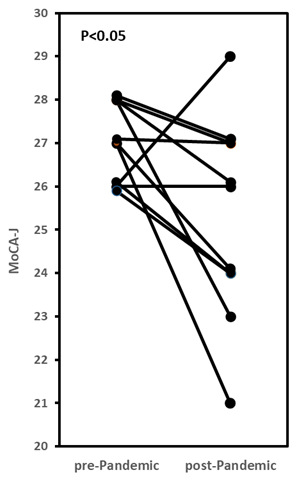
Fig. 1. Significant Decline in MoCA-J Scores During the COVID-19 Pandemic.
Estimation of MoCA-J Scores 5 Years After the COVID-19 Pandemic
To estimate the long-term impact of COVID-19 on cognitive function, we conducted a time series analysis using an exponential smoothing model in 5 individuals with MCI diagnosed post-pandemic. The predicted results of MOCA-J score from 2023 to 2027 were showed in Fig. 2.
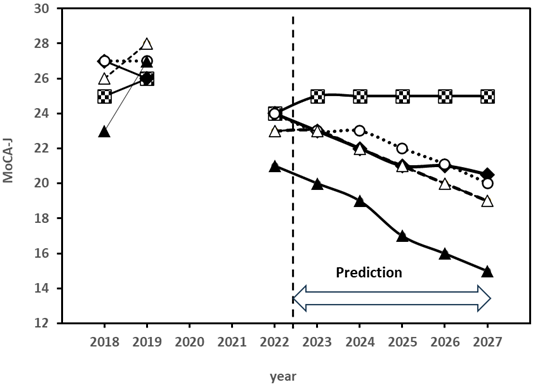
Fig. 2. Projected MoCA-J Scores: 2023-2027.
Discussion
In a large population-based prospective cohort study of dementia in Japan, the prevalence of MCI was 13.2% [14]. Approximately 42.1% of the study participants were diagnosed with MCI before the COVID-19 pandemic, and the prevalence was higher than the average in the Japanese population.
Our analysis, which projected MoCA-J scores five years post-COVID-19 pandemic (2027), indicated that 4 out of 5 individuals showed a decline of 4 to 6 points (>MCID). Physical exercise, including walking, may improve cognitive function [15]. Vitamin D3, which is synthesized in the skin from cholesterol precursors upon UVB exposure, was weakly associated with limb and trunk muscle mass [16].
These results suggest that stay-at-home orders may have contributed to a decline in MOCA-J scores during the COVID-19 pandemic in typical elderly Japanese, as indicated by a normal BMI and body fat percentage, and a decline in MoCA-J scores warrants the implementation of time series analysis and tailored interventions to prevent the progression to dementia.
Although we used only a small number of cases, the inaccuracy from the exponential smoothing model was sufficient for the prediction task. Thus, our findings should be able to serve as a foundation for larger prospective studies.
Our results indicate that time series analysis is available for healthy elderly to prevent a shift to dementia. This analysis could serve as a tool to aid nurses in the clinical decision.
Competing Interests:
The authors declare that they have no competing interests. This work was supported by KAKENHI (grant number 22K11220). We are planning to create an online platform for the ongoing assessment of cognitive function in homebound elderly individuals, which will trigger recommendations for medical follow-up when cognitive decline is observed.
References
Duncan, G. E., Avery, A. R, Seto, E., Tsang, S. (2020). Perceived change in physical activity levels and mental health during COVID-19: Findings among adult twin pairs. PLoS One, 15(8), e0237695.View
Flanagan, E. W., Beyl, R. A., Fearnbach, S. N., Altazan, A. D., Martin, C. K., Redman, L. M. (2021). The impact of COVID-19 stay-at-home orders on health behaviors in adults. Obesity 29(2), 438-445.View
Pellegrini, M., Ponzo, V., Rosato, R., Scumaci, E., Goitre, I., Benso, M., Belcastro, S. (2020). Changes in Weight and Nutritional Habits in Adults with Obesity during the “Lockdown” Period Caused by the COVID-19 Virus Emergency. Nutrients, 12(7), 2016-2026.View
Tison, G. H., Avram, R., Kuhar, P., Abreau, S., Marcus, G. M., Pletcher, M. J., Olgin, J. E. (2020). Worldwide Effect of COVID-19 on Physical Activity: A Descriptive Study. Annals Internal Medicine. 173(9), 767–70.View
Gao, C. & Scullin, M. K. (2020). Sleep health early in the coronavirus disease 2019 (COVID-19) outbreak in the United States: integrating longitudinal, cross-sectional, and retrospective recall data. Sleep Medicine. 73,1–10.View
Ferri, C. P., Prince, M., Bayne, C., Brodaty, H., Fratiglioni, L. Ganguli, M., Hall, K. (2005). Global prevalence of dementia: a Delphi consensus study. Lancet, 366(9503), 2112-2117.View
Prince, M., Bryce, R., Albanese, E., Wimo, A., Ribeiro, W., Ferr, C. P. (2013). The global prevalence of dementia: a systematic review and metaanalysis. Alzheimer's & Dementia, 9(1), 63-75.View
Roberts, R. & Knopman, D. S. (2013). Classification and epidemiology of MCI. Clinics Geriatric Medicine, 29(4), 753-772. View
Ziad, S. N., Natalie, A. P., Valérie, B., Simon, C. Victor, W., Isabelle, C., Jeffey, L. C. (2005). The Montreal Cognitive Assessment, MoCA: a brief screening tool for mild cognitive impairment. Journal of the American Geriatrics Society, 53(4), 695-699. View
Chyon, F. A., Suman, M. N. H., Fahim, M. R. I., Ahmmed, M. S. (2022). Time series analysis and predicting COVID-19 affected patients by ARIMA model using machine learning. Journal of Virological Methods, 301, 11433 -11439. View
Benvenuto, D., Giovanetti, M., Vassallo, L., Angeletti, S., Ciccozzi, M. (2020). Application of the ARIMA model on the COVID 2019 epidemic dataset. Data in Brief, 29, 105340 -105343. View
Zhao, H. M., He, H. D., Lu, K. F., Han, X. L., Ding, Y., Peng, Z-R. (2022). Measuring the impact of an exogenous factor: An exponential smoothing model of the response of shipping to COVID-19. Transport Policy, 118, 91-100. View
Nasredding, Z. S., Phillips, N., Bédirian, V., Charbonneau, S., Whitehead. V., Collin, I., Cummings, J. L. (2005). The Montreal Cognitive Assessment, MoCA: a brief screening tool for mild cognitive impairment. Journal of American Geriatrics Society, 53(4), 695-699. View
Ninomiya, T., Nakaji, S., Maeda, T., Yamada, M., Mimura, M., Nakashima, K., Mori, T. (2020). Study design and baseline characteristics of a population-based prospective cohort study of dementia in Japan: the Japan Prospective Studies Collaboration for Aging and Dementia (JPSC-AD). Environmental Health and Preventive Medicine, 25(1), 64-75. View
Nasredding, Z. S., Phillips, N., Bédirian, V., Charbonneau, S., Whitehead. V., Collin, I., Cummings, J. L. (2005). The Montreal Cognitive Assessment, MoCA: a brief screening tool for mild cognitive impairment. Journal of American Geriatrics Society, 53(4), 695-699.View
Ihara, M., Okamoto, Y., Hase, Y., Takahashi, R. (2012). Association of physical activity with the visuospatial/executive functions of the montreal cognitive assessment in patients with vascular cognitive impairment. Journal of Stroke and Cerebrovascular Diseases, 22(7), e146-e151. View
Hasegawa, N., Shimizu, N., Yamada, T., Tsubouchi, Y., Mochizuki, M., Kato, M. Yoshitake, M. (2022). Association between Serum Vitamin D Levels and Muscle Weight of Adult Day-Care Center Clients in Three Different Latitude Areas of Japan. International Journal Nursing & Clinical Practices, 9, 355-359.