
- About the Journal
- Editorial Board
- Review Process
- Author Guidelines
- Article Processing Charges
- Special Issues
- Current Issue
- Past Issue
 Journal of Mental Health and Social Behaviour
Journal of Mental Health and Social Behaviour Volume 7 (2025), Article ID: JMHSB-204
https://doi.org/10.33790/jmhsb1100204Research Article
The Scent of Beer and Rubbing Alcohol on Behavioral Risk Intentions in College Students
Christina A. Moore & Terry F. Pettijohn II*
Department of Psychology, Coastal Carolina University, P.O. Box 261954, Conway, South Carolina, 29528-6054, United States.
Corresponding Author Details: Terry F. Pettijohn II, Ph.D., Professor, Department of Psychology, Coastal Carolina University, P.O. Box 261954, Conway, South Carolina, 29528-6054, United States.
Received date: 03rd September, 2025
Accepted date: 09th October, 2025
Published date: 11th October, 2025
Citation: Moore, C. A., & Pettijohn, T. F. II. (2025). The Scent of Beer and Rubbing Alcohol on Behavioral Risk Intentions in College Students. J Ment Health Soc Behav 7(2):204.
Copyright: ©2025, This is an open-access article distributed under the terms of the Creative Commons Attribution License, which permits unrestricted use, distribution, and reproduction in any medium, provided the original author and source are credited.
Abstract
To determine if olfactory primes have an influence on risky behavioral intentions, a study was conducted on college students. Participants (N=64) were primed with the smell of either beer, rubbing alcohol, or a control condition followed by a survey that asked questions related to risk-taking behavior intentions with 5 subscales (ethical, financial, health/safety, recreational, social) as well as sexual risks. It was predicted that college students who are exposed to the smell of beer are more likely to report intentions of engaging in risky behaviors, including unprotected sexual activity. When participants are exposed to the smell of rubbing alcohol, they were predicted to be more cautious.
Overall, participants exposed to the beer scent reported greater overall risk-taking intentions, and those especially related to health/ safety, compared to the control condition. The scent of rubbing alcohol also elicited risky behavioral intentions, counter to original predictions. Rubbing alcohol may be confused with other types of liquor. Future studies should explore different types of alcohol and ways to reduce risk-taking among college students in environments where alcohol may be present.Keywords: Olfactory Primes, Behavioral Intentions, Risk-Taking, Smell
Introduction
People differ in the way they think and make decisions involving risk and unwillingness; these changes are described as differences in risk attitude [1]. Beginning college, most students are exposed to a new atmosphere, where some students get carried away with all the freedom they now have from the transition from high school to college. Young adolescent brains could result in an increased stimulus to acquire more positive outcomes and therefore can result in greater risk-taking [2]. Some students do not realize that they must take their schooling very seriously or they will not qualify for the requirements for graduation. Colleges around the United States are known for academics, sports teams, and some are known for being a “party school” [3,4]. The current study will examine the connection between olfactory primes and behavioral risk intentions among college students.
Most new freshmen entering a college setting are 18 and begin to experiment with new surroundings, including alcohol. Alcohol among college students might lead to damaging consequences for the campus community as well as the student’s individual life [5,6]. Alcohol use is associated with risky sexual behavior (RSB) and RSB is defined as several or unintentional partners in unprotected sexual activity [7]. In college students, extreme alcohol consumption is a serious public health problem [8,9]. A person’s risk and attitude describe their identity and efficacy function for the outcomes for their behaviors [10]. Students under the influence of alcohol are more likely to engage in more risky behaviors than students who have full function of their bodies, such as having unprotected sex [11].
Although students explore risky behaviors, it is normal for young adults to explore sexuality as a natural part of growth, but there will always be risks that are involved [12]. Some people do not realize the risks of sexual behaviors that can include sexually transmitted diseases, human immunodeficiency virus (HIV), and unintended pregnancies. There is evidence that adolescents have a basic understanding about HIV/AIDS, but they are not as educated about reproduction, contraception and the high rates of STDs [12]. Evidence has found that persuasive statements can change a person’s views under the influence of alcohol causing people to engage in unprotected sexual activity [7].
Gender differences in risk taking have found that men were taking more risks than women and showed, overall, that the difference varied as a function of the various domains [13,14]. Participants used the risk-attitude-scale, which measured financial, health/safety, recreational, social, and ethical questions to determine which gender was more likely to engage in risk-taking activities [10]. In the United States, men are expected to be heavy alcohol drinkers, heavier smokers, use illegal drugs, and are more likely to become overweight compared to women. Men are less likely than women to go to doctor visits, such as dental care, and practice precautionary care [15].
People engage in risky behavior on a daily basis but do not realize that smell can have an impact on the way they think. For example, past research suggests that people become more generous when they smell clean environments [16]. People are instinctively fairer and more generous when they are in clean smelling environments. Researchers implicated workplaces that have relied on traditional surveillance and security measures to enforce their rules. In the first experiment they wanted to evaluate fairness so they had two groups who were given $12 and were told their partners dropped it on the floor. Participants in the clean-scented rooms were more likely to give the money to their partner than the participants in the regular room. The second experiment wanted to evaluate whether clean scent would encourage charitable behavior. Participants were significantly more interested in volunteering when surveyed in a room that had been sprayed with Windex. Research found positive affect enhancement in ethical behavior when Windex was used [16]. The studies showed that morality and cleanliness work hand in hand.
In another study, participants who were exposed to pathogen cues “liquid ASS” or a control group reported that participants had greater intentions to use condoms than the participants who were exposed to the control condition [17]. Participants entered a room and were told there were very bad plumbing problems in the building, that is why there are unpleasant odors. Then the participants were asked to go get a drink at a water fountain because they needed their saliva for the experiment; meanwhile they were spraying the room with “liquid ass”. When they got back, participants answered a questionnaire that included measures of attitudes towards condoms, condom self-efficacy, and perceptions of condom norms, as well as their sexual partners. The students were asked to fill out a survey about the likeliness they would use or purchase condoms over the next 6 months. Results show that participants who were in the pathogen prime setting were more likely to use condoms than students in the control setting [17].
The purpose of the current study is to determine risky behavioral intentions while being exposed to different smells including beer and rubbing alcohol. Research has shown that different smells increase different risky behavior intentions [17]. The current research consists of a series of surveys that measure behavioral intentions that participants fill out after being exposed to the scent of rubbing alcohol or beer or a control. It is predicted that college students who are exposed to the smell of beer are more likely to report intentions to engage in risky behaviors, including unprotected sexual activity. When participants are exposed to the smell of rubbing alcohol, they are predicted to be more cautious and report less risky behavioral intentions because the smell is related to healthcare situations.
Method
Participants
Sixty-four college students from Coastal Carolina University, which is a mid-sized, state-supported college in the southeastern United States, volunteered to participate in the current study. An online program called Sona Systems managed participant recruitment and research credits. Participants were given one research credit in their Introductory Psychology course for participating in the study. The ethnicity of participants included Caucasian/White (73.4%), African American/Black (17.2%), and other (9.4%). The sample included 32.8% men and 67.2% women, with participating ages ranging from 18 to 73 years (M = 20.14, SD = 7.00). To make sure participants were treated fairly the researcher used the ethical guidelines of the American Psychological Association [18]. The study was reviewed and approved by the institutional review board (IRB) on campus.
Materials
For this study, three surveys and a short word search were utilized. The word search was comprised of 13 animal names, such as alligator, mouse, elephant, and squirrel. In order for participants to be exposed to the different smells, they were given 3 minutes to complete the word search which was scented with either non-alcoholic beer (O’Doul’s), rubbing alcohol, or left unscented. The word search exposed participants to the different scent conditions without participants knowing the source while they were completing an unrelated activity. Non-alcoholic beer was used because the university policy says that no one can have tobacco products or alcohol on campus. The rubbing alcohol was a strong not so “sweet” smell and the beer smelled bitter.
The next part of the questionnaire involved the Domain-Specific Risk-Taking Scale [10], which is a series of 30 questions that measured financial, health/safety, recreational, ethical and social aspects of risk-taking. Participants answered the questions on a 7-point Likert scale, where 1= extremely unlikely, and 7= extremely likely. Some of the questions that were asked were “Driving a car without wearing a seatbelt” and “Having an affair with a married man/women” and participants answered the questions based on how they were feeling at that moment. Internal consistency was measured, and coefficient alpha values were as follows: total score, .83; Social, .69; Recreational, .85; Financial, .70; Health/Safety, .64; and Ethical, .65 [10].
The Sexual Risks Scale [19] was an 18-question survey that measured participant’s attitude about safer sex and intention to practice safer sex from the University of North Carolina at Chapel Hill Center for AIDS Research (CFAR), an NIH funded program P30 AI50410. Examples of questions asked included “I am determined to practice ‘safer’ sex” and “I would try to use a condom when I had sex.” Internal reliability of the scale was reported using Cronbach’s alpha=.88 and construct and predictive validity were strong [19]. Participants answered the questions on a 5-point Likert scale, where 1= strongly disagree and 5=strongly agree.
A short demographic survey that asked participants their sex, age, and race/ethnicity was included last.
Procedure
Before participants arrived, the researcher placed approximately 0.2mL (4 drops) of rubbing alcohol or non-alcoholic beer on the word search. The control condition did not place anything on the word search. This was done five minutes prior to the participant arriving to the study. Students were randomly assigned to the olfactory conditions; rubbing alcohol=21, non-alcoholic beer=22, control=21. They were not told anything about the potential scent in the environment. Participants were brought into an experimental lab room, asked to turn off cell phones and put their belongings in the corner of the room, and instructed to have a seat at the table in the room. Participants were given an informed consent form to sign and told they would be completing a word find and a series of questionnaires about behavioral intentions and demographics. Next, individuals were given three minutes to complete as many words on the word search as they could. After completing the word search covered in one of the olfactory primes, the individuals were given the Domain-Specific Risk-Taking Scale [10], the Sexual Risks Scale [19], and a demographic survey. Following the completion of the questionnaires, the participants were debriefed and thanked for their participation.
Results
The dependent variables were the risk-taking scores and the independent variable was the olfactory prime: beer, rubbing alcohol, or control. To calculate the dependent variables, the 5 risk-taking subscales: Financial, Health/Safety, Recreational, Ethics, and Social, as well as overall risk-taking and the Sexual risk-taking means were calculated. To determine if tests were statistically significant, p< .05 was used.
To test the hypothesis that rubbing alcohol and beer influence risky behavioral intentions, a one-way ANOVA was conducted (Olfactory Prime Condition: Beer, Rubbing Alcohol, or Control) for overall risk-taking behavioral intentions. The main effect for condition was significant, F (2,61) = 3.5, p = .04. Overall, the smell of beer (M = 3.52, SD =. 57) had a greater effect on risk taking than the control (M = 3.01, SD = .77) or the rubbing alcohol (M = 3.41, SD =.57). The analysis from a Tukey post-hoc test showed the beer group scored significantly higher on risky behavioral intentions compared to the control condition, (p = .038), whereas the control group was not significantly different from the rubbing alcohol group (p = .12), and the rubbing alcohol condition was not different than the beer condition (p = .87).
A one-way ANOVA was also used to examine the 5 behavioral risk intention subscales: Financial, Health/Safety, Recreational, Ethics, Social) as well as Sexual risk. The analysis revealed no significant effect for the Financial subscale, F(2, 61) = 1.59, p =.21, no significant effect for the Recreational subscale, F(2, 61) =1.46, p =.55, no significant effect for the Ethics subscale, F(2,61) =1.43, p =.25, and no significant effect for the Sexual risk scale, F(2, 61) =1.26, p =.29. The effect for the Social behavioral risk intention subscale was statistically significant, F(2, 61) =4.23, p = .019, whereas the Health/Safety subscale produced a marginally significant result, F(2, 61) = 3.35, p =.055. See Figure 1 for results.
A 2 (Participant Sex: Male or Female) x 3 (Olfactory Prime Condition: Beer, Rubbing Alcohol, or Control) factorial analysis of variance (ANOVA) was used to analyze the behavioral risk intention differences by participant sex. Overall, there was not a significant main effect for participant sex, F (1, 64) = .063, p = .803. The men (M = 3.33, SD = .73) reported similar overall risky behavioral intentions compared to the women (M = 3.3, SD = .65). The main effect for olfactory prime condition was significant, F (2, 64) = 5.97, p = .004, with the beer condition producing the greatest risk-taking intentions. The interaction effect was also significant, F (2, 64) = 3.69, p = .03. Males reported the most risk-taking intentions when exposed to the beer or the rubbing alcohol condition, while women reported more risk-taking behavioral intentions in the control condition. See Table 1 for risk-taking intention means of men and women by condition.
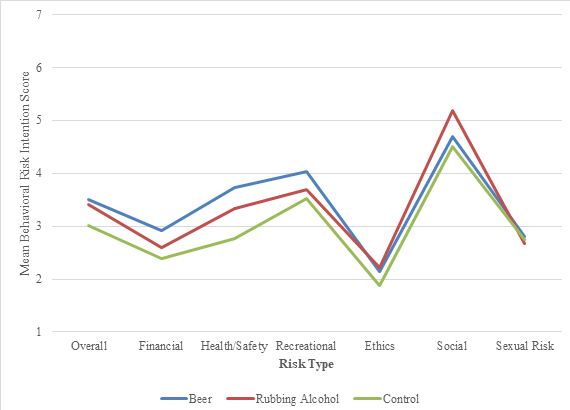
Figure 1: Mean Behavioral Risk Intention Scores by Condition by Risk Type
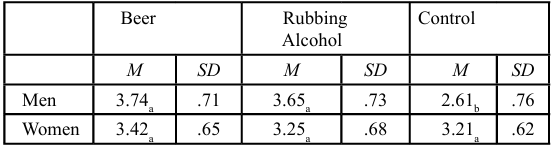
Table 1: Overall Mean Behavioral Risk Intention Scores by Participant Sex and Condition
Discussion
The study hypothesized that college students who are exposed to the smell of beer are more likely to report intentions to engage in risky behaviors, including unprotected sexual activity. When participants are exposed to the smell of rubbing alcohol they are predicted to be more cautious. Hypotheses in this study were partially supported. In order to see the differences in participant’s risky behavioral intentions, there were 5 subscales that included: Financial, Health/ Safety, Recreational, Ethics, and Social, as well as Sexual Risk.
The overall results supported part of the hypothesis showing the students who were exposed to the beer condition were more likely to have an increase in their behavioral risk intentions than students who were exposed to the control. Following the beer condition, the rubbing alcohol condition also displayed a higher result in risky behavioral intentions than the control group, which does not support the hypothesis of the smell of rubbing alcohol making the participant more cautious. The smell of rubbing alcohol might have scores higher because it could have been mistaken for the smell of “vodka” or other alcoholic beverages instead of first-aid associations.
With the smell of beer having an effect on participants’ views towards risky behavioral intentions it follows with the previous research showing drinking beer has a strong impact on the ability to control your thoughts [5]. Not only does the taste of beer have an impact, the smell appears to as well. There has been limited research done on olfactory primes and their effects on risky behavioral intentions.
The results from the Social subscale were statistically significant, but not as predicted. The participants that were exposed to the rubbing alcohol condition scored the highest followed by participants in the beer condition. This does compare with previous research because evidence suggests that young adults who are exposed to alcohol are influenced by social factors [7]. Young adults tend to try to fit in with their surroundings, making it a lot easier to get into trouble and do things they might later regret.
The findings for the current study showed men had slightly higher risky behavioral intentions than women, but these were not statistically significant. The olfactory primes interacted with participant sex. In the control condition, females scored higher than the males, but when males were given a scent (beer or rubbing alcohol) the pattern flipped. The men had greater risky behavioral intentions when they were exposed to a smell in the study compared to the control. Women had higher risky behavioral intentions with the control group, but when they were exposed to a smell the women became less risky.
Participants who were exposed to the beer smell showed an increase in being involved in risky behaviors. In real life, college students have ample access to bars, parties, and nightclubs. These atmospheres offer a mixture of different beers and liquors. This gives students a longer exposure time to the different smells of alcohol mixed with the consumption of alcohol in these party environments. While the current study was conducted in a controlled lab setting, exposure to alcohol in a party setting would certainly enhance risky-behavioral decisions.
Overall, there were three dependent variables, which produced significant results: the Health/Safety subscale, Social subscale, and the Overall risky behavioral intentions. While the other subscales did not yield significant results, they generally followed the same pattern as the Health/Safety subscale (see Figure 1). Participants who were exposed to the beer condition reported riskier behavioral intentions than the participants who were in the control condition. The Social subscale produced significant results, but it followed a different pattern: the rubbing alcohol condition being the highest followed by the beer condition, and then the control condition.
Although the current study adds to the existing literature on olfactory primes and risk intentions, there are some important limitations that must be considered when interpreting the findings and planning future studies. First, although we did our best to eliminate all other odors between sessions, other researchers and professors shared some of the experimental spaces. Another limitation of this study includes the time allowed to complete the study. Data was only collected over a single semester. Additional time would have allowed us to include more participants. Participants were all from Coastal Carolina University, therefore the results may not generalize to college students at different universities in other geographic regions. The age requirement of the research could also be a limitation. The requirement of “18 years of age or older” could have had an impact on the study. Students under the age of 21, the legal age to purchase and consume alcohol in the United States, might have been scared to share intentions for some questions that involve sexual content or underage drinking. Although the students were told they could not be connected to the questionnaire in any way, they might still not have told the whole truth about how they really feel. In future research, participant age could be investigated further to compare those less than 21 to those 21 or older.
The current study focused on how olfactory primes affect the behavioral risky intentions among college students. In future research, a different approach of delivering the scent could be used, such as a room diffusor. A diffusor may spread the smell further and be stronger than the smell on the paper in the current study. It would be interesting to include different types of alcohol besides beer, such as wine, vodka, whiskey, or rum and to observe actual behaviors and choices instead of behavioral intentions from a survey. In hindsight, we should have included manipulation check questions about the olfactory scents in the environment and whether participants could accurately identify them. Pre-testing indicated the smells were effective, and general debriefing procedures did not indicate anything suspicious was happening in the lab space at the end of the study.
The current study provides important applications and implications linking the scent of beer to risk taking intentions. In college environments, where beer and other alcohol is available, knowing that the smell of beer can influence student decision making is very important. To reduce risky behaviors, such as driving under the influence or engaging in risky sexual acts, not attending events where alcohol is present or avoiding parties and other gatherings could help students make less risky decisions. The scent of alcohol may especially increase risky decisions related to health/safety decisions according to the current findings. This may be particularly important for individuals struggling with addictions, such as alcoholism, or who may have made unfavorable decisions in the past, or have specific alcohol expectancies [20]. Research has shown that exposure to certain vodka olfactory cues can impact inhibitory control and attentional bias [21]. More research on the connections between olfactory primes and risky decision-making is important and should be explored in the future.
Competing Interests:
The authors declare that they have no competing interests.
References
Blais, A., & Weber, E. U. (2006). A Domain-Specific Risk Taking (DOSPERT) scale for adult populations. Judgment and Decision Making, 25(1), 33-47. View
Cohen, J. R., Asarnow, R. F., Sabb, F. W., Bilder, R. M., Bookheimer, S. Y., Knowlton, B. J., & Poldrack, R. A. (2010). A unique adolescent response to reward prediction errors. Nature Neuroscience, 13(6), 669-671. View
Moorhouse, M. D., Soule, E. K., Hinson, W. P., & Barnett, T. E. (2014). Assessing alcohol use in college: Is it time for a new approach to identify risky drinking behavior? Journal of Substance Use, 19(3), 262-267.
Birnbaum, M., LeLonde, T., & Paris, J. H. (2022). Party school rankings: Do we have anything to worry about? Tertiary Education and Management, 28(4), 317-334. View
Lewis, M. A., Patrick, M. E., Litt, D. M., Atkins, D. C., Kim, T., Blayney, J. A., & ... Larimer, M. E. (2014). Randomized controlled trial of a web-delivered personalized normative feedback intervention to reduce alcohol-related risky sexual behavior among college students. Journal of Consulting and Clinical Psychology, 82(3), 429-440. View
Paul, F. A., Ganie, A. U. R., & Dar, D. R. (2024). Substance use in university students: A comprehensive examination of its effects on academic achievement and psychological well-being. Social Work in Mental Health, 22(3), 452–484. View
Kingsbury, J. H., Gibbons, F. X., & Gerrard, M. (2015). The effects of social and health consequence framing on heavy drinking intentions among college students. British Journal of Health Psychology, 20(1), 212-220. View
LaBrie, J. W., Hummer, J. F., Ghaidarov, T. M., Lac, A., & Kenney, S. R. (2014). Hooking up in the college context: The event-level effects of alcohol use and partner familiarity on hookup behaviors and contentment. Journal of Sex Research, 51(1), 62-73. View
Ay, A., Çam, C., Kilinc, A., Fatih Önsüz, M., & Metintaş, S. (2025). Prevalence of hazardous alcohol consumption and evaluation of associated factors in university students. Social Psychiatry and Psychiatric Epidemiology, 60(1), 223-233. View
Weber, E. U., Blais, A., & Betz, N. E. (2002). A Domain specific Risk-attitude Scale: Measuring Risk Perceptions and Risk Behaviors. Journal of Behavioral Decision Making, 15(4), 263-290. View
Bonar, E. E., Hoffmann, E., Rosenberg, H., Kryszak, E., Young, K. M., Ashrafioun, L., & ... Bannon, E. E. (2012). Development of a questionnaire to assess university students’ intentions to use behavioral alcohol-reduction strategies. Journal of American College Health, 60(5), 395-402. View
Weinstein, R., Walsh, J., & Ward, L. (2008). Testing a new measure of sexual health knowledge and its connections to students' sex education, communication, confidence, and condom use. International Journal of Sexual Health, 20(3), 212-221 10p. View
Dermen, K. H., & Thomas, S. N. (2011). Randomized controlled trial of brief interventions to reduce college students' drinking and risky sex. Psychology of Addictive Behaviors, 25(4), 583 594. View
Byrnes, J. P., Miller, D. C., & Schafer, W. D. (1999). Gender differences in risk taking: A meta-analysis. Psychological Bulletin, 125(3), 367. View
Pengpid, S., & Peltzer, K. (2015). Gender differences in health risk behavior among university students: An international study. Gender & Behavior, 13(1), 6576-6583. View
Liljenquist, K., Zhong, C., & Galinsky, A. D. (2010). The smell of virtue: Clean scents promote reciprocity and charity. Psychological Science, 21, 381-383. View
Tybur, J. M., Bryan, A. D., Magnan, R. E., & Hooper, A. C. (2011). Smells like safe sex: Olfactory pathogen primes increase intentions to use condoms. Psychological Science, 22(4), 478- 480. View
American Psychological Association (2002). Ethical principles of psychologists and code of conduct. American Psychologist, 57, 1060-1073. View
DeHart, D. D., & Birkimer, J. C. (1997). Trying to practice safer sex: Development of the sexual risks scale. Journal of Sex Research, 34(1), 11-25. View
Magri, T. D., Dvorak, R. D., Aston, E. R., & Meshesha, L. Z. (2024). The role of Alcohol expectancies in the association between behavioral economic alcohol demand, relative reinforcement, and alcohol problems. Journal of Drug Education, 54(1), 31-51. View
Monk, R. L., Qureshi, A., Wernham, G., & Hein, D. (2022). Does the smell of alcohol make it harder to resist? The impact of olfactory cues on inhibitory control and attentional bias. Psychopharmacology, 239, 2109–2118. View