
- About the Journal
- Editorial Board
- Review Process
- Author Guidelines
- Article Processing Charges
- Special Issues
- Current Issue
- Past Issue
 Journal of Mental Health and Social Behaviour
Journal of Mental Health and Social Behaviour Volume 7 (2025), Article ID: JMHSB-205
https://doi.org/10.33790/jmhsb1100205Research Article
Summer Struggles with Stealing: A Single Case Design of Mindfulness and Cognitive Behavioral Interventions to Address Kleptomania
Michelle Salvaggio1,2, Ph.D., LCSW-R
1Visiting Assistant Professor, Department of Social Work, Idaho State University, 921 S 8th Ave, Pocatello, ID 83209, United States.
2Adjunct Assistant Professor at Columbia University School of Social Work, 1255 Amsterdam Avenue, New York, NY 10027 United States.
Corresponding Author Details: Michelle Salvaggio, Ph.D., LCSW-R, Visiting Assistant Professor, Department of Social Work, Idaho State University, 921 S 8th Ave, Pocatello, ID 83209, United States.
Received date: 10th June, 2025
Accepted date: 29th October, 2025
Published date: 03rd October, 2025
Citation: Salvaggio, M., (2025). Summer Struggles with Stealing: A Single Case Design of Mindfulness and Cognitive Behavioral Interventions to Address Kleptomania. J Ment Health Soc Behav 7(2):205.
Copyright: ©2025, This is an open-access article distributed under the terms of the Creative Commons Attribution License, which permits unrestricted use, distribution, and reproduction in any medium, provided the original author and source are credited.
Abstract
Stealing is common among adolescents, whereas kleptomania is a rare impulse control disorder affecting less than 1% of the American population. Diagnosing and treating kleptomania can be incredibly challenging due to the covert nature of stealing as well as the shame experienced which may lead to individuals’ avoidance of treatment. This article uses an AB single case design study demonstrating the effectiveness of utilizing mindfulness and cognitive behavioral interventions to support the cessation of stealing in an 11-year-old private practice female client. Implications for practice encompass expansion of the emerging evidence base for treating kleptomania.
Keywords: Kleptomania, Single Case Design, Mindfulness, Cognitive Behavioral Interventions
Introduction
Assessing individuals in their environments and essentially being where the client is are vital components of clinical social work practice. Cognitive behavioral interventions and mindfulness strategies provide a promising conceptual framework for clinical case formulations to treat adolescents who struggle with stealing. Enter Summer, an 11-year-old middle school girl that has been experiencing difficulty managing her impulse to steal since she was a toddler. At this age, Summer is able, willing and motivated to reflect on and change her behavior. In being approached for this article and to protect her confidentiality, the author inquired as to how she would like to be identified in the study. She expressed feeling that she had always liked the name Summer and that it made her feel happy. If you were her therapist, how might you help her? What aspects of her psychosocial history would be most pertinent to your intervention decision-making process?
Covert Stealing Behavior in Adolescents
Stealing behaviors in adolescents can vary depending on the frequency of these occurrences, location of theft and value of items procured. At the extreme is kleptomania, an impulse control disorder characterized by recurrent episodes of stealing, increased feelings of tension prior to the theft, a sense of relief following the experience and the distinction that the stealing is not emotionally based in anger or linked to active psychosis [1].
Ascertaining the prevalence of these behaviors in adolescents in general and kleptomania specifically is incredibly difficult due to the covert nature of stealing, how the behavior is measured and the source of data collection. FBI data indicates that theft and larceny are the most common property crimes in the United States [2]. Lifetime prevalence of stealing varies depending upon the data source; one recent consumer survey estimated that 1 in 11 Americans reported shoplifting [3], with another investigation positing a higher likelihood at 1 in 5 Americans [4]. Across both surveys, however, adolescents are disproportionately represented in contrast to other age groups. Conversely, kleptomania is highly uncommon as it affects less than 1% of the U.S. population [5].
Understanding the risk factors consistent with this behavior is a fundamental step in the development of effective service delivery models. Adolescent males have consistently emerged as more likely to steal than their female counterparts [6-8]. An early study of a nonclinical sample of adolescents attending summer camp indicates a correlational relationship between stealing and several characteristics such as being 13-15 years old, having a negative attitude toward school as well as valuing peer influences over family values [7]. An investigation of high school students added that stealing tends to be comorbid with a host of other difficulties including poor academic performance, smoking cigarettes, using alcohol and drugs, feeling sad, hopeless and engaging in other antisocial behaviors such as physical violence and carrying a weapon [6]. More recent research emphasizes the significance of peer relationships in that adolescents are more likely to engage in a range of antisocial behaviors including stealing, substance use and violence if they are socializing with peers that engage in those behaviors [9]. As stated above, antisocial behaviors such as stealing and substance use tend to cluster together, and this pattern was further represented in a recent analysis of the National Survey on Drug Use and Health (NSDUH) where marijuana use was positively associated with stealing, selling drugs and physically attacking another person [8].
Cognitive Behavioral Interventions and Mindfulness
Although adolescent males are more likely to self-report stealing, women are three times more likely to have kleptomania than men. Similar to stealing in general, the experience of kleptomania tends to be comorbid with other mental health concerns such as anxiety, depression, and eating and substance use disorders. Individuals with kleptomania tend to struggle with these impulses over the course of their lives, so effective treatment is paramount to their quality of life [5]. Cognitive behavioral interventions aim to support individuals in recognizing and altering their flawed and distressing belief systems as well as addressing the connections among those thoughts, feelings and behavioral patterns. This model is present-oriented and goal focused [10]. Cognitive behavioral interventions have shown effectiveness when utilized to support adolescents experiencing depression and anxiety [11] as well as efficacy in helping children aged 11 and under to cease antisocial behaviors such as stealing and physical aggression [12].
Mindfulness refers to a grounded awareness of an individual’s internal states and environment that can be applied therapeutically in an effort to assist people in avoiding detrimental or impulsive habits and behaviors by learning to observe their thoughts, feelings and other present-oriented experiences without judgment or reaction [13]. Although mindfulness-based interventions have exhibited effectiveness in treating a variety of concerns including children’s externalizing and prosocial behaviors [14], young adults’ management of Attention Deficit Hyperactivity Disorder (ADHD) [15] and adolescent boys’ depression and impulsivity [16], it is essential to fully explicate what is meant by mindfulness in effective service delivery since participants could have varying interpretations [17].
A recent Japanese study analyzed the effectiveness of cognitive behavioral group therapy (CGBT) combined with mindfulness for treating kleptomania and improving participants’ overall quality of life. Participants included 37 adults, the majority of which were female, aged 20 or older. All subjects had been diagnosed with kleptomania by their doctors, and half the sample had additional diagnoses including depressive, anxiety, bipolar, eating and substance use disorders. The 12-week program included discussions of goal setting, utilizing mindfulness strategies such as body scanning, developing coping strategies and a relapse prevention plan and identifying sources of social support. Participants exhibited significant improvement in standardized scales measuring kleptomania symptoms, quality of life, stress response and distress tolerance at pre and posttest data collection [18].
Single Case Design
Single case design has been established as a methodology utilized for clinicians to assess, monitor and evaluate their own practice as well as to investigate the impact of emergent interventions with client populations for which there is a paucity of research [19]. Recent examples of this include the evaluation of nature-based play therapy [20], the Resolutions approach aimed at supporting families in which child maltreatment has occurred [21], and virtual marriage education during the COVID-19 pandemic [22].
Single case design methodology involves the continual measurement of a participant over time which provides rich description of the changes in the trajectory of behavioral patterns through the course of treatment. From an ethical standpoint, each participant functions as their own control, and there is no withholding of services. Larger data sets focus on statistically significant findings when calculating measures of central tendency for groups, those who do not respond to the intervention remain unidentified, and treatments are not adapted to distinguish what particular modifications can be made to improve outcomes. Single case design methodology enables the possibility for replication across settings to build a robust understanding of the limits to which the intervention is efficacious [23].
As empirically validated treatments continue to emerge for kleptomania specifically and stealing behavior in general, a private practice outpatient mental health setting offers the potential to evaluate an intervention’s effectiveness in real time. The author adapted the aforementioned framework [18] of combining cognitive behavioral and mindfulness interventions to support the cessation of stealing in an 11-year-old female client. Single case design methodology was employed for measuring the client’s stealing behavior before, during and after the intervention’s implementation.
Case Introduction
Demographic Data and Presenting Problem
Summer was initially referred for therapy at the age of 5 as she was struggling with tantrums, lying, stealing and regressive behavior in that she experienced diurnal enuresis and was wearing diapers after being fully toilet trained. Summer reportedly achieved developmental milestones in the typical range and transitioned smoothly to school. Summer and her older sister Evelyn came to the attention of child protective services due to physical neglect and were initially foster children prior to being adopted. Much remains unknown as to what Summer may have witnessed or experienced in her infancy. The family of origin reportedly has a history of mental illness, substance abuse and incarceration, specifically Summer’s biological father was in prison for theft. Summer and Evelyn are African-American and have been adopted into a Caucasian family when Summer was 10 months old, and Evelyn was 3 years old.
The family is comprised of Summer’s older brother Joe (15) and younger brother Rob (10). Summer’s adoptive parents have been married for 20 years and reported that since it is a closed adoption, the sisters do not have any contact with their biological family. Summer reports a distant and at times negative relationship with her sister. Evelyn was reportedly born with substances in her system and has had to cope with cognitive challenges as well as difficulty forming healthy attachment relationships. Although both parents have adopted an authoritatively firm but loving parenting stance, Summer has always had a closer relationship with her adoptive father than her adoptive mother. Summer is typically more likely to open up and talk with her father and experience more conflict with her mother. Summer’s adoptive father posited that this may have been due to Summer’s knowledge of who her biological mother is but not ever knowing her biological father.
Summer has had an enduring connection with this therapist, at times meeting weekly, twice monthly or monthly depending on the level of support needed. In that time Summer has matured into an intelligent young woman that has made substantial progress with regard to body control and effectively expressing her thoughts and feelings to her family, friends and others. Summer’s impulse to steal, however, has persisted, and at the age of 11 she decided that she was ready to address this difficulty. When Summer was younger and asked about stealing, she would dissolve into tears. The behavior would subside for a time but always returned.
At the age of two, Summer reportedly took her parents’ car keys and threw them in a storm drain. By the age of three, Summer had taken and broken her older brother’s telescope. Summer was persistently taking what was not hers, being destructive and seemingly envious of what others had. In kindergarten she took a phone from someone in school. In the second grade, Summer began to take packs of gum from classmates’ desks. Summer expressed that she really loved gum but was rarely allowed to consume it at home, so she appeared to become jealous of her classmates that had gum. Summer admitted to taking the gum when questioned by the teacher, but getting caught did not seem to deter her as the theft continued over the course of the school year. Summer has been known to trade toys with other children, although she has expressed feeling sad, frustrated and angry that her perspective is not consistently believed due to her stealing behavior. Also, Summer has been known to sneak into her parents’ and siblings’ rooms to take items without asking and not return them. As she got older, Summer focused on having a phone but was not allowed to have one. In the month prior to this focused intervention, Summer’s stealing behavior escalated as Summer stole a phone from a classmate, the phone was located in Summer’s possession due to a tracking application, and a school safety officer came to her home to retrieve the phone. Summer expressed feeling full of shame and regret, and Summer’s parents expressed feeling that they did not know what to do. Summer and her parents consented to participate in this study.
Case Conceptualization
Based on DSM 5 diagnostic criteria, there are several questions clinicians can posit when assessing for kleptomania:
1. Do you steal or have urges to steal?
2. Do thoughts of stealing or urges to steal preoccupy you?
3.Do you feel tense or anxious before you steal or when you have an urge to steal?
4. Do you feel pleasure or a sense of calm when or after you steal something?
5. Has stealing or urges to steal caused you much distress?
6. Has stealing or urges to steal significantly interfered with your life in some way? [24].
In the initial assessment session, Summer endorsed yes for all of the aforementioned questions, indicating a kleptomania diagnosis. In response to the final question about how stealing may interfere with one’s life, she gave the following response, “Family doesn’t trust you. Some friends don’t trust you, but not everyone. There’s another group of friends at school that don’t know what I did, so we’re still friends. At home, I’m not allowed to be alone, only in my room or the bathroom.”
Individuals with kleptomania are overcome by the powerful urge to steal. Episodes of stealing usually occur randomly without forethought or assistance from anyone else. Thefts may occur in public locations such as retail settings or from friends and family members. The items themselves typically hold no value to the individual with kleptomania, and the person could afford to obtain them. Stolen property is usually hidden, and this behavior is shrouded in secrecy. It can be difficult to detect a pattern as the urge to steal can vary in frequency and intensity over time [25]. As stated above, Summer has typically stolen from family members and friends, and it has been difficult to detect a pattern of her behavior since her episodes of stealing were first recognized at the age of 2. Her parents could afford to buy the items she took, and Summer has described the impulse to steal as something that overpowers her.
As Summer has matured she has gained insight into her feelings of envy for what others have, her difficulties assimilating into her primarily Caucasian community as an African-American girl, her awareness of the distance in her relationship with her sister and mother and her anger and frustration at what she believes is her parents’ overly strict parenting of her. Conversely, Summer has also been able to identify positive peer relationships and excelling in academic and extracurricular activities. With the treatment focusing on calming and shifting the inner turmoil of her distorted thought process, cognitive behavioral therapy is an appropriate intervention. As purported in the cognitive model, precipitating situations lead to automatic thoughts that affect reactions of a physiological, emotional or behavioral nature [26]. With Summer, the precipitating situations would comprise of the opportunities to steal, specifically whether she was unsupervised around others’ possessions. Summer was able to identify the automatic thoughts encompassing one of the aforementioned stressors, especially feeling that her parents were too strict.
Treatment Goals
Summer’s initial treatment goals including gaining insight into her pattern of stealing as well as identifying her automatic thoughts prior to and during the act of theft. Furthermore, upon recognizing those occurrences, Summer worked with the clinician to resist the urge to steal and to utilize mindfulness strategies instead. Mindfulness strategies learned included the 5-4-3-2-1 method, body scanning and the leaves on a stream mindfulness meditation practice. The 5-4-3-2-1 method involves engagement of all five senses in order to ground the individual in the present moment in an effort to gain control over anxiety and racing thoughts. After taking a deep breath, the individual will look around and recognize five aspects of their environment, next they will acknowledge four items they can feel, three sounds they are able to hear, two aromas they are able to smell and something they can taste [27]. In the course of body scanning, the clinician is verbally guiding clients’ awareness to various areas of the body, such as focusing on lifting one foot, then the other and to observe their sensations without judgment [28]. The Leaves on a stream mindfulness meditation exercise involves asking individuals to stay in the present, attend to their breathing and engage in visualization. The clinician narrates a scene whereby the client envisions she is sitting by a stream and that as thoughts and feelings surface, the client can put those thoughts and feelings on a leaf and observe them drifting down the stream [29]. Cognitive behavioral skills implemented included gaining awareness of the antecedents of the thoughts about stealing, identifying feelings and effectively utilizing mindfulness skills as a manner of coping.
Measurement Plan
Over the course of eight sessions, both in-person and virtual, Summer tracked the number of times she thought about stealing as well as the number of instances in which she actually stole an item. The baseline assessment phase (A) occurred over the first two sessions, and the intervention phase (B) began in the third session.
Results
Baseline Phase
Summer reported zero instances of stealing over the course of eight sessions. With regard to thoughts of stealing, Summer’s frequency of thoughts decreased from five times weekly at baseline to zero times weekly by session eight. See Table 1 for a graphic representation of Summer’s self-monitoring log of thoughts of stealing. As stated above, Summer’s responses in the first session clarified her profound struggle with kleptomania. In the second session, she gave more background information regarding her tumultuous relationship with her sister. Summer stated, “Evelyn got hair extensions. I wanted them, and mom said that I could not have them until I was 18. That’s not fair. Evelyn took my facewash and makeup, but I will not tattle on her. She’s always in my space. I thought about taking my grandma’s phone.” Summer and therapist began to make the connection that thoughts of stealing would function as a coping strategy as she would think about what she wanted to take after a conflict with her parents or sister. Therapist utilized this interpretation of coping strategies to encourage client’s shift from thoughts of stealing to developing and practicing mindfulness and cognitive behaviorally focused coping skills.
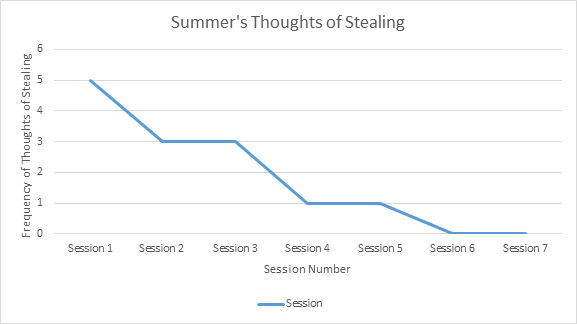
Table 1: Graphic Representation of Summer’s Stealing Self-Monitoring Log
Intervention Phase
By the third session and the introduction of skill development, Summer’s commitment to this process was palpable. Summer shared a theme she had observed in that she would see something that she wants, and typically she would just take it. Summer gave an example of a classmate with a bag of chips, and she reflected on how it would have been so easy to grab the bag. During this session, therapist utilized psychoeducation to review the aforementioned mindfulness strategies, and Summer was particularly intrigued by the 5-4-3-2-1 method which she practiced in session. Summer agreed to practice the 5-4-3-2-1, body scanning and leaves on a stream mindfulness meditation every night before bed as well as when she thought of stealing. By the fourth session, Summer began to tell her story of the night the school safety officer came to her home to retrieve her classmate’s phone. Summer described a cavalcade of emotions she experienced including shame, regret, sadness and anxiety as the safety officer emphasized that consequences would be far more severe if this phone theft happens again. Summer expressed that this moment will often replay in her mind both when she is engaged in mindfulness and when she thinks of stealing.
By the fifth and subsequent sessions, Summer reported little to no thoughts of stealing. Summer expressed feeling that the mindfulness strategies were “boring” but that she would continue practicing because she had agreed to, and she wants to be someone that can be wholeheartedly believed by others. In the sixth session, Summer recalled a recent situation in which her grandparents were visiting the family, and her grandmother’s phone was missing. Summer said, “It’s hard when something is gone, and I am immediately blamed. Will my family ever trust me again? My grandfather ended up having my grandmother’s phone, and no one knew why. My parents apologized that I went through that, and I appreciate their apology.” In the seventh session, Summer shared another experience where her mother’s Apple watch went missing, and everyone’s rooms were searched. Summer stated, “I wasn’t immediately blamed, and it seemed like mom just misplaced it. I was happy to be able to use my IPAD again and have a sleepover with a friend.”
Upon conclusion of the 8-week treatment period, Summer expressed feeling positively about learning ways to regulate her cognitions and emotions when she thought about stealing. Summer reported that the significant factors in her change process included not wanting to further disappoint her parents as well as observing how they have been shifting in their perception of her. Summer has expressed feeling motivated to ask for and earn what she wants since there seems to be more of a distinct possibility that will happen. Summer’s adoptive father offered his perspective in that there had been “nothing major” over the intervention period and that he feels the ongoing work is to support Summer’s self-esteem. He stated, “I try to make her feel important. Summer is so focused on how everyone else is being treated. She makes herself sound like the victim. I want all the kids to be happy. At times I feel like I’m failing.” Beyond the individual focus on supporting Summer in utilizing mindfulness and cognitive behavioral strategies instead of stealing, further exploration is warranted regarding family dynamics, specifically with respect to Summer’s strained relationship with her older sister.
Discussion
The case of Summer exemplifies the promise of utilizing single case design methodology in a private practice setting for treatment of a rare mental health condition such as kleptomania for which there is a paucity of research on clinical best practices. As with any investigation reliant upon self report, there is the potential for social desirability bias which refers to participants’ tendency to more frequently report desirable behaviors and underreport socially undesirable attributes [30]. In order to enhance the trustworthiness of Summer’s perspective, it was essential to involve Summer’s adoptive father to verify the study’s results, especially since Summer had already emphasized her motivation being to make her parents proud.
Despite Summer’s apparent success in managing her impulse to steal, she expressed feeling that it was “boring” and tedious to consistently practice the mindfulness skills. Ongoing exploration is warranted with regard to other opportunities for Summer to engage in mindfulness that is more fitting with her lifestyle as a young adolescent. For example, Summer recently began running on the middle school cross country team. Utilizing mindfulness based interventions has been found to promote athletic performance, as well as mindfulness-related emotional benefits such as decreased stress, self-compassion and attentional control [31].
The findings of this investigation are remarkable as Summer seemingly shifted intractable behaviors with which she has struggled for the past nine years. The question arises as to whether Summer’s progress is due to the introduction of mindfulness and cognitive behavioral strategies or the long-standing relationship between Summer and her therapist of 6 years. A therapeutic alliance is an essential component to clients getting the most out of therapy. DeAngelis [32] emphasizes that fundamental aspects of the therapeutic relationship such as mutual collaboration on goals setting, obtaining client feedback over the course of treatment and addressing relationship ruptures are at least as essential to a positive outcome as utilizing the correct intervention strategy.
In order to support and sustain Summer’s change process, cognitive behavioral and mindfulness interventions must include further exploration of Summer’s core beliefs about herself, others and the world, especially to build empathy and to reduce impulsivity. Summer and her older sister Evelyn are two of the children impacted by the approximately 40% of transracial adoptions occurring in the United States [33]. Summer has expressed feeling different, like she does not belong, and this can be a common experience of adoptees, especially in a transracial household. This has been an understandably difficult topic to address within the family as the community is relatively homogenous.
Due to the potentially long-term course of kleptomania, as well as possible interactions with the legal system, early identification and treatment is essential, especially for this client who is an African-American female adoptee in a transracial household. African-American girls are the fastest growing demographic in the juvenile justice system [34], and African-American women are overrepresented in state and federal prisons [35]. Fully understanding the thought process, emotional state and impetus to change for those who steal is an essential first step in designing effective models of service delivery as well as preventing the long-term consequences of kleptomania.
Competing Interests:
The authors declare that they have no competing interests.
References
American Psychiatric Association. (2013). Diagnostic and statistical manual of mental disorders (5th ed.). Washington, DC: Author. View
Gramlich, J. (2024). What the data says about crime in the U.S. Retrieved May 17, 2025 from https://www.pewresearch.org/ short-reads/2024/04/24/what-the-data-says-about-crime-in-the us/. View
Devasia, A. (2025). 50 Shocking Shoplifting Statistics, Data and Trends.
Capital One Shopping Research. (2025). Retail theft (shoplifting) statistics. View
Cleveland Clinic. (2022). Kleptomania. Retrieved May 9, 2025 from https://my.clevelandclinic.org/health/diseases/9878 kleptomania. View
Grant, J.E., Potenza, M.N., Krishnan-Sarin, S., Cavallo, D.A., & Desai, R.A. (2011). Stealing among high school students: Prevalence and clinical correlates. J Am Acad Psychiatry Law, 39(1), 44–52. View
Moncher, F.J. & Miller, G.E. (1999). Nondelinquent youths’ stealing behavior and their perception of parents, school and peers. Adolescence, 34(135), 577-591. View
Moss, S.L., Santaella-Tenorio, J., Mauro, P.M., Keyes, K.M., & Martins, S.S. (2019). Changes over time in marijuana use, deviant behavior and preference for risky behavior among US adolescents from 2002 to 2014: testing the moderating effect of gender and age. Addiction, 114(4), 674-686. View
Hoeben, E.M., Osgood, D.W., S.E., Siennick, & Weerman, F.M. (2021). Hanging out with the wrong crowd? The role of unstructured socializing in adolescents’ specialization in delinquency and substance use. Journal of Quantitative Criminology, 37(1), 141-177. View
Institute for Quality and Efficiency in Health Care. (2022). In brief: Cognitive behavioral therapy (CBT). Retrieved May 14, 2025 https://www.ncbi.nlm.nih.gov/books/NBK279297/. View
Yale-Soulière, G., Campeau, G., Turgeon, L., & Goulet, J. (2024). Evaluation of a brief intervention to reduce test anxiety in adolescents: a randomized control trial. Current Psychology, 43(39), 30760-30775. View
Farrington, D.P., & Koegl, C.J. (2015). Monetary benefits and costs of the Stop Now and Plan Program for boys aged 6–11, based on the prevention of later offending. Journal of Quantitative Criminology, 31(2), 263-287. View
American Psychological Association (2018). APA dictionary of psychology: mindfulness. View
Sciutto, M.J., Veres, D.A., Marinstein, T.L., Baily, B.F., & Cehely, S.K. (2021). Effects of a school-based mindfulness program for young children. Journal of Child and Family Studies, 30(6), 1516-1527. View
Lester, E.G. & Murrell, A.R. (2019). Mindfulness interventions for college students with ADHD: A multiple single case research design. Journal of College Student Psychotherapy, 33(3), 199 220. View
Roux, B. & Philippot, P. (2020). A mindfulness-based program among adolescent boys with behavior disorders: A quasi experimental study. Journal of Child and Family Studies, 29(8), 2186-2200. View
Buhk, A.H., Schultz, H. & Bullock, W.A. (2023). What are they measuring? Testing the convergent validity of state and trait mindfulness measures across two independent samples. A Journal of Psychopathology and Behavioral Assessment, 45(4), 1107-1118.View
Asami, Y., Nomura, K., Shimada, H., Nakagawa, K., Sugano, M., Koshiba, A. Ohishi, Y., Ohishi, H., & Ohishi, M. (2022). Cognitive behavioral group therapy with mindfulness for kleptomania: an open trial. The Cognitive Behavior Therapist, 15(34), 1-12. View
Rubin, A. (2020). Program evaluation: Pragmatic methods for social work and human service agencies. New York: Cambridge University Press. View
Swank, J.M., Shin, S.M., Cabrita, C., Cheung, C, & Rivers, B. (2015). Initial investigation of nature-based, child-centered play therapy: A single case design. Journal of Counseling and Development, 93(4), 440-450. View
Sepers, A. J. W., van der Werff,, V., de Roos, C., Mooren, T., & Maric, M. (2020). Increasing family safety and decreasing parental stress and child’s social-emotional problems with Resolutions Approach: a single-case experimental design study protocol. Journal of Family Violence, 35(5), 527-536. View
Chalmers, J.H. (2020). Online marriage education during COVID-19 lockdown: A multiple-baseline single-case experimental design. Interpersona, 14(2), 150-168. View
Brown, C.L., Peltier, C., Smarinsky, E.C., Lewis, O.J., & Lee, D.Y. (2024). A review of counseling research using single-case design. Journal of Counseling and Development, 102(3), 334 349.View
Simon, K.M., York, T., & Diaz, Y.A. (2021). Kleptomania: 4 tips for better diagnosis and treatment. View
Mayo Clinic (2022). Kleptomania. View
Beck Institute (2021). Cognitive Model: CBT for personality disorders – online course. View
Imran, A. (2020). Combat against stress, anxiety and panic attacks: 5-4-3-2-1 coping technique. Journal of Traumatic Stress Disorders and Treatment, 9(4), 207. View
Leeth, C.D., Villarreal, V., & Styck, K.M. (2019). Mindfulness interventions for children and adolescents with ADHD: A review of objectives and skills. Journal of Creativity in Mental Health, 14(4), 436-446. View
Saldana, K.S., McGowan, S.K., & Martin, J.L. (2023). Acceptance and commitment therapy as an adjunct or alternative treatment to cognitive behavioral therapy for insomnia. Sleep Medicine Clinics, 18(1), 73-83. View
Latkin, C.A., Edwards, C., Davey-Rothwell, M.A., & Tobin, K.E. (2017). The relationship between social desirability bias and self-reports of health, substance use, and social network factors among urban substance users in Baltimore, Maryland. Addictive Behavior, 73, 133-136. View
Wang, Y., Lei, S-M., & Fan, J. (2023). Effects of mindfulness based interventions on promoting athletic performance and related factors among athletes: A systematic review and meta analysis of randomized controlled trial. International Journal of Environmental Research and Public Health, 20(3), 2038. View
DeAngelis, T. (2019). Better relationships with patients lead to better outcomes. View
Buchstein, F. (2024). History of transracial adoption in the U.S. View
Killeen, E. (2019). The increased criminalization of African American girls. Retrieved May 19, 2025 from https://www. law.georgetown.edu/poverty-journal/blog/the-increased criminalization-of-african-american-girls/. View
Budd, K.M. (2024) Incarcerated women and girls. View