
- About the Journal
- Editorial Board
- Review Process
- Author Guidelines
- Article Processing Charges
- Special Issues
- Current Issue
- Past Issue
 Journal of Mental Health and Social Behaviour
Journal of Mental Health and Social Behaviour Volume 8 (2026), Article ID: JMHSB-212
https://doi.org/10.33790/jmhsb1100212Review Article
Understanding Behavioral Function: A Narrative Review of Functional Analysis Methodology
Lacy M. Knutson
School of Education, Counseling and Human Development, South Dakota State University, Brookings, SD, United States of America.
Corresponding Author Details: Lacy M. Knutson, School of Education, Counseling and Human Development, South Dakota State University, Brookings, SD, United States of America.
Received date: 09th December, 2025
Accepted date: 08th April, 2026
Published date: 10th April, 2026
Citation: Knutson, L. M., (2026). Understanding Behavioral Function: A Narrative Review of Functional Analysis Methodology. J Ment Health Soc Behav 8(1):212.
Copyright: ©2026, This is an open-access article distributed under the terms of the Creative Commons Attribution License, which permits unrestricted use, distribution, and reproduction in any medium, provided the original author and source are credited.
Abstract
This article provides an entry-level introduction to functional analysis (FA) methodology and its contributions to understanding the variables that influence human problem behavior and treatment. Initially developed over 40 years ago, this methodology has grown in various ways, becoming one of the most valuable clinical tools used in behavior analysis. This paper briefly reviews the purpose of FA, various methodology practices including condition and procedural variations as well as safety and acceptability of procedures. Having a basic understanding of common assessment methodologies used in developing function-based interventions is beneficial for those working with or caring for individuals who engage in problem behavior.
Keywords: Functional Analysis, Problem Behavior, Function-Based treatment
Introduction
The desire to understand ‘why’ humans behave the way they do draws many people to the field of psychology and, more specifically, behavior analysis. For many, gaining insight into complex topics like this can offer orderliness to a seemingly chaotic world. This article will briefly review the history and progression of developing scientific procedures to determine ‘why’ a human may behave in ways that put them or others at risk. Furthermore, it will briefly explore how behavior analysts use that information to design meaningful and effective interventions.
Prior to the late 1970’s the clinical approach to addressing problem behaviors often involved providing reinforcement following adaptive behaviors and using planned ignoring or punishment for the occurrences of problem behaviors. This was referred to as contingency management [1]. In 1977, Carr proposed that there was a logical and systematic relationship between problem behavior and the consequences that followed (e.g., attention, avoiding demands). This proposition shifted not only the way problem behaviors were conceptualized but also assessed and the treatment strategies provided.
A functional analysis (FA) is a scientific means of assessing the behavioral function or the ‘why’ of a person’s behavior [2]. FA methodologies are based on operant conditioning principles pioneered by B. F. Skinner [3]. A basic principle of operant conditioning is that behaviors are shaped by their consequences. Behaviors followed by reinforcing events occur more often in the future, and behaviors followed by punishing events occur less often in the future [4]. Therefore, if a person is engaging in problem behavior, that behavior must be followed by a reinforcing event. When problem behaviors increase in severity such is the case in severe aggression, self-injury, or property destruction, it is critical to find effective treatments.
The purpose of an FA is to systematically determine what is reinforcing the problem behavior [5]. For example, does the attention that a person receives following the problem behavior maintain its occurrence? Or is the problem behavior occurring because when the person does the behavior, caregivers stop asking them to do things they don’t like? FA procedures help researchers and clinicians answer these types of questions. Researchers and trained clinicians, such as Board Certified Behavior Analysts (BCBA), design FAs to experimentally manipulate environmental conditions to evoke the problem behavior in the target individual to identify which environmental conditions lead to problem behavior. For example, if a BCBA hypothesizes that their client engages in self-injury to access attention and affection from their caregiver, they will design an FA session where caregivers give low or no attention/affection unless the individual engages in self-injury. If manipulating when caregiver attention/affection is delivered results in a change in the occurrence of the problem behavior, then a functional relationship has been demonstrated. A functional relationship means that when you make a change in one variable (e.g., caregiver attention/ affection), it produces a predictable change in another variable (e.g., self-injury) [3]. Identification of functional relationships allows for the development of function-based interventions. Function-based interventions are those designed to teach adaptive skills that meet the same function or need the problem behavior is currently resulting in [1]. For example, if someone is engaging in self-harm so that their caregiver gives them attention or affection, a function-based intervention might be to teach the individual to say “Hey, mom” or to raise their hand in class to allow for the same functional outcome of getting caregiver attention or affection.
Since their inception, FA procedures have been found to be highly effective in understanding the conditions under which individuals are more or less likely to engage in problem behavior. These procedures have been extensively researched and primarily employed with individuals with developmental disabilities who engage in severe problem behaviors [2,6,7]. Individuals who engage in behaviors such as self-injury, aggression, property destruction, etc., can cause harm to themselves or others, and these behaviors often impede the person’s quality of life. Therefore, FA’s have become a standard clinical tool in behavior analysis for assessing and treating problem behavior in individuals with developmental disabilities [5,8].
In the early 1980s, Iwata, Dorsey, Slifer, Bauman, and Richman [2] designed the first experiment to understand the function of self- injurious behaviors of individuals with developmental disabilities. The goal was to find an effective methodology allowing researchers to match treatment to the function of problem behavior. Function- based treatments could then be used to reduce the problem behavior, rather than relying on punishment-based treatments, which were often used at the time. In this foundational study, Iwata and colleagues [2] first proposed FA methods that would vastly change the clinical world of behavior analysis. The procedures developed by Iwata and colleagues [2] are often referred to as a standardized FA.
Standardized FA procedures focused on experimentally assessing the impact of manipulating antecedent and consequent variables on the occurrence of self-injury [2]. Antecedents are environmental conditions that occur directly before the target behavior, whereas consequences are environmental conditions that occur directly following the target behavior [9]. Each FA session is structured to emulate a possible environmental condition that may evoke problem behavior – social disapproval, academic demand, and being alone [2]. Each condition is examined across one or more sessions to gather the rate of the behaviors occurrence. Rates of occurrence of the problem behavior in the specific experimental conditions are compared to one another and to a control condition to determine which variable is exerting control over the problem behavior [2]. For example, in social disapproval conditions, researchers examine the effect of providing attention to the individual directly following an occurrence of self-injury. The specific type of attention may be a statement such as “Be careful, don’t hurt yourself” thus suggesting social disapproval of the act of self-injury. Experimental sessions are structured so the individual is encouraged to play with toys while the researcher completes other activities. In doing so, the researcher is trying to establish a motivating operation for attention [10]. If the individual engages in self-injury, the researcher stops what they were working on and provides the social disapproval attention statement to the individual [2]. The play condition was used as a control, meaning that the individual had access to fun toys/activities, with no academic demands placed upon them, and attention from caregivers if they wanted it. Researchers presumed that self-injury would be less likely in the control condition because the individual could access what they wanted and were not asked to do things they disliked.
If self-injury occurred more often in one or more of the experimental conditions compared to the control condition, it was said to be differentiated, and researchers concluded that variable exerted functional control over the individual’s behavior [2]. For example, in Figure 1, you can see hypothetical data from a differentiated FA. The data shows that self-injury occurs at higher rates in the social disapproval sessions than in other conditions. Therefore, the researchers concluded that the attention the individual received was reinforcing, and the individual was engaging in self-injury to access attention.
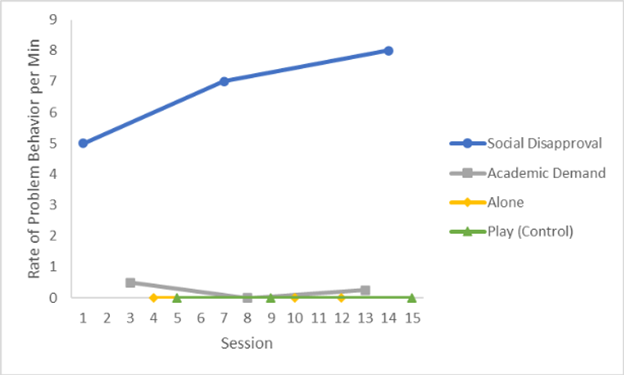
Figure 1: HES Total Score
A differentiated FA can be compared to an undifferentiated FA, as is presented in Figure 2. An undifferentiated FA is one in which data are elevated across multiple conditions [11]. In Figure 2, you can see elevated hypothetical data across all assessment conditions. Undifferentiated FAs make designing treatment more difficult as it is unclear what the reinforcer is [12]. Under some situations, this suggests that the behavior may be automatically reinforcing meaning that engaging in the behavior produces some desired outcome [11]. Another possible conclusion from an undifferentiated FA is that multiple variables control the behavior. In cases where multiple variables control the behavior, the individual uses this behavior to meet various needs [6,2]. For example, the individual may engage in the problem behavior to communicate that they need/want attention and that they dislike/do not want to do something.
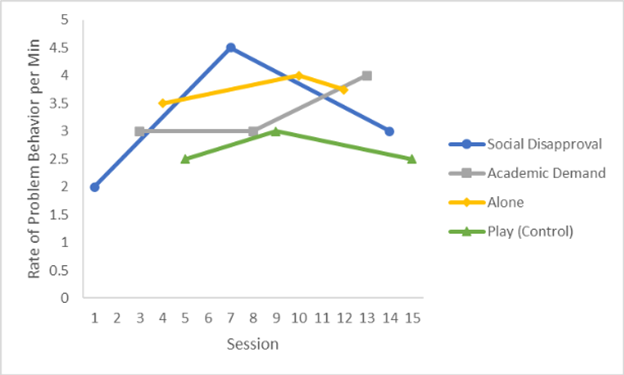
Figure 2: Hypothetical data of an undifferentiated FA
Once the behavioral function(s) of the problem behavior have been identified, function-based treatments are designed [1]. Function based treatments often include the development of one or more functionally equivalent replacement behaviors (FERB). FERBs are adaptive skills that meet the same function of the problem behavior and are taught as an alternative means of getting their needs met [6,13]. For example, a therapist may teach the individual how to raise their hand or to press a button that says, ‘Come here, please,’ to access attention from others. The outcome of both of these responses match the functional reinforcer of the problem behavior and therefore are appropriate replacement behaviors to teach the individual. FERBs are selected by ensuring that the new skill meets the same functional outcome, are easy, and efficient. For example, raising a hand is less physically strenuous than repeatedly hitting oneself to access attention. By matching the behavioral function of the problem behavior to the FERB, it is more likely that the treatment will be successful [13].
Since the original work on FAs, hundreds of articles have been published documenting variations of the original methodology to further the scientific understanding of behavioral functions and to improve procedural designs, efficiency, safety, and acceptability [14]. These variations include things such as shortening the assessment duration such as in the brief-functional analysis [15], minimizing the individual’s exposure to evocative situations during assessment sessions [16-19], focusing on less severe precursor behaviors [20], exploring the feasibility of implementation by parents [21,22], teachers [17] and residential staff [23]. The following sections will discuss a bit more about the strengths and weaknesses of some of these variations.
Condition Variations
In their original study, Iwata and colleagues [2] examined three experimental assessment conditions: social disapproval, academic demand, and being alone. These assessment conditions can be further classified into socially mediated positive reinforcement, socially mediated negative reinforcement, and automatic reinforcement [9]. Socially mediated means that the reinforcing consequence is mediated or delivered through the involvement of another person [9]. For example, the behavior of a child engaging in self-injury to receive physical comfort and statements of concern from a caregiver would be said to be occurring as a function of socially mediated positive reinforcement (physical and verbal attention). In contrast, the behavior of a child engaging in self-injury so that their teacher stops asking them to do a task would be said to be occurring as a function of socially mediated negative reinforcement. Automatically reinforced behaviors produce reinforcing consequences simply through performing the behavior itself. Automatically reinforcing behaviors may produce sensory input such as when an individual applies pressure to their eyes, they may experience changes in focus, color and clarity of their view. In other cases, the behavior may reduce sensory input such as someone putting pressure on their temple reduces a headache [24].
As research on FAs has grown, additional considerations to motivating conditions has expanded thus increasing potential conditions to evaluate. In addition to examining the role of socially mediated access to attention, researchers started examining socially mediated access to preferred objects and items [25,26]. These sessions are referred to as tangible conditions. In a tangible condition session, the individual has access to either low-preferred items to engage with or no items. When the individual engages in the target behavior, the researcher provides them with their highly preferred items for a brief time [12]. If the target behavior occurs more often in the tangible condition than in the control condition, researchers conclude that the behavior is occurring to access preferred items. Table 1 lists the common FA condition names, their relevant antecedents and consequences, and the function examined in that assessment condition.
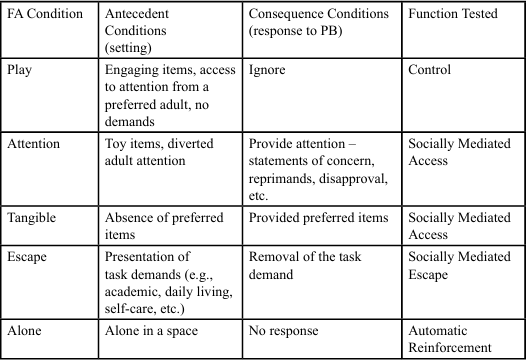
Table 1: Conditions commonly examined during a Functional Analysis (FA)
The inclusion of tangible conditions has been cautioned against under some circumstances. While some researchers argue that developing new relational contingencies are unlikely during brief analyses, creating a reinforcement contingency of problem behavior that was not previously present is still possible [27,28]. If exposed to tangible conditions where highly preferred items are provided directly following an occurrence of problem behavior, a person whose problem behavior was not initially maintained by this reinforcer may learn that engaging in the problem behavior is an effective way to gain access to these items. Rooker et al. [28] found that exposing individuals who displayed automatically reinforced behaviors to tangible conditions increased behavior rates, creating a false positive result suggesting that the behavior was also maintained by access to tangibles. Furthermore, these effects may occur outside of the assessment setting, resulting in the individual continuing to engage in problem behaviors to access these items. Hanley, Iwata, and McCord [6] highlight the importance of using indirect assessments such as interviews and questionnaires as well as direct observations to guide the selection of conditions to include in a functional analysis. If preliminary data suggest a functional relationship may exist, then including these conditions would be appropriate. However, if no preliminary relationship is suggested, it is recommended to not including those test conditions [6,29]. For example, if in the initial interview, the parents provide no information suggesting that their child engages in self-injury to gain access to preferred items such as the TV, iPhone, tablet, etc., then it would be best practice for the researchers to leave out tangible conditions. A recent literature review shows that the number of studies including tangible conditions continues to rise [14]. There are several potential factors as to why this might be the case, such as the increased reinforcing value of available tangible items, increased portability of high-value stimuli, and increased feasibility of delivery [14]. Put another way, with the many advancements in technology, a greater number of tangible items, such as iPads, smartphones, and handheld gaming devices, can be easily transported and offer high-value engagement/ entertainment, which may make this a more regularly occurring contingency for problem behavior in today’s society as compared to previous years.
Procedural Variations
Since Iwata and colleagues developed the standardized FA methods [2], researchers have explored a variety of procedural variations. These include differences in assessment length, session durations, experimental formats, and the feasibility of caregivers as primary assessors. Assessment lengths can be divided into two broad categories: full and brief. Full assessments are those in which the individual is exposed to the evocative event three or more times per session [14,30]. In contrast, brief assessments involve individuals being exposed to the evocative event two or fewer times per session [14,30]. One reason for exploring the value of shorter assessment methods is to decrease unnecessary exposure to situations likely to produce the problem behavior [15,31].
Researchers have also examined variations in session duration in an attempt to increase efficiency. For example, standardized FA sessions are often 10-15 minutes in duration with repeated exposure to the evocative events and programmed consequences [16]. However, alternative session lengths, such as those in the brief functional analysis, have shown to be effective in identifying the maintaining function of the behavior [15], as have trial-based procedures [16,17,19]. Northup and colleagues [15] examined the utility of a series of brief functional analysis conditions that were 5 to 10 min in duration during a one-day outpatient evaluation. Results showed that behavioral function was able to be identified with all participants thus suggesting that shorter assessment durations can lead to meaningful outcomes. Trial-based procedures involve exposing the participant to a session that ends immediately following the first occurrence of the problem behavior [21,32-34]. Immediately ending the session following a single instance of the problem behavior reduces the risk to the participant and researcher. Thomason-Sassi and colleagues [31] explored the role of response latency in functional analysis of problem behaviors. Authors found shorter latencies to problem behavior as well as overall higher rates of problem behavior in conditions associated with maintaining functions. Additionally, results of the 5-min latency-based FA found consistent results compared to the 10-min standardized FA in 9 out of 10 cases. Again, this suggests that options such as trial-based, brief-FA and latency- based FAs are appropriate alternatives to the longer, standardized FA.
Much of the research on FAs has been conducted including multiple individual conditions, each targeting a specific antecedent condition and reinforcing consequence in isolation [14]. However, following the Beavers et al. [30] review of FA literature, more research has explored the role of synthesized arrangements [29]. Synthesized arrangements involve presenting multiple evocative conditions or suspected reinforcers simultaneously [35]. For example, presenting a demand to put aside a preferred item and come to the table for dinner would be considered a synthesized evocative condition. Whereas, allowing someone to take a break from math and go to a ‘calm down’ corner is an example of a synthesized reinforcement condition.
Many clinicians and researchers have branched away from the approach of looking at isolated conditions and explore synthesized conditions that are similar to those reported in typical contexts. A key example of this is the Practical Functional Assessment (PFA) method by Hanley and colleagues [36]. The PFA process relies heavily on the use of an open-ended interview with parents/ caregivers, followed by direct observations of the individual, and then uses the information gathered to identify which reinforcing consequences would be assessed together (synthesized) in a single test condition [36]. Unlike isolated FA methods, the PFA presents multiple evocative situations in the test sessions and delivers multiple potential reinforcers following the occurrence of the problem behavior [37]. Conditions selected for inclusion are based on the findings from the open-ended interview as well as observations. For example, if the interviews and direct observations suggest that problem behavior may be evoked by loss of preferred items and the placement of demands, a PFA may be designed with the evocative situations being asked to leave a preferred activity and transition to a desk to complete academic work. If the individual engages in the problem behavior, multiple reinforcers will be delivered, such as removal of the academic demands and being allowed to return to the preferred activity. Research on the PFA continues to grow; however, one advantage of these methods compared to traditional FA methods is that they resemble more real-life situations [29,35,38]. For example, when a teacher becomes frustrated and walks away from having their student complete the math assignment, that student rarely sits and does nothing. Instead, the teacher will often say, “Let’s take a break. Why don’t you play with blocks for a while.” In this example, the student receives multiple environmental changes following a problem behavior. They no longer need to work on math and they get time to play with blocks. Rather than spending valuable time analyzing which of the two environmental changes plays the primary role, the PFA methods suggest that both changes likely have a synthesized versus an isolated effect [29].
While the PFA methods have many advantages, the use of synthesized reinforcers can be considered by some, a limitation. By relying on the delivery of multiple potential reinforcers, it is not clear to what degree each of the individual variables contributes to the problem behavior [30]. Without this knowledge, the FA may result in a false positive for a function and misguide treatment [37,39]. For example, presume researchers design a PFA using interview information suggesting that problem behaviors occur to access attention and snacks. If functional control is established over the problem behavior during the PFA, researchers will design a treatment to address both variables. However, had we explored each variable individually, we may have found that access to attention only was reinforcing the problem behavior. In essence, the presence of snacks ‘came along for the ride’ as a hypothesized reinforcer. Meaning the presence of snacks does not influence the problem behavior.
The divide among practitioners and researchers on the isolated versus synthesized contingency approach continues and is beyond the scope of this paper. However, it is important to note that both FA approaches have the goal of understanding behavioral function and ultimately designing an effective intervention that will benefit the client [40]. This shared focus on client success should continue to guide both research and practice. For those interested in exploring this topic further, Fahmie and Sullivan [40] is identified as recommended reading.
Having a highly trained professional conduct these assessments may be ideal; however, that is not always possible, considering the current supply and demand. Board Certified Behavior Analysts (BCBAs) receive targeted instruction on using FAs as part of their training and are the go-to specialists for these procedures. There currently are 81,566 BCBAs in the United States [41], a significant increase from just ten years ago when there were only 12,625. However, at the time of this writing, www.indeed.com [42] had over 27,000 job postings for ‘behavior analyst’ positions, indicating high demand (2026). Due to the high need, behavior analysts have had to explore alternatives to ensure individuals receive effective and timely treatment. Examining the effectiveness of training parents [21,22], teachers [17], and residential staff [23] to conduct FAs have not only increased the number of trained individuals but also added a level of ecological validity that may not present otherwise. Meaning that by having familiar individuals, such as parents or teachers, who live/ work with the person on a daily basis trained to conduct the FA, the results are more likely to accurately predict the behavioral patterns of the person as compared to an FA done in a more analog clinical setting.
Safety and Acceptability
Individuals experiencing severe problem behaviors such as self-harm or aggression, may be required to live or work in a more restrictive setting for safety [43,44], they may have reduced opportunities to learn new skills and reduced community participation if it is unsafe for them or others [45] and therefore may experience a reduced quality of life [46]. Considering these many negative outcomes, it is important that we continue to promote safe and acceptable assessment methodologies. The Ethical Code for Behavior Analysts [47] supports this goal.
The Ethics Code for Behavior Analysts [48], guides behavior analysts in ensuring safety, care, and dignity of those they serve. Assessments such as functional analyses of problem behavior involve an inherent level of risk and therefore relate to several ethical standards. For example, Ethical Code 1.05 Practicing within Scope of Competence outlines that behavior analysts should only practice procedures and techniques that they have been trained in [47]. If a behavior analyst has not been trained in FA methodology, it would be inappropriate for them to implement this assessment without first receiving training and guidance by someone who is competent. Ethical Code 2.13 Selecting, Designing, and Implementing Assessments is also relevant [47]. This code states that behavior analysts should prioritize maximizing benefits and minimizing risks of harm while selecting and designing assessment strategies [47].
While FAs may present some inherent risks, safety procedures have been included since their initial development by Iwata and colleagues [2] and continue to be included [48]. A comprehensive review of the various modifications and safety procedures for FAs is beyond the scope of this paper. However, interested readers may explore Frank- Crawford et al. [48] for further discussion. Some of the efforts to increase safety and acceptance have resulted in several modifications which are discussed next.
One step toward reducing risk involves removing unnecessary test conditions. As mentioned above, researchers recommended that assessments only contain tangible conditions if indirect methods suggest that there may be a functional relationship [6,11]. If the indirect assessments conducted prior to the FA do not suggest a possible tangible function, it may be in the client’s best interest to not include that condition as part of the assessment. Querim et al. [49] recommend using a brief extended no-interaction condition to test for automatically maintained problem behavior. If there are no occurrences of the problem behavior in the extended no-interaction sessions, then researchers can eliminate the alone condition from the larger assessment. However, if problem behavior occurs, researchers can develop a treatment to address automatically reinforced behaviors.
When results from a standardized FA are inconclusive or undifferentiated, additional assessment conditions may need to take place to guide effective treatment. Hagopian et al. [12] found that additional modifications following an undifferentiated standardized FA resulted in differentiation in a majority of cases. However, authors emphasize that extending the analysis through additional modifications should be done when risks to the participant can be safely managed.
A goal at the core of PFA approach and subsequent skill-based treatments is ‘televisibility’. A ‘televisable' procedure would be able to be shown, easily understood, and welcomed by a novel audience [50]. A criticism of FAs, whether traditional or PFA, is that researchers knowingly and repeatedly create situations designed to evoke the problem behavior. In a survey conducted by Oliver et al. [51], the increased risk due to structuring the context to evoke problem behavior is one that some BCBAs may not be willing to take. For example, it may sound counterintuitive to want to create a situation encouraging a person to engage in aggression or self-injury. While the PFA methodology also presents these evocative situations, PFA procedures aim to minimize the exposure to these situations by quickly providing all potential reinforcers to ‘shut off’ or stop the behavior [52]. The assessment concludes once researchers can reliably ‘shut off’ the problem behavior. This procedural structure allows PFAs to have fewer sessions and more brief test sessions overall, increasing the safety of all involved [53]. This potential for increased safety and efficiency may address the concerns preventing BCBAs from using this technology [18].
In Summary
Understanding the processes underlying the ‘why’ of human problem behavior is a primary research topic for behavior analysts. Based on the operant conditioning principles developed by B. F. Skinner, FAs have become the go-to method in behavior analysis to understand why problem behaviors occur [5]. Additionally, FAs are the foundation on which function-based interventions are developed. Since the inception of these methods, researchers have worked diligently to maintain safety and acceptability while retaining a solid scientific foundation.
There are over 40 years of research on the use and effectiveness of FAs [14]. While creating situations knowing that problem behavior is likely to occur presents risks, one must ask themselves if it is a greater risk to do nothing and allow the individual to continue to engage in the problem behavior. Most often, when researchers or therapists analyze the risks and benefits of conducting an FA, it makes sense to briefly create these situations in a controlled, systematic, and careful way to achieve the information needed to create an effective treatment plan. Function-based treatment plans allow individuals to engage in new behaviors to access the same desired outcome as their problem behavior once served [13]. With these newfound replacement skills and reduced reliance on problem behavior, these individuals are less likely to be required to live in restrictive settings such as group homes [43,44].
Understanding human behavior is a complex process, and there are added challenges when the behavior under investigation has the potential to cause significant risk to one or more individuals. Functional analysis methodology provides an avenue to empirically evaluate and understand the conditions likely involved in the development and continuation of these behaviors. As research in this area continues, the more effective and efficient procedures will become, offering an even safer and more thorough answer to the question of ‘why’.
Conflict of interest:
There are no conflicts of interest to disclose.
References
Dunlap, G. & Fox, L. (2012). Function-based interventions for children with challenging behavior. Journal of Early Intervention, 33(4), 333-343. View
Iwata, B.A., Dorsey, M.F., Slifer, K.J., Bauman, K.E., & Richman, G.S. (1994). Toward a functional analysis of self- injury. Journal of Applied Behavior Analysis, 27(2), 197-209. View
Skinner, B. F. (1953). Science and human behavior. The Free Press. New York, NY. View
Skinner, B. F. (1938). The behavior of organisms. Copely Publishing Group, Acton, MA. View
Saini, V., Fisher, W. W., Retzlaff, B. J., & Keevy, M. (2020). Efficiency in functional analysis of problem behavior: A quantitative and qualitative review. Journal of Applied Behavior Analysis, 53(1), 44-66. View
Hanley, G. P., Iwata, B. A., & McCord, B. E. (2003). Functional analysis of problem behavior: A review. Journal of Applied Behavior Analysis, 36(2), 147-185. View
Mueller, M. M., Nkosi, A., & Hine, J. F. (2011). Functional analysis in public schools: A summary of 90 functional analyses. Journal of Applied Behavior Analysis, 44(4), 807-818. View
Mace, F. C. (1994). The significance and future of functional analysis methodologies. Journal of Applied Behavior Analysis, 27, 385-392. View
Cooper, J. O., Heron, T. E., & Heward, W. L. (2020). Applied Behavior Analysis (3rd ed.). Ed. Pearson Education, Inc., Hoboken, NJ. View
Michael, J. (1982). Distinguishing between discriminative and motivational functions of stimuli. Journal of the Experimental Analysis of Behavior, 37(1), 149-155. View
Brown, K. R., Irwin Helvey, C., Kranak, M. P., & Lavin, A. (2025). Functional analysis decision-making considerations. Behavior Analysis in Practice, 18, 1237-1254. View
Hagopian, L. P., Rooker, G. W., Jessel, J., & DeLeon, I. G. (2013). Initial functional analysis outcomes and modifications in pursuit of differentiation: A summary of 176 inpatient cases. Journal of Applied Behavior Analysis, 46(1), 88-100. View
Carr, E. G., & Durand, V. M. (1985). Reducing behavior problems through functional communication training. Journal of Applied Behavior Analysis, 18(2), 111-126. View
Melanson, I. J. & Fahmie, T. A. (2023). Functional analysis of problem behavior: A 40-year review. Journal of Applied Behavior Analysis, 56(2), 262-281. View
Northup, J., Wacker, D., Sasso, G., Steege, M., Cigrand, K., Cook, J., & DeRaad, A. (1991). A brief functional analysis of aggressive and alternative behavior in an outclinic setting. Journal of Applied Behavior Analysis, 24(3), 509-522. View
Bloom, S. E., Iwata, B. A., Fritz, J. N., Roscoe, E. M., & Carreau, A. B. (2011). Classroom application of a trial-based functional analysis. Journal of Applied Behavior Analysis, 44(1), 19-31. View
Bloom, S. E., Lambert, J. M., Dayton, E., & Samaha, A. L. (2013). Teacher-conducted trial-based functional analyses as the basis for intervention. Journal of Applied Behavior Analysis, 46(1), 208-218. View
Jessel, J., Hanley, G. P., Ghaemmaghami, M., & Metras, R. (2018). An evaluation of the single-session interview-informed synthesized contingency analysis. Behavioral Interventions, 34(1), 62-78. View
Lambert, J. M., Bloom, S. E., & Irvin, J. (2012). Trial-based functional analysis and functional communication training in an early childhood setting. Journal of Applied Behavior Analysis, 45(3), 579-584. View
Smith, R. G., & Churchill, R. M. (2002). Identification of environmental determinants of behavior disorders through functional analysis of precursor behaviors. Journal of Applied Behavior Analysis, 35(2), 125-136. View
Gerow, S., Rispoli, M., Gregori, E., & Sanchez, L. (2019). Parent-implemented trial-based functional analysis for young children with ASD. Focus on Autism and Other Developmental Disabilities, 34(1), 29-40. View
Gerow, S., Radhakrishnan, S., Davis, T. N., Zambrano, J., Avery, S., Cosottile, D. W., & Exline, E. (2021). Parent-implemented brief functional analysis and treatment with coaching via telehealth. Journal of Applied Behavior Analysis,54(1), 54-69. View
Lambert, J. M., Bloom, S. E., Kunnavatana, S. S., Collins, S. D., & Clay, C. J. (2013). Training residential staff to conduct trial-based functional analyses. Journal of Applied Behavior Analysis, 46(1), 296-300. View
Ajimsha M. S. (2011). Effectiveness of direct vs indirect technique myofascial release in the management of tension- type headache. Journal of Bodywork and Movement Therapies, 15(4):431–435. View
Day, R. M., Rea, J. A., Schussler, N. G., Larsen, S. E., & Johnson, W. L. (1988). A functionally based approach to the treatment of self-injurious behavior. Behavior Modification, 12, 565-589. View
Mace, F. C., & West, B. J. (1986). Analysis of demand conditions associated with reluctant speech. Journal of Behavior Therapy and Experimental Psychiatry, 17, 285-294. View
Shirley, M. J., Iwata, B. A., & Kahng, S. (1999). False-positive maintenance of self-injurious behavior by access to tangible reinforcers. Journal of Applied Behavior Analysis, 32, 201-204. View
Rooker, G. W., Iwata, B. A., Harper, J. M., Fahmie, T. A., & Camp, E. M. (2011). False-positive tangible outcomes of functional analyses. Journal of Applied Behavior Analysis, 44(4), 737–745. View
Slaton, J. D., & Hanley, G. P. (2018). Nature and scope of synthesis in functional analysis and treatment of problem behavior. Journal of Applied Behavior Analysis, 51(4), 943 973. View
Beavers, G. A., Iwata, B. A., & Lerman, D. C. (2013). Thirty years of research on the functional analysis of problem behavior. Journal of Applied Behavior Analysis, 46(1), 1-21. View
Thomason-Sassi, J. L., Iwata, B. A., Neidert, P. L., Roscoe, E. M. (2011). Response latency as an index of response strength during functional analyses of problem behavior. Journal of Applied Behavior Analysis, 44(1), 51-67. View
Chezan, L. C., Drasgow, E. & Martin, C. A. (2014). Discrete- trial functional analysis and functional communication training with three adults with intellectual disabilities and problem behavior. Journal of Behavioral Education, 23(2), 221-246. View
Sigafoos, J. & Saggers, E. (1995). A discrete-trial approach to the functional analysis of aggressive behaviour in two boys with autism. Australia and New Zealand Journal of Developmental Disabilities, 20(4), 287-297. View
Vollmer, T. R. & Wunderlich, K. L. (2014). Discrete-trial functional analysis (DTFA) approach appears practical and effective. Evidence Based Communication Assessment and Intervention, 8(2), 52-57. View
Jessel, J., Metras, R., Hanley, G. P., Jessel, C. Ingvarsson, E. T. (2020). Evaluating the boundaries of analytic efficiency and control: A consecutive controlled case series of 26 functional analyses. Journal of Applied Behavior Analysis, 53(1), 25-42. View
Hanley, G. P., Jin, C. S., Vanselow, N. R., & Hanratty, L. A. (2014). Producing meaningful improvements in problem behavior of children with autism via synthesized analyses and treatments. Journal of Applied Behavior Analysis, 47(1), 16-36. View
Fisher, W. W., Greer, B. D., Romani, P. W., Zangrillo, A. N., & Owen, T. M. (2016). Comparisons of synthesized and individual reinforcement contingencies during functional analysis. Journal of Applied Behavior Analysis, 49(3), 596-616. View
Rajaraman, A., Hanley, G. P., Gover, H. C., Staubitz, J. L., Staubitz, J. E., Simcoe, K. M., Metras, R. (2022). Minimizing escalation by treating dangerous problem behavior within an enhanced choice model. Behavior Analysis in Practice, 15, 219 242. View
Greer, B. D., Mitteer, D. R., Briggs, A. M., Fisher, W. W., & Sodawasser, A. J. (2020). Comparisons of standardized and interview-informed synthesized reinforcement contingencies relative to functional analysis. Journal of Applied Behavior Analysis, 53 (1), 82-101. View
Fahmie, T. A., & Sullivan, E. K. (2025). Shapers at Odds: Isolation, Synthesis, and Resulting Division in the Assessment and Treatment of Problem Behavior. Perspectives on Behavior Science, 48(3), 661–675. View
Behavior Analyst Certification Board (2026, January 01). BACB certificant data. View
Indeed.com (2026, February 25). Behavior Analyst (search term). View
Courtemanche, A. B., Lloyd, B. P., & Tapp, J. T. (2018). A descriptive analysis of self-injury in community settings: Exploring behaviour–behaviour contingencies. Journal of Intellectual Disability Research, 62(12), 1097–1107. View
Minshawi, N., Hurwitz, S., Fodstad, J., Biebl, S., Morris, D., & McDougle, C. (2014). The association between self-injurious behaviors and autism spectrum disorders. Psychology Research and Behavior Management, 125–136. View
McTiernan, A., Leader, G., Healy, O., & Mannion, A. (2011). Analysis of risk factors and early predictors of challenging behavior for children with autism spectrum disorder. Research in Autism Spectrum Disorders, 5(3), 1215–1222. View
Choi, H-Y., Kim, S. E., Woon Lee, H., Kim, E-J. (2016). Social behavioral problems and the Health-Related Quality of Life in children and adolescents with epilepsy. Psychiatry Investigations, 13(5), 488-495.
Behavior Analyst Certification Board (2020). Ethics code for behavior analysts. View
Frank-Crawford, M. A., Piersma, D. E., Fernandez, N., Tate, S. A., & Bustamante, E. A. (2024). Protective procedures in functional analysis of self-injurious behavior: An updated scoping review. Journal of Applied Behavior Analysis, 57(4), 840–858. View
Querim, A. C., Iwata, B. A., Roscoe, E. M., Schlichenmeyer, K. J., Virués, Ortega, J., & Hurl, E. (2013). Functional analysis screening for problem behavior maintained by automatic reinforcement. Journal of Applied Behavior Analysis, 46(1), 47- 60. View
Hanley, G. P. (2020, June 4). A perspective on today’s ABA from Dr. Hanley. Practical Functional Assessment. View
Oliver, A. C., Pratt, L. A., & Normand, M. P. (2015). A survey of functional behavior assessment methods used by behavior analysts in practice. Journal of Applied Behavior Analysis, 48(4), 817-829. View
Virginia Department of Behavioral Health and Developmental Services (2025). An introduction to skill based treatment [PowerPoint slides]. View
Kahng, S., Hausman, N. L., Fisher, A. B., Donaldson, J. M., Cox, J. R., Lugo, M., & Wiskow, K. M. (2015). The safety of functional analyses of self-injurious behavior. Journal of Applied Behavior Analysis, 48(1), 107-114. View