
- About the Journal
- Editorial Board
- Review Process
- Author Guidelines
- Article Processing Charges
- Special Issues
- Current Issue
- Past Issue
 Journal of Mental Health and Social Behaviour
Journal of Mental Health and Social Behaviour Volume 8 (2026), Article ID: JMHSB-215
https://doi.org/10.33790/jmhsb1100215Research Article
The Mental Health Challenges, Protective Factors and Recommendations to Uplift Mental Wellness of Migrant Domestic Workers in Singapore
Fatimah Lateef1*, Eunice Olsen2, Porsche Poh3, Sally Choo4, Vivien Loi5, Samantha Tan6 and Kavitha Sundram Rajoo7
1Professor, Senior Consultant, Department of Emergency Medicine, Singapore General Hospital, Singapore.
2Board Member, Silver Ribbon, Singapore.
3Executive Director, Silver Ribbon, Singapore.
4Co-Founder/Manager, Silver Ribbon, Singapore.
5Team Lead, Silver Ribbon, Singapore.
6Assistant Team Lead, Silver Ribbon, Singapore.
7Senior Executive, Policy & Partnership, Centre for Domestic Employees, Singapore.
Corresponding Author Details: Fatimah Lateef, FRCS (A&E), MBBS, FAMS (Em Med), Professor, Senior Consultant, Depart ment of Emergency Medicine, Singapore General Hospital, Outram Road, 169608, Singapore.
Received date: 12th February, 2026
Accepted date: 08th May, 2026
Published date: 09th May, 2026
Citation: Lateef, F., Olsen, E., Poh, P., Choo, S., Loi, V., Tan, S., & Rajoo, K. S., (2026). The Mental Health Challenges, Protective Factors and Recommendations to Uplift Mental Wellness of Migrant Domestic Workers in Singapore. J Ment Health Soc Behav 8(1):215.
Copyright: ©2026, This is an open-access article distributed under the terms of the Creative Commons Attribution License, which permits unrestricted use, distribution, and reproduction in any medium, provided the original author and source are credited.
Abstract
A migrant domestic worker (MDW) is a waged migrant woman, attached to one employer, engaged in domestic work in that respective household, on a contractual basis for a specific period of time. MDWs are common in Asia but is also seen in Eastern Europe and America. This group faces several mental health challenges, as well as specific barriers in accessing formal care. This paper reviews the issues and proposes recommendation to uplift mental wellness amongst MDWs in Singapore.
In December 2024, Silver Ribbon Singapore, a mental health non-governmental organization, co-organized a fair to celebrate International Migrants Day, with The Centre for Domestic Employees (CDE). During this event a descriptive mental wellbeing survey was conducted. The recruitment was on a first come first served basis, for the first 400 who turned up for the event. A total of 400 MDWs completed the survey. The data collected include socio-demographic data as well as questions to assess mental health and protective factors. It was an anonymous survey. The data collected was analysed as descriptive, observational statistics.
From the results, some important and interesting results pertaining to mental wellness and mental health were noted:
i.79.2% have additional caregiving responsibilities beyond basic housework:
• 52.5% cared for babies/children
• 14.8% cared for elderly persons and
• 11.3% cared for individuals with physical illness, disability, neurological or mental disorders
These additional responsibilities highlight the critical role MDWs play in supporting families and the broader community. This underscores the importance of investing in mental health promotion and support for them, given the substantial caregiving and emotional burden they shoulder.
ii. The data showed that the MDWs experienced some mental health challenges, though mostly at moderate levels:
• Sadness/hopelessness: 70.1% experienced this sometimes to always (4.5% always, 6.3% often, 59.3% sometimes)
• Anxiety: 55.3% experienced this sometimes to always (3.3% always, 5.5% often, 46.5% sometimes)
• Loneliness: 56% experienced this sometimes to always (3% always, 5% often, 48% sometimes)
• Stress: 58.3% experienced this sometimes to always (3.5% always, 7.5% often, 47.3% sometimes)
• Crying frequently: 48.1% cry sometimes to always (1.8% always, 5.5% often, 40.8% sometimes)
On the other hand, the protective factors were also noted:
• Family connection: 78.3% can always or often call home, which is a crucial protective factor for psychological health
• Stress management awareness: 71.3% agree or strongly agree they know how to manage stress
• Willingness to act: 65.5% are likely or very likely to do something to manage their stress
Overall, while MDWs experience moderate levels of mental health symptoms, their high scores on protective factors (staying connected with families, awareness of stress management techniques and willingness to seek help and take action) suggest that current support efforts may be effective.
The authors have put forth 7 strategies to reinforce the existing regulatory framework and guidelines to help uplift and maintain the mental wellness of MDWs in Singapore.
Key words: Migrant domestic workers, mental wellness, care giving, Singapore
Introduction and Background
Singapore, a small island city state, is located at the crossroads of the world. It is also at the heart of South-East Asia. The population of Singapore is 6.11 million, where 3.66 million are Singapore citizens, 0.54 million are Permanent Residents and 1.91 million are non-residents and foreign workers. In the latter group, 16% represent migrant domestic workers (MDW). This translates to a total of 305 600 MDWs, based on the 2025 Department of Statistics figures [1,2]. This substantial number of MDW is drawn from several countries in the region, including Philippines, Indonesia, India and Myammar as well as countries such as India and Sri Lanka [2]. A MDW is a stay in, waged, migrant woman, attached to one employer, and engaged in domestic works in that respective household, on a contractual basis, for a specific duration. MDWs are quite common in Asian societies but it is also seen in western countries such as Eastern Europe and America [2-4].
In the early history of Singapore, women tended to stay home and provided care-giving. However, with progress and development as well as higher numbers of women achieving educational qualifications, increasing numbers of women went out to work, continue to stay on and be promoted in the workforce. With the evolution of the demographic, economic and social domains, the demands and needs within the Singapore families continue to change. With women working full time, having careers of their own and contributing towards the dual income of the family, care-giving and child-rearing begun to be co-shared or transferred to grandparents, extended family members (such as aunts, cousins who were not working) and also MDWs. With time and further progress, as women begun to attain higher status, both in education and economically, the numbers getting married and having children tended to decrease [3,5,6]. In 2024, the crude birth rate was 7.4 per 1000 residents and the total fertility rate was 0.97. This is one of the lowest in the world [1,7,8]. MDWs then began to be employed more frequently, to provide household services such as daily chores, cooking and house-keeping. The trend continued to evolve further [3,8,9].
In more recent years, with the gradually ageing population in Singapore, MDWs help with care provision for seniors (parents and grandparents) within the families [10-13]. Singapore is now rapidly becoming a super-aged society. By 2026, more than 1 in 5 of the population are aged 65 years and above. This will make up more than 21% of the total population. Today, there are more than 145 000 seniors aged 80 and beyond; with over 25 000 being nonagenarians (aged 90 years and above) and some 1500 are centenarians (aged 100 and above) [1,14,15]. Transitioning to this super-aged society presents multiple challenges:
• Healthcare cost expenditure will increase substantially
• The need to strategize and plan offerings in terms of healthcare related services
• Preparation for longer term care, with the increasing life expectancy
• Provision for more step-down care services and age-related care, targeting more community-based care for seniors
• Recognition and appropriate interventions based on the increasing needs and pressures on social services
With the ageing population, the prevalence of chronic diseases such as Diabetes Mellitus, Hypertension, Coronary Artery Disease and other non communicable diseases is increased [7,8,12]. Thus, MDWs will usually have to accept that they will need to provide care for these seniors, besides cooking, washing, cleaning, marketing and other routine housework. Some of these added tasks will include checking blood sugar levels and blood pressure, serving specific medications in a timely fashion, preparing special food such as liquid or soft diet, performing simple exercises such as moving the limbs and turning the elderly who are bed-bound, etc. The boundaries between these different tasks MDWs have to execute, can become very blurred [12,15]. With a multitude of tasks to accomplish, the work of a MDW can be unending and stressful. As live-in helpers, they may be at the ‘beck and call’ of their employers 24 hours a day, making it hard to delineate work versus rest times [16-18].
Understanding this dynamic shift and progress is important as it will help one understand the evolving role of the MDWs in Singapore.
MDWs in Singapore
Singapore has policies and guidelines that delineates the process of employment of MDWs. The regulatory framework requires in principle approval, by the potential employer, before the arrival of the MDW. Potential job applicants are kept “on hold” in their countries until selected by an employer in Singapore, based on the biodata, photographs, video and virtual interviews [2,19]. The MDW represents a worker paid for performing domestic work. The nature of live-in domestic work constitutes a worker-employer relationship. The containment of labour is within the private sphere of the particular household and it is thus, the “work site” for the MDW. They are not allowed to work elsewhere, such as in the business premises of their employers. Regulations also include: [2,5,19-21]
a. Imposition of a levy on employers
b. Issuance of work permit for duration of 2 years at a time, subject to renewal at the discretion of the Ministry of Manpower (with employers choice borne in mind as well)
c. In principle approval and a security bond of SGD 5000, before the issuance of the work permit
d. 6 monthly medical examination for the MDW and
e. Prohibition of marriage to a Singapore citizen
There are also other considerations which arise in the process of employing a MDW: [2,5,19,21]:
i. The proper regulations and policies Singapore has in place ensures and open and transparent way of dealing with agencies and agents in the industry. It reduces the likelihood of corruptions and under-table dealings but only within the parts that Singapore can control. The other portions of the deal, back in the source countries, may not be visible, despite clearly stipulating entry requirements on paper. Embassies of source countries can be important influencers in this aspects.
ii. The regulation of providing mandatory rest days is important for the wellness and recreation of the MDWs [2,19]. The activities such as catching up with fellow country MDWs, visiting places of interest in Singapore, having gatherings and celebrations can be critical at maintaining mental balance and wellness. Besides the mandatory once a week rest day, the other arrangements fall entirely within the agreement of both the employer and the MDW
iii. The insurance that employers pay to employ an MDW will help cover illnesses and injuries such as when they require consultation and encounter some ailment.
iv. In the employment contract, employers are to provide for the daily meals of the MDWs as well as ensure balanced and nutritious food is provided. The easiest way is to have the MDWs eat the same food as the rest of the family. Although there are instances of differentiation, by some employers, it is certainly an act that be reversed by counselling right from the start of the employment.
v. The 6 monthly medical assessment by a designated practitioner is also important as it can provide peace of mind to the MDWs when it comes to their health. The employer will pay the fees.
Mental Wellness
The World Health Organization (WHO) defines positive mental health as a state where an individual realizes their own potential, can cope with normal life stresses, works productively, and contributes to their community, emphasizing it is more than just the absence of mental illness. It is a core component of overall health, encompassing the ability to learn, work, and form healthy relationships. It is important to align with this definition and understand that normally people do encounter stressors in their daily life, however most of the time they are able to handle and manage these, utilizing their own internal capabilities or external resources or persons to assist them [22]. Since the Covid 19 pandemic, much progress has been made in the area of maintaining and talking about mental health. More people are having conversations about and acknowledging this. The level of stigmatization of people with mental health issues appears to be better accepted and managed today [22-24]. Just as these changes affect the general population, it also impacted the MDWs population.
In Singapore there are many organizations (governmental and non- governmental) focussing on the provision of psychological support for the general population as well as those diagnosed with mental health issues. Silver Ribbon (Singapore) (SRS) is a Social Service Agency that works to promote positive attitudes towards mental health. It provides services like complimentary emotional support, outreach, awareness talks and workshops, crisis resolution team and psychiatric ambulatory support [25]. Silver Ribbon also works in partnership with many other organization, schools and workplaces. One of these is The Centre for Domestic Employees (CDE) [26].
CDE, Centre for Domestic Employees, works in partnership with SRS to help strengthen psychological health support for MDWs. There are free counselling services, mental wellness workshops help during weekends (when most of the MDWs have their off day) as well as resources for employers to support their MDWs. There are also other programmes such as cooking classes, yoga and exercise sessions, digital literacy classes, eldercare and caregivers self care sessions and conversational dialect classes (in view many elderly in Singapore converse in a variety of ethnic dialects). CDE also has a Domestic Employees Welfare Fund which can be tapped on for specific gatherings and celebrations. Services such as medical and legal counselling and advice are also provided to those in need of these. All these are provided with a view to help MDWs thrive personally and professionally in their jobs (26) These offerings are aligned with WHO’s global call to promote social cohesion and reduce isolation [22].
Methods
On 8th Dec 2024, SRS co-organized a fair with the Centre For Domestic Employees (CDE), to celebrate International Migrants Day. This is a celebration which is held annually [26]. There were a range of activities and booths set up to encourage wellness and positive mindset, as well as interesting games. During the event, a simple, descriptive Mental Wellbeing Survey for MDWs was conducted. Some of the MDWs responded using the hard copies provided, whilst others completed the online version of the survey. The survey was conducted on a completely voluntary basis. The recruitment was on a first come first served basis, for the first 400 who turned up for the event. A total of 400 MDWs completed the survey. A good sample size, based on calculation, would be at least 384 FDWs [27]. The data collected include socio-demographic data as well as questions to assess mental health and protective factors. It was an anonymous survey (Table 1). The data collected was analysed as descriptive, observational statistics.
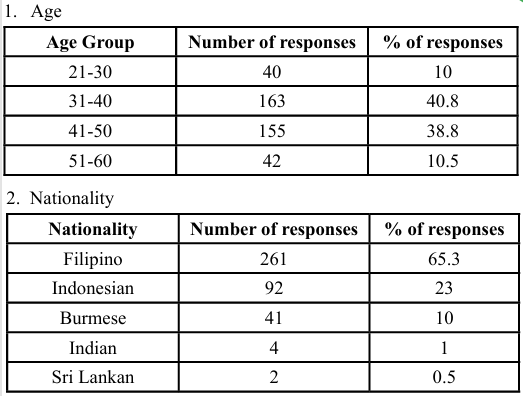
Table 1. Results for entall Wellbeing Survey for Migrant Domestic Workers (MDWs)
The reasons for conducting the survey at this point in time are as follows:
• Despite having the International Migrants Day celebrations for some years, no such survey has been executed previously
• The attendees at the event is fairly high and thus it provides a good platform to have a reasonable sample size
• It has also been a while since such a survey was conducted and moreover, it is executed at a time when most of the policies have reached a stable state ( been around for some years and parties are familiar with them)
• Silver Ribbon, which offers mental health counselling services and other programmes to MDWs is in the process of reviewing these to see what other gaps need to be addressed as well as what some of the protective factors to mental stress were, in order to apply these as relevant, to our programmes.
With the above, we fine-tuned it further to a two pronged objective:
a. To understand the current mental health challenges, as well as protective factors of MDWs in Singapore
b. To put forth recommendations to uplift and strengthen existing mental health initiatives/ interventions, in particular for Silver Ribbon ( as we review our offerings)
Results (Table 1)
The results and important observations are as follows:
i. Socio-Dermography and Job Characteristics
About 90% of the MDWs were aged 50 years or lower. The remaining 10% were older than 50 years. Filipinos (65.3%) and Indonesians (23.0%) made up 88% of the MDWs. The remainder were from other South-East Asian countries as well as India and Sri Lanka. About 53% had worked in Singapore up to 10 years and 7% had only been here less than a year. 18.8% had been working in Singapore for 20 years or more.
From the survey, we can gather that the workforce is predominantly:
• Experienced: 71.6% have worked 6+ years in Singapore, with 28.5% having 11-15 years of service
• Middle-aged: 79.6% are between 31-50 years old
• Filipino: 65.3% of respondents
The high proportion of experienced workers suggests that the psychological challenges they face (Table 1; see discussion below) may have persisted over time rather than being limited to the initial adjustment periods.
ii. Workload and Care-giving Burden
79.2% have additional caregiving responsibilities beyond basic housework:
• 52.5% cared for babies/children
• 14.8% cared for elderly persons and
• 11.3% cared for individuals with physical illness, disability, neurological or mental disorders
These additional responsibilities highlight the critical role MDWs play in supporting families and the broader community. This underscores the importance of investing in mental health promotion and support for them, given the substantial caregiving and emotional burden they shoulder.
iii. Financial Pressure
97.3% work primarily for financial reasons (69.8% to support family, 26.8% to save for the future, 1.5% to pay debts), indicating significant financial pressure that may compound their stress as well.
iv. Social Isolation
Despite good family contact rates (98.6% called and talked to their families back home sometimes, often or always), 55.3% still experience loneliness (sometimes to always), suggesting isolation. This could be due to various causes such as being away from their own families, lack of familiar environment in a foreign country or a lack of peer support networks (especially with contacts and friends from their own country). The MDWs may have members of the family they are staying with around, but they may not consider them as persons in their “inner circle” (eg. their own family members or their spouses) with whom they can open up, with more intimate discussions and heart-to-heart conversations.
v. Prevalence of Negative Mental Health Symptoms
The data showed that the MDWs experienced some psychological health challenges, though mostly at moderate levels:
• Sadness/hopelessness: 70.1% experienced this sometimes to always (4.5% always, 6.3% often, 59.3% sometimes)
• Anxiety: 55.3% experienced this sometimes to always (3.3% always, 5.5% often, 46.5% sometimes)
• Loneliness: 56% experienced this sometimes to always (3% always, 5% often, 48% sometimes)
• Stress: 58.3% experienced this sometimes to always (3.5% always, 7.5% often, 47.3% sometimes)
• Crying frequently: 48.1% cry sometimes to always (1.8% always, 5.5% often, 40.8% sometimes)
On the other hand, the protective factors include:
• Family connection: 78.3% can always or often call home, which is a crucial protective factor for psychological health
• Stress management awareness: 71.3% agree or strongly agree they know how to manage stress
• Willingness to act: 65.5% are likely or very likely to do something to manage their stress
Overall, while MDWs experience moderate levels of mental health symptoms, their high scores on protective factors (staying connected with families, awareness of stress management techniques and willingness to seek help and take action) suggest that current support efforts may be effective.
The authors have put forth 7 strategies to reinforce the existing regulatory framework and guidelines to help uplift and maintain the mental wellness of MDWs in Singapore.
Key words: Migrant domestic workers, mental wellness, care giving, Singapore
Introduction and Background
Singapore, a small island city state, is located at the crossroads of the world. It is also at the heart of South-East Asia. The population of Singapore is 6.11 million, where 3.66 million are Singapore citizens, 0.54 million are Permanent Residents and 1.91 million are non-residents and foreign workers. In the latter group, 16% represent migrant domestic workers (MDW). This translates to a total of 305 600 MDWs, based on the 2025 Department of Statistics figures [1,2]. This substantial number of MDW is drawn from several countries in the region, including Philippines, Indonesia, India and Myammar as well as countries such as India and Sri Lanka [2]. A MDW is a stay in, waged, migrant woman, attached to one employer, and engaged in domestic works in that respective household, on a contractual basis, for a specific duration. MDWs are quite common in Asian societies but it is also seen in western countries such as Eastern Europe and America [2-4].
In the early history of Singapore, women tended to stay home and provided care-giving. However, with progress and development as well as higher numbers of women achieving educational qualifications, increasing numbers of women went out to work, continue to stay on and be promoted in the workforce. With the evolution of the demographic, economic and social domains, the demands and needs within the Singapore families continue to change. With women working full time, having careers of their own and contributing towards the dual income of the family, care-giving and child-rearing begun to be co-shared or transferred to grandparents, extended family members (such as aunts, cousins who were not working) and also MDWs. With time and further progress, as women begun to attain higher status, both in education and economically, the numbers getting married and having children tended to decrease [3,5,6]. In 2024, the crude birth rate was 7.4 per 1000 residents and the total fertility rate was 0.97. This is one of the lowest in the world [1,7,8]. MDWs then began to be employed more frequently, to provide household services such as daily chores, cooking and house-keeping. The trend continued to evolve further [3,8,9].
In more recent years, with the gradually ageing population in Singapore, MDWs help with care provision for seniors (parents and grandparents) within the families [10-13]. Singapore is now rapidly becoming a super-aged society. By 2026, more than 1 in 5 of the population are aged 65 years and above. This will make up more than 21% of the total population. Today, there are more than 145 000 seniors aged 80 and beyond; with over 25 000 being nonagenarians (aged 90 years and above) and some 1500 are centenarians (aged 100 and above) [1,14,15]. Transitioning to this super-aged society presents multiple challenges:
• Healthcare cost expenditure will increase substantially
• The need to strategize and plan offerings in terms of healthcare related services
• Preparation for longer term care, with the increasing life expectancy
• Provision for more step-down care services and age-related care, targeting more community-based care for seniors
• Recognition and appropriate interventions based on the increasing needs and pressures on social services
With the ageing population, the prevalence of chronic diseases such as Diabetes Mellitus, Hypertension, Coronary Artery Disease and other non communicable diseases is increased [7,8,12]. Thus, MDWs will usually have to accept that they will need to provide care for these seniors, besides cooking, washing, cleaning, marketing and other routine housework. Some of these added tasks will include checking blood sugar levels and blood pressure, serving specific medications in a timely fashion, preparing special food such as liquid or soft diet, performing simple exercises such as moving the limbs and turning the elderly who are bed-bound, etc. The boundaries between these different tasks MDWs have to execute, can become very blurred [12,15]. With a multitude of tasks to accomplish, the work of a MDW can be unending and stressful. As live-in helpers, they may be at the ‘beck and call’ of their employers 24 hours a day, making it hard to delineate work versus rest times [16-18].
Understanding this dynamic shift and progress is important as it will help one understand the evolving role of the MDWs in Singapore.
MDWs in Singapore
Singapore has policies and guidelines that delineates the process of employment of MDWs. The regulatory framework requires in principle approval, by the potential employer, before the arrival of the MDW. Potential job applicants are kept “on hold” in their countries until selected by an employer in Singapore, based on the biodata, photographs, video and virtual interviews [2,19]. The MDW represents a worker paid for performing domestic work. The nature of live-in domestic work constitutes a worker-employer relationship. The containment of labour is within the private sphere of the particular household and it is thus, the “work site” for the MDW. They are not allowed to work elsewhere, such as in the business premises of their employers. Regulations also include: [2,5,19-21]
a. Imposition of a levy on employers
b. Issuance of work permit for duration of 2 years at a time, subject to renewal at the discretion of the Ministry of Manpower (with employers choice borne in mind as well)
c.In principle approval and a security bond of SGD 5000, before the issuance of the work permit
d. 6 monthly medical examination for the MDW and
e. Prohibition of marriage to a Singapore citizen
There are also other considerations which arise in the process of employing a MDW: [2,5,19,21]:
i. The proper regulations and policies Singapore has in place ensures and open and transparent way of dealing with agencies and agents in the industry. It reduces the likelihood of corruptions and under-table dealings but only within the parts that Singapore can control. The other portions of the deal, back in the source countries, may not be visible, despite clearly stipulating entry requirements on paper. Embassies of source countries can be important influencers in this aspects.
ii. The regulation of providing mandatory rest days is important for the wellness and recreation of the MDWs [2,19]. The activities such as catching up with fellow country MDWs, visiting places of interest in Singapore, having gatherings and celebrations can be critical at maintaining mental balance and wellness. Besides the mandatory once a week rest day, the other arrangements fall entirely within the agreement of both the employer and the MDW
iii. The insurance that employers pay to employ an MDW will help cover illnesses and injuries such as when they require consultation and encounter some ailment.
iv. In the employment contract, employers are to provide for the daily meals of the MDWs as well as ensure balanced and nutritious food is provided. The easiest way is to have the MDWs eat the same food as the rest of the family. Although there are instances of differentiation, by some employers, it is certainly an act that be reversed by counselling right from the start of the employment.
v. The 6 monthly medical assessment by a designated practitioner is also important as it can provide peace of mind to the MDWs when it comes to their health. The employer will pay the fees.
Mental Wellness
The World Health Organization (WHO) defines positive mental health as a state where an individual realizes their own potential, can cope with normal life stresses, works productively, and contributes to their community, emphasizing it is more than just the absence of mental illness. It is a core component of overall health, encompassing the ability to learn, work, and form healthy relationships. It is important to align with this definition and understand that normally people do encounter stressors in their daily life, however most of the time they are able to handle and manage these, utilizing their own internal capabilities or external resources or persons to assist them [22]. Since the Covid 19 pandemic, much progress has been made in the area of maintaining and talking about mental health. More people are having conversations about and acknowledging this. The level of stigmatization of people with mental health issues appears to be better accepted and managed today [22-24]. Just as these changes affect the general population, it also impacted the MDWs population.
In Singapore there are many organizations (governmental and non- governmental) focussing on the provision of psychological support for the general population as well as those diagnosed with mental health issues. Silver Ribbon (Singapore) (SRS) is a Social Service Agency that works to promote positive attitudes towards mental health. It provides services like complimentary emotional support, outreach, awareness talks and workshops, crisis resolution team and psychiatric ambulatory support [25]. Silver Ribbon also works in partnership with many other organization, schools and workplaces. One of these is The Centre for Domestic Employees (CDE) [26].
CDE, Centre for Domestic Employees, works in partnership with SRS to help strengthen psychological health support for MDWs. There are free counselling services, mental wellness workshops help during weekends (when most of the MDWs have their off day) as well as resources for employers to support their MDWs. There are also other programmes such as cooking classes, yoga and exercise sessions, digital literacy classes, eldercare and caregivers self care sessions and conversational dialect classes (in view many elderly in Singapore converse in a variety of ethnic dialects). CDE also has a Domestic Employees Welfare Fund which can be tapped on for specific gatherings and celebrations. Services such as medical and legal counselling and advice are also provided to those in need of these. All these are provided with a view to help MDWs thrive personally and professionally in their jobs (26) These offerings are aligned with WHO’s global call to promote social cohesion and reduce isolation [22].
Methods
On 8th Dec 2024, SRS co-organized a fair with the Centre For Domestic Employees (CDE), to celebrate International Migrants Day. This is a celebration which is held annually [26]. There were a range of activities and booths set up to encourage wellness and positive mindset, as well as interesting games. During the event, a simple, descriptive Mental Wellbeing Survey for MDWs was conducted. Some of the MDWs responded using the hard copies provided, whilst others completed the online version of the survey. The survey was conducted on a completely voluntary basis. The recruitment was on a first come first served basis, for the first 400 who turned up for the event. A total of 400 MDWs completed the survey. A good sample size, based on calculation, would be at least 384 FDWs [27]. The data collected include socio-demographic data as well as questions to assess mental health and protective factors. It was an anonymous survey (Table 1). The data collected was analysed as descriptive, observational statistics.
Table 1: Results for entall Wellbeing Survey for Migrant Domestic Workers (MDWs)
The reasons for conducting the survey at this point in time are as follows:
• Despite having the International Migrants Day celebrations for some years, no such survey has been executed previously
• The attendees at the event is fairly high and thus it provides a good platform to have a reasonable sample size
• It has also been a while since such a survey was conducted and moreover, it is executed at a time when most of the policies have reached a stable state ( been around for some years and parties are familiar with them)
• Silver Ribbon, which offers mental health counselling services and other programmes to MDWs is in the process of reviewing these to see what other gaps need to be addressed as well as what some of the protective factors to mental stress were, in order to apply these as relevant, to our programmes.
With the above, we fine-tuned it further to a two pronged objective:
a. To understand the current mental health challenges, as well as protective factors of MDWs in Singapore
b. To put forth recommendations to uplift and strengthen existing mental health initiatives/ interventions, in particular for Silver Ribbon ( as we review our offerings)
Results (Table 1)
The results and important observations are as follows:
i. Socio-Dermography and Job Characteristics
About 90% of the MDWs were aged 50 years or lower. The remaining 10% were older than 50 years. Filipinos (65.3%) and Indonesians (23.0%) made up 88% of the MDWs. The remainder were from other South-East Asian countries as well as India and Sri Lanka. About 53% had worked in Singapore up to 10 years and 7% had only been here less than a year. 18.8% had been working in Singapore for 20 years or more.
From the survey, we can gather that the workforce is predominantly:
• Experienced: 71.6% have worked 6+ years in Singapore, with 28.5% having 11-15 years of service
• Middle-aged: 79.6% are between 31-50 years old
• Filipino: 65.3% of respondents
The high proportion of experienced workers suggests that the psychological challenges they face (Table 1; see discussion below) may have persisted over time rather than being limited to the initial adjustment periods.
ii. Workload and Care-giving Burden
79.2% have additional caregiving responsibilities beyond basic housework:
• 52.5% cared for babies/children
• 14.8% cared for elderly persons and
• 11.3% cared for individuals with physical illness, disability, neurological or mental disorders
These additional responsibilities highlight the critical role MDWs play in supporting families and the broader community. This underscores the importance of investing in mental health promotion and support for them, given the substantial caregiving and emotional burden they shoulder.
iii. Financial Pressure
97.3% work primarily for financial reasons (69.8% to support family, 26.8% to save for the future, 1.5% to pay debts), indicating significant financial pressure that may compound their stress as well.
iv. Social Isolation
Despite good family contact rates (98.6% called and talked to their families back home sometimes, often or always), 55.3% still experience loneliness (sometimes to always), suggesting isolation. This could be due to various causes such as being away from their own families, lack of familiar environment in a foreign country or a lack of peer support networks (especially with contacts and friends from their own country). The MDWs may have members of the family they are staying with around, but they may not consider them as persons in their “inner circle” (eg. their own family members or their spouses) with whom they can open up, with more intimate discussions and heart-to-heart conversations.
v. Prevalence of Negative Mental Health Symptoms
The data showed that the MDWs experienced some psychological health challenges, though mostly at moderate levels:
• Sadness/hopelessness: 70.1% experienced this sometimes to always (4.5% always, 6.3% often, 59.3% sometimes)
• Anxiety: 55.3% experienced this sometimes to always (3.3% always, 5.5% often, 46.5% sometimes)
• Loneliness: 56% experienced this sometimes to always (3% always, 5% often, 48% sometimes)
• Stress: 58.3% experienced this sometimes to always (3.5% always, 7.5% often, 47.3% sometimes)
• Crying frequently: 48.1% cry sometimes to always (1.8% always, 5.5% often, 40.8% sometimes)
On the other hand, the protective factors include:
• Family connection: 78.3% can always or often call home, which is a crucial protective factor for psychological health
• Stress management awareness: 71.3% agree or strongly agree they know how to manage stress
• Willingness to act: 65.5% are likely or very likely to do something to manage their stress Overall, thee MDWs experience moderate levels of mental health symptoms, but score high on protective factors (eg. staying connected with families, awareness of stress management techniques and willingness to seek help and take action).
Analysis of Results
From the age perspective, majority are less than 50 years and this links to the set prescriptive regulation. The minimum age of recruitment is 18 and this is linked to several factors such as attaining a set number of years in education in their home country and reaching a certain level of maturity to carry out the work required of a MDW [2,19]. For the first timers coming in, older than 50 years, acceptance is based on case-by-case consideration with closer surveillance [2,19]. Those responding to the survey are likely to be those who had arrived in Singapore much earlier and have been working here for a number of years. For length of service, 53% have been here up to 10 years and nearly 20% have been working up to 20 years. The longer duration may reflect on a good match with the employers, to explain why they have stayed on longer. Those who stayed less than a year are still in the initial stages of adjustment and their feelings and work attitude may tend to be more labile.
The Knowledge-Action Gap
Our survey results showed that
• 71.3% know how to manage stress
• 65.5% are likely to do something about it
• Yet 70% experienced sadness, 55% experienced anxiety, 56% experienced loneliness
This suggests that knowing what to do and actually doing it are very different things. This gap could be critical and points to several possible or potential barriers: [20,21]
1. Practical Barriers
• Time constraints: Even if they know stress management techniques, they may have no private time to practice them (long working hours, lack of personal space)
• Physical exhaustion: After a full day of work and caregiving, they may be too tired to implement coping strategies
• Lack of privacy: Difficult to practice stress relief in employers’ home without privacy
2. Structural Barriers
• Inability to address root causes: They may know how to manage symptoms but are unable to change the underlying stressors (workload, isolation, financial pressures)
• Limited agency: Knowing breathing exercises does not help if the fundamental issue is an unreasonable employer or excessive workload which needs to be achieved within a specific period of time
• “Financially trapped” situation: 97.3% work for financial reasons therefore, they cannot simply leave. This may be comparable to any worker across any industry who may have to stay in their position despite challenges, but for the MDWs, the difference is that they are working away from their home country. Thus switching jobs may not be an option.
3. Normalisation of Distress
• They may view these symptoms as a "normal" part of being an MDW
• In Asian societies it may seem like the cultural expectations is to endure some degree of stressors in order to provide for the family
• "Sometimes" feeling sad/anxious/lonely might be seen as acceptable rather than something requiring intervention, especially in the context where these MDWs have so many things to accomplish on their routine daily task lists.
The 30.5% “Neutral Group” is also key for us to understand. They may know how to manage stress but is neutral about taking action. This could suggest: [24,28,29]
• Resignation: "I know what to do, but it won't really help"
• Learned helplessness: Previous attempts may not have produced results
• Stigma: Knowing about psychological health does not mean they are comfortable seeking help. It may also be seen as stigma in “their eyes”
• Perceived ineffectiveness: This is where they doubt that stress management techniques will address their real problems
Mental Wellness of the MDWs
These numbers from the survey are significant enough to for us to understand the need to provide support, counselling and befriending services for the MDWs. When one is working away from home, it is natural to feel lonely. Thus, it is important for the employers’ family to become the MDW’s family, “away from home”. This is especially when these MDWs’ work place is actually also their “home” in contrast to foreign workers in other sectors [29,30].
MDWs may feel sad or down in their mood when they cannot partake in the usual lifestyle and activities they are used to back home. There will be changes in their food/ diet, lifestyle, the work practices; requiring adaptation on the part of the MDWs. Thus, the stress, anxiety and nervousness they feel can be anticipated. Employers and their families should be cognizant of this and be supportive, orientating them in the early days and during the “run-in” period and being patient with them. Both parties’ expectations need to be managed. The following aspects of managing these MDWs can be strengthened and reinforced: [2,20,21,32,33]
A. Proper selection process at country of origin by the agencies involved. Counselling and expectations need to be managed and perhaps even some form of psychometric assessment can be conducted to assess fitness for job (especially a job away from home). Despite the fact that this may already be required, the quality and depth with which it is carried out may need surveillance and perhaps accreditation. Singapore may not regulate on this aspects but it is to the benefit of the source countries to prepare their MDWs well so that they may continue to flourish and grow in their jobs, whilst in Singapore
B. Orientation and training upon arrival in Singapore. This is already in place and conducted by appointed agencies. The physical aspects of preparation is sufficient but perhaps a more in-depth coverage of mental and psychological health and wellness can be incorporated. Investment in psychological health promotion amongst these MDWs who are going to work and stay with our Singaporean families is definitely beneficial.
C. Orientation for employers of MDWs. Currently these employers may be briefed by the agencies they have appointed to help with recruitment but this is often cursory and focuses on the more regulatory parts. Covering more emotional, psychological and social aspects are proving to be important and perhaps an educational component on this theme will need to be incorporated. Having a session together is beneficial so that expectations and sharing can be done openly to manage each others’ mindsets, right from the start.
D. Interval follow-up assessment and home visits. This has been implemented by MOM more recently and it is a good move to help align both parties. Open conversations and sharing are important. Afterall, MDWs come with emotions, feelings and expectations and they can indeed strive to be the best at what they are expected to perform, provided they feel psychologically well.
Discussion
This survey has a reasonably large sample size of MDW participants in Singapore. This survey is also conducted at a time when the MDW industry in Singapore has reached a certain level of maturity and stabilization. At the same time, Silver Ribbon is also proactively reviewing our offerings of programmes and counselling, and hope to align with the latest needs.
The nature of work for MDWs introduces distinct challenges:
• Live-In Isolation: MDWs reside in their employer's homes, which blurs the boundaries between work and rest and can lead to a pervasive sense of surveillance or confinement. Other workers (e.g., in construction or manufacturing) typically live in dormitories, which allow for separation from the workplace. This means regular opportunities for social life, communications with friends and country men and peer support network connections [30].
• Vulnerability to Abuse: The private nature of domestic work increases the risk of physical, verbal, and emotional abuse. This may be harder to monitor or prove especially when the MDWs are within the confines of the employers’ homes.
• Social Support & Communication Barriers: Restrictions on movement and phone use can severely limit a MDW's ability to maintain social networks and communicate with family back home. This is a crucial protective factor for psychological health. Other migrant workers may have more time and freedom to socialize and decompress [27,30].
• Gendered Stressors: MDWs are all women who may be prone to specific psychological stressors linked to gendered expectations and biases.
• Job Security and Autonomy: The "demand-control theory" of stress highlights that jobs with high demands and low autonomy are high-strain. MDW roles are often characterized by these factors, whereas some non-domestic roles, might offer more autonomy or a different structure of demands [33,34].
Recommendations:
From this survey, our team is putting forth the Recommendations (Annex 1) which will strengthen the mental wellness of the MDWs. Silver Ribbon will also be embedding some of these, where relevant, into our programmes, mental wellness initiatives and counselling sessions.
Conclusions
In maintaining the mental wellness of MDWs:
i. Good, stringent regulatory framework is a basic fundamental for countries that have MDWs employment. The framework should cover all parties involved
ii. Awareness is an important component. Awareness creation should not be a one-off action at the point of recruitment but should be intentionally reinforced at every opportunity and high touch point events.
iii. The Recommendations (Annex 1) proposed, aim to uplift the existing course of action already in practice
iv. MDWs need to have work-life balance, which employers need to be made aware of
Whilst the MDWs are generally coping, there is an under-current of psychological unease that may warrant systemic attention and strengthening of the existing support infrastructure available for MDWs in Singapore [35].
Conflicts of Interest:
The authors declare no conflicts of interest.
References
Singapore Department of Statistics. Available at: Singapore Department of Statistics (DOS) | SingStat Website View
Ministry of Manpower. Employment rules for Migrant Domestic Workers. Singapore. Ministry of Manpower 2021. View
Khoo, S-E., Smith, P. C., & Fawcett, J. T. (1984). Migration of women to cities: The Asian situation in comparative perspective. Int Migration Review. 18(40: 1247-1263 View
De la Cuesta-Benjumea, C., & Roe, B. (2014). The experience of family caregivers and migrant paid caregivers relief of burden: a contrasted qualitative analysis. Ageing Soc, 34: 1219-1242 View
Tan EKB. (2010). Managing female FDWs in Singapore, Economic pragmatism, coercive legal regulation or human rights? Israel Law Review, 43(1): 99-125 View
Yeoh, B. S. A., & Huang, S. (1998). Negotiating public spaces: Strategies and styles of migrant female domestic workers in Singapore. Urban Stud, 3593: 583-602 View
Death and Life Expectancy (2024). Singapore Department of statistics. Available at: DOS | SingStat Website - Death and Life Expectancy - Latest Data (last accessed 5 April 2026) View
Pang JXH. A super-aged society: Defusing Singapore’s Demographic Time-Bomb. Scholarbank@ NUS. View
Chen, C., Lim, J., & Visaria, A., et al. (2023). Societal ageing and its impact on Singapore. National Bureau of Economic Research Working Paper 31958. View
Yeoh, B. S. A., & Huang, S. (2010). FDWs and home-based care for elders in Singapore. J Aging Soc Policy, 22: 69-88 View
Rozario, P. A., & Hong, S-I., (2019). FDWs and eldercare in Singapore: Who hires them? J Aging Soc Policy, 31: 197-210 View
Ha, N. H. L., Chong, M. S., & Choo, R. W. M. et al. (2018). Caregiving burden in foreign domestic workers caring for frail older adults in Singapore. Int Psychogeriatr, 30:1139-1147
United Nations. Dept of Economic and Social Affairs. World Social Report (2023). Leaving No One behind in an ageing world. Available at: World Social Report 2023 Calls for Leaving No Ageing Person Behind – SDG Knowledge Hub (last accessed on 5 Apr 2026) View
World Health Organization. (2022). Ageing and Health, WHO. View
Beard, J. R., Biggs, S., & Bloom, D. E., et al. (2011). Eds. Global Population ageing: Peril or Promise. World Economic Forum, Geneva, 2011. Global Agenda Council on Ageing Societies. View
Zainal, K. A., & Barlas, J., (2022). Mental health, stressors and resources in migrant domestic workers in Singapore: A thematic analysis of indepth interviews. Int J of Intercultural Relations, 90:116-128 View
Mucci, N., Traversini, V., & Giorgi, G., et al. (2020). Migrant Workers and Psychological Health: A Systematic Review. Sustainability, 12: 120. View
Van der Ham, A. J., Ujano-Batangan, M. T., & Ignacio, R., et al. (2015). The Dynamics of Migration-Related Stress and Coping of Female Domestic Workers from the Philippines: An Exploratory Study, Community Mental Health Journal, 51: 14–20 View
Ministry of Manpower, Singapore. Settling in Programme (SIP) for first time FDWs. MOM 2020. View
Kantachote, K., (2023). Micromanagement of foreign domestic workers in Singapore: The influence of state regulations and laws. Heliyon, 9(7): e17679 View
Anjara, S. G., Nellums, L. B., Bonetto, C., et al. (2017). Stress, health and quality of life of female migrant domestic workers in Singapore: a cross sectional study. BMJ Women’s Health, 17:1 13 View
Mental Health. World Health Organization. Available at: Comprehensive Mental Health Action Plan 2013-2030 View
Mental Health Services Listing. Available at: Mental health services | Ministry of Health
Foreign domestic workers more likely to develop mental health problems - TODAY
Silver Ribbon (Singapore). Available at: www.silverribbonsingapore.com View
Centre for Domestic Employees. View
Viechtbauer, W., Smit, S. L., & Kotz, D., et al. (2015). A simple formula for the calculation of sample size in pilot studies. J Clin Epidemiol, 68: 1375-1379 View
Kaur-Gill, S., Qin-Liang, Y., & Hassan, S. (2021). Negotiating Mental Health During the COVID-19 Pandemic: Performing Migrant Domestic Work in Contentious Conditions. American Behavioral Scientist, 65(10): 1406–1425. View
Chan, Y. W., & Piper, N. (2022). Sanitized Boundaries, Sanitized Homes: COVID-19 and the Sporadic Hyper-Precarity of Migrant Domestic Workers in Hong Kong. Asian and Pacific Migration Journal, 31(3): 270–291 View
Parrenas, R. S., Kantachote, K., & Silvey, R., (2021). Soft violence: Migrant dormitory worker precarity and the management of unfree labour in Singapore. J of Ethnic Migrant Stud, 47(20): 4671-4687 View
Tam, W. J., Koh, GC-H., & Legido-Quigley, H., et al. (2018). “I cant do this alone” A study of FDWs providing long term care for frail seniors at home. Int Psychogeriatr, 30: 1269-1277 View
Basuyat, I., & Chang, L. (2017). Examining live-in FDWs as a coping resource for family caregivers of people with dementia in Singapore. Health Commun, 32: 1171-1179 View
Ho, K. H., Yang, L., & Leung, A. K., et al. (2022). Peer support and mental health of MDWs: a scoping review. Int J Environ Res Public Health, 191(3): 7617 View
HealthServe trains 1300 migrant workers to support peers in mental health. View
Subramaniam, M., Zhang, Y. J., & Satgharc, P., et al. (2026). Mental health help seeking behaviour among MW and MDW in Singapore: a mixed methods study. Archives of Public Health, 84:45View