
- About the Journal
- Editorial Board
- Review Process
- Author Guidelines
- Article Processing Charges
- Special Issues
- Current Issue
- Past Issue
 Journal of Mental Health and Social Behaviour
Journal of Mental Health and Social Behaviour Volume 8 (2026), Article ID: JMHSB-217
https://doi.org/10.33790/jmhsb1100217Review Article
Educational Interventions for Enhanced Learning and Academic Performance: A Comprehensive Systematic Review Across Cognitive, Emotional, and Behavioral Domains
Su Jin1, Xiaoxi Li2*, Ph.D., Ting Wen3, Ph.D., and Aimin Wang4, Ph.D.
1Department of Educational Leadership, Miami University, Oxford, Ohio, United States.
2Department of Deyu School of Marxism, Dalian University of Foreign Languages, Dalian, Liaoning, China.
3School of International Business Communications, Dongbei University of Finance and Economics, Dalian, Liaoning, China.
4Department of Educational Psychology, Miami University, 201 McGuffey Hall, Oxford, OH 45056, United States.
Corresponding Author Details: Xiaoxi Li, Ph.D., Department of Deyu School of Marxism, Dalian University of Foreign Languages, Dalian, Liaoning, China.
Received date: 28th October, 2025
Accepted date: 21st May, 2026
Published date: 23rd May, 2026
Citation: Jin, S., Li, X., Wen, T., & Wang, A., (2026). Educational Interventions for Enhanced Learning and Academic Performance: A Comprehensive Systematic Review Across Cognitive, Emotional, and Behavioral Domains. J Ment Health Soc Behav 8(1):217.
Copyright: ©2026, This is an open-access article distributed under the terms of the Creative Commons Attribution License, which permits unrestricted use, distribution, and reproduction in any medium, provided the original author and source are credited.
Abstract
This systematic review examines non subject related educational interventions that support students’ learning behavior and academic performance across different age groups. The interventions are grouped into three domains: cognitive, emotional, and behavioral. Cognitive interventions focus on learning strategies, study habits, and metacognition. Emotional interventions address emotional regulation, emotional awareness, and well being. Behavioral interventions emphasize classroom behavior, motivation, and engagement.
The review synthesizes studies from different educational levels and considers how interventions vary across developmental stages. Rather than judging effectiveness through causal claims, this review summarizes existing empirical studies to describe how different types of interventions have been examined in educational settings. Across the literature, consistent patterns indicate that cognitive, emotional, and behavioral processes are closely connected to learning behavior and academic performance. This synthesis provides educators, policymakers, and researchers with a clear and integrated overview of non subject related educational interventions and their relevance to supporting learning behavior and academic outcomes.
Keywords: Education Intervention, Student Learning, Learning Behavior, Academic Performance, Education Psychology, Education Technique
Introduction
The global significance of education in shaping individual earnings, health, and overall well-being underscores the imperative need for effective interventions, especially for disadvantaged children. Governments worldwide recognize this as a pivotal concern. In response to the evolving educational landscape, researchers, educators, and policymakers have increasingly focused on interventions to enhance academic performance. Moving beyond the traditional disciplinary boundaries, this manuscript provides an exhaustive review proceeding with a systematic investigation and evaluation of the different cognitive, emotional, and behavioral aspects that intersect with each other. This will help readers fathom this in-depth exploration with the aim of addressing interrelated topics across different age clusters.
The deliberate exclusion of subject-related interventions aligns with the educational psychology curriculum's orientation, emphasizing the scrutiny of interventions addressing learning strategy instruction. Focusing on non-subject-related interventions, this paper seeks to offer insights into the broader context of educational psychology, emphasizing the generalizable aspects of learning strategies. This review focuses on non subject related educational interventions implemented in general education contexts. The target population is defined as typically developing students. Studies focusing on populations with formally diagnosed clinical or developmental conditions were excluded in order to examine educational interventions outside clinical or special education settings. This scope allows the review to focus on learning behavior and academic processes commonly addressed in general education.
Educational psychology, as a discipline, is dedicated to comprehending and enhancing learning and instructional processes, and the emphasis on non-subject-related interventions is guided by their direct relevance to the educational psychology curriculum. These interventions contribute to a holistic understanding of effective teaching and learning practices, encompassing principles and theories related to cognition, motivation, and learning processes [1].
This review explores non-subject-related interventions across three key domains: cognition, emotion, and behavior. Cognitive interventions aim to enhance processes such as memory, attention, and problem-solving skills, while emotion-related interventions target emotional intelligence, regulation, and overall well-being. Behavior related interventions address observable actions and conduct, including classroom management techniques and motivational strategies.
Teaching study strategies to students has been found to have a moderate impact on emotional and motivational aspects, with a minor effect on performance [2], highlighting their distinct yet interconnected influence on academic performance. The academic learning model proposed by Ben-Eliyahu [3] emphasizes integrating emotional learning within cognitive learning, underlining the crucial role of emotions. Meta-analysis research reveals the comprehensive impact of relaxation training, surpassing cognitive-behavioral or mindfulness interventions [4].
By systematically reviewing interventions in these interconnected domains, this paper aims to provide a comprehensive understanding of educational interventions' multifaceted nature. Recognizing the intricate interplay between cognition, emotion, and behavior is essential for developing effective strategies that promote optimal learning environments and contribute to enhanced academic performance across diverse age groups.
Literature Review
Learning and learning behavior
Learning is a journey that fills the gap between where we are to where we are heading, through the means of not only involving skills and knowledge, but also coving values, attitudes, and emotional reactions [5,6]. Learning drives a learner from the current situation all the way toward the end where the learner is successfully learned. Student learning theory has two approaches: deep learning and surface learning [7]. Deep approaches to learning aims to understand the meaning of text. In contrast, surface approaches describe a paired intention to meet the immediate demands of assessment for identifying and remembering the essential facts. Learning as a behavior is the specific move we conducted in the learning process. The word "behavior" has many physical and psychological meanings, but in this context, it typically refers to an action or activity that is eidetically learned as a result of conditioning.
When exploring the concept of learning, knowledge, skill, motivation, habits, and environment are all well studied as crucial principles. For example, when someone knows what to do, but chooses not to comply, there may be many reasons for their actions specifically in learning environments. Dirksen [6] defined it as a motivation gap. It may be because the destination does not make sense, or the inherent difficulty of finding a path. Other times people get distracted or just are not interested in making any effort. However, in order to promote the learning process, we need to focus on learning habits as opposed to content being learned [6,8].
Motivation also plays a major role toward explaining behaviors of learners, which influence academic performance. Motivation is commonly examined within the context of self-determination theory, which distinguishes between intrinsic motivation, extrinsic motivation, and amotivation. Intrinsic motivation, driven by the desire for knowledge, achievement, and stimulation, proves most effective in fostering high self-determination and improved self-regulation [9,10]. A holistic understanding of learning behaviors emerges when considering both arousal theory and motivation theory. The challenge students face is assessed based on the complexity of the context and their prior knowledge. The latter is characterized as an experience filter, wherein learners process new information through past experiences, seeking to interpret and explain novel knowledge. However, individuals may inadvertently learn incorrect lessons from their experiences. A student's willingness to sacrifice immediate gratification for future gains depends on whether they are influenced by past experiences and the immediate consequences within learning situations.
In situations demanding optimal learning behavior decisions, characterized by emotional tension and high stress, the ability to act confidently is crucial. Emphasizing self-efficacy becomes paramount in such circumstances. According to Bandura [11], self-efficacy for learning and performance refers to individuals' assessments of their capabilities to plan and execute behaviors necessary for goal achievement. Substantial evidence, as highlighted by researchers [12], underscores the significant correlation between self-efficacy and learning. Individuals are more inclined to participate in activities when they believe in their ability to succeed, mirroring students' increased commitment to learning when they possess the efficacy for academic success.
Education Intervention
Educational interventions play a pivotal role in shaping students' learning experiences and academic outcomes. Drawing on two decades of procedural data, the interplay among various interventions has become evident over time, with categorizations based on cognition, behavior, and emotion. These interventions often operate in interactive pathways, acknowledging the interdependence of cognition, behavior, and emotion in the learning process. In the realm of educational interventions, Miranda [13] highlighted three primary areas of focus for behavioral educational techniques: academic preparedness, academic skills, and academic self-confidence. Miranda's "Find Your Classroom Voice" program, for instance, employs targeted methods to enhance class participation, fostering active engagement and positive emotions in students. Such behavior- oriented approaches aim to create a conducive environment for active participation and emotional well-being.
Researchers employing cognitive-behavioral techniques, including meditation practices, have also integrated the three aforementioned dimensions. Firth-Clark et al. [14] conducted a six-week heart intervention focusing on self-efficacy and self-regulation, demonstrating the positive impact of perceived value and emotional enjoyment on learning behavior and academic improvement. Mindfulness, diaphragmatic breathing, and heart rate variability biofeedback have similarly been associated with scholastic enhancements, emphasizing the interconnectedness of mental well- being and academic performance [14, 15].
Beyond physically behavior-focused approaches, there is a growing emphasis on mentally and psychologically oriented interventions. Psychological skill training, encompassing strategies such as self- talk, focused attention, goal identification, imagery, and cognitive restructuring, promotes self-regulatory behaviors to enhance performance. These cognitive-related skills demonstrate transferable outcomes, influencing both behavioral change and emotional well- being [16]. The shift towards mentally and psychologically focused interventions underscores the holistic nature of educational strategies aimed at fostering cognitive, behavioral, and emotional development.
In recent years, the Response to Intervention (RtI) approach has gained prominence as a preventative measure for students at risk of learning difficulties. Key to RtI is the integration of functional behavioral assessment, identifying variables contributing to persistent behavioral issues and tailoring interventions accordingly [17]. With a three-tier structure encompassing assessments, progress monitoring, and targeted teaching, the RtI model proves effective in addressing instructional needs in K-12 public school systems. However, the lack of standardized outcome measures poses a significant hurdle in evaluating and refining educational interventions. To ensure sustained success and adaptability across diverse contexts, establishing reliable metrics is crucial, facilitating evidence-based decision-making and continuous improvement in educational practices [18].
As we delve into the examination of educational interventions, a critical consideration surfaces regarding the limitations of standardized measurement tools. Beyond discussing the RtI model and its objectives, subsequent sections will explore the broader implications of standardized measures, specifically in assessing the multifaceted impacts of educational interventions with a focus on academic performance. Through an in-depth analysis of existing literature, this review aims to elucidate the significance of reliable metrics in guiding evidence-based decision-making and fostering continuous improvement in educational practices.
Within the realm of educational psychology, academic performance is a pivotal aspect subject to diverse measurement methodologies [19]. These include self-evaluation questionnaires, IQ tests, knowledge base exams, essays, and performance observations. Standardized tests, notably prevalent in contexts like China, play a central role in measuring academic achievement, reflecting a school's effectiveness in instruction through measurable outcomes in students' test scores [20].
The historical evolution of standardized testing reveals a progression from multiple-choice tests in the 1920s to intelligence tests, or IQ tests, later in the 20th century [19, 20]. While the efficiency of multiple-choice tests led to their preference, the 1980s and 1990s saw the emergence of the alternative assessment movement, promoting open-ended questions, essays, portfolios, and performance tasks. Despite the movement's goals, challenges like bias in scoring and high costs led to the resurgence of multiple-choice tests as the preferred standardized measure [19].
Extensively researched within educational psychology, academic performance is a crucial predictor of educational outcomes and an indicator of potential psychosocial issues or learning disorders [21]. Poor academic performance correlates with adverse outcomes, including burnout, depression, substance use initiation, aggressive behaviors, delinquency, and dropout rates [22].
In light of these multifaceted implications, the measurement of academic performance emerges as a critical domain for educational evaluation and intervention. As we proceed, this literature review will delve into the nuances of measuring academic performance, exploring the varied dimensions influencing student outcomes in educational interventions.
Methods
The systematic review employed a rigorous process to identify relevant literature on educational interventions, learning, and academic performance. The initial search (see Figure 1) was conducted on PsycInfo, yielding a total of 376 papers. After the title scan, 63 reviews, 6 commentaries, 6 other papers, and 27 books that did not represent primary studies were excluded.
Following these exclusions, an abstract scanning phase was implemented, leading to the exclusion of 53 papers for focusing on special needs subjects, 6 non-English papers, and 4 papers with no access to the full text, whittling the total down to 205. After a pilot rough reading phase removed 83 records for not focusing on interventions, 6 for lack of an academic subject, 7 non-primary studies, and 17 studies focusing on overly narrow subject groups, 92 texts remained for thorough scanning. The final selection was based on the relevance of the studies to educational interventions, learning, and academic performance, ensuring a comprehensive and focused analysis of the literature, meaning 27 interventions were not included because they were outside of the scope, which left 65 interventions in total to be included in the systematic review at hand.
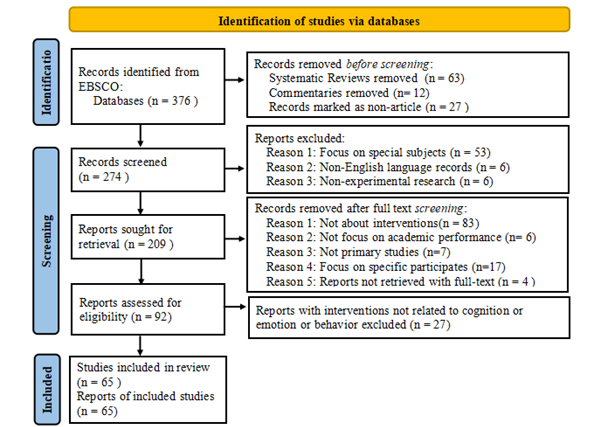
Figure 1: Literature search strategy
In this review, an educational intervention is defined as a structured and intentional approach implemented within educational settings to influence students’ learning related cognitive processes, emotional regulation, or behavioral patterns, with the aim of supporting learning behavior or academic performance. This definition distinguishes educational interventions from isolated teaching techniques or subject specific instructional methods by emphasizing systematic implementation and a direct connection to learning processes. Under this definition, cognitive, emotional, and behavioral interventions are considered educational when they are embedded in learning contexts and explicitly linked to learning behavior or academic outcomes.
The systematic review encompassed an extensive range of studies conducted between 1995 and 2025, examining interventions across various countries and age groups. Although the search period extended through 2025, the inclusion of studies was determined by relevance to non-subject-related educational interventions, learning behavior, and academic performance rather than publication year alone. As a result, the distribution of included studies reflects patterns in the existing literature, with fewer recent studies meeting the inclusion criteria across all intervention domains. This approach ensured conceptual consistency while allowing for the inclusion of foundational and contemporary studies relevant to the review scope.
The data included diverse samples, such as 7th graders in the USA (n=215), 5th graders in Canada (n=24), community college students in the USA (n=126), 6th graders in Portugal (n=191), and undergraduate biology students in the USA (n=147), among others. The review incorporated studies involving different educational levels, from elementary schoolers to high school graduates, and encompassed interventions implemented in multiple nations, including the USA, Canada, Portugal, Italy, Palestine, Germany, France, the UK, the Netherlands, and China. The sample sizes varied widely, with studies ranging from small groups, such as 2nd graders in the USA (n=6) or high school students in Spain (n=164), to large-scale studies like the one involving 9th graders in the USA (n=21,364). This comprehensive synthesis provides a nuanced overview of the diverse interventions and populations studied, offering valuable insights for future research and intervention design.
Results
This systematic review identified a wide range of educational interventions targeting academic performance across emotional, cognitive, and behavioral domains (Table 1). Across studies, intervention effects varied in strength and consistency, reflecting differences in intervention focus, design, and measurement approaches.
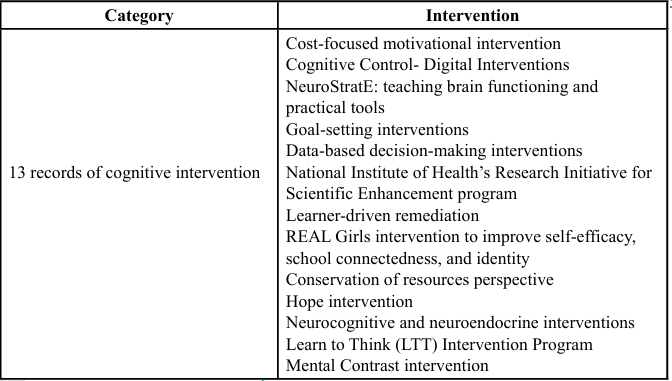
Table 1: Classification of Educational Interventions Across Cognitive, Emotional, and Behavioral Domains
Within the emotional domain, interventions commonly targeted emotional regulation, stress responses, and students’ sense of control under academic demands. Programs focusing on mental toughness, mindfulness, and social emotional learning were associated with improvements in academic achievement and well-being in several studies, particularly when standardized academic outcomes were used [23- 25]. However, short follow-up periods and reliance on self- reported outcomes in some studies limited conclusions about longer- term academic patterns [24, 26].
Cognitive interventions frequently addressed planning, goal setting, strategic learning, and monitoring processes. Several studies reported improvements in exam performance and academic outcomes when these learning processes were strengthened [27- 29]. At the same time, findings were mixed across studies, with some interventions, such as growth mindset programs, showing limited or no effects on academic performance or retention [30]. Variability in outcomes appeared to be influenced by intervention intensity, implementation context, and measurement choices [31, 32].
Behavioral interventions ranged from self-monitoring and classroom routines to classwide and schoolwide behavior support systems. Changes in on-task behavior, classroom participation, and learning routines were frequently reported and were associated with academic outcomes in several studies [33,34]. More sustained and structured approaches, such as the Good Behavior Game and schoolwide behavior systems, were linked to more stable academic patterns over time [35,38]. Because many behavior-focused programs also incorporated cognitive and emotional elements, attribution to a single underlying mechanism was not always possible [39,40].
Several interventions spanned multiple domains. Programs combining cognitive, emotional, and behavioral components often reported broader outcome patterns across academic performance, self-efficacy, and social emotional skills [41-43]. However, multi- component designs reduced precision in identifying which specific elements contributed most directly to academic change and limited comparability across studies [44].
Across the reviewed studies, the strength of empirical evidence varied substantially. While some interventions were supported by randomized or quasi-experimental designs with standardized academic outcomes, others relied on smaller samples, short term implementations, or self-reported indicators. In addition, heterogeneity in outcome measures, including standardized tests, course grades, and self-evaluations, further complicated synthesis and direct comparison of academic effects across intervention domains [19, 20].
Discussion
Taken together, the findings of this review suggest that educational interventions targeting cognition, emotion, and behavior are best understood as interrelated rather than isolated approaches. Across the reviewed studies, learning behavior and academic performance were shaped by overlapping cognitive processes, emotional regulation, and behavioral routines, consistent with integrated perspectives in educational psychology [3, 45]. Rather than treating intervention domains as independent categories or proposing a validated theoretical model, this review adopts a synthesis-oriented perspective to summarize how different intervention approaches converge in supporting learning processes across educational contexts. Accordingly, the domain-based organization used in this review serves as a descriptive framework for interpreting reported patterns in the literature, not as a basis for causal inference or intervention hierarchies. This framing provides a foundation for the domain specific discussion that follows.
Behavior Interventions
The prevalence of behavior intervention as the predominant focus in educational research signifies a discernible emphasis on practices associated with Positive Behavioral Interventions and Supports (PBIS). This pronounced inclination toward behavior intervention underscores the recognition and adoption of PBIS principles within educational contexts [36,38,46]. The widespread incorporation of behavior-focused interventions suggests a pervasive acknowledgment of the significance of fostering positive behavior and creating supportive learning environments within the educational landscape [38].
Miranda [13] summarized behavioral educational techniques focus on deficiencies in three basic areas: a) academic preparedness (i.e., the level of academic knowledge attained); b) academic skills (i.e., the skills required in order to succeed academically); and c) academic self-confidence (i.e., a determinant in how much effort a student makes in the pursuit of his or her degree). Her delineation of behavioral educational techniques as addressing deficiencies in academic preparedness, skills, and self-confidence lays a foundational understanding of intervention strategies. However, to comprehensively address student development and academic success, it is imperative to extend this perspective to consider the intricate links between behavior, emotion, and cognition. This broader conceptualization aligns with contemporary educational psychology paradigms, enriching the discourse on effective and holistic approaches.
Cross-Domain Interventions
Numerous interventions consist of multiple sessions, often spanning various domains. Some targeted interventions are specifically crafted to integrate elements from more than two domains. As listed in the results section, a growth mindset intervention is typically considered both a cognitive and a behavioral intervention [41]. The concept of a growth mindset, popularized by psychologist Carol Dweck, pertains to the belief that one's abilities and intelligence can be developed through dedication, hard work, learning, and resilience [47]. In this context, the intervention involves fostering a mindset that embraces challenges, persists in the face of setbacks, and sees effort as a path to improvement.
From a cognitive perspective, the intervention targets individuals' beliefs and thought processes about their abilities. It seeks to shift their mindset from a fixed belief that intelligence is static to a growth- oriented perspective that emphasizes the potential for improvement through learning and effort. This cognitive shift involves changing the way individuals perceive challenges and interpret failures [47].
On the behavioral side, a growth mindset intervention often involves specific strategies and practices aimed at promoting adaptive behaviors. For example, educators might encourage students to take on challenging tasks, praise effort rather than innate ability, and provide feedback that emphasizes the link between hard work and improvement. These behavioral components reinforce and support the cultivation of a growth mindset.
Diverse Measurements
Diverse measurement approaches across studies represent a central challenge in interpreting the findings of this systematic review. The reviewed interventions employed a wide range of outcome measures to assess academic performance and learning-related changes, including standardized tests, course grades, and study-specific instruments. The lack of calibration across these measures limits direct comparison of intervention outcomes and contributes to variability in reported effects.
From a methodological perspective, this variability aligns with longstanding concerns in educational psychology regarding precision and control in intervention research. Bijou [48] emphasized the importance of systematic measurement and the identification of controlling variables, principles that are central to the Applied Behavior Analysis (ABA) framework. ABA-based approaches highlight the need to account for individual learning histories and contextual factors when evaluating intervention outcomes, underscoring the importance of precision-based and context-sensitive measurement practices.
Consistent with these principles, Rosenshine [49] recommended the use of standardized outcome measures to improve the comparability and interpretability of intervention studies. Although standardized assessments may be less sensitive to short-term or narrowly targeted intervention effects, they provide a common metric that supports more reliable cross-study comparisons. Their inclusion alongside study- specific measures can strengthen the overall rigor of intervention research and enhance the interpretability of aggregated findings.
Several methodological limitations should therefore be considered when interpreting the results of this review. Substantial heterogeneity across study designs, intervention duration, and implementation contexts constrains direct comparison of academic outcomes [19,49]. In addition, reliance on non-standardized or locally developed measures increases measurement variability and reduces comparability across intervention domains [20,31]. Finally, because many interventions integrate cognitive, emotional, and behavioral components, isolating domain-specific mechanisms underlying observed academic patterns remains challenging [3, 45].
Age Distribution
The age distribution in this systematic review shows a clear emphasis on elementary school-aged participants. This pattern reflects trends in the existing literature, where non-subject-related educational interventions are more frequently designed, implemented, and evaluated during compulsory schooling. Interventions at this stage are often easier to integrate into daily instruction and allow sufficient time for implementation and adjustment. This emphasis is also attributed to the foundational role of early interventions and the longer developmental window available in elementary school settings [50]. Studies at this level often focus on establishing basic learning behaviors, self-regulation skills, and classroom routines that support later academic development.
In contrast, interventions targeting secondary and tertiary education levels are less common in the reviewed literature. This imbalance may be partly explained by practical constraints, including shorter instructional periods, higher academic specialization, and greater difficulty in implementing and evaluating interventions in upper grade contexts. Despite this skew, the inclusion of multiple age groups in the review allows for a broader understanding of how educational interventions function across developmental stages. The observed distribution highlights the strategic importance of elementary school settings in intervention research while also pointing to the need for future studies that extend systematic intervention efforts into secondary and postsecondary education to strengthen developmental continuity.
Turbulence in Results
The findings of this systematic review indicate that interventions administered by either assistants or researchers yield the most significant impact. This outcome may be attributed to the implementers' inclination toward "teaching to the test" or their high motivation and confidence, contributing to the success of the interventions. It is noteworthy that the interventions investigated in this study were diverse in several aspects, focusing exclusively on learning strategy instruction. Consequently, generalizing the findings regarding the influence of intervention attributes to other educational instructions remains uncertain. While variations in effect sizes among different types of educational interventions may exist, we posit that the identified trends could extend beyond the realm of learning strategy instruction.
Conclusion
This systematic review provides an integrated overview of how cognitive, emotional, and behavioral interventions are associated with learning behavior and academic performance across different age groups (Table 2). Learning is shaped by the interaction of thinking, feeling, and acting, and educational interventions are most meaningfully understood when these processes are considered together rather than in isolation [3, 45].
Table 2: Summary Behavioral, Cognitive, and Emotional Interventions and Their Impacts on Academic Performance
Cognitive-focused interventions commonly target skills such as attention, memory, planning, and problem-solving. When these learning processes are intentionally supported, studies have reported improvements in students’ persistence, strategic engagement, and academic outcomes [28,29,51]. These findings highlight the importance of metacognition and strategic learning as central components of academic development.
Emotional interventions emphasize that learning is not solely an intellectual process but is also shaped by students’ emotional experiences. Programs that support emotional regulation, stress management, and interpersonal understanding have been associated with improved engagement, motivation, and academic functioning in educational settings [25, 52, 53]. Supporting emotional well- being allows students to approach academic challenges with greater stability and confidence.
Behavioral interventions, including structured classroom routines, self-regulation practices, and behavior support systems, have also demonstrated positive associations with student engagement and academic performance [34, 36, 54]. Long-term and classwide approaches, such as the Good Behavior Game, suggest that consistent behavioral support can contribute to sustained academic benefits over time [35]. Together, these findings underscore the role of productive learning habits and behavioral expectations in supporting academic growth.
Importantly, the reviewed literature indicates that no single intervention approach is sufficient for all learners or contexts. Educational needs vary across developmental stages, instructional settings, and student characteristics, requiring flexible and adaptive intervention designs that account for both individual and environmental factors [50,55]. Future research would benefit from increased collaboration among educators, psychologists, and policymakers to develop practical, evidence-based frameworks that align with school realities and implementation constraints [18,56].
In summary, this review highlights that supporting academic performance requires an integrated approach that attends to cognitive strategies, emotional support, and behavioral guidance together. When these dimensions are aligned within educational contexts, learning becomes more consistent, inclusive, and sustainable [49]. A balanced focus on these interconnected processes provides a foundation for future research and practice aimed at improving learning outcomes across diverse educational settings.
Conflicts of Interest:
The authors declare no conflicts of interest.
References
Ormrod, J. E. (2008). Human Learning (5th ed.). Upper Saddle River, NJ: Pearson.View
Hattie, J., Biggs, J., & Purdie, N. (1996). Effects of learning skills interventions on student learning: A meta- analysis. Review of Educational Research, 66, 99– 136. View
Ben-Eliyahu, A. (2019). Academic emotional learning: A critical component of selfregulated learning in the emotional learning cycle. Educational Psychologist, 54, 84–105. View
Conley, C. S., Durlak, J. A., & Kirsch, A. C. (2015). A meta analysis of universal mental health prevention programs for higher education students. Prevention Science, 16, 487–507. doi:10.1007/s11121-015-0543-1 View
Ormrod, J.E. (2020). Human Learning (8th edition). Boston: Pearson. View
Dirksen, J. (2016). Design for how people learn (2nd edition). New Riders. View
Marton, F., & Säljö, R. (1984). Approaches to learning. In F. Marton, D. J. Hounsell, & N. Entwistle (Eds.), The experience of learning (pp. 36–55). Edinburgh: Scottish Academic Press. View
Wang, A., Karns, J. T., & Meredith, W. (2003). Motivation, stress, self-control ability, and self-control behavior of preschool children in China. Journal of Research in Childhood Education, 17(2), 175–187. View
Pintrich, P. R., & De Groot, E. V. (1990). Motivational and self-regulated learning components of classroom academic performance. Journal of Educational Psychology, 82(1), 33–40. View
Pintrich, P.R., Smith, D.A., Garcia, T. and McKeachie, W.J. (1993) Reliability and Predictive Validity of the Motivated Strategies for Learning Questionnaire (MSLQ). Educational and Psychological Measurement, 53, 801-813. View
Bandura, A. (1977). Self-efficacy: Toward a unifying theory of behavioral change. Psychological Review, 84(2), 191–215. View
Alrushiedat, N., & Olfman, L., (2014). Anchoring for self efficacy and success: An anchored asynchronous online discussion case. Journal of Information Systems Education 25(2):107-116. View
Miranda, M. V. (2009). Creating the successful community college student: Using behaviorism to foster constructivism. The Community College Enterprise, 15(1), 21. View
Firth-Clark, A., Sütterlin, S., and Lugo, R. G., (2019). Using Cognitive Behavioural Techniques to Improve Academic Achievement in Student-Athletes. Educ. Sci. 9 (89). View
Schonert-Reichl, K. A., Oberle, E., Lawlor, M. S., Abbott, D., Thomson, K., Oberlander, T. F., & Diamond, A. (2015). Enhancing cognitive and social-emotional development through a simple-to-administer mindfulness-based school program for elementary school children: A randomized controlled trial. Developmental Psychology, 51(1), 52-66. View
Weinberg, R.S. and Gould, D. (2007). Foundations of Sport and Exercise Psychology. Human Kinetics Publishers, Champaign. View
Kearney, C. A., Graczyk, P. A. (2014). A Response to Intervention model to promote school attendance and decrease school absenteeism. Child and Youth Care Forum, 43(1), 1-25. View
Hughes, C. & Dester, D. D. (2015). Field studies of RtI Programs, revised.
Clarke, M. M., Madaus, G. F., Horn, C. L., & Ramos, M. A. (2000). Retrospective on Educational Testing and assessment in the 20th Century. Journal of Curriculum Studies, 32(2), 159- 181. View
Wiliam, D. (2010). Standardized Testing and School Accountability. Educational Psychologist, 45(2), 107–122. View
Battin-Pearson, S., Newcomb, M. D., Abbott, R. D., Hill, K. G., Catalano, R. F., & Hawkins, J. D. (2000). Predictors of early high school dropout: A test of five theories. Journal of Educational Psychology, 92(3), 568–582. View
Kiuru, N., Aunola, K., Nurmi, J. E., Leskinen, E., & Salmela-Aro, K. (2008). Peer group influence and selection in adolescents’ school burnout: A longitudinal study. Merrill-Palmer Quarterly, 54(1), 23–55. View
Zappala, P. K. E., Sturman, E. D., Brannigan, G. G., & Brannigan, M. J. (2023). Building mental toughness: A middle school intervention to increase grit, locus of control, and academic performance. Psychology in the Schools, 60(8), 2975–2990. View
Bakosh, L. S., Tobias Mortlock, J. M., Querstret, D., & Morison, L. (2018). Audio-guided mindfulness training in schools and its effect on academic attainment: Contributing to theory and practice. Learning and Instruction, 58, 34–41. View
Borman, G. D., Rozek, C. S., Pyne, J., & Hanselman, P. (2019). Reappraising academic and social adversity improves middle school students’ academic achievement, behavior, and well- being. PNAS Proceedings of the National Academy of Sciences of the United States of America, 116(33), 16286–16291. View
Bearden, A. G., Oostrom, S., & Brown, S. B. R. E. (2023). The effects of heartmath heart lock-in on elementary students’ hrv and self-reported emotion regulation skills. Psychology in the Schools. View
Rosenzweig, E. Q., Song, Y., & Clark, S. (2022). Mixed effects of a randomized trial replication study testing a cost focused motivational intervention. Learning and Instruction, 82, 1–10. View
Cogliano, M., Bernacki, M. L., & Kardash, C. M. (2021). A metacognitive retrieval practice intervention to improve undergraduates’ monitoring and control processes and use of performance feedback for classroom learning. Journal of Educational Psychology, 113(7), 1421–1440. View
Gollwitzer, A., Oettingen, G., Kirby, T. A., Duckworth, A. L., & Mayer, D. (2011). Mental contrasting facilitates academic performance in school children. Motivation and Emotion, 35(4), 403–412. View
McCabe, J. A., Kane-Gerard, S., & Friedman-Wheeler, D. G. (2020). Examining the utility of growth-mindset interventions in undergraduates: A longitudinal study of retention and academic success in a first-year cohort. Translational Issues in Psychological Science, 6(2), 132–146. View
Keuning, T., van Geel, M., Visscher, A., & Fox, J. (2019). Assessing and validating effects of a data-based decision- making intervention on student growth for mathematics and spelling. Journal of Educational Measurement, 56(4), 757–792. View
Cherrier, S., Le Roux, P.-Y., Gerard, F.-M., Wattelez, G., & Galy, O. (2020). Impact of a neuroscience intervention (NeuroStratE) on the school performance of high school students: Academic achievement, self-knowledge and autonomy through a metacognitive approach. Trends in Neuroscience and Education, 18. View
Rames, L. J., & Hixson, M. D. (2021). On‐Task in a Box as a classwide intervention: Effects on on-task behavior and academic productivity. Psychology in the Schools, 58(8), 1655–1668. View
Diperna, J. C., Lei, P., Bellinger, J., & Cheng, W. (2016). Effects of a universal positive classroom behavior program on student learning. Psychology in the Schools, 53(2), 189–203. View
Ashworth, E., Panayiotou, M., Humphrey, N., & Hennessey, A. (2020). Game on—Complier average causal effect estimation reveals sleeper effects on academic attainment in a randomized trial of the good behavior game. Prevention Science, 21(2), 222 233. View
Bradshaw, C. P., Mitchell, M. M., & Leaf, P. J. (2010). Examining the effects of schoolwide positive behavioral interventions and supports on student outcomes: Results from a randomized controlled effectiveness trial in elementary schools. Journal of Positive Behavior Interventions, 12(3), 133–148. View
Angus, G., & Nelson, R. B. (2021). School-wide positive behavior interventions and supports and student academic achievement. Contemporary School Psychology, 25(4), 443 465. View
Gage, N. A., Leite, W., Childs, K., & Kincaid, D. (2017). Average treatment effect of school-wide positive behavioral interventions and supports on school-level academic achievement in Florida. Journal of Positive Behavior Interventions, 19(3), 158–167. View
Houchens, G. W., Zhang, J., Davis, K., Niu, C., Chon, K. H., & Miller, S. (2017). The impact of Positive Behavior Interventions and Supports on teachers’ perceptions of teaching conditions and student achievement. Journal of Positive Behavior Interventions, 19(3), 168–179. View
Malloy, J. M., Bohanon, H., & Francoeur, K. (2018). Positive behavioral interventions and supports in high schools: A case study from New Hampshire. Journal of Educational & Psychological Consultation, 28(2), 219–247. View
Linares, L. O., Rosbruch, N., Stern, M. B., Edwards, M. E., Walker, G., Abikoff, H. B., & Alvir, J. M. J. (2005). Developing Cognitive-Social-Emotional Competencies to Enhance Academic Learning. Psychology in the Schools, 42(4), 405–417. View
Gettinger, M., Kratochwill, T. R., Eubanks, A., Foy, A., & Levin, J. R. (2021). Academic and Behavior Combined Support: Evaluation of an integrated supplemental intervention for early elementary students. Journal of School Psychology, 89, 1–19. View
Andrzejewski, C. E., Davis, H. A., Shalter Bruening, P., & Poirier, R. R. (2016). Can a self-regulated strategy intervention close the achievement gap? Exploring a classroom-based intervention in 9th grade earth science. Learning and Individual Differences, 49, 85–99. View
Camacho, A., Alves, R. A., Silva, M., Ferreira, P., Correia, N., & Daniel, J. R. (2023). The impact of combining SRSD instruction with a brief growth mindset intervention on sixth graders’ writing motivation and performance. Contemporary Educational Psychology, 72, 1–15. View
Pekrun, R., & Linnenbrink-Garcia, L. (Eds.). (2014). International Handbook of Emotions in Education. Routledge. View
Muscott, H. S., Mann, E. L., & LeBrun, M. R. (2008). Positive behavioral interventions and supports in New Hampshire Effects of large-scale implementation of schoolwide positive behavior support on student discipline and academic achievement. Journal of Positive Behavior Interventions, 10(3), 190–205. View
Dweck, C. (2017). Mindset: Changing the Way You Think to Fulfill Your Potential. Robinson. View
Bijou, S. W. (1970). What psychology has to offer education— Now. Journal of Applied Behavior Analysis, 3, 65–71. View
Rosenshine, B. (1994). The conduct and reporting of intervention studies. Educational Psychology Review, 6, 245- 254. View
Brotman, L. M., Dawson-McClure, S., Calzada, E. J., Huang, K.-Y., Kamboukos, D., Palamar, J. J., & Petkova, E. (2013). Cluster (School) RCT of ParentCorps: Impact on kindergarten academic achievement. Pediatrics, 131(5), e1521–e1529. View
Schippers, M. C., Morisano, D., Locke, E. A., Scheepers, A. W. A., Latham, G. P., & de Jong, E. M. (2020). Writing about personal goals and plans regardless of goal type boosts academic performance. Contemporary Educational Psychology, 60. View
Miller, C. F., Kochel, K. P., Wheeler, L. A., Updegraff, K. A., Fabes, R. A., Martin, C. L., & Hanish, L. D. (2017). The efficacy of a relationship building intervention in 5th grade. Journal of School Psychology, 61, 75–88. View
Yamada, K., & Victor, T. L. (2012). The impact of mindful awareness practices on college student health, well-being, and capacity for learning: A pilot study. Psychology Learning & Teaching, 11(2), 139–145. View
Nunn, G. D. (1995). Effects of a learning styles and strategies intervention upon at-risk middle school students’ achievement and locus of control. Journal of Instructional Psychology, 22(1), 34–39.
Mullender-Wijnsma, M. J., Hartman, E., de Greeff, J. W., Doolaard, S., Bosker, R. J., & Visscher, C. (2016). Physically active math and language lessons improve academic achievement: A cluster randomized controlled trial. Pediatrics, 137(3), 1–9. View
Mellard, D.F. & Johnson, E. (2008). RTI: A practitioner’s guide to implementing response to intervention. Thousand Oaks, California. Corwin Press. View