
- About the Journal
- Editorial Board
- Review Process
- Author Guidelines
- Article Processing Charges
- Special Issues
- Current Issue
- Past Issue
 Journal of Rehabilitation Practices and Research
Journal of Rehabilitation Practices and Research Volume 6 (2025), Article ID: JRPR-186
https://doi.org/10.33790/jrpr1100186Research Article
Exploring the Feasibility of Mindfulness Practices in Occupational Therapy for Upper Extremity Orthopedic Conditions
Amanda Fontana, Alysson Goodwin*, and Julianna Nichols
Monmouth University, 400 Cedar Avenue, West Long Branch, NJ 07764, United States.
Corresponding Author Details: Alysson Goodwin, PhD, Specialist Professor, Department of Occupational Therapy, Monmouth University, 400 Cedar Avenue, West Long Branch, NJ 07764, United States.
Received date: 09th September, 2025
Accepted date: 16th October, 2025
Published date: 18th October, 2025
Citation: Fontana, A., Goodwin, A., & Nichols, J., (2025). Exploring the Feasibility of Mindfulness Practices in Occupational Therapy for Upper Extremity Orthopedic Conditions. J Rehab Pract Res, 6(2):186.
Copyright: ©2025, This is an open-access article distributed under the terms of the Creative Commons Attribution License 4.0, which permits unrestricted use, distribution, and reproduction in any medium, provided the original author and source are credited.
Abstract
This short report examines the feasibility of adding mindfulness based programming into occupational therapy (OT) upper extremity rehabilitation by examining perceptions of individuals with upper extremity (UE) conditions who utilized a mindfulness program in conjunction with regular OT. With the prevalence of orthopedic injuries and associated psychosocial challenges due to pain and loss of function, this study highlights the potential benefits of integrating mindfulness interventions into rehabilitation practices. Utilizing a mixed methods approach, participants reported qualitative positive experiences and improvements in health management through mindfulness techniques such as meditation and journaling. Limitations for this study include short duration, lack of comparison for quantitative findings, and small sample size. The findings suggest that mindfulness can significantly enhance the treatment of orthopedic conditions by addressing both physical and mental health needs, paving the way for protocol development in outpatient OT settings.
Keywords: Occupational Therapy, Upper Extremity, Mindfulness, Healthcare Delivery, Health Promotion, Pain Management, Holistic Medicine
Introduction
Globally, the prevalence of orthopedic injuries and disorders of the upper extremity (UE) is 26.9% [1]. At hospital discharge, 70% of orthopedic trauma patients report experiencing moderate to severe pain, and almost half of orthopedic clients treated surgically develop chronic pain [2]. Clients with hand trauma face physical challenges and emotional distress due to the potential loss of their ability to perform essential functions including grooming, feeding, and toileting [3].
Despite strong evidence supporting the significance of psychosocial aspects in recovery from traumatic hand injury, these aspects are not consistently addressed in rehabilitation [4]. Current guidelines for managing orthopedic injuries advocate the use of opioid analgesics and non-opioid analgesics; such as non- steroidal anti-inflammatory drugs (NSAIDs) and multimodal analgesia; for pain relief [2]. Assessing pain related psychological outcomes of clients and incorporating physical and mental health interventions are important components of their overall treatment and recovery process [3]. The lack of psychosocial treatment related to pain prevents the holistic treatment of clients and could lead to lower quality of life and limited improved reassessment scores [5].
This study described within this report evaluates participants’ experiences with mindfulness interventions in conjunction with regular occupational therapy (OT) interventions to improve the occupation of health management through pain management and better meet the physical and mental health needs of individuals with UE impairments. The findings highlight the benefits of mindfulness based treatments within UE conditions and serve as a basis for further research regarding the integration of mindfulness interventions within orthopedic rehabilitation practices.
Methods
Design
All methods were granted exemption approval through the Monmouth University Institutional Review Board. A mixed methods approach was utilized by analyzing quantitative data along with a qualitative design using a phenomenological approach. Qualitative analysis captured the participants’ experience with semi-structured interviews and reported results through discovered themes [6]. Quantitative analysis determined the average change in pain intensity for participants from the initial interview to the final interview utilizing the Ashworth Pain Scale (APS).
Participants were determined for this study through convenience and purposive sampling [6]. The study was completed in a single outpatient rehabilitation clinic with all clients that met inclusion criteria within one specialized hand therapy OT’s current caseload. The inclusion criteria for participants included participation in outpatient hand therapy at the research site, 18 years of age or older, and no cognitive impairment that could limit the gathering of data. A records review was completed to identify potential participants that met these criteria. Exclusion criteria for this study included anyone not an occupational therapy client, therefore physical therapy (PT) clients were ineligible to participate in the study. Prior to the study’s initiation, informed consent was obtained from all participants for all audio recordings and for participation in mindfulness interventions.
Participants were provided instruction on the mindfulness techniques of meditation, deep breathing, nature, and journaling to be completed in a self-directed manner between regular OT sessions. Three semi-structured interviews were recorded during regular OT sessions (Interview part A, B, and C) using audio only for a two-week period to explore participant experiences with their self-directed mindfulness practice. Participants also reported their level of pain using the APS at regular OT sessions. Qualitative data from interviews were analyzed using Braun and Clarke’s [7] thematic analysis. Quantitative data were analyzed using descriptive statistics in Microsoft Excel.
Results
Qualitative Results
Thematic analysis of participants' perceptions revealed several key themes that could shape the development of a protocol for mindfulness based treatment of orthopedic conditions. Four major themes arose from their experience; (1) Perceptions of Pain related to Condition, (2) Motivation for Participation in Mindfulness programming, (3) Use of Mindfulness Program, (4) Client’s Understanding of Change Over Time. Within those four themes, subthemes were also developed to depict more detailed examples of participants’ experiences. Table 1 outlines resulting representative statements relating to themes and subthemes (Table 1). Results indicate specific perceptions of pain related to condition have psychosocial subthemes. Participants reported that continued motivation for participating in mindfulness practices was due to positive psychosocial aspects of confidence, relaxation and decreased attention to pain. Participants reported self directed use of the program allowed for completion during exercise, with household members, and at home. Clients also reported changes in their perception of the impacts of their condition over time.
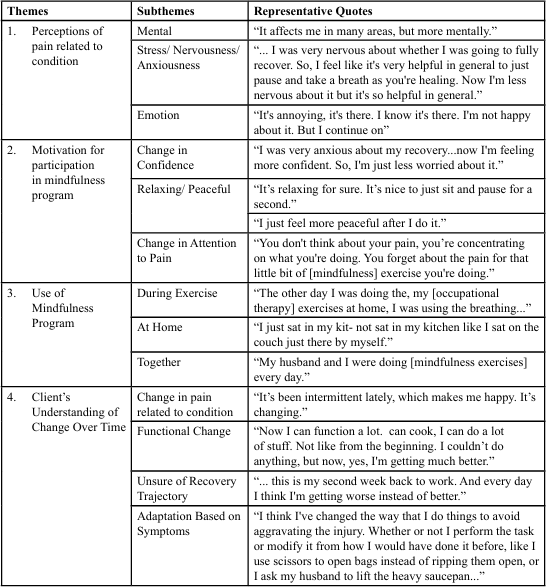
Table 1. Qualitative Data Analysis: Themes and Subthemes with Representative Quotes
Quantitative Results
The APS was used in Interview Parts A and C for four of the six study participants to determine changes in reported pain levels of participant’s before and after implementation of mindfulness program. Descriptive statistics reported average change in participants' APS scores over the two-week intervention period. Findings do not illustrate a direct correlation between pain levels and the mindfulness program; however, an average change in pain intensity score was calculated for each client using subtracting the baseline APS from the follow up APS. Each client demonstrated a decrease in APS with the average change being -3. Percentage change for each client was calculated by subtracting baseline APS from follow-up APS and dividing that number by the baseline APS and multiplying by 100. The average percentage change for all participants was 44.17% following the use of a mindfulness program in conjunction with regular OT. Table 2 reports APS data during participants interviews and results of analysis. (Table 2)
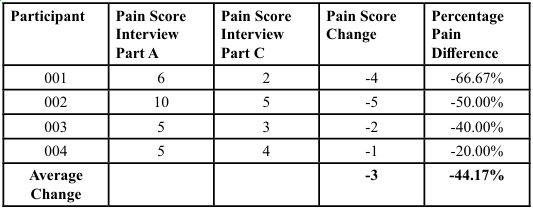
Table 2. Quantitative Data Analysis: Average Change in Pain Intensity Scale
Limitations
Limitations of the study include the small sample size of four participants which limits the generalizability of the results to the general population. The short duration (two weeks) of the study may not adequately capture patient experience with mindfulness or change in pain intensity over time. Demographic information was not collected to ensure the sample represents the general population. Quantitative data collected using the APS was not gathered consistently every session. Because no direct comparison data for regular OT treatment change in APS was gathered, a claim that reduction in pain is directly related to the use of mindfulness strategies cannot be made. Future studies should use to APS as a comparison point between groups participating in mindfulness practice in conjunction with UE OT and those who participate in in UE OT alone.
Discussion
This study suggests that integrating mindfulness practices into the rehabilitation process for patients with UE orthopedic conditions can positively impact both physical and psychological outcomes. Participants reported improved perceptions of their conditions and increased motivation for their treatment. Themes derived from interview data indicated that mindfulness interventions, including meditation and deep breathing, helped them manage pain more effectively and regain a sense of control over their recovery. This highlights the importance of addressing psychosocial factors in pain management, especially for chronic pain following UE injuries. Findings of the study align with previous research concluding a decrease in awareness of pain and increase in occupational engagement [4,8-10]. The qualitative findings of this study are similar to Ghitan et al. [3] confirming that pain is a significant contributor to psychosocial symptoms following hand injury, hand pain limits participation in everyday activities, and hand pain decreases overall life satisfaction. Similar to the findings of Yi et al. [5] while results of the use of mindfulness-based activities for orthopedic postoperative pain are promising, further research is needed to develop a comprehensive protocol for mindfulness in orthopedic rehabilitation, involving larger sample sizes and diverse conditions to improve applicability.
Although quantitative data from the Ashworth Pain Scale showed a significant decrease in pain intensity, this result could not be attributed to participation in the mindfulness program. This study contributes to the literature in suggesting the use of mindfulness to address pain-related psychosocial issues in UE impairment, the positive experience of reflection within OT sessions to document change in client perceptions, the suggestion that self-administration of mindfulness-based exercises led to client use of mindfulness during times of potential pain, and the use of the Ashworth Pain Scale as an indicator of change in intensity of pain as a comparison point for different OT UE approaches to pain.
Conclusion
The purpose of this research was to explore the feasibility of completing mindfulness-based interventions in conjunction with regular OT interventions to improve health management and psychosocial symptoms related to pain to better meet the physical and mental health needs of individuals with UE impairments. Qualitative findings suggest a self-administered mindfulness program is a pragmatic addition to outpatient UE OT to provide holistic treatment. Qualitative findings of the study align with previous research concluding a decrease in awareness of pain and increase in occupational engagement [4,8-10] and in the psychosocial aspects of pain related to orthopedic conditions [3,5]. This study offers the opportunity for OT practitioners to expand the treatment of pain related psychosocial symptomatology associated with orthopedic conditions and optimize health outcomes.
Competing Interests:
The authors declare that they have no competing interests.
References
Takata, S. C., Wade, E. T., & Roll, S. C. (2019). Hand therapy interventions, outcomes, and diagnoses evaluated over the last 10 years: A mapping review linking research to practice. Journal of Hand Therapy. 32(1), 1-9. View
Grzelak, S., Bérubé, M., Gagnon, M. A., Côté, C., Turcotte, V., Pelet, S., & Belzile, É. (2018). Pain management strategies after orthopedic trauma: A mixed-methods study with a view to optimizing practices. Journal of Pain Research. 15, 385-402. View
Ghițan, A. F., Gheorman, V., Pîrvu, D., Gheorman, V., Udriștoiu, I., & Ciurea, M. E. (2023). A review of psychological outcomes in patients with complex hand trauma: A multidisciplinary approach. Current Health Sciences Journal. 49(2), 143-150. View
Verhiel, S. H. W. L., Greenberg, J., Zale, E. L., Chen, N. C., Ring, D. C., & Vranceanu, A. M. (2019). What role does positive psychology play in understanding pain intensity and disability among patients with hand and upper extremity conditions? Clinical Orthopedics & Related Research. 477(8), 1769-1776. View
Yi, J. L., Porucznik, C. A., Gren, L. H., Guan, J., Joyce, E., Brodke, D. S., Dailey, A. T., Mahan, M. A., Hood, R. S., Lawrence, B. D., Spiker, W. R., Spina, N. T., & Bisson, E. F. (2019). The impact of preoperative mindfulness-based stress reduction on postoperative patient-reported pain, A Qualitative Study on Using Mindfulness Practices disability, quality of life, and prescription opioid use in lumbar spine degenerative disease: A pilot study. World Neurosurgery, 121, 786-791. View
Creswell, J. W., & Poth, C. N. (2018). Qualitative inquiry and research design: Choosing among five approaches (4th ed.). Sage Publishing. View
Braun, V., & Clarke, V. (2006 . Using thematic analysis in psychology. Qualitative Research in Psychology. 3(2): 77-101. View
Burns, A. C., Windred, D. P., Rutter, M. K., Olivier, P., Vetter, C., Saxena, R., Lane, J. M., Phillips, A. J. K., & Cain, S. W. (2023). Day and night light exposure are associated with psychiatric disorders: an objective light study in >85,000 people. Nature Mental Health, 1, 853–862. View
Pei, D., Guo, B.G., Li, P.J., et al. (2021). Investigation and Analysis Report on China’s Walnut Market and Industry. Agricultural Products Market, 19, 54-56. View
Talaei-Khoei, M., Chen, N., Ring, D., & Vranceanu, A. M. (2018). Satisfaction with life moderates the indirect effect of pain intensity on pain interference through pain catastrophizing. Journal of Consulting and Clinical Psychology. 86(3), 231–241. View