
- About the Journal
- Editorial Board
- Review Process
- Author Guidelines
- Article Processing Charges
- Special Issues
- Current Issue
- Past Issue
 Journal of Rehabilitation Practices and Research
Journal of Rehabilitation Practices and Research Volume 6 (2025), Article ID: JRPR-187
https://doi.org/10.33790/jrpr1100187Research Article
Perspectives on Advising in DPT Education: Opportunities for Growth and Improvement
Emily S. Becker*, Krista F. Van Der Laan, Christopher Wiedman, William E. Healey, Jane E Sullivan, Derin Birch, Margaret Sim, and Vicki M Tysseling
Department of Physical Therapy and Human Movement Sciences, Northwestern University, Feinberg School of Medicine, 645 N. Michigan Avenue, Suite 1100, Chicago, IL 60611, United States.
Corresponding Author Details: Emily S. Becker, Assistant Professor, Department of Physical Therapy and Human Movement Sciences, Northwestern University, Feinberg School of Medicine, 645 N. Michigan Avenue, Suite 1100, Chicago, IL 60611, United States.
Received date: 10th September, 2025
Accepted date: 21st October, 2025
Published date: 23rd October, 2025
Citation: Becker, E. S., Van Der Laan, K. F., Wiedman, C., Healey, W. E., Sullivan, J. E., Birch, D., Sim, M., & Tysseling, V. M., (2025). Perspectives on Advising in DPT Education: Opportunities for Growth and Improvement. J Rehab Pract Res, 6(2):187.
Copyright: ©2025, This is an open-access article distributed under the terms of the Creative Commons Attribution License 4.0, which permits unrestricted use, distribution, and reproduction in any medium, provided the original author and source are credited.
Abstract
Academic advising is crucial in education, yet best practices and outcomes are underexplored in physical therapy education. This study examines how Doctor of Physical Therapy students, alumni, and faculty perceive advising experiences and identify improvement areas.
Subjects: 114 survey participants and 17 focus group participants from a midwestern physical therapy program.
Methods: A mixed methods design with an 18-item survey and four semi-structured focus groups.
Results: Advisees showed more disagreement than advisers on the following: "helping advisees with non-academic concerns" (RES 3); "being successful in their academic program" (OUT3); and "helping to achieve their career goals" (OUT4). Advisees had more agreement than advisers on "advisees are responsive in their communication with advisors" (LOG4). Qualitative analysis revealed themes of structure, similarities, support, and relationship building.
Conclusion: Students value advising but seek more structured, personalized experiences. Effective advising should balance structured resource allocation with flexible, supportive relationships.
Keywords: Advisee-Advisor Relationships, Mentorship, Physical Therapy Education
Introduction
Academic advising is an important aspect of an educational experience. Experiences greatly vary and there is currently limited to no literature describing these practices within doctoral level graduate programs. This is even more limited within the physical therapy profession. This study aims to investigate how Doctor of Physical Therapy Students and faculty characterize their experience with the academic advising program and to identify opportunities for improvement in future program implementation.
Historical definitions of academic advising include descriptions of a collaborative, dynamic relationship, where the adviser serves as teacher and guide to facilitate students’ achievement of educational, career, and personal goals. Most healthcare professionals have likely interacted with at least one academic adviser during their higher educational journey. It is also likely that perceptions about the format, content, and success of everyone's academic advising experiences are unique. Existing literature provided descriptions of student advising in baccalaureate healthcare programs including in allied health [1] and nursing [2]. Advising in professional health education programs has also been described in dentistry [3,4], pharmacy [5,6], medicine [7-10], and medical specialties/residency selection and training [11,13].
While there is considerable literature on multiple aspects of physical therapy education, including curricula [14-18], faculty [19-21], teaching and learning strategies [22-24], and outcomes [25,26], there is a paucity of literature on academic advising in physical therapy [27]. The Commission on Education in Physical Therapy Education (CAPTE) reported 273 accredited physical therapy education programs in 2022. An additional 21 programs were in the development/candidacy phase. Given the scale of physical therapy education, the number of current physical therapy students, and the fact that physical therapy student academic advising is understudied and underreported, there is both a need and an opportunity to better understand this experience.
The Department of Physical Therapy and Human Movement Sciences in the Feinberg School of Medicine at Northwestern University (PTHMS) has a 39-member faculty, enrolls 90-95 students per class in a 32-month educational program culminating in the Doctor of Physical Therapy (DPT) degree. Physical Therapy and Human Movement Sciences created a task force to review the DPT program and learning environment to explore strategies to promote student success. The task force sought student and faculty feedback and identified nine actionable recommendations to enhance student support and success. One of the nine recommendations highlighted a need for a revised advising system including: variability in student experience and relationships with advisers, desire for a team-based model, and desire to have advisers with connections to the students' potential long-term clinical interests.
At the beginning of the project, all students were assigned a faculty academic adviser at matriculation. Assignments were made by admissions-committee members based on interactions with incoming students and a match between student-faculty characteristics. All full-time faculty were expected to serve as advisers to 2-4 students/ class. Advisers met with students at the onset of the program and then typically each academic term (or more often as needed) before their terminal clinical education experiences.
In the summer of 2020, the PTHMS curriculum committee placed a call for interested faculty volunteers to participate in an Advising Subcommittee (AS). It consisted of four faculty members with diversity in teaching experience, rank and role, and content expertise. The Department’s Curriculum Committee charged the AS to review training and expectations for faculty in their role as an adviser and make recommendations.
The AS conducted a literature review on academic advising in PT showing that a limited amount had been written about the topic. To inform the work, the taskforce met with two experts in student advising in health professions education [28]. Numerous methods for exploring the topic of academic advising were discussed. All directed the AS to complete an initial needs assessment of the status of academic advising at PTHMS.
The purpose of this study was to investigate how Doctor of Physical Therapy Students and faculty characterize their experience with the academic advising program. A secondary purpose of this study was to identify opportunities for improvement in future program implementation.
Subjects
Subjects from survey: 114 survey participants included 24 faculty, 12 recent graduates (within the year), and 78 current students. Current students were further divided into three groups: class of 2021 (n=17), 2022 (n=40), and 2023 (n=21). Additionally, seventeen focus group participants included: Class of 2021 alumni (n=5); Class of 2022 DPT students (n=2); Class of 2023 DPT students (n=4); and PTHMS core faculty members (n=6).
Methods
A mixed methods study was employed to ensure the benefits of both approaches were included in the results. The quantitative portion allowed a broader examination of the program while the qualitative semi-structured interviews allowed the researchers to gain a more nuanced understanding of this complex phenomenon. The mixed methods approach allowed for a more granular examination of students, faculty, and alumni perceptions on the personal topic of advising.
Since there was not a standardized survey specific to this topic available within the literature, an online survey instrument was developed based on discussions with experts and informed by two published examples [7]. A survey including four categories consisting of 18-items was created to query respondents’ perceptions of adviser access, and experiences with academic and non-academic issues, behaviors, benefits, and career goals. Items were scored on a 7-point Likert scale of agreement (strongly agree <-> strongly disagree). The survey included a free text box for additional comments not captured in other survey questions. To establish face validity, program students and faculty members were invited to view the survey and provide feedback. Minor revisions were made to the survey instrument based on that feedback. The survey was managed using REDCap electronic data capture tools hosted at Yale University. A link to the online Advisor-Advisee survey was emailed to faculty and students from the 2020-2023 classes in the beginning of September 2021. Table 1 displays the survey items.
Following analysis of the online survey data, semi-structured focus groups were conducted to elicit further information regarding factors identified in the online survey. The participants in the semi-structured focus groups were separated between students, faculty, or alumni. The AS partnered with a focus group facilitator who was experienced in quantitative inquiry, skilled in conducting focus groups, and familiar with PTHMS curriculum and faculty. The facilitator did not have a formal role in the department to provide a safe environment for students and faculty to openly share their experiences. The focus group facilitator met with the AS several times to reach agreement on the goals, structure, format, and specific questions for the focus groups. The appendix contains the focus group interview guide.
Results
Quantitative Survey Results
Table 1 shows the categories examined, the Cronbach alpha score for each category, the items (survey questions) within each category along with each item’s label, the number of individuals within each respondent group, and the central tendencies (mean and median) plus variability (SD and range, respectively) for each respondent group for each item. Each question was identified with one of four categories; logistics of the program (LOG), resources offered within the program (RES), program support of belonging and inclusion (BAI), and outcome of the program (OUT) as shown in Table 1.
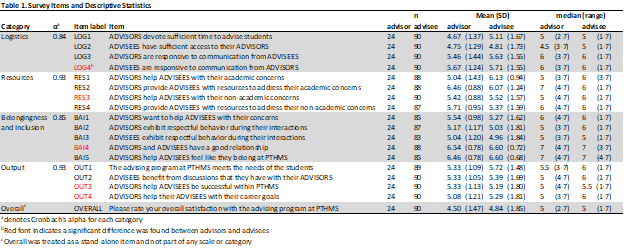
Table 1: Table 1 shows the categories examined, the Cronbach alpha score for each category, the items (survey questions) within each category along with each item’s label, the number of individuals within each respondent group, and the central tendencies (mean and median) plus variability (SD and range, respectively) for each respondent group for each item. Red font in the item label denotes that a significant difference was found between advisors and advisees.
Figure 1A shows the distributions for each item. A Kruskal-Wallis test showed no statistically significant differences between any of the student respondent groups, including the recent graduate group, in rating the individual items so the student groups were merged. A Mann-Whitney U test was conducted to determine whether there were any significant differences between advisors and advisees. The results showed that advisors scored significantly lower than advisees on “advisees are responsive to communication from advisors” (LOG4: U=588.00, p= <0.001) and “advisors and advisees have a good relationship” (BAI4: U=794.00, p = 0.046).
Items within a category were averaged to give the category score. An ANOVA showed that there were no statistically significant differences between any of the student respondent groups, including the recent graduate group, in category score so the student groups were merged. T-tests revealed no significant differences between advisors and advisees in each category (Figure 1B).
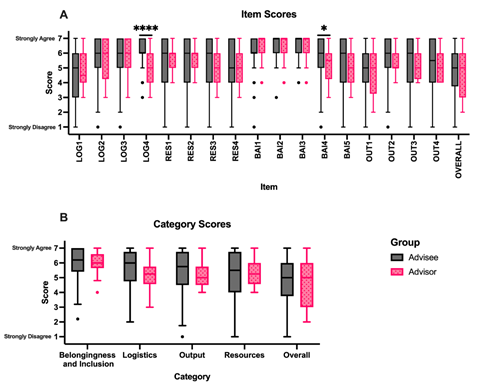
Figure 1: Figure 1A shows the distributions for each item within the survey. All student responses were pooled as there were no significant differences between the groups. There were no differences between advisor and advisee responses to the items except for LOG4 (U=588.00, p=<0.001) and BAI4 (U-794.00, p=0.046) where advisors scored significantly less agreeable than advisees (Mann-Whitney U). Figure 1B shows a comparison between advisor and advisee responses across the categories for which there were no significant differences (t-test). Figure 1B also shows the response from the uncategorized overall question (Overall).

Figure 2: The directionality of responses to the items was analyzed. Results showed that advisees had more association with disagreement than advisors on RES3 (χ2=6.431, df=2, p=.040) OUT3 (χ2=6.345, df=2, p=.042), and OUT4 (χ2=8.147, df=2, p=.017). However, advisees had more association with agreement than advisors on LOG4 (χ2=16.399, df=2, p=.<0.001) (chi-square).
A follow-up analysis was conducted to examine the directionality of the responses. Answers were collapsed into the nominal variables of agreement (responses of 5-7), neutral (response of 4), and disagree (responses of 1-3). A chi-square test of association was conducted to evaluate the relationship between group (advisor or advisee) and the nominal categories. Results showed that advisees had more association with disagreement than advisors on “advisors help advisees with their non-academic concerns” (RES3; χ2=6.431, df=2, p=.040); “advisors help advisees be successful within PTHMS” (OUT3: χ2=6.345, df=2, p=.042); and “advisors help their advisees with their career goals” (OUT4; χ2=8.147, df=2, p=.017). However, advisees had more association with agreement than advisors on LOG4 (χ2=16.399, df=2, p=.<0.001).
Qualitative Focus Group Results
The quantitative analysis produced an overview of the advisor advisee relationship. However, question 20, which asked their overall view of the program, scored less agreeable than the other items. This prompted additional qualitative analysis to elucidate specific improvements for the program.
Focus groups were conducted between February and March of 2021 by Zoom, audio recorded, and transcribed. Zoom was used to facilitate participation. The mean length of the four focus groups was 77 minutes (range 62-95 minutes). Three study investigators read and independently coded one of the transcripts. The three met, discussed their codes, and came to consensus on a coding schema for the remaining three transcripts. Codes were condensed into subthemes and themes.
The following four themes were identified: Structure, Similarities, Supportive, and Relationship Building. Figure 3 graphically displays the four themes and their corresponding subthemes. Table 2 presents illustrative quotes for each subtheme.
The first theme to emerge from the inductive coding process was titled “Structure.” All four focus groups commented on the structure or rather lack of structure in the existing academic advisory program. The qualitative coding process revealed three subthemes which described focus group participants’ perceptions of the advisory program’s structural strengths and areas for improvement.
Subtheme one was titled “Built into the System.” Overall, participants felt the existing academic advisory program was not integrated into the broader context of the DPT program. The adjunct status of the advising program was exemplified by a lack of structured meeting times, other program responsibilities taking priority, and a subsequent lack of availability of both faculty and students to commit to the advising program.
Subtheme two was titled “Set Expectations.” Both faculty and student focus group participants shared the perception that expectations in the academic advisory program were unclear. Neither faculty nor students understood what the expectations for the content nor schedule of the meetings. Some felt it was the faculty’s responsibility to reach out while others felt that responsibility fell to the individual student. This lack of clarity led to perceived inconsistencies in how faculty and students managed their advisor/advisee relationships. The lack of clear expectations resulted in each group making assumptions about the other.
Subtheme three was titled “Has Resources.” Participants felt the structural shortcomings of the program were the result of insufficient resources. Participants noted a lack of free time to devote to quality interactions led to a perception by students that academic advising was not a priority. The absence of a structured mechanism for information sharing left faculty wondering when or if an individual advisee might need additional attention. Faculty felt additional training on DPT program expectations, advising techniques, and available resources would be helpful, while students noted that not all faculty appeared “cut out” to be advisors.
Theme two – similarities
The second theme identified in the coding process was titled “Similarities.” Both students and faculty expressed a desire for similarity between advisor and advisee. While the desire for shared professional identity (physical therapist, as opposed to non-clinical research faculty) was present, this theme was more expansive than professional identity alone.
The first subtheme was titled “Background.” This subtheme was prevalent in the student focus groups. Students expressed a desire for faculty from similar backgrounds, including shared racial or ethnic background, but also shared life experiences. Shared life experience could include a shared undergraduate school or geographic location where one was raised or lived.
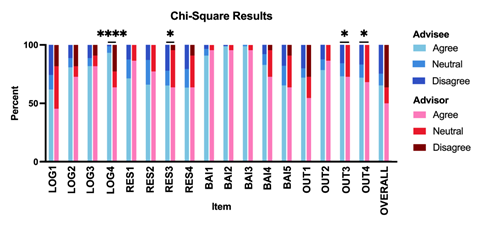
Figure 3: The four themes and their corresponding subthemes.
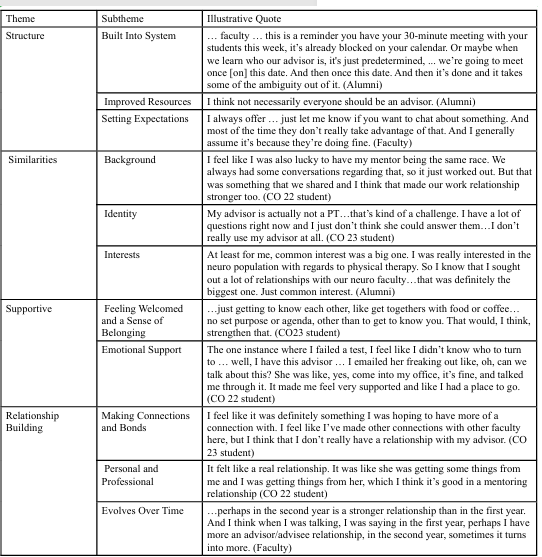
Table 2. Themes/Subthemes and Illustrative Quotes
The second subtheme was titled “Identities.” Most notable in this subtheme was the desire for a shared professional role identity. Student focus group participants noted how an academic advisor who was not a physical therapist, a non-clinical research faculty for example, affected their ability to connect with the advisor as a student in a clinically focused doctoral program. Identity similarities expanded beyond professional identity, however, with participants noting the importance of social connection and perceived approachability as key components of the advisor’s identity contributed to their willingness to access their assigned advisor, versus seeking other sources of information or connection.
The third subtheme was titled “Interests.” Similar interests in an area of clinical practice specialty were a common desire expressed by students. Students felt this commonality led them to access their advisor more as the program progressed from classroom to clinical work to career planning. Focus group participants compared the advisory program with their involvement in a required faculty-guided research project. Possessing a shared interest increased faculty and student investment in the relationship. This shared interest was noted regardless of whether the faculty research advisor was a physical therapist or not which made this aspect of subtheme three distinct from subtheme two.
Theme three –supportive
The third theme was “Supportive.” Participants reported the advising program should support students’ tenure and training in the PTHMS community. Whether or not the advising program was successful in this role varied by individual participant experience. Two subthemes further described the importance of the advising program to make students feel welcomed and provide emotional support.
The first subtheme was titled “Welcome and Belonging.” Participants described how students expected the role of the faculty advisors was to reach out and make them feel welcomed. The advisor’s performance also played an important role in whether students felt a sense of belonging. When asked what role the advisee-advisor relationship played in developing a sense of belonging, several faculty participants felt this should happen but, despite efforts, did not.
A second subtheme was titled “Emotional Support” and related to the ability of advisors to provide emotional support during challenges faced in DPT training. One faculty member reported their role as another level of support, as a safety net, while student participants felt academic advisors should support them in more than just areas of academic performance and success.
Theme four –relationship building
The fourth theme was titled “Relationship Building.” This theme described a desired component of the advising program to establish an ongoing and progressively maturing relationship.
The first subtheme that emerged was titled “Making Connections and Bonds.” Several participants explained how the advisor may play an important role in making connections and directing students to others and resources that align with students’ interests. Making these connections with students was viewed as rewarding and positive by faculty and the first step in relationship-building.
The second subtheme was titled “Personal and Professional.” This subtheme described how students wished to connect with faculty on both the personal and professional level. Having a supportive advisor with shared interests and backgrounds was felt to be important to the development of this relationship.
The third subtheme was titled “Evolves Over Time” and represented participants’ perceptions that the advising program should progressively mature and evolve as the student progressed through the program. Ideally, students should require less advisement on matters of rote academic performance and benefit from more attention to maturation as a budding professional and future colleague as the students’ progress through the DPT program.The results of the qualitative data analysis are visually represented in Figure 3. Illustrative quotes for each theme are presented in Table 2.
Discussion and Conclusion
The primary focus of this study was to evaluate the advisor advisee relationships within a graduate physical therapy program and to identify areas of improvement for both students and faculty experiences. The research employed a mixed-methods approach by combining quantitative surveys and qualitative focus groups to provide a comprehensive view of the advising program's effectiveness.
The internal consistency of the quantitative survey items was assessed by measuring Cronbach’s alpha (Table 1) for the categories to which they belong. The alpha values for each category were quite high, all >0.8, suggesting high reliability of the survey items. Initial survey results provided an overall positive assessment of the advising system as observed in the central tendencies of the items shown in Table 1, all of which were above a neutral score of 4, and the even higher mean category scores shown in Fig. 1B. However, discrepancies emerged when evaluating specific items within the survey, including the overall satisfaction ratings in particular. The initial quantitative findings indicated that while students generally found the advising program beneficial, there was significant room for improvement. This finding was consistent across multiple survey items. The Mann-Whitney U tests showed significant differences between advisors and advisees on LOG4 and BAI4 (Fig. 1A), suggesting differences in perspectives regarding communication and quality of relationships respectively. From these results, we would recommend that advisors within this program could improve outcomes if they encourage more communication from their advisees and work on and encourage the development of better relationships. The chi-square tests of association showed differences in LOG4 and three other items: RES3, OUT3, and OUT4 (Fig. 2). From these results, we would recommend that advisors within this program could improve outcomes if they put more effort into addressing non-academic concerns (RES3) and focus more on their advisees’ expectations of success within (OUT3) and beyond (OUT4) the program.
The discrepancies just discussed can point to specific areas of improvement, but they do not address the unknowns—potential items or categories that are not addressed by the survey. In this regard, one key result stood out: the overall satisfaction score was lower than all individual item and category scores, signaling a need to understand the underlying causes of this discrepancy. This led to the inclusion of qualitative methods, allowing the researchers to delve deeper into the experiences of both students and faculty through focus groups. The use of focus groups aligned with existing literature on advising systems, which suggests that qualitative data often provide richer insights into student and faculty experiences.
The focus group discussions revealed that students desired a more structured and personalized advising experience that went beyond academic performance monitoring. The qualitative themes that emerged highlighted a preference for relationships that were built on shared interests and identities, allowing the advisor-advisee relationship to evolve into a more personal and professional connection over time. This academic relationship has been shown to be beneficial in the education of other healthcare professions in physical and psychological well-being of students during their graduate medical education [29]. This desire for a deeper relationship was found to contribute to the lower overall satisfaction scores, despite positive responses to more specific elements of the advising process. This is supported in the current literature as similar studies support that the safety of the learning environment, strength of the mentee- mentor relationship, and preparing for the mentorship meetings were the most important factors associated with the intended outcomes of mentoring of early career mentorship within physical therapy [30].
These findings point to the need for an advising program which balances a structured approach to resource allocation, advisor/advisee matching, and program expectations, with sufficient flexibility to allow supportive advisor/advisee relationships to develop and evolve organically over time. For example, a key action step taken as a result of the data in this study is the introduction of a formalized mentor-mentee program, as seen in the newly implemented Professional Development and Mentoring Program. This program is designed to foster long-term relationships between faculty mentors and students, facilitating personal and professional growth. Future iterations of advising programs may benefit from focusing on matching advisors and advisees based on shared backgrounds or interests, a factor highlighted in this study as essential for deeper connections to better facilitate the desired physical and psychological wellbeing benefits of the advisee program [31].
Given the study's limitations of being focused on a single institution and the potential biases in volunteer focus group participation, the results cannot be generalized to all Doctor of Physical Therapy (DPT) programs. However, the findings emphasize the importance of addressing the evolving needs of both students and faculty in the advising process and could serve as a foundational example for other DPT programs to consider when implementing mentorship programs within their institutions.
Competing Interests:
The author(s) declare that they have no competing interests.
References
Aljohani, K. A., Almarwani, A. M., Tubaishat, A., Gracia, P. R. B., Natividad, M. J. B., Gamboa, H. M., & Aljohani, M. S. (2023). Health Sciences Students' Perspective on the Functions of Academic Advising. SAGE Open Nursing, 9, 23779608231172656. View
Chan, Z. C. (2016). A qualitative study of freshmen's and academic advisors' perspectives on academic advising in nursing. Nurse Education in Practice, 18, 23-29. View
Golshah, A., Sadegh, S., & Rezaie, L. (2021). Dental Students’ Satisfaction with Academic Advisors: A Qualitative Study. Education Research in Medical Sciences, 10(2), e121312. View
Al-Ansari, A., El Tantawi, M., AbdelSalam, M., & Al-Harbi, F. (2015). Academic advising and student support: Help seeking behaviors among Saudi dental undergraduate students. Saudi Dental Journal, 27(2), 57-62. View
Gortney, J. S.,Lahiri, M., Lucarotti, R., (2021). Engaging faculty advisors to promote students' personal and professional development. Curr Pharm Teach Learn. 13(10):1346-1350. View
Sierra, C. M., Koch, J., Gonzalez, J., & Bahjri, K. (2022). Student perception of academic advising in a school of pharmacy. International Journal of Pharmacy Practice, 30(2), 184-187. View
Delaram, M., & Hosseini, S. (2014). Comparison of the students' satisfaction about the performance of academic advisors before and after the advisor project in Shahrekord University of Medical Sciences. Journal of Advances in Medical Education & Professionalism, 2(1), 6-11. View
Howse, K., Harris, J., & Dalgarno, N. (2017). Canadian National Guidelines and Recommendations for Integrating Career Advising Into Medical School Curricula. Academic Medicine, 92(11), 1543-1548. View
Kow, C. S., Teo, Y. H., Teo, Y. N., Chua, K. Z. Y., Quah, E. L. Y., Kamal, N., Tan, L. H. E., Cheong, C. W. S., Ong, Y. T., Tay, K. T., Chiam, M., Mason, S., & Krishna, L. K. R. (2020). A systematic scoping review of ethical issues in mentoring in medical schools. BMC Medical Education, 20(1), 246. View
Frosch, E., & Goldstein, M. (2019). Relationship Centered Advising in a Medical School Learning Community. Journal of Medical Education and Curricular Development, 6, 2382120519827895. View
Royce, C. S., Everett, E. N., Craig, L. B., Fleming, A., Forstein, D. A., Graziano, S. C., Hampton, B. S., Hopkins, L., McKenzie, M. L., Morgan, H. K., & Sims, S. M. (2021). To the Point: advising students applying to Obstetrics and Gynecology residency in 2020 and beyond. American Journal of Obstetrics and Gynecology, 224(2), 148-157. View
Alexandraki, K. I., Angelousi, A., Mytareli, C., Grossman, A. B., Kaltsas, G., (2023). New developments and concepts in the diagnosis and management of diabetes insipidus (AVP deficiency and resistance). J Neuroendocrinol. 35(1):e13233. View
Pelletier-Bui, A., Franzen, D., Smith, L., Hopson, L., Lutfy Clayton, L., Parekh, K., Olaf, M., Morrissey, T., Gordon, D., McDonough, E., Schnapp, B., Edens, M., Kiemeney, M., (2020). Western Journal of Emergency Medicine, 21(5) 1105 1113. View
Ballengee, L. A., Covington, J. K., & George, S. Z. (2020). Introduction of a psychologically informed educational intervention for pre-licensure physical therapists in a classroom setting. BMC Medical Education, 20(1), 382. View
Calo, M., Judd, B., Chipchase, L., & Blackstock, F. (2022). Grit, Resilience, Mindset, and Academic Success in Physical Therapist Students: A Cross-Sectional, Multicenter Study. Physical Therapy, 102(6). View
Matthews, L., Ford, G., Schenk, R., Ross, M., & Donnelly, J. (2021). Dry needling curricula in entry-level education programs in the United States for physical therapists. Journal of Manual & Manipulative Therapy, 29(2), 83-91. View
Gagnon, K., Bachman, T., Beuning, B., Koppenhaver, S., Unverzagt, C., Feda, J., & Gantt, C. (2022). Doctor of Physical Therapy Education in a Hybrid Learning Environment: A Case Report. Physical Therapy, 102(8). View
Mulligan, E. P., & DeVahl, J. (2017). Sports physical therapy curricula in physical therapists professional degree programs. International Journal of Sports Physical Therapy, 12(5), 787 797. View
Greenwood, K. C., & Ewell, S. B. (2018). Faculty development through simulation-based education in physical therapist education. Advances in Simulation, 3(1). View
Pinto Zipp, G., Maher, C., & Falzarano, M. (2015). An observational study exploring academic mentorship in physical therapy. Journal of Allied Health, 44(2), 96-100. View
Dickson, T., & Zafereo, J. (2021). Faculty and programmatic influences on the percentage of graduates of color from professional physical therapy programs in the United States. Advances in Health Sciences Education, 26(1), 215-235. View
Hadley, D. E., Pitonyak, J. S., Wynarczuk, K. D., Sen, S., Ward, J. F., & Patel, R. V. (2018). A pilot IPE workshop integrating OT, pharmacy, PT, and PA programs. Currents in Pharmacy Teaching and Learning, 10(2), 220-225. View
Shoemaker, M. J., Beasley, J., Cooper, M., Perkins, R., Smith, J., & Swank, C. (2011). A method for providing high-volume interprofessional simulation encounters in physical and occupational therapy education programs. Journal of Allied Health, 40(1), e15-21. View
Youdas, J. W., Krause, D. A., Hellyer, N. J., Rindflesch, A. B., & Hollman, J. H. (2013). Use of individual feedback during human gross anatomy course for enhancing professional behaviors in doctor of physical therapy students. Anatomical Sciences Education, 6(5), 324-331. View
Elvén, M., Hochwälder, J., Dean, E., & Söderlund, A. (2019). Predictors of Clinical Reasoning Using the Reasoning 4 Change Instrument With Physical Therapist Students. Physical Therapy, 99(8), 964-976. View
Shields, R. K., & Dudley-Javoroski, S. (2021). Benchmarking in Academic Physical Therapy: A Multicenter Trial Using the PT GQ Survey. Physical Therapy, 101(12). View
Barnes, L. J., & Parish, R. (2017). Improving student-perceived benefit of academic advising within education of occupational and physical therapy in the United States: a quality improvement initiative. Journal of Educational Evaluation for Health Professions, 14, 4. View
Hutchinson, K. (2021). Meeting to Explore Critical Issues in Student Advising. In E. Becker, H. Witte, & J. Sullivan (Eds.), Issues and Strategies in Medical Student Advising.
Becerra, M., Wong, E., Jenkins, B. N., & Pressman, S. D. (2021). Does a good advisor a day keep the doctor away? How advisor-advisee relationships are associated with psychological and physical well-being among graduate students. International Journal of Community Well-Being, 4(4), 505-524. View
Becker, E. S., Grant, M., Witte, M. M., Deveikis, L. T., & Traisman, R. K. (2023). Exploring outcomes in formal physical therapy mentorship programs. Education in the Health Professions, 6(1), 34-41. View
Sarabipour, S., Hainer, S. J., Arslan, F. N., et al. (2022). Building and sustaining mentor interactions as a mentee. FEBS Journal, 289(6), 1374-1384. View