
- About the Journal
- Editorial Board
- Review Process
- Author Guidelines
- Article Processing Charges
- Special Issues
- Current Issue
- Past Issue
 Journal of Rehabilitation Practices and Research
Journal of Rehabilitation Practices and Research Volume 7 (2026), Article ID: JRPR-205
https://doi.org/10.33790/jrpr1100205Case Report
Clinical Application of a Wrist-Hand Orthosis to Support Grasping Skills in Hemiplegic Cerebral Palsy: A Case Report
Naomie Corro, OTD, OTR/L, BCP
Assistant Professor, School of Health Care Professions, Missouri State University, 901 S. National Avenue, OCHS 203G Springfield, Missouri 65897, United States.
Corresponding Author Details: Naomie Corro, OTD, OTR/L, BCP, Assistant Professor, School of Health Care Professions, Missouri State University, 901 S. National Avenue, OCHS 203G Springfield, Missouri 65897, United States.
Received date: 03rd December, 2025
Accepted date: 25th May, 2026
Published date: 27th May, 2026
Citation: Corro, N., (2026). Clinical Application of a Wrist-Hand Orthosis to Support Grasping Skills in Hemiplegic Cerebral Palsy: A Case Report. J Rehab Pract Res, 7(1):205.
Copyright: ©2026, This is an open-access article distributed under the terms of the Creative Commons Attribution License 4.0, which permits unrestricted use, distribution, and reproduction in any medium, provided the original author and source are credited.
Abstract
This case report describes the clinical application of the Rehabilitation Treatment Specification System (RTSS) to guide intervention planning and documentation for the use of a wrist-hand orthosis in a child with hemiplegic cerebral palsy (CP). As part of routine clinical care, the Peabody Developmental Motor Scales- Second Edition (PDMS-2) was administered before and after a 4-week occupational therapy (OT) intervention to monitor changes in grasping performance. RTSS was used to systematically describe treatment targets and active intervention variables associated with orthotic use and therapeutic activities. Improvements in grasping performance were observed, as reflected by increases in raw scores, percentile rank, and age-equivalent scores on the PDMS-2 grasping subtest. This case highlights the potential utility of RTSS as a framework for specifying and documenting rehabilitation interventions in pediatric clinical practice. Further refinement of identified treatment targets and active intervention components may be warranted, along with future investigation to establish broader clinical applicability and content validity.
Keywords: Wrist Hand Orthosis, Grasping, Pediatric Hemiplegia, Rehabilitation Treatment Specification System, Cerebral Palsy
Introduction
Cerebral palsy (CP) is a nonprogressive neurological condition affecting movement and postural control due to injury to the developing brain [1] and remains a leading cause of childhood disability. Hemiplegia occurs in approximately 25%-33% of children with CP, with upper extremity impairments often more pronounced than lower extremity involvement [2]. Children with hemiplegia commonly experience motor and sensory impairments in the affected upper extremity [3,4] which can limit functional hand use and contribute to developmental disregard or learned nonuse of the affected limb [5,6].
Evidence supporting upper extremity interventions in children with CP continues to evolve. Rameckers, Janssen-Potten, Essers, and Smeets [7] synthesized findings on strength training interventions and reported that stand-alone upper extremity strength training demonstrated limited effects; however, when combined with other therapeutic interventions, improvements in overall muscle strength were observed. This highlights the importance of using integrated intervention approaches that address both strength and functional performance. Ten Berge et al. [8] reported positive effects of a neoprene thumb splint on hand function in children with unilateral spastic CP presenting with thumb-in-palm deformity. Improvements were observed during self-selected activities of daily living and persisted even after splint removal in several participants, suggesting potential carryover effects. Outcomes were measured using the Goal Attainment Scale and parent-reported Visual Analog Scale ratings of disability in activities of daily living, alongside weekly semi- structured parent interviews. However, methodological limitations included lack of blinding and unclear parent training regarding splint application, which may affect interpretation of findings. Goodman and Bazyk [9] similarly supported the use of a short thumb opponens splint in a single-subject study involving a 4-year-old child with cerebral palsy. Over an 8-week intervention period, improvements were noted in active thumb range of motion, grip and pinch strength, and the speed and quality of grasp and release. More recently, Jackman, Novak, and Lannin [10] described the use of hand splinting protocols combined with task-specific training as an intervention approach for improving upper extremity function in children with cerebral palsy. Collectively, these studies suggest that hand orthoses may support functional hand use; however, variability in intervention protocols and study design highlights the need for clearer treatment specification and further clinical investigation.
Although evidence-based interventions exist, treatment delivery can vary considerably across clinicians, even when using similar therapeutic approaches. This variability highlights the need for a standardized framework to clearly describe OT and rehabilitation interventions, including their treatment targets and active variables. The RTSS offers a structured framework for identifying and describing the clinician actions (“ingredients or variables”) intended to influence specific aspects of patient functioning (“targets”) [11-13]. RTSS aims to improve consistency in rehabilitation terminology, intervention design, and treatment replication across clinical and research settings [12]. However, RTSS does not prescribe standardized methodologies for identifying treatment targets, requiring clinicians to apply treatment theory and clinical reasoning in intervention development [11,12].
Given the broad range of therapeutic strategies available to address upper extremity impairment in children with CP, systematic treatment specification may enhance intervention clarity, clinical reasoning, and reproducibility in practice. Although a recent scoping review by Katz et al. [14] highlighted growing interest in RTSS, considerable work remains to improve the quality and comprehensiveness of intervention specifications, as well as the application across diverse areas of rehabilitation practice. This case report contributes to that emerging body of work by describing the clinical application of RTSS to guide intervention planning and documentation in the use of a wrist-hand orthosis to support grasping skills in a child with hemiplegic CP.
Methods
Clinical Case Description
J.S. (pseudonym used to maintain confidentiality) was a 3-year- old boy referred by his pediatrician to an outpatient OT clinic for evaluation and intervention related to his diagnosis CP with right hemiparesis. J. S. was born at 39 weeks gestation and was diagnosed at birth with hypoplastic left heart syndrome and aortic atresia. Shortly after delivery, he was admitted to the neonatal intensive care unit because of declining oxygen saturation. His early medical course was further complicated by intracranial hemorrhage requiring surgical shunt placement. Subsequently, he was diagnosed with CP with associated right-sided hemiplegia and developmental delays.
At the time of evaluation, J.S. used a custom wheelchair as his primary means of mobility and utilized a walker, stander, and bilateral ankle-foot orthoses as part of his ongoing rehabilitation management. OT evaluation identified impairments in the right upper extremity, including limited range of motion, weakness, spasticity, incoordination, and delayed grasp development, which affected functional participation in occupations of play and self-care activities. A parent interview identified concerns related to grasping, bilateral hand use, toy manipulation, and self-feeding.
Ethical Considerations
Written informed consent for publication was obtained from the participant’s parent/guardian. Participant confidentiality was maintained through the use of a pseudonym, and identifying details were modified to protect privacy. This report describes routine care and was prepared in accordance with ethical standards for case reporting.
Clinical Measures
As part of routine OT assessment, the grasping subtest of the Peabody Developmental Motor Scales–Second Edition (PDMS- 2; Folio & Fewell, 2000) was used to monitor fine motor hand function. The PDMS-2 is a standardized assessment of motor development in young children, with items scored on a 3-point scale: 0 = unable or unwilling to perform the task, 1 = partial performance or below criterion, and 2 = successful performance meeting the criterion. Changes in raw score, percentile rank, and age-equivalent performance were reviewed to describe clinical progress in grasping ability over the course of intervention.
Clinical Intervention
OT services were provided over four consecutive weeks in an outpatient setting, with individual 45-minute sessions delivered twice weekly. Intervention planning was based on the child’s clinical presentation, developmental level, and functional goals related to grasping, bilateral hand use, play participation, and self-feeding. A static wrist-hand orthosis was used to support hand positioning and facilitate grasp function of the affected upper extremity. Caregivers were provided verbal instruction, written education, splint-wearing guidance, and skin integrity precautions to support safe orthotic use at home. Repeated opportunities to practice donning and doffing the orthosis were provided during therapy visits to support caregiver confidence and consistency.
Therapeutic activities included motor control retraining, repetitive grasp-and-release practice, bilateral and bimanual play activities, reaching tasks, toy manipulation, and self-feeding activities designed to promote active functional use of the affected hand. Activities were graded according to the child’s tolerance, motor abilities, and developmental readiness. Caregiver feedback regarding orthotic tolerance, home implementation, and functional hand use was incorporated into ongoing clinical decision-making. The RTSS framework was used to describe treatment targets and active intervention components associated with the clinical intervention.
Clinical Summary
Changes in grasping performance observed across the course of care, along with caregiver-reported observations of functional hand use and orthotic tolerance, were descriptively summarized to illustrate the clinical application of the intervention.
Clinical Outcomes
As part of routine clinical care, grasping performance was monitored at the initial OT evaluation and again following four weeks of intervention using the grasping subtest of the Peabody Developmental Motor Scales–Second Edition (PDMS-2). Clinical observations indicated improvement in grasping performance over the course of intervention, as reflected by increases in raw score, percentile rank, age-equivalent performance, and z-score on the PDMS-2 grasping subtest (see Table 1).
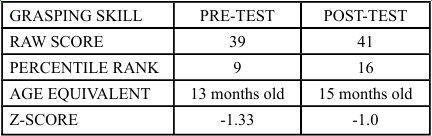
Table 1. Comparison of pretest and posttest values on grasping component of Peabody Developmental Motor Scale-2nd Ed. (PDMS-2)
Caregiver education and home program implementation were integral components of clinical care. Parents received verbal instruction, written educational materials, and a monitoring log to support appropriate donning and doffing of the wrist-hand orthosis, adherence to the recommended wearing schedule, and observation of skin integrity precautions. Ongoing caregiver discussions during occupational therapy sessions provided opportunities to monitor implementation, gather caregiver observations, and address barriers to home program follow-through. Caregivers were encouraged to have the child wear the orthosis for approximately four hours daily during functional activities that promoted active hand use.
Several practical challenges emerged during the course of care. During the third week, the child experienced illness, resulting in a missed therapy session and temporary disruption of the home program routine. Caregivers also described occasional behavioral resistance to orthotic wear and difficulty maintaining the recommended schedule because of changes in family routine associated with the illness. Despite these challenges, caregivers reported overall consistency with orthotic use and participation in recommended home-based motor control activities. Parents also noted that repeated opportunities to practice donning and doffing the orthosis during therapy visits improved their confidence and consistency in carrying out the intervention at home.
To systematically describe the intervention, a clinical treatment specification protocol was also developed using RTSS framework [12]. OT treatment components, therapeutic targets, proposed mechanisms of action, and active intervention variables associated with the use of the static wrist-hand orthosis to support grasping and upper extremity hand function in a child with hemiplegic CP were described. The RTSS framework provided a structured approach for documenting intervention delivery and enhancing treatment specificity within pediatric OT clinical practice (see Table 2).
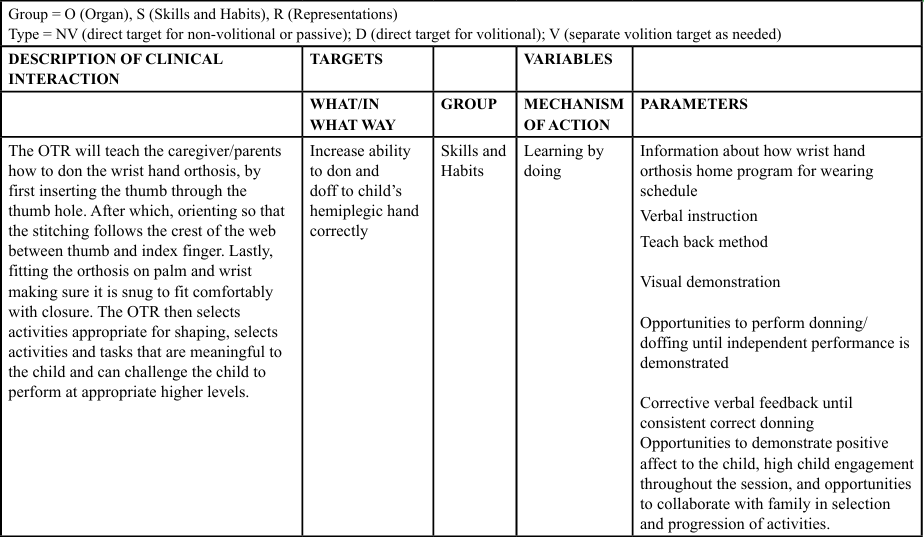
Table 2. Rehabilitation Treatment Specification System (RTSS) to describe an Example of Fine Motor Training to Hemiplegic hand
Discussions
This case report illustrates the feasibility of incorporating a static wrist-hand orthosis as part of OT management for a child with hemiplegic cerebral palsy. Over the course of four weeks of OT sessions, improvements in grasping performance were observed, including increases in raw score, percentile rank, and age-equivalent performance on the Peabody Developmental Motor Scales–Second Edition [15]. Caregiver observations also suggested increased opportunities for functional use of the affected hand during daily activities, along with improved confidence in implementing recommended home strategies.
Observations from the case report are consistent with prior literature supporting orthotic intervention for improving hand function in children with CP. Ten Berge et al. [8] reported positive effects of thumb splint use on hand function in children with unilateral hand impairments with some benefits maintained following orthotic treatment regimen. Similarly, Goodman and Bazyk [9] described improvements in active thumb range of motion, grip strength, pinch strength, and grasp quality following short thumb opponens splint use in a child with CP. Jackman et al. [10] further highlighted the role of hand splinting protocols combined with task-specific training in pediatric upper extremity rehabilitation. In the present case, the integration of structured OT therapeutic activities, caregiver education, and repeated opportunities for functional hand use may have contributed to the observed clinical progress.
An important contribution to this case report is the clinical application of the Rehabilitation Treatment Specification System (RTSS) to guide treatment planning and documentation. RTSS provided a structured framework for identifying treatment components, therapeutic targets, proposed mechanisms of action, and active intervention ingredients associated with orthotic use and OT intervention. This framework has the potential to improve clarity, consistency, and treatment specification in rehabilitation practice; however, RTSS does not prescribe a standardized methodology for identifying treatment targets and intervention ingredients, requiring clinicians to rely on treatment theory and professional clinical reasoning [16].
Limitations
Several limitations are acknowledged. As a single clinical case report, observations are specific to this individual and limited generalizability to broader populations. Changes in clinical presentation may also have been influenced by factors beyond orthotic use, including concurrent OT intervention, caregiver implementation, developmental progression, temporary disruptions in routine care caused by illness and missed therapy attendance. In addition, the treatment specifications developed using the RTSS framework were not formally validated, limiting broader applicability of the identified targets and intervention variables. Future clinical scholarship may benefit from expert consensus approaches, such as Delphi methodology, to refine and establish content validity for RTSS-informed treatment specifications in pediatric rehabilitation. Despite these limitations, this case provides practical clinical insight into both the implementation of orthotic intervention and the applicability of RTSS within pediatric OT practice in promoting consistent and accurate language in documentation.
Conclusion
This case report describes the use of routine clinical measures and the RTSS framework to document the application of static wrist-hand orthosis within pediatric OT care. Clinical observations suggest that wrist-hand orthotic use, when integrated with OT therapeutic interventions, caregiver education, and home program implementation, may support improvements in grasping performance and functional hand use in children with CP. In addition, RTSS demonstrated potential as a useful framework for enhancing treatment specificity, clinical reasoning, and rehabilitation documentation in pediatric practice. Further practice-based scholarships and larger practice-based investigations may help strengthen the evidence for orthotic interventions and RTSS informed rehabilitation planning.
Funding statement
This work was not supported by any funding agency nor grants.
Conflicts of Interest:
The author reports there are no competing interests to declare.
Disclaimer/Publisher’s Note:
Written informed consent for publication was obtained from the participant’s parent/guardian, and identifying details were modified to preserve participant anonymity
References
Bax, M. (2005). Proposed definition and classification of cerebral palsy. Developmental Medicine and Child Neurology, 47, 571–576. View
Colver, A. F., & Sethumadhavan, T. (2003). The term diplegia should be abandoned. Archives of Disease in Childhood, 88, 286–290. View
Exner, C. E., & Henderson, A. (2025). Pediatric hand therapy. In J. C. O’Brien & H. Kuhaneck (Eds.), Case-Smith’s occupational therapy for children and adolescents (9th ed., pp. 455–476). Elsevier. View
Fedrizzi, E., Pagliano, E., & Andreucci, E. (2003). Hand function in children with hemiplegic cerebral palsy: Prospective follow up and functional outcome in adolescence. Developmental Medicine and Child Neurology, 45, 85–91. View
Deluca, S. C., Echols, K., Law, C. R., & Ramey, S. L. (2006). Intensive pediatric constraint-induced therapy for children with cerebral palsy: Randomized, controlled, crossover trial. Journal of Child Neurology, 21, 931–938. View
Taub, E., Ramey, S. L., DeLuca, S., & Echols, K. (2004). Efficacy of constraint-induced movement therapy for children with cerebral palsy with asymmetric motor impairment. Pediatrics, 113, 305–312. View
Rameckers, E. A., Janssen-Potten, Y. J., Essers, I. M., & Smeets, R. J. (2015). Efficacy of upper limb strengthening in children with Cerebral Palsy: A critical review. Research in developmental disabilities, 36C, 87–101. View
Ten Berge, S., Boonstra, A., Dijkstra, P., Hadders-Algra, M., Haga, N., & Maathuis, C. (2011). A systematic evaluation of the effect of thumb opponens splints on hand function in children with unilateral spastic cerebral palsy. Clinical Rehabilitation, 26 (4), 362-371. View
Goodman, G., & Bazyk, S. (1991). The effects of a short thumb opponens splint on hand function in cerebral palsy: A single subject study. American Journal of Occupational Therapy, 45(8),726-731. View
Jackman, M., Novak, I., & Lannin, N. (2014). Effectiveness of functional hand splinting and the cognitive orientation to occupational performance (CO-OP) approach in children with cerebral palsy and brain injury: Two randomized controlled trial protocols. BMC Neurology, 14(144), 2-12. View
Hart, T., Dijkers, M. P., Whyte, J., Turkstra, L. S., Zanca, J. M., Packel, A., Van Stan, J. H., Ferraro, M., & Chen, C. (2019). A theory-driven system for the specification of rehabilitation treatments. Archives of Physical Medicine and Rehabilitation, 100(1), 172-180. View
Van Stan, J. H., Dijkers, M. P., Whyte, J., Hart, T., Turkstra, L. S., Zanca, J. M., & Chen, C. (2019). The Rehabilitation Treatment Specification System: Implications for Improvements in Research Design, Reporting, Replication, and Synthesis. Archives of physical medicine and rehabilitation, 100(1), 146- 155. View
Fasoli, S. E., Ferraro, M. K., & Lin, S. H. (2019). Occupational Therapy Can Benefit From an Interprofessional Rehabilitation Treatment Specification System. The American journal of occupational therapy : official publication of the American Occupational Therapy Association, 73(2), 7302347010p1- 7302347010p6. View
Katz, L. W., Asiello, J. D., Packel, A., Gopaul, U., Levine, H. G., Fasoli, S. E., Sisto, S. A., Zafron, M. L., & Tierney-Hendricks, C. (2025). Applying the Rehabilitation Treatment Specification System in Rehabilitation: A Scoping Review. Archives of physical medicine and rehabilitation, S0003-9993(25)01102 5. Advance online publication. View
Folio, M. R., & Fewell, R. R. (2000). Peabody developmental motor scales (2nd ed.). PRO-ED. View
Van Stan, J. H., Whyte, J., Duffy, J. R., Barkmeier-Kraemer, J. M., Doyle, P. B., Gherson, S., Kelchner, L., Muise, J., Petty, B., Roy, N., Stemple, J., Thibeault, S., & Tolejano, C. J. (2021). Rehabilitation Treatment Specification System: Methodology to Identify and Describe Unique Targets and Ingredients. Archives of physical medicine and rehabilitation, 102(3), 521–531. View