
- About the Journal
- Editorial Board
- Review Process
- Author Guidelines
- Article Processing Charges
- Special Issues
- Current Issue
- Past Issue
 Journal of Rehabilitation Practices and Research
Journal of Rehabilitation Practices and Research Volume 7 (2026), Article ID: JRPR-211
https://doi.org/10.33790/jrpr1100211Research Article
Psychological Quality of Life in Women College Students with Disabilities: A Mixed-Methods Study
Heekyung Lee1*, Jeoung Min Lee2, Jaegoo Lee3, Jarhed Peña4
1School of Psychological and Behavioral Sciences, Southern Illinois University, Carbondale, IL, United States.
2School of Education, Social Work, and Psychological Sciences, University of Missouri-Kansas City, Kansas City, MO, United States.
3School of Social Work, Jackson State University, Jackson, MS, United States.
4Recovery and Balance, Atlanta, GA, United States.
Corresponding Author Details: Heekyung Lee, Assistant Professor, School of Psychological and Behavioral Sciences, Southern Illinois University, Carbondale, IL, United States.
Received date: 02nd June, 2026
Accepted date: 01st August, 2026
Published date: 03rd August, 2026
Citation: Lee, H., Lee, J. M., Lee, J-G., & Peña, J., (2026). Psychological Quality of Life in Women College Students with Disabilities: A Mixed-Methods Study. J Rehab Pract Res, 7(2):211.
Copyright: ©2026, This is an open-access article distributed under the terms of the Creative Commons Attribution License 4.0, which permits unrestricted use, distribution, and reproduction in any medium, provided the original author and source are credited.
Abstract
Psychological quality of Life (QoL) refers to an individual's subjective evaluation of their mental well-being, emotions, and life satisfaction. Students with disabilities (SWDs), especially women college SWDs, often experience lower QoL compared to their nondisabled peers due to social, environmental, and structural barriers. Hence, little research has examined psychological QoL in them owing to their multiple marginalized identities. A convergent mixed-methods design was used to collect information about psychological vulnerability, behavioral disengagement, quality of life, life stress, and coping mechanisms of women college SWDs. A total of 104 women college students with disabilities (M = 22.35, SD = 5.69), drawn from a larger survey of 155 students, participated in this study. Due to missing data, the final mediation model was analyzed using a subsample of 97 participants and 99 participants responded to the qualitative questions. Quantitative results found that while higher psychosocial vulnerability was directly related to lower psychological QoL (b = –.33, SE = 0.08, 95% BCa CI [–.485, –.170]) and higher psychosocial vulnerability was indirectly related to lower psychological QoL through behavioral disengagement (b = –.20, SE = 0.05, 95% BCa CI [–.317, –.106]), after adjusting for covariates. Qualitative results found that the general life stress that participants experienced has an influence on the poor quality of life. As psychological vulnerability/stress impacts psychological QoL for women college SWDs, both individual and systematic levels of support are needed for better psychological QoL in women college SWDs.
Keywords: Women, College Students, Disabilities, Stress, Quality of Life
Introduction
Quality of life (QoL) refers to an individual’s overall well-being and satisfaction with life in multiple domains, including physical, psychological, social, and environmental functioning [1]. Psychological QoL is an individual's subjective evaluation of their mental well-being, emotions, and life satisfaction. QoL is a critical component in rehabilitation counseling as disability services are intended to improve not only functional abilities but also for individuals’ social participation and overall life satisfaction. Especially during global crises such as the Great Recession (2007 to 2009) and COVID-19, QoL, particularly psychological QoL, in persons with disabilities was significantly compromised by increased economic hardship, social isolation, and poor access to essential services [2,3]. Although the absolute number of persons with disabilities has increased over time, they still face significant barriers in social, civic, and employment participation, which further impact on their QoL [4]. Particularly, those individuals who transition to post-secondary education experience unique systemic barriers that worsen the equal participation and inclusion in higher education [5]. Furthermore, those women college students with disabilities (SWDs) encounter compounded barriers that research has not dived into deep yet.
In the U.S., approximately 37% of college students reported having some types of disabilities. Of them, 21.9% identified themselves as women, representing roughly one-fifth of the disability group enrolled in college [6]. When 1 out of every 2 persons with disabilities is a woman in the general population, the number of women college SWDs shows a disproportionate underrepresentation, which remains a concern in various areas [7]. Extant research found that college SWDs experience unique challenges in everyday life, including, but are not limited to, the experience of alienation and discrimination from their peers, a non-accepting culture from their fellow students, a lack of support and awareness from academic staff, mental health crisis, social relationships, and poor academic performance [8,9]. These everyday barriers are further related to their dissatisfaction in lives [10,11].
Despite the amount of disability studies, only a handful of research pays attention to distinct obstacles that women college SWDs experience. A study done by Leon-Larios et al. [12] posited that being a woman in the disability group adds another layer of complexity owing to the patriarchal social framework. Kim and Rhinehart [13] found women college SWDs are at higher risk for mental health conditions due to multiple marginalized identities. Likewise, women college SWDs may experience additional challenges because gender-related vulnerabilities in the patriarchal society intersect with disability-related barriers, which contribute to increased psychological distress, social exclusion, and limited access to institutional support [14]. In addition, research that solely focuses on multifaceted obstacles experienced by women college SWDs needs to be further examined as these barriers may lead to detrimental outcomes in social participation and QoL.
Relationship between Psychological Psychological Quality of Life (QoL)
The impact of psychological vulnerability on women college SWDs’ psychological QoL has not been widely discussed, as scant research has focused on women with disabilities [15]. To the authors’ knowledge, none of the current literature distinguishes men and women college students separately. Research has found that college SWDs are at heightened risk for diminished QoL [16,17] primarily due to psychological vulnerability, defined as susceptibility to stress and related difficulties [18]. This vulnerability directly contributes to emotional problems and reduced QoL [19]. For example, academic and personal barriers, including course difficulties, the need for accommodations, and navigating systems not designed for their needs, further elevate stress and generate negative moods that undermine QoL [20,21]. Moreover, literature has revealed that psychological vulnerability is associated with adverse mental health outcomes and social engagement [22,23].
The Indirect Effect of Behavioral Disengagement
Behavioral disengagement, a maladaptive coping strategy characterized by reduced effort to address stressors or the avoidance of affective distress [24], is strongly associated with lower QoL [25] and has been identified as a mediating factor [26]. For example, a quantitative study of 211 Indonesian college students found that dysfunctional coping strategies, including behavioral disengagement and denial, significantly predicted declines in women students’ psychological well-being [26]. Similarly, a study of 418 Turkish young adults (ages 18-35) reported that psychological vulnerability significantly predicted emotional problems and suicidal cognitions while negatively predicting QoL; emotional problems, in turn, mediated the relationships among psychological vulnerability, suicidal cognitions, and QoL [27]. These findings, however, have not examined the psychological QoL in women college SWDs nor the role of behavioral disengagement in diminishing QoL. In addition, prior studies have linked psychological vulnerability to reduced psychological QoL; however, the mechanisms underlying this relationship in this population remain unclear. Clarifying these processes is critical to guide the development of clinical interventions targeting underlying vulnerabilities and maladaptive coping strategies.
Theoretical Framework
The current research was developed guided by the social model of disability [28] that disabilities arise not solely from an individual's impairment but from social and environmental barriers that restrict participation and inclusion in society. Considering being a woman is another social barrier that persons with disabilities experience within the disability society [29], women with disabilities already face unique forms of discrimination coming from the combination of sexism and ableism. Adding to this, the current research employed the stress-vulnerability model [30] that was originally developed for a better understanding of schizophrenia, as the occurrence of schizophrenia spectrum disorders is related to the combination of biological, psychological, and social factors. Zubin and Spring [30] posit that each individual possesses a genetic predisposition to stress, which leads to unique psychological vulnerability in them. This vulnerability further interacts with psychosocial stressors and influences the individual’s well-being and mental health. Protective factors such as social support, adaptive coping skills, and stress management can buffer against the occurrence or relapse of mental illness. That is, the stress-vulnerability model views that individuals’ QoL is impacted by the interaction between their unique vulnerability and psychosocial factors. This entails that understanding protective factors and risk factors in individuals is critical, as they can enhance or diminish the QoL in individuals. Exploring stress (i.e., psychological vulnerability) and coping skills (i.e., behavioral disengagement) among women college SWDs is essential as they interrelate with each other; and these variables create roadblocks for their women students’ social success that impact psychological QoL.
To the authors’ knowledge, the current study is the first mixed methods research examining the relationship between psychological vulnerability, behavioral disengagement, and psychological QoL in women college SWDs. As they are underrepresented and marginalized in the disability society due to the preexisting gender inequalities [31], it is critical to address and shed light on their voice. Thus, by integrating quantitative and qualitative approaches, this study offers a more comprehensive understanding of psychological quality of life under these circumstances. In this sense, the purpose of the current study was to examine the effect of women college SWDs’ psychosocial vulnerability on psychological QoL through the role of behavioral disengagement, and also to describe how stress impacts their psychological QoL. Accordingly, the research questions are:
1. To what extent does psychological vulnerability indirectly influence the psychological quality of life through behavioral disengagement among women college students with disabilities?
Hypothesis 1) Psychological vulnerability will be negatively associated with psychological quality of life among women college students with disabilities.
Hypothesis 2) Women college students with disabilities who report higher levels of psychological vulnerability will report higher levels of behavioral disengagement, which will be associated with lower levels of psychological quality of life.
2. How does life stress influence the quality of life of women college students with disabilities, and how do they manage their stress?
3. How do the lived experiences of quality of life among women college students with disabilities help explain the relationship between psychological vulnerability, behavioral disengagement, and psychological quality of life?
Materials and Methods
Study Design
A convergent mixed-methods design [32] was employed with the goal of gaining knowledge about the relationship between stress, coping mechanism, and QoL in women college SWDs. This study design was chosen to allow a complete understanding of the identified problem through both quantitative and qualitative data to inform [32]. Thus, two data sources were used in this research: (1) closed-ended survey questions and (2) free-response open-ended questions. Both data were collected concurrently through Qualtrics. The open-ended questions were developed based on the study purpose and research questions to capture the participants’ lived experiences, perceptions, and challenges related to their QoL. The research team reviewed and refined the questions to ensure clarity and relevance with the study objectives.
Quantitative Study Measures
Psychological quality of life. Psychological quality of life was measured using only the six items from the psychological domain of the World Health Organization Quality of Life-BREF [1]. The WHOQOL-BREF includes four domains—physical health, psychological, social relationships, and environment—comprising a total of 26 items. These items are rated on a 5-point Likert scale ranging from 1 (Not at all) to 5 (An extreme amount). Example items include: “How much do you enjoy life?”, “To what extent do you feel your life to be meaningful?”, and “How well are you able to concentrate?” The WHOQOL-BREF has been widely used to assess individuals’ health across the world, particularly in the medical field [33,34]. In the current sample, Cronbach’s alpha for this scale was .81.
Psychological vulnerability. Psychological vulnerability was measured using seven items adapted from the Perceived Stress Scale—Revised [18]. The PSS-R was originally developed in a study examining psychological vulnerability among older African Americans [35]. Example items include: “How often have you been upset because of something that happened unexpectedly?”, “How often have you felt that you were unable to control the important things in your life?”, and “How often have you felt nervous and stressed?” Responses were recorded on a five-point Likert scale ranging from 0 (Never) to 4 (Very often). In the current sample, Cronbach’s alpha for this scale was .75.
Behavioral disengagement. Behavioral disengagement was measured using two items adapted from the Brief COPE Inventory [36], which includes both avoidant and approach coping styles [37]. The two items used in this study belong to the avoidant coping style. These items were: “I've been giving up trying to deal with it” and “I've been giving up the attempt to cope.” Responses were measured on a four-point Likert scale ranging from 1 (I haven't been doing this at all) to 4 (I've been doing this a lot). The Spearman-Brown reliability coefficient for this measure was .55; however, lower internal consistency is typical and expected for two-item scales [38]. The Brief COPE Inventory has been widely used as a measure of coping [39].
Covariates. The covariates included age, job status (i.e., employed vs. unemployed), and race (coded as White = 1, Others = 0). Due to the small number of participants identifying as Black, American Indian, Alaska Native or First Nation, Mixed race, Hispanic or Latinx, and other racial/ethnic groups (n = 15), these categories were combined into a single “Other” group.
Qualitative Study Responses
The survey also included five open-ended questions to further explore participants’ QoL. We asked: (a) How stressful is your life in general?, (b) What is the most stressful thing?, (c) Considering the most stressful thing you listed above, how does it affect your physical health, psychological well-being, social well-being, and ability to navigate your environment?, (d) How do you manage or cope with the stressful things that are most stressful?, and (e) Are there any specific support you feel you would have wanted to have to help you cope?
Procedure and Participants
After the IRB approval, participants were recruited from the Michigan affiliate of the Association on Higher Education And Disability (MI-AHEAD) Listserv. The survey was conducted using Qualtrics, and participation was voluntary. Because recruitment was limited to this single regional listserv, the sample primarily represents students within the state of Michigan. The first 100 participants who completed the survey received a $20 Amazon e-gift card. The inclusion criteria were: (1) college students aged 18 or older diagnosed with any type of disabilities and (2) currently enrolled in college (i.e., community colleges, 4-year colleges, and graduate schools) and taking credits. A total of 155 college SWDs (Mage = 22.5, SD = 5.19) responded to the survey that we recruited from Listserv during April to September 2020. Among them, 104 participants were identified as women (Mage = 22.35, SD = 5.69).
Data Analysis
Quantitative Analysis
To describe the characteristics and correlations of the variables, descriptive statistics and correlation analyses were conducted. To examine an indirect relationship, the PROCESS macro version 8 [40] in SPSS 29 was employed. All variables were normally distributed, as skewness and kurtosis values were close to zero, and the Variance Inflation Factors (VIFs) confirmed the absence of multicollinearity [41]. Additionally, a bootstrap analysis with 5,000 resamples was conducted to determine the significance of the indirect effects, using 95% confidence intervals [42]. While the total descriptive sample consisted of 104 participants, seven cases were excluded from the mediation analysis due to missing data on the primary study variables (final analyzed n = 97).
Qualitative Content Analysis
Of 104 women participants, a total of 99 responded to the open ended questions. We employed content analysis for qualitative data analysis. Qualitative content analysis [43] is a systematic method for describing the meaning of qualitative data by reducing them to categories that capture the themes. In doing so, we followed inductive content analysis: preparation, organizing, and reporting [44]. Throughout the stages, the first and the third authors conducted coding processes and used consensus as a critical data analysis strategy with multiple working meetings. First, both authors read through all the responses separately multiple times to familiarize themselves with the data. Second, during the organizing phase, recurring content patterns were identified and labeled with preliminary codes. After each round, both authors discussed the coding until they reached consensus regarding the selected units of meaning and the codes to create an initial coding framework. Then, the coded segments were grouped into categories and sub-categories by both authors and the coding framework was further revised. Next, both authors proceeded with coding the entire dataset, followed by the revised coding framework. To enhance trustworthiness, we utilized investigator triangulation, peer debriefing, and external auditor [32]. Additionally, the Consolidated Criteria for Reporting Qualitative Research (COREQ) checklist was utilized to ensure reporting of the research [45].
Results
Quantitative Results
Descriptive statistics and correlation coefficients for the study variables are presented in Table 1.
The mean score for psychological QoL was 17.31 (SD = 4.25), for psychological vulnerability 26.43 (SD = 4.52), for behavioral disengagement 3.54 (SD = 1.73), and for age 22.35 (SD = 5.69). Additionally, 38 (36.5%) women college SWDs reported having a job, and 85 (81.7%) identified as White. Psychological QoL was negatively correlated with both psychological vulnerability and behavioral disengagement. However, White identity was positively correlated with psychological QoL. All variables were significantly correlated, with correlation coefficients (r) ranging from −.64 to .49. Based on the R² value, 51% of the variance in psychological QoL was explained by the combined direct and indirect effects of psychological vulnerability and behavioral disengagement. Figure 1 illustrates the conceptual model of this study and the direct effect values.
Table 2 presents the results of the estimated indirect effect of psychological vulnerability on psychological QoL via behavioral disengagement.
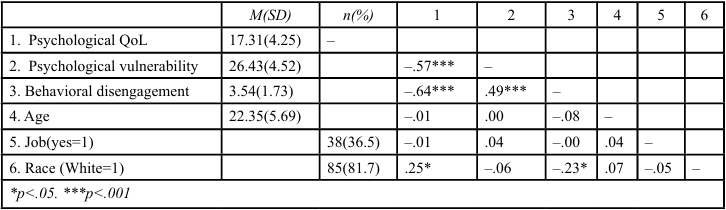
Table 1. Descriptive Statistics and Correlations among the Study Variables
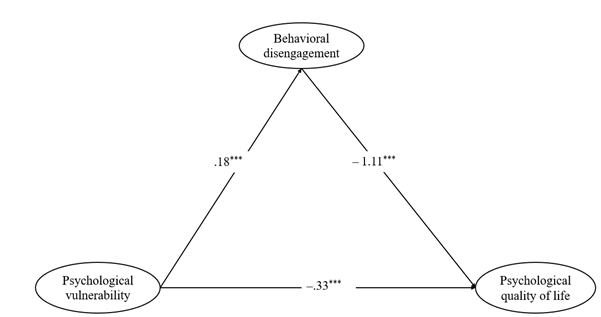
Figure 1. Direct effects among study variables. Values on paths represent unstandardized regression coefficients (B). The larger coefficient (−1.11) reflects scale variance differences of the 2-item behavioral disengagement subscale relative to the multi-item psychological quality of life measure (N = 97).
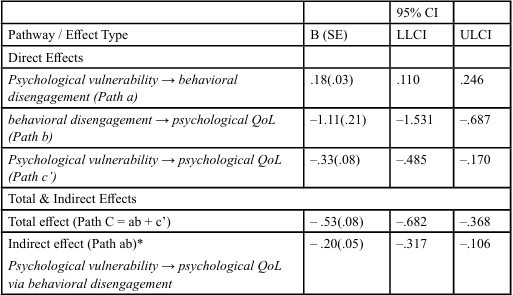
Table 2. The Direct and Indirect Effects of Psychological Vulnerability on Psychological Quality of Life via Behavioral Disengagement
The results indicate that psychological vulnerability was negatively associated with psychological QoL (c′: b = –.33, SE = .08, 95% BCa CI [–.485, –.170]). The indirect effect of psychological vulnerability on psychological QoL through behavioral disengagement was also significant (ab: b = –.20, SE = .05, 95% BCa CI [–.317, –.106]), after controlling for covariate variables.
Qualitative Results
Four themes were developed from the content analysis of open- ended survey responses: too many roles to play, multiple stressors, manifestation of disability in daily life, and academic pressure.
Too Many Roles to Play
Many participants in the current study were overwhelmed because of the various roles (e.g., mother, wife, employee) that they had to play as college students. These roles created a significant amount of pressure, which led to poor psychological quality of life. Specifically, participant 7 described experiencing significant pressure “wearing all of those hats,” which led to feeling depressed and reduced psychological well-being. She said:
Extremely stressful. I am a mother, wife, and full-time student, and amid COVID-19, I am wearing all of those hats at once, and it is hard. Sometimes I leave the house with nowhere to go because I am so overwhelmed. At least two weeks out of the month, I am at my lowest with depression. I get so emotional but so void with others. I feel as though I cannot make a single good decision during times like these.
Participant 27 also expressed that the burden she feels from all the responsibilities that she has to take part in life worsened her well being. She mentioned:
I feel stressed all the time. The burden of my responsibilities that I do and do not partake in, weigh heavy on me every day. They have prevented me from sleeping at night and have made my weight fluctuate because I emotionally eat. I feel that I'm not good enough. I question if I can't get a job now, how will my degree change that?
Likewise, the authors noted numerous roles that the women SWDs played in life built more psychological vulnerability and diminished psychological well-being accordingly. Due to the intersectional identities as a woman, a person with disability, a college student, and a member of the subgroups that they belong to, women SWDs were observed to have more psychological burdens and responsibilities in their lives, which influenced psychological QoL.
Multiple Stressors
Participants’ psychological vulnerability came from the combination of multiple stressors, including, but not limited to, academic burden, family relationships, health issues, financial strain, etc. These combinations of multiple stressors exacerbated their psychological well-being. Participants frequently cited family relationships as a source of ongoing stress, health and mental health as continuous barriers, and traumatic life events shaped their current stress. Also, several respondents described struggling to make ends meet, which was compounded by other stressors they already faced. Participant 4 said:
Currently, I have been trying to find answers to health problems I have had for years, which is very stressful. I have had 2 surgeries on my sinuses in the past year and an upcoming one on my kidney stones. My life at home is very stressful, and the relationship I have with my family is not very good. My physical health puts a strain on my mental health since I have to cope with not knowing answers on top of my depression, anxiety, ADHD, and PTSD.
Participant 54 mentioned:
Pretty stressful between balancing a relationship where we [my partner and I] are both depressive/anxious people with his teenage kids, and school and work. School is terrible. Grades freak me out and make me feel s*** about myself. Injures self- esteem, injures morale.
A handful of participants further described how they coped with their current stress. We identified that those individuals who had multiple stressors tend to use behavioral disengagement patterns (e.g., avoidance and giving up) as their coping mechanism. Participant 11 struggles with a combination of financial strain, education, and work. She demonstrated “unhealthy” coping mechanisms to overcome her stress. She mentioned:
I am a low-middle-class white girl who has a part-time job and goes to school part-time. I have a few good close friends and smoke a lot of weed to cope with my everyday stress. Although I have an anxiety disorder so that is where most of my stress comes from. I hate being poor it f*** sucks because I want that new shirt and want to travel and be able to afford an education and not have to live paycheck to paycheck and drown in student loan debt. It makes me sad, and like I will never be able to catch up with those who are blessed with options and privilege. I smoke a lot of weed, I drink… just overall just try to forget that I will suffer in the real world with no money.
Participant 28 also added her pattern of behavioral disengagement to deal with her stress coming from various sources. She said:
Generally, I have a lot on my plate. It is not impossible to manage but along with my Generalized Anxiety Disorder and Depression, that amplifies it. I work full-time, am taking classes, and struggle to make ends meet. It is a big anxiety trigger and can lead to spiraling anxious thoughts when I feel like my academic duties are too overwhelming. Usually avoidance. I am really good at procrastinating when I feel overwhelmed although it often leads to exacerbating my to-do list and anxiety.
Many of the women SWDs appeared to be overwhelmed by various stressors that decrease their psychological QoL. In addition, their common coping mechanism (i.e. behavioral disengagement) does not ameliorate their situation, rather it seems ineffective to deal with their stress.
Manifestation of Disability in Daily Life
The current study participants mentioned that their stress was often amplified by the manifestation of their disability. The respondents highlighted how overthinking and constant worry about their disability contributed to feeling overwhelmed and remained as a daily challenge for them. Participant 22 experienced difficulties with her disability conditions. She mentioned:
Since starting college, I have had 5 feeding tubes placed in the span of three years. I lost over 80 pounds and was unable to eat or drink by myself. I started student teaching and had stress about carrying around a feeding tube on top of my backpack around campus and the schools I worked in. I had to constantly worry about something happening to my tubes and what people think. I constantly worry about people staring at me and thinking negatively about me because I’m connected to all these tubes. It makes me stressed that I won't be able to teach special education like I am dreaming of.
Participant 39 also struggles with her disability manifestation coming from the clinical characteristics of her disability condition.
I get anxious very easily and with my Aspergers. It is hard to handle when my schedule unexpectedly changes at times. I have many people that misunderstand me and it is rough when I get accused of things that I didn’t do at work when I have done my job properly. It’s hard and very stressful. I feel useless. I cry and break down. I shut down a lot because the tension triggers my PTSD. I feel like I am stupid and worth nothing because of what I am often accused of.
Participants experienced enormous amounts of psychological pressure owing to their disability manifestation as evidenced by being cautious about how their disability may appear to other people. Furthermore, due to little awareness of disability in the general public, the present study participants experienced barriers in life, which affected their psychological QoL eventually.
Academic Pressure
The participants described that heavy academic workloads, the demands of graduate school, and the uncertainty of future plans became their stress. The participants noticed that the academic pressure they experienced created anxiety and left them feeling "small and stupid.”
Participant 13 mentioned that academic burden is the main source that made her in lower psychological QoL. She said, “The stress in my life comes from schoolwork and anticipating the future as I apply to graduate programs. It makes me anxious and sometimes depressed.” In addition, participant 49 stated that college was very stressful as there is so much work to do, which seems beyond her capacity. She said:
College was very stressful. A constant, never ending to do list. I always feel like I’m not doing enough. Like my existence is not sufficient. I must work myself to the bone to make society happy. It makes me feel small and stupid.
As noted by these participants, college was one of the leading causes of their psychological vulnerability, and this decreased their psychological QoL. This finding is prevalent among all participants.
Integrated Results
In order to address research question three, we merged the quantitative and qualitative data sets using a weaving approach [46].
Table 3. Joint Display of Quantitative, Qualitative, and Mixed Methods Meta-Inferences
The quantitative findings indicated that psychological vulnerability has a significant direct effect on psychological QoL; and psychological vulnerability also has a significant indirect effect on psychological QoL through behavioral disengagement, which is associated with lower levels of psychological QoL. The qualitative findings supported and expanded our quantitative results. Participants in the current study were under severe stress coming from various roles to play, multiple stressors, disability itself, and academic pressure, which seemed to be associated with lower psychological QoL. Together, the quantitative and qualitative findings suggest that high psychological vulnerability is related to lower psychological QoL. Also, poor coping skills (i.e., behavioral disengagement) are associated with lower psychological QoL. Thus, it is critical to pay attention to individuals’ coping skills to support psychological QoL.
Discussion
College SWDs experience various challenges in higher education, and these barriers can significantly impact their ability to manage academic and daily life tasks. Women college SWDs, especially, encounter unique obstacles in their lives as being an individual with double minority status. Based on the perspectives of the intersectionality and the stress-vulnerability model, we found that high psychological vulnerability is positively associated with higher levels of behavioral disengagement, which in turn is associated with lower levels of psychological QoL. Also, the current research participants frequently reported maladaptive coping mechanisms such as avoidance and abstention as their stress management methods.
Regarding the direct effect, the present study showed that psychological vulnerability was negatively associated with psychological QoL. This result aligns with prior research by Smedema et al. [47], which identified stress as a significant predictor of lower psychological QoL among SWDs. More recent studies also support the current study finding that psychological vulnerability (e.g., anxiety, depression, and stress) is negatively associated with psychological QoL in SWDs [48,49]. Women college SWDs often experience unique psychological vulnerabilities due to a combination of social, academic, environmental, and personal factors. In addition, due to the multiple intersecting stressors (e.g., stigma, systemic barriers, self-advocacy fatigue, and internalized pressure) along with intersecting identities (i.e., women, SWD, mother, wife), they are more likely to encounter lower psychological QoL. As psychological vulnerability is relatively unmodifiable—given individual differences in stress responses—the most effective approach to supporting women SWDs involves creating environments that minimize stress exposure and foster supportive conditions to prevent declines in psychological QoL.
Regarding the indirect effect, the current research indicated the mediating role of behavioral disengagement on the association between psychological vulnerability and psychological QoL. This finding is similar to existing research that behavioral disengagement was related to declines in women students’ psychological well being [26], was linked to poor QoL in individuals with multiple sclerosis [50], and has shown as a mediator between social media use and psychological distress in college students [51]. Behavioral disengagement is one of maladaptive coping strategies that individuals utilize to manage stress. Research has found that SWDs are more likely to operate maladaptive coping mechanisms because of a lack of skill, higher risk for social-emotional difficulties, less accommodating environments, fewer supports, and greater emotional burdens [52]. All these combine to increase the likelihood that they rely on maladaptive coping strategies rather than adaptive coping mechanisms. Although the extant research has not specifically demonstrated the indirect effect of behavioral disengagement in women college SWDs, the current study seeks to help bridge the importance of utilizing adaptive coping skills to achieve a better psychological QoL. This finding highlights the importance of providing support services for women college SWDs that focus on developing adaptive coping mechanisms at the institutional level as coping mechanisms help college students manage their stress and challenges, which are further related not only for academic success but also for overall QoL in them, including psychological QoL.
The qualitative findings implied our study participants are at high stress levels, have poor psychological QoL, and frequently utilize maladaptive coping skills. These findings are consistent with the stress-vulnerability theory [30] that heightened psychological vulnerability interacting with environmental stressors (i.e., college, limited disability support, multiple life responsibilities) contributes to diminished well-being. In addition, the maladaptive coping strategies (i.e., avoidant, substance abuse, excessive sleep) that participants indicated in our study are shared by existing research that college SWDs tend to employ maladaptive coping strategies, including avoidant behaviors [53,54]. These findings are noteworthy as the intersecting identities that women college SWDs have worsened their access to available services [55] and might be associated with repetitive use of the current maladaptive coping skills that they retain. This would further perpetuate injustice and exclusion in the under-served population unless they address the needs and necessity of resolution.
Though the direct effect highlights the role of psychological vulnerability in understanding psychological QoL and our qualitative findings presented poorer psychological QoL among women college SWDs, alternative explanations should also be considered. First, the data were collected during the COVID-19 pandemic, a period when higher education experienced sudden changes in class delivery format, reduced social interaction, and increased uncertainty. These contextual factors may have influenced participants’ perceptions of their quality of life and disability experiences. Second, variations in the severity of disabilities and co-morbidity should also be considered for the psychological QoL. These factors may have also contributed to participants’ lived experience about psychological QoL. Additionally, socioeconomic factors, including access to healthcare and other resources may have shaped participants’ psychological QoL. Future research should examine these factors to better understand the complex interplay of individual, contextual, and systemic influences on psychological QoL among women college SWDs. Our research findings inform us the value of psychosocial aspects in women college SWDs’ lives and higher education’s readiness for providing such support. QoL is an important goal in disability services as it reflects individuals’ overall well-being and social participation. Psychological QoL also needs to be taken into consideration in higher education as college is a transitional time and place for persons with disabilities to be equipped with knowledge, skills, and confidence to participate in society. Furthermore, as stress has a significant impact on psychological QoL and women college SWDs tend to utilize maladaptive coping skills to manage their stress, it is pivotal to understand the relationships among each variable and adequate support from the institutional level.
Limitations and Future Directions
The goal of this research was to explore the effect of psychosocial vulnerability on the psychological QoL among women college SWDs through the mediating role of behavioral disengagement. Although the current study is meaningful, as little research has addressed women SWDs in general, several limitations should be acknowledged. First, the data were collected during the COVID-19 shutdown but did not ask the impact of COVID-19 on psychological QoL directly. Due to COVID-19, participants may experience sudden changes such as stay-at-home orders, unplanned online courses, and limited interpersonal contact. Due to the scarcity of available resources during this period, participants faced additional challenges that may have affected their psychological vulnerability and psychological QoL. Future replication studies are needed to determine whether COVID-19 itself had a strong influence on participants’ stress and psychological QoL and to further explore ways to support women SWDs during unexpected societal disruptions. Second, this study relied heavily on self-report measures, which may be subject to common-method bias, including social desirability and recall bias, potentially influencing the strength of the observed associations. Future research should incorporate multiple methods of assessment, such as behavioral measures, clinician ratings, or reports from significant others to reduce method-related bias.
Additionally, the current study employed cross-sectional design, and only college students from the Midwestern region participated. Given the nature of cross-sectional research, the present findings should be interpreted with caution and cannot be generalized to the entire women with disabilities population. Furthermore, institutional, cultural, and policy in the Midwestern region can be different from other states, which may influence students’ disability experiences and available support. Although disability can pose barriers to daily living, many people with disabilities accept their disability as part of their identity. The purpose of this paper is to highlight how two marginalized identities create additional impediments that warrant tailored, needs-based services rather than treating them as a separate group. Lastly, this study examined disability as a single, broad category rather than distinguishing between specific disability types. As a result, important differences among disability groups may not have been captured. Future research should focus on specific disability categories to provide deeper understanding and insight into the experiences of particular groups.
Conclusion
The present mixed-methods study examined the relationships among psychological vulnerability, behavioral disengagement, and psychological QoL in women college SWDs. Quantitative analyses revealed that greater psychological vulnerability was associated with lower psychological QoL both directly and indirectly through behavioral disengagement. Qualitative findings further contextualized these results, showing that the combined effects of multiple roles, intersecting stressors, disability manifestations, and academic pressures diminished participants’ psychological well being. The nature of mixed-methods study allowed us to integrate quantitative and qualitative findings, providing a more comprehensive understanding of quality of life among women college SWDs, one of the understudied populations. However, the exclusive use of self report measures in both quantitative and qualitative data may have introduced methodological bias including social desirability or recall bias, which may not fully capture the complexity of the participants’ lived experience. Consistent with the stress-vulnerability model, our findings suggest that psychological vulnerability, when intensified by environmental stressors and limited coping resources, undermines life satisfaction. By focusing on women SWDs—an underrepresented and marginalized group—this study underscores the need for institutional direct support while addressing structural inequities. Collaboration among counseling professionals, disability service providers, and higher education administrators is essential to strengthen resilience and reduce maladaptive coping mechanisms on women college SWDs. The current study can provide a foundation for future research examining how adaptive coping interventions and inclusive practices affect psychological QoL. Broadly, the findings emphasize that enhancing psychological QoL requires both individual-level interventions and systemic efforts toward equity and inclusion.
Conflicts of Interest:
The authors declare no conflicts of interest.
References
World Health Organization. (1996). WHOQOL-BREF: Introduction, administration, scoring and generic version of the assessment (Field trial version, December 1996). World Health Organization. View
Croft, S., & Fraser, S. (2022). A Scoping review of barriers and facilitators affecting the lives of people with disabilities during COVID-19. Frontiers in Rehabilitation Sciences, 2(1),1-14. View
Livermore, G. A., & Honeycutt, T. C. (2015). Employment and economic well-being of people with and without disabilities before and after the great recession. Rehabilitation Counseling Bulletin, 59(2), 70–83. View
Houtenville, A., & Bach, S. (2024). Annual report on people with disabilities in America: 2024. University of New Hampshire Institute on Disability. View
Chiu, Y. J., Lee, H., Lu, J., Ntinda, K., Chen, R. K., & Castillo, Y. A. (2025). Integrating technology to support learning and accessibility in counselor education and supervision. In D. Bates & C. Ortega (Eds.), Innovative approaches in counselor education for students with disabilities (pp. 105-140). IGI Global Scientific Publishing. View
Cameron, M., Johnson, R., Lacy, T.A., Wu, J., Siegel, P., Holley, J., & Wine, J. (2023). 2019–20 National postsecondary student aid study (NPSAS:20): First look at student financial aid estimates for 2019–20 (NCES 2023-466). View
Center for Research on Disability. (2024). Annual disability statistics compendium 2024. University of New Hampshire. View
Lett, E., Jackson, R. A., & Galgay, C. (2020). Disability microaggressions in higher education: A qualitative exploration. Journal of College Student Development, 61(4), 481-496.
McLeod, J. D, Meanwell, E., & Hawbaker, A. (2019). The experiences of college students on the autism spectrum: A comparison to their neurotypical peers. Journal of Autism and Developmental Disorders, 49(6), 2320-2336. View
Aliedan, M. M., Elshaer, I. A., Zayed, M. A., Elrayah, M., & Moustafa, M. (2023). Evaluating the role of university disability service support, family support, and friends’ support in predicting the quality of life among disabled students in higher education: Physical self-esteem as a mediator. Journal of Disability Research, 2(3), 48–59. View
Madhesh. (2023). Quality of life of higher education students with disabilities at Shaqra University. Research in Developmental Disabilities, 138(1), 1-13. View
Leon-Larios, F., Benítez-Lugo, M.-L., Almendros-Caballero, C., Meyer, L. S., Corrales-Gutierrez, I., & Casado-Mejía, R. (2024). Bridging gaps, fostering inclusion: A gendered look at disability support for women in higher education. Women, 4(3), 241-253. View
Kim, S. A., & Rhinehart, L. V. (2026). Marginalized identities and intersectionalities that contribute to college students’ mental health challenges and use of psychological services. Journal of Attention Disorders. 30(2). 167-180. View
World Health Organization. (2011). World Report on Disability. Geneva: WHO. View
Sarkar, R. (2023). Exploring challenges of women with disabilities in accessing higher education. Journal of Disability Studies, 9(1), 1-7. View
Lambert, D. C., & Dryer, R. (2018). Quality of life of higher education students with learning disability studying online. International Journal of Disability, Development and Education, 65(4), 393-407. View
Powers, B. M., Patterson, F., Freedman, B., Giancola, S., Pacanowski, C., & Healy, S. (2025). A multiperspectival examination of stress, anxiety, and related coping strategies among college students with intellectual disabilities. Journal of Diversity in Higher Education, 18(1), 586-598. View
Wickrama, K. A. S., Ralston, P. A., O’Neal, C. W., Ilich, J. Z., Harris, C. M., Coccia, C., Young-Clark, I., & Lemacks, J. (2013). Perceived Stress Scale--Revised [Database record]. PsycTESTS. View
Ribeiro, Icaro, J. S., Pereira, R., Freire, I. V., de Oliveira, B. G., Casotti, C. A., & Boery, E. N. (2017). Stress and quality of life among university students: A systematic literature review. Health Professions Education, 4(1), 70-77. View
Metzger, I. W., Blevins, C., Calhoun, C. D., Ritchwood, T. D., Gilmore, A. K., Stewart, R., & Bountress, K. E. (2017). An examination of the impact of maladaptive coping on the association between stressor type and alcohol use in college. Journal of American College Health, 65(8), 534–541. View
Teixeira, R. J., Brandão, T., & Dores, A. R. (2022). Academic stress, coping, emotion regulation, affect and psychosomatic symptoms in higher education. Current Psychology, 41(1), 7618-7627. View
Hong, B. (2015). Qualitative analysis of the barriers college students with disabilities experience in higher education. Journal of College Student Development, 56(3), 209–226. View
Moustafa, M. A., Elshaer, I. A., Aliedan, M. M., Zayed, M. A., & Elrayah, M. (2024). Risk perception of mental health disorders among disabled students and their quality of life: The role of university disability service support. Journal of Disability Research, 3(2). 1-15. View
Hartley, S., & Maclean, W. E. (2008). Copying strategies of adults with mild intellectual disability for stressful social interactions. Journal of Mental Health Research in Intellectual Disabilities, 1(2), 109-127. View
Lone, A., Khan, A. S., AlWadani, F. A. S., & Almaqhawi, A. (2024). Quality of life and coping strategies in children with and without learning disabilities from the perspective of their parents and caregivers. Pediatric Reports, 16(4), 957-973. View
Angelica, K., Sukamto, M. E., Chandra, C. C., & Andrea, K. (2022). Coping strategies to predict the psychological well- being of college students during the COVID-19 pandemic. Humanitas: Indonesian Psychological Journal, 19(2), 148-160. View
Arslan, G., Türk, N., & Kaya, A. (2024). Psychological vulnerability, emotional problems, and quality-of-life: Validation of the brief suicide cognitions scale for Turkish college students. Current Psychology, 43(24), 21009-21018. View
Oliver, M. (2013). The social model of disability: Thirty years on. Disability & Society, 28(7), 1024-1026. View
Garland-Thomson, R. (2002). Integrating disability, transforming feminist theory. NWSA Journal, 14(3), 1–32. View
Zubin, J., & Spring, B. (1977). Vulnerability: A new view of schizophrenia. Journal of Abnormal Psychology. 86(2), 103- 126. View
Mukherjee, S., Rajendra, N. & Dwivedi, P. (2025). Social exclusion and gender inequality faced by students with disabilities during the COVID pandemic. Journal of Social and Economic Development, 27(1), 25–40. View
Creswell, J. W., & Clark, P. V. L. (2025). Designing and conducting mixed methods research (4th ed.). Sage. View
Khafif, T. C., Belizario, G. O., Silva, M., Gomes, B. C., & Lafer, B. (2021). Quality of life and clinical outcomes in bipolar disorder: an 8-year longitudinal study. Journal of Affective Disorders, 278(1), 239-243. View
Wong, F. Y., Yang, L., Yuen, J. W., Chang, K. K., & Wong, F. K. (2018). Assessing quality of life using WHOQOL-BREF: a cross-sectional study on the association between quality of life and neighborhood environmental satisfaction, and the mediating effect of health-related behaviors. BMC Public Health, 18(1), 1-14. View
Wickrama, K. A. S., Ralston, P. A., O’Neal, C. W., Ilich, J. Z., Harris, C. M., Coccia, C., Young-Clark, I., & Lemacks, J. (2012). Linking life dissatisfaction to health behaviors of older African Americans through psychological competency and vulnerability. Research on Aging, 35(5), 591-611. View
Carver, C. S. (1997). You want to measure coping but your protocol’s too long: Consider the brief cope. International Journal of Behavioral Medicine, 4(1), 92-100. View
Eisenberg, S. A., Shen, B. J., Schwarz, E. R., & Mallon, S. (2012). Avoidant coping moderates the association between anxiety and patient-rated physical functioning in heart failure patients. Journal of Behavioral Medicine, 35(3), 253-261. View
Eisinga, R., Grotenhuis, M. T., & Pelzer, B. (2013). The reliability of a two-item scale: Pearson, Cronbach, or Spearman- Brown?. International Journal of Public Health, 58(4), 637- 642. View
Solberg, M. A., Gridley, M. K., & Peters, R. M. (2022). The factor structure of the brief cope: A systematic review. Western Journal of Nursing Research, 44(6), 612-627. View
Hayes, A. F. (2022). Introduction to mediation, moderation, and conditional process analysis: A regression-based approach (3rd ed.). The Guilford Press. View
Keith, T. Z. (2019). Multiple regression and beyond: An introduction to multiple regression and structural equation modeling (3rd ed.). Routledge. View
Hayes, A. F., & Scharkow, M. (2013). The relative trustworthiness of inferential tests of the indirect effect in statistical mediation analysis: Does method really matter? Psychological Science, 24(10), 1918–1927. View
Schreier, M. (2012). Qualitative content analysis in practice. Sage. View
Elo, S., & Kyngäs, H. (2008). The qualitative content analysis process. Journal of Advanced Nursing, 62(1), 107–115. View
Tong, A., Sainsbury, P., & Craig, J. (2007). Consolidated criteria for reporting qualitative research (COREQ): a 32-item checklist for interviews and focus groups. International Journal for Quality in Health Care, 19(6), 349–357. View
Fetters, M., Curry, L., & Creswell, J. (2013). Achieving integration in mixed methods designs: Principles and practices. Health Services Research, 48(6pt2), 2134–2156. View
Smedema, S. M., Chan, F., Yaghmaian, R. A., Cardoso, E. D., Muller, V., Keegan, J., Dutta, A., & Ebener, D. J. (2015). The relationship of core self-evaluations and life satisfaction in college students with disabilities: Evaluation of a mediator model. Journal of Postsecondary Education and Disability, 28(3), 341-358 View
Al-Shaer, E. A., Aliedan, M. M., Zayed, M. A., Elrayah, M., & Moustafa, M. A. (2024). Mental health and quality of life among university students with disabilities: The moderating role of religiosity and social connectedness. Sustainability, 16(2), 1-23. View
Alyahya, M., Elshaer, I. A., Azazz, A. M. S., & Sobaih, A. E. E. (2025). Emotional support as a lifeline: Promoting the sustainability of quality of life for college students with disabilities facing mental health disorders. Sustainability, 17(4), 1-18. View
Grech, L. B., Kiropoulos, L. A., Kirby, K. M., Butler, E., Paine, M., & Hester, R. (2019). Importance of coping in the relationship between executive function and quality of life in people with multiple sclerosis. International Journal of MS Care, 21(5), 201–206. View
Shiraly, R., Roshanfekr, A., Asadollahi, A., & Griffiths, M. D. (2024). Psychological distress, social media use, and academic performance of medical students: the mediating role of coping style. BMC medical education, 24(999), 1-11. View
Owusu-Ansah, F. E., Okrah, G., & Ayisi-Boateng, N. K. (2024). Psychological well-being and coping strategies of university students with physical disability. Journal of Science and Technology, 42(4), 1-10. View
Adkins, A. (2002). The impact of perceived stress and coping behaviors on college adjustment for undergraduate students with learning disabilities [Unpublished doctoral dissertation]. University of Oklahoma. View
Wolfner, C., Ott, C., Upshaw, K., Stowe, A., Schwiebert, L., & Lanzi, R. G. (2023). Coping strategies and help-seeking behaviors of college students and postdoctoral fellows with disabilities or pre-existing conditions during COVID-19. Disabilities, 3(1), 62-86. View
Crenshaw, K. (1991). Mapping the margins: Intersectionality, identity politics, and violence against women of color. Stanford Law Review, 43(6), 1241–1299. View