
- About the Journal
- Editorial Board
- Review Process
- Author Guidelines
- Article Processing Charges
- Special Issues
- Current Issue
- Past Issue
 Journal of Rehabilitation Practices and Research
 Volume 7 (2026), Article ID: JRPR-217
https://doi.org/10.33790/jrpr1100217Research Article
Biomechanical Analysis of The Lower Limb During An Unanticipated 180-Degree Cutting Maneuver For Inclusion In ACL Injury Screening Protocols
Alejandro Ovispo-Martinez1,2, Clark Dickin2, Dorice Hankemeier2, Meredith D. Wells3, and Henry Wang2*
1School of Kinesiology, Recreation, and Sport Studies, University of Tennessee, Knoxville, TN 37996, USA.
2School of Kinesiology, Ball State University, Muncie, IN 47306, USA.
3Exponent, Inc., Biomechanics Practice, Farmington Hills, MI 48331, USA.
Corresponding Author Details: Henry Wang, Ph.D., Professor, School of Kinesiology, Ball State University, Muncie, IN 47306, United States.
Received date: 12th May, 2026
Accepted date: 09th September, 2026
Published date: 11th September, 2026
Citation: Ovispo-Martinez, A., Dickin, C., Hankemeier, D., Wells, M. D., & Wang, H., (2026). Biomechanical Analysis of The Lower Limb During An Unanticipated 180-Degree Cutting Maneuver For Inclusion In ACL Injury Screening Protocols. J Rehab Pract Res, 7(2):217.
Copyright: ©2026, This is an open-access article distributed under the terms of the Creative Commons Attribution License 4.0, which permits unrestricted use, distribution, and reproduction in any medium, provided the original author and source are credited.
Abstract
Anterior cruciate ligament (ACL) injuries can be detrimental to athletic careers and are often the result of non-contact actions such as rapid deceleration and change of direction tasks. Depending on severity, ACL injuries may result in a costly surgery and a lengthy recovery process. ACL injury risk factors have been assessed in various cutting and jump landing tasks. Research has shown that as the angle of the cutting maneuver increases, the greater the amount of stress placed on the knee joint. Despite being common in sports, and posing a potentially significant ACL injury risk, the 180-degree pivot cut has not been fully analyzed. Therefore, the purpose of this study was to assess biomechanical ACL-injury risk factors of a pivot-cutting maneuver compared to a 45-degree cutting maneuver and a drop vertical jump. Twelve recreationally active participants performed unanticipated 45-degree and 180-degree cuts in a randomized order followed by drop vertical jumps. Repeated measure analysis of variance tests were conducted and pairwise comparisons were carried out when statistical differences were seen (α=0.05). During initial contact, participants displayed decreased hip and knee flexion angles during the 180-degree cut compared to the 45-degree cut (p<0.001 for both). During the loading-phase, the 180-degree cut resulted in decreased peak knee flexion angles (p<0.001) and increased internal knee adduction moments (p<0.001) compared to the drop vertical jump. During the propulsive phase, the pivot cut elicited a greater peak internal knee adduction moment than the 45-degree cut (p=0.038) and drop vertical jump (p=0.002). Due to the mechanical characteristics of the pivot cut and the high demand for dynamic control required it could be incorporated as a pre-screening assessment for ACL-injury.
Keywords: Lower Extremity, Injury Risk, Kinetics, Kinematics, Sports Medicine
Introduction
Anterior cruciate ligament (ACL) tears make up almost half of all knee injuries [11] and create significant complications and barriers for individual athletes as well as teams. Most ACL injuries occur in athletes, with females being at an increased risk for ACL injury [14,22,39]. Once an athlete sustains an ACL injury, they can expect to miss 9-13 months of play, on average, and may face a potentially career ending and costly surgery [31]. ACL injuries result in approximately 400,000 reconstruction surgeries each year [23] followed by lengthy recovery periods and intense pre- and post-operative physical rehabilitation. Immediate costs of ACL reconstruction are approximately $11,000, and the combined costs of doctor visits and pre- and post-surgical care can equate to around $15,000 [18]. The causes of ACL injury, both intrinsic, or specific to the athlete, and extrinsic, or tied to the environment, have been thoroughly investigated with the goal of developing improved screening tools and introducing necessary precautions to reduce injury risk.
The movements that an individual executes leading up to and at the moment an ACL injury occurs have been the focus of many studies to identify biomechanical ACL injury risk factors. ACL injuries can occur due to direct lateral impact to the knee, such as a football tackle [5]. However, research has demonstrated that most ACL injuries are non-contact injuries, meaning the individual was not in contact with another player or object, and typically occur during rapid deceleration and change of direction movements, such as cutting and pivoting maneuvers [1,3,31]. Rapid change of direction movements have been investigated over the years in an effort to determine the circumstances or biomechanics most related to ACL injury risk. Intrinsic biomechanical factors including neuromuscular activation, kinematic variables and kinetic variables have been studied in relation to many variations of a jump landing or cutting maneuver.
Variations of cutting and pivoting maneuvers are analyzed by manipulating the angle and anticipation condition (anticipated vs unanticipated) of the movement [2,7,9,10,13,20, 21,24-27,33-37, 42,44]. An anticipated condition indicates that the participant is familiar with the angle or direction of the cutting maneuver that they will perform prior to the trial. An unanticipated condition indicates that the participant is unaware of the angle or direction of the cut prior to starting the trial. Unanticipated conditions have been implemented in studies because they elicit a greater change of mechanics, including increased mechanical loads to the lower limbs [2,7] and are more representative of real gameplay. A typical angle utilized in many studies is the 45-degree cut because it is easily reproducible and mimics many game-like situations. An early study investigating the effect of directional changes compared differences between normal walking and a 45-degree walking change of direction [19]. Results illustrated significant differences in the neuromuscular activity of select lower limb muscles showing that there are significant changes to lower limb mechanics even when the speed of the direction change is slow. More recently, the 45-degree side-step cutting maneuver was compared to a 110-degree cutting maneuver. Results demonstrated an increased load placed on the knee joint during the 110-degree cut [33]. Specifically, there was an increase in frontal plane joint moments at the knee, particularly in the valgus direction, as well as an increase in vertical ground reaction force (GRF) during the 110-degree cut. In general, current literature on cutting maneuvers illustrates that as the angle of the cut increases, the greater the risk of knee injury, biomechanically. This risk is illustrated by greater GRFs, increased knee joint moments, decreased joint flexion angles, and greater knee valgus angles [7,26,33,44].
Jump-landings have also been studied in conjunction with cutting maneuvers due to their association with ACL injuries to further identify the biomechanical risk factors for ACL injury. Like cutting maneuvers, variations of jump landings have been previously studied by manipulating variables such jump height, single vs double-leg landings, and vertical vs forward jump landings [1,4,6, 12,16,17,28,29,38, 40,41,43]. Like the adoption of the 45-degree cutting maneuver, the drop vertical jump has emerged as the most common jump-landing used in prior research. This task is accomplished by dropping from a set height and immediately performing a maximum vertical jump.
As previously mentioned, the mechanical risk factors for ACL injury have been studied during cutting maneuvers and jump-landings. This information has been used to develop screening assessments and tools to identify individuals who may be at an increased risk for ACL injury. However, pivot-cutting (180-degree) maneuvers are also common in sports such as soccer, football, and basketball. A study determined that although soccer athletes perform more cutting maneuvers between the angles of 45 and 135 degrees, cutting angles above 135 degrees are also performed throughout soccer matches [30]. Studies assessing the pivot-cut have looked at the comparisons between final foot contact versus penultimate foot contact, and limb preference, as well as the pivot-cut compared to a side-step cut and a jump-landing [21,37]. One study compared the pivot-cutting maneuver to a drop vertical jump task and the 45-degree side-step cutting maneuver [7]. When comparing the kinematics and kinetics across these three tasks, they found that during the pivot-cut task the participants displayed increased knee valgus angles and decreased knee flexion angles compared to the other two tasks which indicate a greater risk for injury.
While kinematic and kinetic data obtained from side-step cutting maneuvers and jump-landings have been used to generate prescreening measures for ACL injury risk, the 180-degree cutting maneuver has not been fully analyzed. Therefore, the primary purpose of this study was to compare the biomechanical risk factors for ACL injury during a 180-degree cutting maneuver compared to a 45-degree cutting maneuver and a drop vertical jump task. The secondary purpose of this study was to analyze the lower limb mechanics of the 180-degree cutting maneuver and its potential to be used as a pre-screening tool for ACL injury. Due to the greater change of direction and thus greater multiplanar control required to perform the 180-degree cut, we hypothesized that the 180-degree cutting maneuver would elicit greater biomechanical risk factors compared to the 45-degree cut and the drop vertical jump task.
Materials and methods
Participants
This study included healthy, recreationally active individuals between the ages of 18 – 25 with a minimum of 4 years of experience in a sport involving rapid changes of direction. Acceptable sports included American football, basketball, soccer and tennis. For this study, healthy and recreationally active were defined as participating in any kind of cardiorespiratory exercise at least 3-5 times per week and/or participating in a recreational league. Participants had no current injuries/impairments, and no musculoskeletal or medical conditions that would affect their ability to complete the protocol. Additionally, participants had no history of ACL injury or ACL reconstructive surgery. A health history questionnaire was used to determine the eligibility of every participant in the study. The institutional review board at Ball State University approved this study (IRB #: 1830714-3), and all participants read and signed a written informed consent document prior to participating.
Instruments and equipment
Kinematic and kinetic data were collected using retroreflective markers, a 9-camera Vantage Vicon motion analysis system (Vicon, Oxford Metric Ltd., Oxford, UK) sampling at 200 Hz, and two embedded AMTI force platforms (Advanced Mechanical Technologies Inc., Watertown, MA, USA) sampling at 2000 Hz. A 30 cm tall box was used during the drop vertical jumps. Timing gait sensors and a projector were used to cue the participants during the cutting trials. Two sensors were placed 2 meters from the start line and 2.5 meters from the center of the furthest force plate. Once participants crossed the sensors the projector was signaled to project an image onto the wall 4 meters directly in front of them that cued the participant to perform either a 45-degree cut or a 180-degree cut.
Procedure
All data collection was performed in the Biomechanics Laboratory located on Ball State University's campus. Upon arrival at the lab, participants completed the necessary paperwork and changed into tight-fitting clothing, as needed, and standardized footwear. Anthropometric measurements were taken for each participant including height, weight, leg length, and ankle, knee and hip widths. Then, 43 retroreflective markers were placed on anatomical landmarks using a modified Plug-in-Gait model. Cluster marker sets were used for the thigh and shank, with additional markers placed on the lateral malleolus, lateral knee, anterior and posterior superior iliac spine, acromion process of each shoulder, and on the manubrium and xiphoid process.
The following protocol was adapted from related studies [7,13,36,37]. Participants performed a standardized warm-up on a cycle ergometer for five minutes while maintaining an intensity of approximately 50 Watts. Once the warm-up was complete, the cutting maneuvers were explained and demonstrated to the participant before allowing three to five familiarization trials for each task. For the cutting tasks, participants were instructed to begin at a line marked 4.5 meters from the center of a force plate. Once collection devices were started, participants were allowed to begin when they felt ready. Participants were asked to begin by sprinting forward, at the two-meter mark they triggered the sensors that displayed the directions in image form on the wall in front of them. The images included a double left or right arrow (depending on limb dominance) and an upward arrow. The double arrow was the cue for them to perform the 45-degree cutting maneuver. The upward arrow was the cue to perform the 180-degree cutting maneuver. The 45-degree cutting maneuver was achieved by placing pieces of tape on the ground at 30 degrees and 60 degrees as used previously by Sigward et al., [33] and instructing participants to sprint between the lines. The 180-degree cutting maneuver was performed by having the participant sprint forward and plant their dominant limb on the force plate, pivot 180-degrees, and sprint back toward the start line. Participants always planted their dominant foot on the force plate and rotated away, thus, right leg-dominant participants planted their right foot and rotated to the left.
Participants were instructed to exert a maximal effort and to maintain their vision on the wall in front of them to avoid any changes in their mechanics that may occur from focusing their attention on the force plates. Participants performed cutting tasks in a randomized order with 30-second rest periods between trials until three successful trials of each cutting maneuver were obtained. A trial was considered successful if the participant firmly planted their entire foot onto one force plate and performed the cued cutting maneuver without sliding or losing their footing. All participants were required to perform the cutting maneuvers with a mean speed of 4.0 m/s verified in the collection software. The approach speed was determined by highlighting a hip joint marker and noting the speed just before impact of the dominant foot on the force plate.
Once the cutting maneuvers were completed, participants were given a five-minute rest before the jump-landing task. During this time, instructions for the drop vertical jump task were provided. The participant was asked to stand on top of a 30 cm box that was positioned just behind the force plates. They were instructed to step straight off the box and to land with one foot on each of the two force plates. Immediately after landing, they were asked to immediately perform a maximum vertical jump. Participants completed drop vertical jumps until three successful landings were achieved.
Data Processing/Reduction
Data were analyzed from the dominant limb only, which was defined as the limb that a participant would use to kick a ball. Kinematic data were initially processed in Vicon Nexus (2.12.1). Visual 3D 2021 x64 (C-Motion, Germantown, MD) was then used for further processing of the kinematic and kinetic data. Kinematics and kinetics of both cutting maneuvers and jump-landings were analyzed at initial ground contact, loading phase, and propulsive phase. Initial ground contact (IC) was defined as the point at which the dominant foot contacted the force plate and reached a minimum of 20 N of force. The loading phase was defined as the period between IC and maximum knee flexion. The propulsive phase was defined as the period between maximum knee flexion and toe-off. Kinematic variables of interest at initial contact included ankle plantarflexion, knee flexion, knee abduction, and hip flexion angles. The kinematic and kinetic variables analyzed during the loading and propulsive phases included the peak knee abduction angle, peak internal knee adduction and knee extensor moments, and peak vertical GRF. Internal knee adduction moment represents the internal forces that act to resist the external forces pushing outward on the knee. In addition, the peak knee flexion angle was also analyzed during the loading phase. Vertical GRFs were normalized to body weight.
Statistical Analysis and Research Design
One-way repeated analysis of variance (ANOVA) measures were conducted to compare differences in the biomechanical variables of interest with the three movement tasks as the independent variables. Pairwise comparisons were run when statistically significant differences were seen. Dependent t-tests were conducted to compare differences in biomechanical variables between the two cutting tasks. IBM SPSS (Version 27) was used to perform all statistical analyses with an alpha level of p<0.05.
Results
Participants
Thirteen individuals were recruited to participate. One individual was excluded due to inability to complete the protocol. Thus, 12 participants (10 males; age: 21.8±1.9 years; mass: 74.5±12.7 kg; height: 1.7±0.1 meters; years of sport experience: 10.8±2.1 years) completed the full protocol. All participants were right leg dominant.
Initial Contact
At IC, there were significant main effects across the jump-landing, 45-degree cut and 180-degree cut for hip and knee flexion, knee abduction, and ankle plantarflexion (Table 1). Pairwise comparisons showed that the 45-degree cut resulted in significantly greater hip and knee flexion compared to both the 180-degree cut (p=0.001 and p=0.001, respectively), and the jump landing (p=0.004 and p=0.002, respectively). There was also significantly more ankle plantarflexion observed in the 180-degree cut compared to both the 45-degree cut (p=0.027) and the jump landing (p=0.013). In addition, the knee abduction angle was greater at IC of the 45-degree cut compared to the 180-degree cut (p=0.004). There were significant differences in frontal plane knee joint angles, however, the knee was mostly in adduction rather than abduction.
Loading Phase
During the loading phase, there were significant main effects across the three tasks for all five variables (Table 1). Pairwise comparisons illustrated that participants demonstrated lower vertical GRFs (p=0.004), smaller peak knee extensor moments (p=0.022) but greater peak knee adduction moments (p=0.001), and increased peak knee flexion angles (p=0.001) with decreased peak knee abduction angles (p=0.013) during the 180-degree cutting maneuver compared to the 45-degree cutting maneuver. Additionally, participants exhibited a larger peak knee adduction moment (p=0.001), but significantly smaller peak knee flexion (p=0.001) and peak knee abduction (p=0.011) angles during the 180-degree cut compared to the jump landing.
Propulsive phase
Significant differences were seen during the propulsive phase among the three tasks for all variables of interest except the knee abduction angle (Table 1). When compared to the 45-degree cut, participants displayed decreased vertical GRFs (p<0.001), smaller peak knee extensor moments (p=0.007), and greater peak knee adduction moments (p=0.038) during the propulsive phase of the 180-degree cut. When compared to the jump-landing, the 180-degree cut resulted in greater peak vertical GRFs (p=0.003), and greater peak knee adduction moments (p=0.002).
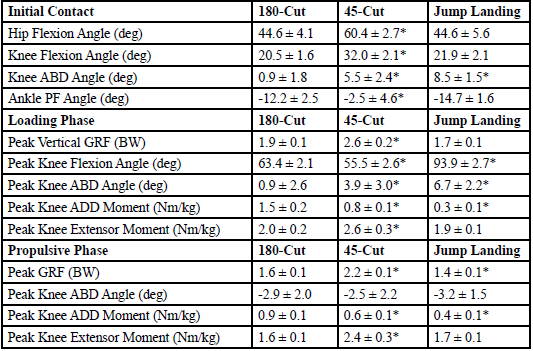
Table 1. Kinematic and kinetic measurements compared across the 180-degree cutting maneuver, 45-degree cutting maneuver, and drop vertical jump task during all three phases.
Discussion
ACL injuries are severe knee injuries that can require surgery accompanied by months of intense physical rehabilitation. Cutting maneuvers and a variety of jump landings have been studied to gain a better understanding of risk factors and mechanisms for ACL injuries because knee injuries have been seen to occur when individuals engage in these dynamic movements [1,3,31]. However, there is insufficient data surrounding the 180-degree, or pivot, cutting maneuver, which limits our full understanding of the level of risk that an individual is at when performing it. The goal of this study was to analyze and compare the 180-degree cutting maneuver to the more common 45-degree cut and a drop vertical jump. We hypothesized that there would be an increased risk for ACL injury during the 180-degree cutting maneuver, particularly regarding lower extremity sagittal plane motion and frontal plane knee motion, when compared to the 45-degree cut and the jump-landing tasks. However, our hypothesis was only partially supported by the results from this study.
During IC, the biomechanical risk factors for ACL injury were significantly greater in the 180-degree cutting maneuver compared to the 45-degree cutting maneuver. Participants displayed significantly less knee and hip flexion, but greater ankle plantarflexion, during the 180-degree cut than the 45-degree cut. Additionally, this study detected significantly less knee adduction at IC during the 180-degree cut than both the 45-degree cut and the drop vertical jump. These findings are supported by the results from a study by Cortes et al. in which they also demonstrated that participants performed the 180-degree cutting maneuver with decreased knee flexion angles compared to the 45-degree cut at IC [12]. Similarly, they also found decreased peak knee flexion angles and increased knee valgus/abduction angles which further subject the knee joint to possible injury during the peak stance of the movements. We agree that participants performed the 180-degree cut with a more erect posture at IC which increases mechanical risk factors associated with knee joint injury.
During the loading phase, the 45-degree cutting maneuver displayed the least favorable sagittal plane mechanics when compared to both the 180-degree cut and the drop vertical jump. This finding is supported as participants demonstrated smaller peak knee flexion angles, greater peak knee extensor moments, and a higher vertical GRF compared to the other two movements. The increased GRF and decreased knee flexion angle increases the load placed on the knee joint which translates to the increased internal knee extensor moment. In the frontal plane, the 180-degree cut resulted in the smallest knee adduction angle, indicating participants were closer to knee valgus, which is a variable associated with ACL injury. The smaller knee adduction angle may have also contributed to the greater internal knee adduction moment due to needing to resist external abduction. During the drop vertical jump, participants illustrated the smallest vertical GRF, the greatest amount of knee joint flexion and knee adduction, and the smallest knee joint moments in the frontal and sagittal plane compared to both the cutting maneuvers. This finding is supported by research, as cutting maneuvers have been shown to elicit greater biomechanical risks than jump landings due to the rapid frontal plane changes of directions [7,33].
During the propulsive phase, we found similar results to the loading phase. The 180-degree cutting maneuver resulted in decreased knee extensor moments and lower vertical GRFs compared to the 45-degree cut. Additionally, there was a greater vertical GRF during the 180-degree cut compared to the drop vertical jump. The peak internal knee adduction moment was also greater during the 180-degree cut than during both the 45-degree cut and the drop vertical jump. Though statistically insignificant, the drop vertical jump resulted in the greatest peak knee abduction angle, which is a key risk factor for ACL injury, during the propulsive phase while the 45-degree cut illustrated the smallest peak knee abduction angles. The greater peak knee abduction angle during the 180-cut compared to the 45-degree cut does correlate with the greater internal knee adduction moment that was also seen during the 180-degree cut compared to the 45-degree cut. A greater knee abduction angle requires a greater internal knee adduction moment to resist excessive abduction taking place. This finding is also supported by previous literature utilizing similar cutting maneuver angles [7,33]. Internal muscle moments can also be reactive protective mechanisms to help attenuate the load experienced at a particular joint by assisting in stabilizing the joint. The propulsive phase was not previously analyzed during the 180-degree cutting maneuver; however, these results suggest that this phase demands increased dynamic stabilization and control to reduce the rotational load and prevent potential injury.
There are a few limitations to this study. First, there are sex differences in ACL injury risk as well as mechanical differences between men and women when performing cutting maneuvers [2,8,12, 15,20,25,33,45]. Thus, investigating the effect of sex on the biomechanical risk factors during 180-degree cuts was desired, however, we were unable to recruit enough female participants to perform a statistical analysis between the two groups. A second limitation is that this was a cross-sectional study where participants were only tested once, and it is unknown if any of the risk factors detected resulted in later injury. Lastly, fatigue could affect the results illustrated, however, rest was built into the protocol to limit any effects of fatigue on the outcome variables.
Conclusion
The 180-degree cut resulted in greater risk factors for ACL injury than the 45-degree cut at IC with decreased hip and knee joint flexion. During the loading and propulsive phases, the 180-degree cut displayed frontal plane knee mechanics that are more concerning with a greater peak knee abduction angle and a greater peak internal knee adduction moment. There were also measurable differences between the drop vertical jump task and the 180-degree cut. Given this information, it could be beneficial to include the 180-degree cutting maneuver as an option for ACL pre-screening. The most common ACL pre-screening tools are jump tests such as drop vertical jump, single-legged forward and backward jumps, and hop tests for distance [32]. However, these tasks are relatively simple and linear movements. The 180-degree cut task is more complex and, if included in the ACL pre-assessment tool kit, could potentially identify deficits or risk factors in athletes that would be otherwise missed. It is recommended that future longitudinal studies utilize the 180-cutting maneuver as an assessment tool prior to observing injury and re-injury rates in athletes to provide further insight into the usefulness of this task as a pre-screening assessment.
Acknowledgments
The authors would like to thank all the participants for their time and energy in completing this study.
Declaration of Interest
The authors have no conflict of interest to report.
References
Alentorn-Geli, E., Myer, G. D., Silvers, H. J., Samitier, G., Romero, D., Lazaro-Haro, C., & Cugat, R. (2009). Prevention of non-contact anterior cruciate ligament injuries in soccer players. Part 1: Mechanisms of injury and underlying risk factors. Knee Surgery, Sports Traumatology, Arthroscopy, 17(7):705-729. View
Beaulieu, M. L., Lamontagne, M., & Xu, L. (2009). Lower limb muscle activity and kinematics of an unanticipated cutting manoeuvre: A gender comparison." Knee Surgery, Sports Traumatology, Arthroscopy, 17(8):968-976. View
Bisciotti, G. N., Chamari, K., Cena, E., Bisciotti, A., Bisciotti, A,, Corsini, A., & Volpi, P. (2019). Anterior cruciate ligament injury risk factors in football. Journal of Sports Medicine and Physical Fitness, 59(10):1724-38. View
Blackburn, J. T., & Padua, D. A. (2008). Influence of trunk flexion on hip and knee joint kinematics during a controlled drop landing." Clinical Biomechanics, 23(3):313-319. View
Boden, B. P., Dean, G. S., Feagin, J. A., & Garrett, W. E. (2000). Mechanisms of anterior cruciate ligament injury. Orthopedics, 23(6):573-578. View
Chappell, J. D., Creighton, R. A., Giuliani, C., Yu, B., & Garrett, W. E. (2007). Kinematics and electromyography of landing preparation in vertical stop-jump: Risks for noncontact anterior cruciate ligament injury." American Journal of Sports Medicine, 35(2):235-241. View
Cortes, N., Onate, J., & Van Lunen, B. (2011). Pivot task increases knee frontal plane loading compared with sidestep and drop-jump." Journal of Sports Science, 29(1):83-92. View
Decker, M. J., Torry, M. R., Wyland, D. J., Sterett, W. I., & Steadman, J. R. (2003). Gender differences in lower extremity kinematics, kinetics and energy absorption during landing." Clinical Biomechanics (Bristol, Avon), 18(7):662-669. View
Dos'Santos, T., Thomas, C., McBurnie, A., Comfort, P., & Jones, P. A. (2021). Biomechanical determinants of performance and injury risk during cutting: A performance-injury conflict? Sports Medicine, 51(9):1983-1998. View
Ebben, W. P., Fauth, M. L., Petushek, E. J., Garceau, L. R., Hsu, B. E., Lutsch, B. N., & Feldmann, C. R. (2010). Genderbased analysis of hamstring and quadriceps muscle activation during jump landings and cutting. Journal of Strength and Conditioning Research, 24(2):408-415. View
Evans, J., Mabrouk, A., Nielson, J. (2023). Anterior cruciate ligament knee injury. [Updated 2023 Nov 17]. In: StatPearls [Internet]. Treasure Island (FL): StatPearls Publishing; 2024 Jan-. View
Fagenbaum, R., & Darling, W. G. (2003). Jump landing strategies in male and female college athletes and the implications of such strategies for anterior cruciate ligament injury." American Journal of Sports Medicine, 31(2):233-240. View
Fuerst, P., Gollhofer, A., & Gehring, D. (2017). Preparation time influences ankle and knee joint control during dynamic change of direction movements. Journal of Sports Science, 35(8):762- 768. View
Gupta, A. S., Pierpoint, L. A., Comstock, R. D., & Saper, M. G. (2020). Sex-based differences in anterior cruciate ligament injuries among United States high school soccer players: An epidemiological study. Orthopedic Journal of Sports Medicine, 8(5): 2325967120919178. View
Hanson, A. M., Padua, D. A., Blackburn, J. T., Prentice, W. E., & Hirth, C. J. (2008). Muscle activation during side-step cutting maneuvers in male and female soccer athletes. Journal of Athletic Training, 43(2):133-143. View
Heebner, N. R., Rafferty, D. M., Wohleber, M. F., Simonson, A. J., Lovalekar, M., Reinert, A., & Sell, T. C. (2017). Landing kinematics and kinetics at the knee during different landing tasks." Journal of Athletic Training, 52(12):1101-1108. View
Heinert, B. L., Collins, T., Tehan, C., Ragan, R., & Kernozek, T. W. (2021). Effect of hamstring-to-quadriceps ratio on knee forces in females during landing. International Journal of Sports Medicine, 42(3):264-269. View
Herzog, M. M., Marshall, S. W., Lund, J. L., Pate, V., & Spang, J. T. (2017). Cost of outpatient arthroscopic anterior cruciate ligament reconstruction among commercially insured patients in the United States, 2005-2013. Orthopedic Journal of Sports Medicine, 5(1). View
Houck, J. (2003). Muscle activation patterns of selected lower extremity muscles during stepping and cutting tasks. Journal of Electromyography and Kinesiology, 13(6):545-554. View
James, C. R., Sizer, P. S., Starch, D. W., Lockhart, T. E., & Slauterbeck, J. (2004). Gender differences among sagittal plane knee kinematic and ground reaction force characteristics during a rapid sprint and cut maneuver. Research Quarterly for Exercise and Sport, 75(1):31-38. View
Jones, P. A., Herrington, L., & Graham-Smith, P. (2016). Braking characteristics during cutting and pivoting in female soccer players. Journal of Electromyography Kinesiology, 30:46-54. View
Joseph, A. M., Collins, C. L., Henke, N. M., Yard, E. E., Fields, S. K., & Comstock, R. D. (2013). A multisport epidemiologic comparison of anterior cruciate ligament injuries in high school athletics. Journal of Athletic Training, 48(6): 810-817. View
Kaeding, C. C., Léger-St-Jean, B., & Magnussen, R. A. (2017). Epidemiology and diagnosis of anterior cruciate ligament injuries. Clinical Sports Medicine, 36(1):1-8. View
Kim, J. H., Lee, K. K., Kong, S. J., An, K. O., Jeong, J. H., & Lee, Y. S. (2014). Effect of anticipation on lower extremity biomechanics during side- and cross-cutting maneuvers in young soccer players." American Journal of Sports Medicine, 42(8):1985-1992. View
Landry, S. C., McKean, K. A., Hubley-Kozey, C. L., Stanish, W. D., & Deluzio, K. J. (2007). Neuromuscular and lower limb biomechanical differences exist between male and female elite adolescent soccer players during an unanticipated side-cut maneuver." American Journal of Sports Medicine, 35(11):1888- 1900. View
McBurnie, A. J., Dos'Santos, T., & Jones, P. A. (2021). Biomechanical associates of performance and knee joint loads during a 70-90° cutting maneuver in subelite soccer players." Journal of Strength and Conditioning Research, 35(11):3190- 3198. View
McLean, S. G., Lipfert, S. W., & van den Bogert, A. J. (2004). Effect of gender and defensive opponent on the biomechanics of sidestep cutting." Medicine and Science in Sports and Exercise, 36(6):1008-1016. View
Nagano, Y., Ida, H., Akai, M., & Fukubayashi, T. (2007). Gender differences in knee kinematics and muscle activity during single limb drop landing. Knee, 14(3):218-223. View
Oberhofer, K., Hosseini Nasab, S. H., Schutz, P., Postolka, B., Snedeker, J. G., Taylor, W. R., & List, R. (2017). The influence of muscle-tendon forces on ACL loading during jump landing: A systematic review. Muscles Ligaments Tendons Journal, 7(1):125-135.
Robinson, G., O'Donoghue, P., & Wooster, B. (2011). Path changes in the movement of English Premier League soccer players. Journal of Sports Medicine and Physical Fitness, 51(2):220-226. View
Rothenberg, P., Grau, L., Kaplan, L., & Baraga, M. G. (2016). Knee injuries in American football: An epidemiological review." American Journal of Orthopedics (Belle Mead NJ), 45(6): 368-373. View
Schweizer, N., Strutzenberger, G., Franchi, M. V., Farshad, M., Scherr, J., & Spörri, J. (2022). Screening tests for assessing athletes at risk of ACL injury or reinjury – A scoping review. International Journal of Environmental Research Public Health, 19(5). View
Sigward, S. M., Cesar, G. M., & Havens, K. L. (2015). Predictors of frontal plane knee moments during side-step cutting to 45 and 110 degrees in men and women: Implications for anterior cruciate ligament injury." Clinical Journal of Sports Medicine, 25(6):529-534. View
Sigward, S., & Powers, C. M. (2006). The influence of experience on knee mechanics during side-step cutting in females." Clinical Biomechanics (Bristol, Avon), 21(7):740- 747. View
Sigward, S. M., & Powers, C. M. (2006). The influence of gender on knee kinematics, kinetics and muscle activation patterns during side-step cutting. Clinical Biomechanics (Bristol, Avon), 21(1):41-48. View
Thomas, C., Dos'Santos, T., Comfort, P., & Jones, P. A. (2024). Male and female soccer players exhibit different knee joint mechanics during pre-planned change of direction." Sports Biomechanics, 23(1):118-131. View
Thomas, C., Dos'santos, T., Cuthbert, M., Fields, C., & Jones, P. A. (2020). The effect of limb preference on braking strategy and knee joint mechanics during pivoting in female soccer players." Science Medicine Football, 4(1):30-36. View
Trigsted, S. M., Cook, D. B., Pickett, K. A., Cadmus-Bertram, L., Dunn, W. R., & Bell, D. R. (2018). Greater fear of reinjury is related to stiffened jump-landing biomechanics and muscle activation in women after ACL reconstruction. Knee Surgery, Sports Traumatology, Arthroscopy, 26(12):3682-3689. View
Trojian, T. H., & Ragle, R. B. (2008). Injuries in women's basketball. Connecticut Medicine, 72(3): 147-50. View
Urabe, Y., Kobayashi, R., Sumida, S., Tanaka, K., Yoshiada, N., Nishiwaki, G. A., … Ochi, M. (2005). Electromyographic analysis of the knee during jump landing in male and female athletes. Knee, 12(2):129-134. View
Walsh, M., Boling, M. C., McGrath, M., Blackburn, J. T., & Padua, D. A. (2012). Lower extremity muscle activation and knee flexion during a jump-landing task. Journal of Athletic Training, 47(4):406-413. View
Xie, D., Urabe, Y., Ochiai, J., Kobayashi, E., & Maeda, N. (2013). Sidestep cutting maneuvers in female basketball players: Stop phase poses greater risk for anterior cruciate ligament injury. Knee, 20(2):85-89. View
Yu, B., Lin, C. F., & Garrett, W. E. (2006). Lower extremity biomechanics during the landing of a stop-jump task." Clinical Biomechanics, 21(3):297-305. View
Zago, M., Esposito, F., Bertozzi, F., Tritto, B., Rampichini, S., Galvani, C., … Sforza, C. (2019). Kinematic effects of repeated turns while running. European Journal of Sports Science, 19(8):1072-1081. View
Zazulak, B. T., Ponce, P. L., Straub, S. J., Medvecky, M. J., Avedisian, L., & Hewett, T. E. (2005). Gender comparison of hip muscle activity during single-leg landing. Journal of Orthopedic Sports Physical Therapy, 35(5):292-299. View