
- About the Journal
- Editorial Board
- Review Process
- Author Guidelines
- Article Processing Charges
- Special Issues
- Current Issue
- Past Issue
 Journal of Rehabilitation Practices and Research
Journal of Rehabilitation Practices and Research Volume 7 (2026), Article ID: JRPR-203
https://doi.org/10.33790/jrpr1100203Research Article
Assessing Total Body Strength Decline in People Living with HIV Using the Isometric Mid-Thigh Pull
Richard Ferraro1*, Andrew Lynch1, David Kietrys1, James Scott Parrott2, and Mary Lou Galantino3,4
1Rutgers, The State University of New Jersey, School of Health Professions-DPT Program-Newark, NJ, United States.
2Rutgers, Department of Interdisciplinary Studies, The State University of New Jersey, United States.
3Stockton University, School of Health Sciences, Galloway, NJ, United States.
4University of Witwatersrand, Physiotherapy Department in the School of Health Sciences, South Africa.
Corresponding Author Details: Richard Ferraro, Ph.D., PT, Assistant Professor, Department Rehabilitation and Movement Sciences, School of Health Professions-DPT Program-Newark, Rutgers, The State University of New Jersey, 55 Dudley Rd, New Brunswick, NJ 08901, United States.
Received date: 30th January, 2026
Accepted date: 25th April, 2026
Published date: 27th April, 2026
Citation: Ferraro, R., Lynch, A., Kietrys, D., Parrott, J. S., & Galantino, M. L., (2026). Assessing Total Body Strength Decline in People Living with HIV Using the Isometric Mid-Thigh Pull. J Rehab Pract Res, 7(1):203.
Copyright: ©2026, This is an open-access article distributed under the terms of the Creative Commons Attribution License 4.0, which permits unrestricted use, distribution, and reproduction in any medium, provided the original author and source are credited.
Abstract
Living with HIV negatively impacts strength which can be measured with a validated test of overall total body strength the isometric mid thigh pull (IMTP). The objective of this secondary analysis of data from 2 cross sectional studies was to compare IMTP performance between persons living with HIV (PLHIV) and adults without known HIV. IMTP data from 74 PLHIV [average age 55.7 (SD 12.2)] were compared to data from adults without known HIV [n = 121; average age 34.5 (SD 14.0)]. IMTP maximum force was normalized to body weight. To control for age and sex, a multivariable linear regression was used, with IMTP performance as the dependent variable and independent predictors of age, sex, and duration of HIV infection. Age, sex, and duration of HIV infection were all significant predictors of strength, accounting for 54.7% of the variance(p<0.001). On average, women produced 5.9 less N/kg (p < 0.001, 95% CI: 4.8, 7.1 N/kg). Each year increase in age was associated with a decrease of 0.12 N/kg (p < 0.001, 95% CI: -0.16, -0.07). PLHIV for <20 years produced 2.2 N/kg less than the comparison group (p = 0.021, 95% CI: -4.1, -0.34 N/kg). PLHIV for >20 years produced 3.3 N/kg less than the comparison group (p<0.001, 95% CI -5.1, -1.5 N/kg). Adults living with HIV produced 2.2 to 3.3 fewer N/kg of total body force after adjusting for age and sex. Strength deficits are greater with longer HIV infection.
Key words: Strength Outcome Measures, Total Body Muscle Performance, Chronic Disease
Introduction
The use of antiretroviral therapy (ART) has greatly improved longevity of people living with HIV (PLHIV). According to the Joint United Nations Program on HIV/AIDS, 17 million PLHIV receive ART therapy worldwide [1]. Use of ART soon after HIV diagnosis has been shown to increase life expectancy by approximately 43.1 years [2].
Impairments in physical function seen in PLHIV have been linked to HIV disease severity, comorbidities, inflammation, oxidative stress and mitochondrial dysfunction [3]. Furthermore, long term use of ART may have adverse side effects including sarcopenia and dynapenia and reduced bone density [4]. These negative effects on musculoskeletal tissue may predispose PLHIV to frailty, falls, and poor overall muscle function [5]. PLHIV are at greater risk of compromised physical function, unintentional weight loss, self- reported exhaustion, and muscle weakness [6,7]. Muscle weakness and reduced aerobic capacity in PLHIV can decrease performance and daily activity, which may greatly influence the individual’s function and social participation [8-10]. Balance and gait impairments, including slower walking speed, have also been identified in PHLIV, independently of ART use [11]. An overall decreased “strengthspan” in PLHIV may make routine everyday tasks difficult and may lead some individuals to adopt a more sedentary lifestyle [12]. Comparative studies of physical activity have demonstrated that individuals with HIV exhibit lower levels of physical activity and were less likely to meet WHO-recommended physical activity recommendations relative to adults without known HIV [13,14].
In order to identify and remediate musculoskeletal decline in PLHIV, it is important to accurately measure strength as it relates to physical performance, both in the clinical context and in research. Measuring overall strength has historically been done with surrogate measures like grip strength or isolated strength testing like leg press or chest press using isotonic or isokinetic approaches [15]. Though grip strength is a biomarker of health and is correlated with morbidity and future function, it engages only upper extremity musculature [16].
Grip strength and isolated strength tests do not simulate multi- joint muscle performance involving all extremities and the trunk simultaneously, which occurs with everyday functional tasks like rising from a chair, stair climbing, and lifting/carrying objects. The isometric mid-thigh pull (IMTP) is a simple and safe multi-joint test of strength and power that has been used extensively in athletes [17-19]. The IMTP requires force generation and total body coordination of the extremities and core musculature. To date, the IMTP has not been used to quantify strength and muscle performance in PLHIV. The purpose of this study is to compare total body strength, as measured with IMTP, in PLHIV to adults without known HIV. We hypothesized that PLHIV would perform worse than adults without known HIV when adjusting for age and sex.
Materials and Methods
We conducted a secondary analysis of IMTP performance from two separate research studies (one involving PLHIV and the other involving adults without known HIV) performed in the same laboratory. Participants in each study performed the IMTP using the same standardized methodology for data collection and processing. Participants in the HIV study were recruited from infectious disease practices and community groups in New Jersey and Philadelphia. PLHIV were eligible if they were between 18-89 years of age and receiving ART with a CD4+ count of at least 200 cell/mm3. Participants were excluded if they were pregnant, had a current opportunistic infection, open wounds or sores on the feet, dementia, or an uncontrolled psychiatric disorder.
Adults without known HIV were recruited from a convenience sample in two college communities via flyers and email correspondence. Participants were excluded due to musculoskeletal injuries in the past 6 months or surgeries in the past 3 months that may have limited ability to perform a maximum effort contraction or having a systemic illness or condition that could affect ability to complete the procedures safely. All participants provided written consent. Both studies received approval from the XXXX University Institutional Review Board (Pro2020000459, Pro2020003234). This study was not registered.
Testing sessions were conducted in a laboratory setting. PLHIV completed the 4-meter walk test, the 5 times sit-to-stand test, and the 6-minute walk test prior to IMTP Testing. Adults in the comparison group (those without known HIV) completed grip strength testing using a Jamar hand dynamometer (JLW Instruments, Chicago, Illinois), the 30 second chair rise test, and a standing broad jump prior to IMTP testing. Participants were given one minute to recover between each test.
All participants completed three sub-maximal effort “warm-up” IMTP trials and three maximum effort IMTP trials. Warm-up trials were completed at 50% and 75% of perceived maximum effort and near maximum effort (~90%). Warm up trials acclimated participants to the verbal cues and the testing instructions that included pulling without recoil or counter movements. Participants stood with a load cell between their feet at the level of the metatarsal heads. The hips and knees were flexed between 20° and 40°, and between 30° and 50°, respectively [20,21]. The angles were confirmed using a goniometer. The IMTP was set to ensure that the T-bar handle was midway between the knee and hip joints with the sternum positioned directly over the T-bar. Participants used an unassisted grip to hold the bar. Following a standardized countdown, participants pulled as hard as possible (for test trials) while maintaining a straight spine for 5 seconds [22]. Participants were monitored for proper mechanics. If excessive arching or extension of the trunk was observed, the trial was stopped. Force data (Newtons) were captured at 100 Hz using LoadVUE (LV-1000HS-10K) software connected to an S-Beam Load cell (Loadstar Sensors, Fremont, CA, USA). A similar system using a single-axis load cell to measure the peak force (PF) during IMTP was shown to have acceptable reliability and validity when compared to force plates [22].
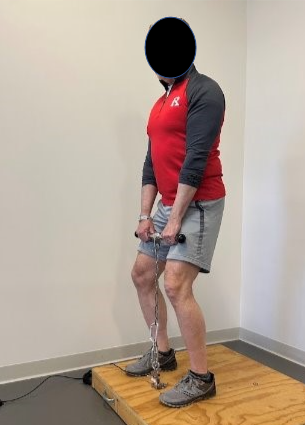
Figure 1. Example set up of IMTP Testing. Participants were positioned with the load cell at the level of the metatarsal heads. Hips and knees were flexed within the acceptable range to position the bar at mid-thigh.
Data were collected and managed using REDCap (Research Electronic Data Capture) hosted at XXXXXXXX [23,24]. Statistical analyses were performed with Stata 17.0 (StataCorp LLC, College Station, TX). The trial with the highest peak force (PF) was used for the analysis. IMTP PF was normalized and expressed as a ratio of force produced in N/kg of body weight to control for differences in participant size.
To control for the effect of age and sex on strength, a multivariable linear regression was used to estimate the effect of living with HIV on total body strength. Normalized IMTP performance was used as the dependent variable with independent predictors of age, sex, and duration of HIV infection. HIV duration was categorized into those with HIV infection of less than 20 years and greater than 20 years, to account for chronicity of the disease. The regression equation was analyzed for collinearity, variance inflation, and the effect of influential points on the overall model.
Results
One hundred ninety-five individuals completed the IMTP testing procedures (n=121 adults without known HIV; n=74 PLHIV). Demographic data are presented in Table 1. In general, the cohort of adults without known HIV was younger and had a lower body mass index (BMI). On average, PLHIV were diagnosed with HIV 22.3 ± 9.9 years prior to testing (range 0 to 44 years). Average performance for the healthy adults without known HIV (comparison group) and both sub-groups of PLHIV are listed in Table 2. Results are divided by sex due to the known effect of sex on strength outcomes. Figure 2 demonstrates the relationship between age and PF for each sub- group. Regression results are presented in Table 3. The regression model including sex, age, and duration of HIV explained 55.4% of the variance in IMTP performance (p<0.001). There is an observed effect of sex, with women producing 5.9N of force less per pound of body weight on average (p < 0.001, 95% CI: 4.8, 7.1 N/kg). Each year increase in age was associated with a decrease of 0.12 N/kg (p < 0.001, 95% CI: -0.16, -0.07). PLHIV for less than 20 years produced 2.4 N/kg less than the adults without known HIV (p = 0.013, 95% CI: -4.2, -0.51 N/kg). PLHIV for 20 years or more produced 3.2 N/kg less than adults without known HIV (p<0.001, 95% CI -5.0, -1.4 N/ kg). For sensitivity analysis, we also carried out the same models but modeled years with HIV infection as a continuous variable (years). The findings were not substantially different.
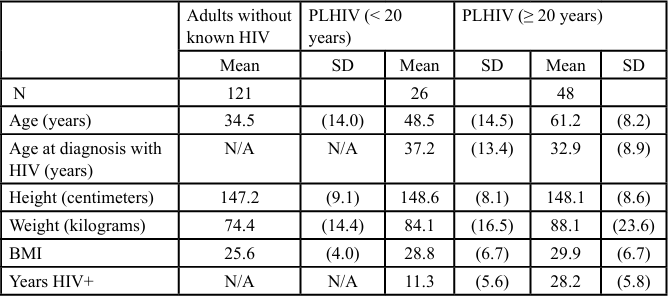
Table 1. Demographics
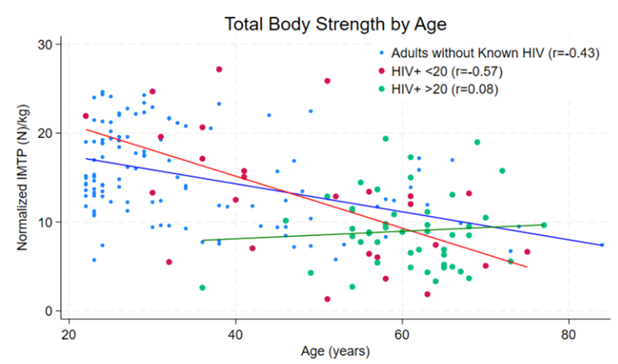
Figure 2. Relationship between age and IMTP force output normalized to body weight by group. Each dot represents one participant. Pearson correlation coefficients are listed in the figure legend.
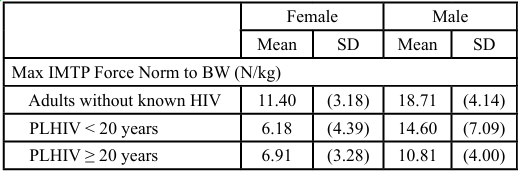
Table 2. IMTP Performance by Group and Sex
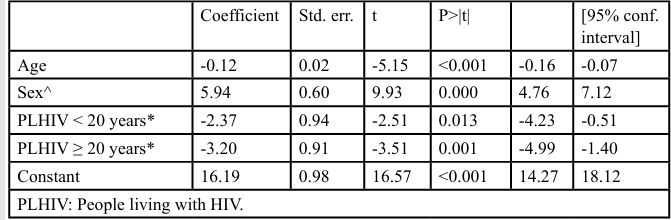
Table 3. Regression Analysis
The individual and combined effects of sex, aging, and living with HIV is illustrated in Figure 3. The regression equation predicts a 3 N per kilogram reduction in force output after aging by 26 years for both men and women. That drop off is more substantial for women due to a lower starting value. If the person had contracted HIV at the age of 35, the reduction in force production would have doubled to a 6N per kilogram reduction.
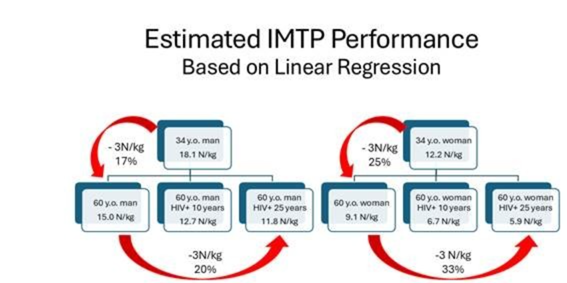
Figure 3. A graphical representation of the effect of aging with and without HIV for the average participant based on the regression equation from the data. The average age of the group without known HIV in this sample was 34 years, which coincides with the average age at the time of diagnosis with HIV in the sample of PLHIV. We used the regression equation from Table 3 to estimate how a 34-year-old , recreationally active man would perform on the IMTP and then simulated how that might change if the man were to age by 26 years without contracting HIV, contracting HIV later in life and contracting HIV around the age of 35. The process was repeated for the same scenario for a woman.
Discussion
Our findings suggest that IMTP peak force decreases with longer duration of HIV infection and is less than that of adults without known HIV, suggesting that living with HIV has a negative impact on total body strength. We recognize that there is a wide array of factors that can contribute to strength declines in PLHIV. As previous studies have identified, factors that contribute to overall strength and physical performance declines include comorbidities, activity levels, and existing viral loads [25,26]. Although our findings do not help elucidate the causal factors associated with strength decline, they do help confirm previous findings of an overall decrease in strength in PLHIV [27]. Specifically, some of the differences found in IMTP peak force between those with HIV for less than 20 years or 20 years or more might be explained by these long-term effects of living the HIV and/or side effects of ART and aging. It is important to note that while the decline in force exerted by the radults in the comparison group may be interpreted as a typical effect of aging, the slope of the decline is steeper in PLHIV <20 years, indicating a quicker decline in strength among these individuals (Figure 2). For individuals with HIV > 20 years, there was no apparent relationship between aging and force produced. While data on timing and type of ART therapy were not recorded, individuals in the > 20 year group were more likely to have used earlier types of ART, which were known to be more toxic. It is possible that the negative effects of these earlier ART medications (e.g., distal neuropathy) could offset the expected effect of age in this population. More recently infected individuals are receiving ART drugs that are better tolerated with less side effects than many of the antiretroviral drugs used in the 1990s.
Declines in physical performance measures including grip strength, leg press, chest press, 5x STS, and VO2 max in PLHIV gradually occur with aging [28-30]. When comparing regression coefficients associated with age (-0.12) and living with HIV for less than 20 years (-2.37), living with HIV is roughly equivalent to 19.8 years of aging. In our sample, the strength deficit associated with living with HIV, as measured by the IMTP, is roughly equivalent to an additional aging of 19.8 years. Erlandson et al found similar effects in advanced aging metrics citing increased sarcopenia and decreased muscle capacity in PLHIV [6].
The comparative IMTP absolute peak force results in the group of adults without known HIV were similar to findings of previous studies [31,32]. On average, women (with and without HIV) produced 5.9 fewer N/kg than men. This is in line with previous research in healthy adults and in other clinical populations where women were not as strong as men [33]. Most researchers agree that this difference in strength is due to the physiological differences in females compared to men including hormonal differences, muscle mass and distribution, skeletal structure and neuromuscular efficiency [34,35]. This distinction in strength between sexes is important as it has been reported that women with HIV have an increased incidence and earlier onset of sarcopenia, decreased grip strength, and overall greater impairments [36,37]. Age also affects IMTP performance. Each year of increased age was associated with a decrease in IMTP peak force of 0.12 N/kg. Results of our study agree with previous studies in healthy adults identifying declines in strength with increased age [38]. Our results in PLHIV were similar to declines in older subjects with HIV using other strength outcome measures like grip strength, 5 times sit to stand and leg press [39]. The effect of aging on strength is well documented and can be attributed to normal age-related declines in many different physiological factors like mitochondrial decline, hormonal declines, chronic inflammation and neuromuscular alterations among others [40,41]. Our findings support previous research and show that older participants are weaker than younger adults.
Our regression modeling suggests compounding negative effects of aging and diagnosis of HIV on total body strength. Because the model only explains about 55% of the variance in IMTP performance, other factors clearly play a role in how force production will vary over the lifespan. This can clearly be seen in the scatter plots in Figure 2 which demonstrate that some older adults living with HIV for over 20 years can produce nearly 20N of force per kilogram of body weight – performance that exceeds the predicted force of the base case in the scenario depicted in Figure 3.
Limitations of this study include that we compared a slightly older sample of PLHIV to a sample of younger adults without known HIV. However, the regression model accounts for some of that variability. We recognize that performing different outcome measures before the IMTP may have affected the IMTP performance differently between the groups. To mitigate this, we provided a one-minute rest break between procedures. Recruitment was voluntary and so the results may not be generalizable to the larger population of PLHIV. We did not control for viral loads, CD4 counts, stage of HIV disease, activity levels, presence of comorbidities, or timing or adherence to ART, any of which may all be confounders related to strength and physical performance. Our speculation that the unusual relationship between age and strength in PLHIV >20 years could be due to patterns in ART use needs to be further explored. The causal factors for lower IMTP performance in the sample of PLHIV were not explored in this study. It is likely that a wide array of factors such as HIV medication adherence, HIV-related comorbidities, smoking history, immune system status, and physical activity levels, rather than HIV serostatus and duration of HIV infection, may be related to the lower levels of total body strength we observed in our sample of PLHIV. More research is needed to ascertain the factors that adversely impact total body strength in PLHIV. Such knowledge may be helpful to inform strategies for mitigating the decline in strength we found in our sample of PLHIV.
Conclusion
The clinical implications of this study are many but focus mainly around quantifying total muscle performance and understanding what contributes to physiological and functional changes in PLHIV using a validated measure of total body strength. This study adds to the understanding of strength decline in PLHIV using a novel approach to quantify total body strength across a wide age range. Being older, female and infected with HIV for a longer duration, all appear to accelerate this decline in strength. More study is needed to examine other factors related to strength and muscle force generation differences between PLHIV and persons without known HIV and should be addressed in the context of functional performance. This is essential for the development of targeted exercise regimens that have yet to gain consensus in PLHIV. Exercise prescription for PLHIV should address strength and power deficits as identified through testing such as IMTP assuming the individual is medically stable and cleared for exercise. Future research should consider using the IMTP as an outcome measure in interventional studies of exercise in PLHIV.
Acknowledgements
*The authors would like to acknowledge all of the Rutgers University DPT students who helped with subject recruitment and data collection and all authors who contributed to the poster iteration of this study: Adrienne Simonds, Judith Barberio, Todd Levin, Oonagh Breen and Diane Reibel.
Funding
This research did not receive any specific grant from funding agencies in the public, commercial, or not-for-profit sectors.
Conflicts of Interest:
The authors declare no conflicts of interest.
References
Konishi, K., Nakagawa, H., & Asaoka, T., et al. (2022). Sarcopenia among people living with HIV and the effect of antiretroviral therapy on body composition. Medicine (Baltimore). 101(42):e31349. View
Conde-Higuera, P., Garduño-García, J. J., & Cruz-Jentoft, A. J., et al. (2022). Sarcopenia in people living with HIV. A review. AIDS Rev. 24(4):166-172. View
Curran, A., Ribera, E., (2011). From old to new nucleoside reverse transcriptase inhibitors: changes in body fat composition, metabolic parameters and mitochondrial toxicity after the switch from thymidine analogs to tenofovir or abacavir. Expert Opin Drug Saf. 10(3):389-406. View
Schank, M., Zhao, J., Moorman, J. P., & Yao, Z. Q., (2021). The impact of HIV-and ART-induced mitochondrial dysfunction in cellular senescence and aging. Cells. 10(1):174. View
Lorenz, D. R., Mukerji, S. S., & Misra, V., et al. (2021). Predictors of transition to frailty in middle-aged and older people with HIV: a prospective cohort study. J Acquir Immune Defic Syndr. 88(5):518-527. View
Erlandson, K. M., Allshouse, A. A., & Jankowski, C. M., et al. (2013). Functional impairment is associated with low bone and muscle mass among persons aging with HIV infection. J Acquir Immune Defic Syndr. 63(2):209-215. View
Baranoski, A. S., Harris, A., & Michaels, D., et al. (2014). Relationship between poor physical function, inflammatory markers, and comorbidities in HIV infected women on antiretroviral therapy. J Womens Health. 23(1):69-76. View
Rusch, M., Nixon, S., & Schilder, A., et al. (2004). Impairments, activity limitations and participation restrictions: prevalence and associations among persons living with HIV/AIDS in British Columbia. Health Qual Life Outcomes. 6:46. View
Cade, W. T., Peralta, L., Keyser, R. E., (2004). Aerobic exercise dysfunction in human immunodeficiency virus: a potential link to physical disability. Phys Ther. 84(7):655-664. View
Gomes Neto, M., Conceição, C. S., & Ogalha, C., et al. (2016). Aerobic capacity and health-related quality of life in adults HIV-infected patients with and without lipodystrophy. Braz J Infect Dis. 20(1):76-80. View
Berner, K., Morris, L., Baumeister, J., & Louw, Q., (2017). Objective impairments of gait and balance in adults living with HIV-1 infection: a systematic review and meta-analysis of observational studies. BMC Musculoskelet Disord. 18:1-26. View
Faigenbaum, A. D., Garcia-Hermoso, A., & MacDonald, J. P., et al. (2024). Bridging the gap between strengthspan and lifespan. Br J Sports Med. 58(14):758-760. View
Martin, K., Naclerio, F., Karsten, B., & Vera, J. H. (2019). Physical activity and quality of life in people living with HIV. AIDS care, 31(5), 589-598. View
Kitilya, B., PrayGod, G., Peck, R., Changalucha, J., Jeremiah, K., Kavishe, B. B. & Olsen, M. F. (2022). Levels and correlates of physical activity and capacity among HIV-infected compared to HIV-uninfected individuals. PLoS One, 17(1), e0262298. View
Marques, M. C., Izquierdo, M., & de Paula Simão, R., et al. (2012). Are resistance and plyometric training programs equally effective for improving strength, power, running speed, and jumping ability in young adult females? J Strength Cond Res. 26(12):3311-3317.
Bohannon, R. W., (2019). Grip strength: an indispensable biomarker for older adults. Clin Interv Aging. 14:1681-1691. View
Crewther, B. T., Carruthers, J., & Kilduff, L. P., et al. (2016). Temporal associations between individual changes in hormones, training motivation and physical performance in elite and non-elite trained men. Biol Sport. 33(3):215-221. View
Frey, B. B., (2021). The SAGE Encyclopedia of Research Design. Thousand Oaks, CA: SAGE Publications. View
Toonstra, J., & Mattacola, C. G., (2013). Test-retest reliability and validity of isometric knee-flexion and -extension measurement using 3 methods of assessing muscle strength. J Sport Rehabil. 22(1):1-6. View
Haff, G. G., Ruben, R. P., & Lider, J., et al. (2015). A comparison of methods for determining the rate of force development during isometric midthigh clean pulls. J Strength Cond Res. 29(2):386- 395. View
McGuigan, M. R., & Winchester, J. B., (2008). The relationship between isometric and dynamic strength in college football players. J Sports Sci Med. 7(1):101-105. View
Jidovtseff, B., Croisier, J. L., & Scimar, N., et al. (2008). The ability of isoinertial assessment to monitor specific training effects. J Sports Med Phys Fitness. 48(1):55-64. View
Harris, P. A., Taylor, R., & Minor, B. L., et al. (2019). The REDCap consortium: building an international community of software platform partners. J Biomed Inform. 95:103208. View
Harris, P. A., Taylor, R., & Thielke, R., et al. (2009). Research electronic data capture (REDCap)--a metadata-driven methodology and workflow process for providing translational research informatics support. J Biomed Inform. 42(2):377-381. View
Tillin, N. A., Pain, M. T., & Folland, J., (2013). Explosive force production during isometric squats correlates with athletic performance in rugby union players. J Sports Sci. 31(1):66-76. View
Schrack, J. A., Jacobson, L. P., & Althoff, K. N., et al. (2016). Effect of HIV-infection and cumulative viral load on age-related decline in grip strength. AIDS. 30(17):2645-2652. View
Guaraldi, G., & Palella, F. J. Jr. (2017). Clinical implications of aging with HIV infection: perspectives and the future medical care agenda. AIDS. 31(Suppl 2):S129-S135. View
Gomes-Neto, M., Rodriguez, I., & Lédo, A. P., et al. (2018). Muscle strength and aerobic capacity in HIV-infected patients: a systematic review and meta-analysis. J Acquir Immune Defic Syndr. 79(4):491-500. View
Schrack, J. A., Simonsick, E. M., & Ferrucci, L., (2014). The energetic pathway to mobility loss: an emerging new framework for longitudinal studies on aging. J Am Geriatr Soc. 62(4):681 685. View
Gomes-Neto, M., Saquetto, M. B., & Alves, I. G., et al. (2021). Effects of exercise interventions on aerobic capacity and health-related quality of life in people living with HIV/AIDS: systematic review and network meta-analysis. Phys Ther. 101(7):pzab092. View
Sayer, A. A., & Kirkwood, T. B., (2015). Grip strength and mortality: a biomarker of ageing? Lancet. 386(9990):226-227. View
Merrigan, J. J., Dabbs, N. C., & Jones, M. T., (2020). Isometric mid-thigh pull kinetics: sex differences and response to whole-body vibration. J Strength Cond Res. 34(9):2407-2411. View
Parsonage, J. R., Secomb, J. L., & Tran, T. T., et al. (2017). Gender differences in physical performance characteristics of elite surfers. J Strength Cond Res. 31(9):2417-2422. View
Alexander, S. E., Pollock, A. C., & Lamon, S., (2022). The effect of sex hormones on skeletal muscle adaptation in females. Eur J Sport Sci. 22(7):1035-1045. View
American College of Sports Medicine. (2023). ACSM’s Guidelines for Exercise Testing and Prescription. 11th ed. Philadelphia, PA: Wolters Kluwer View
Yin, F., Lu, L., & Liu, B., et al. (2023). Alternative skeletal muscle index for sarcopenia diagnosis in elderly patients with type 2 diabetes mellitus: a pilot study. Front Endocrinol (Lausanne). 14:1083722. View
Sharma, A., Shi, Q., & Hoover, D. R., et al. (2019). Frailty predicts fractures among women with and at-risk for HIV. AIDS. 33(3):455-463. View
Joseph, C., Kenny, A. M., & Taxel, P., et al. (2005). Role of endocrine-immune dysregulation in osteoporosis, sarcopenia, frailty and fracture risk. Mol Aspects Med. 26(3):181-201. View
Schrack, J. A., Jacobson, L. P., & Althoff, K. N., et al. (2016). Effect of HIV-infection and cumulative viral load on age-related decline in grip strength. AIDS. 30(17):2645-2652. View
Larsson, L., Degens, H., & Li, M., et al. (2019). Sarcopenia: aging-related loss of muscle mass and function. Physiol Rev. 99(1):427-511. View
Mitchell, W. K., Williams, J., & Atherton, P., et al. (2012). Sarcopenia, dynapenia, and the impact of advancing age on human skeletal muscle size and strength: a quantitative review. Front Physiol. 3:260. View