
- About the Journal
- Editorial Board
- Review Process
- Author Guidelines
- Article Processing Charges
- Special Issues
- Current Issue
- Past Issue
 Journal of Rehabilitation Practices and Research
Journal of Rehabilitation Practices and Research Volume 7 (2026), Article ID: JRPR-209
https://doi.org/10.33790/jrpr1100209Research Article
Willingness to Pay for Fitness Programs at Civil Sports Centers: A Case Study of Kaohsiung City, Taiwan
Chien-Hsing Tseng1, Jian-An Shen2, and Kun-Yu Liu3*
1Department of Recreation and Sport Management, Shu-Te University, Kaohsiung 82445, Taiwan.
2Independent Researcher, Taiwan.
3Associate Professor, Department of Recreational Sport and Health Promotion, National Pingtung University of Science and Technology.1, Shuefu Rd., Neipu, Pingtung 912301, Taiwan.
Corresponding Author Details: Kun-Yu Liu, Associate Professor, Department of Recreational Sport and Health Promotion, National Pingtung University of Science and Technology.1, Shuefu Rd., Neipu, Pingtung 912301, Taiwan.
Received date: 21st April, 2026
Accepted date: 18th June, 2026
Published date: 20th June, 2026
Citation: Tseng, C. H., Shen, J. A., & Liu, K. Y., (2026). Willingness to Pay for Fitness Programs at Civil Sports Centers: A Case Study of Kaohsiung City, Taiwan. J Rehab Pract Res, 7(1):209.
Copyright: ©2026, This is an open-access article distributed under the terms of the Creative Commons Attribution License 4.0, which permits unrestricted use, distribution, and reproduction in any medium, provided the original author and source are credited.
Abstract
With rising economic standards and increasing health awareness, demand for leisure and physical activity has grown steadily, prompting sports facilities to develop diverse fitness programs. However, the absence of standardized pricing frameworks presents challenges for operators in balancing profitability and customer satisfaction. This study examines residents’ willingness to pay (WTP) for fitness programs at civil sports centers in Kaohsiung City, Taiwan, and analyzes the influence of socio-demographic characteristics and exercise participation behaviors. Data were collected from a questionnaire survey, yielding 345 valid responses, and analyzed using descriptive statistics, independent-samples t-tests, and one-way ANOVA. The results indicate that gender differences are significant in aerial yoga, yoga, and group fitness programs, while educational level significantly affects only aerial yoga. Marital status shows significant differences across all program types, and residential districts influence WTP for selected programs. Additionally, exercise frequency and prior participation in paid courses significantly affect WTP, and differences between peak and off-peak pricing are associated with education, marital status, and residential area. Overall, both socio-demographic factors and exercise behaviors significantly influence WTP. These findings provide practical implications for pricing strategies and program design, contributing to improved customer satisfaction and sustainable development in the sports industry.
Keywords: Civil Sports Center; Fitness Programs; Willingness to Pay (WTP); Exercise Participation; Pricing Strategy
Introduction
With the advancement of modern society and rapid economic development, lifestyles have undergone substantial transformation, shifting from physically demanding daily routines to increasingly sedentary patterns. According to the World Health Organization [1], approximately 31% of adults and more than 80% of adolescents worldwide do not meet the recommended levels of physical activity. This transition has contributed to insufficient physical activity and the rising prevalence of chronic diseases, thereby posing significant public health concerns. In Taiwan, the Ministry of Sports [2] reported that only 35.6% of the population met the criteria for regular exercise, at an intensity sufficient to induce sweating and elevated respiration. These statistics highlight the continuing need to promote physical activity and healthy lifestyles. In response, governments worldwide have emphasized the importance of regular exercise as a key strategy for disease prevention and health promotion. In Taiwan, a series of national policies, including the “Sport Island Program” and “i-Taiwan Sports Program,” have been implemented to encourage public participation in physical activity.
Among these efforts, civil sports centers have emerged as a crucial component of public sports policy. As of 2026, approximately 78 civil sports centers had been established throughout Taiwan, with additional facilities currently under construction or planning. Primarily located in urban areas, these centers provide accessible, safe, and well-equipped indoor environments that cater to diverse populations. Equipped with facilities such as swimming pools, fitness centers, and multipurpose exercise spaces, they offer structured fitness programs designed to meet varying needs related to health promotion and recreational engagement [3]. Previous studies have indicated that the accessibility and quality of sports facilities significantly influence individuals’ willingness to engage in regular exercise.
The importance of physical activity was further highlighted during the COVID-19 pandemic. Yang et al. [4] reported that regular physical activity contributes to the prevention and recovery of COVID-19 while promoting overall physical health. During this period, public awareness of health promotion increased substantially, and individuals became more attentive to exercise participation and personal health management. In addition, the demand for safe and controlled exercise environments increased, resulting in a growing interest in professionally guided indoor fitness programs. Consequently, demand for structured fitness programs continued to rise, contributing to the growth of the sports and fitness industry.
In terms of sports consumption, national surveys have shown that sports-related expenditures continue to grow. According to the Sports Administration [5], total sports consumption in Taiwan reached NT$133.85 billion, with participation-based expenditures accounting for a substantial proportion of overall spending. Fitness program fees represent an important component of these expenditures, reflecting consumers’ increasing willingness to invest in structured and professionally guided exercise services. Despite this growth, pricing for fitness programs varies considerably across different types of providers, including civil sports centers, commercial gyms, and private fitness studios. Such pricing decisions are often based on market competition or managerial experience rather than systematic evaluations of consumer preferences, potentially resulting in mismatches between perceived service value and consumer expectations.
From a theoretical perspective, willingness to pay (WTP), rooted in the concept of consumer surplus, represents the maximum amount an individual is willing to pay for a product or service [6]. It has been widely applied in the evaluation of public goods and services, particularly through the Contingent Valuation Method (CVM), which estimates individuals’ valuation under hypothetical scenarios [7,8]. In addition, behavioral theories such as the Health Belief Model (HBM) and the Theory of Planned Behavior (TPB) suggest that individuals’ perceptions, attitudes, and behavioral intentions significantly influence their willingness to engage in health- related behaviors and associated expenditures. Previous studies have identified several determinants of WTP. Previous studies have identified several determinants of WTP. Socio-demographic characteristics, such as income, education, and marital status, are positively associated with WTP. In addition, favorable service attributes, greater convenience, and positive user experiences have been found to positively influence consumers’ willingness to pay by enhancing perceived value and service satisfaction [9-11]. In the sports context, Lu [12] found that residents’ WTP for fitness facilities varied significantly across regions and income levels, reflecting differences in perceived value and accessibility. Similarly, Chen [13] demonstrated that higher income, longer usage time, and stronger health awareness were associated with higher WTP for fitness facilities. Despite the growing body of literature, research on WTP for fitness programs remains relatively limited, particularly in Taiwan. Existing studies have predominantly focused on facility management, service quality, customer satisfaction, and loyalty, with comparatively less attention given to the economic valuation of fitness programs from the consumer perspective. Given the rapid growth of the fitness market and the absence of standardized pricing mechanisms, a deeper understanding of consumers’ willingness to pay is essential for both academic inquiry and practical application.
Therefore, this study aims to investigate residents’ willingness to pay for fitness programs at civil sports centers in Kaohsiung City, Taiwan. Specifically, it examines the influence of socio-demographic characteristics and exercise participation behaviors on WTP. By providing empirical evidence on consumer preferences and valuation, this study seeks to contribute to the literature on sports consumption and offer practical implications for pricing strategies, program design, and the sustainable development of the sports industry.
Research Methods
This study adopted a quantitative research approach and employed a questionnaire survey to collect data on residents’ willingness to pay (WTP) for fitness programs in Kaohsiung City. The fitness program pricing survey consisted of 38 items. Pricing information was collected from civil sports centers, commercial fitness chains, and private fitness studios in Kaohsiung City. For each fitness program, the highest and lowest market prices were identified, and the price range was divided into four pricing intervals representing increasing levels of willingness to pay. These intervals were coded from 1 to 4 and treated as continuous variables for statistical analysis, with higher scores indicating a greater willingness to pay. Respondents were asked to select the price range they considered reasonable for each fitness program using a single-choice format based on their personal perceptions of an acceptable price. Differences in WTP were analyzed based on socio-demographic characteristics and exercise participation behaviors.
Research Framework
Based on the literature review, this study developed a research framework in which socio-demographic variables and exercise participation behaviors were treated as independent variables, while willingness to pay for fitness programs was considered the dependent variable. The framework further examined differences in WTP across various course types, time periods (peak and off-peak), and specific target groups (e.g., older adults and children).
The research framework consisted of three major components: (1) socio-demographic characteristics, (2) exercise participation behaviors, and (3) willingness to pay for different types of fitness programs. This structure enables a comprehensive understanding of individuals’ price acceptance and the underlying influencing factors.
Participants and Data Collection
The study targeted residents aged 18 years and above in Kaohsiung City. A purposive sampling method was employed, and data were collected through an online questionnaire distributed via local social media platforms, including Facebook and LINE, using Google Forms. To prevent duplicate responses, participants were required to log in with an email account before completing the questionnaire. Additionally, a screening question (“Are you a resident of Kaohsiung City?”) was included at the beginning of the survey to exclude ineligible respondents. A pilot test was conducted from October 17 to October 21, 2022, yielding 137 valid responses. After revising the questionnaire, the formal survey was administered from November 15 to November 18, 2022. A total of 404 questionnaires were collected, of which 345 were valid, resulting in a valid response rate of 85.4%. Although the data collection period was limited to a specific time frame, which may not fully capture seasonal variations in pricing perceptions, the results are considered representative of general public perceptions in Kaohsiung City.
Instrument
The research instrument was a self-developed questionnaire titled “Willingness to Pay for Fitness Programs in Kaohsiung City.” The questionnaire consisted of three sections: (1) demographic information, (2) exercise participation behaviors, and (3) fitness program pricing. A total of 50 items were included.
The exercise participation section contained five items, adapted from previous studies and official reports, including the 2021 Sports Status Survey [5], as well as studies by Chang (2021), Chang (2015), and Pan (2021). These items assessed exercise frequency, duration, location, time period, expenditure, and prior participation in paid programs. All items were measured using single-choice responses based on participants’ actual exercise behaviors.
The fitness program pricing section consisted of 38 items, developed based on pricing information collected from civil sports centers, commercial gyms, and private fitness studios in Kaohsiung City. Eight major types of fitness programs were included: TRX training, aerial yoga, yoga, spinning, aerobic exercise, dance, group fitness, and one-on-one personal training.
Price ranges were established by identifying the highest and lowest prices for each program and categorizing them into four levels, which were treated as continuous variables for subsequent analysis. Additionally, pricing scenarios were differentiated into standard pricing, peak periods, off-peak periods, and special groups (older adults and children). Participants were asked to select the price range they considered reasonable for each category.
Prior to the formal survey, a pilot test was conducted to evaluate the clarity and appropriateness of the questionnaire items. Item analysis using the critical ratio (CR) method was performed to assess item discrimination, and items with non-significant CR values were removed, providing preliminary evidence of construct validity. Internal consistency reliability was assessed using Cronbach’s alpha. The eight dimensions of willingness to pay demonstrated good reliability, with Cronbach’s alpha values ranging from .835 to .935. Based on the results of the pilot test, item analysis, and reliability assessment, the final questionnaire was established for formal data collection.
Results
This study targeted residents of Kaohsiung City and obtained a total of 345 valid questionnaires. The analysis focused on socio- demographic characteristics, exercise participation behaviors, and willingness to pay (WTP) for eight types of fitness programs. The results are shown in Table 1and table 2.
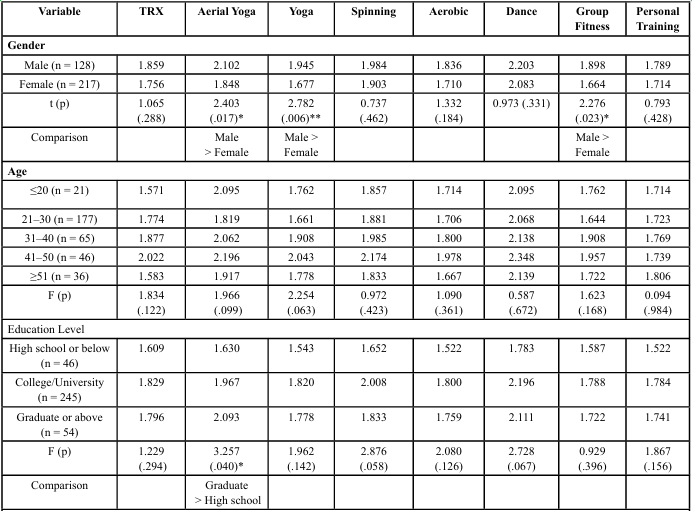
Table 1. Differences in Willingness to Pay (WTP) for Fitness Programs by Socio-demographic Variables
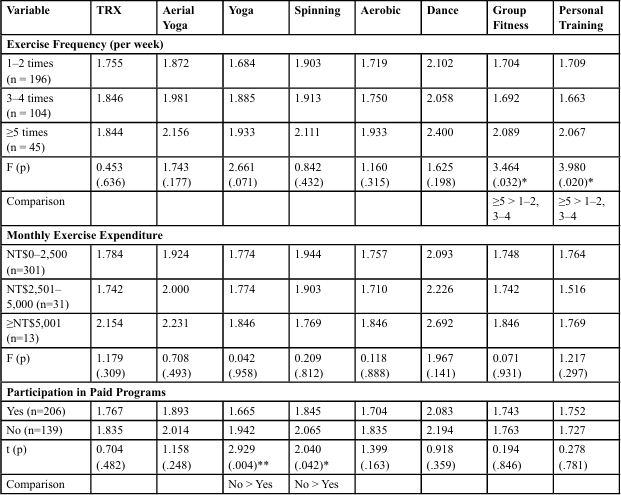
Table 2. Differences in Willingness to Pay (WTP) by Exercise Participation Behavior and Time Period
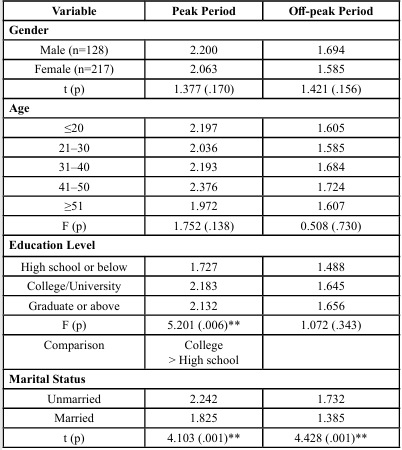
Table 2(B). Differences in WTP between Peak and Off-peak Periods
Socio-demographic Characteristics and Exercise Participation
Descriptive statistics indicated that the majority of respondents were female (62.90%), aged 21–30 years (51.30%), with a college-level education (71.01%), unmarried (69.28%), and resided primarily in southern Kaohsiung (63.77%). In terms of exercise behavior, the majority exercised 1–2 times per week (56.81%), followed by 3–4 times per week (30.14%). Monthly expenditure on exercise was mostly within NT$0–2,500 (87.25%), and most respondents had prior experience participating in paid fitness programs (59.71%).
Willingness to Pay for Fitness Programs
The average WTP scores for the eight types of fitness programs ranged from 1.75 to 2.18 (shown in Table 3). Among them, aerial yoga, spinning, and dance programs received the highest scores, suggesting that respondents were more willing to pay higher prices for distinctive or higher-intensity programs. In addition, peak-period pricing consistently received the highest scores across all program types, indicating that time convenience plays a significant role in consumers’ willingness to pay.
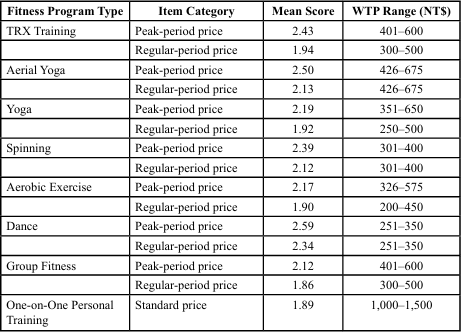
Table 3. Willingness to Pay (WTP) for Different Types of Fitness Programs
Differences in WTP by Socio-demographic Characteristics
Regarding gender, significant differences were found in aerial yoga, yoga, and group fitness programs, with males demonstrating higher WTP than females. Age did not show any significant differences across program types. Educational level had a significant effect on aerial yoga programs, with respondents holding graduate-level degrees showing higher WTP than those with a high school education or below.
Marital status exhibited significant differences across all program types, with unmarried individuals reporting higher WTP than married individuals. Furthermore, residential location showed significant differences in aerial yoga, yoga, and group fitness programs, with residents in northern Kaohsiung demonstrating higher WTP than those in southern areas, reflecting disparities in economic conditions and lifestyle patterns.
Differences in WTP by Exercise Participation Behavior
Exercise frequency showed significant differences in group fitness and one-on-one personal training programs. Individuals who exercised five or more times per week exhibited significantly higher WTP than those with lower exercise frequency. Monthly exercise expenditure did not show significant differences across program types. However, prior participation in paid fitness programs significantly influenced WTP for yoga and spinning programs, with individuals who had not previously participated in paid programs demonstrating higher WTP. This may reflect higher expectations or less accurate price perceptions among inexperienced consumers.
Differences in Peak and Off-peak Pricing
Significant differences were observed in educational level, marital status, and residential location. Respondents with a college education demonstrated higher WTP for peak-period pricing than those with lower educational levels. Unmarried individuals showed higher WTP than married individuals across both peak and off-peak periods. Additionally, residents of northern Kaohsiung exhibited higher WTP for off-peak pricing than those in southern areas.
Overall, although only some variables reached statistical significance, descriptive results consistently indicated that respondents were generally willing to pay higher prices during peak periods, highlighting the importance of time convenience in pricing strategies.
Discussion
This study targeted residents of Kaohsiung City and systematically examined willingness to pay (WTP) for eight types of fitness programs from the perspectives of socio-demographic characteristics, exercise participation behaviors, and program attributes. The findings reveal clear market segmentation and group differences, indicating that WTP is an effective construct for explaining consumer behavior in the fitness market.
Overall, the findings indicate that respondents demonstrated varying levels of willingness to pay for fitness programs offered at civil sports centers. Among the eight fitness programs examined, aerial yoga, spinning, and dance programs exhibited relatively higher WTP values, suggesting that consumers may place greater value on programs characterized by experiential appeal, stimulation, and novelty. Furthermore, peak-period pricing consistently showed higher WTP across all program types, indicating that scheduling convenience may represent an important factor influencing consumers' payment preferences.
Differences in willingness to pay across socio-demographic backgrounds and exercise behavior characteristics may be associated with individuals’ perceptions of the value of fitness services and their stage of exercise participation. The findings revealed unmarried individuals had higher willingness to pay. This may be attributed to differences in financial responsibilities and time constraints. The findings revealed that respondents with higher exercise frequency demonstrated greater willingness to pay for group fitness classes and personal training programs, suggesting a stronger recognition of the health benefits and added value provided by these services. This finding may be explained by the Transtheoretical Model proposed by Prochaska and DiClemente [14], which suggests that individuals in the action and maintenance stages have established stable exercise habits and exhibit a higher level of commitment to physical activity. Consequently, they are more willing to invest financial resources to sustain their exercise behaviors. Furthermore, the differences in willingness to pay observed across gender, educational level, marital status, and residential area may reflect variations in health awareness, lifestyle preferences, and perceptions of program benefits, which in turn influence consumers’ value evaluations and purchasing decisions regarding fitness programs.
According to the Transtheoretical Model, individuals in the action and maintenance stages have established regular exercise habits and demonstrate stronger commitment to physical activity participation [14]. Consequently, they may perceive greater value in fitness services and exhibit higher willingness to pay.
Taken together, the findings suggest that WTP not only reflects price perception but also serves as a comprehensive indicator of exercise involvement, lifestyle structure, and health-related values. This study provides a practical basis for market positioning and pricing strategies in the fitness industry.
Limitation
Based on the findings, this study has two limitations to become implications for industry practice and future research. First, from an industry perspective, fitness facility operators are advised to adopt differentiated and flexible pricing strategies. Pricing and program design should be tailored according to consumer characteristics such as gender, age, marital status, residential location, and level of exercise involvement in order to enhance market acceptance. Implementing price differentiation between peak and off-peak periods can improve facility utilization efficiency. In addition, providing specialized programs, such as personal training and high-value experiential courses, for highly involved consumers may increase revenue and customer retention. The markets for older adults and children also demonstrate considerable growth potential; therefore, operators are encouraged to develop low-impact functional training programs, family-oriented courses, and safe, accessible environments to address population aging and family-oriented demands.
Second, future research is encouraged to expand the sampling scope to include cross-regional comparisons and investigate psychological factors that were not examined in the present study, such as perceived value, health beliefs, and self-efficacy. Furthermore, advanced analytical approaches, such as structural equation modeling (SEM), may be employed to explore the mechanisms underlying willingness to pay for fitness programs.
In conclusion, this study not only addresses the research gap in willingness to pay for fitness programs in Taiwan but also provides empirical evidence that contributes to pricing strategies and program innovation in the sports industry, offering both theoretical and practical significance.
Acknowledgments
The authors would like to thank all the participants, and the community care centers in Kaohsiung City, Taiwan for their support and cooperation in this study.
Conflicts of Interest:
The authors declare no conflicts of interest.
References
World Health Organization. (2024, June 26). Physical activity. View
Sports Administration, Ministry of Education. (2025). 2025 survey on sports participation in Taiwan. View
Sports Administration, Ministry of Education.(2020). Guidelines for civil sports center planning and operation.
Yang, J., Li, X., He, T., Ju, F., Qiu, Y., & Tian, Z. (2022). Impact of physical activity on COVID-19. International Journal of Environmental Research and Public Health, 19(21), 14108. View
Sports Administration, Ministry of Education. (2021). Annual survey of sports participation and consumption expenditure in Taiwan.
Wertenbroch, K., & Skiera, B. (2002). Measuring consumers’ willingness to pay at the point of purchase. Journal of Marketing Research, 39(2), 228–241. View
Mitchell, R. C., & Carson, R. T. (1989). Using surveys to value public goods: The contingent valuation method. Resources for the Future, Washington DC. View
Hanemann, W. M. (1991). Willingness to pay and willingness to accept: How much can they differ? American Economic Review, 81(3), 635–647. View
Chu, C.-H., Tu, W.-S., & Chiang, C.-H. (2012). An estimation of the willingness-to-pay of leisure cycling path: The case of tamsui golden riverside. Journal of Public Affairs Review, 13(1), 45-63. View
Chou, R.-C., Wang, P.-L., & Lin, C.-W. (2017). Willingness to pay of renting a public bike for a transit passenger. Transportation Planning Journal, 46(2), 165-189.
Wu, K.-F. (2021). The influence of environmental awareness on willingness to pay: Evidence from recreational visitors.
Lu, H.-F. (2013). The economic valuation of national sports centers: An application of the contingent valuation method. Journal of Outdoor Recreation Study, 26(3), 1-45. View
Chen, Y.-C. (2014). Investigating the non-use stadiums by using the contingent valuation method: A case study of university sports stadiums. Journal of Taiwan Society for Sport Management, 14(1), 145-167. View
Prochaska, J. O., & DiClemente, C. C. (1983). Stages and processes of self-change of smoking: Toward an integrative model of change. Journal of Consulting and Clinical Psychology, 51(3), 390–395. View